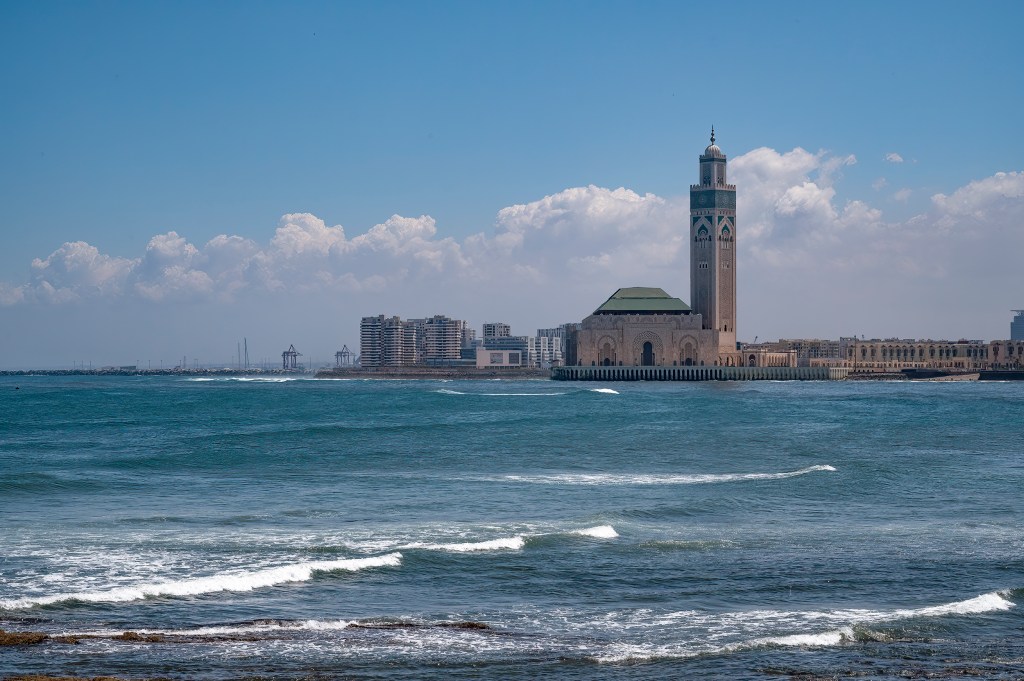
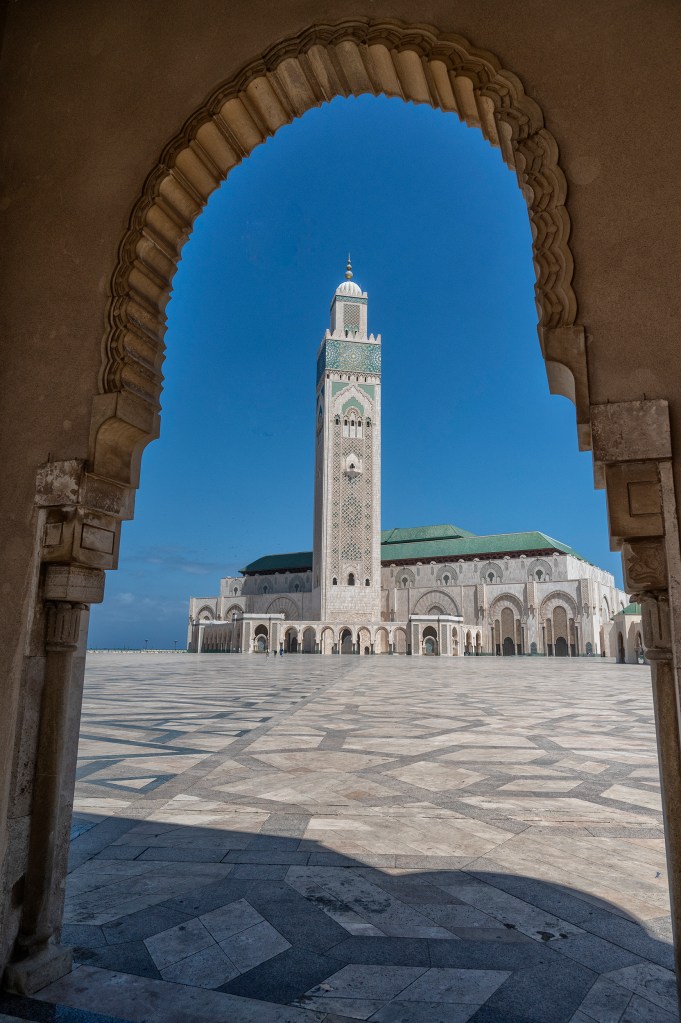
We began our recent two week trip to Morocco with a flight into Casablanca. Karen had been in Morocco 12 or so years ago, and was taken to see the Hassan II mosque in Casablanca. However the tour guide had failed to confirm that the mosque was open for visitors! So Karen was insistent that we visit the mosque on this trip, and it was open indeed.
History
On his birthday in 1980, the Moroccan king (King Hassan II) declared that the great Hassan II Mosque was to be commissioned and built giving Casablanca a unique monument. The construction of the mosque, designed by French architect Michael Pinseau, began in 1986 on reclaimed land in a dilapidated area near the ocean front. It was completed in August 1993. Almost all the materials in the mosque come from Morocco, except for the imported white granite columns and glass chandeliers (from Murano near Venice). The cedar comes from the Middle Atlas and the granite from Tafraoute.
Over 6000 Moroccan masters and artisans were employed to work these local materials into intricate decorations that embellish the entire structure.
About the Mosque
The Mosque is magnificent in size and in the quality of the building. It is one of the largest and most beautiful mosques in the world after the Great Mosque in Mecca and the Mosque of the Prophet in Medina.
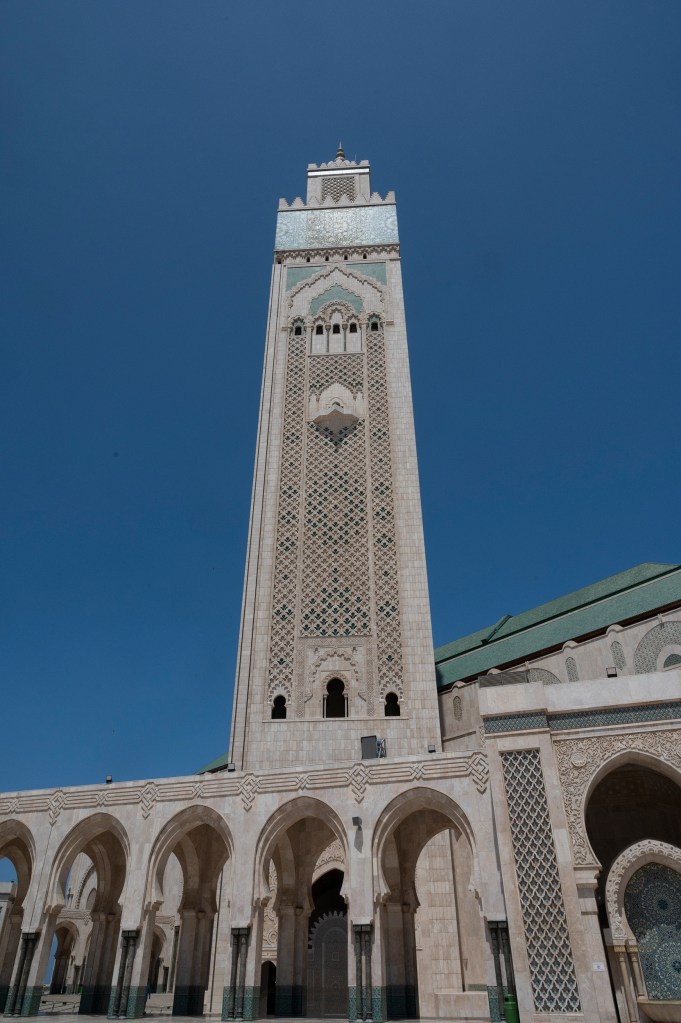
The minaret at 210 meters is the tallest in the world. A maximum of 105,000 believers can gather for prayer; up to 25,000 can be accommodated in the prayer hall, while 80,000 can be accommodated on the esplanade. The main prayer hall measures 100 meters by 200 meters, and is 65 meters high (all three measurements dd up to 365).
What to See
The mosque is open to all Muslims during prayer times. Non-Muslims can enter on tours that are held several times per day. The most distinctive feature of the mosque is its spectacular location on a platform above the Atlantic. Part of the floor is made of glass, so that worshipers can kneel right above the sea.
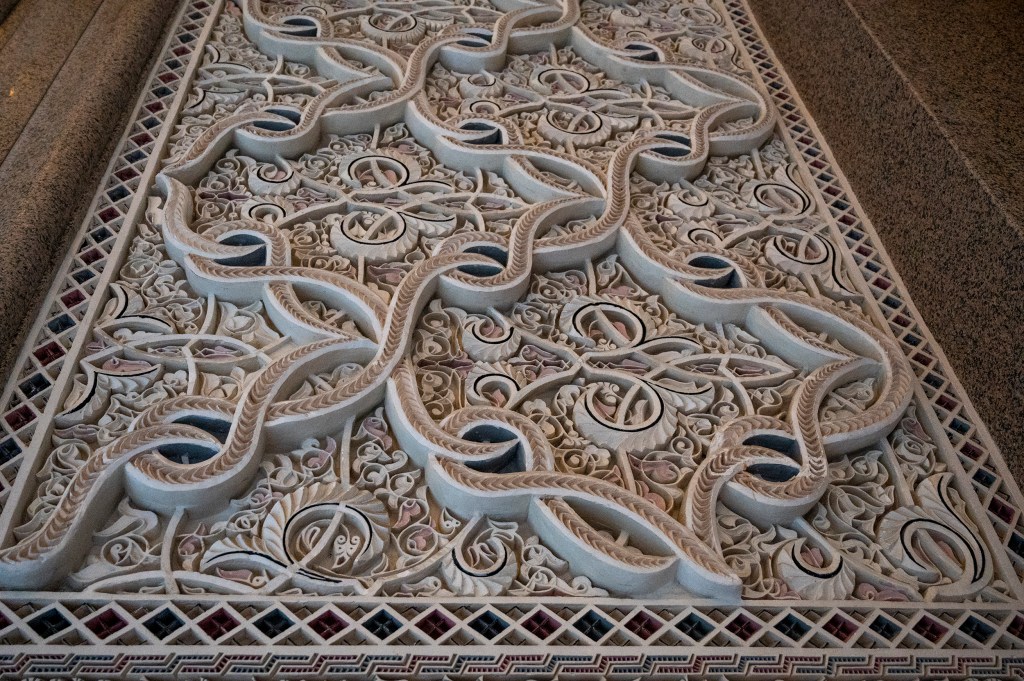
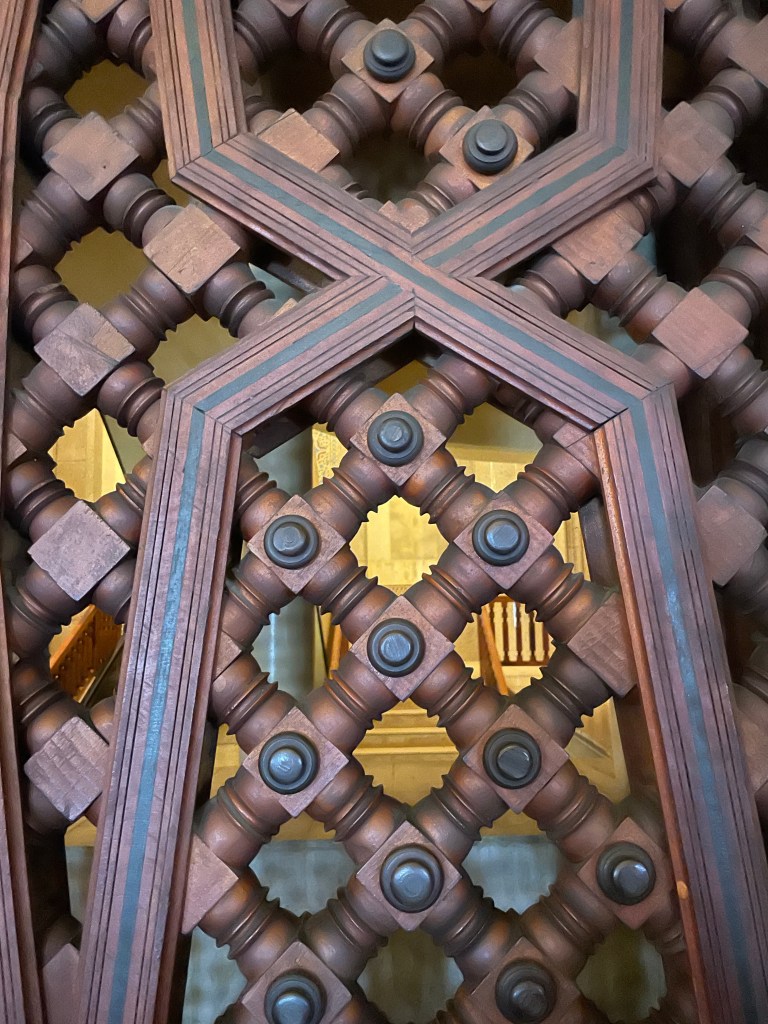
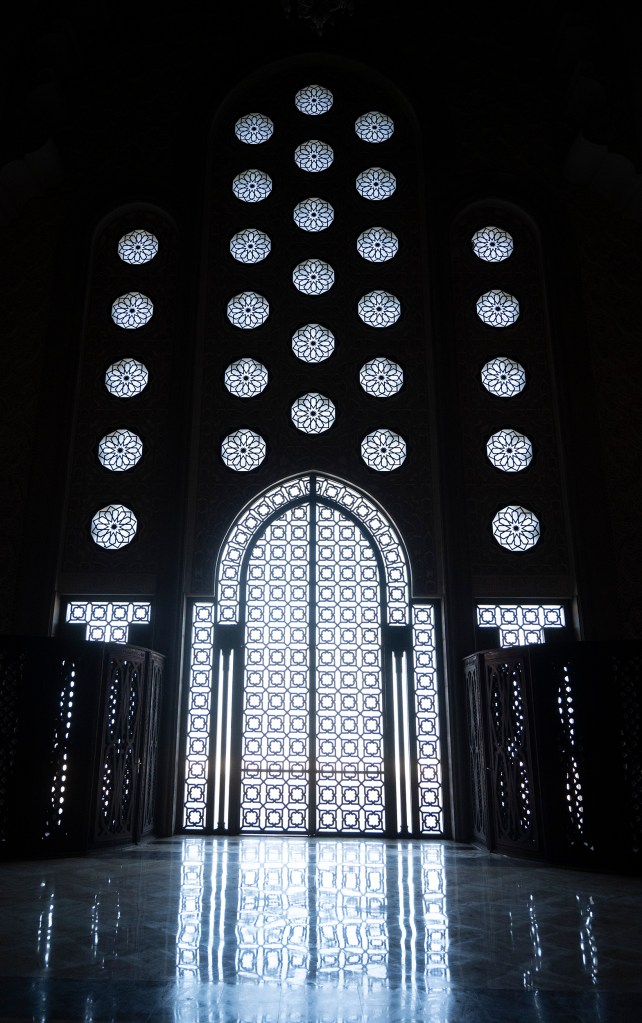
The style of the Mosque shows strong Moorish influences reminiscent of the Alhambra and Mezquita in Spain. Horseshoe arches are common both inside and inside, and the walls and pillars of the interior are finely carved in a variety of intricate patterns. There is a huge women’s gallery to the right as one turns from the prayer area, which is beautifully carved out of dark wood. On the ground floor, there are Turkish style baths and fountains for washing.
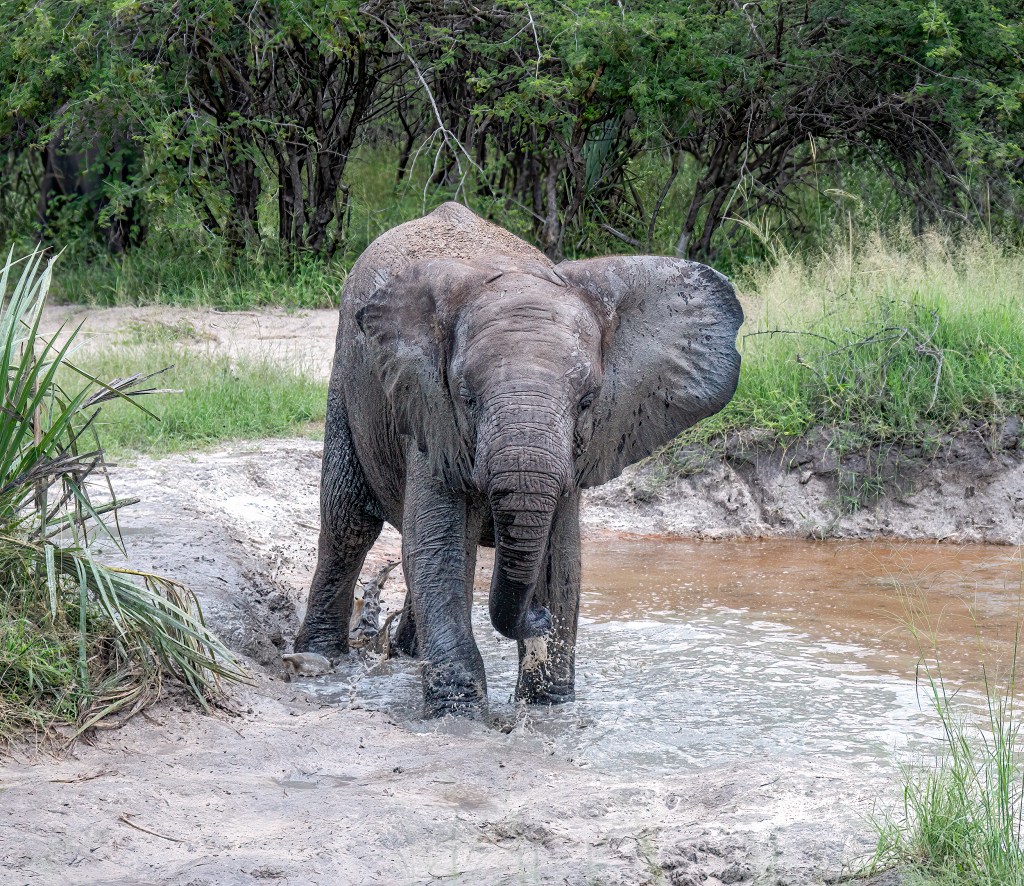
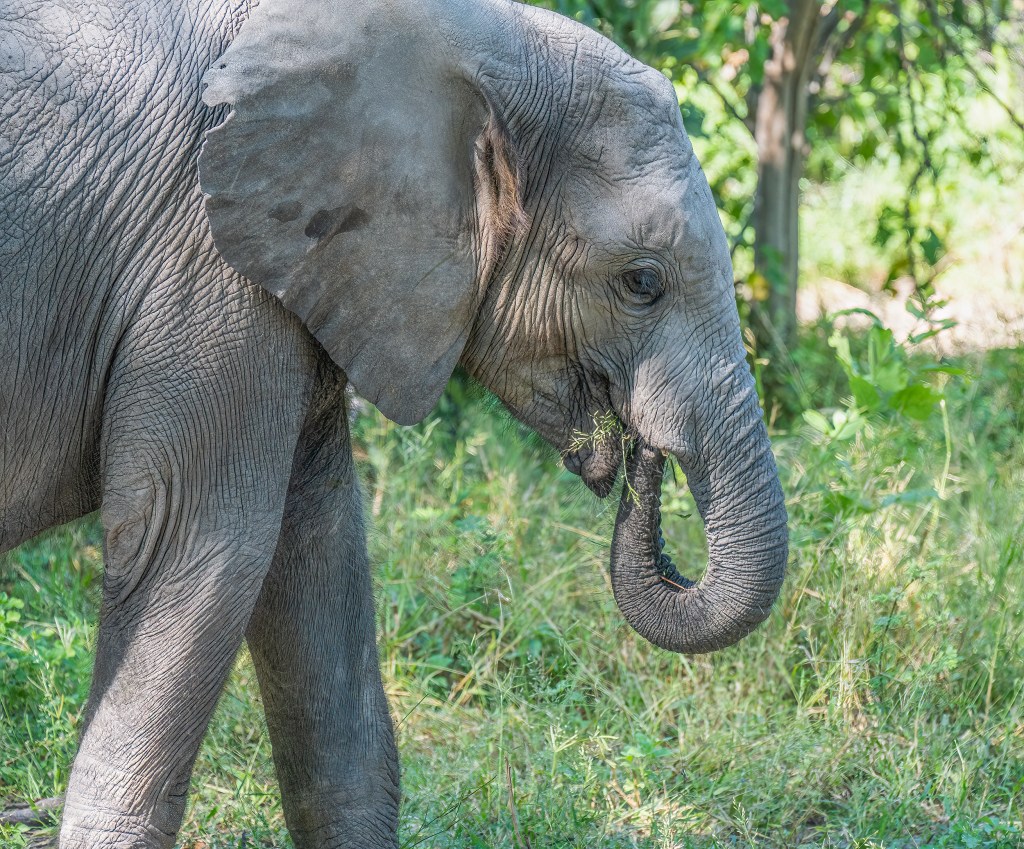
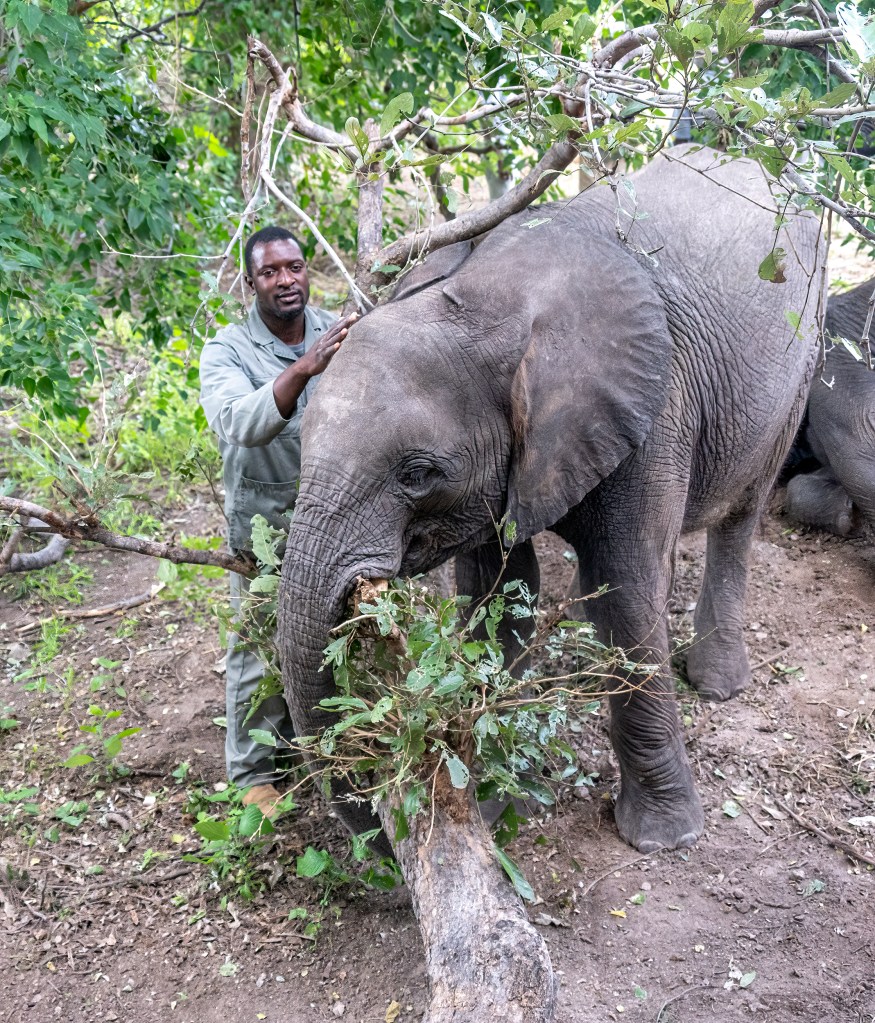
Elephant Havens was established with the primary goal of rescuing baby elephant orphans, raising them and ultimately releasing them back into the wild as young adults. The charity hopes to become a leading voice in wildlife conservation awareness and wildlife protection. However the little elephants also insist that the charity engages with their human neighbors as part of the mission.
Community Outreach
Elephant Havens has hired all local Botswana staff from the Delta area and immediate community. As of today EH employs 24 people, impacting them and their families.
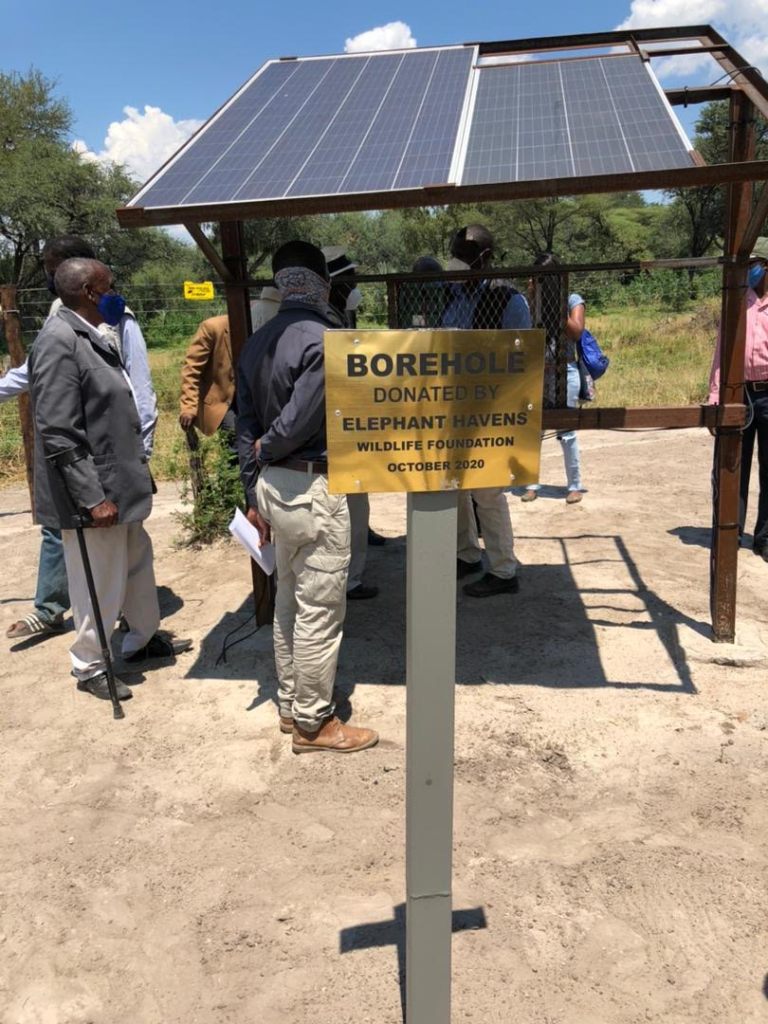
EH has successfully drilled three water wells for the local community to provide the first ever fresh drinking water to the area.
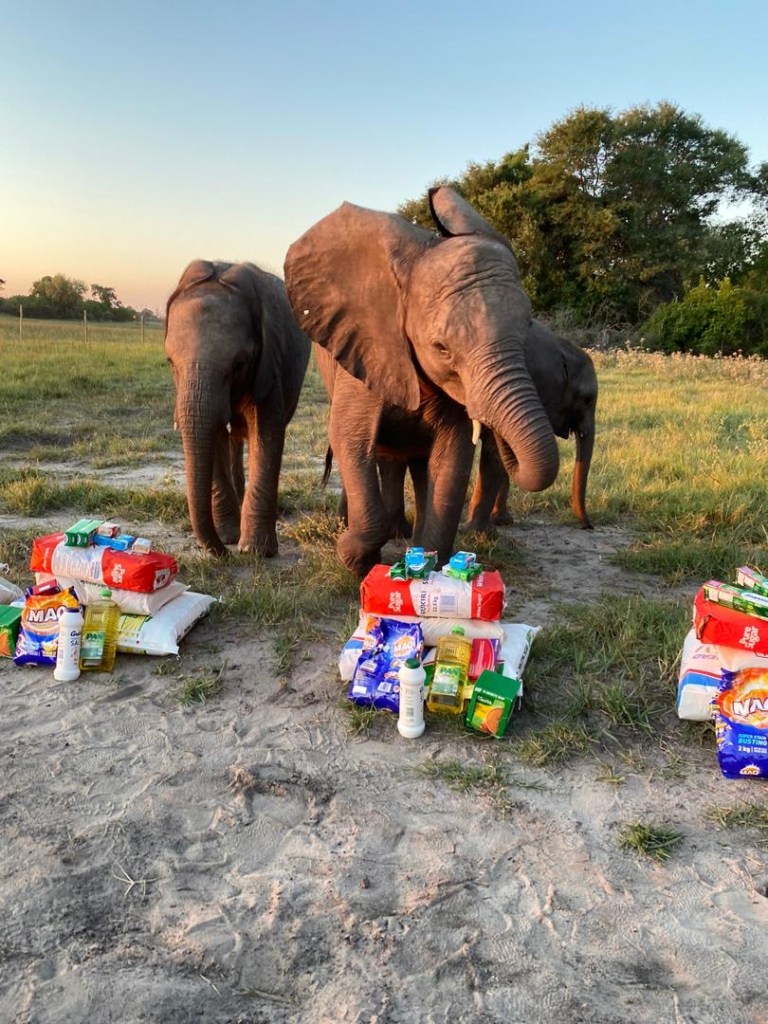
The Foundation has initiated outreach to those most in need and are feeding those folks who the team can identify as most critically affected by the covid shutdown.
Several recent initiatives have been to complete or repair new bridges over flooded channels that lead to the community.
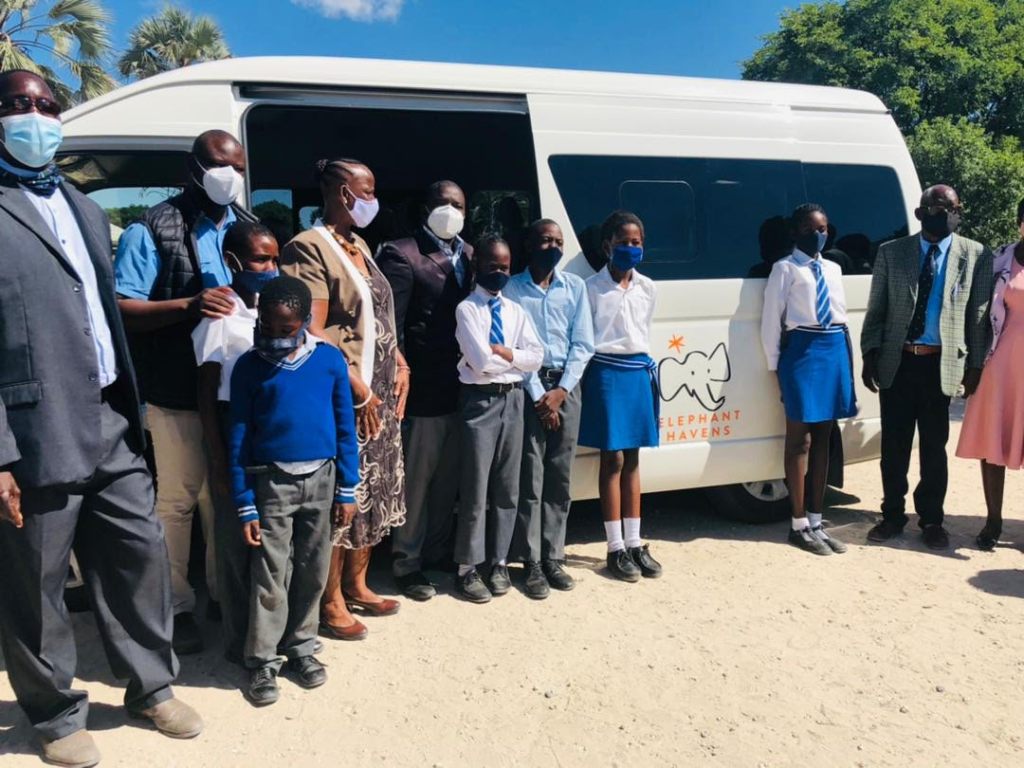
EH has acquired a new Toyota bus, and makes four trips each morning and four trips each afternoon to the local school. The local children can now avoid the dangerous miles-long trek to school through corridors used by elephants moving between the water and the mopane woodlands.
The bus has proven to be such a success that the local school now overflows with students. EH is providing tents as classrooms to shelter the overflow and provide the opportunity for more children than ever to engage in learning.
EH is providing school uniforms and shoes for 150 students, with the uniforms to be sown by local tailors.
EH supports local women by training them in the craft of paper-making using elephant dung. These ladies are making quite a successful business out of their beautiful paper products that are sold on the property.
EH has built toilet facilities for the local community center.
EH has established relationships with local leaders and classrooms of students. Several classrooms of students have visited the orphanage and had their first positive interaction with elephants.
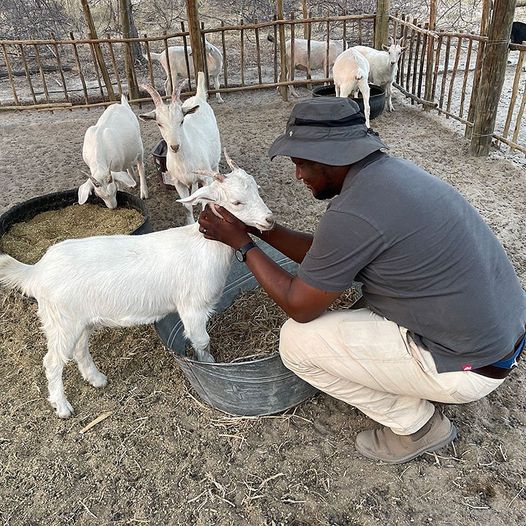
EH has recently provide 100 milk goats to ten local farmers to raise and sell goat milk. This product is very beneficial to the young elephants. Each farmer will tend to their goats, provide milk to EH until the value reaches the original cost of the goats. At that point the farmers will own the goats and will sell the milk to EH.
Partnership
EH is approved as one of 12 wildlife partners with the Dallas Zoo.
Dallas Zoo interns chose EH as their conservation project and raised $20,000 for the Foundation.
EH’s Botswana vet, Dr. Comfort Nkgowe, visited Dallas and Houston zoos to tech and learn.
The Dallas Zoo has provided some of the equipment as well as specifications for the establishment of a proper “bush” veterinary lab. They also sent two of their employees to help set up the lab and train the local team in Botswana how to do simple lab tests.
MmaMotse (means Haven)is the first elephant rescued by EH when just over one year old. She was orphaned because of suspected poaching. She is now almost five and is the matriarch of the group.
Lerumo (with Sandy)
Lerumo (means Bullet) is just over four,and female. She was rescued at 3 1/2 after being shot resulting in a gaping hole in her trunk. Nursed back to health she has become a very sweet baby girl.
Tsholofelo
Tsholofelo (means Hope) is just over four and male. He was rescued at 1 1/2 years due to drought conditions in Eretsha.
Bokamoso
Bokamoso (means Future) is a one 1/2 year old female, rescued at 10 months. Boko is very feisty but loves contact with the handlers, and Debra for sure!
Mofalodi
Mofalodi (means Survivor) is just over three and a male. He was rescued at 1 1/2, orphaned because his mother died of cyanobacteria in the panhandle of the Delta. He loves his milk and Bee’s thumb!
Sandy
Sandy was named in honor of Alexander McCall Smith, the famous Scottish author. He is 2 /1/2 years old, rescued at 1 year when his mother was killed by humans. He was featured in the book called How to Raise an Elephant, a volume in The No. 1 Ladies Detective Agency series.
Tshepiso
Tshepiso (means Promise) is 3 1/2, rescued at 9 months after her mother was killed by humans. She was very traumatized for some time, probably because she had seen her mother killed. After MmaMotse weeks with her in the boma, and she has become quite relaxed and fond of oranges.
Bonolo
Bonolo (means Calm) has just turned five. She was rescued at age 2 1/2 when her mother was killed by poachers.She was born with just one tusk, apparently quite common. She is a calm, sweet girl.
Seloko
Seloko (means Mud) is just over two, and was rescued at 1 1/2 when she became stuck in mud, and was abandoned by the herd. He has become very attached to his bottle, and hates to give it up.
The original site of the orphanage has tripled in size and includes a mud wallow and sand bathing area as well as plenty of browsing and grazing habitat. Local tribal authorities, land boards and communities have gifted Elephant Havens with 840 acres of additional land. This will be used for soft release of the elephants as they outgrow the nursery at age 4-5. They will then spend 5-9 years with little human contact before reintroduction into the Delta.
There are 13 enclosed boma area (enclosures), plus 2 bomas for the temporary quarantine of new elephants. We are currently raising 9 orphaned elephants, all under five years of age.
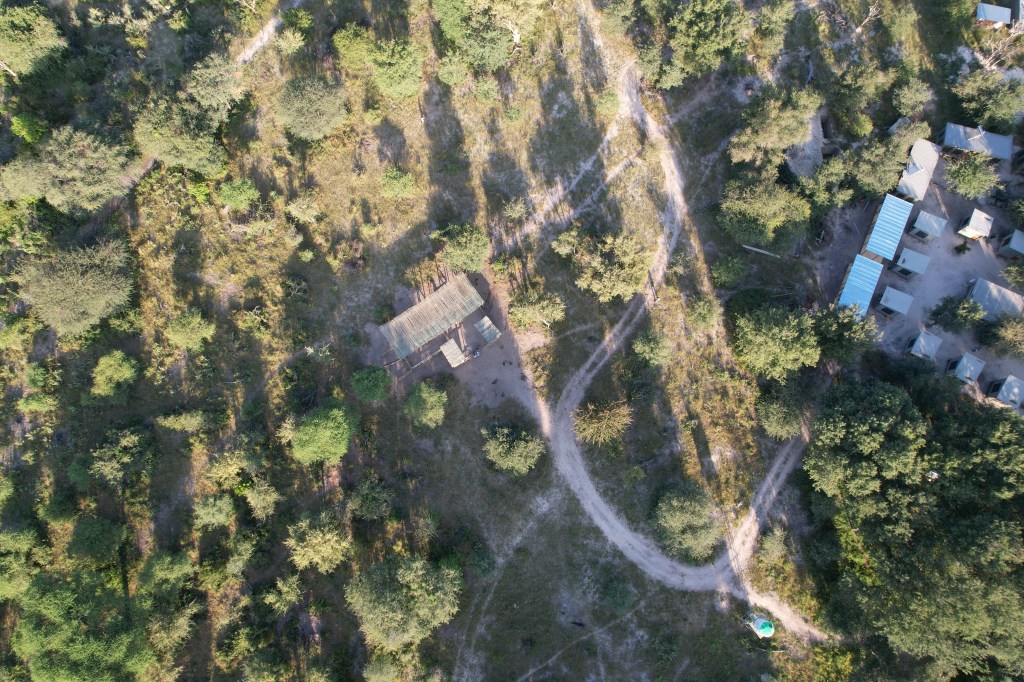
On-site the facilities include an elephant formula prep kitchen, laundry, laboratory, food and medical storage room, refrigeration for elephant medicines and formula, and a scale for weighing the elephants.
The site is fully fenced with an adult elephant-proof solar-powered electric fence, as specified by Botswana wildlife officials.
The guest reception area includes a kitchen, dining room, meeting room and bathroom, as well as a lovely expansive porch.
The staff village is home to 15 on-site staff members. The project requires satff on duty 24 hours a day, 7 days a week.
Many of you know that we are huge fans and donors to a wonderful charity called Elephant Havens Wildlife Foundation, the principal funder of Elephant Havens in Botswana. I am taking the liberty of plagiarizing their written information, but I want to provide my subscribers and readers a detailed description of this venture. Karen and I became involved originally when we met Boago Poloko, the elephant handler at Abu, in 2015. This meeting and a friendship on Facebook evolved into us meeting Scott and Debra in 2018. We were enthralled with their plans and we became an early donor to the foundation. Our admiration for Bee, Debra and Scott and their dedication to protecting the elephants and providing aid and comfort to the local community has only deepened with the passage of time.
About Elephant Havens
Debra Stevens and her husband Scott Jackson have been trekking to Africa from the US since 2000. Over the years, they fell in love with the villagers and wildlife. But it was on a visit to Botswana in 2013 when Debra met a 6-month-old orphaned elephant named Naledi that her life changed forever. The connection between them was instantaneous and a lifelong bond was created.
The possibility of saving more orphaned or abandoned babies like Naledi inspired Debra and Scott, along with their local Botswana friend and experienced elephant handler, Boago Poloko, to found the non-profit Elephant Havens Wildlife Foundation in 2017. This mission to protect and preserve the African elephant was truly founded by love.
Elephant Havens Wildlife Foundation was formed in 2017 as a 501(c)(3) non-profit corporation based in the US. The US charity supports Elephant Havens operating in Botswana as a separate Botswana charitable trust. In 2018 the Trust was awarded a one-of-a-kind permit by Botswanan authorities that allows the team to quickly rescue and move orphaned and abandoned elephants and raise them with the goal of returning them to the wild – a project that will take more than ten years from the time of rescue for each elephant.
Through habitat protection, community outreach and the rescue and hand-rearing of young elephant orphans, Elephant Havens aims to become a leading voice in wildlife conservation awareness and wildlife protection.
With funds from generous donors, we built the Elephant Havens orphanage on the edge of the Okavango Delta. With more than 850 acres of land, this sanctuary for abandoned and orphaned elephants is a safe place for them to be cared for until they can be reintroduced into the wild. We encourage both foreign visitors and local community members to visit and learn more about these remarkable animals.
We are also working to bridge the gap between communities and wildlife. By educating local communities on elephant behavior and habitat protection, we hope to instill an understanding of the benefits of conservation. Beyond this we also work with the local community to provide resources that make a positive impact on their lives.
Our team in Botswana is creating educational activities and experiences aimed at helping people of all ages to understand and appreciate wildlife and wild lands, encouraging people to take action to conserve it now and for future generations.
The Founders
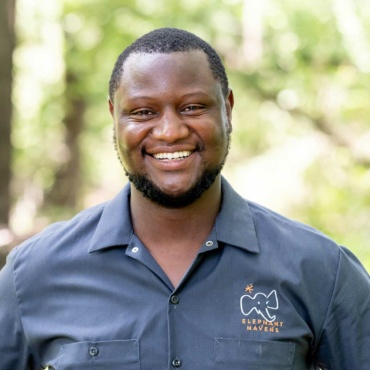
Boago Poloko, or “Bee”, has been part of Elephant Havens from the very beginning. He is a third generation elephant handler who was raised by his handler father and grandfather. Bee is also a licensed safari guide and a naturalist. In the past he worked at Abu Camp supervising a healthy breeding herd that lived as wild elephants during the day and returned home to the bomas at night. There he learned how to raise these deceptively fragile orphan elephants to adulthood. At Elephant Havens, Bee manages our team of handlers and oversees all aspects of rescue and care of our elephants.
Debra Stevens learned how enticing elephants are as a species after she met and fell in love with a 6-month-old orphaned elephant on one of her many trips to Africa. These animals so need love and connection to community that they simply can’t live without it. She is determined to give orphaned and abandoned babies a “family” of both humans and other elephants so they can thrive and eventually be reintroduced to the wild. Debra is chief fundraiser and evangelist for Elephant Havens and travels fro Dallas to Botswana every other month to bond with the elephants and work with the team there.
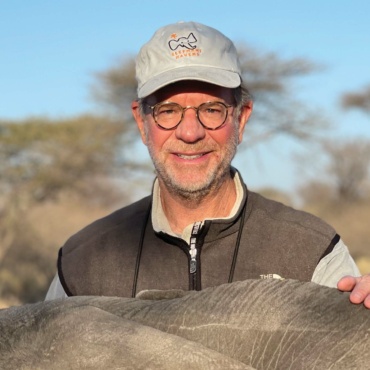
Scott Jackson was introduced to Africa by Debra on their honeymoon. After decades behind a desk he found that in Botswana and other areas of sub-Saharan Africa, the human footprint was light and at every turn there was something new to discover and learn. He quickly developed the same passion for elephants that his wife has always known. While maintaining his regular real estate law practice in Dallas, Scott also guides the U.S. charity’s grant writing efforts and helps coordinate operations on the ground for projects in Africa, from elephant care to construction and insurance, land acquisition to permit procurement and more.
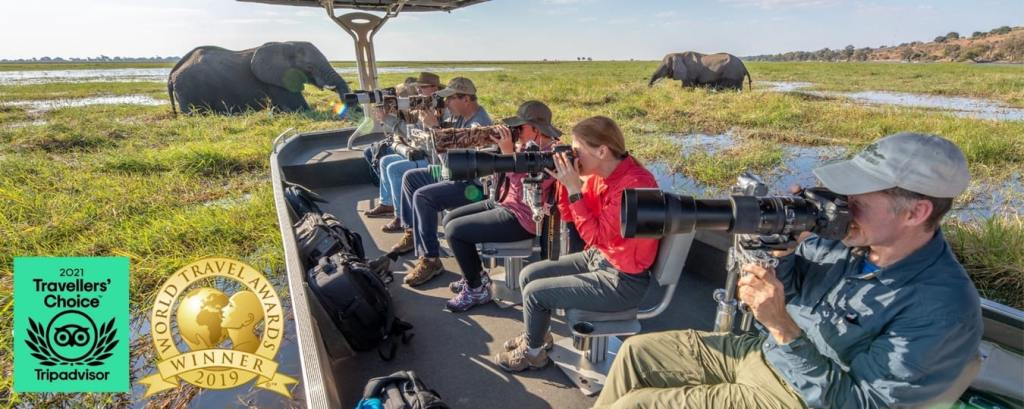
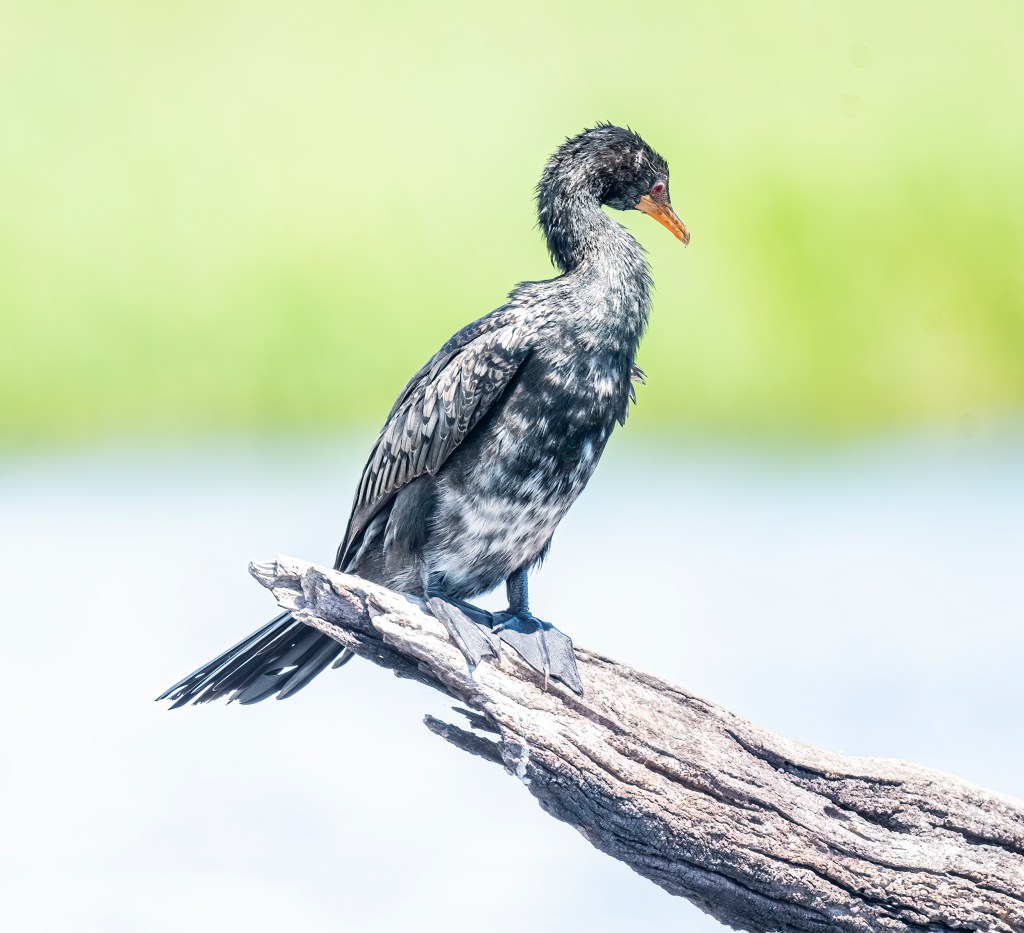
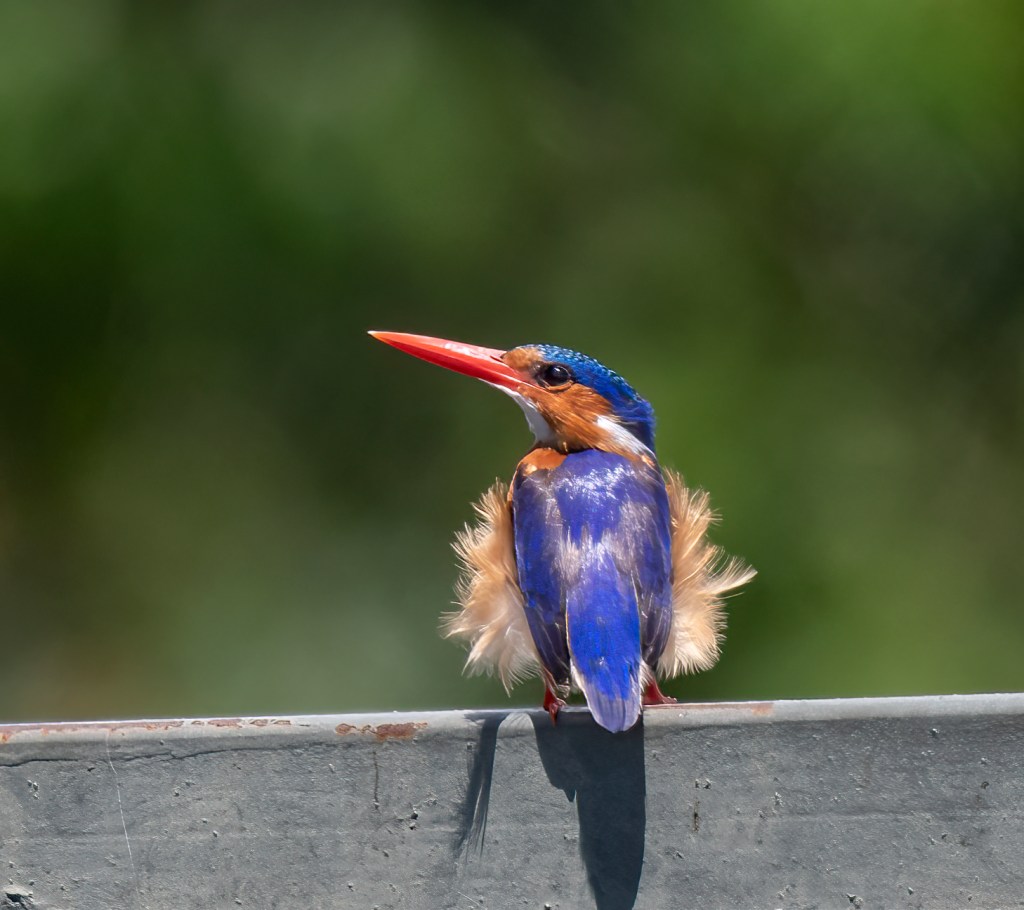
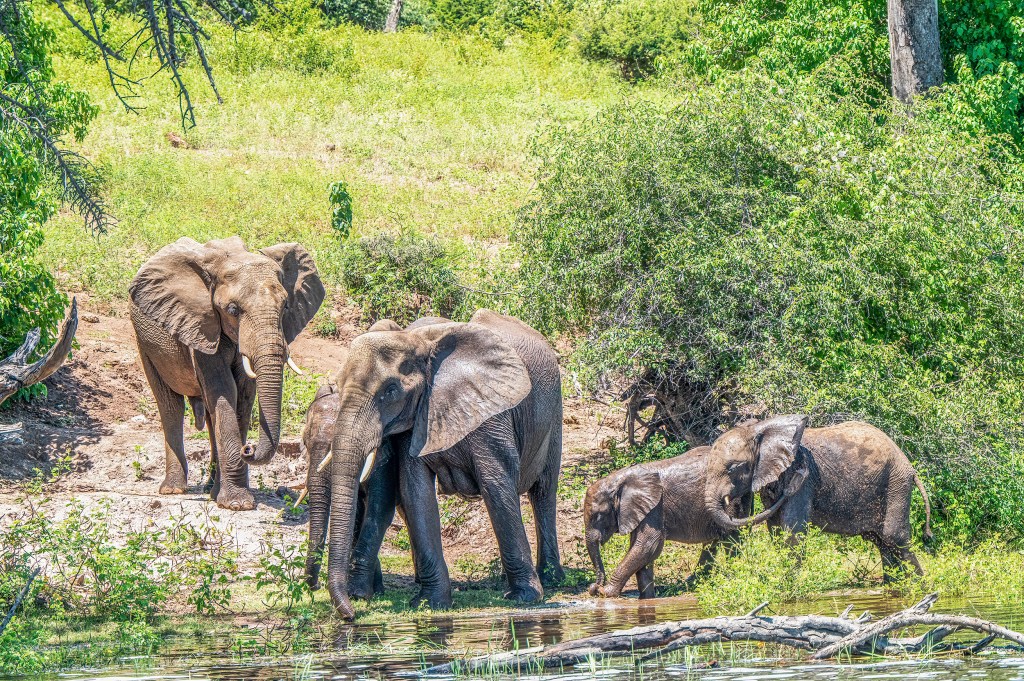
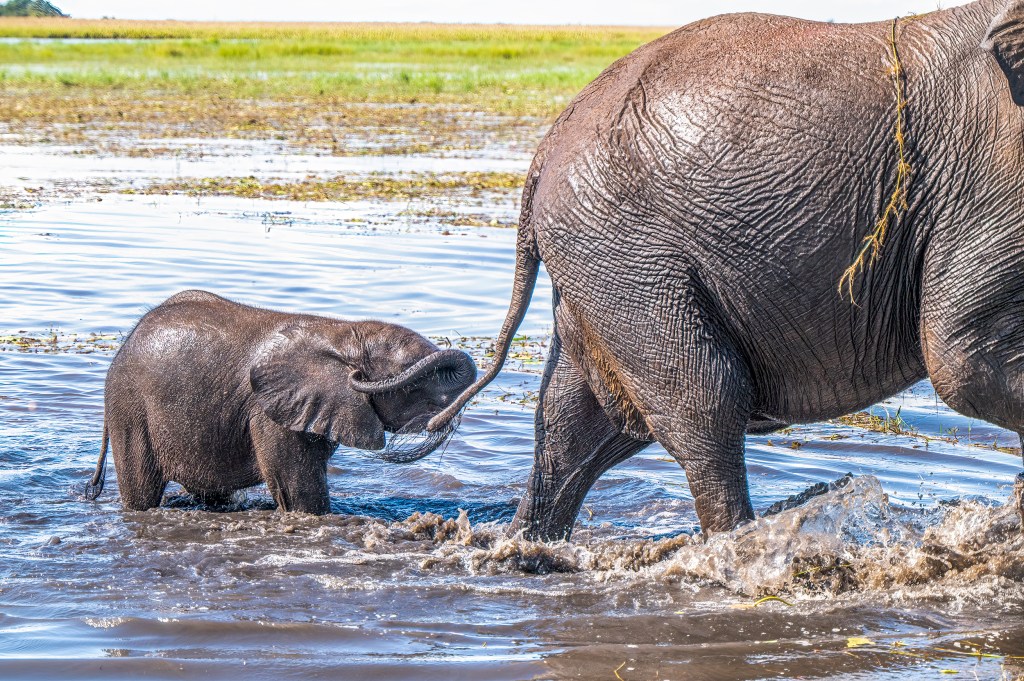
Our last stop (before returning to Elephant Havens) was an overnight visit to Pangolin Photo’s lodge in Kasane. Our plans were to participate in two safari boat adventures with Pangolin, one in the latter afternoon and the second early the next morning. In the meantime we enjoyed our overnight including dinner and breakfast with a small group of photographers and the Pangolin staff.
Botswana, Africa photo safari in Chobe
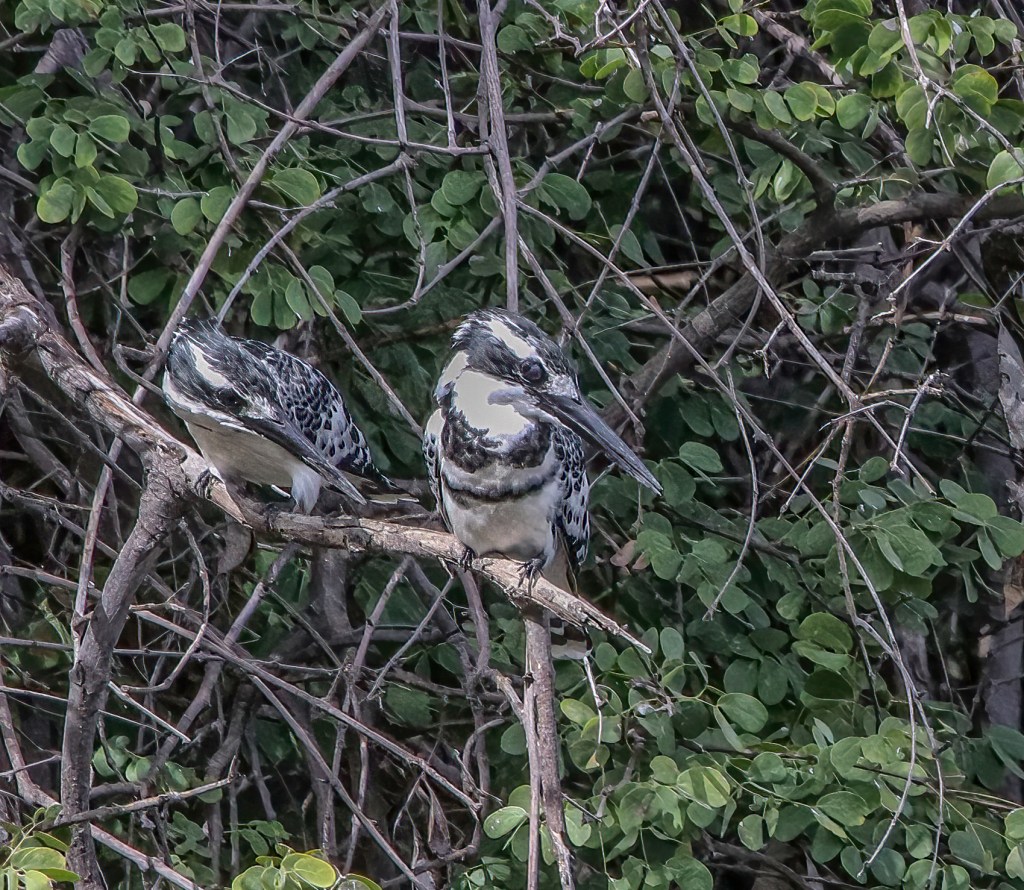
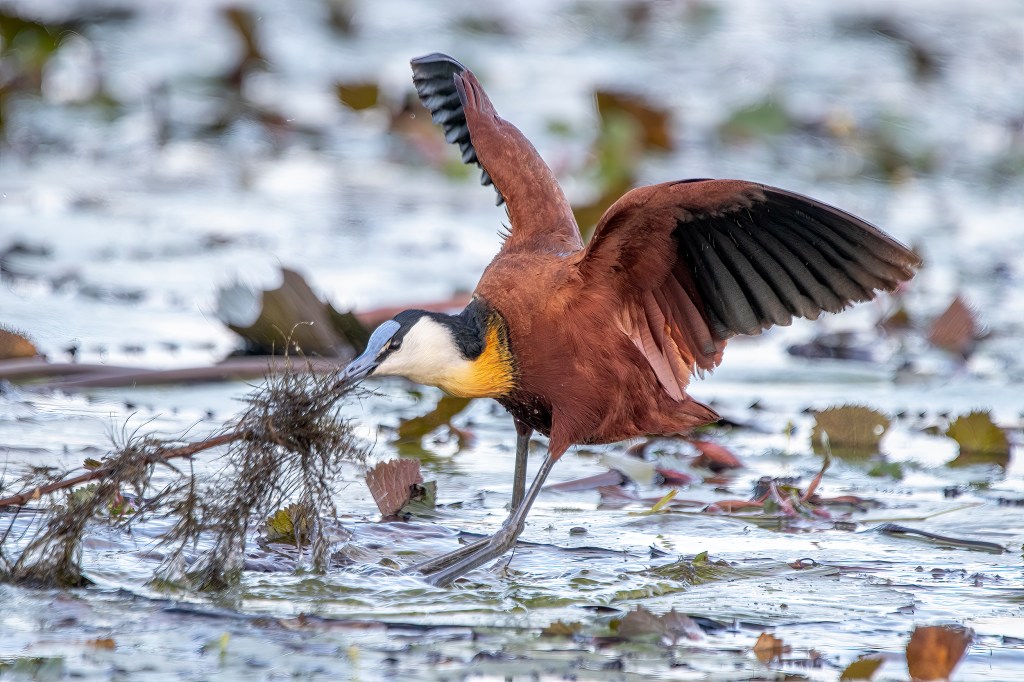
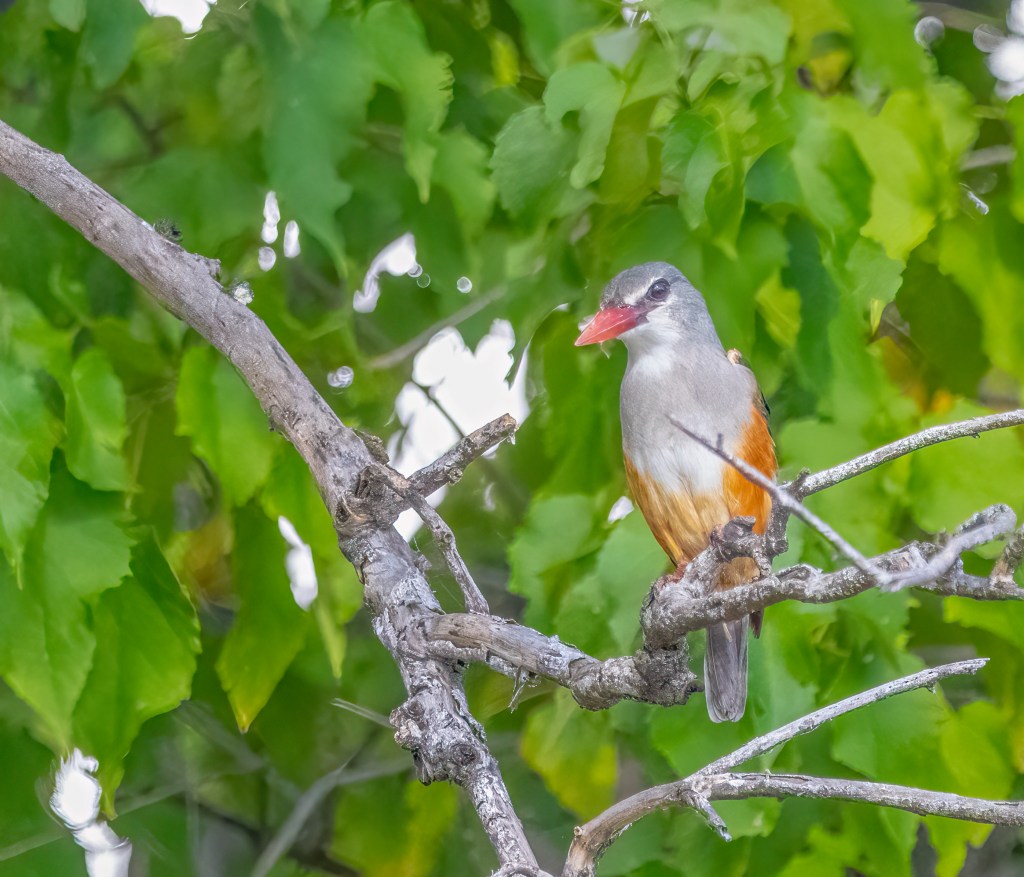
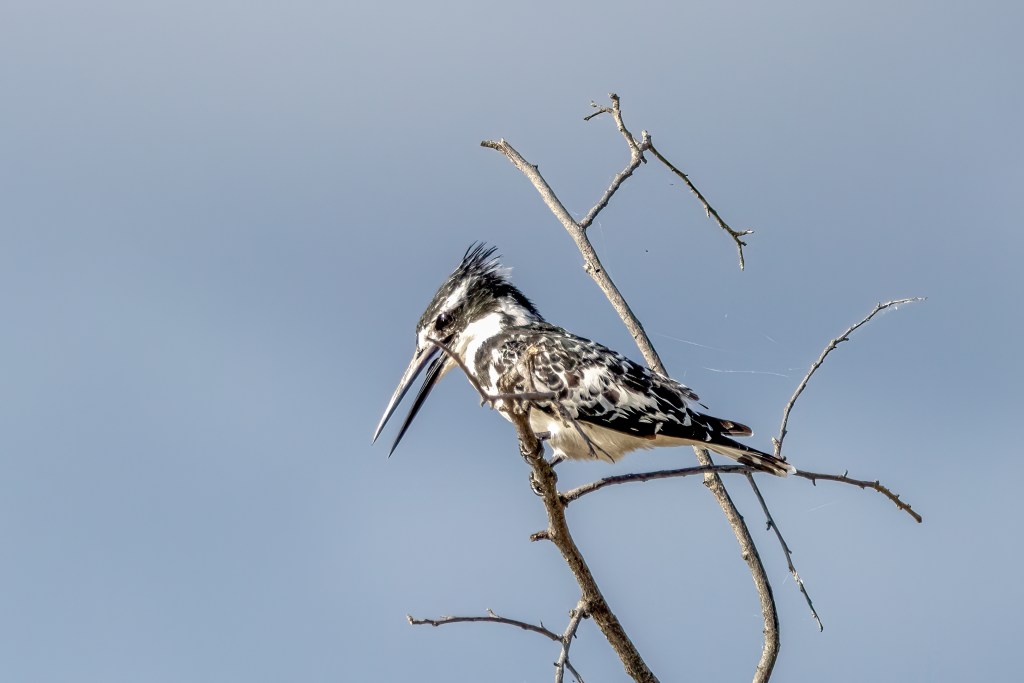
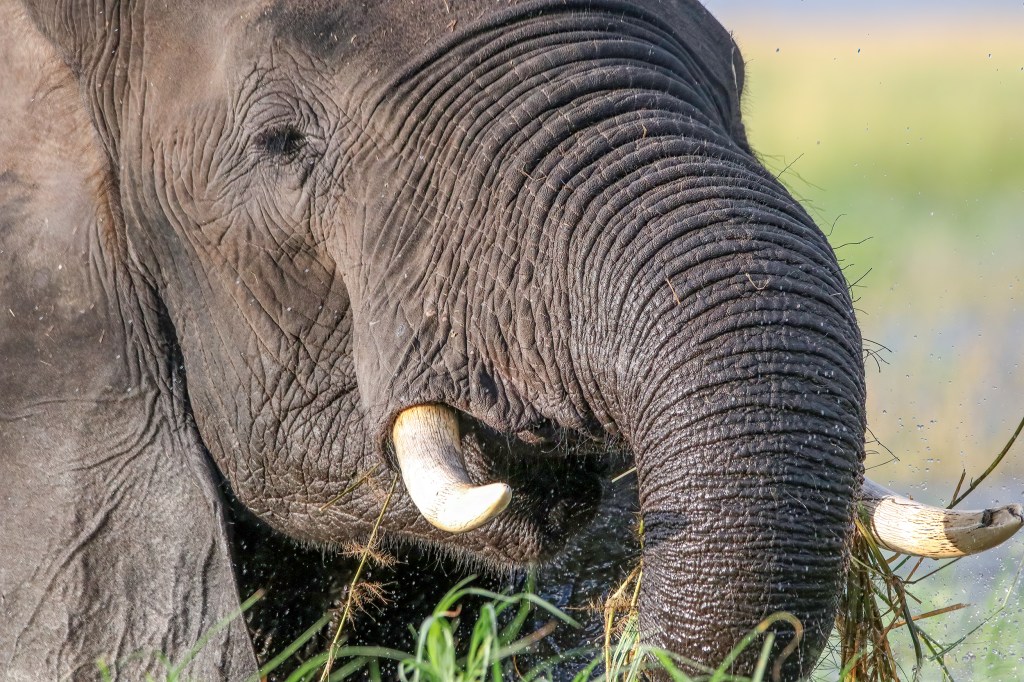
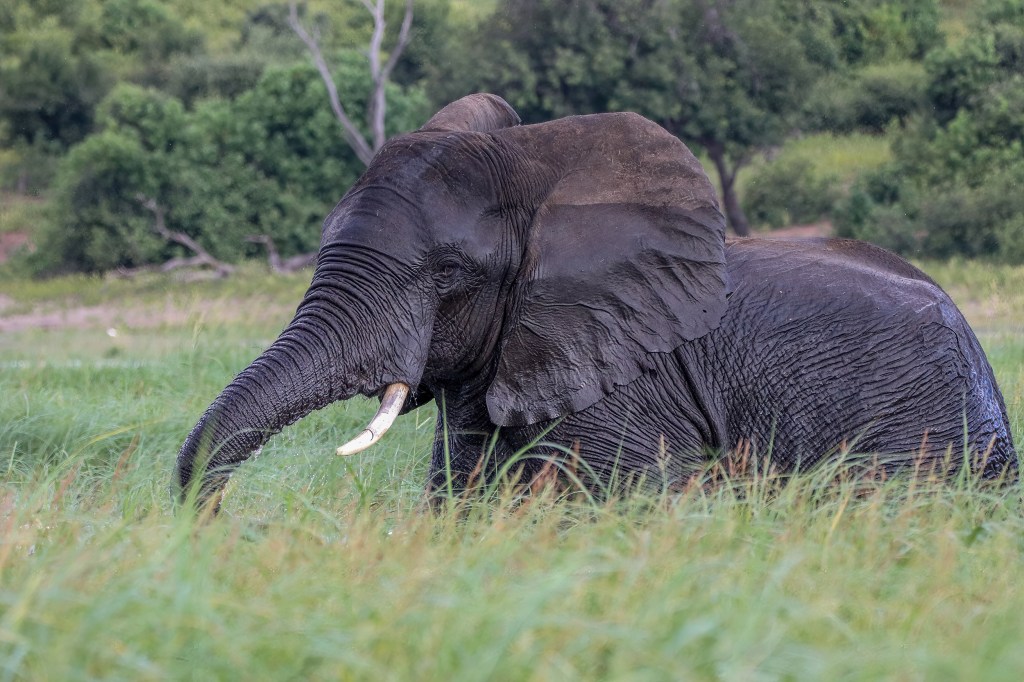
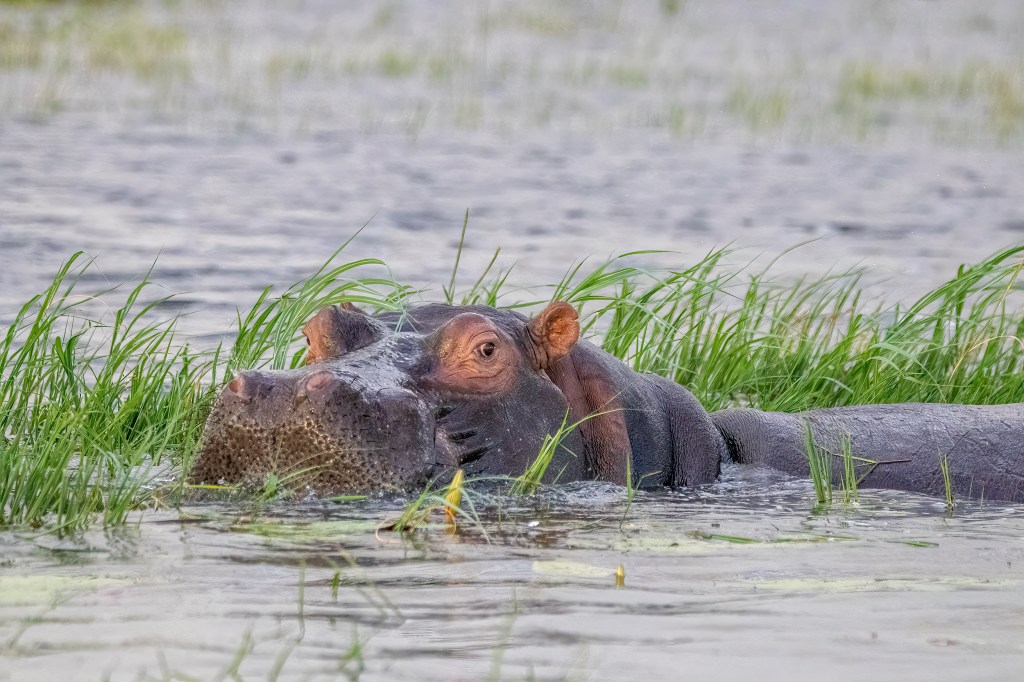
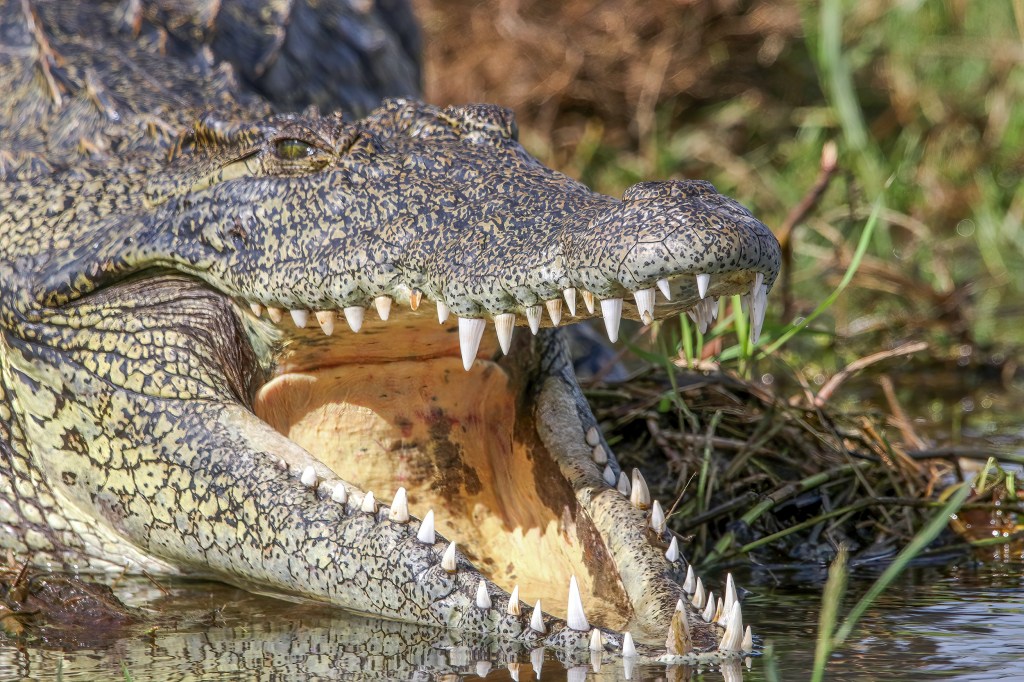
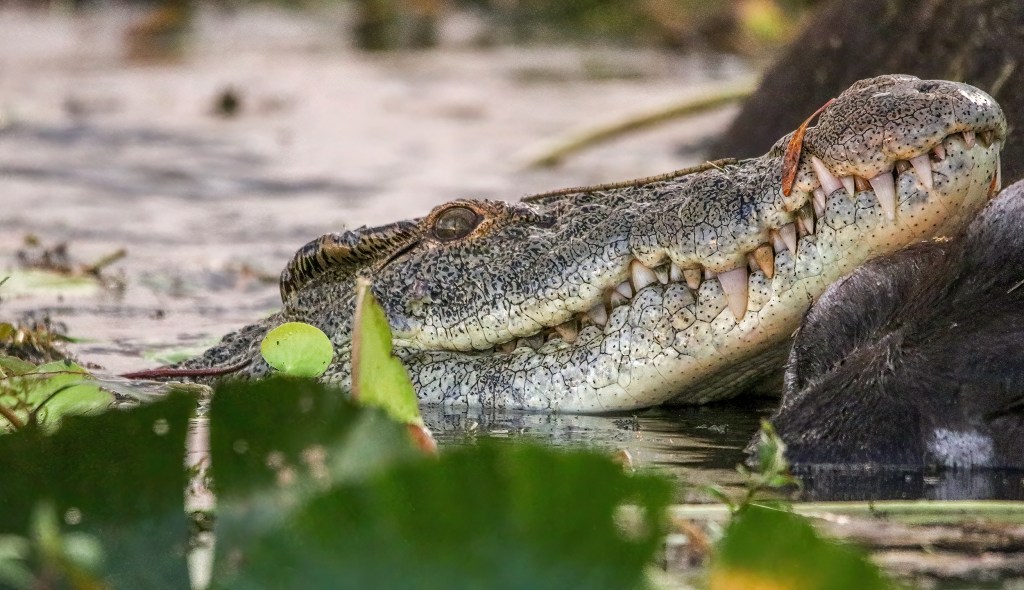
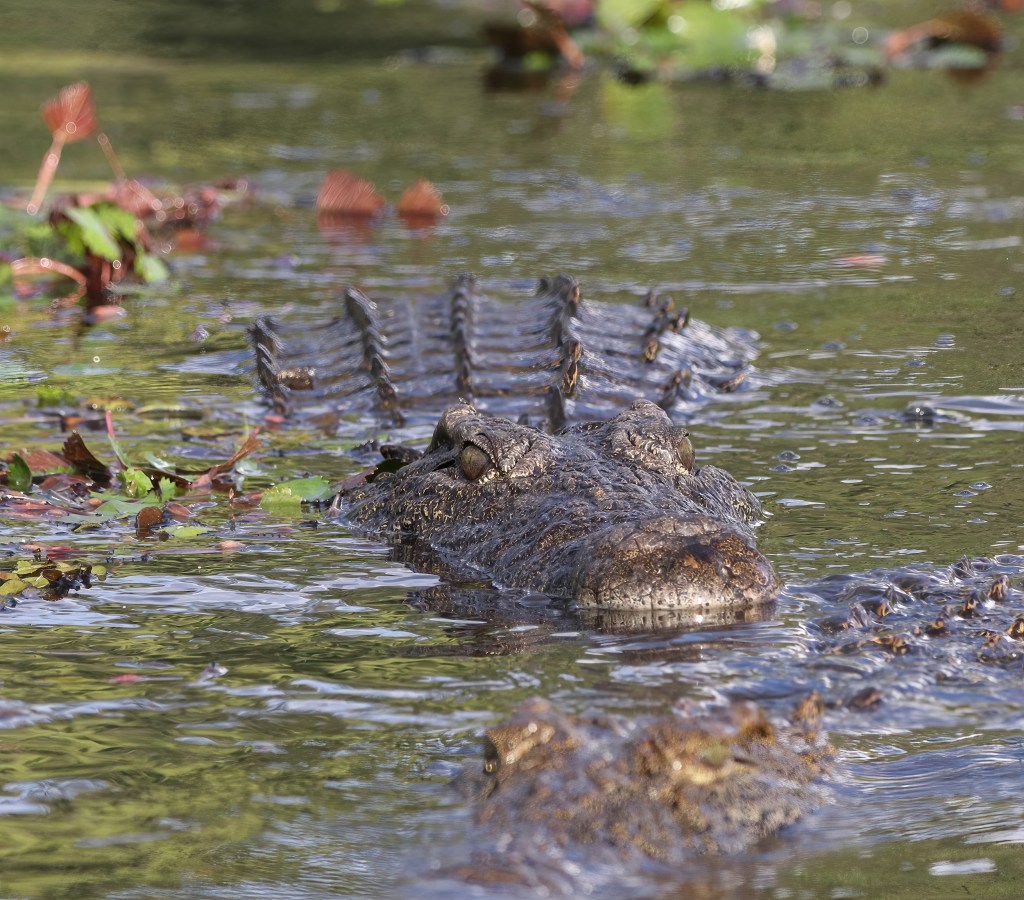
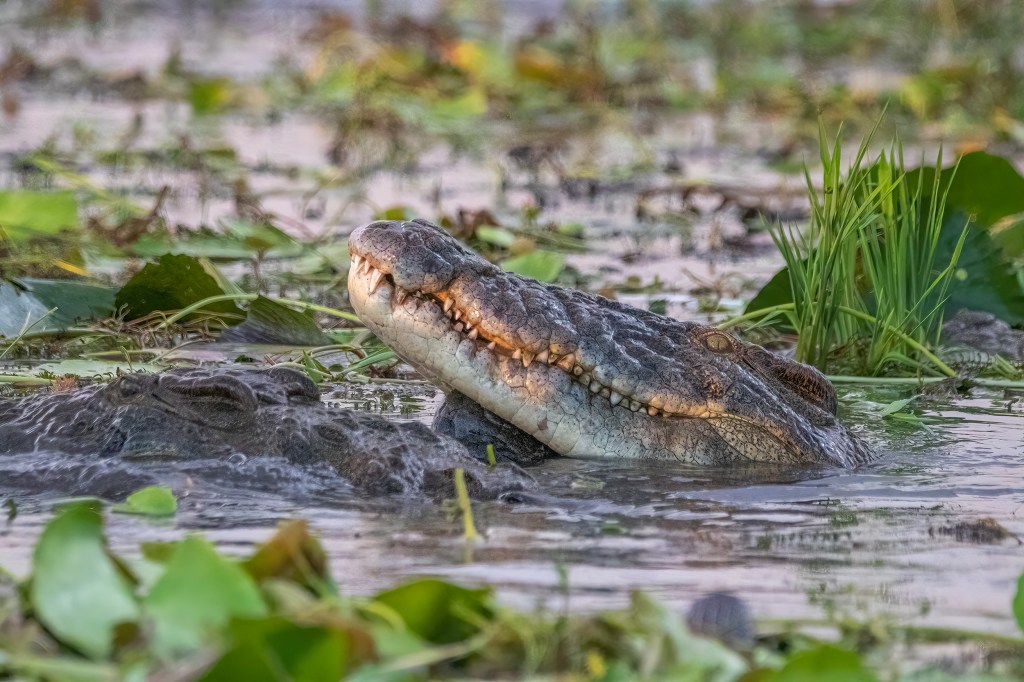
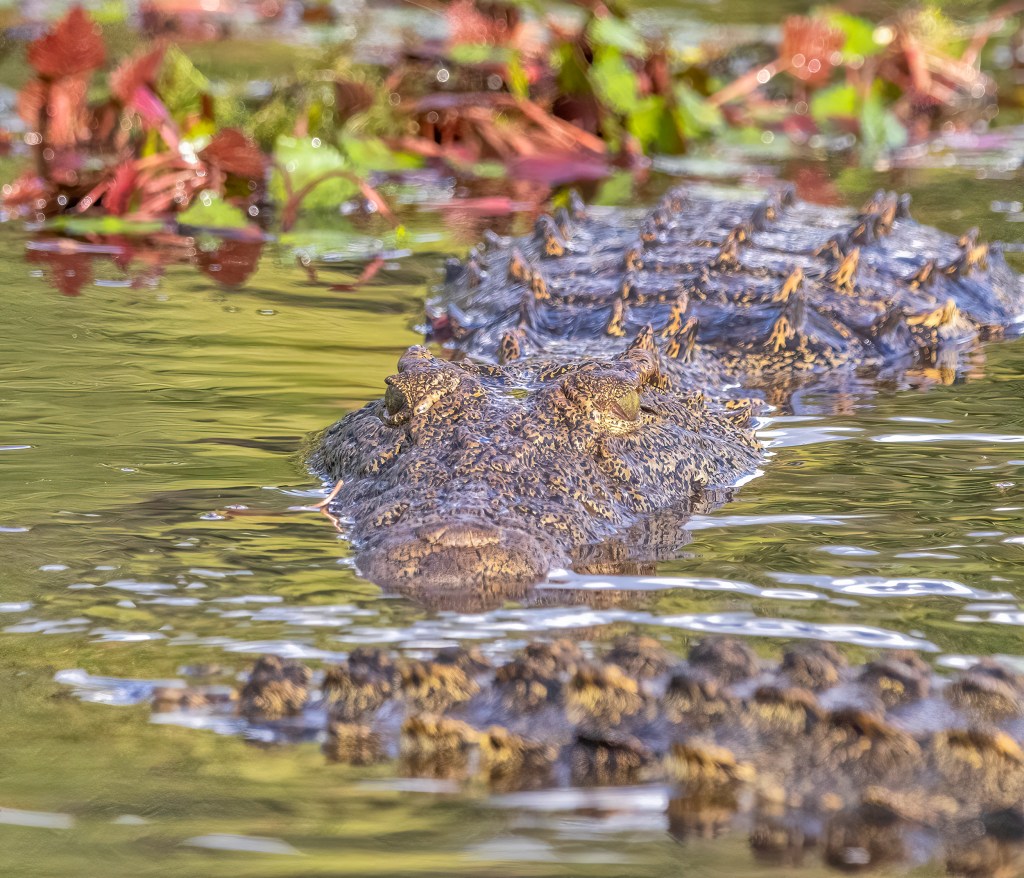
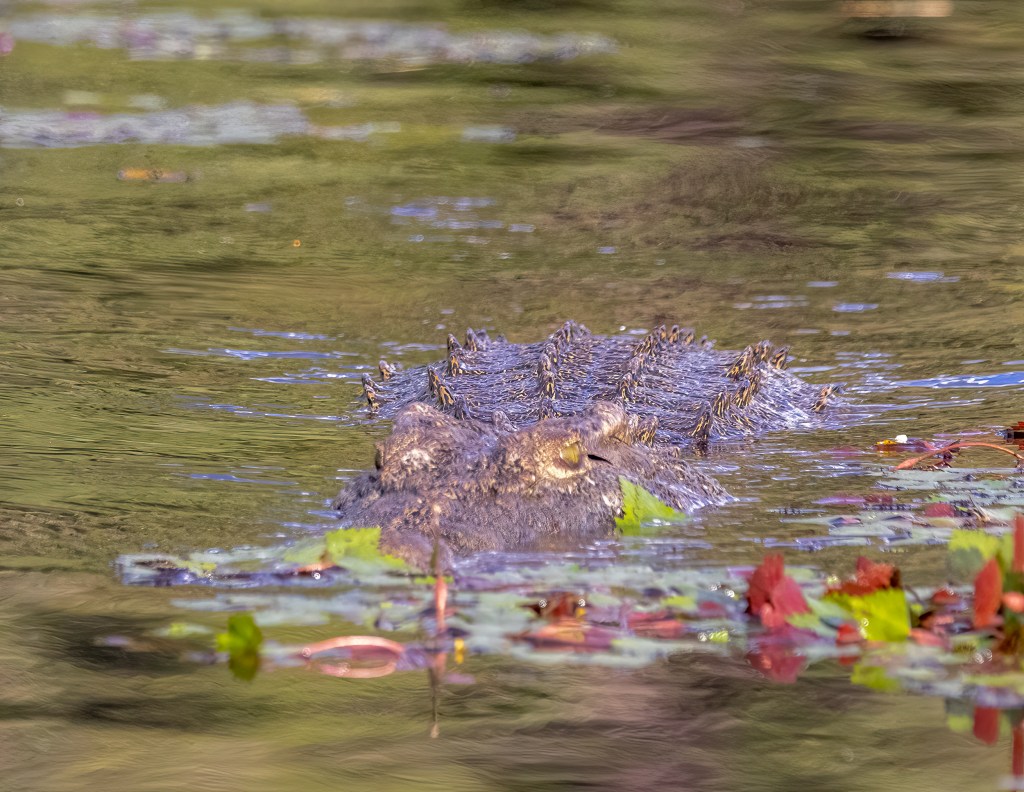
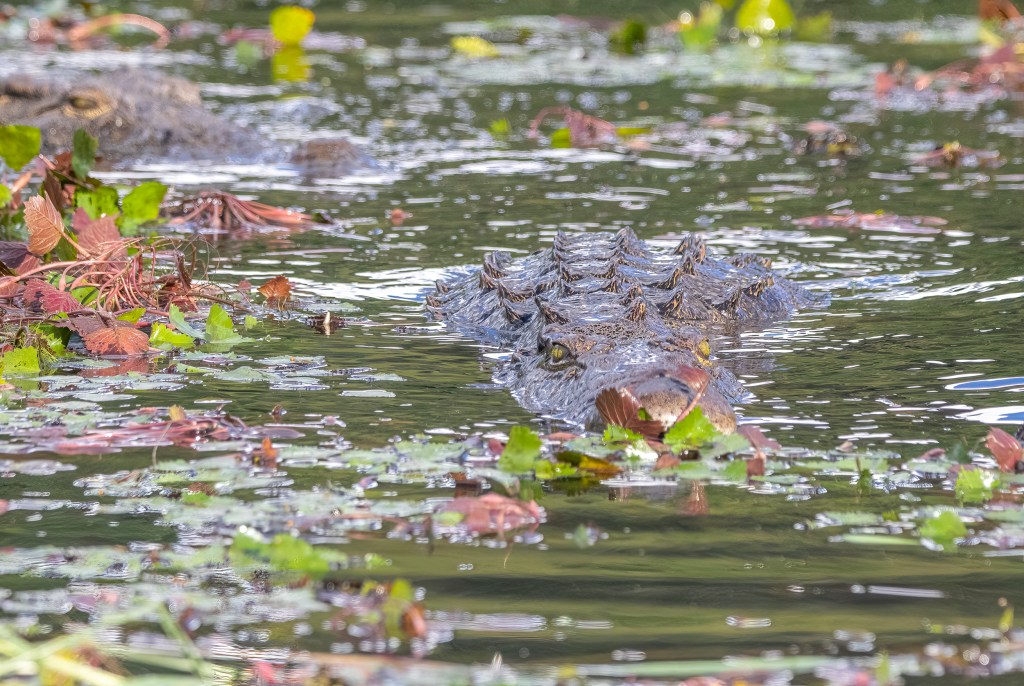
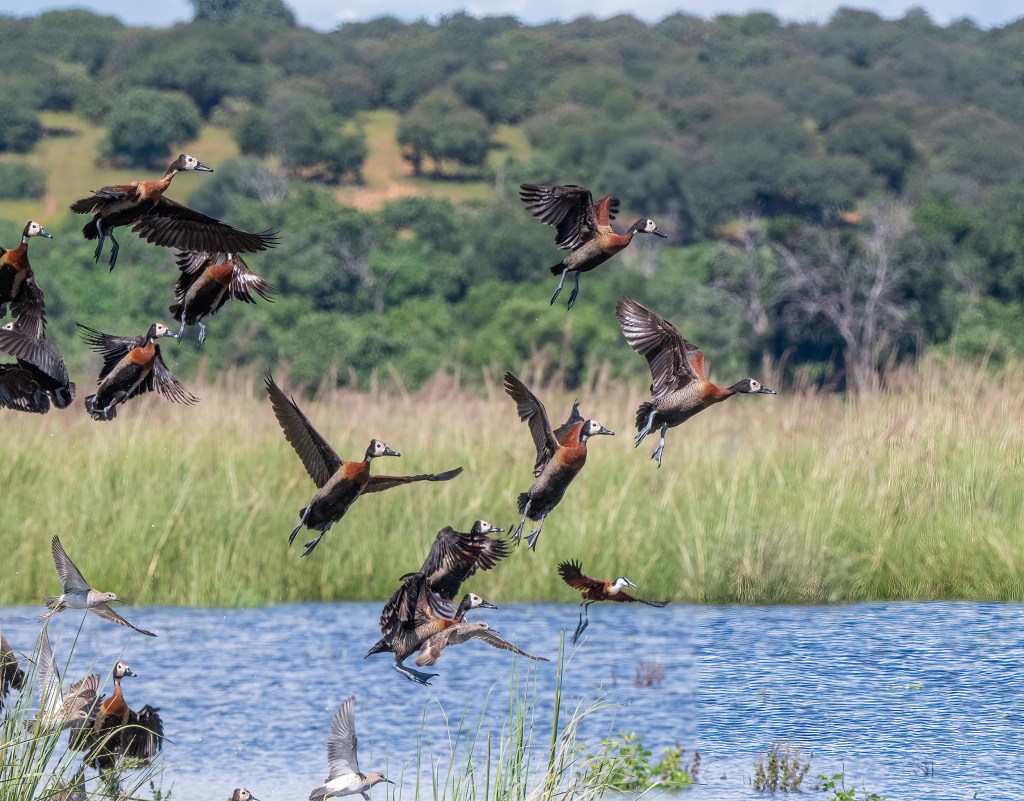
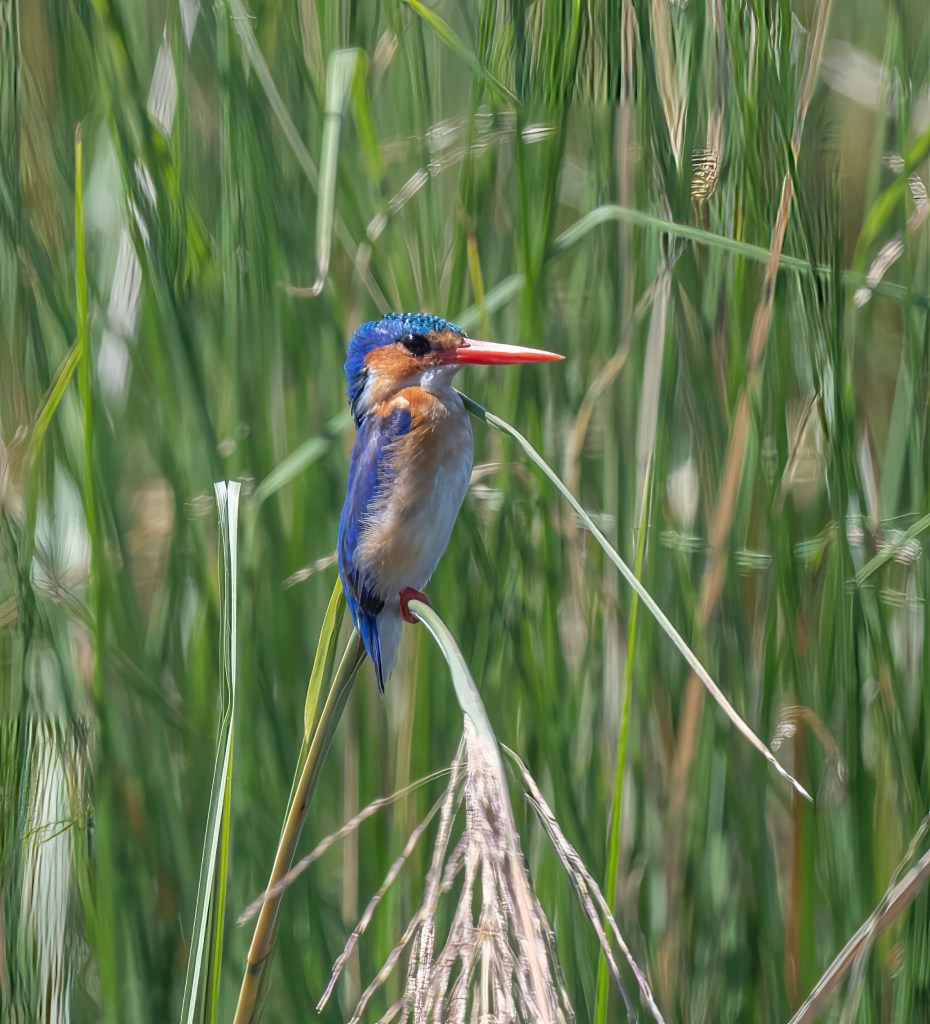
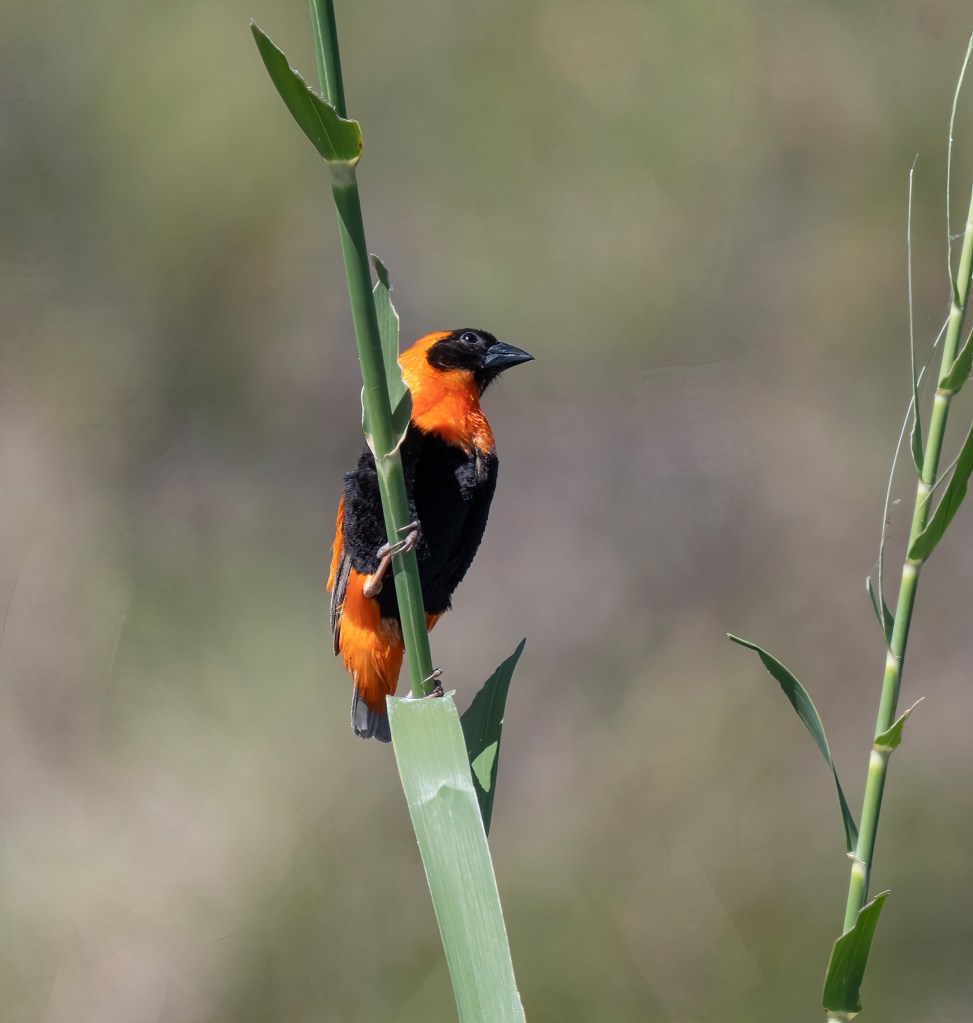
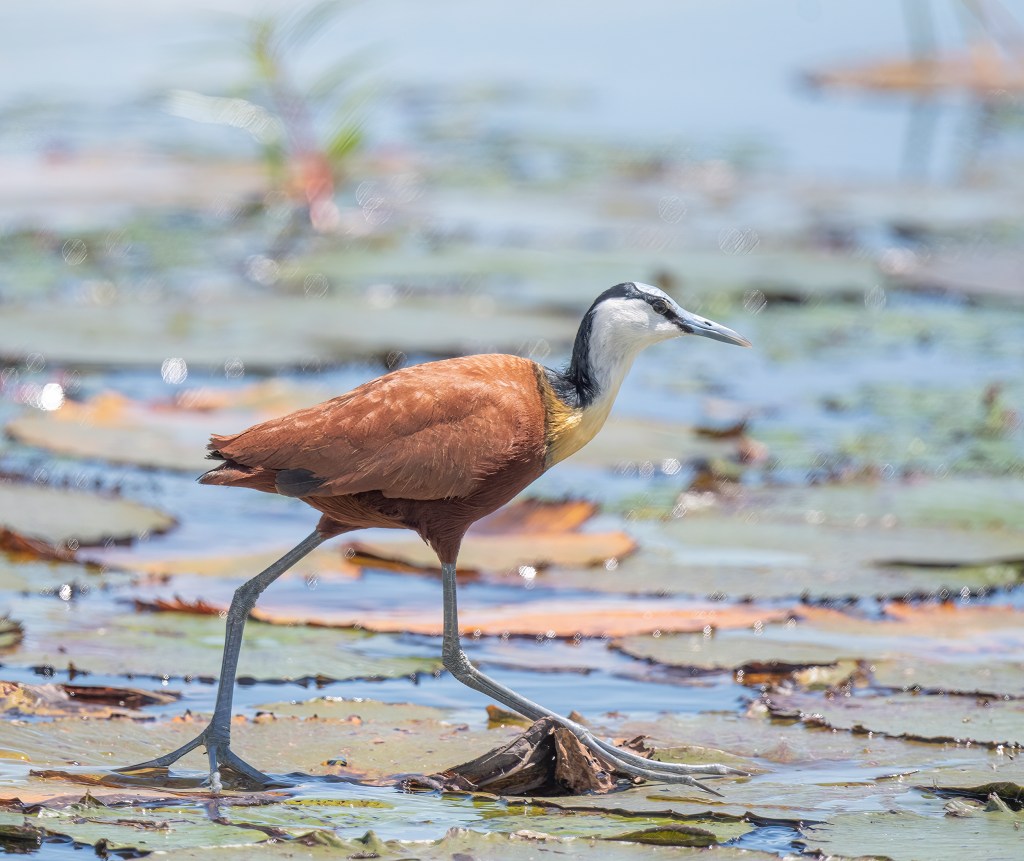
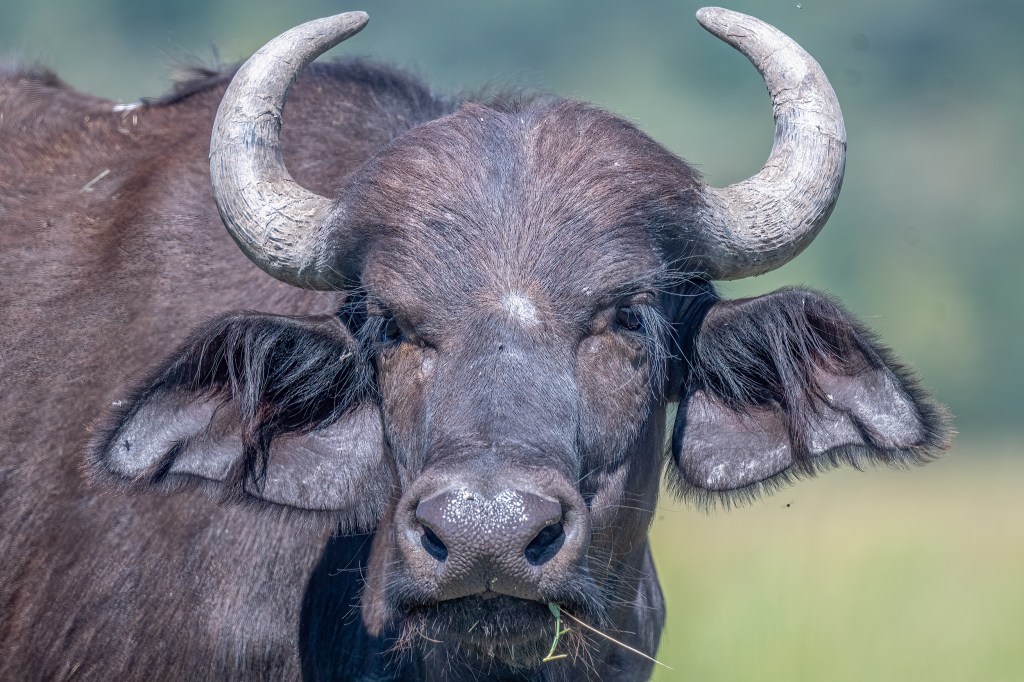
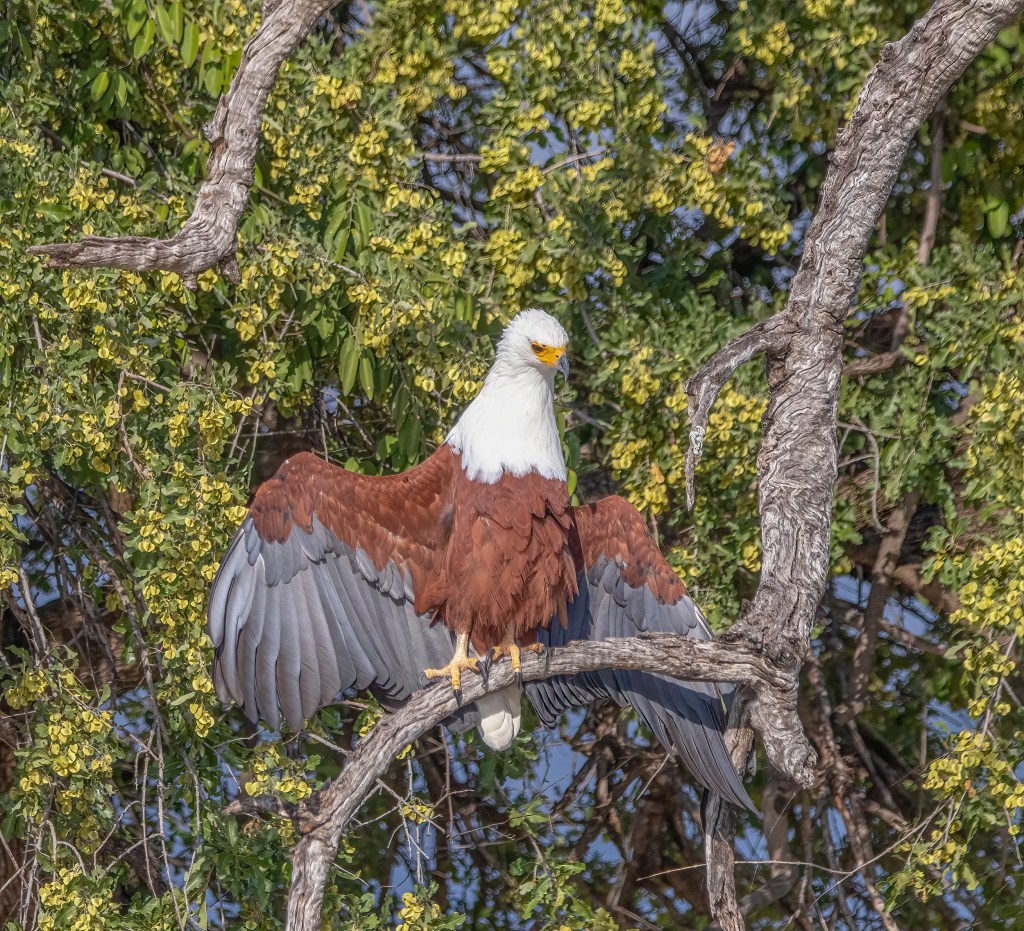
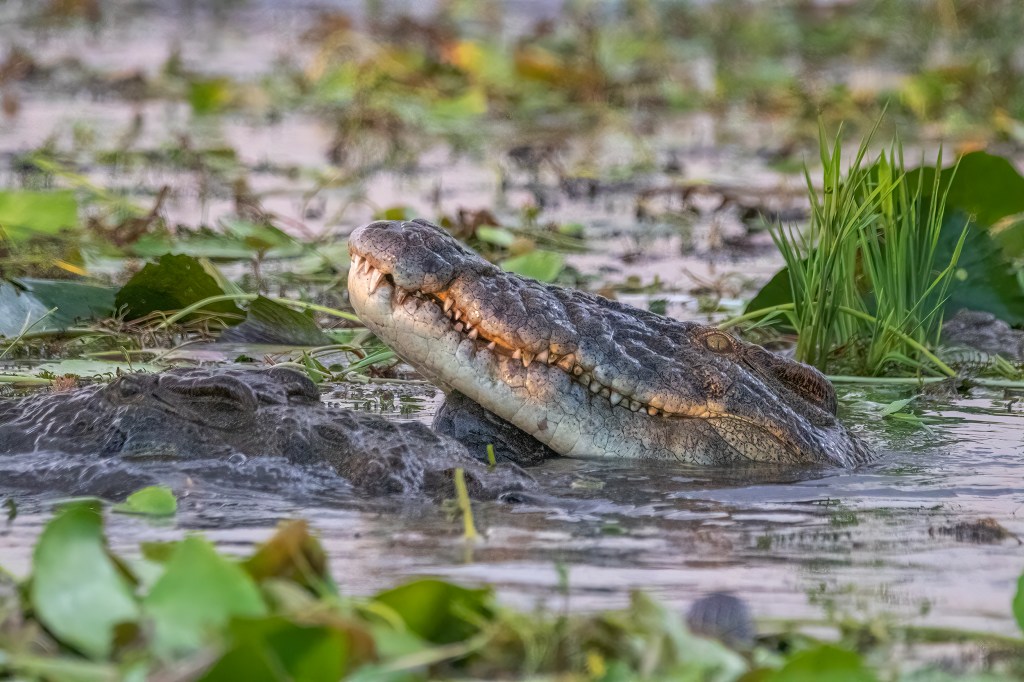
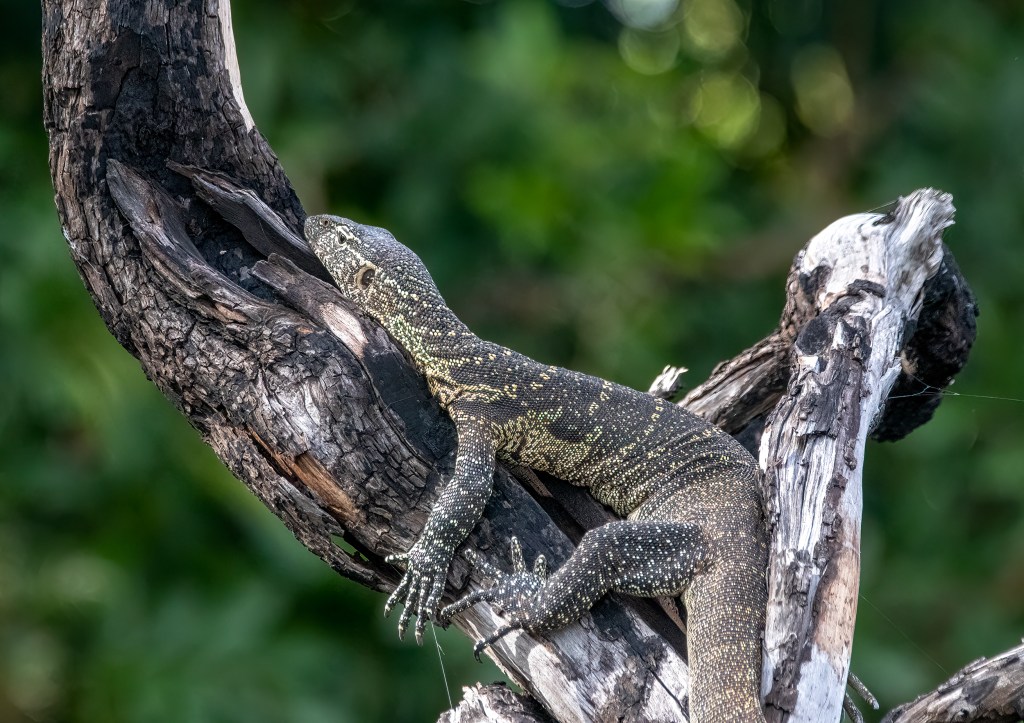
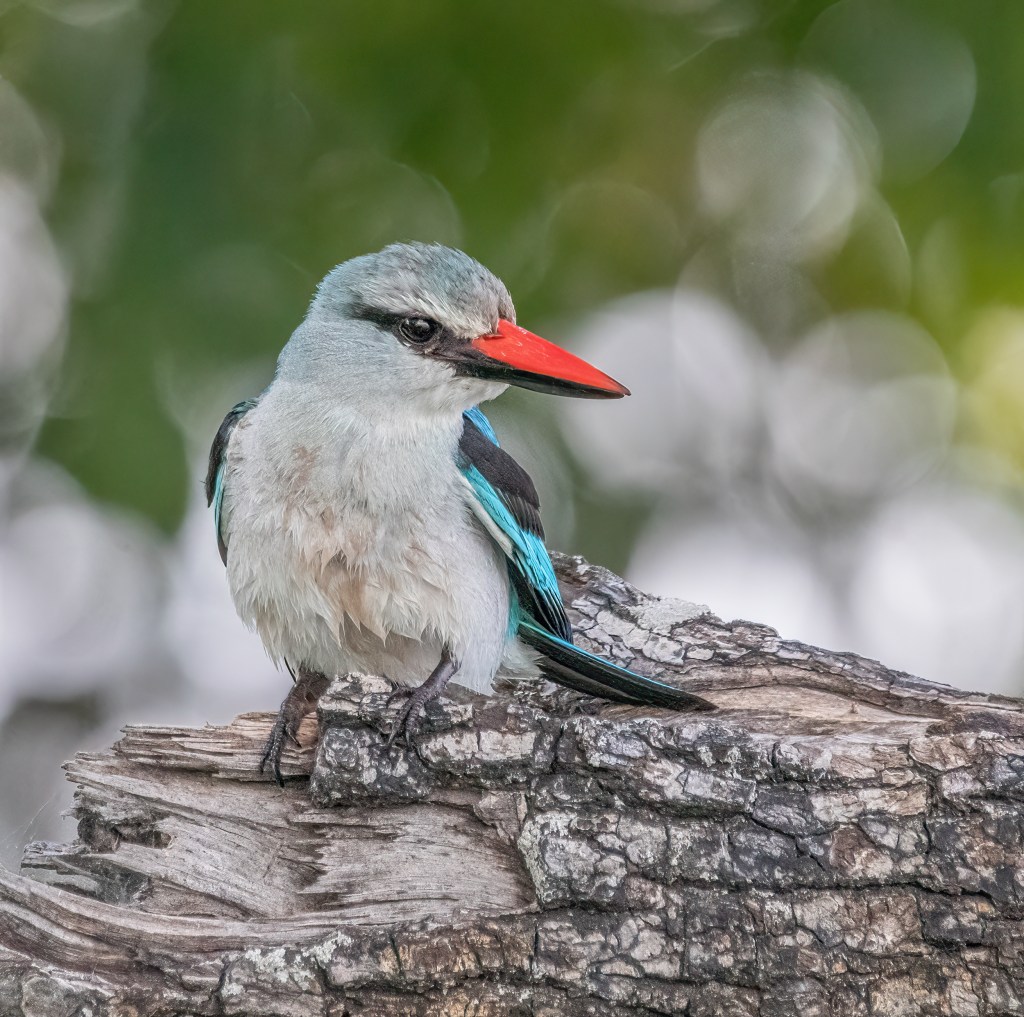
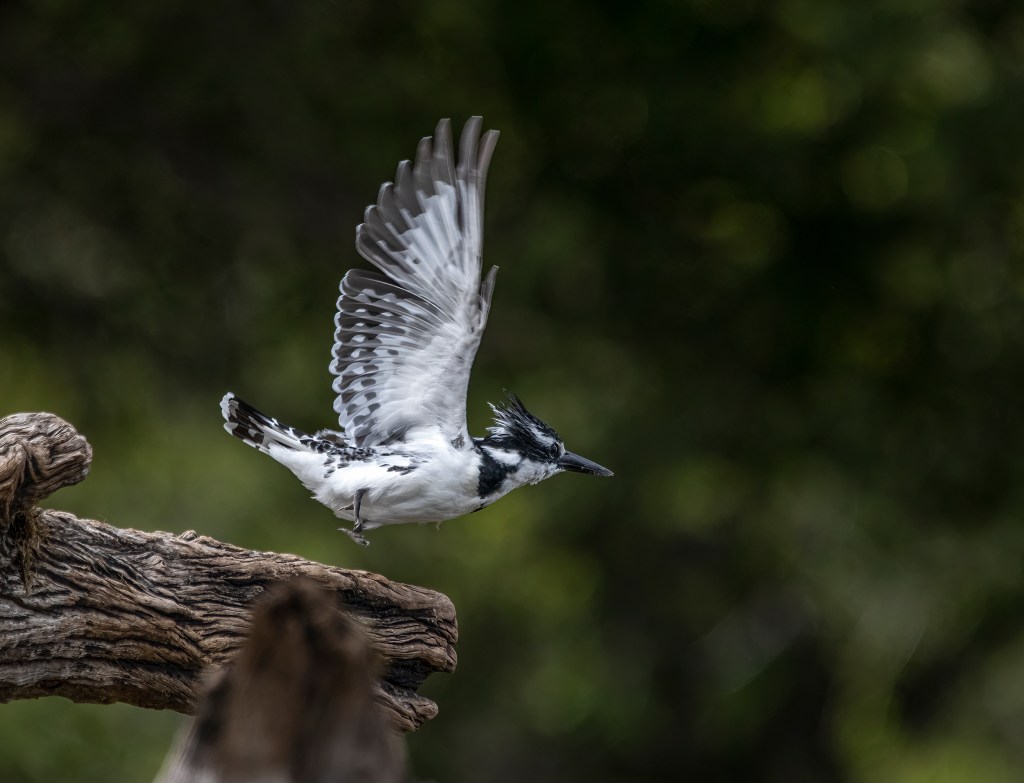
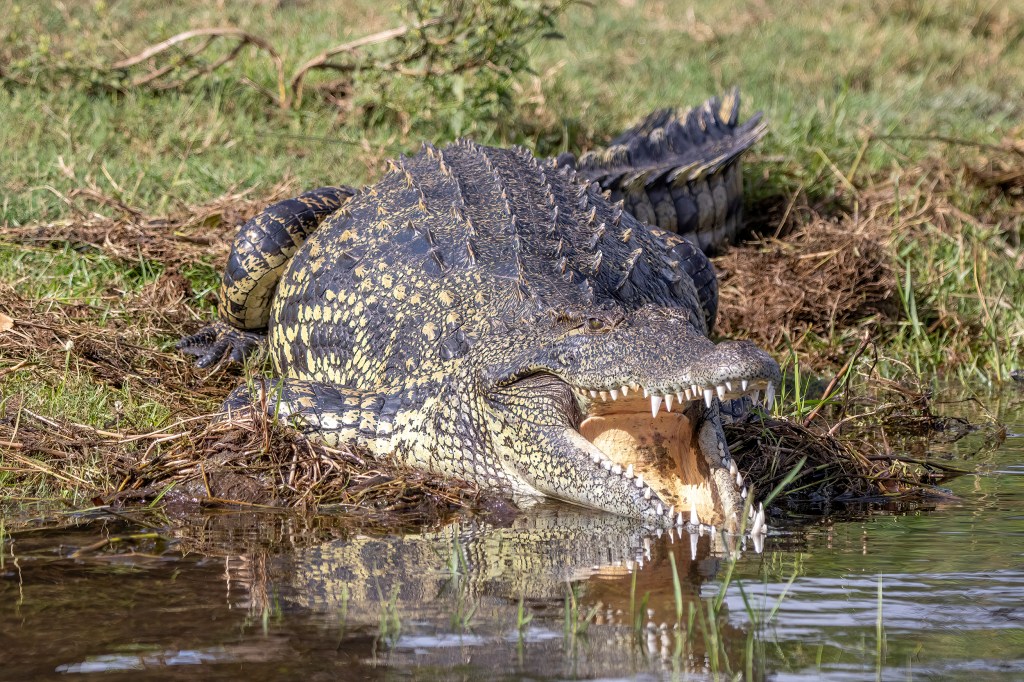
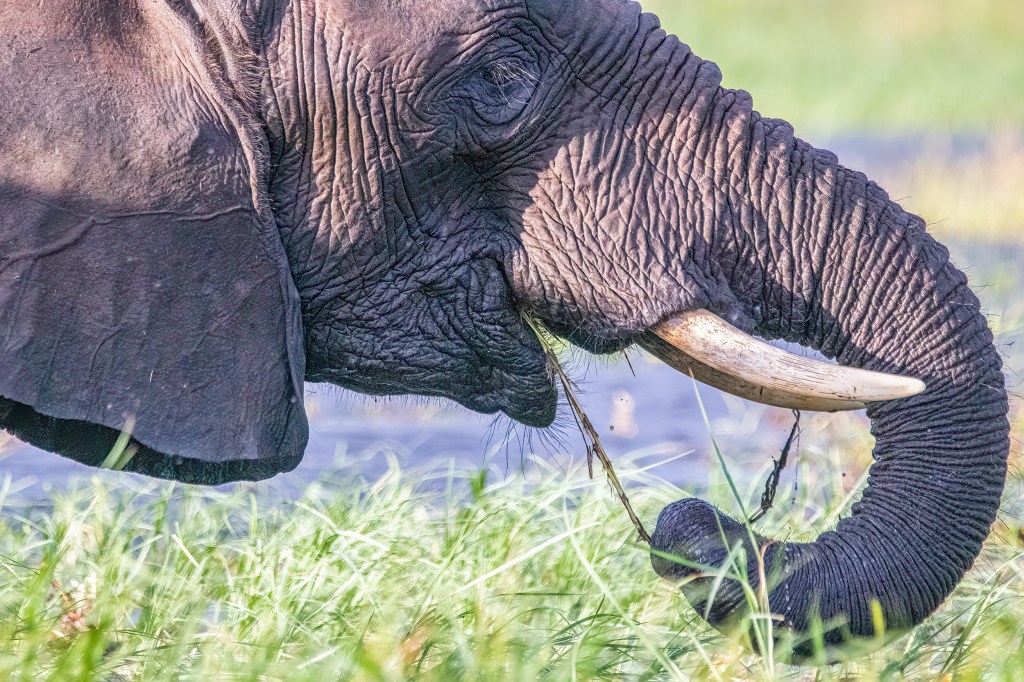
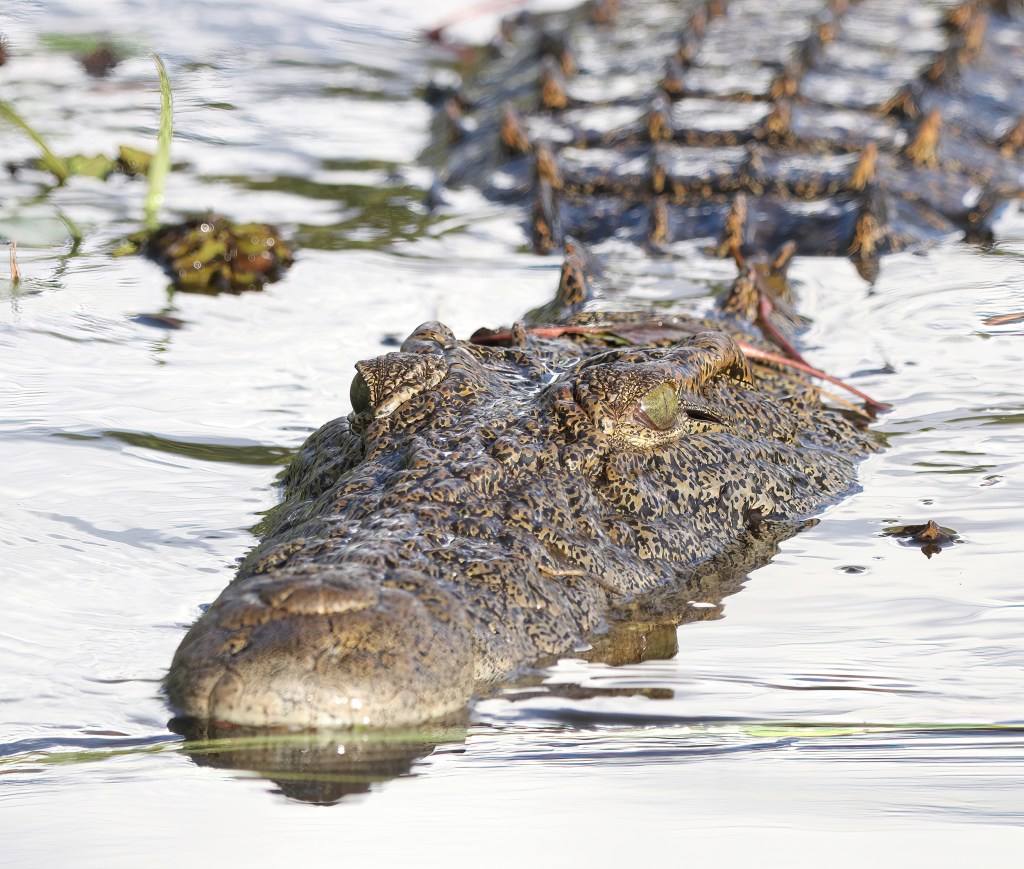
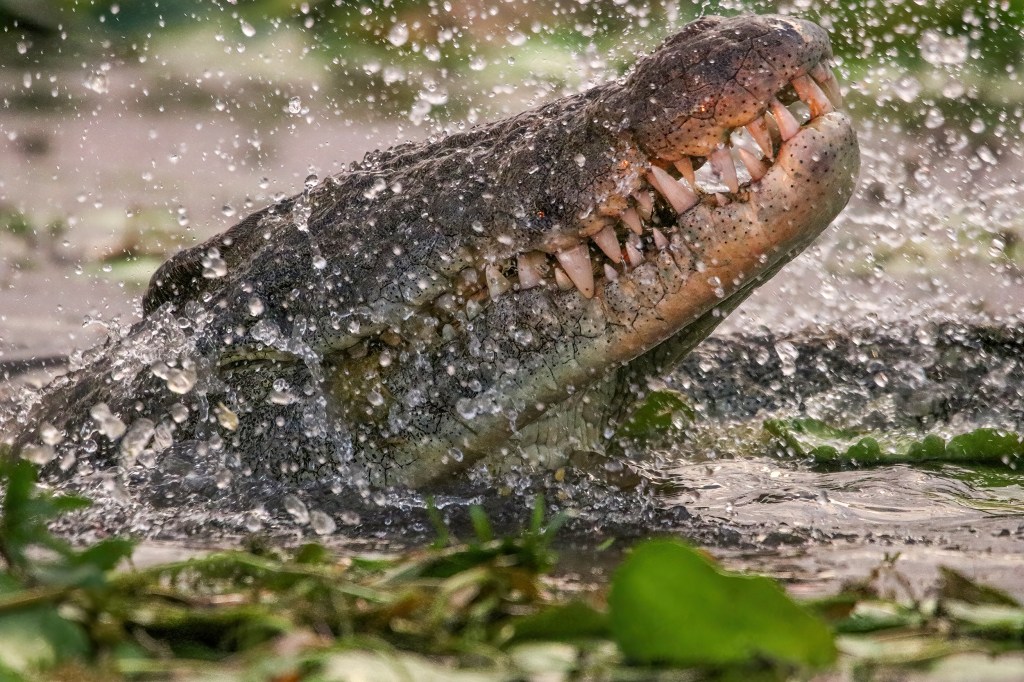
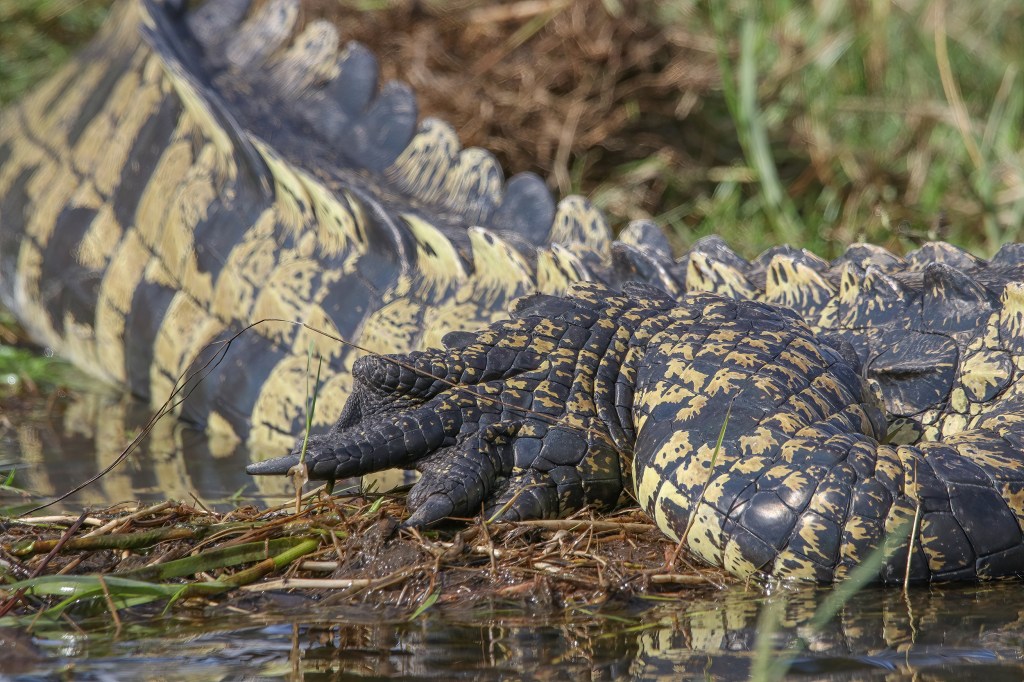
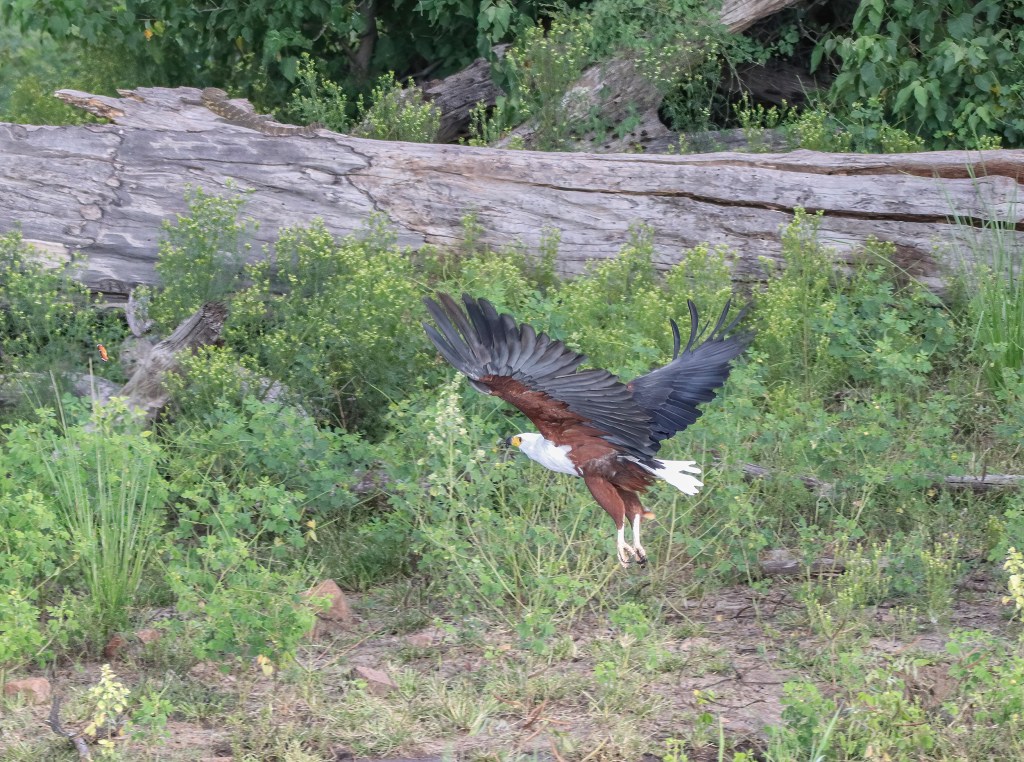
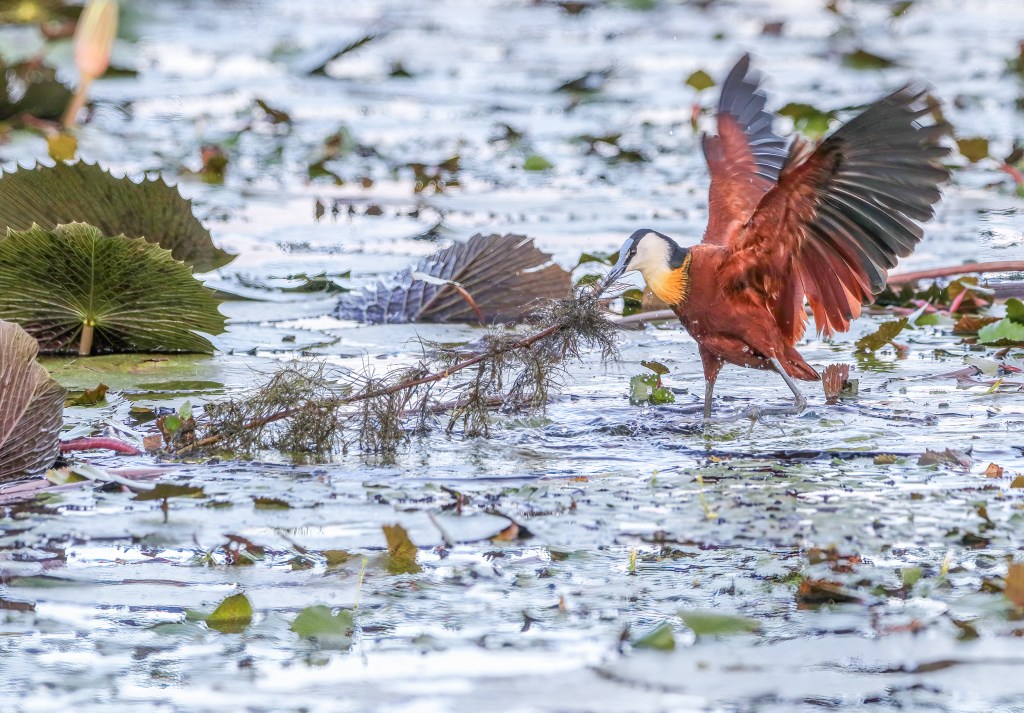
Our focus on both trips was to capture a few bird images, and to take images of a variety of wildlife. We happened to see several crocodiles eating a drowned cape buffalo so that became a real focus. here are a number of images taken by Karen and I.
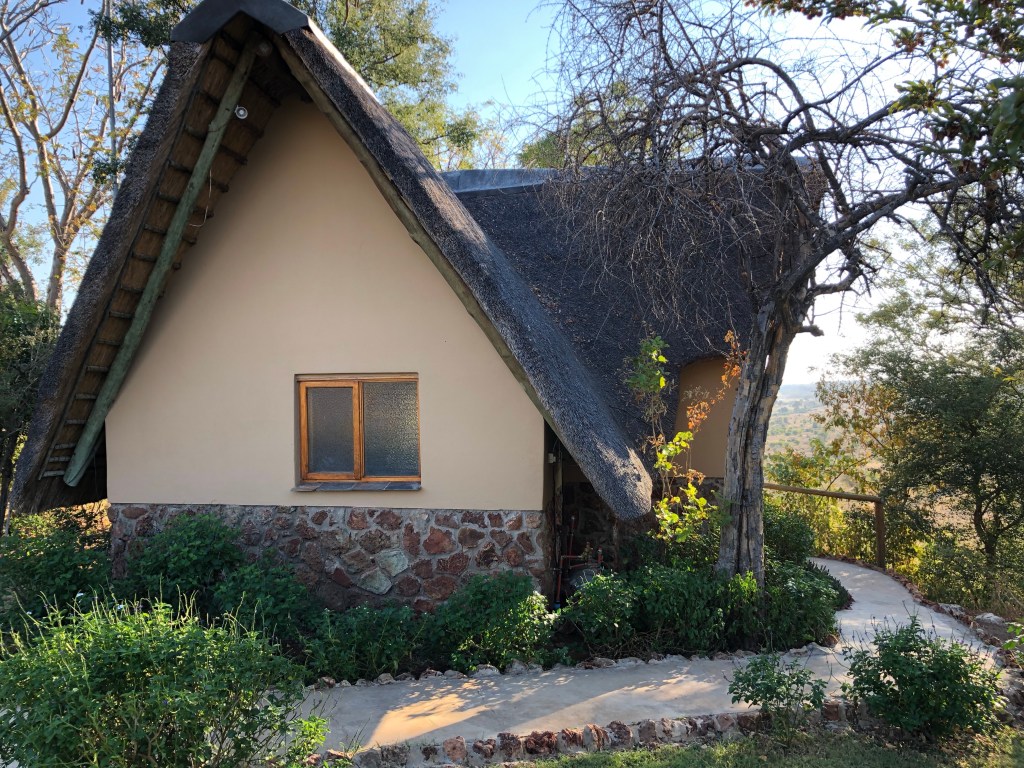
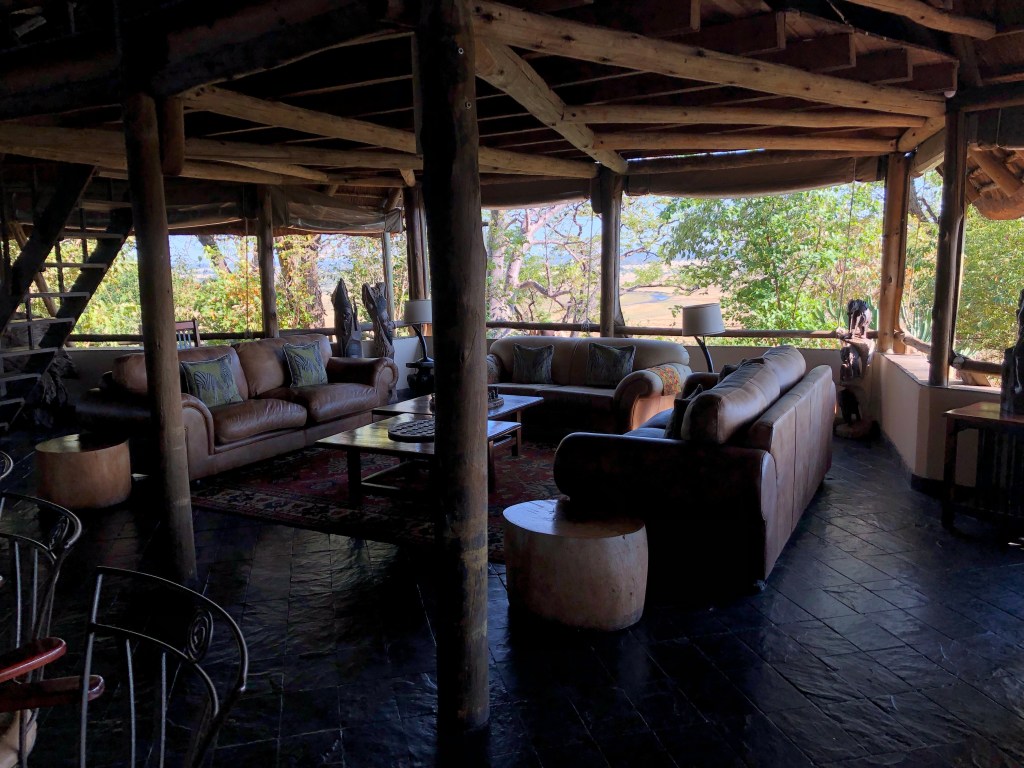
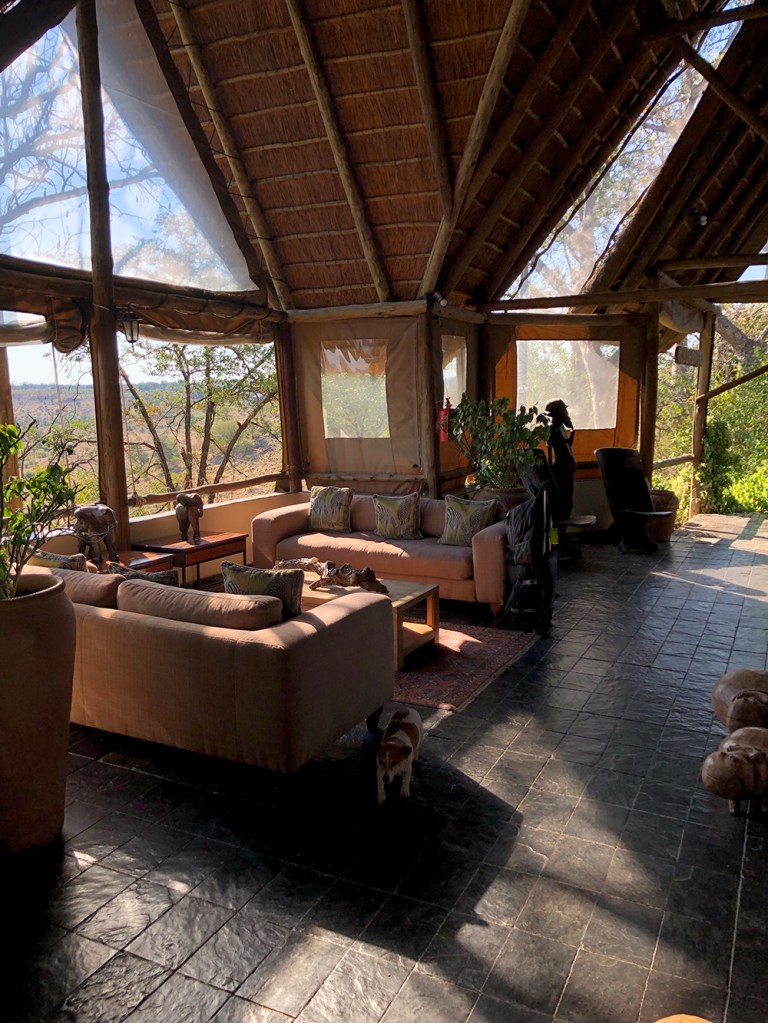
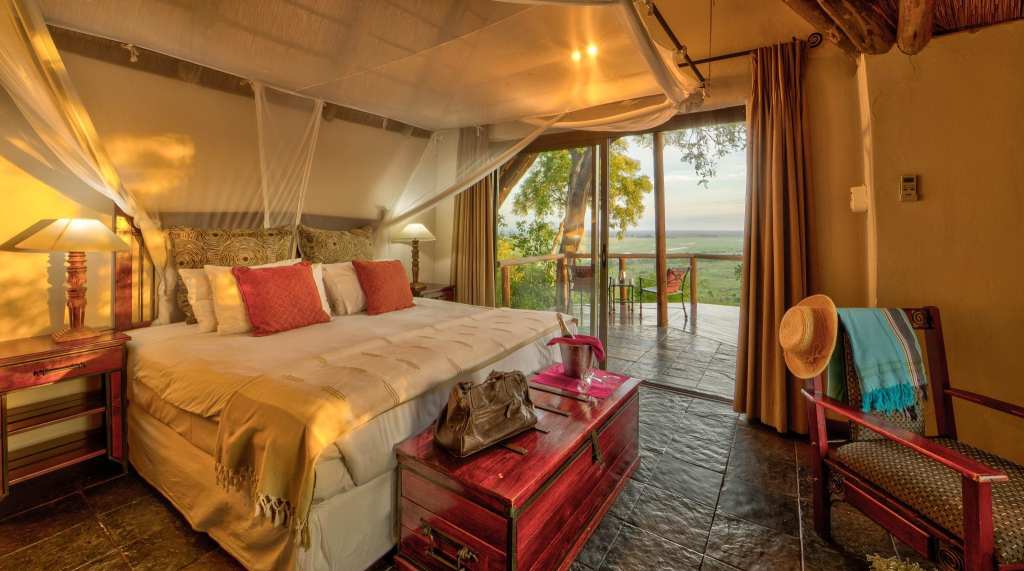
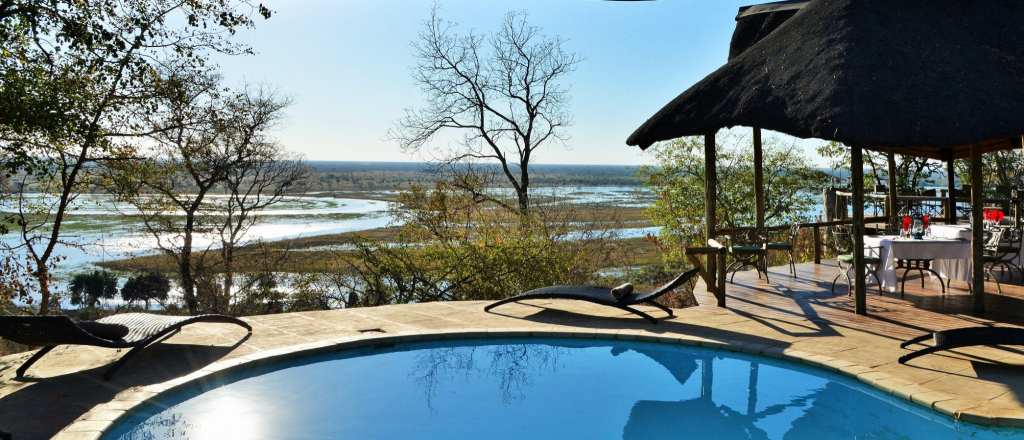
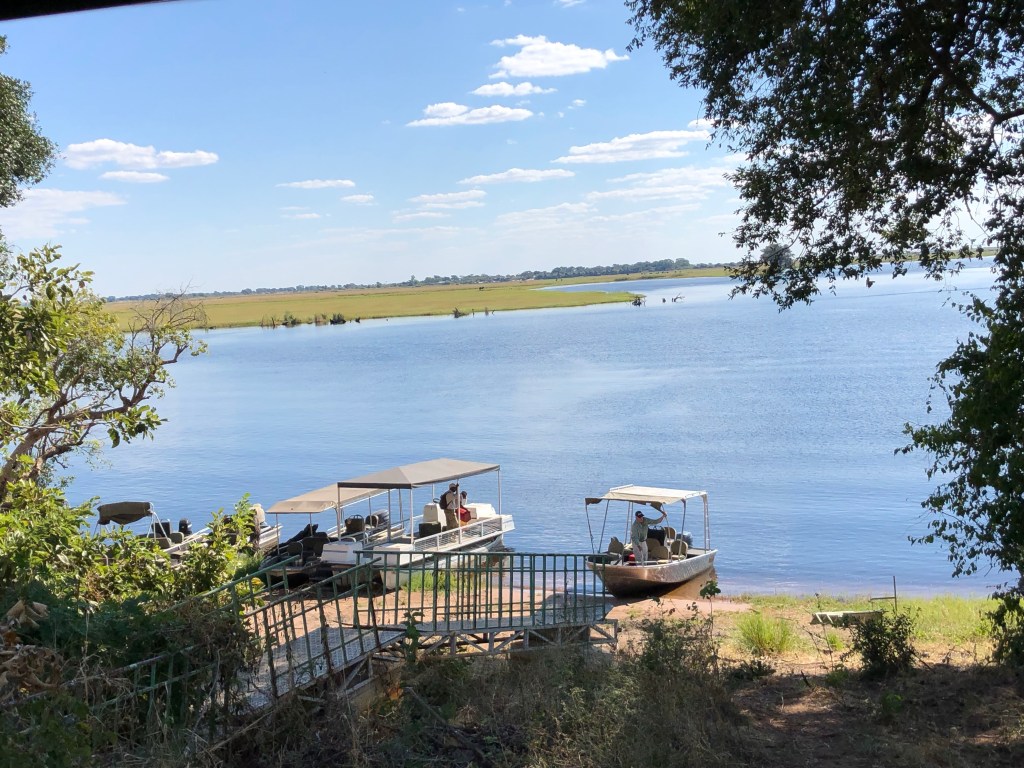
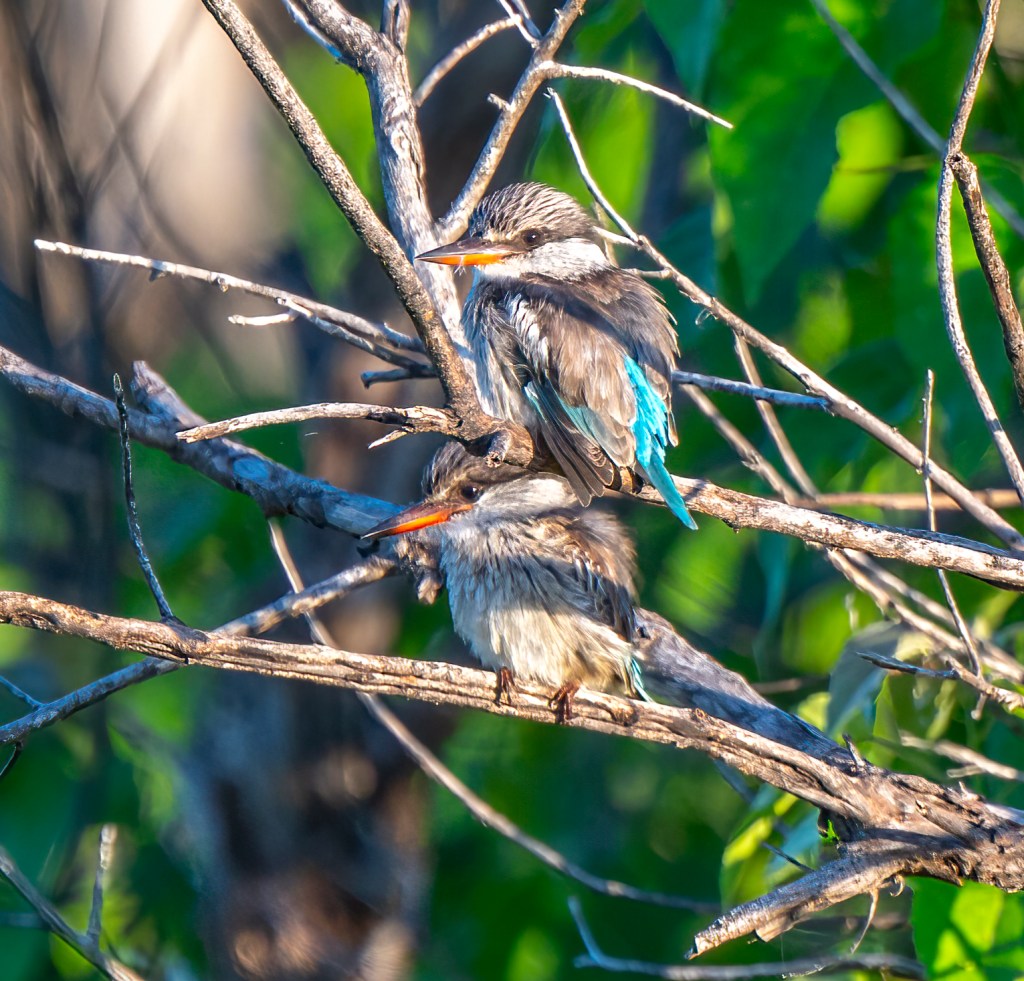
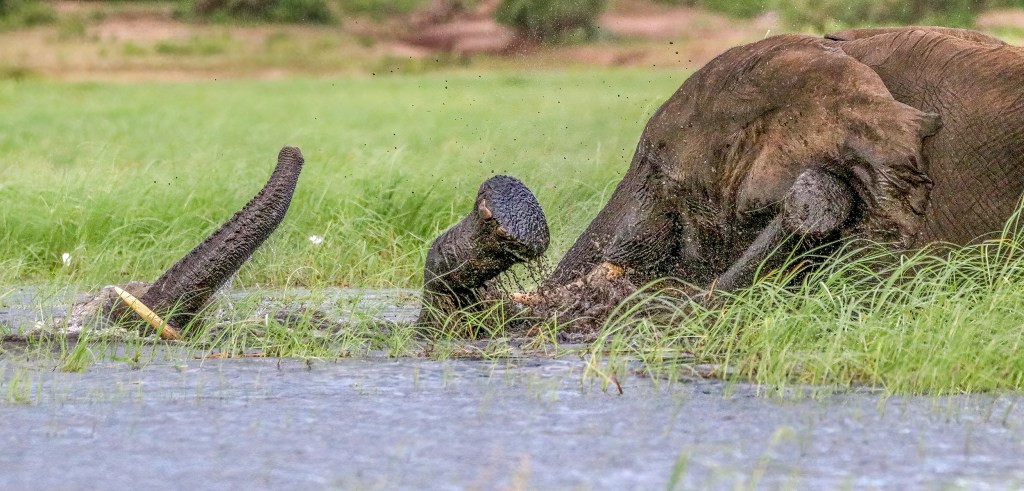
Our third stop on the 2022 safari was Muchenje Lodge , on the west side of Chobe National Park and overlooking the Chobe River from a magnificent perch atop the ridge. The lodge is another favorite as it offers boating on the Chobe, in addition to safari drives in the park and walking safaris below the camp. The lodge is magnificent, as are the accommodations in ten individual chalets. The boating is a great windup to eight days of twice daily game drives, and offers a real opportunity to closeup views of elephants, hippos, cape buffalo and crocodiles in the river. In addition the bird life around the water and grassy islands is beautiful and quite unique.
One of our absolute favorite camps, Kwara is in the Kwando Concession located on the NE side of Moremi Reserve. Its’ sister camp is Splash, which we visited last May. The Concession is in our opinion one of the best areas in Botswana for wildlife, and we visit regularly. Kwando also is one of the few camp operators which feature both a guide/driver and a tracker in each vehicle, which enhances the likelihood of finding wildlife, spotting birds and so on.
The Camp
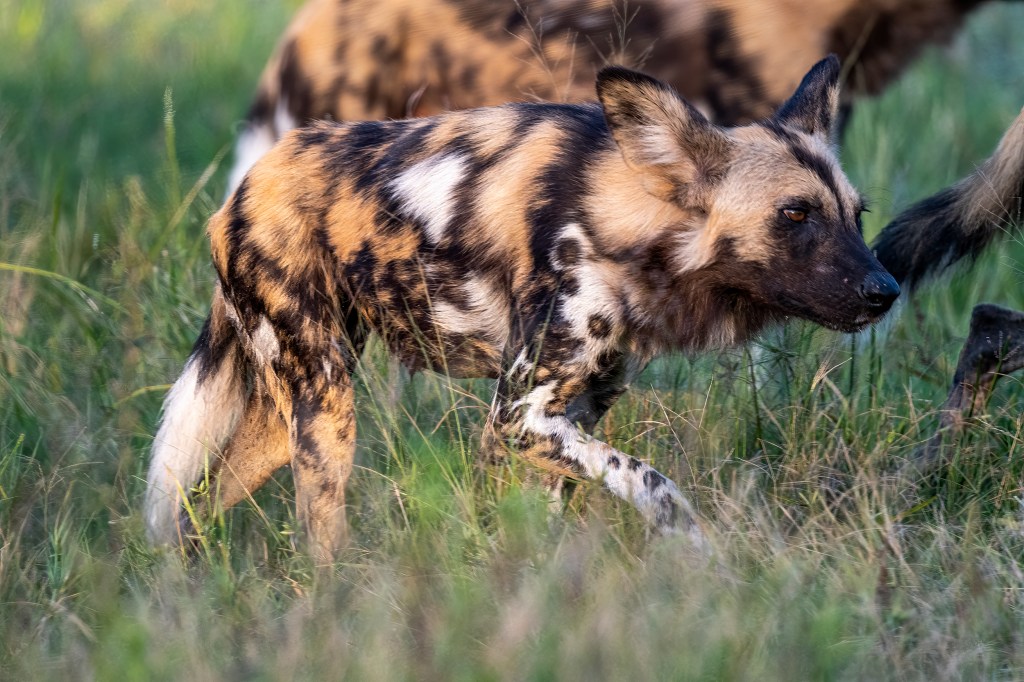
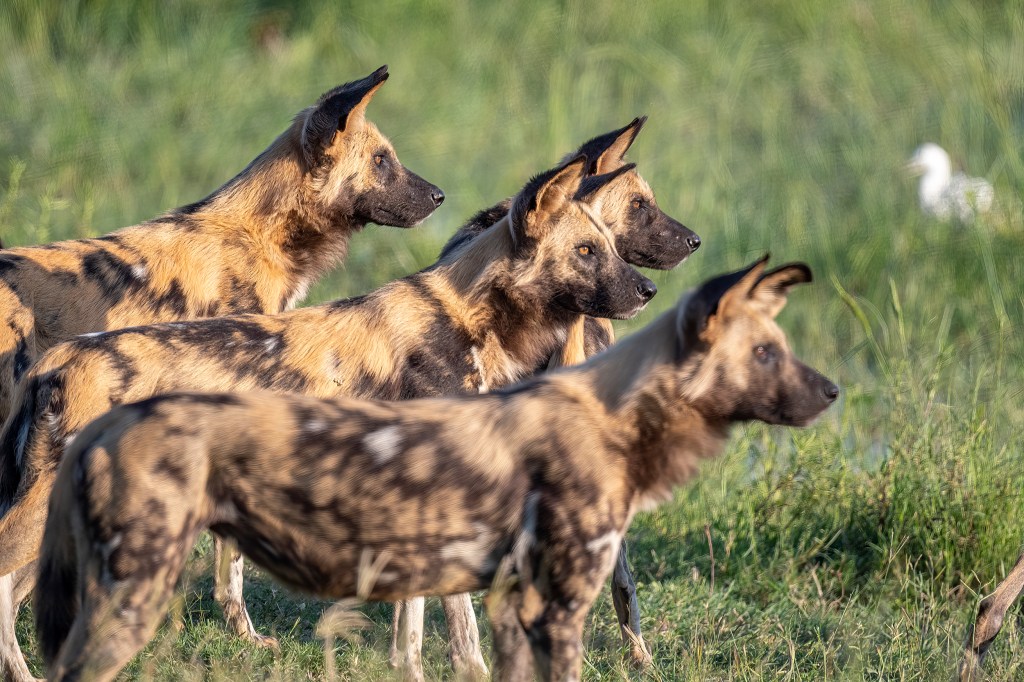
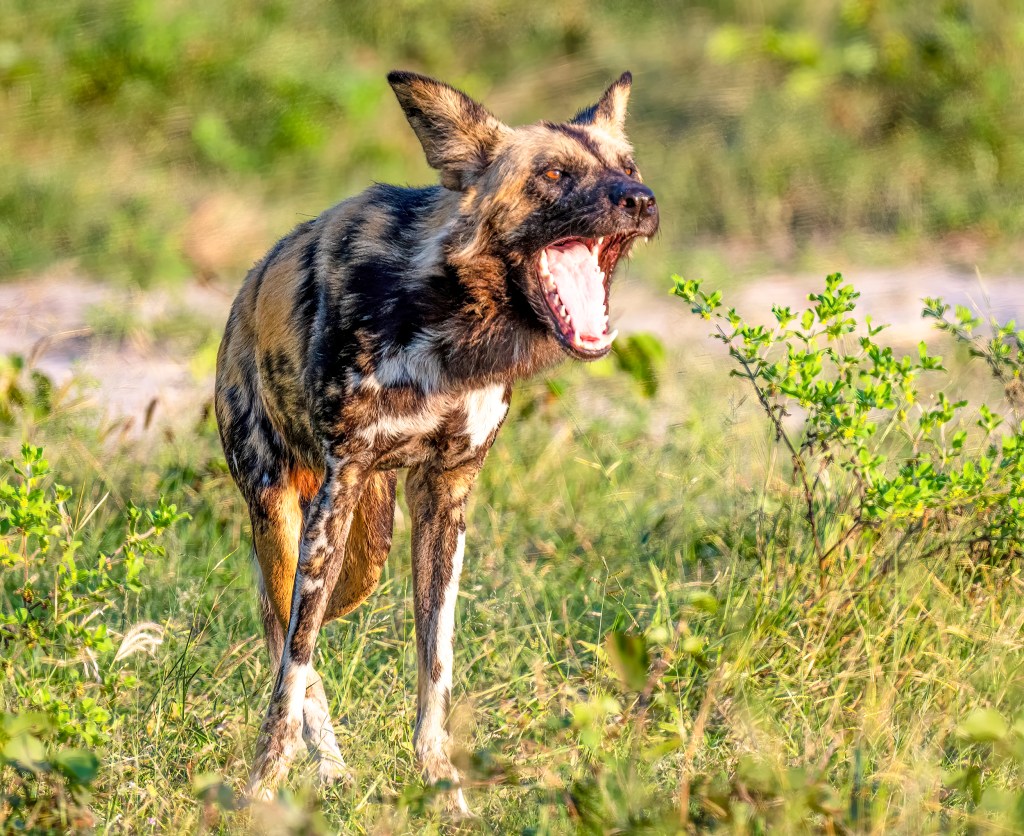
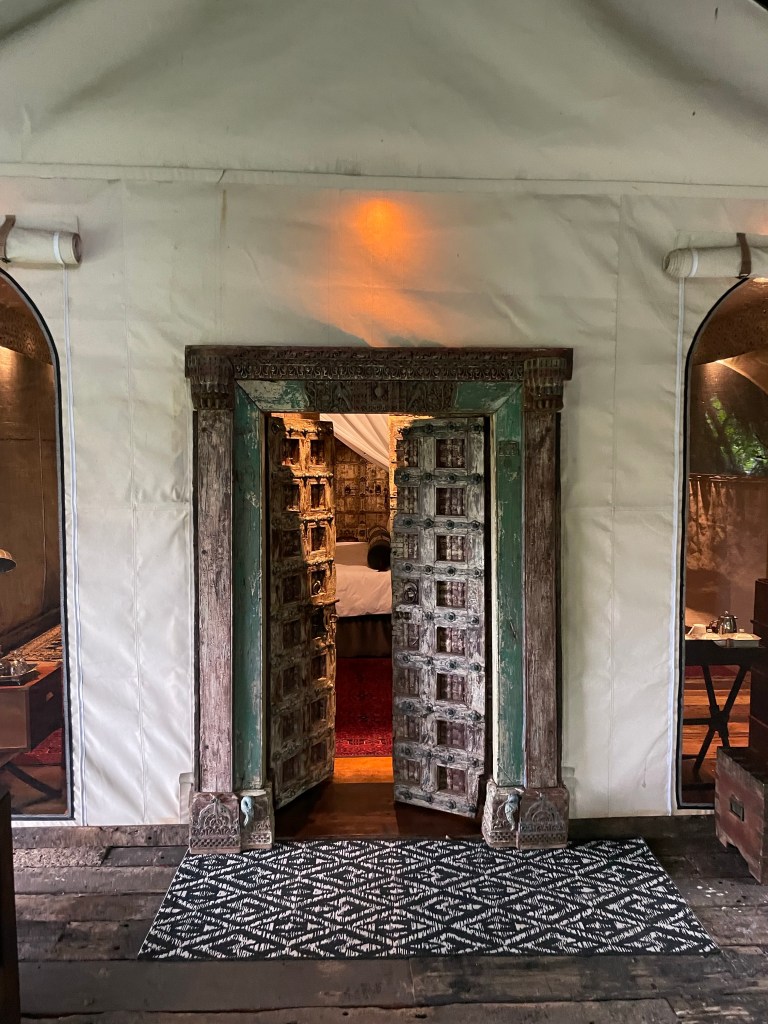
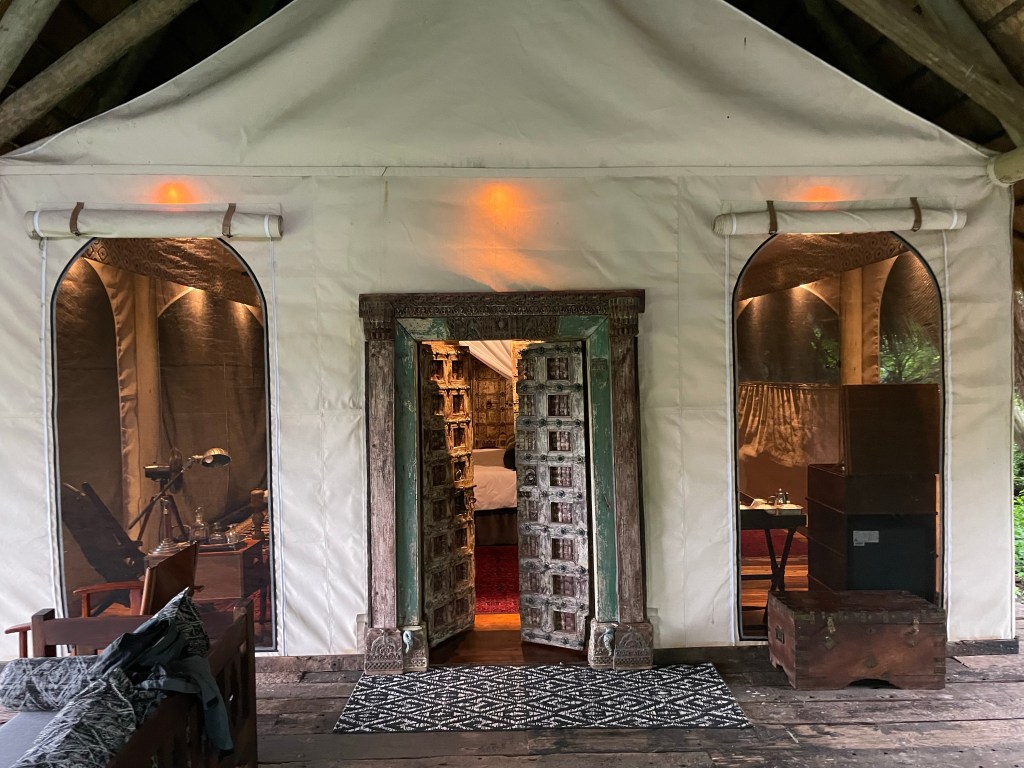
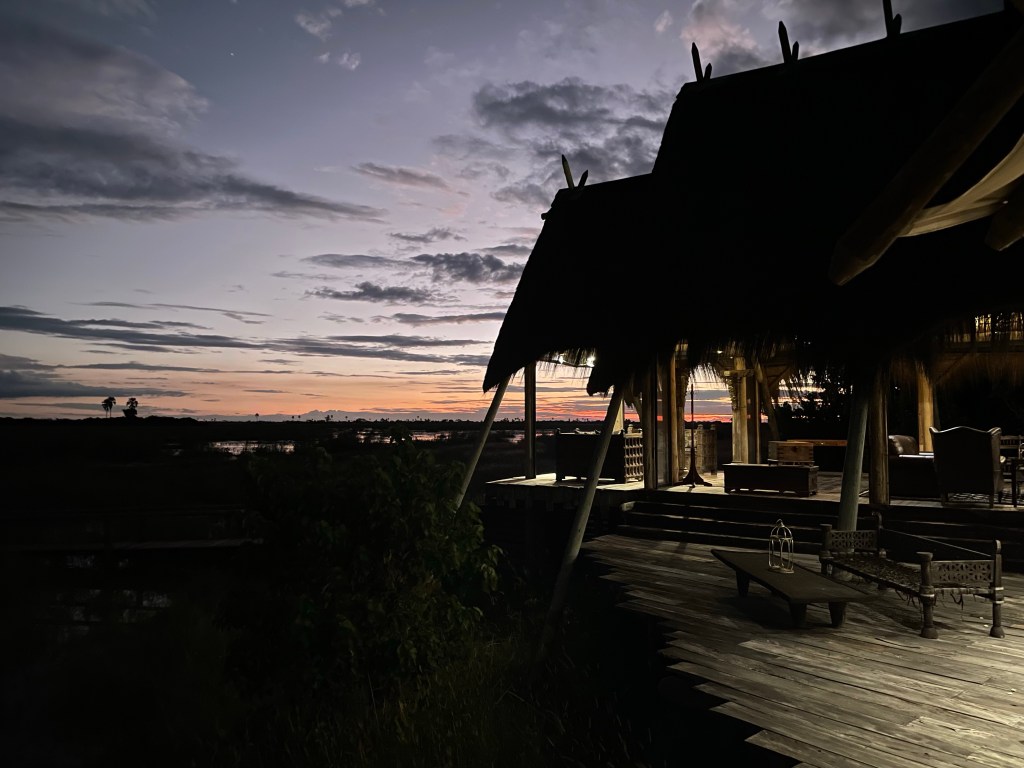
Kwara is a new camp, built recently on the sites of an older Kwara (visited in 2013) and Little Kwara (visited 2017) Camps. There are nine guest tents, each of which overlooks a secluded lagoon. The main area includes several comfortable lounges, dining, gift shop and the usual on-the-ground campfire area used for early morning breakfasts. The area is well known for predators including lions, leopards, hyenas, cheetahs and especially African wild dogs.
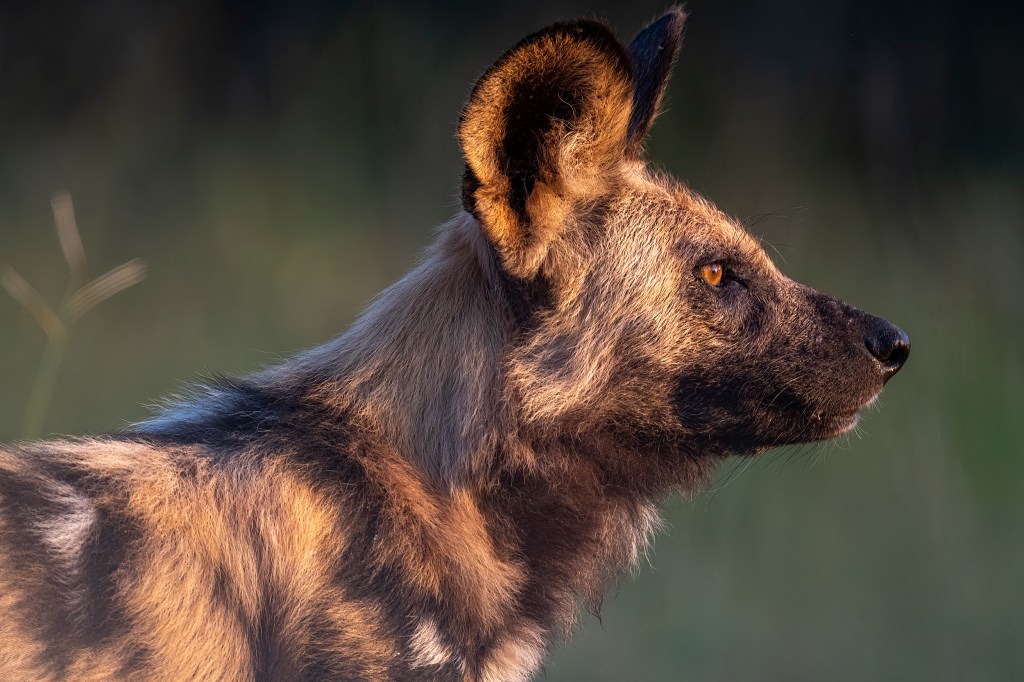
African Wild Dogs
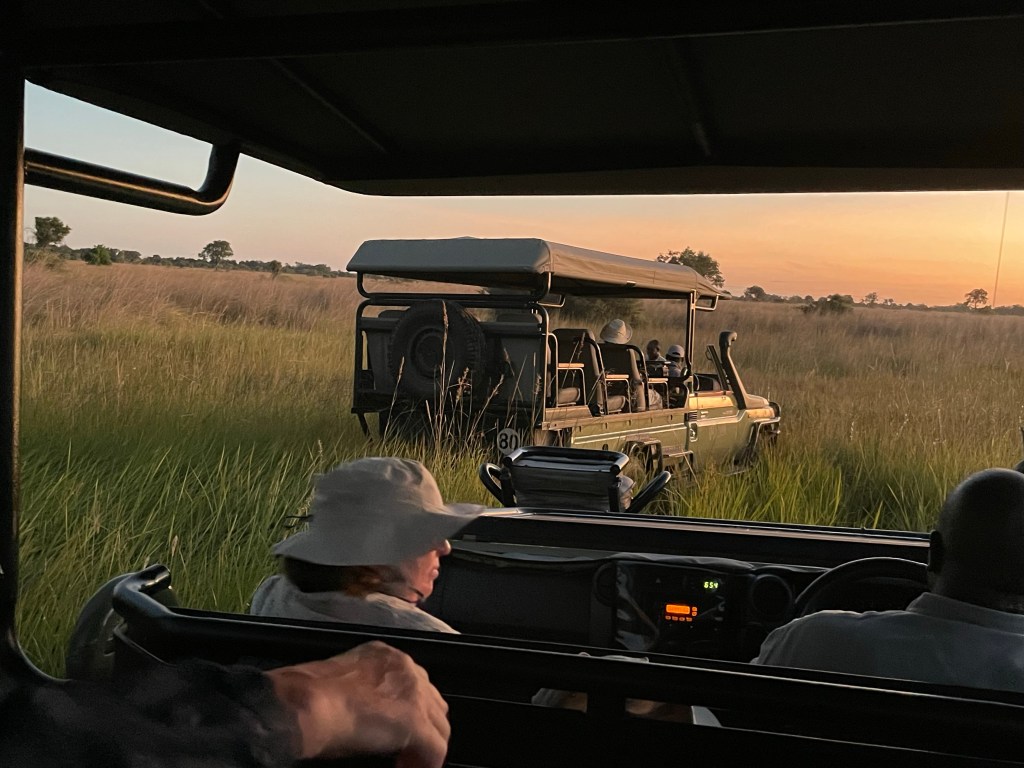
These are an absolute favorite, often difficult to find. However on this visit we spotted them four days in a row. The first experience was after an “Indy” type drive by our guide Shine!
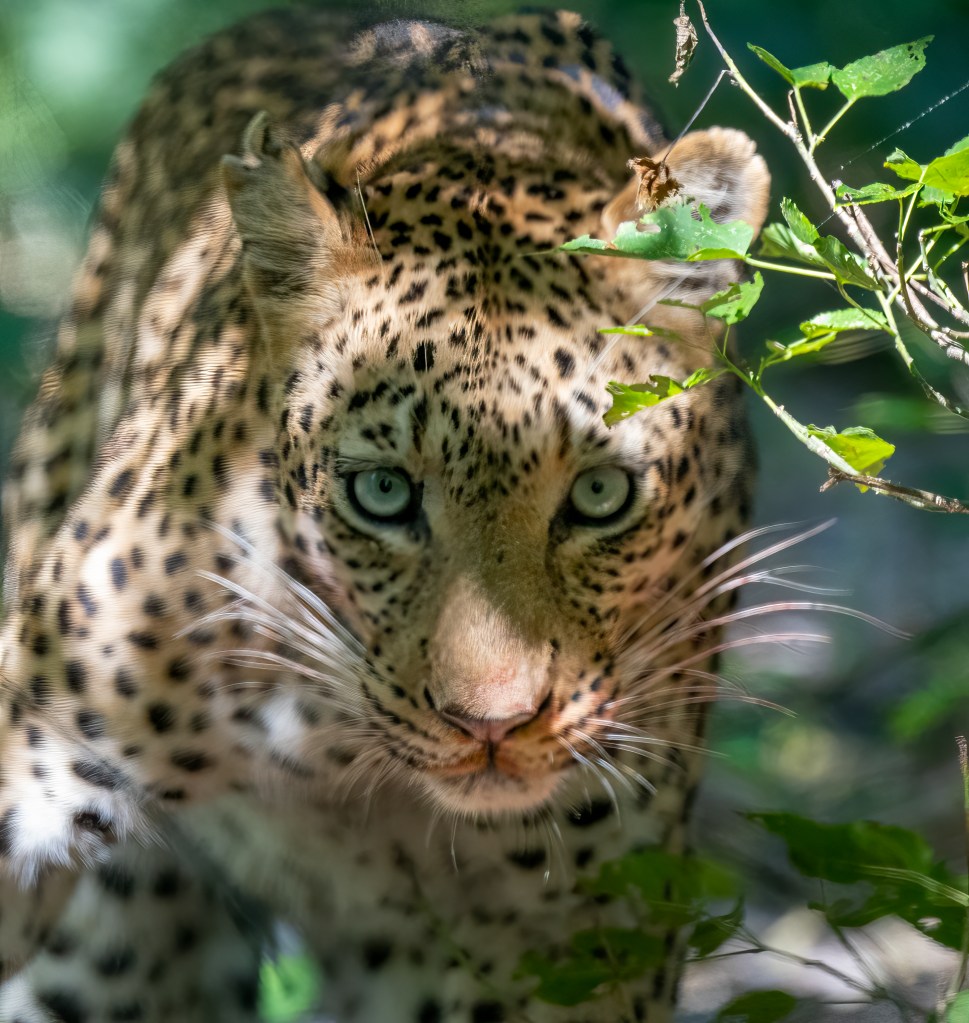
Leopard
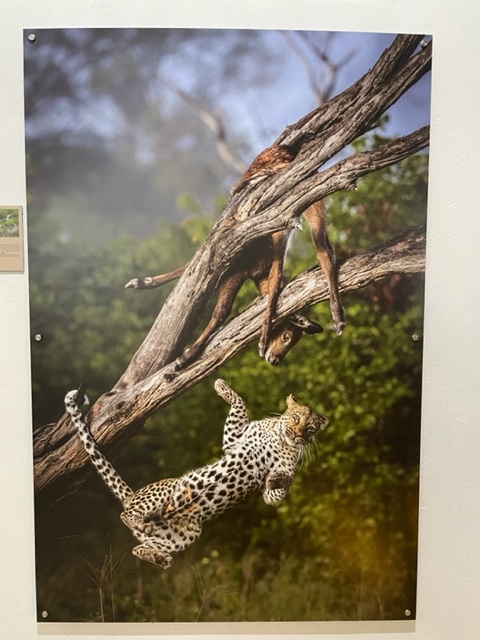
We had one sighting of a leopard and it was a great one. The leopard was settling into the bushes with a newly caught impala, and Shine was able to position the vehicle so we had a really good view of it beginning to eat.
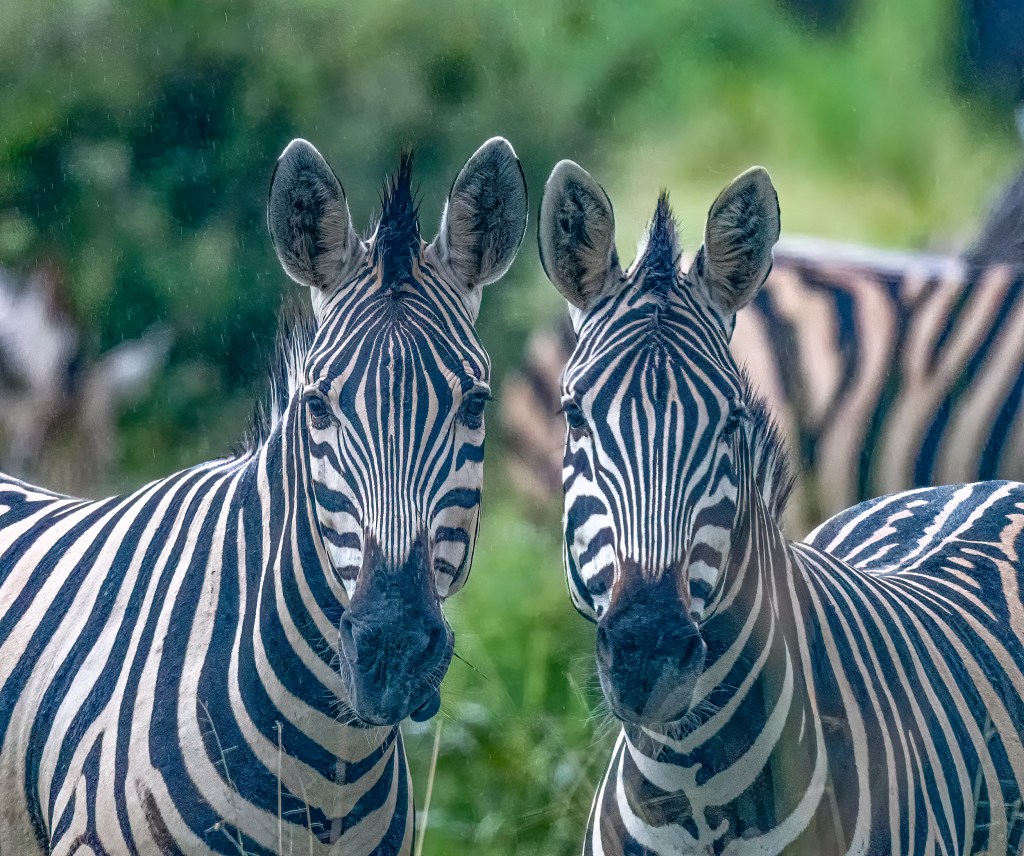
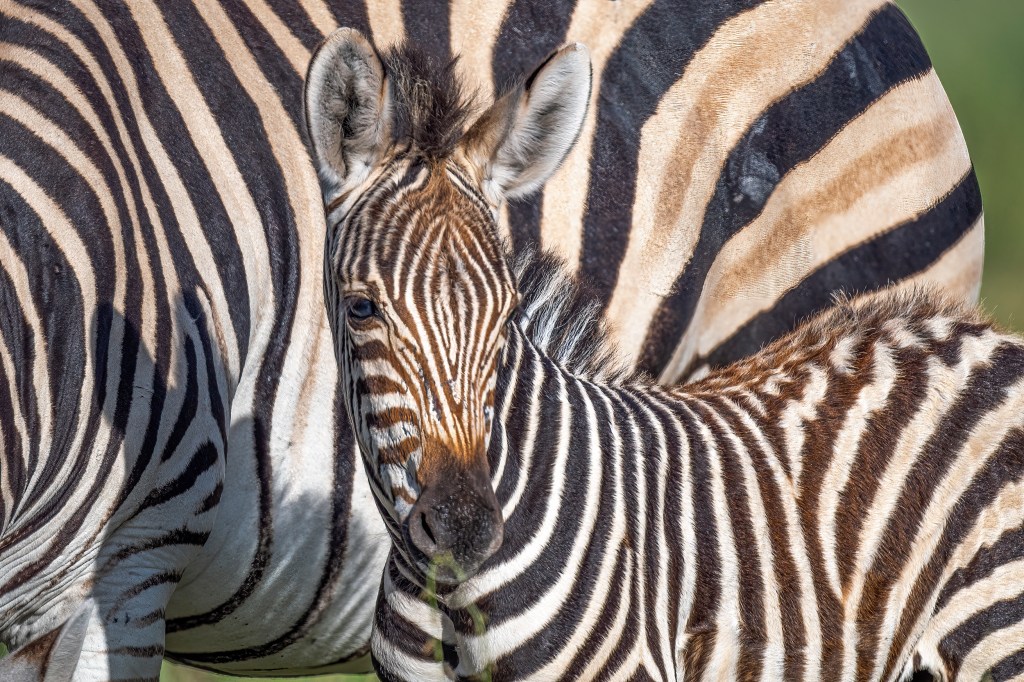
Zebras
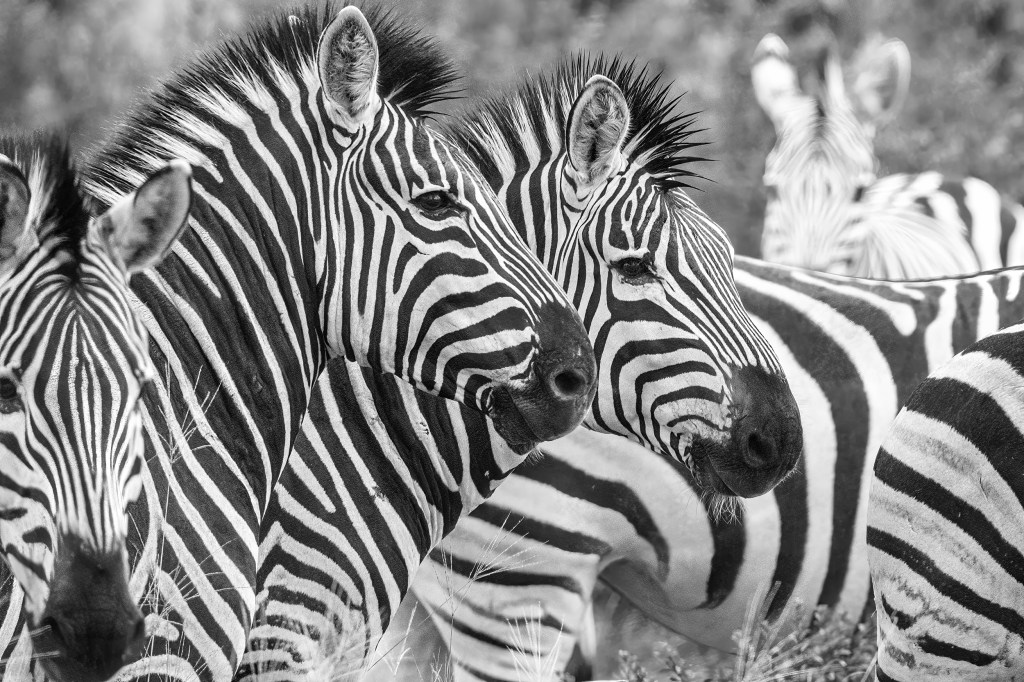
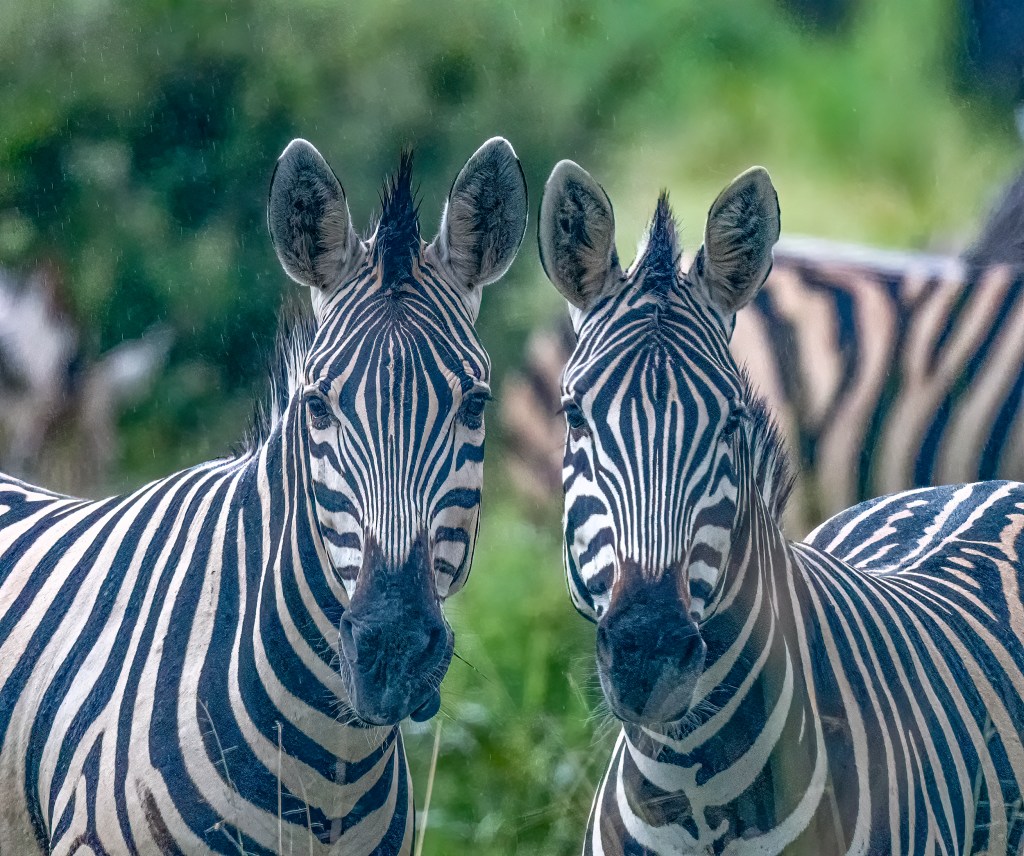
Very nice sightings of a large zebra “dazzle”, as a group of these animals are called.
Hyena
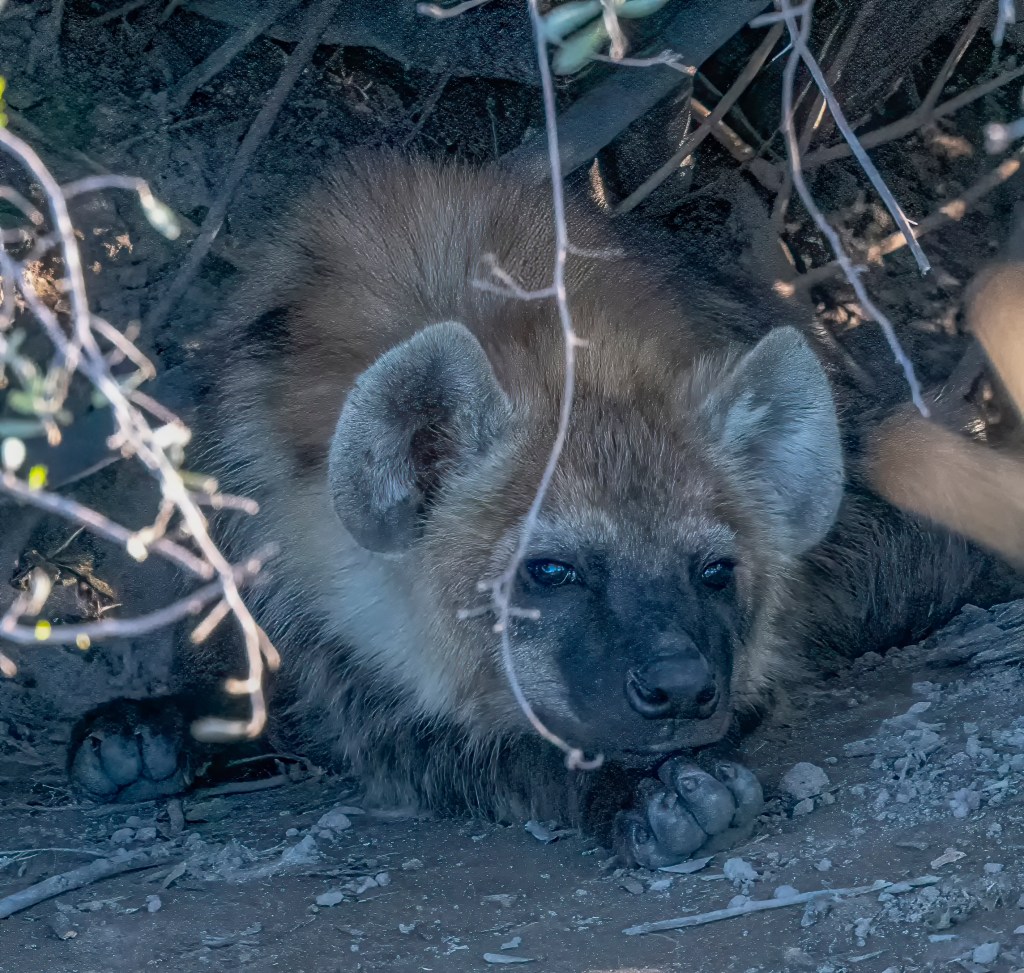
Nice sighting of this very young hyena alone in the family den.
Hippos
We saw a lot of hippos, including some real action as some pools were a little crowded!
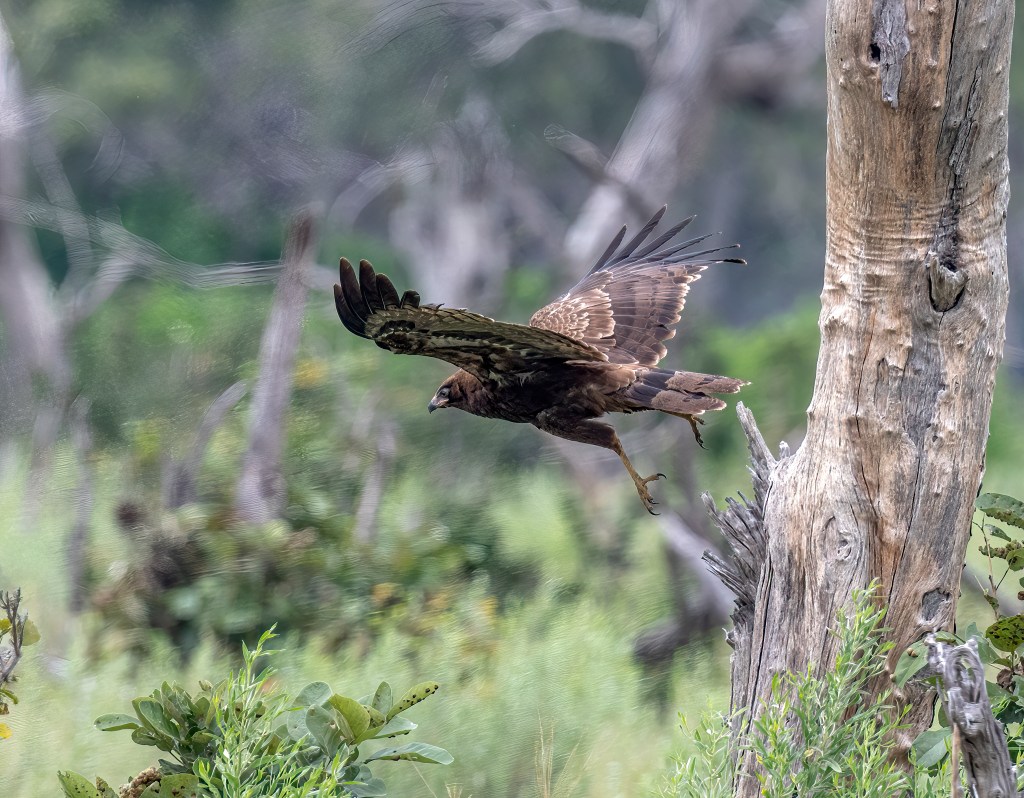
Hawk
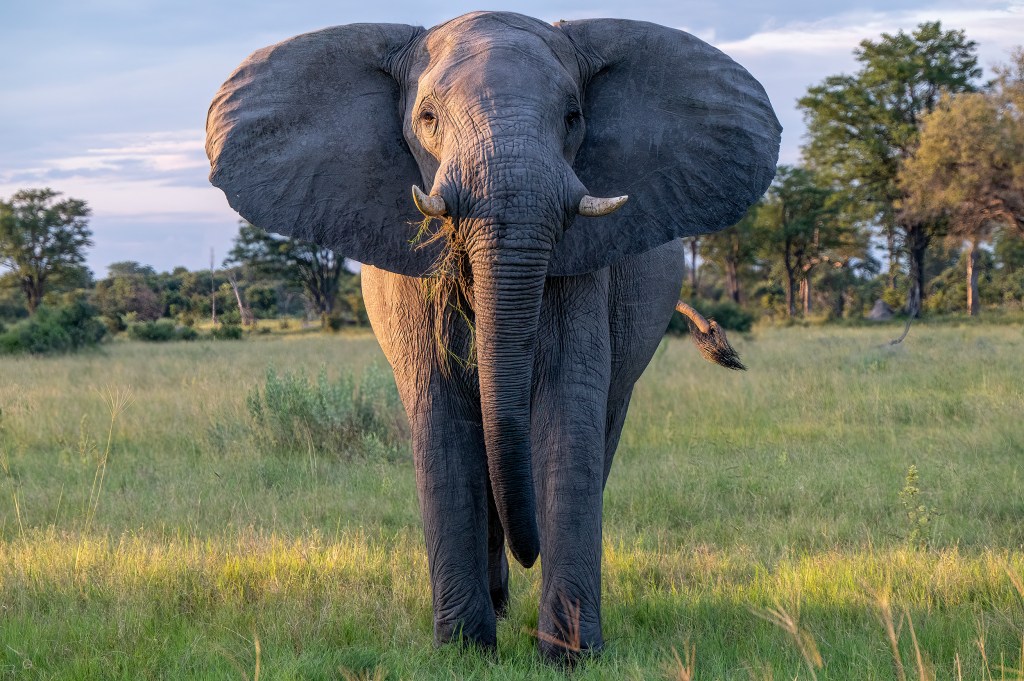
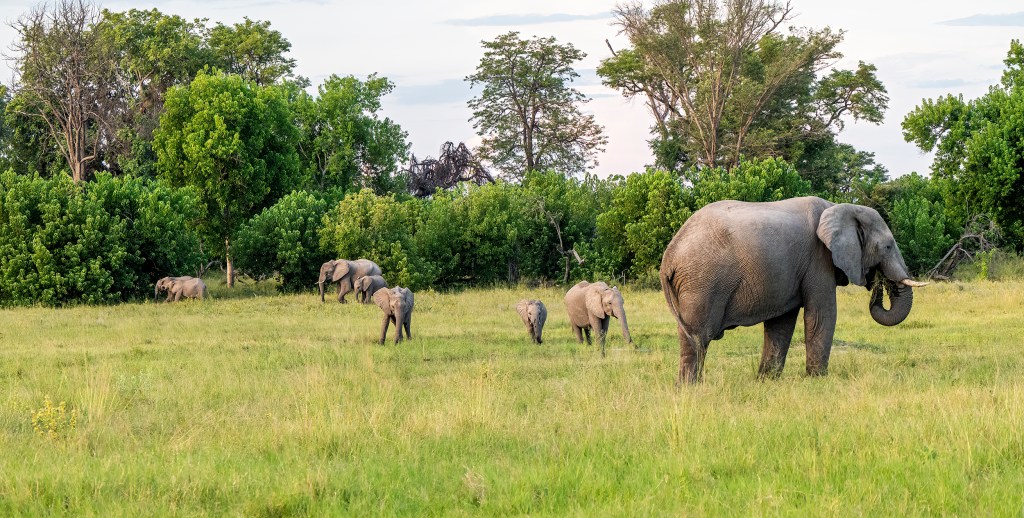
Elephants
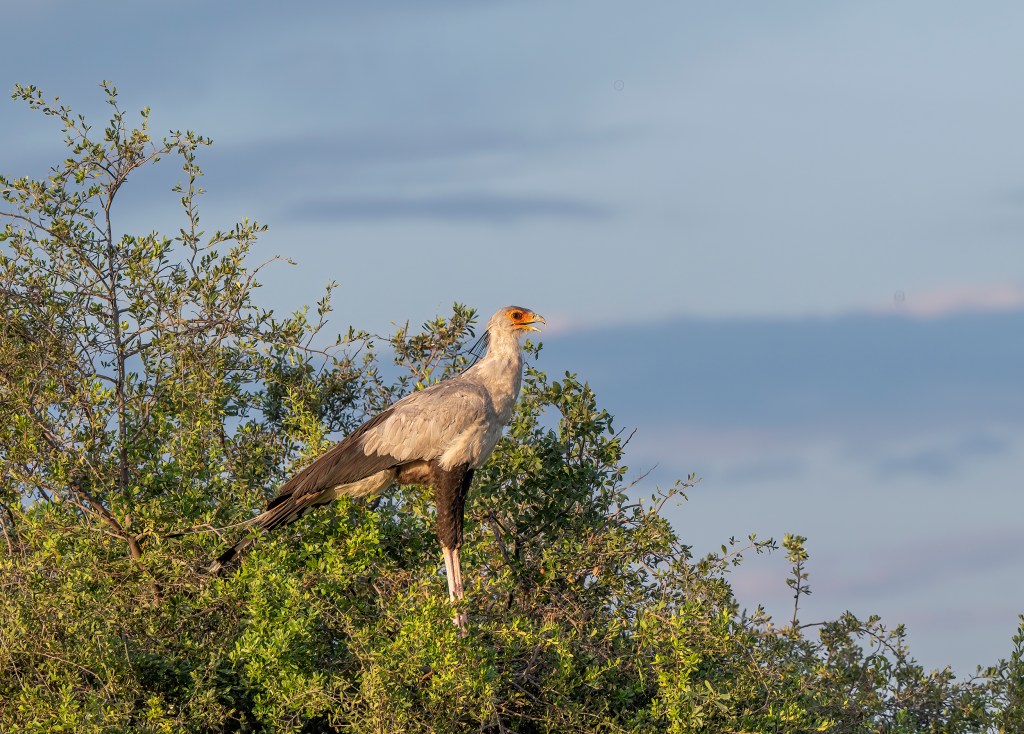
Secretary Birds
Cheetah
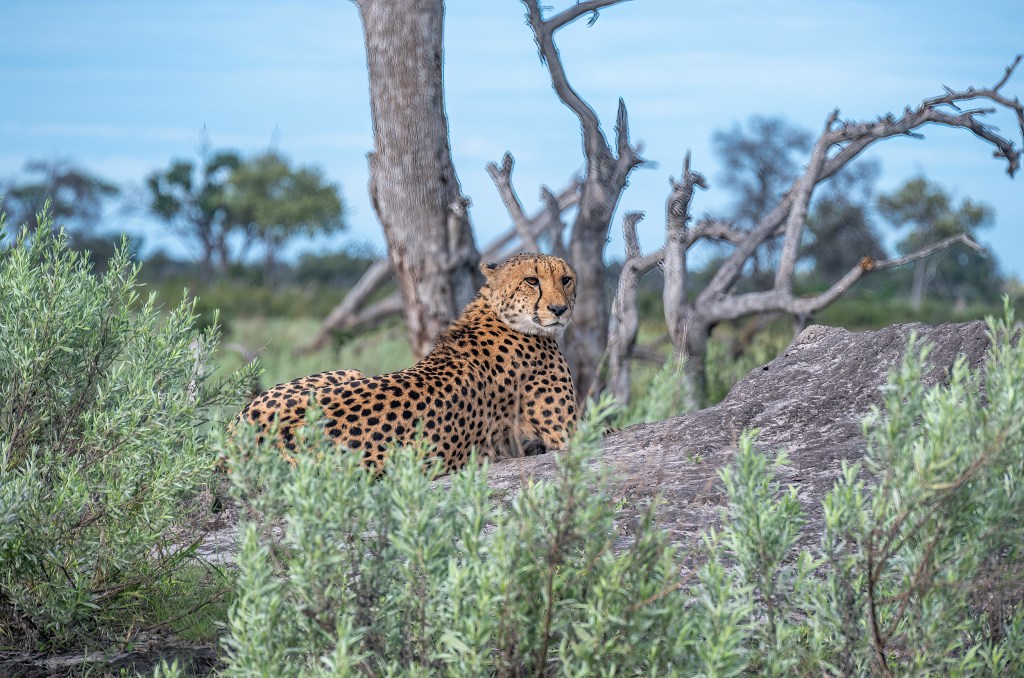
This one cheetah has been dominant in the Kwando Concession for eight years or so. He is called “Mr. Special” because of his tendency to climb into trees, unusual for the species. Karen and I spent a whole day with him last year at Splash.
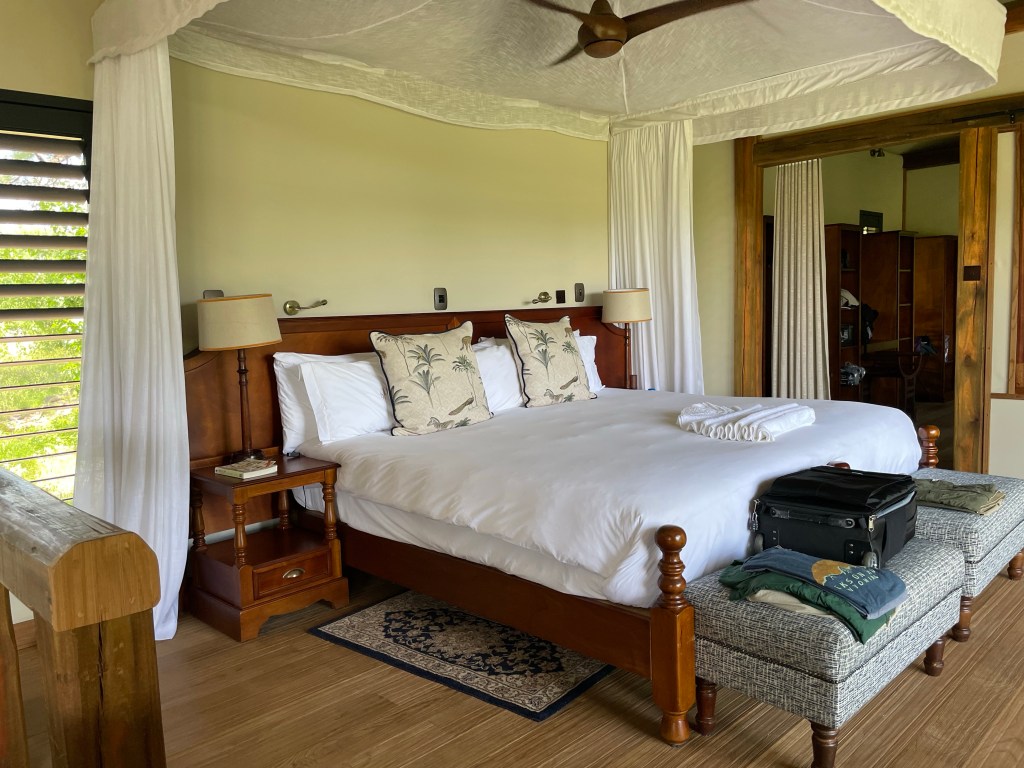
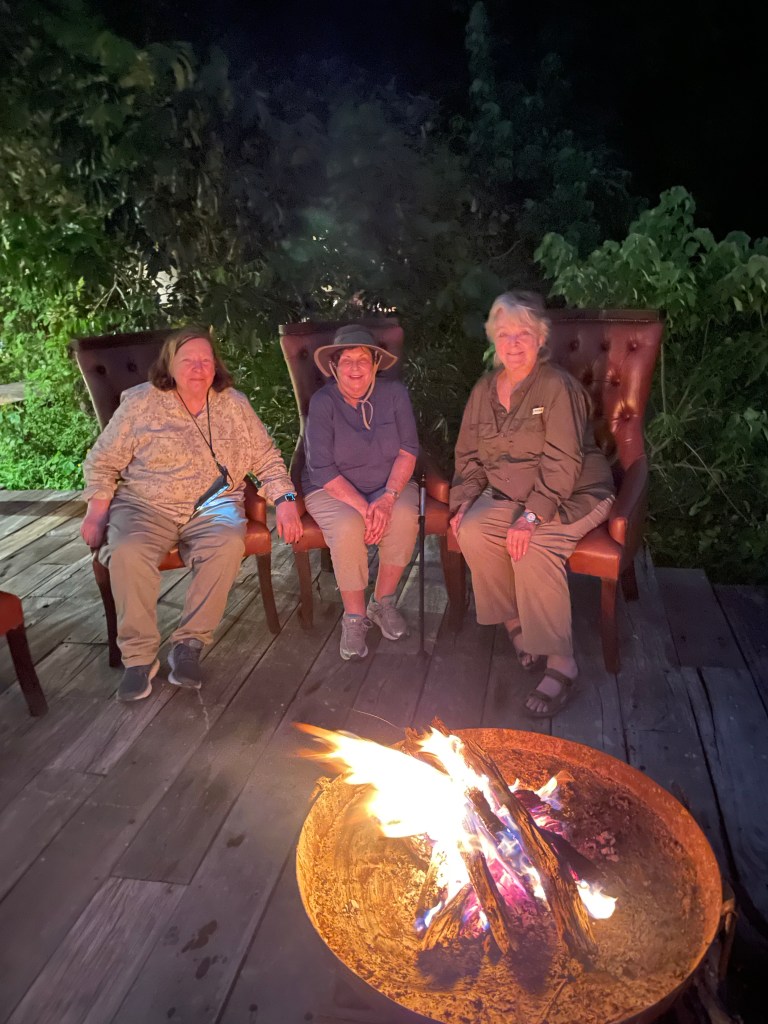
On our recent safari trip to Botswana – our sixth – we had the privilege of spending four nights at Selinda Camp in the Linyanti region of Botswana. Selinda is a premier camp owned and operated by Great Plains Conservation, and a member of Relais and Chateaux properties. The camp is located on the banks of the Selinda Spillway at its’ juncture with the Linyanti River, and consists of the main lodge, three magnificent guest suites and a two bedroom Selinda Suite. The concession is 130,000 hectares in area, and offers excellent game viewing with most of the typical wildlife encountered in Botswana. While at Selinda, we were treated royally, fed gourmet food, rested in luxury and experienced a number of special sightings. I might note that the water levels throughout our trip were higher than we have ever seen, grasses were very tall and wildlife detection difficult at best.
The Camp
Through our arrival the camp was skillfully managed by its’ two gracious and friendly managers Anica and Michael Jones. Anica is South African, Michael English; both have managed propertries in Botswana for some time. They were in the process of moving to another assignment in Great Plains, and have been replaced by Bujos and CeCe Moabi, good friends of ours from Shinde Camp. Bujos is also Bee Poloko’s (Elephant Havens) nephew. Botswana is a small world!
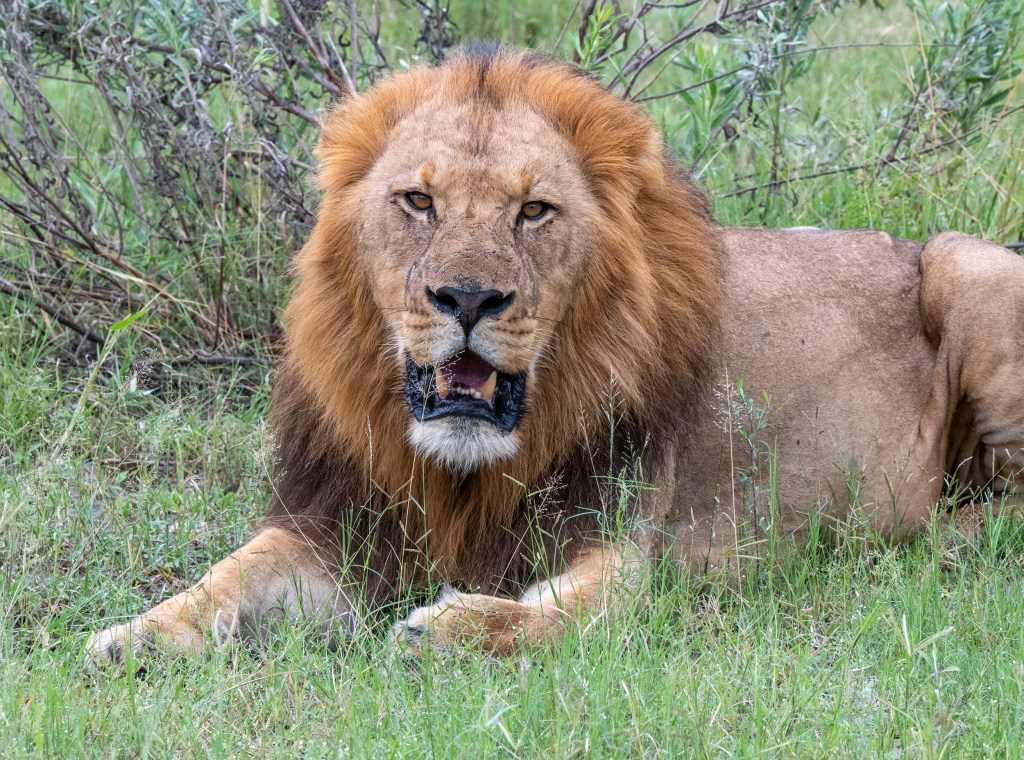
Lions
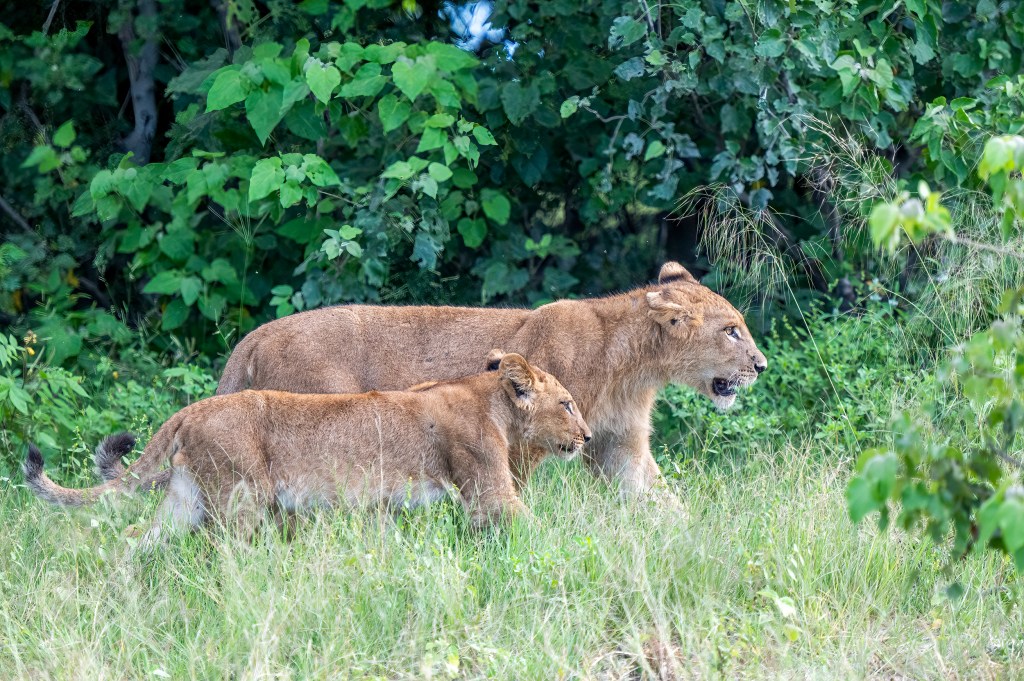
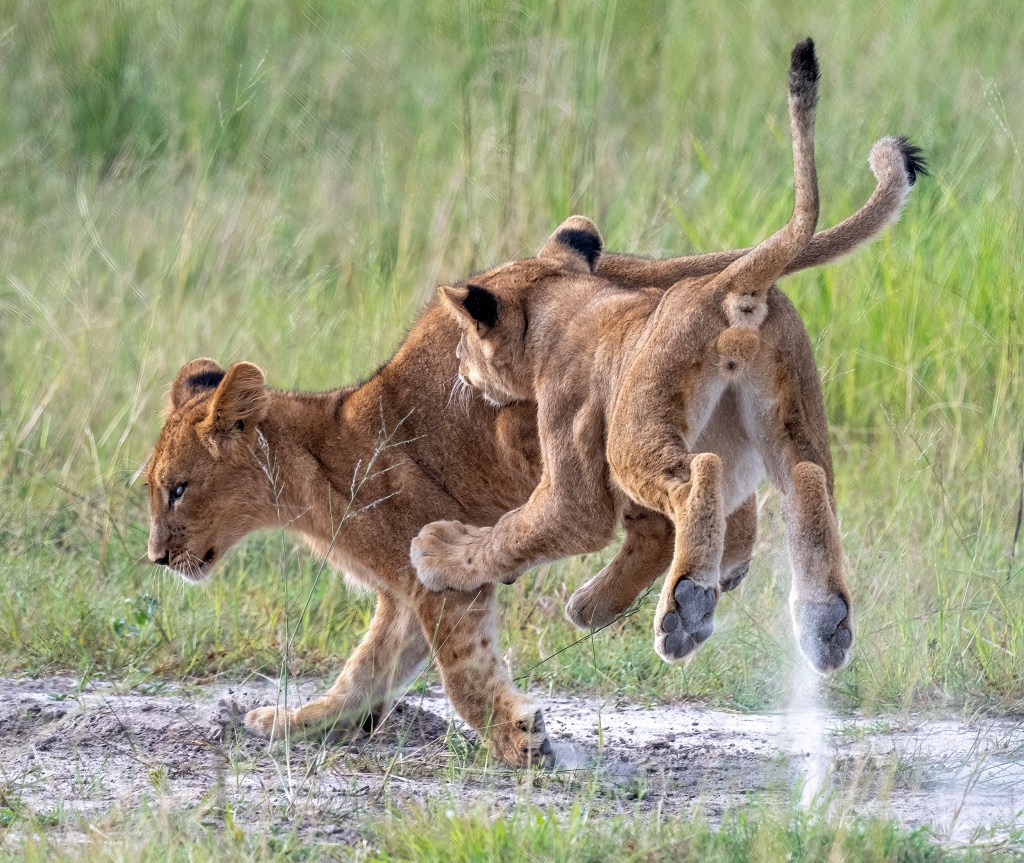
We saw quite a few lions at Selinda. One notable experience included seeing a male and a female lion repeatedly mating – – action was quickly accomplished several times within 45 minutes.
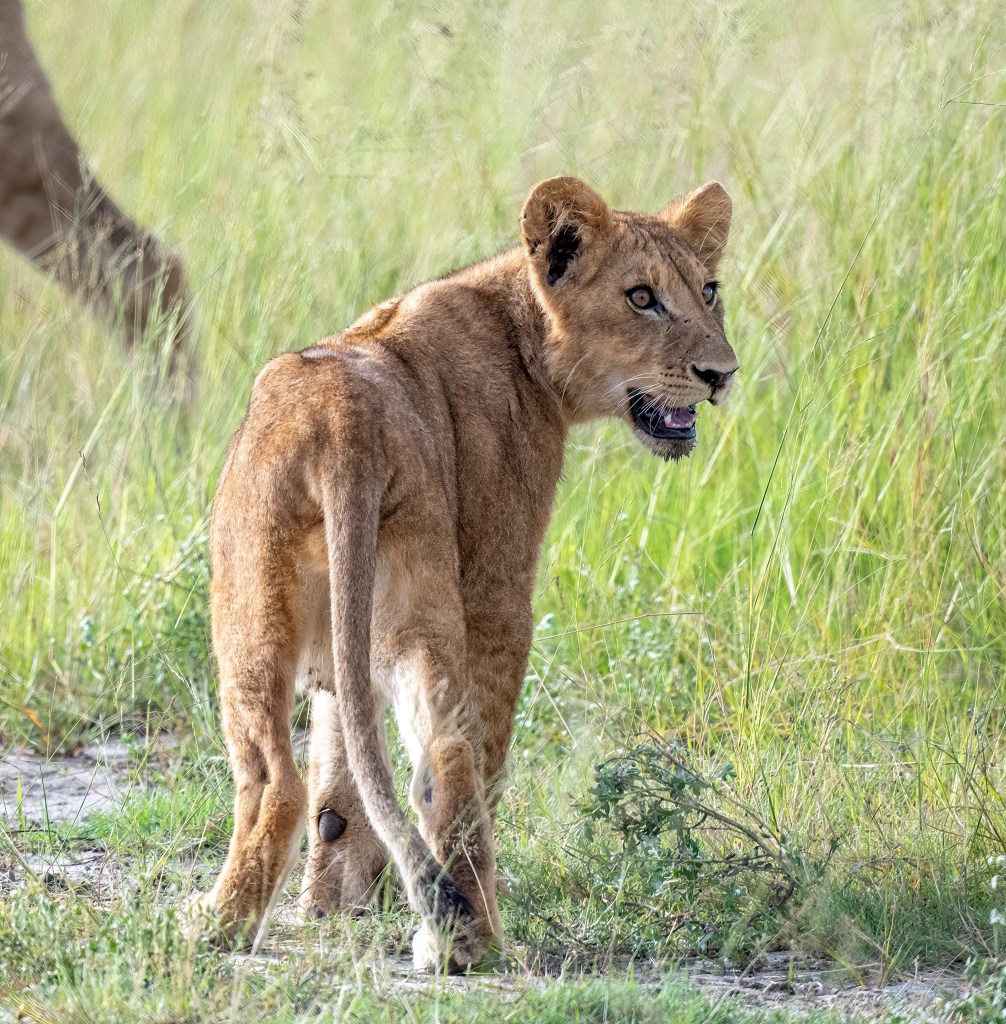
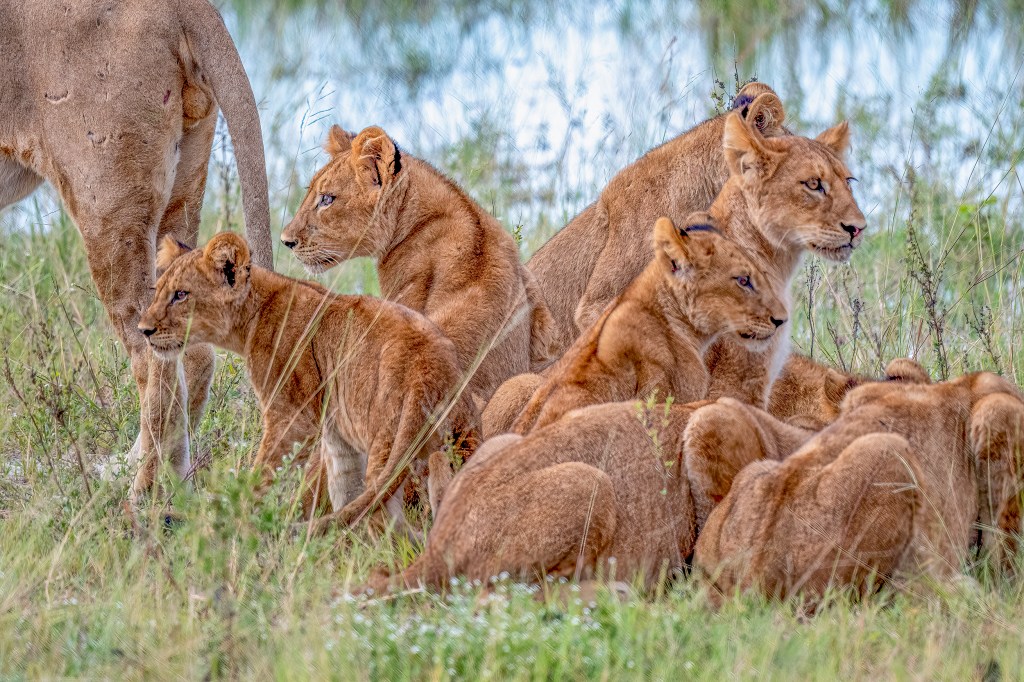
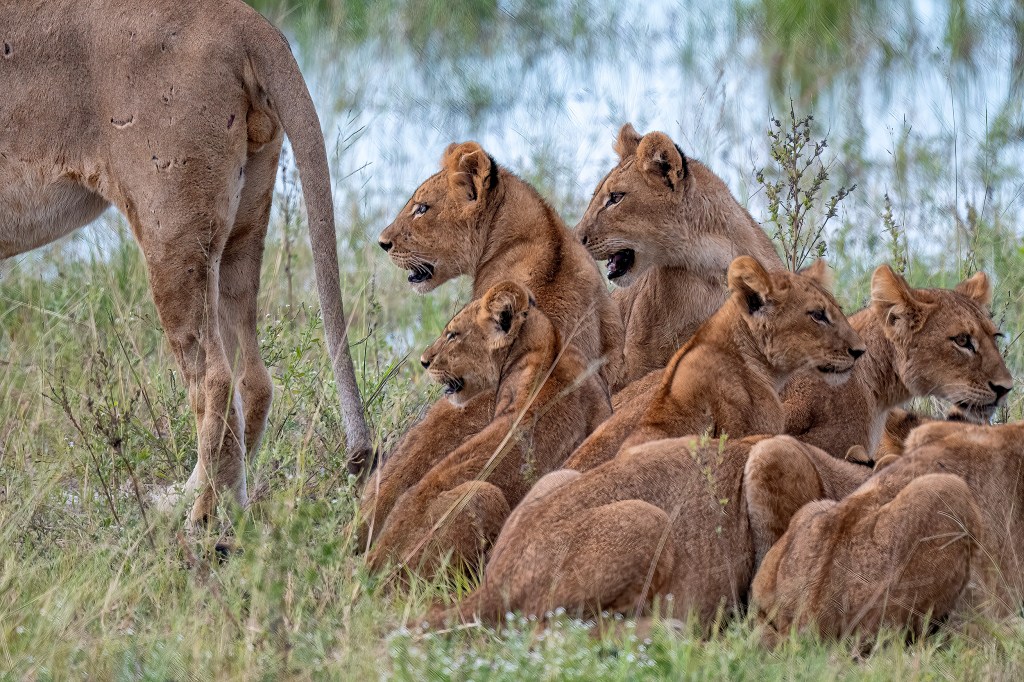
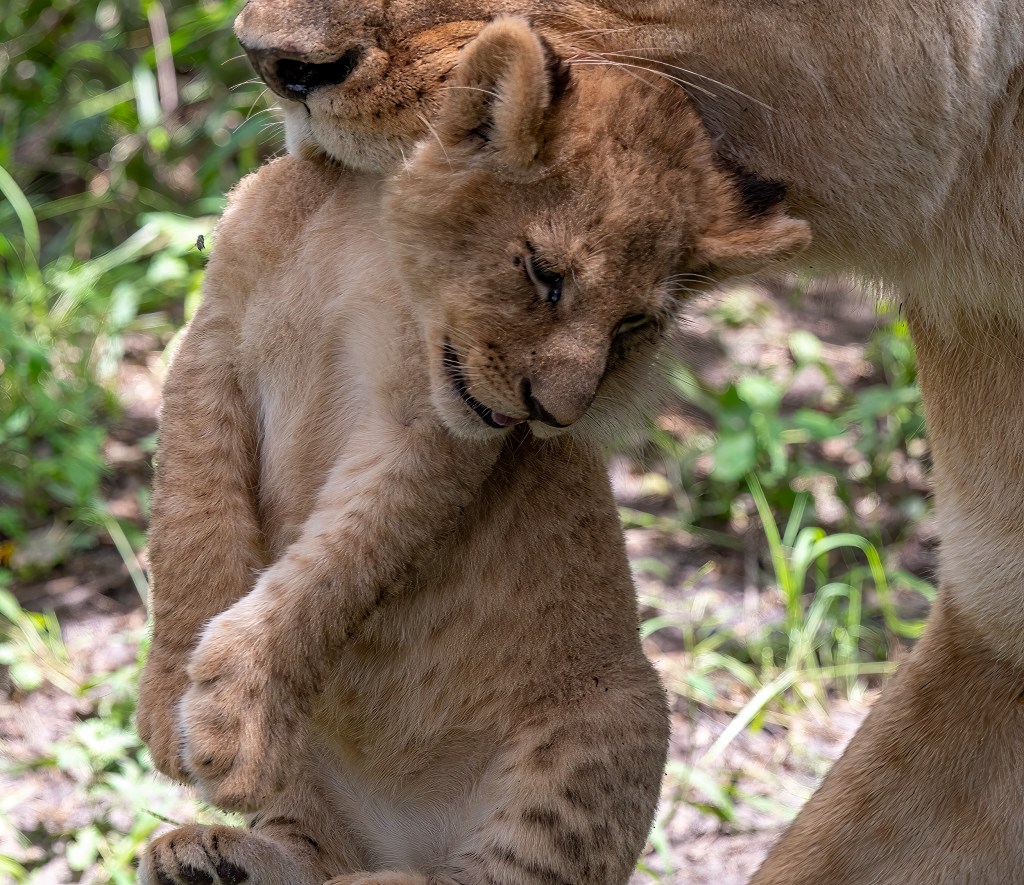
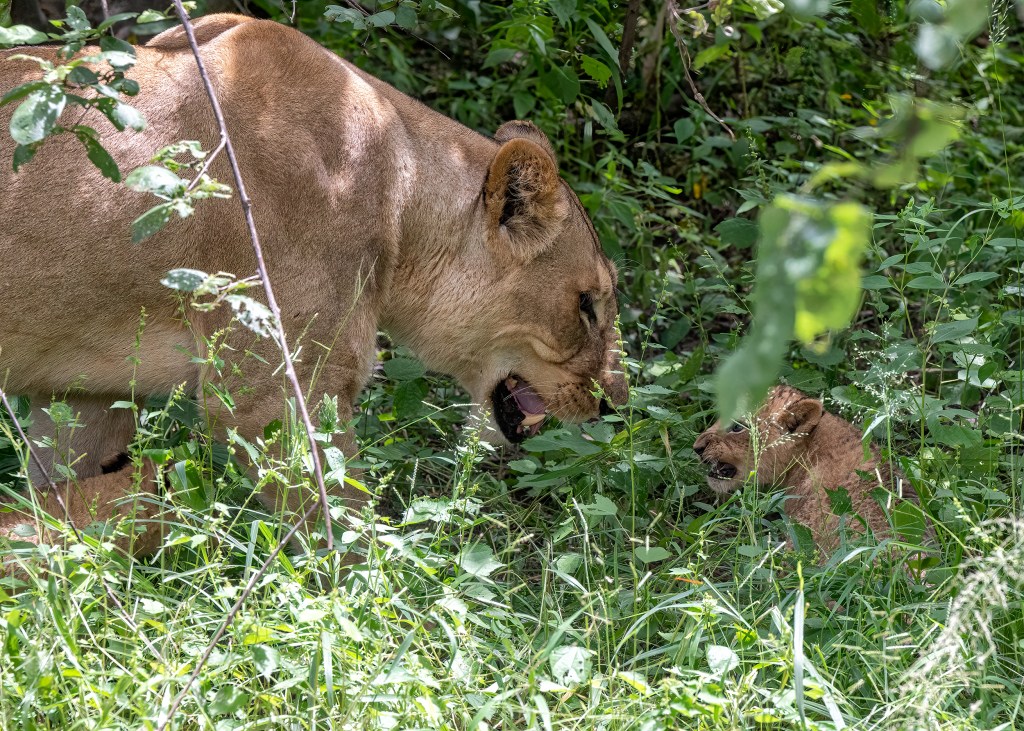
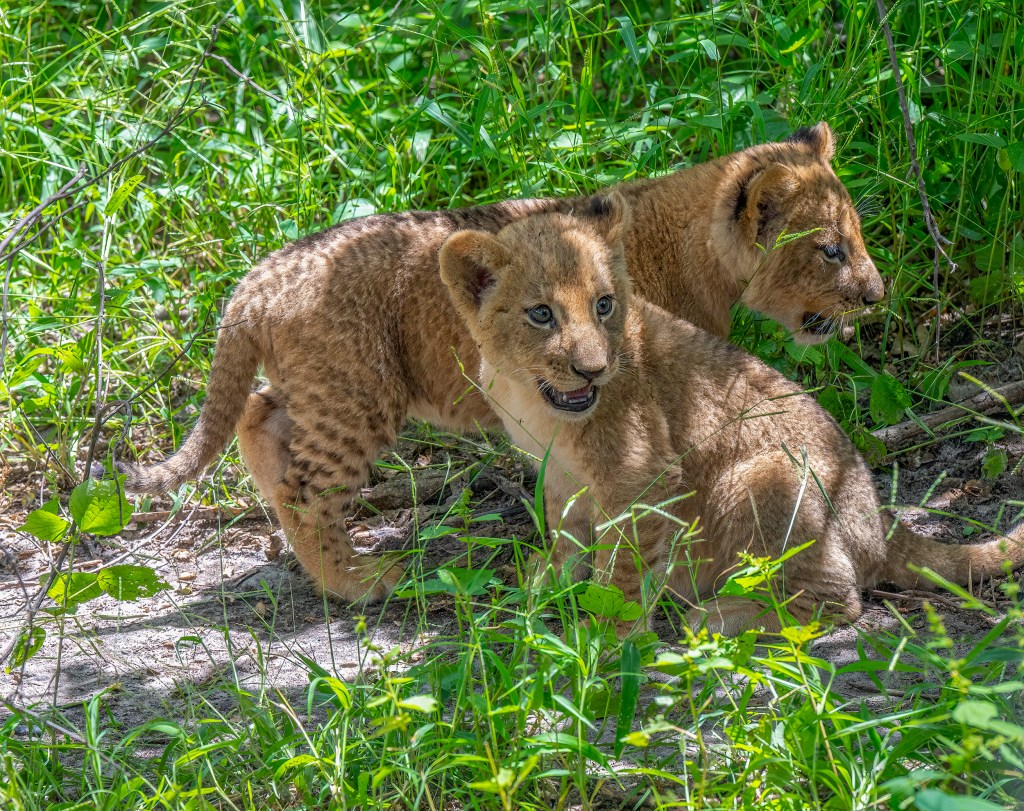
More interesting – and heartwarming – was the sight of lion cubs. Our guides Alex and Opie were aware that one of the local females had three cubs, and we spent considerable time trying to locate the little ones. Finally Opie found them – three small cubs and their mother, who were soon joined by the mother’s mother and her three cubs. What great fun!
The Kill
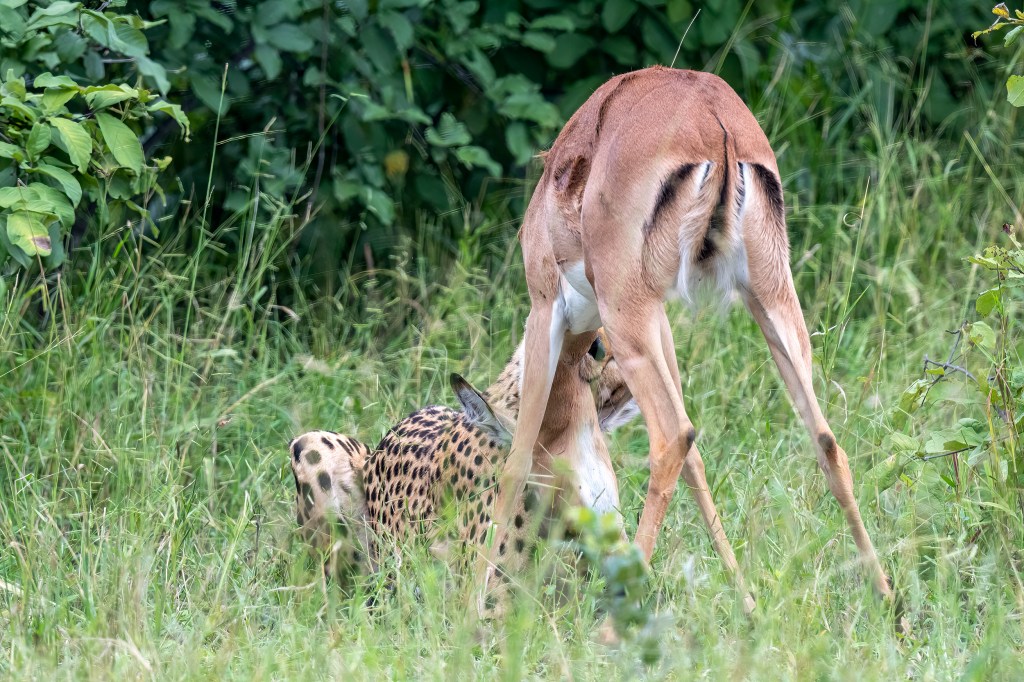
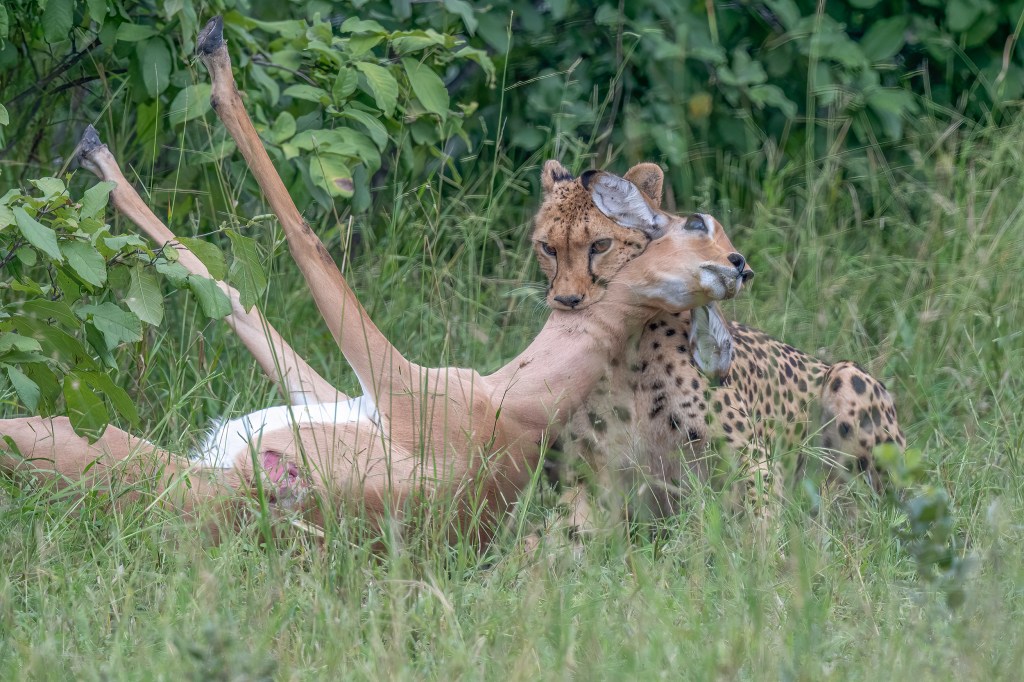
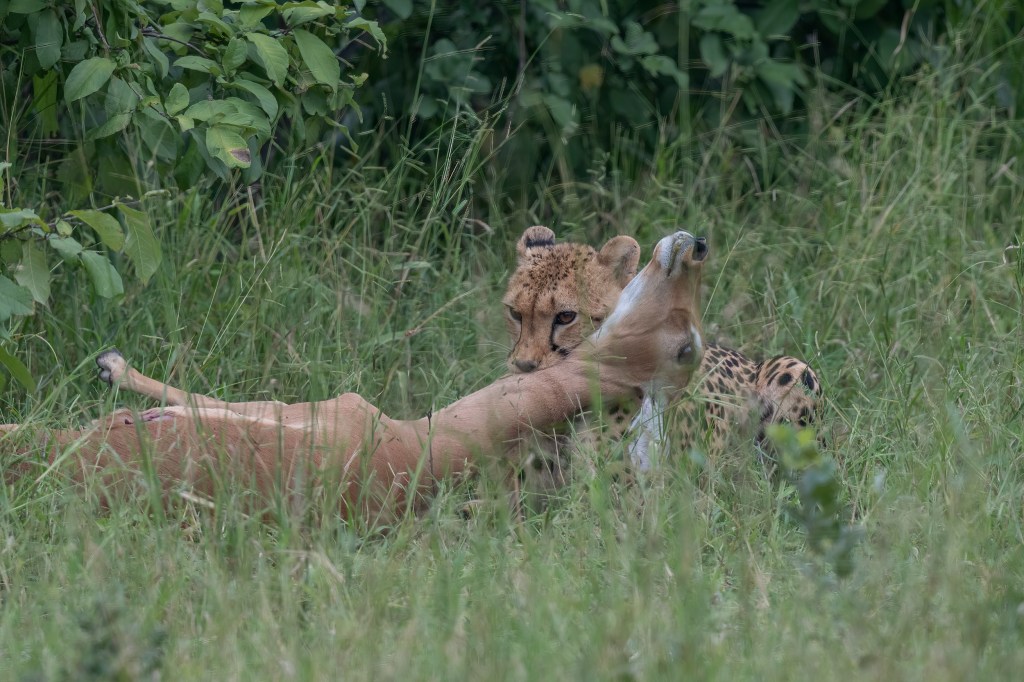
One morning we were driving along, and came upon a small zebra sitting in the grass beside her mother. As we approached the two began to walk away to our left, nearing a fairly large group of impale and more zebras. Suddenly the mother and baby – and others – cam rushing past us in the opposite direction. We then spotted a cheetah pulling down an impala, slowly suffocating the prey and then dragging it onto the adjacent buses. A live kill!
Cheetahs
Sables
Carmine Bee Eaters
We were constantly followed by carmine bee eaters who were going after insects stirred up by the safari vehicle. We all tried to capture these birds while in flight, possible because they tended to return to their original perch. But difficult indeed.
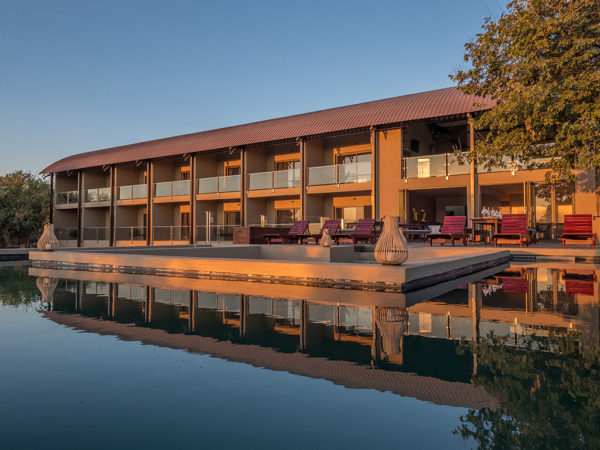
Pangolin was conceived by two individuals in 2011, who saw a potential demand for photographic support of wildlife safaris in Botswana. They began with conducted photo safaris, added a houseboat on the Chobe, then a hotel in Kasane in 2018. The hotel has 14 rooms and overlooks the Chobe River form an elevated site in Kasane. The boat dock is only five minutes away. Pangolin has several eight chair photo boats, each with swivel chairs and gimbel arrangements for guest’s cameras. Each trip is led by a photo professional; in our case we were well educated by Dennis, who happened to be a high school classmate of our friend Bee of Elephant Havens.
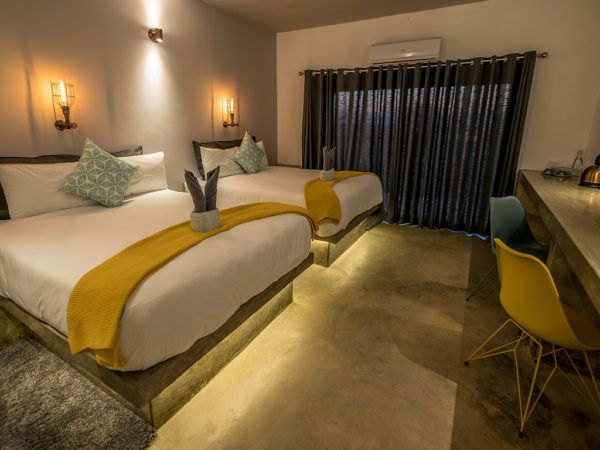
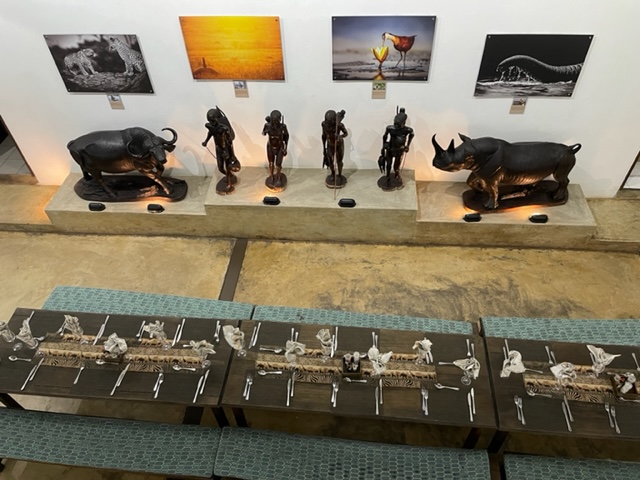
The hotel is very comfortable, and has a main hall with mounted photos taken by their professional. Rooms are quite large and rather rustic in nature with exposed piping and so on. Meals were very nice, and served in a group setting which made making acquaintances quite easy.
Karen and I can certainly recommend Pangolin as a short stop at the end of a safari, or as a focused stay to learn the art of wildlife photography.