Adventures in Alaska

Two years ago, we took a break from our African visits to go to Alaska for a couple of weeks. Of course we did most of the usual stuff (except cruising on a large ship). We started in Anchorage – lovely city, good restaurants (try Simon and Seafort’s – the halibut cheeks were wonderful), a very well done Anchorage Museum (land, people, art and history of Alaska) , and interesting activity around a busy Lake Hood seaplane base. Then we headed to Denali National Park on the train, a three day journey up, into, and back. This was well worth the time, and something one just has to do. The scenery was awesome, we did see some wildlife (a grizzly, some Dahl sheep, some caribou and a  moose in town). But we did not see the peak; apparently 70% of the visitors do not because of cloudy skies. http://www.simonandseaforts.com. http://www.anchoragemuseum.org.

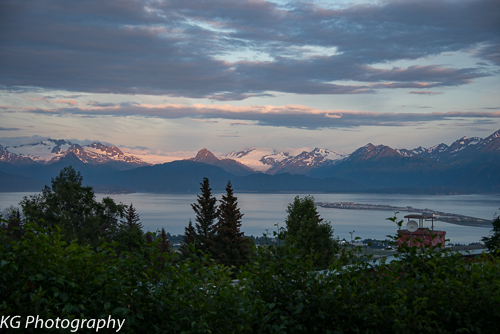
We then drove down the Kenai Peninsula to Homer, and spent three days there. Neat little town with great views of Cook Inlet and the mountains on the afar Katmai Peninsula. Lots of local restaurants and shops, and the famous Homer Spit with its’ equally famous Salty Dawg Saloon. We fished for halibut – caught our limit and later thoroughly enjoyed the eating – a good time, but it was like pulling a dead weight up 100′!TGJ201507120596
Then off to Sitka and an eight day cruise in the Inner Passage, ending in Ketchikan. Wonderful experience to spend that time on a 40 passenger catamaran (with 17 crew) cruising the waters of the Inner Passage.

We had several really neat adventures that I want to tell you about in some detail.

Alaskan Dream

The first is the cruise itself. A small boat cruise like this is very special. We made 36 other friends, and loved the crew from the captain to the chef to the pastry chef to the naturalist to the deck hands. The food was fabulous. The cabins were small but comfortable – all we did there was sleep. The sights were unbelievable. The activities and lectures were both educational and enjoyable. This cruise is an intimate exposure to some of our most beautiful geographic sights, fascinating cultures and wildlife. http://www.alaskandream.com. Some highlights:

  • Sitka is a really interesting town, established in 1799 by the Russians and it functioned as the capital until the US purchase. Highlights include St. Michael’s Russian Orthodox Cathedral, the Naa Kahidi Tlingit dancers at their community house, the Russian Bishop’s House built in 1842, the Sheldon Jackson Museum (Alaskan native ethnographic material), and a harbor cruise (seals, whales and lots of fun to watch sea otters)
  • Icy Straits and Glacier Bay are both spectacular, especially the Marjorie Glacier at the far end. We took an inflatable boat ride (DIB) and walked around Reid Glacier, a neat experience.
  • The best of Juneau – a lovely seabound city – was the Mendenhall Glacier. We also enjoyed a wonderful Alaskan outdoor evening eating salmon and crab at the Orca Point Lodge.
  • Cruising up Tracy Arm is  great experience – 400′ cliffs, waterfalls galore, glaciers and a DIB ride among the bergs and close up to the main face.
  • The highlight at Wrangell, after several hours on our way there watching humpbacks cavorting, was a trip to Anan, which is covered later.TGJ201507190213
  • At Thorne Bay we were treated to a peaceful walk through the forest to Whale House, a Haida meeting place, and a talk about Haida culture.
  • Then we had a visit to Metlakatla, an Indian community including the community center, a school and a native dance exhibition.
  • The cruise finished at Ketchikan, an interesting but commercial stopover for the big cruise ships.TGJ201507230124

Anan Bear and Wildlife Observatory

Hop in a jet boat at the dock in Wrangell, and head south along the shores of Wrangell Island and the mainland for 35 miles on an exhilarating ride to a special place. After a 30-35 minute ride (yes, that fast) one reaches the entry point to Anan. This is an area regulated by the US Forest Service, and access is limited to 60 people per day. Take a moderately difficult walk along a narrow boardwalk with 250 steps (total elevation gain is 150′) accompanied by an armed ranger – there are bears here! Eventually we reach an elevated observation deck, complete with a photographic blind down below, built over a cascading Anan Creek. This was an ancient Tlingit native fishing site. Between June and August the salmon and straining to swim up the creek, and there are bears (brown and black)and eagles galore trying to get their share! And you get very close and can take great images. If you are ever going to be in Wrangell you just have to experience this 5-6 hour excursion. http://www.wrangell.com.

Katmai and Bears

Another wonderful adventure is a small plane trip to the Katmai Peninsula to see  bears and  glaciers. Katmai National Park and Preserve protects an active volcano landscape and 9000 years of human history, and is an important habitat for salmon and thousands of brown bears. We took a five passenger (plus pilot/guide) plane on a 45′ flight across Cook Inlet from Homer on Homer Air. The pilot landed us on the beach which was quite exciting but uneventful. We piled out and joined a second group and proceeded to check out the scene for brown bears. We soon found them – in the adjacent meadow, cavorting in the surf, digging in the sandy beach for clams and so on. We had some excitement. Two juveniles came hurtling down the beach towards the group and broke off at the last second! And we waded across a small stream to get closer to some other bears; the return trip was exciting as the tide had raised the water to hip level. While we had waders on, we got wet feet! This is an adventure well worth taking, and runs about $600 for a 5-6 hour day. Our pilot eventually reduced air pressure in the tire, we took off and he showed us closeup glaciers complete with mountain goats. http://www.homerair.com.

By the way, do you know the difference between brown bears and grizzlies??? The answer is basically nothing other than brown bears live by the water and eat fish, and grizzlies live in the mountains and eat meat.

Wildlife Rescue

While there are probably many wildlife rescue facilities in Alaska, we visited two and can highly recommend both. The Alaskan Wildlife Conservation Center (in Girdwood (45 minutes east of Anchorage) is a 200 acre site with a 1.5 mile loop which can be driven. Rescued wildlife is arranged in specific habitats, and can be fairly closely approached for pictures and general observation. The wildlife includes bears, bison, elk, deer, caribou, moose, fox, wolves, lynx, owls, eagles and more. http://www.alaskawildlife.org. The Alaska Raptor Center in Sitka, situated on 17 wooded acres adjacent to the Tongass National Forest, rehabilitates about 100-200 bird annually. They have about 25 Raptors-in-Residence including owls, eagles, hawks, falcons and kestrels; these raptors cannot be released because of permanent disabilities. One can easily do a walking tour in an hour or so, and get quite close to the wildlife. http://www.alaskaraptor.org.

Halibut Cove

My last “adventure” is less wildlife focused, but fun. In Homer, the Kachemak Bay ferry called the Danny J (29 passengers) does several trips daily. One is an afternoon visit to a bird sanctuary on Gull Island, which has 9 species of birds. Another is a dinner cruise which departs at 5 PM and sails across the bay to Halibut Cove (12 miles)and dinner at The Saltry. Halibut Cove is an isolated small community of some 75 residents with no road access. It’s population peaked in 1911 at about 1000 people, when it was a center for old herring salteries. Today it is a little jewel tucked away in Kachemak Bay State Park, and is an enclave of artists, craftsmen and commercial fishermen. There are 12 blocks of boardwalk skirting the water’s edge, with several neat little shops selling hand crafts. Sea otters, harbor seals, porpoise and eagles abound.

The Saltry is a very pleasant little restaurant situated up a steep walkway from the dock, and it has both indoor and outdoor seating. The salt air is infectious and the views of water, forests and mountains from the outdoor deck are spectacular. The fare is of course heavily focused on the sea, with oysters, mussels, octopus, scallops, halibut, wild salmon and black cod featured on the menu. The smoked black cod was indescribable. http://www.thesaltry.com.


Just a few of our most pleasant experiences in Alaska. You must see for yourself of course.


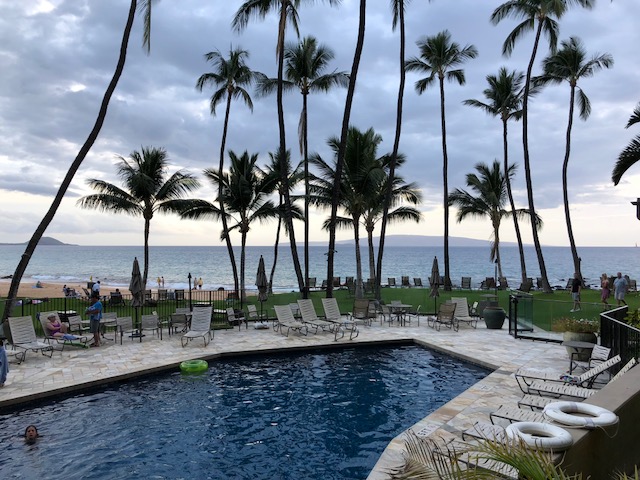
Adventures in Maui

Our favorite Hawaiian island is Maui. We have been to Maui several times, and were actually married there at Kapalua a few years ago. There are lots of activities available on the island, especially those related to the numerous beautiful sandy beaches – swimming, sunning, walking, snorkeling, surfing, windsurfing and so on. But when you are tired of all that, what else is there to do? In this blog post I am going to suggest to you several adventures that you can pursue, show you  some pictures and provide a few tips.

So here we go.

Road to Hana (all day)

Hana is a small town on the southeast coast of Maui. It is located about 42 miles from the small town of Paia, itself a neat shopping experience. The road to Hana is a windy, narrow – but paved – road which contains literally 54 bridges – mostly one way – and some 600 hairpin turns. The scenery is spectacular, with great views of the ocean, the lush rain forest and many cascading waterfalls. The whole trip will take 6-10 hours, depending on how many stops you make. There are many places with hikes, so if you want to do that, the trip will take all day. The “adventure is the journey” as they say; Hana is not the principal objective at all, although it is a very nice little place with a good beach and the only gas station around.

Here are four key tips:

  • Gas up in Hana
  • Download the app from GyPSy Guide called “Road to Hana – Maui”. The narrator will tell you where and where not to stop using GPS signals all the way past Hana; he considers five sights as “must stops”.
  • Eat at the food stands at mile 30 or at the BBQ at mile 29. The food is nourishing if not gourmet!
  • Consider driving past Hana all along the south side of the island. Parts of the road are a little rough but the scenery and changes in environment should not be missed.

Haleakala (half day)

There are two non-active volcanoes on Maui. If you want to see molten lava, go to the Big Island! However the tallest of the two on Maui is Haleakala at 10,023′ above sea level. The “crater” is actually now a valley carved by erosion. Above 7000′ this is a US National Park, and also offers many opportunities for biking (from 700′ down) and hiking. The real attraction since the late 1800’s has been to watch the sun rise over the volcanic crater. As Samuel Clemens wrote “this was the sublimest spectacle I have ever witnessed”. While sunrise is the big attraction, sunset is also a spectacle and visits during daylight hours offer fantastic views of Maui, Molokai, Lanai and the sea.

Here are four tips:

  • Register your vehicle with the Park Service ahead of time. http://www.recreation.gov. Only 140 vehicles are allowed up the mountain before 7 am.
  • Allow 2 hours from Kihei, and plan to be at the top at least 30 minutes before official sunrise.
  • Dress warmly. Temperatures can go to freezing and below, and it can be windy.
  • For the best views, stand by the railing adjacent to the Visitor Center at the end of the parking lot.

Whale Watching (two hours)

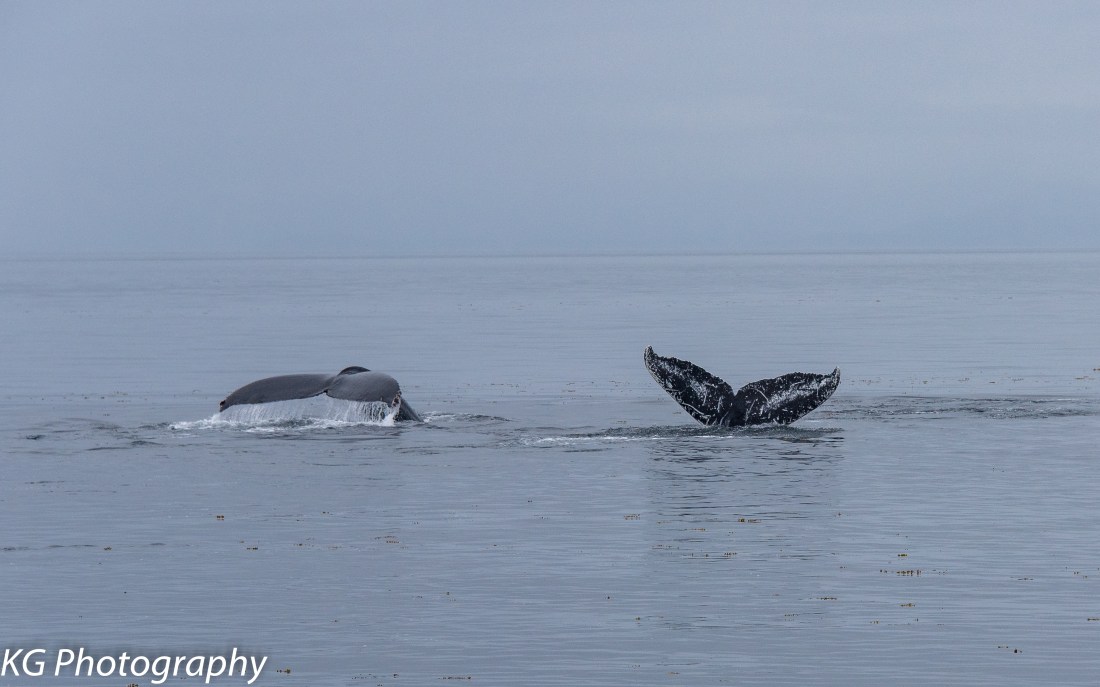
During the winter months, humpback whales arrive in Hawaii from Alaska primarily to breed. A favorite area is the waters between Maui, and Molokai and Lanai as it is relatively shallow and protected. Between December and March there are many opportunities to go whale watching out of Ma’alaea or Lahaina, usually as a two hour trip. The whales, which run to 50′ in length and 80,000 lb in weight, are fascinating to obesrve. One exciting whale activity is a competition pod, where several males try to fight over a single female for the right to mate. This is illustrated in the images below.

Here are three tips:

  • We can recommend the Pacific Whale Eco-Adventures, although one has many choices. The tours are managed by certified marine naturalists who provide lots of information about whale behavior and characteristics, and also provide underwater listening devices .
  • Try to get on early and sit in elevated seats near the front.
  • Don’t spend all your time taking pictures. Watching the mammals is great fun.

Drive beyond Wailea and Makena (two to four hours)

Another neat adventure is a drive  along the southwestern shore below Wailea and Makena, all the way to La Perouse Bay. This is really the end of the road. One can then hike for 5.5 miles along the Hoapili Trail, constructed between 1824 and 1840. This trail runs through the youngest lava field on Maui and ends up at the Hanomanioa Lighthouse. One can see very nice wildflowers, and snorkeling is quite good at the end. The contrast between unvegetated lava and the vegetated upper levels on Haleakala are quite stark.

Here are three tips:

  • If you do the walk, wear good hiking shoes and take water
  • Stop at car park at La Perouse Bay and watch the swells, snorkelers, birds and other action.
  • Take a look at the beach at Makena State Park on the way in or out.

Five Quick Suggestions

  1. Eat at Mama’s Fish House outside Paia. Expensive but the best food on Maui and and a great experience.

    IMG_1953

  2. Go to the Five Palms in Kihei for Happy Hour. Great appetizers and a great view. IMG_1918 (1)
  3. Visit  Ho’okipa Beach near Mama’s, considered the best surfing on Maui. See surfers, wind surfers and lots of sea turtles.
  4. Visit the Iao Valley just outside Wailuku. This is a stream cut valley with great displays of tropical flora and rushing waters.
  5. The beaches at Kameole in Kihei are beautiful, sandy and relatively calm for swimming, sunning, walking and snorkeling.IMG_1910


If you have any questions, please ask and we will try to help. Aloha!!


Xakanaxa Camp

The first time we saw the Okavango Delta was in May 2013 when we arrived by small airplane at Xakanaxa (ka-ka-na-ka) Camp, located in the Moremi Game Reserve north of Maun. The camp is situated on the Xakanaxa Lagoon and is surrounded by leadwood trees. There are twelve tented rooms for up to 24 guests, and the camp is considered to b a traditional safari camp with individual tents and centralized dining and relaxation.

Our experiences were generally positive, with a good assortment of game, decent food and accomodations, qualified guides and pleasant company. The primary negative about the camp is it’s location within Moremi National Park. Offroading and night driving is not allowed. In addition there are several nearby lodges, so we did encounter more vehicles than one would in a private reserve. Overall however the experience was a great introduction to the Okavango Delta.

Here are a few images from the camp.

Hamilton Greenbelt

Hamilton Greenbelt is a local park here in Lakeway, constructed on land given to the city by Jack and Myrtle Hamilton and opened in 1990. The park has several miles of trails which meander through the woods and along both Hurst and Yaupon Creeks. The park is maintained primarily by the Friends of the Parks, a volunteer organization. The Friends recently constructed a well placed and nicely constructed bird blind which we have utilized several times recently. Here are a few images taken a few days ago.


Texas Birds

I have become an avid bird photographer. Capturing birds on a digital camera is quite challenging for a number of reasons. First, it is difficult to get really close, so a substantial zoom lens is essential. I have settled on the D500 Nikon body with either a 200-500 mm lens, or a 300 mm fixed lens with a 1.4x teleconverter. Second birds are likely to move quickly, or are in flight. So one needs a fast shutter speed (I prefer 1/1000 or faster), a wide open setting like f4.0 in order to diminish the background, and an ISO setting above the minimum. I have set my camera to auto ISO and a minimum shutter speed for that purpose. I have also found that a single point focus is best; try to focus on the eyes of the bird in order to get the sharpest pictures.

Where do I take photographs? A favorite site is my own backyard, through the rear window. We have crepe myrtle trees overhanging our spa, and I prefer to capture the birds in the trees or on the spa run-over. Locally we have access to a nicely laid out and situated bird blind in the Hamilton Greenbelt in Lakeway, and this is becoming another favorite site. In addition, when we travel, I often find friends or relatives have bird feeders, and I have taken some neat shots there as well.

So here are a few of my favorite recent images.


Ponds and Other Water in Jackson Hole

While there are certainly lots of vistas including magnificent mountains to see in the area, I love to check out the ponds and small bodies of water for bird like. While we did not see a huge amount, we did spot a few swans, ducks and geese.

National Elk Refuge

The National Elk Refuge in Jackson Hole is a 25,000 acre area just north of town where the elk winter. As many as 4-5000 elk gather here each winter to feed on available grasses and rear their young. It is also common for other wildlife to be seen, including eagles, coyotes, foxes, bison and sometimes wolves, as well as trumpeter swans, ducks, geese and a variety of other birds. The combination of wildlife and some of Wyoming’s most scenic landscapes, including the Teton Mountain

Range, makes the Refuge sleigh ride a great experience.

On the east side of the refuge, one can drive from Jackson Hole for about 1 1/2 miles between the mountains and Miller’s Butte. Often herds of bighorn sheep can be seen in this area. It is not uncommon for these animals to come up to your car and lick off the salt.

_DSC1541_DSC1552DSC_6346DSC_6370DSC_6384DSC_6388Untitled_Panorama6


Teton Barns

Mike Jackson has a passion for barns. He has taken photos of many, and is always on the lookout for more. He will research ownership and take years to get permission to photograph privately owned properties. So when we did a day long photo shoot, we spent a little time looking out for some interesting and accessible barns. I should note that the iconic Moulton barns were not reachable in January as the roads are not cleared. Here are a few we saw.

This slideshow requires JavaScript.

A Photographic Day in Jackson Hole


I was fortunate to find Mike Jackson on a recent trip to Jackson Hole. He has a photographic guide service and , as a long term resident and avid photographer, he knows where to look for scenic and wildlife image opportunities. His work can be seen on his blog “Best of the Tetons”.  Mike and I met at the Jackson Hole visitor center early one morning. It was overcast, so sunrise shots of the Tetons from Snake River Overlook were out. So we headed to Gros Ventre Road through the town of Kelly looking for wildlife. Just north of Kelly – a neat little town with interesting photo opportunities – we encountered a small herd of moose in the drifting snow.

After getting quite a few shots, we headed further north along Ditch Creek and encountered a pair of buffalo trying to root through the snow for grasses to eat. We watched them for some time, waiting for one or the other to raise their heads.

This area was quite pretty, with patches of trees, a few old buildings, the creek and lots of fresh snow. We had seen about 10″ the day before, and at the time light snow continued.

_DSC0980_DSC0974_DSC0965_DSC1006

We then headed back to Kelly for a few interesting shots. I particularly like the one of the old wheels with the Tetons in the back.

_DSC1030

Mike then drove us over to Moose Junction and down Moose Wilson Road to a small pond created by a beaver dam. There were a few of Mike’s professional friends down by the pond watching the antics of a river otter. We trudged down about 150′ through knee high snow to get close to the pond. After a while we saw the otter swimming around, then eventually climbing out of the pond with a frog in its’ mouth.

DSC_6101

We watched for a while longer, then headed back to town for lunch. Along the way, and after lunch, Mike showed me a number of Teton barns, which I will cover in the next post.

Jackson Hole Iditarod

The Pedigree Stage Stop Race is an annual eight-stage sled dog race through western Wyoming and eastern Idaho. The race, which begins in Jackson Hole, is challenging because it is neither sprint nor distance. Each stage is different; it is more about strategy than speed. The race features mushers from all over North America.

We were in Jackson Hole for the race  this year. The town was abuzz form 5 pm on, with the bars and restaurants in the town center area all crowded, with a real sense of excitement. At 6:30 pm the first two sleds set off. Other sleds set off at about ten minute intervals. This was a fairly short leg – a few blocks to the base of Snow King, followed by a torch parade down the mountain and fireworks. A fun event!