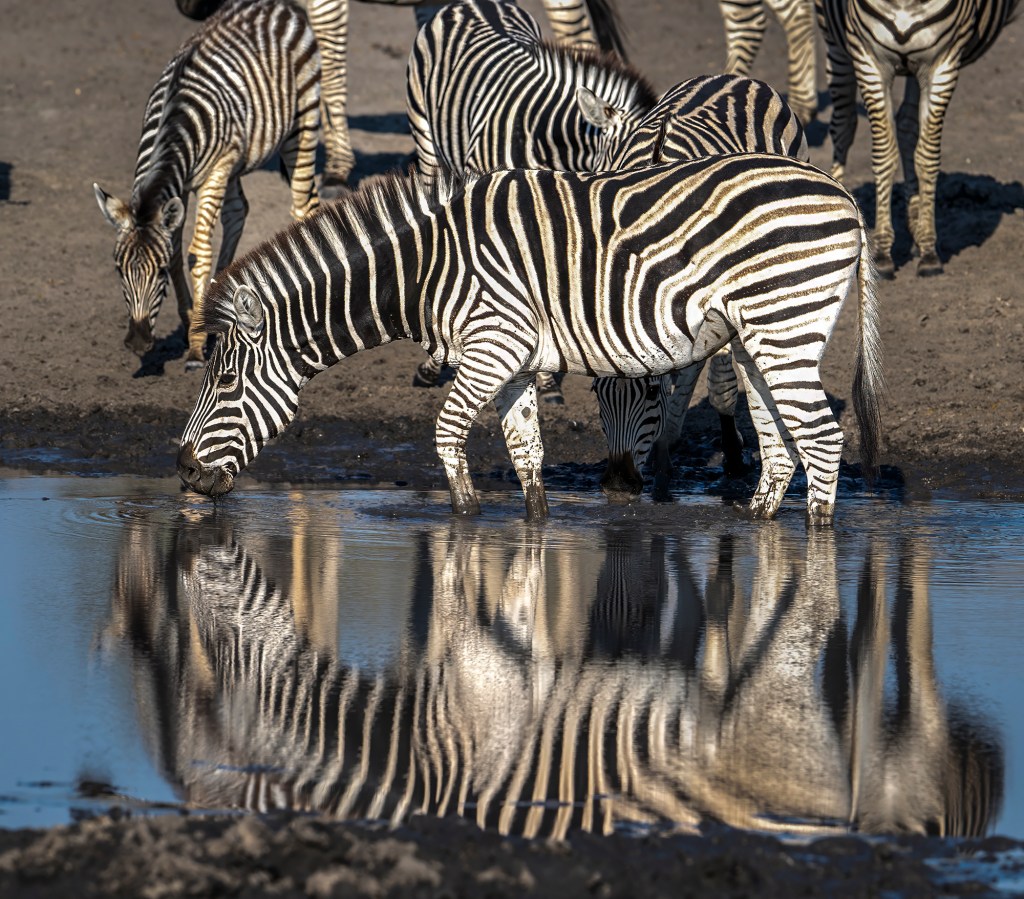
The term zebras refers to any of the three species of strikingly black-and-white striped mammals of the horse family (genus Equus); the plains zebra, found in the rich grasslands over much of eastern and southern Africa; Grevy’s zebra, which lives in arid, sparsely wooded areas in Kenya; and the mountain zebra which inhabits dry upland plains in Namibia and South Africa. The plains zebra is made up of six subspecies; Crawshay’s, half-maned, Grant’s, Chapmann’s, Burchell’s and quagga, which is extinct. Botswana is populated with large herds of the plains zebra, predominantly Burchell’s.
Zebras are closely related to domestic horses. They are large single-hoofed ungulates built for speed and long-distance migrations. They typically stand about 47-55 inches at the shoulder. Plains zebra weigh 400-850 pounds. Sexes are the same size in the plains zebra. Males do have spade-shaped canines used in fighting. The teeth of all three species are adapted for grazing.
All zebras are dark-skinned. Their stripes arise from melanocytes that selectively determine the pigmentation of the fur. The cells transfer melanin into some of the animal’s growing hairs. Hairs that contain melanin appear black, whereas those without melanin appear white. Many have brown tinges or coloring in the white areas, presumably due to lower melanin levels.
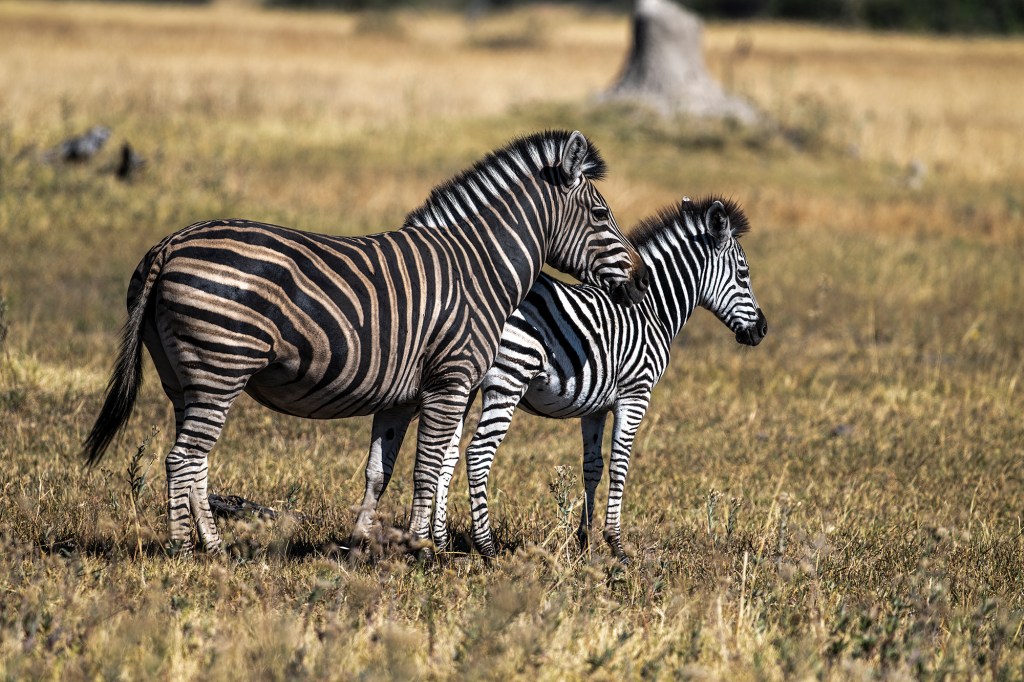
In the plains zebra the stripes are wide and widely spaced. Some have lighter “shadow stripes” between the main stripes. Many scientists maintain that the zebra’s stripes evolved to thwart horse fly infestation. A 2019 study showed that the zebra’s black and white striped pattern appeared to confuse biting horse flies.
Two types of mating systems are observed in zebras. Like the horse, the mountain and plains zebras live in small family groups consisting of a stallion and several mares with their foals. The females that inhabit the harem are unrelated. The females mate only with their stallion. Gestation is 11-13 months, with one foal only. Foals nurse for about 12 months.
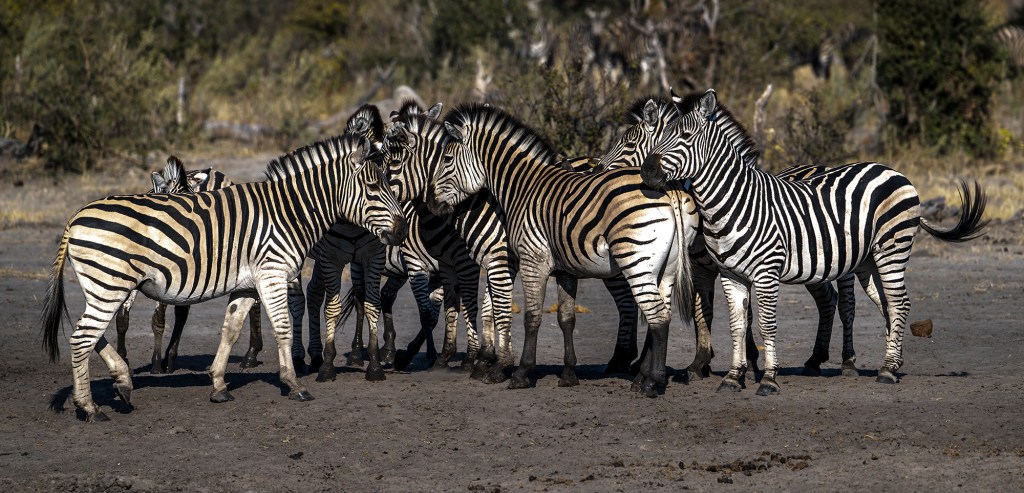
With plentiful food, small groups may coalesce into large herds or “dazzles” and still maintain their identity. When we were at Four Rivers Camp this year, we saw huge collections of zebras estimated at 400 animals or more. Zebras often form mixed herds with other mammals such as wildebeests and giraffes. Zebras with young colts avoid predators such as hyenas by forming a cluster around the mother and foal. Available surface water is a critical need.


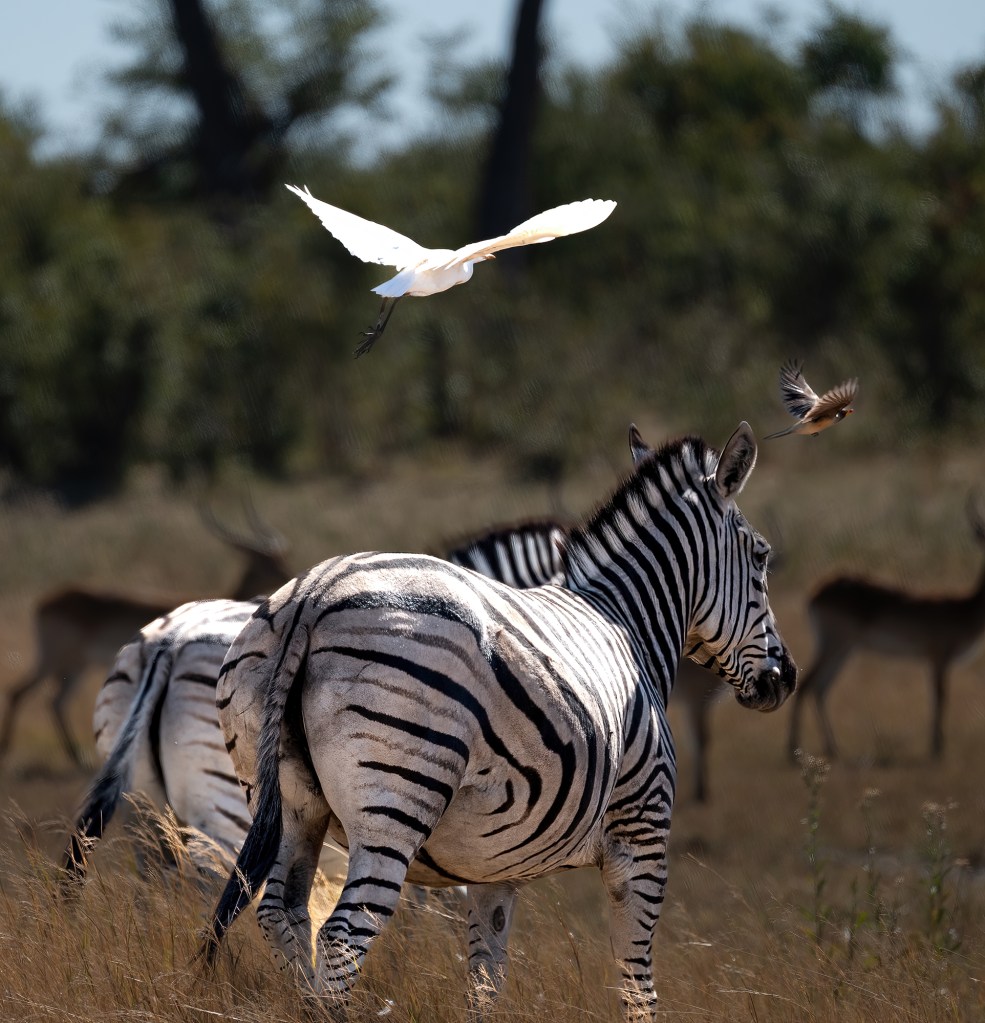
Zebras are considered to be in the “near threatened” category. All three species have decreased in abundance through human activities; Grevy’s are considered an endangered species.






 The Carefree Photographer