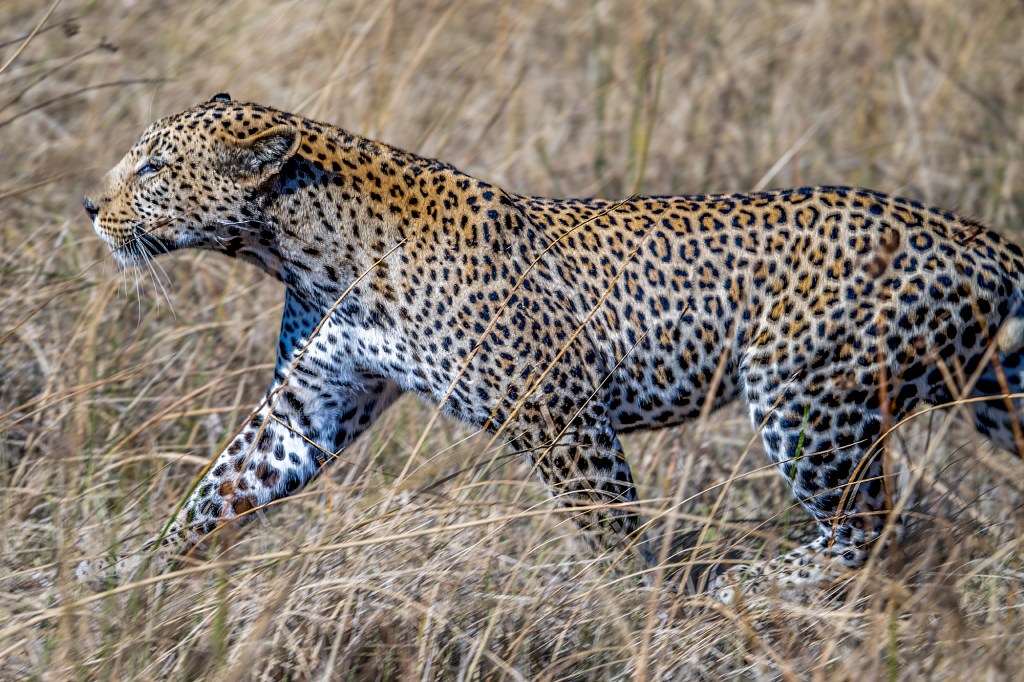
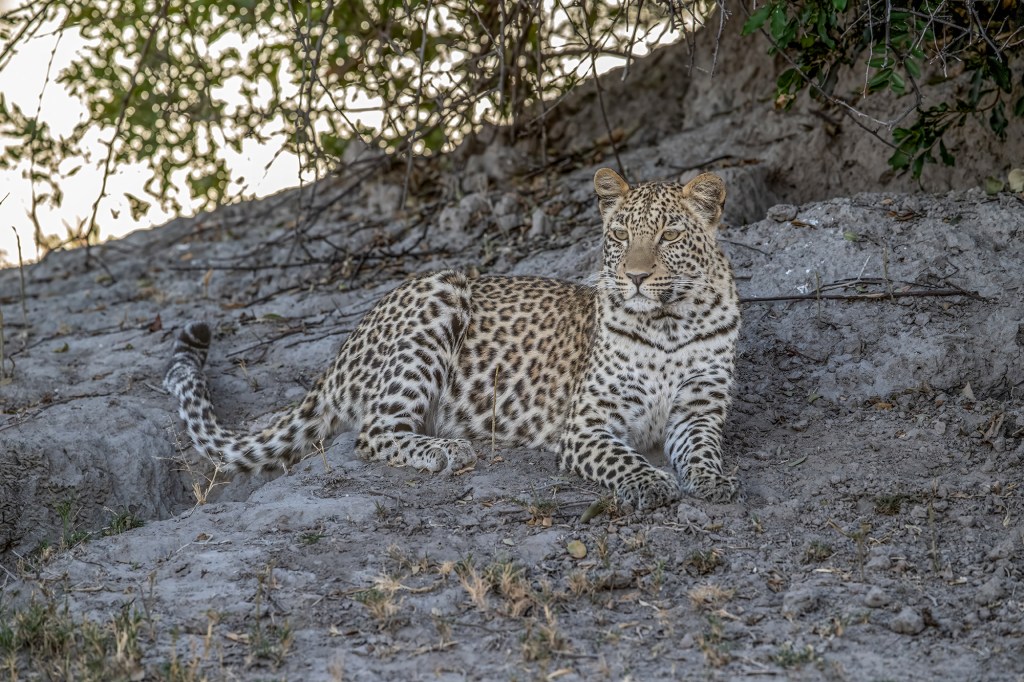
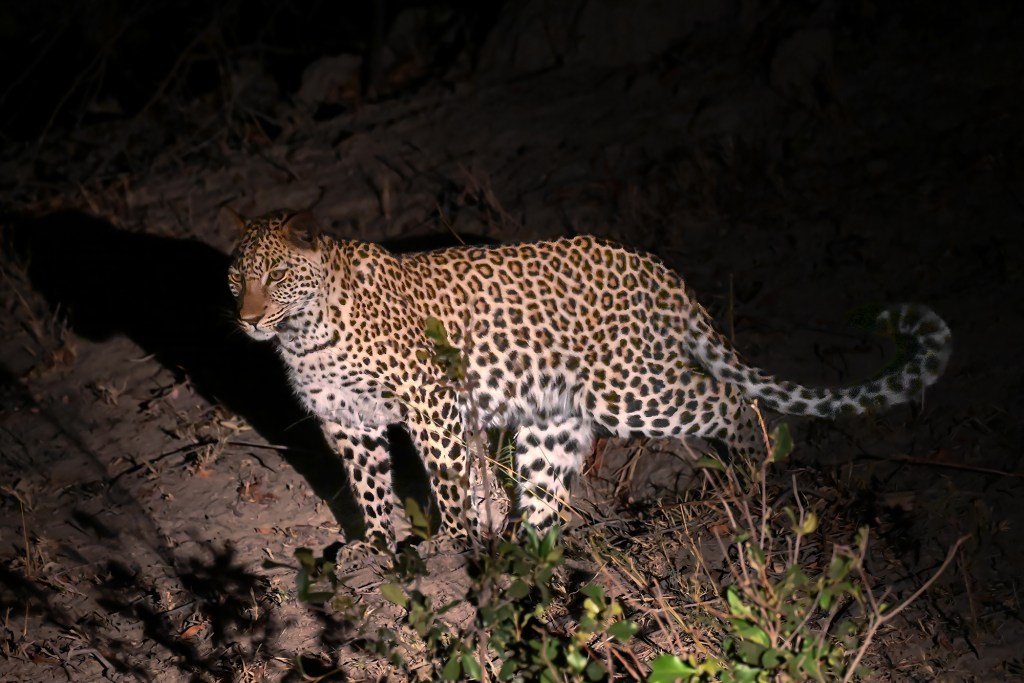
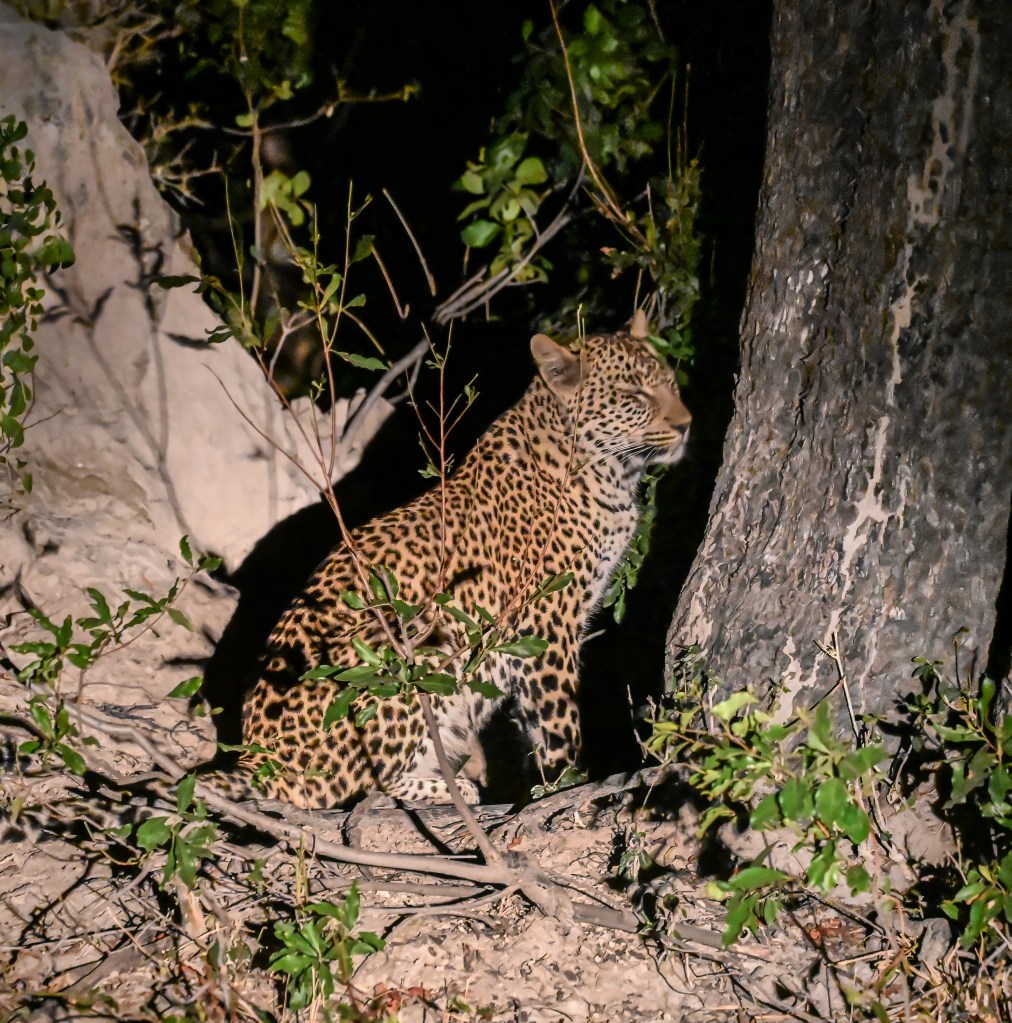
Many find this species the most desired sighting in Africa. Leopards are many times difficult to find as they tend to hunt primarily at twilight and night and are quite solitary. On this most recent trip we were fortunate to see about a dozen leopards in eight days. More than usual for sure!
Leopards are found primarily in Africa ans Asia, with eight subspecies recognized. They are adapted to a variety of habitats. They are opportunistic predators, relying on their spotted patterns for camouflage as it stalks and ambushes its prey. They are active and very strong tree climbers, often hauling their dead prey up into trees, mainly to avoid theft by lions, hyenas and other predators.
They are also territorial and can wander for many miles to mark their territory. Leopards prefer medium-sized prey which tend to concentrate in small herds in wooded areas. These include impala, bushbuck, duiker and chital. They also hunt smaller prey such as jackal, fox, genet and cheetah. Typically the animal are killed by suffocation. Average daily meat consumption for an average male has been determined as almost 8 kg. Their main enemy is the lion, responsible for more than 20% of leopard deaths at one major reserve. In fact on this trip, we saw a dead female leopard who had an impala kill in a tree. She had come down for a break, and on her return was ambushed by two male lions.
Gestation period is 90-105 days, with litters of two to four cubs common. On average 40% will not live a year. Males at maturity reach 60-70 cm in height at the shoulder and weigh 30-70 kg. Their top speed is nearing 40 mph.
Leopards occur widely in Africa, the Caucasus and Asia. In Africa they are still numerous and surviving, although there is considerable potential for human-leopard conflict due to leopards preying on livestock. In addition, expanding human populations continue to diminish available areas for wildlife. Historical ranges in Africa are only about 50% of that in 1750, and most are now in sub-Saharan areas. Leopard population estimates in the world range from 50-100,000. Botswana population is thought to be 3-5000, mostly in the Okavango Delta. They are also fairly abundant in the Indian subcontinent, with a population estimated at 12-13000. We were told on our India trip earlier this year that leopards at a preserve near Jaipur commonly hunted dogs in the urban area at night.







 The Carefree Photographer
THEY SOUND BEAUTIFUL, BUT SCARY.
>
LikeLike
Beautiful write up and images Grant, thank you for sharing.
LikeLike
Beautiful Animals Grant, Thanks for sharing !
LikeLike
Really nice, my darling!!!
<
div dir=”ltr”>
<
blockquote type=”cite”>
LikeLike