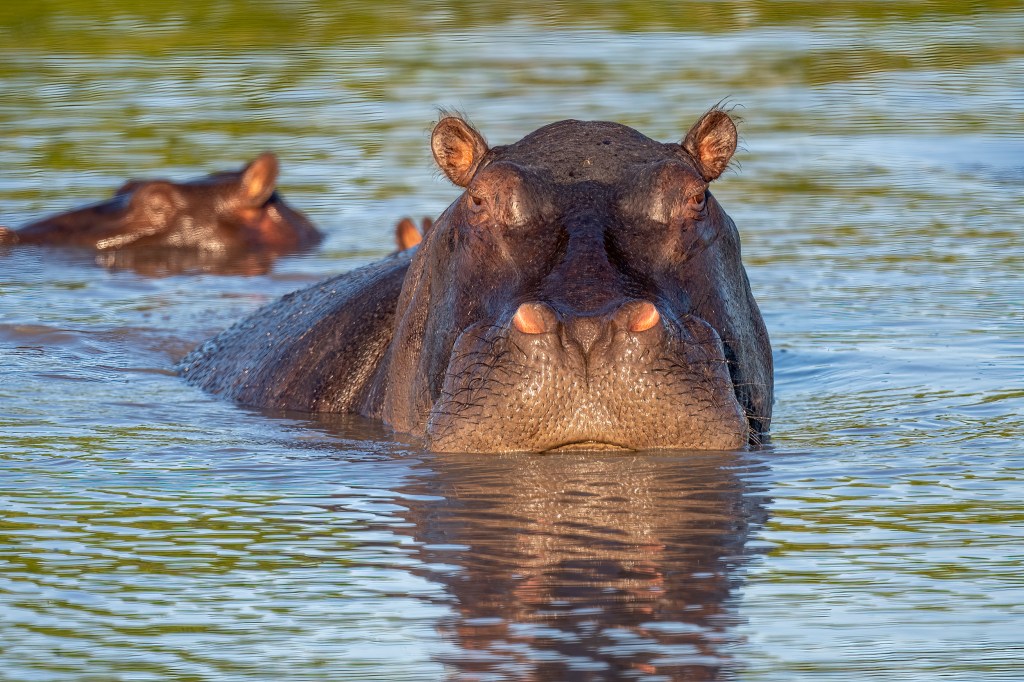
The hippopotamus, also known as the hippo, is a large semi aquatic mammal native to sub-Saharan Africa. After elephants and rhinoceroses, the hippo is the next largest land mammal. The closest living relatives of the hippos are cetaceans (whales, dolphins and porpoises). Hippos are recognizable for their barrel-shaped torsos, wide opening mouths with large canine tusks, nearly hairless bodies, pillar-like legs and large size. Adults average 3300 pounds for bulls and 2000 for cows. They are capable of running almost 20 mph over short distances.

After elephants and rhinos, the hippo is the next largest land mammal. Its’ closet living relatives are cetaceans – whales, porpoises, dolphins and the like. Hippos are recognizable for their barrel-shaped torsos, wide opening mouths with large canine tusks, nearly hairless bodies, pillar=like legs and large size. Adults average 3300 pounds for bulls and 2900 for cows. It is capable of running almost 20 mph for short distances.
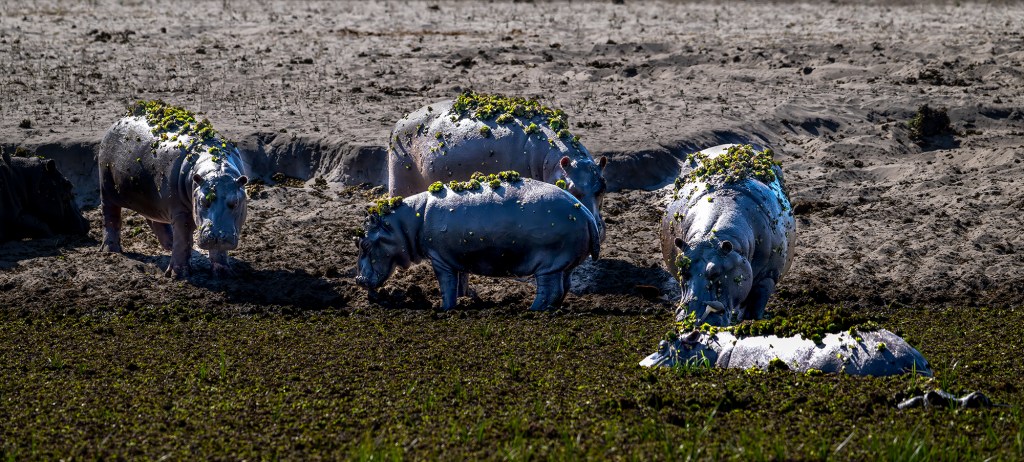
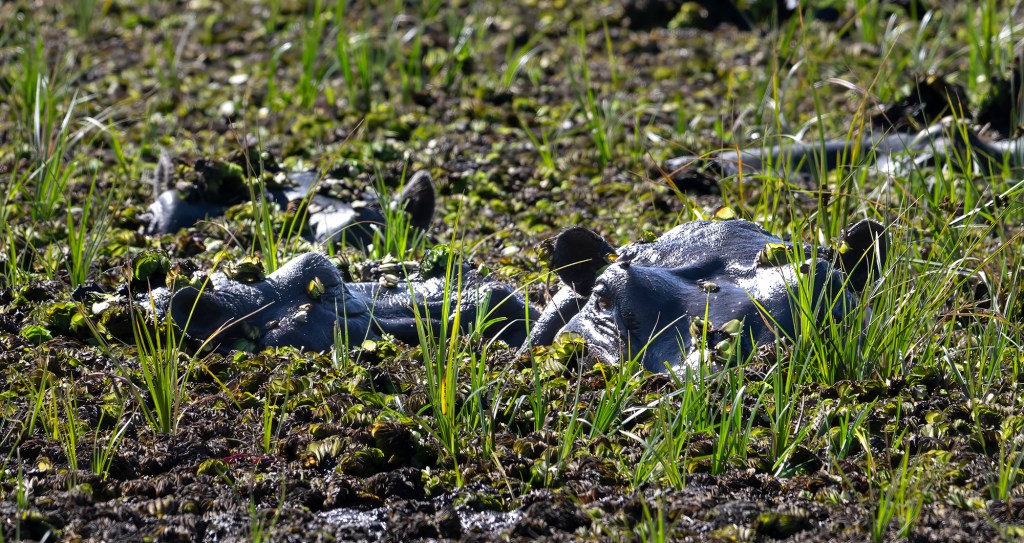
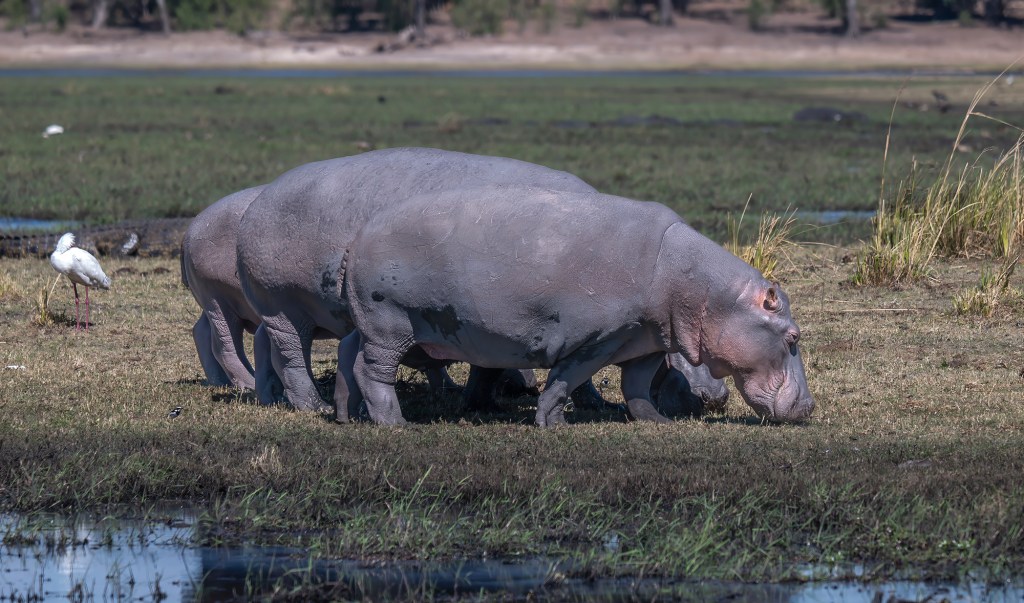
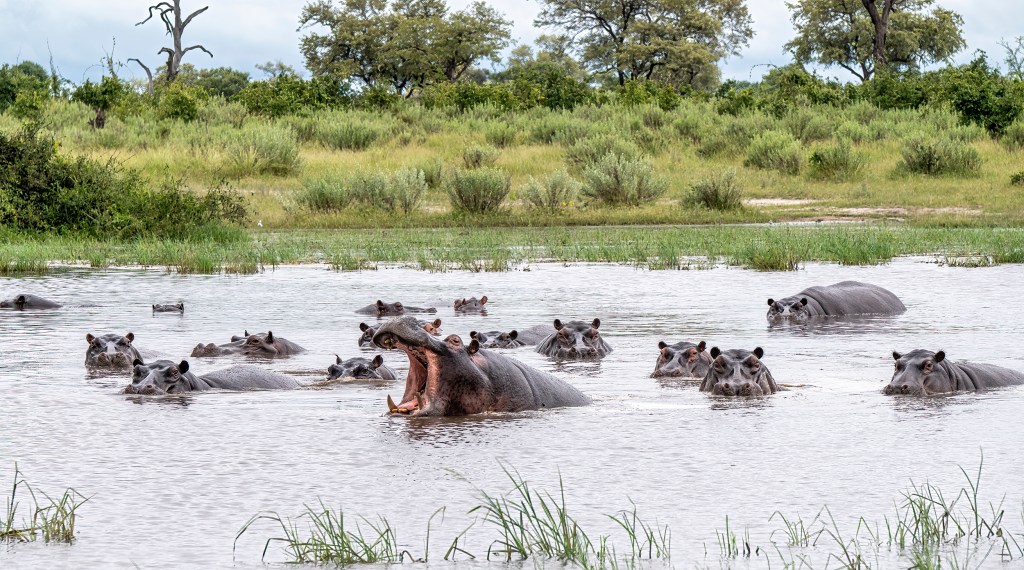
Hippos inhabit rivers, lakes and mangrove swamps. Territorial males each preside over a stretch of water and a group of five to thirty cows and calves. The bull has breweding access to all the cows in his territory. Mating and birth both take place in water. During the day, hippos remain cool by staying in water or mud, emerging at dusk to graze on grasses. A hippo will travel 2-3 miles per night, eating around 90 pounds of grass. By dawn they are back in the water. Grazing is solitary and non-territorial. Hippos are the most dangerous animals in the world due to their aggressive and unpredictable nature. They are threatened by habitat loss and poaching for meat and ivory.
Their skin is protected by a natural secretion of a red-colored sunscreen substance that is sometimes called a “blood sweat”. The hippo’s life span is typically 40-50 years. They are not particularly good swimmers. They rarely enter deep water. They can survive under water for 4-6 minutes at a time. They sleep with both hemispheres of their brains resting, and usually sleep on land or water with the nostrils exposed.
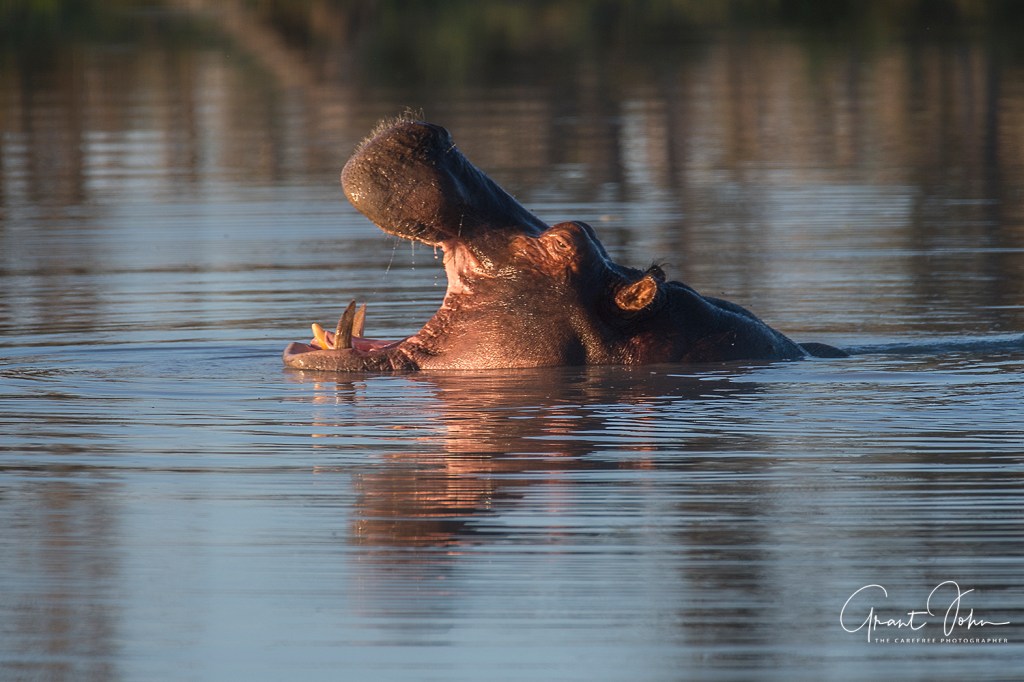
Hippos have a significant impact on the land across they walk, keeping the land clear of vegetation and depressing the ground. Over time they can redirect the path of streams, swamps ans d channels. Yawning, very common, serves as a threat display. When fighting the bulls use their incisors to block each other’s attacks and their large canines as offensive weapons. The most common hippo vocalization is the “wheeze honk”, which can travel over long distances in air. The call starts as a high-pitched squeal followed by a deeper resonant call. The animals can recognize the calls of other individuals.
Cows reach sexual maturity at five to six years of age and have a gestation period of eight months. Females will typically not begin ovulation after giving birth for 17 months. Calves weigh on average 110 pounds. Hippos coexist alongside a variety of large predators including Nile crocodiles, lions and spotted hyenas. Calves are particularly susceptible.




 The Carefree Photographer