Ah, my favorite mammal in Botswana! Alas, this year we failed to see any of these beautiful animals, last year only a small pack of five. So I will use images from prior trips, and these are plentiful.
The African wild dog, also known as the painted dog or Cape hunting dog., is a wild canine native to sub-Saharan Africa. It is the largest wild canine in Africa. It is estimated that there are around 6600 adults living in 39 sub-populations, all threatened by habitat fragmentation, human persecution and outbreaks of disease. As the largest population probably consists of fewer than 250 individuals, the African wild dog has been listed as endangered by the authorities.

The English language has several names for the African wild dog, including African hunting dog, Cape hunting dog, painted hunting dog, painted dog, painted wolf and painted lycaon. The term painted dog is preferable to avoid negative impressions.
The dogs possess the most spectacular adaptations among the canids for coat color and diet and for pursuing its prey through its running ability. It has a graceful skeleton, and the loss of the first digit on its forefeet increases its stride and speed. This adaptation allows it to pursue prey across open terrain for long distances. They illustrate the most vivid varied coat colors among mammals. Individuals differ in patterns and colors, indicating a diversity of the underlying genes.The African wild dog is largely isolated from gene transfer with other canid species.
The African wild dog is the bulkiest and most solidly built of African canids. The species stands 24-30″ at the shoulders, measures 28 to 44′ in head-to-body length and has a tail length of 11 to 16″. Adults have a weight range of 40 to 80m pounds, averaging 44-55 pounds. Females are usually 3-7% smaller than males.
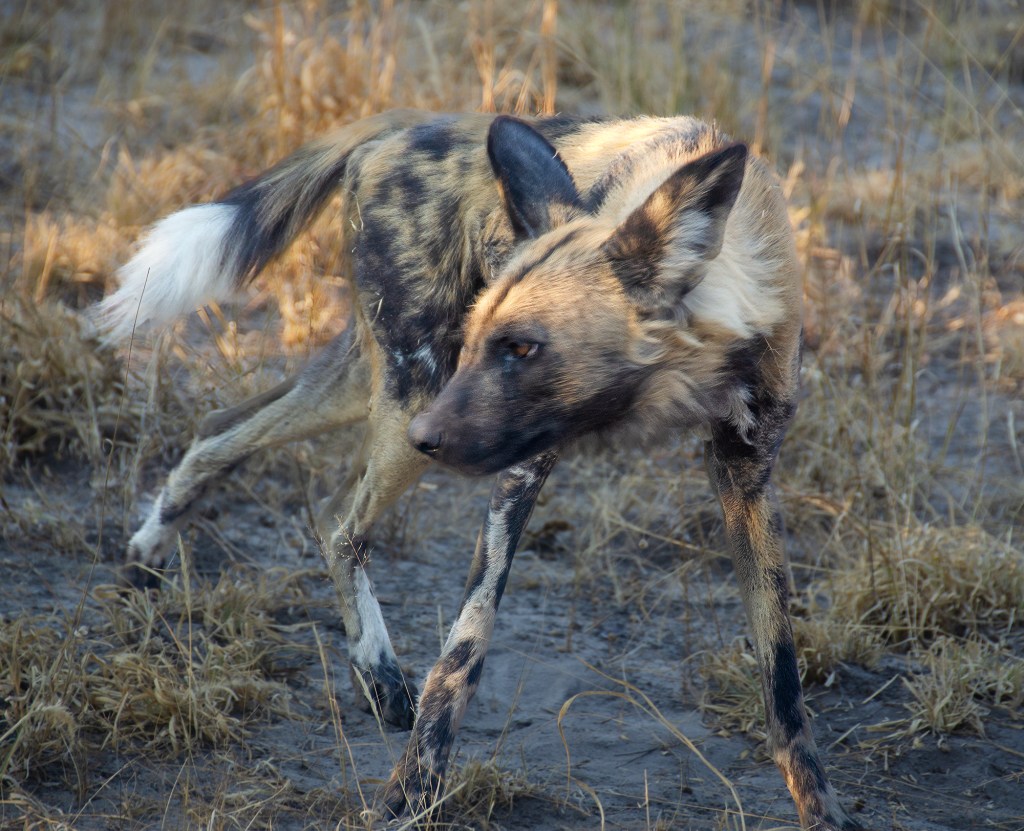
Color variation is extreme, and may serve in visual identification, as the dogs can recognize each other at distances of 160-330 feet. Much of the species’ coat patterning occurs on the trunk and legs. The tail is usually white at the tip, black in the middle and brown at the base.
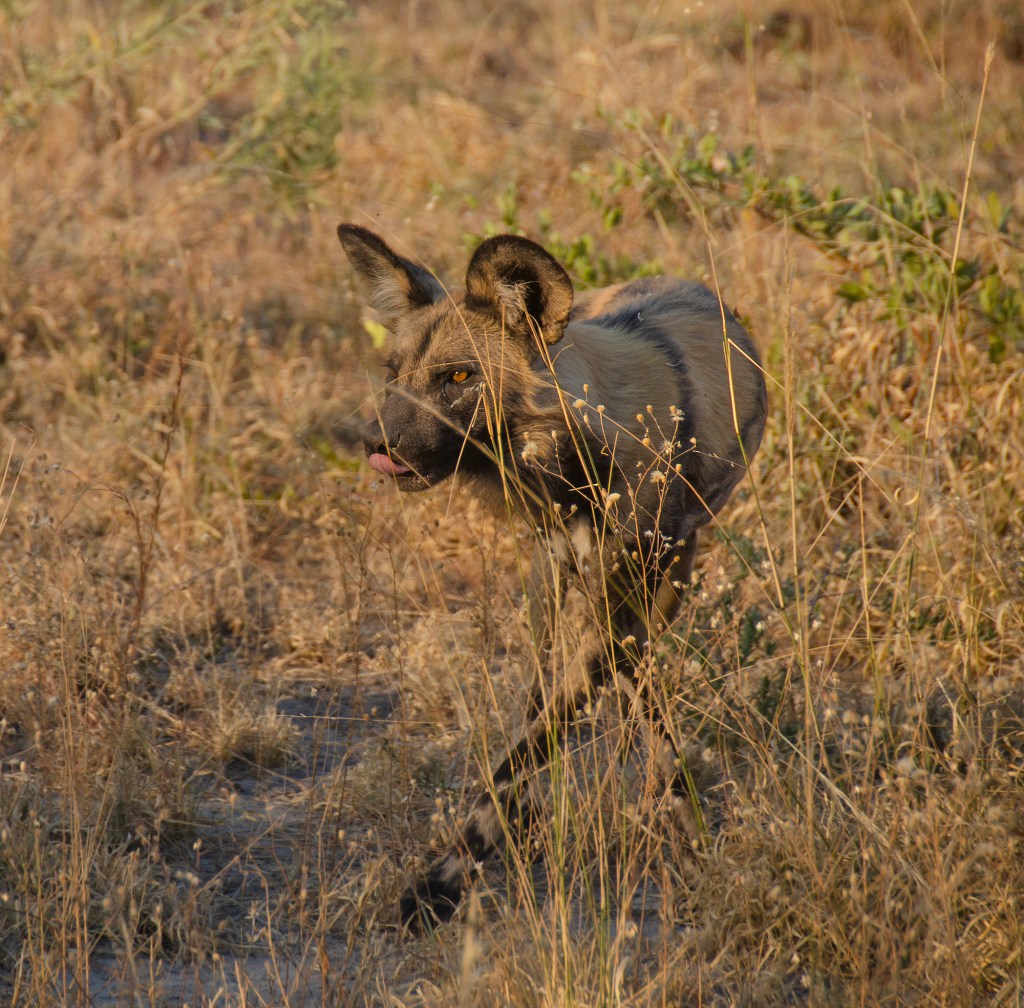
The African wild dog occurs foremost in southern and eastern Africa. It inhabits mostly savannas and arid zones, generally avoiding forested ares. This is likely linked to its hunting preferences, which require open areas that do not obstruct vision or impede pursuit. It travels through scrubland, woodland and montane ares in pursuit of prey.
The dogs have strong social bonds; solitary living and hunting are extremely rare. They live in permanent packs consisting of two to 27 adults and yearling pups. Typical pack size in the Moremi is 8-9 individuals. Larger packs have been observed. Males and females have separate dominance hierarchies, with the latter usually being led by the oldest female. The dominant pair typically monopolizes breeding. Populations in southern Africa usually breed during the April-July period. During estrus the female is closely accompanied by a single male. The estrus period can last as long as 20 days. The gestation period lasts 69-73 days.; the interval between each pregnancy is about 12-14 months. Litters contain 6-16 pups, with an average of 10. Breeding is strictly limited to the dominant female. Pups are weaned at five weeks. African dogs have a lifespan of about 10-11 years in the wild.
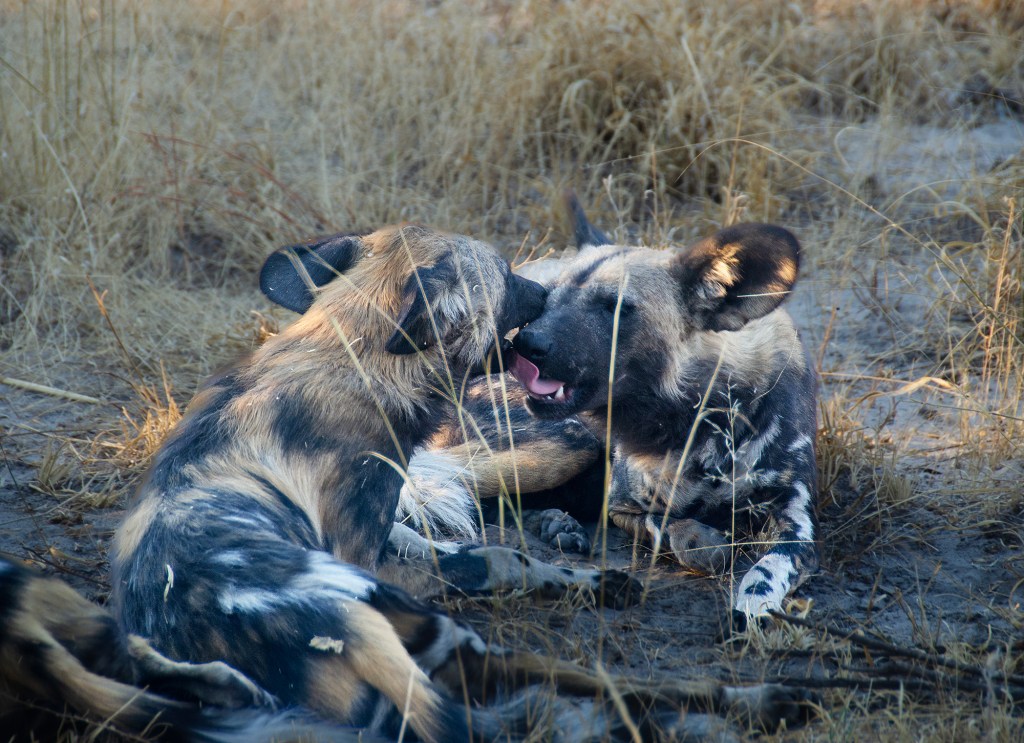

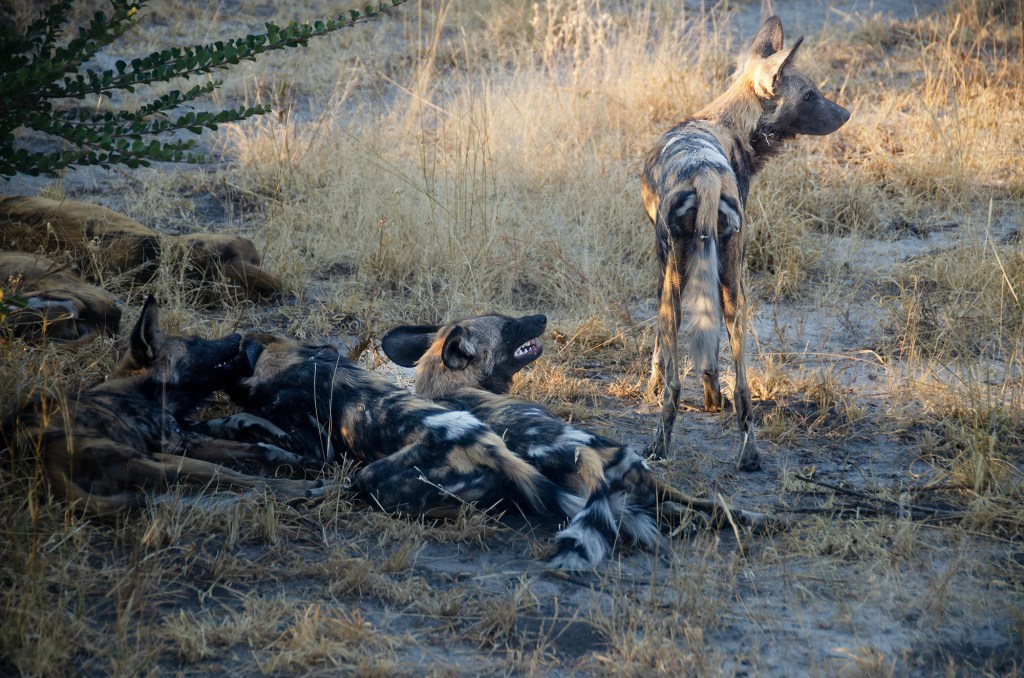

Packs have a high ratio of males to females. Early litters have a high proportion of males, with subsequent litters more balanced or tilted to females.
Populations in the Okavango Delta have been observed rallying before setting out to hunt. Not every rally results in a departure, but departure becomes more likely when more individual dogs sneeze. The process of a pack awakening from a sleep, activating each other and finally setting out on a hunt is fascinating to observe. This can take 15-30 minutes.
Because the dog largely exists in fragmented , small populations, its existence is endangered. Inbreeding avoidance by mate selection is a characteristic of the species. The dogs are primarily threatened by habitat fragmentation, which results from human-wildlife conflict, transmission of infectious diseases and high mortality rates.
The African wild dog is a specialized pack hunter of common medium sized antelopes. The dogs hunt by approaching prey silently, then chasing it in a pursuit clocking at up to 40 mph for 10-60 minutes. The average chase covers some 1.2 miles, during which the prey suffers numerous bites to legs, belly and rump. The strategy can be adapted to type of prey. Medium sized prey is killed in 2-5 minutes, larger may take a half hour. Typical prey include kudu, gazelles, impale, bushbuck and wildebeest. Hunting success is good, with 60% of all chases ending up in a kill. This can rise to 90%. Kills are shared. Dogs are very fast eaters. The dogs will regurgitate food for other adults as well as young family members.
Lions dominate wild dogs and are a major source of mortality. The dogs are usually killed and left uneaten by lions. Kills by dogs are commonly lost to larger predators, especially spotted hyenas.


NOTE: Most of these images were taken by my wife Karen on our first trip to Botswana in 2013. Much of the information contained herein came from Wilipedia.

 The Carefree Photographer