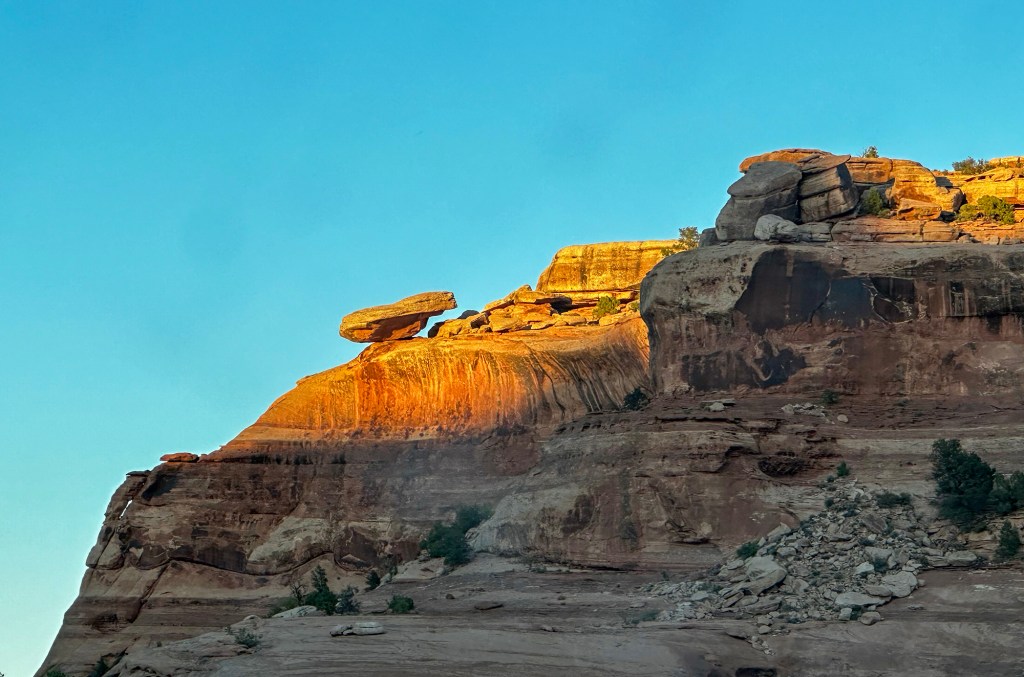
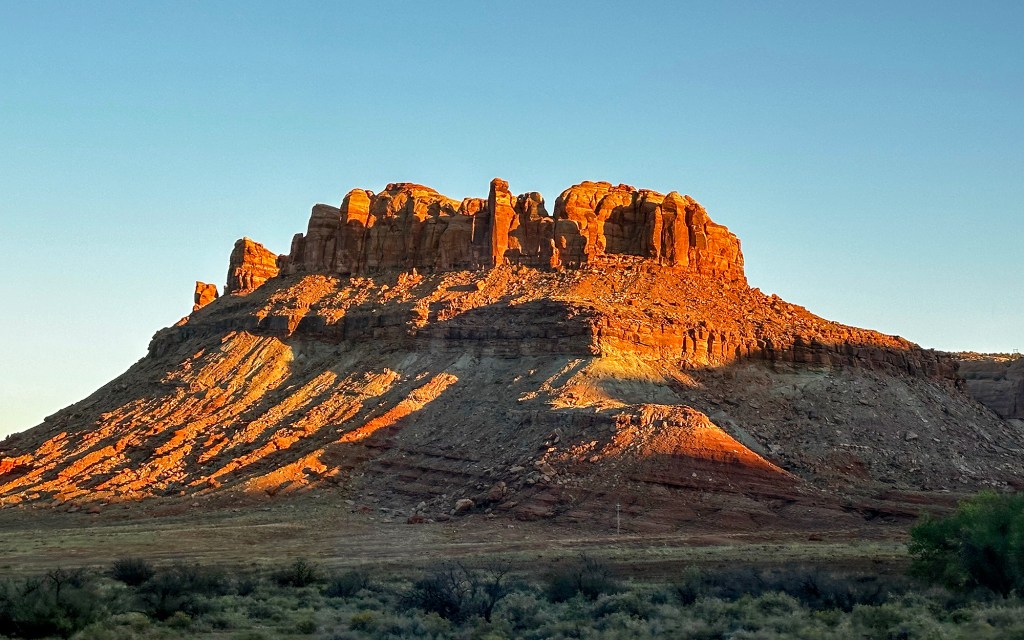
A group of us recently toured the main national parks in Utah, visiting Arches, Bryce and Zion. On these travels we also visited Dead Horse Point State Park and drove through Capital Reef National Park. The scenery both in the parks and between them along the byways we spectacular.
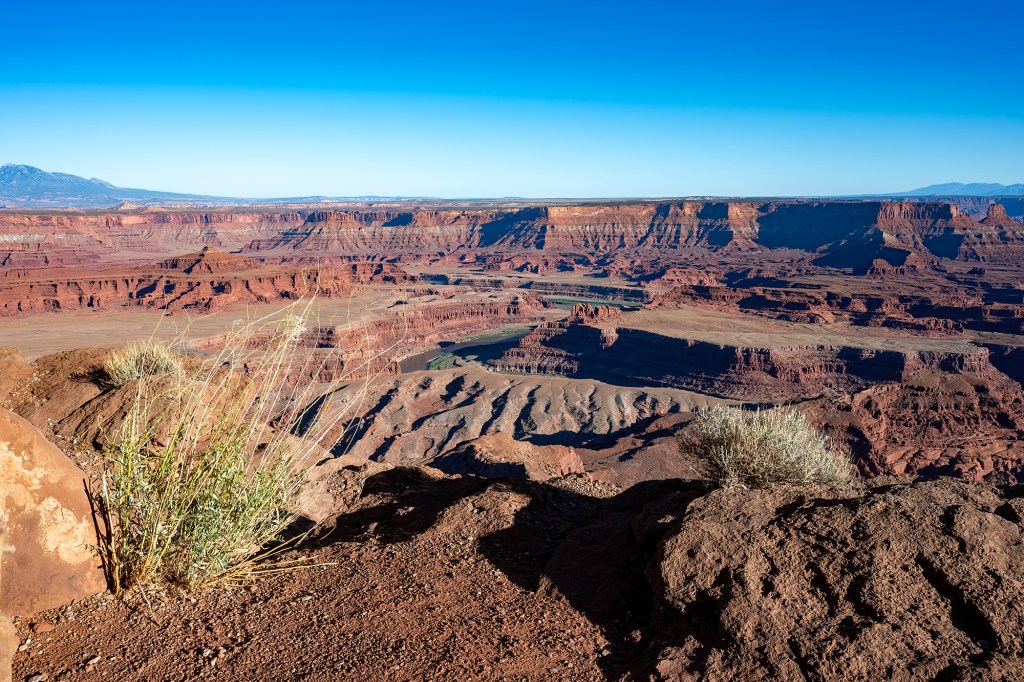
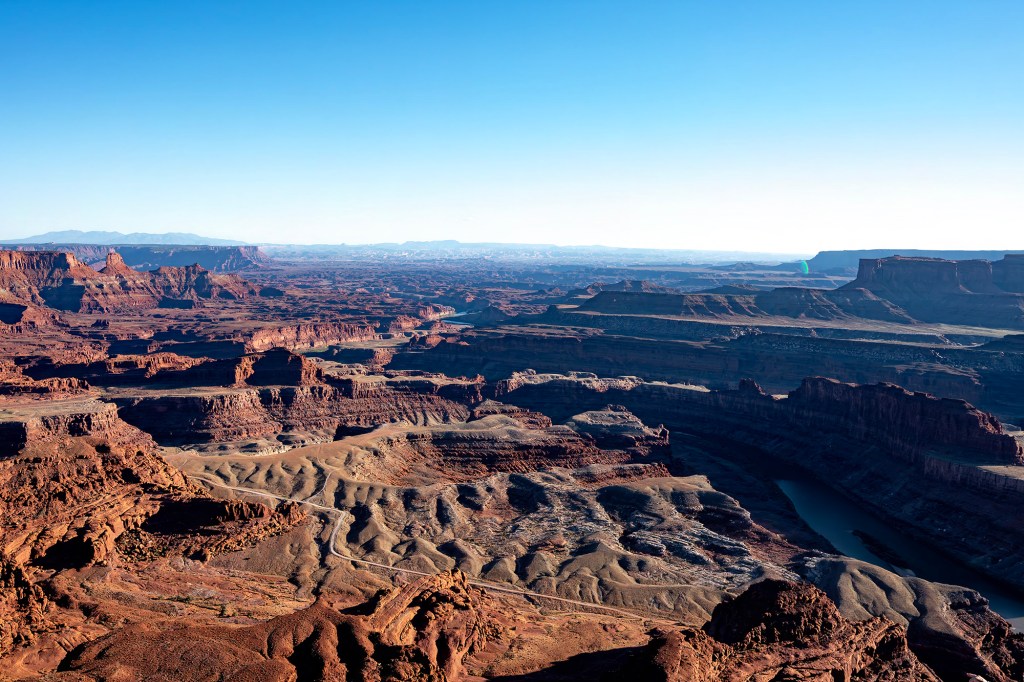
Dead Horse Point is a small state park near Arches and Canyonlands National Parks, and just north of Moab, UT. It was formed in 1959. The park is on a mesa which narrows to a point which is only about 100′ wide and surrounded on three sides by steep cliffs which drop 200′ or so to the basin formed by the Colorado River. It provides a spectacular view of the river and Canyonlands NP, and should be a must stop if you are in the area. The park is best visited in late afternoon.
The name is derived from legends. The most popular has it that local settlers corraled a bunch of wild horses on the point, trapping them with a fence made from brush. After selecting the best, they left the rest to die from lack of water in order the keep the horses out of the hands of the Utes, the local Indian tribe.
The site has appeared in a number of movies including the car scene in “Thelma and Louise”.
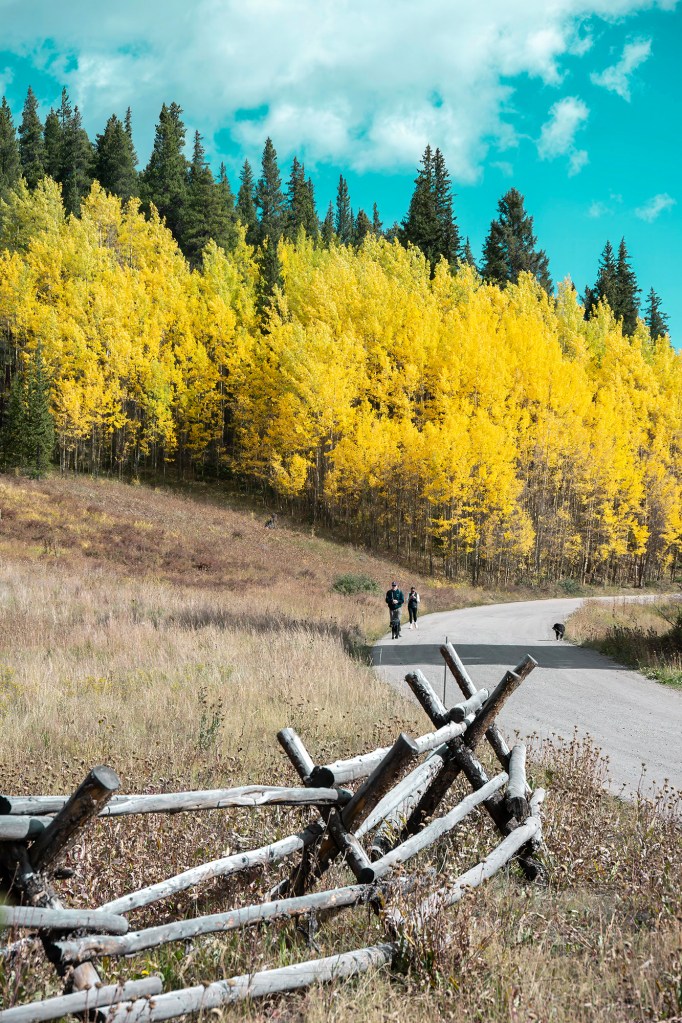
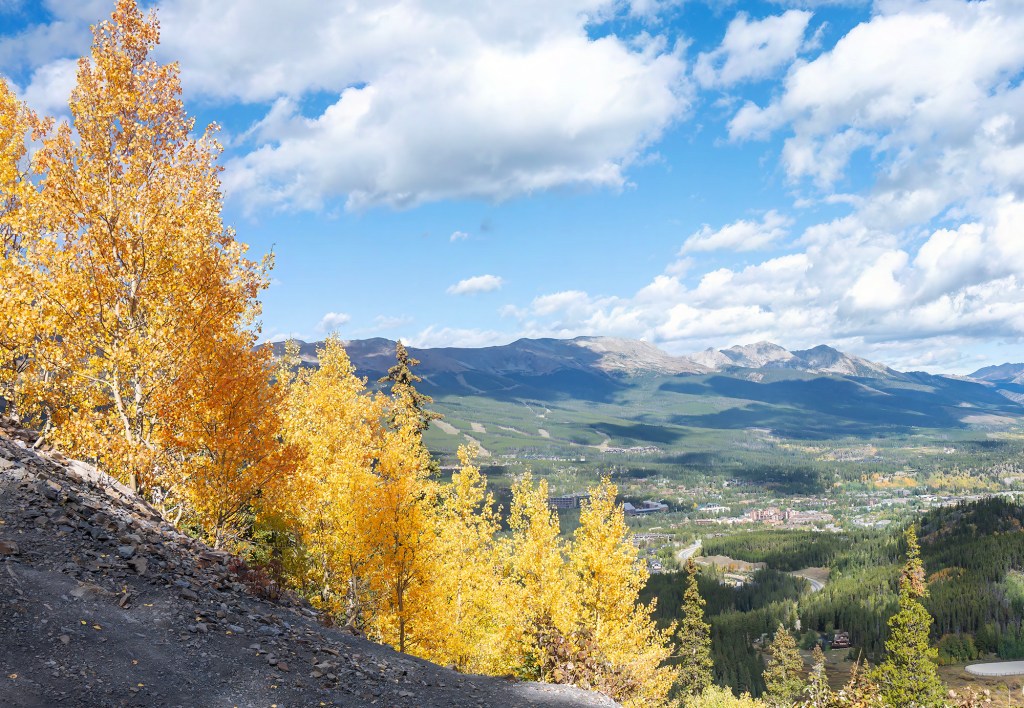
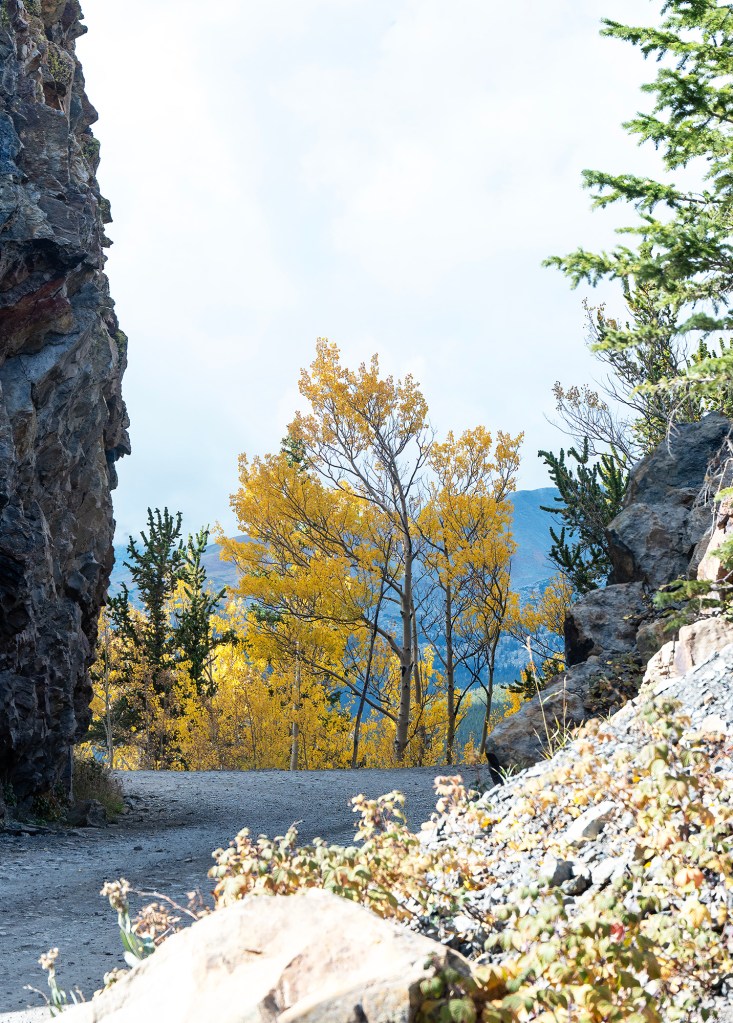
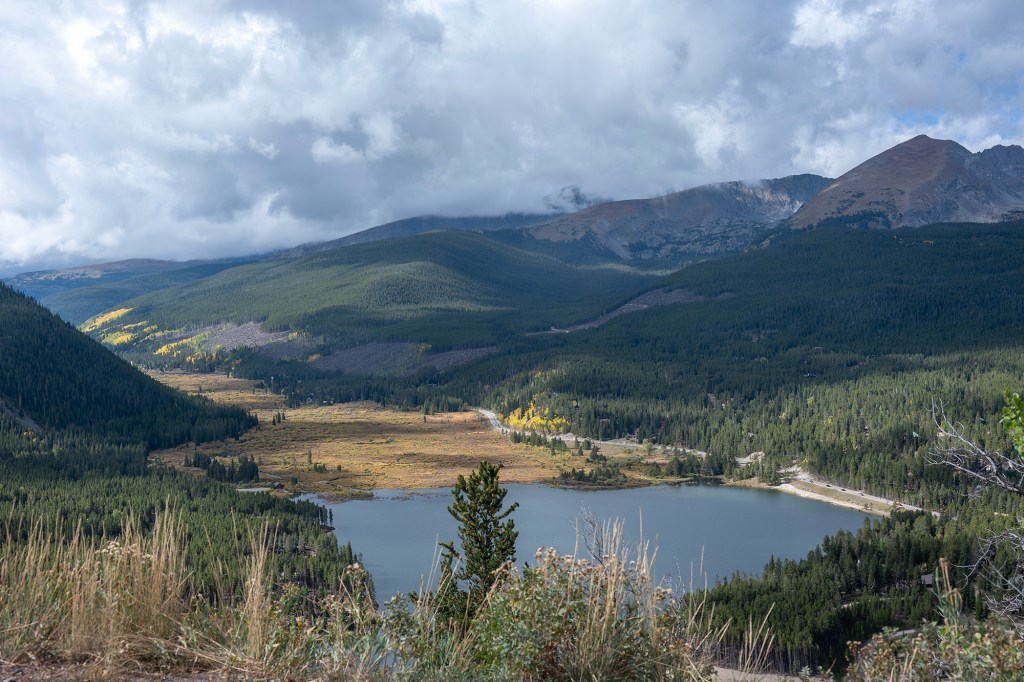
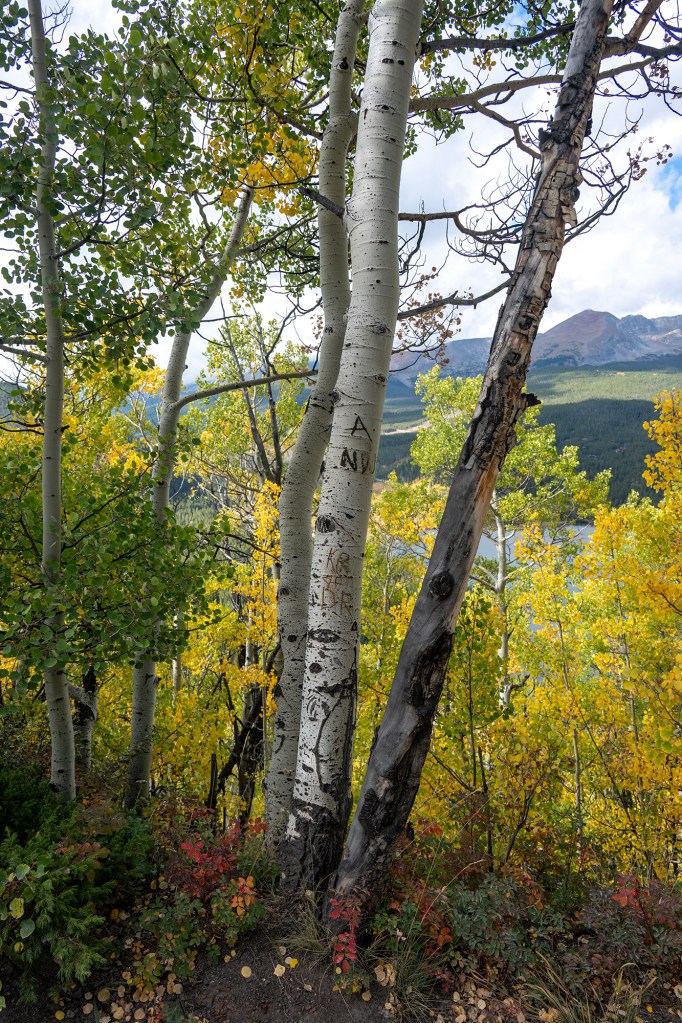
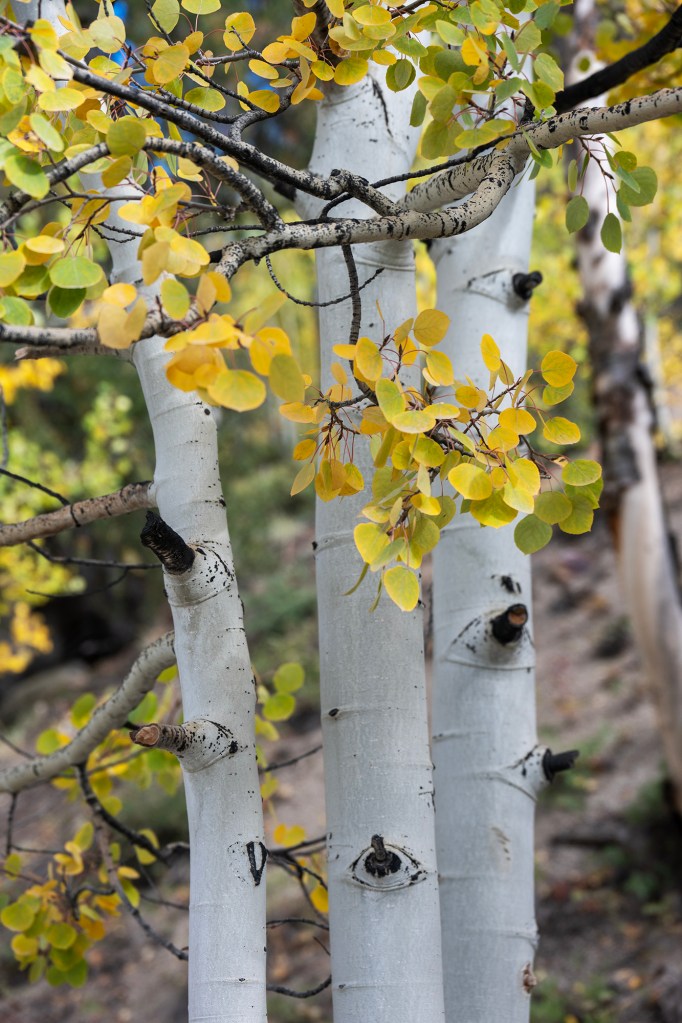
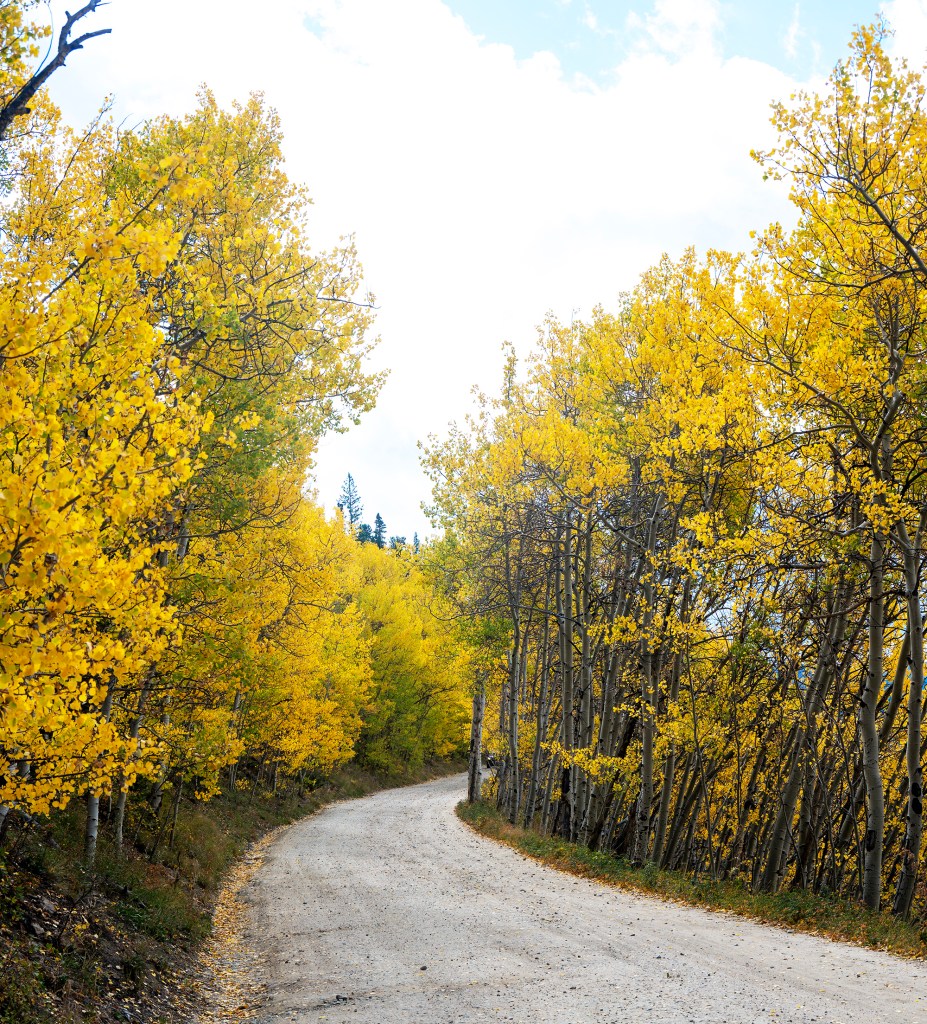
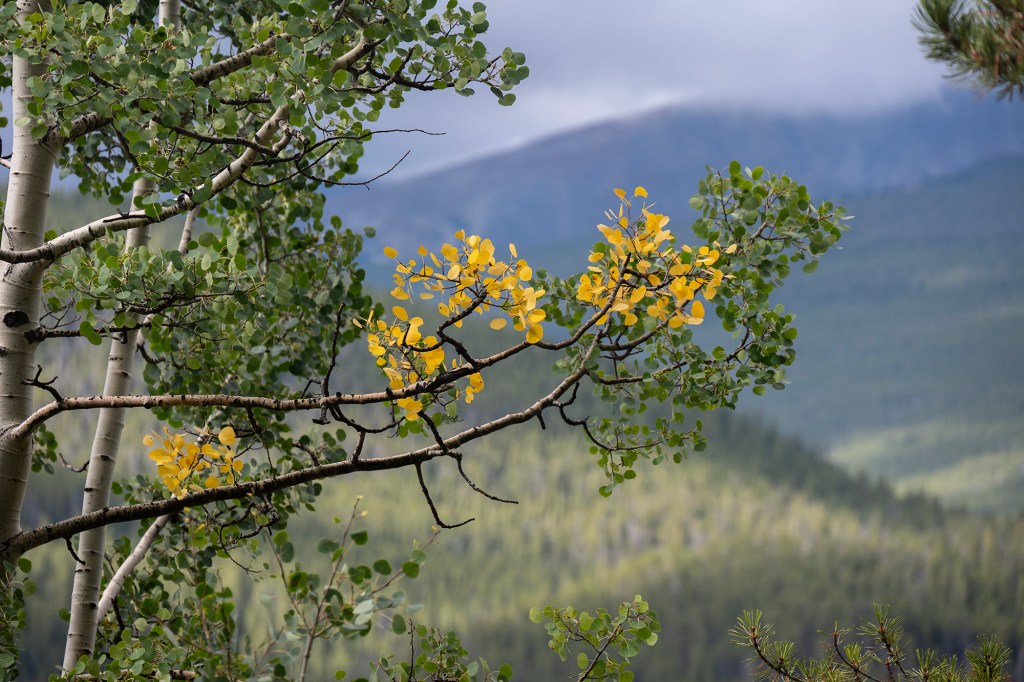
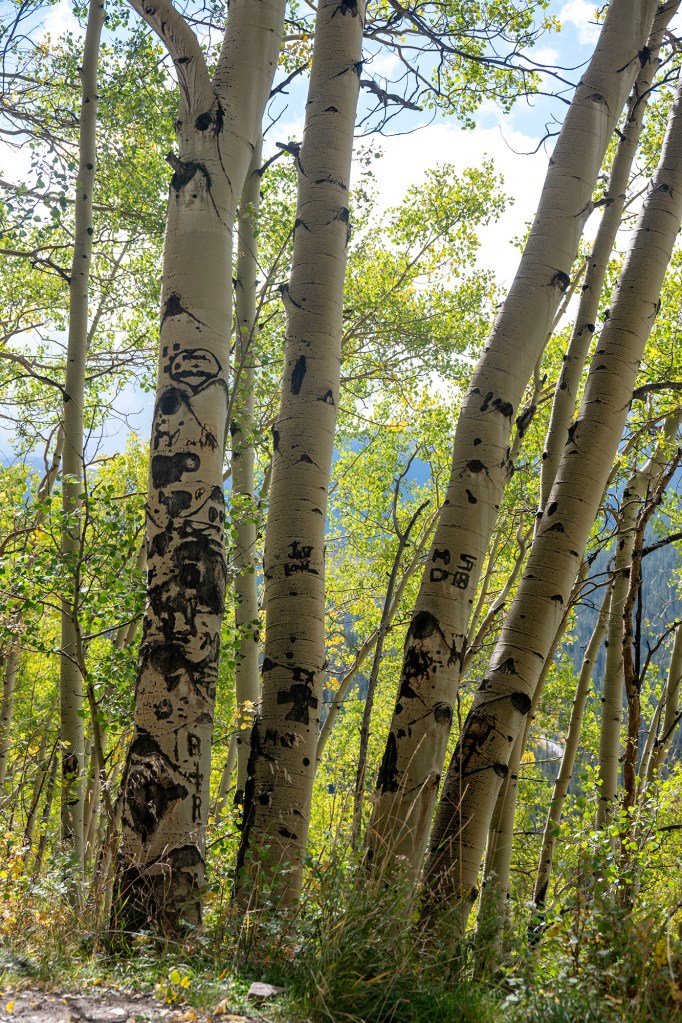
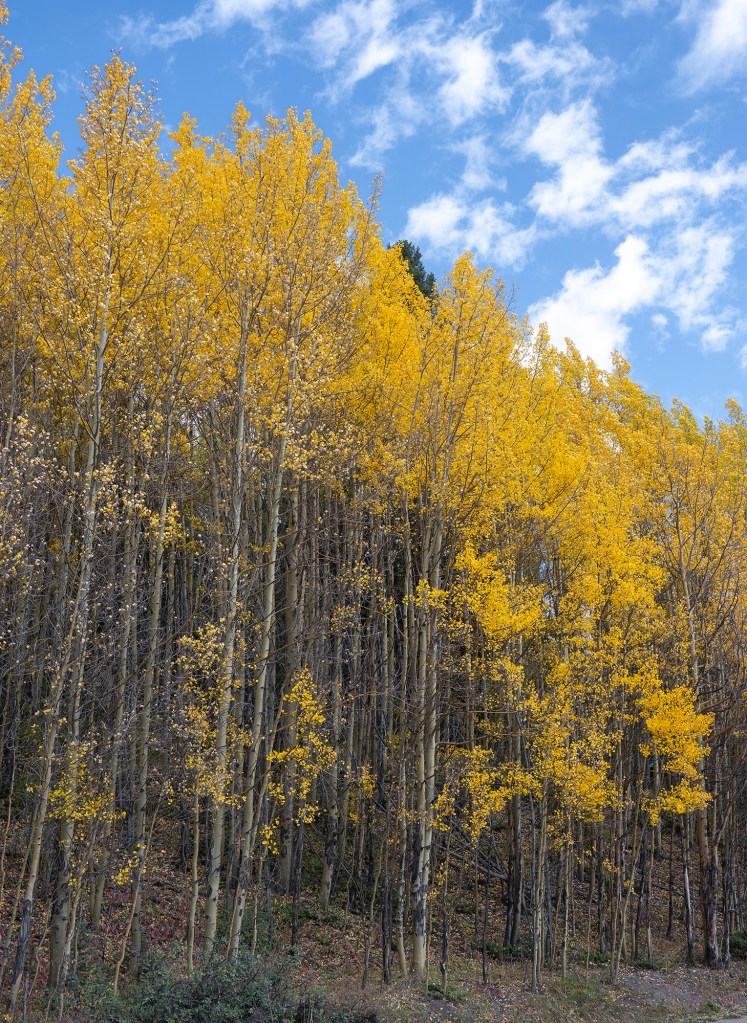
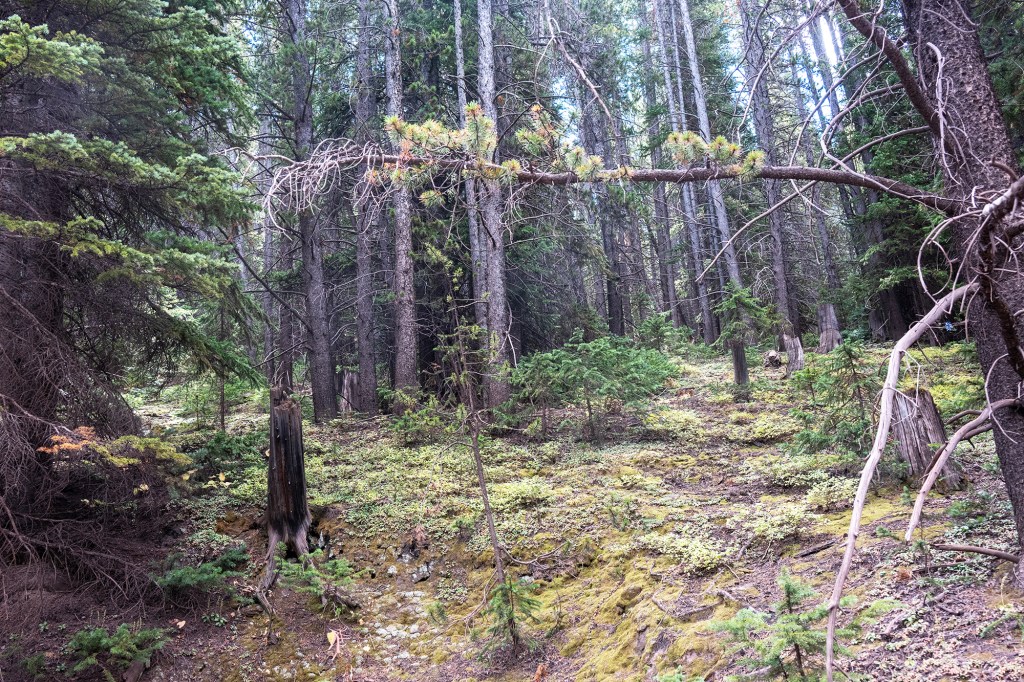
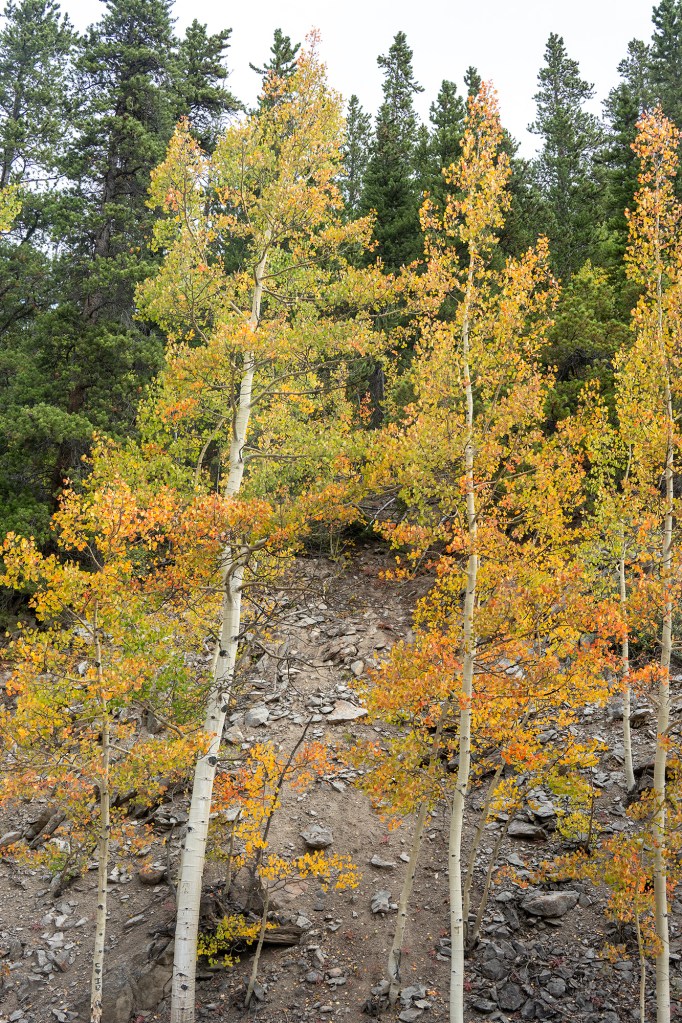
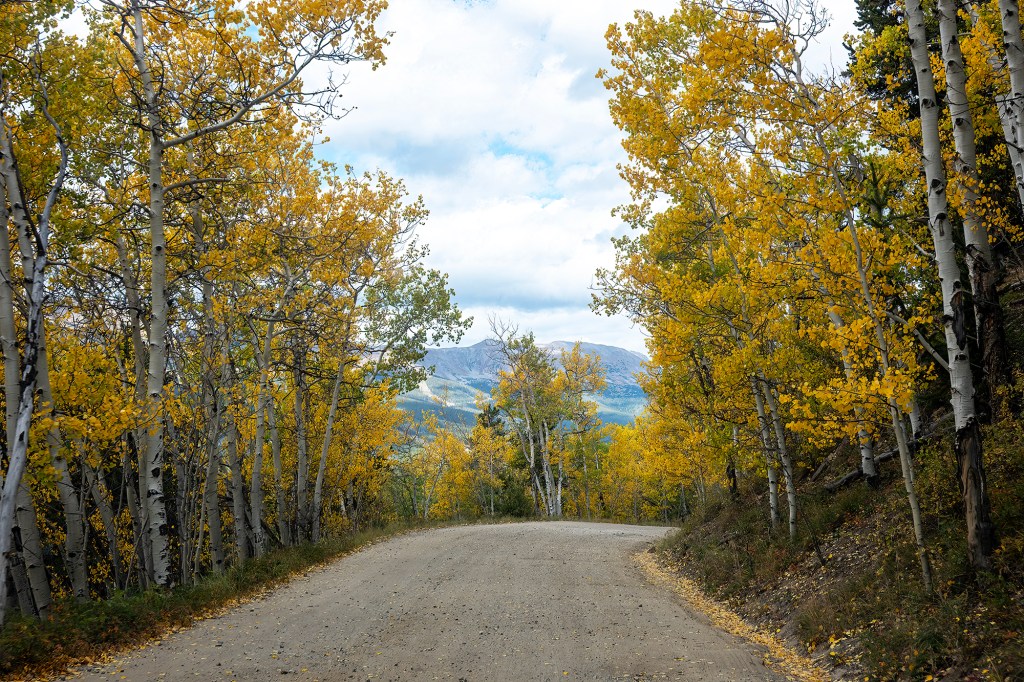
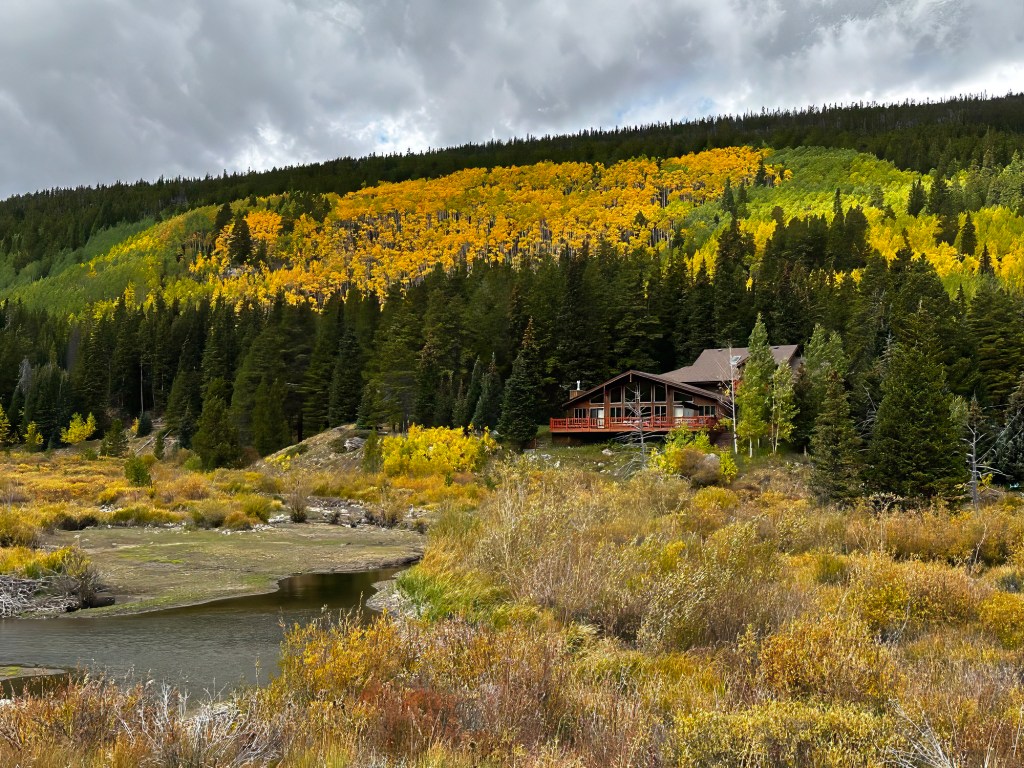
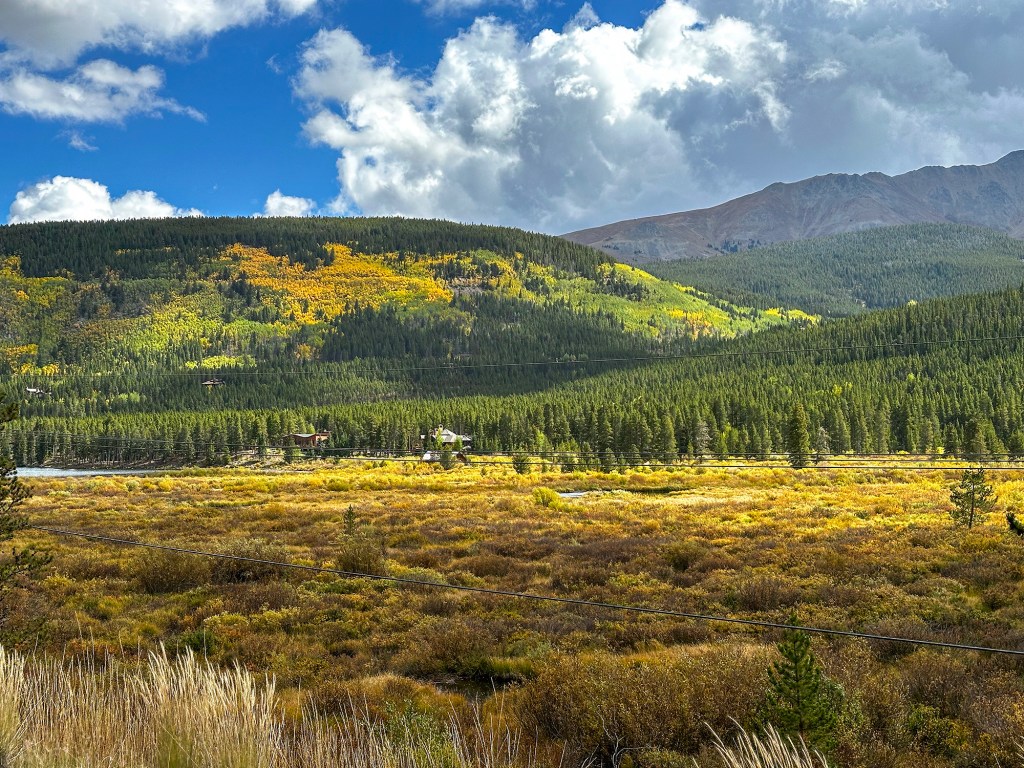
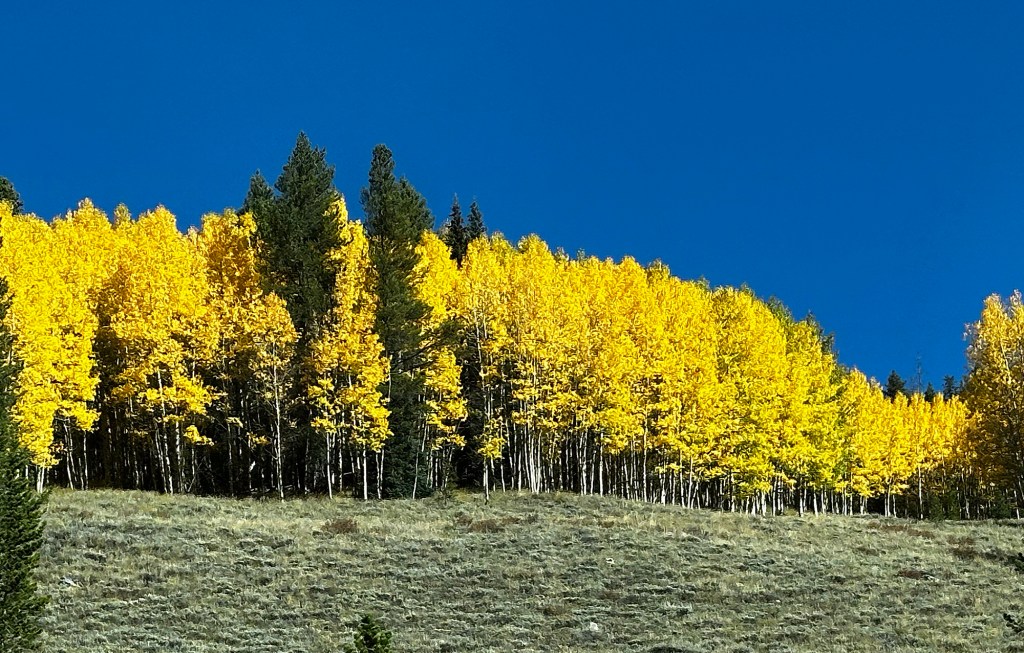
Breckenridge is one of our favorite places to visit. This is particularly so in mid to late November, when the as;pens are in the process of changing color from green to yellow to – in some cases – orange/red. At this time we often drive up the road on the SE end of town up to Boreas Pass. This is a paved road that turns at some point to gravel, and is a favorite road for hikers, bikers and walkers, as well as drivers. Here are a few of this year’s images.
A widespread and conspicuously abundant resident of the African savanna. Often seen in family groups, trotting around with tail raised stiffly. This diurnal pig dines on grasses, insects, roots, berries and the like.
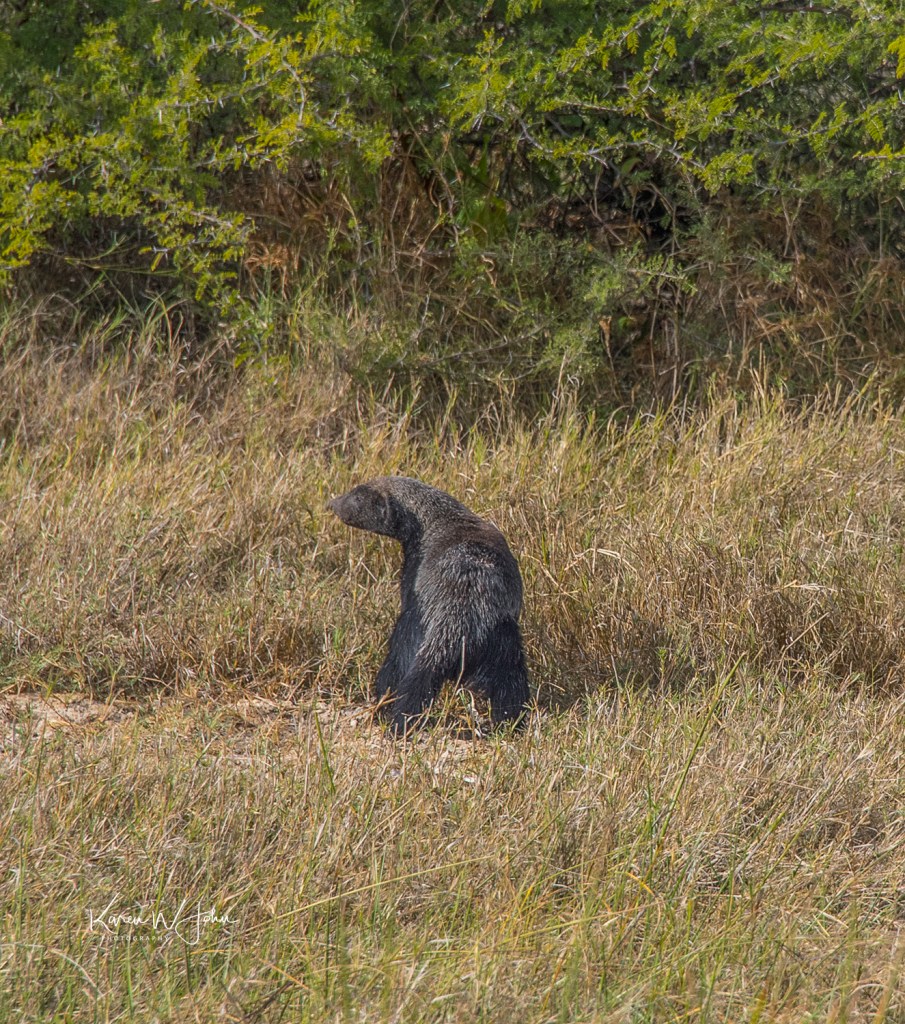
Honey Badger
The honey badger is black with a puppyish face and grey-white back. Loves to feed on broken up bee hives. Most widespread African carnivore, most powerful and aggressive for its size. Thinly distributed and infrequently seen.
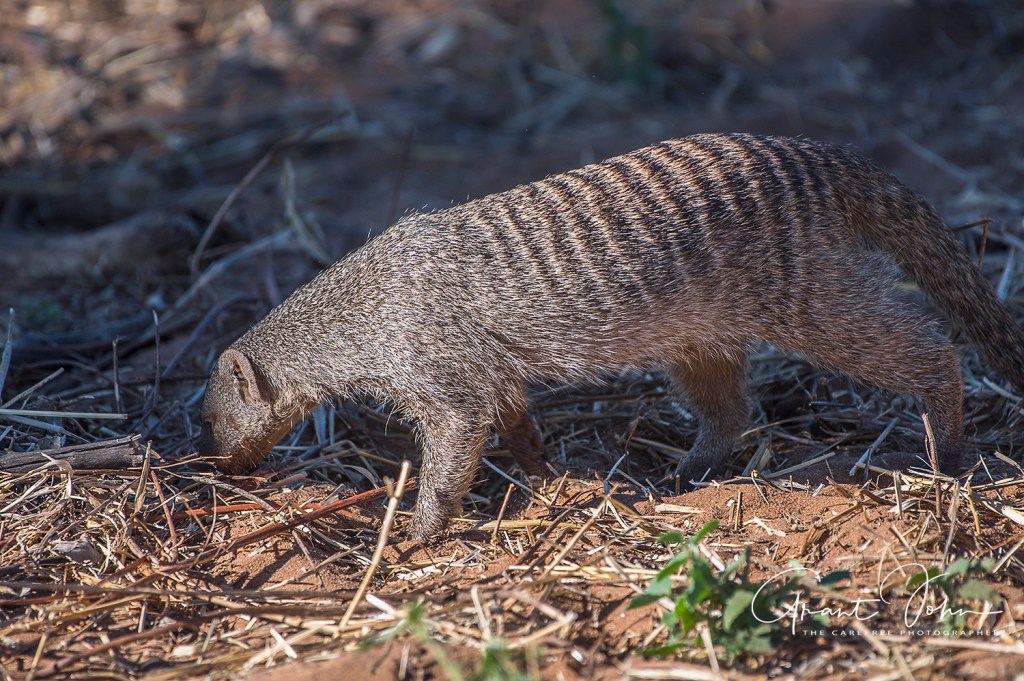
Mongoose
Most frequently the banded version. Most commonly observed of a group of small carnivores. Occur in playful family groups, or troops, throughout Botswana. Feeds on insects, scorpions, amphibians, reptiles and eggs.
Squirrel
Common in ground and bush varieties; the first is located in the arid part of Botswana and the second in the bush lands.
Bushbaby
Most widespread and common member of a group of nocturnal primates distantly related to the lemur. Seen throughout the northern half of Botswana. Feed on insects. Inhabit wooded ares. Keen eyes and lightning speed.
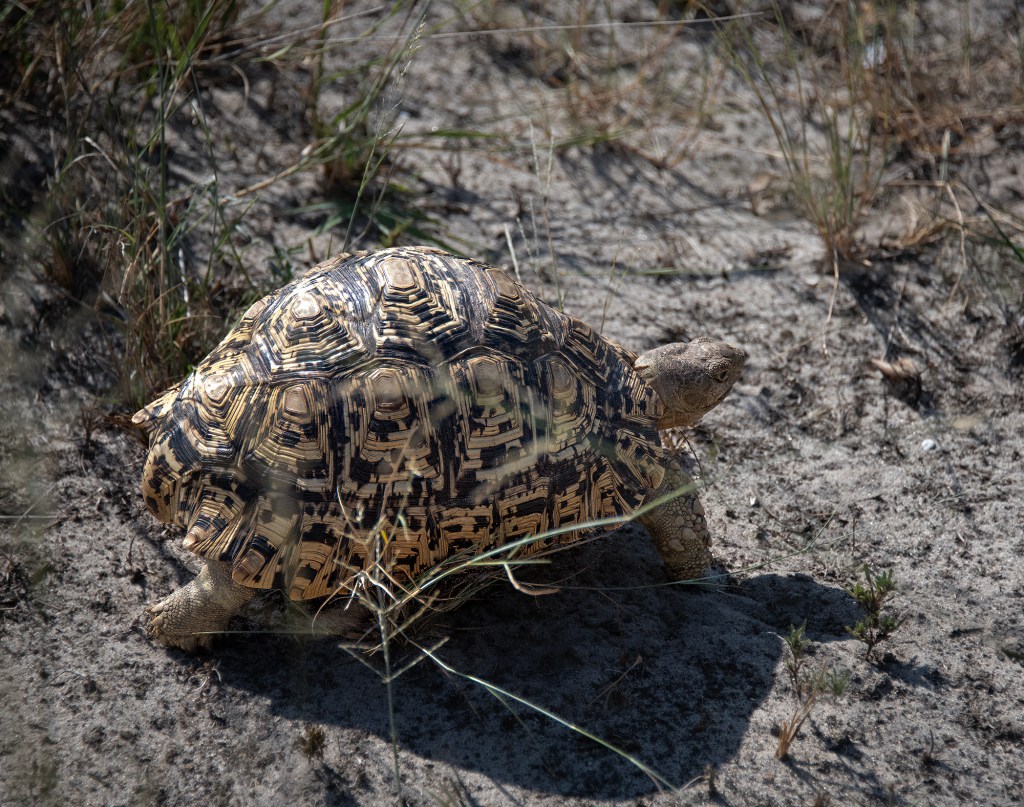
Leopard Tortoise
A large and attractively marked tortoise found in the savanna of eastern and southern Africa. A grazing species that favors semiarid thorny to grassland habitats. Dwells in abandoned burrows. Grazes among mixed grasses, and favors succulents and thistles.
Scrub Hare
Largest and most common African hare. Nocturnal, tend to freeze when disturbed.
Bat Eared Fox
Small, silver-grey insectivore with huge ears and black eye-mask. Found anywhere the harvester termite is found, usually short grass plains. Will also eat lizards, gerbils, small birds, scorpions beetle larvae and other insects. Mostly nocturnal, often seen in small family groups.
Monitor Lizard
Lizards in the genus Varansus. Long necks, powerful tails and well-developed limbs. Terrestrial and carnivorous. Very abundant near water.
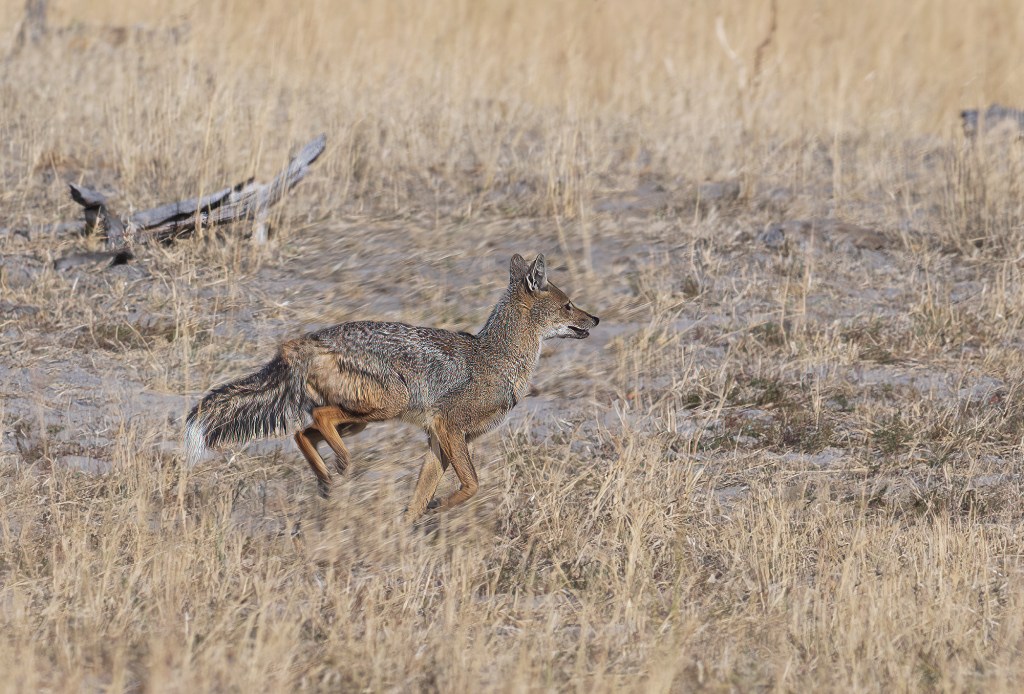
Side Striped Jackal
Relatively uncommon in Botswana. Grayish in color, with a horizontal stripe on each flank and often a white-tipped tail. Opportunistic feeder, taking rats, mice, birds, insects, carrion, fruit and termites.
African Wild Cat
Similat to coomon house cat in appearance. Ringed tail, brown tinge to back of ears and unspotted torso.Prey on reptiles, amphibians and birds.
Genet
Long, lean carnivores that appear catlike with a tail as long as the body. Round and elongated spots. Omnivorous. weighs 2-7 pounds.
Caracal
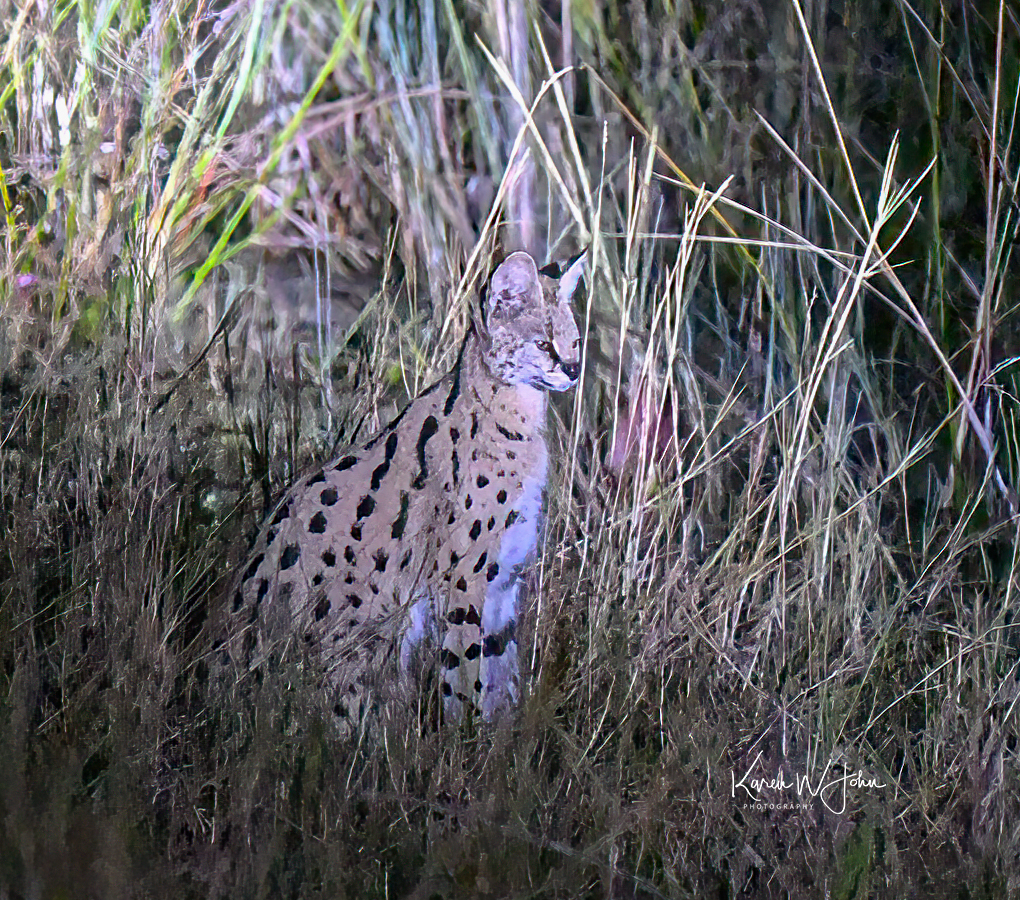
Smaller but heavier than the serval, resemble European lynx, with a tan coat and tufted ears. Solitary nocturnal hunters which feed on birds, small antelope and young livestock. Remarkable hunters. Rarely seen and mostly at night.
Black Mamba
Species of highly venomous snakes, native to sub-Saharan Africa. Second longest venomous snake after the king cobra. Mature snakes grow to 2-3 meters in length. Very fast. Seldom seen.
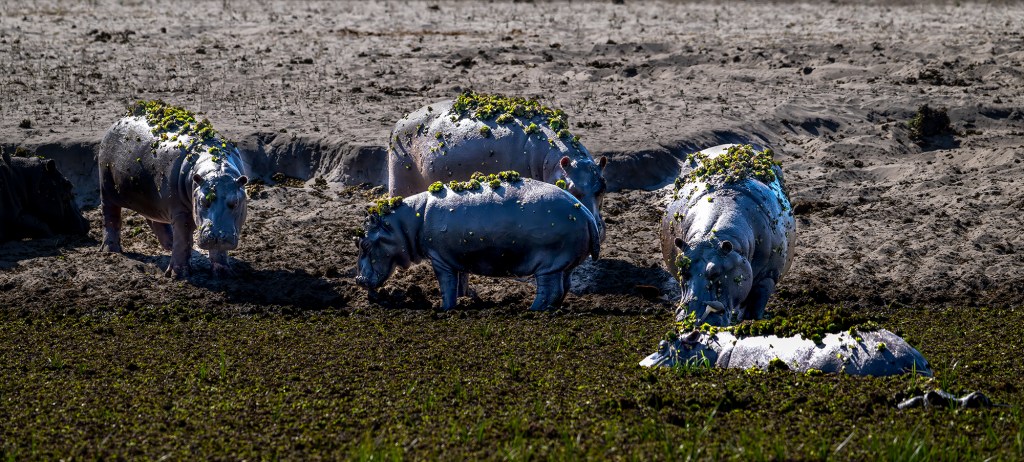
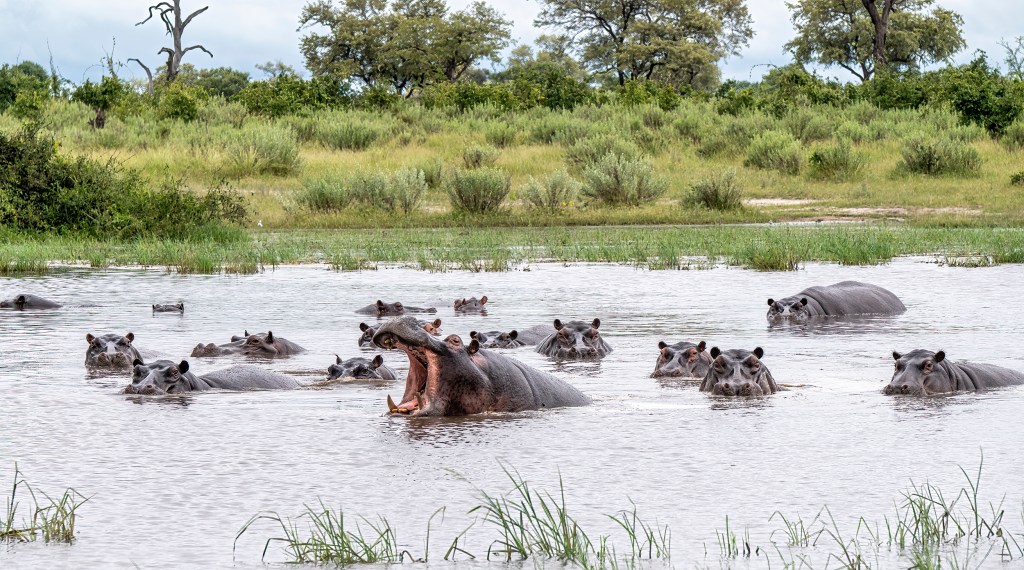
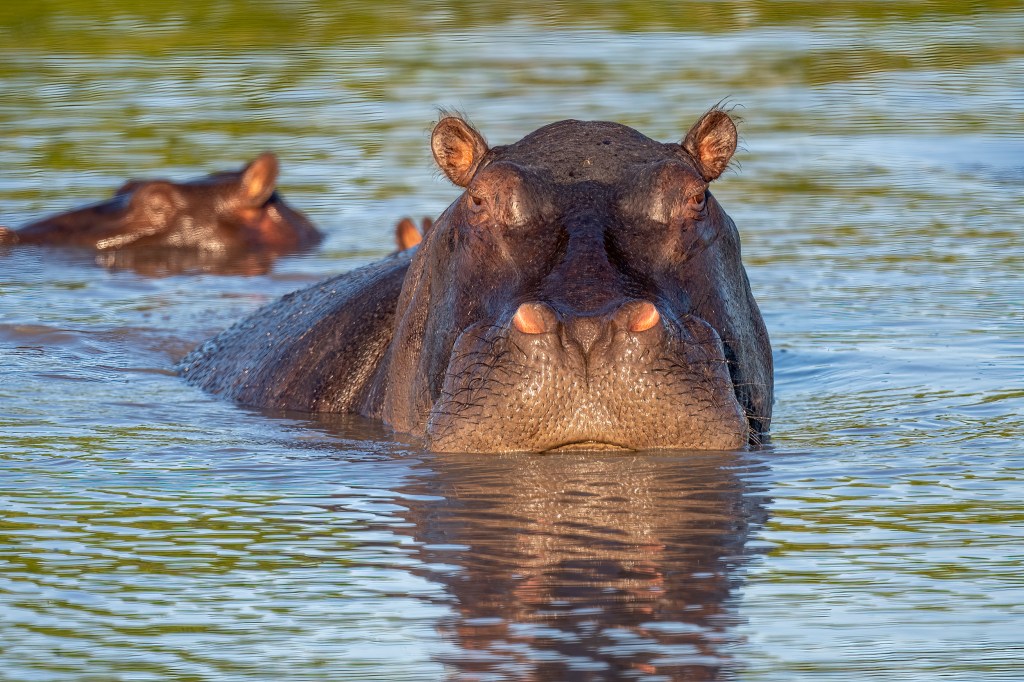
The hippopotamus, also known as the hippo, is a large semi aquatic mammal native to sub-Saharan Africa. After elephants and rhinoceroses, the hippo is the next largest land mammal. The closest living relatives of the hippos are cetaceans (whales, dolphins and porpoises). Hippos are recognizable for their barrel-shaped torsos, wide opening mouths with large canine tusks, nearly hairless bodies, pillar-like legs and large size. Adults average 3300 pounds for bulls and 2000 for cows. They are capable of running almost 20 mph over short distances.
After elephants and rhinos, the hippo is the next largest land mammal. Its’ closet living relatives are cetaceans – whales, porpoises, dolphins and the like. Hippos are recognizable for their barrel-shaped torsos, wide opening mouths with large canine tusks, nearly hairless bodies, pillar=like legs and large size. Adults average 3300 pounds for bulls and 2900 for cows. It is capable of running almost 20 mph for short distances.
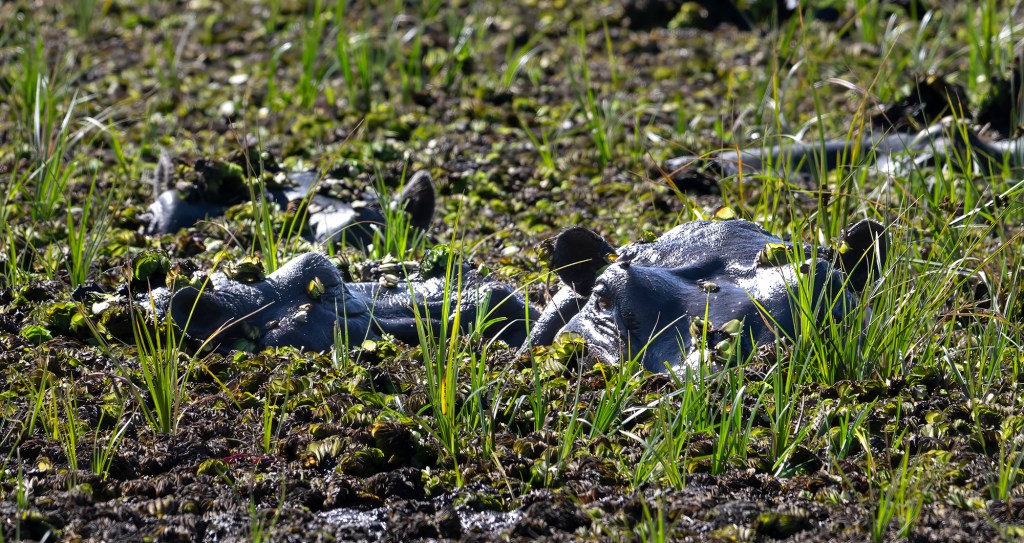
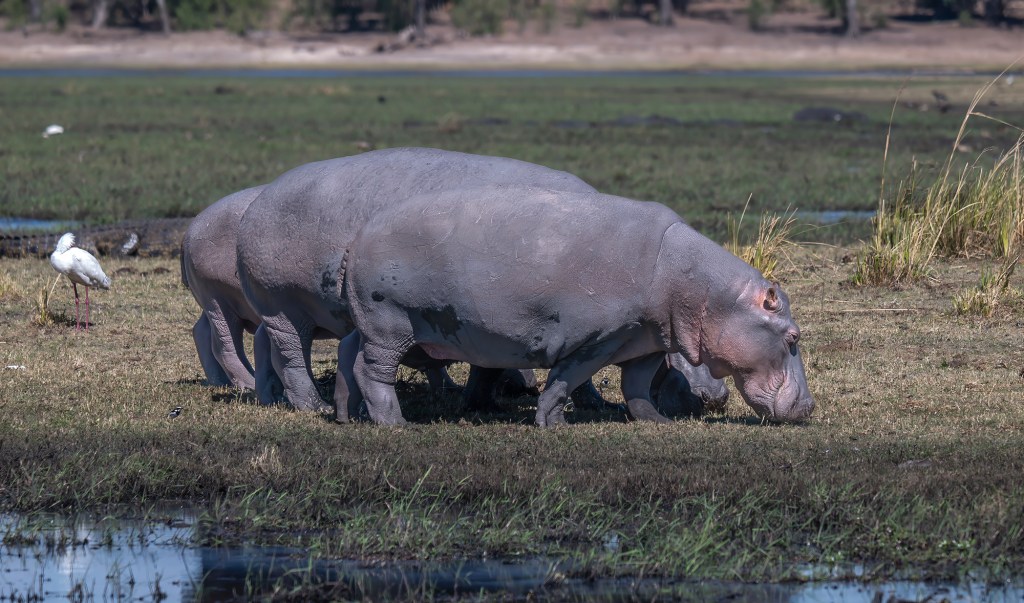
Hippos inhabit rivers, lakes and mangrove swamps. Territorial males each preside over a stretch of water and a group of five to thirty cows and calves. The bull has breweding access to all the cows in his territory. Mating and birth both take place in water. During the day, hippos remain cool by staying in water or mud, emerging at dusk to graze on grasses. A hippo will travel 2-3 miles per night, eating around 90 pounds of grass. By dawn they are back in the water. Grazing is solitary and non-territorial. Hippos are the most dangerous animals in the world due to their aggressive and unpredictable nature. They are threatened by habitat loss and poaching for meat and ivory.
Their skin is protected by a natural secretion of a red-colored sunscreen substance that is sometimes called a “blood sweat”. The hippo’s life span is typically 40-50 years. They are not particularly good swimmers. They rarely enter deep water. They can survive under water for 4-6 minutes at a time. They sleep with both hemispheres of their brains resting, and usually sleep on land or water with the nostrils exposed.
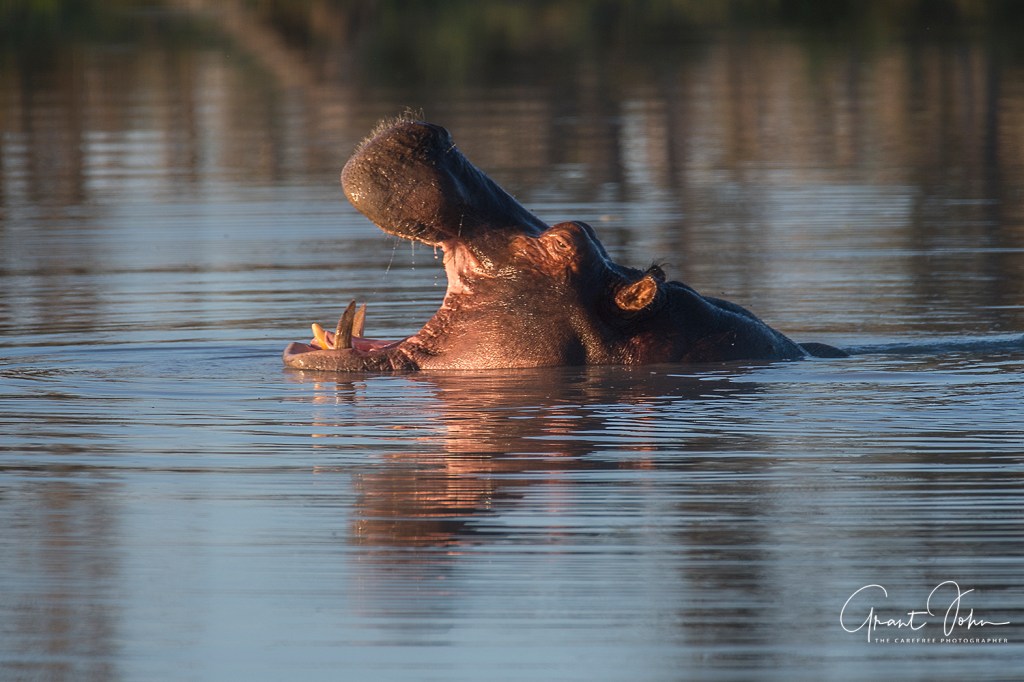
Hippos have a significant impact on the land across they walk, keeping the land clear of vegetation and depressing the ground. Over time they can redirect the path of streams, swamps ans d channels. Yawning, very common, serves as a threat display. When fighting the bulls use their incisors to block each other’s attacks and their large canines as offensive weapons. The most common hippo vocalization is the “wheeze honk”, which can travel over long distances in air. The call starts as a high-pitched squeal followed by a deeper resonant call. The animals can recognize the calls of other individuals.
Cows reach sexual maturity at five to six years of age and have a gestation period of eight months. Females will typically not begin ovulation after giving birth for 17 months. Calves weigh on average 110 pounds. Hippos coexist alongside a variety of large predators including Nile crocodiles, lions and spotted hyenas. Calves are particularly susceptible.
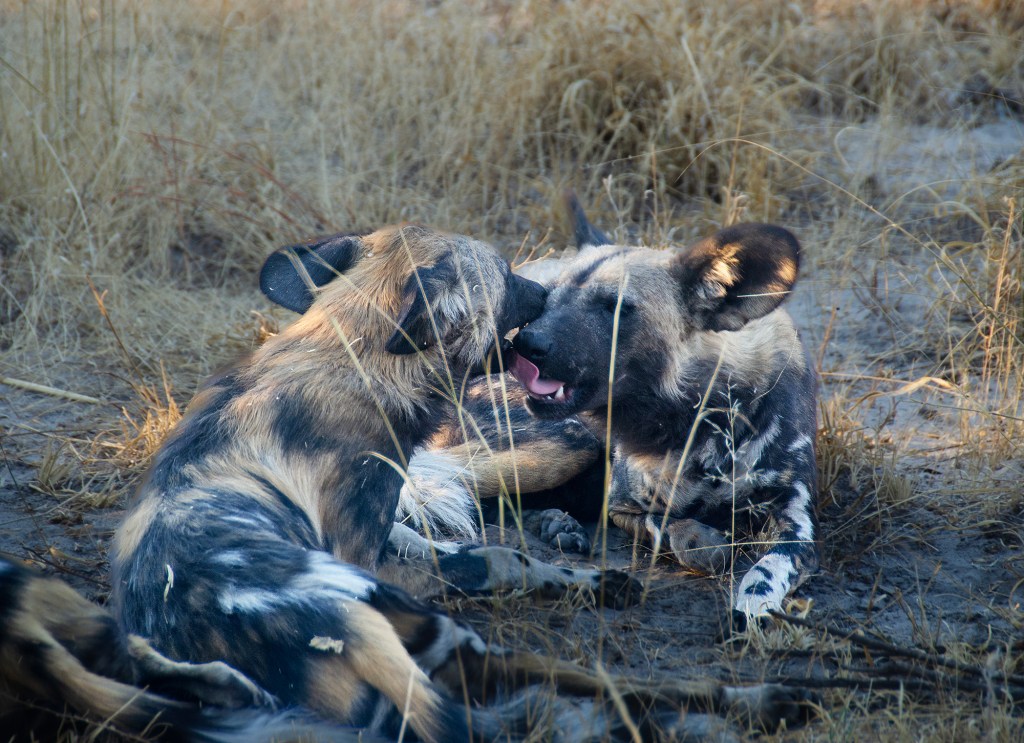
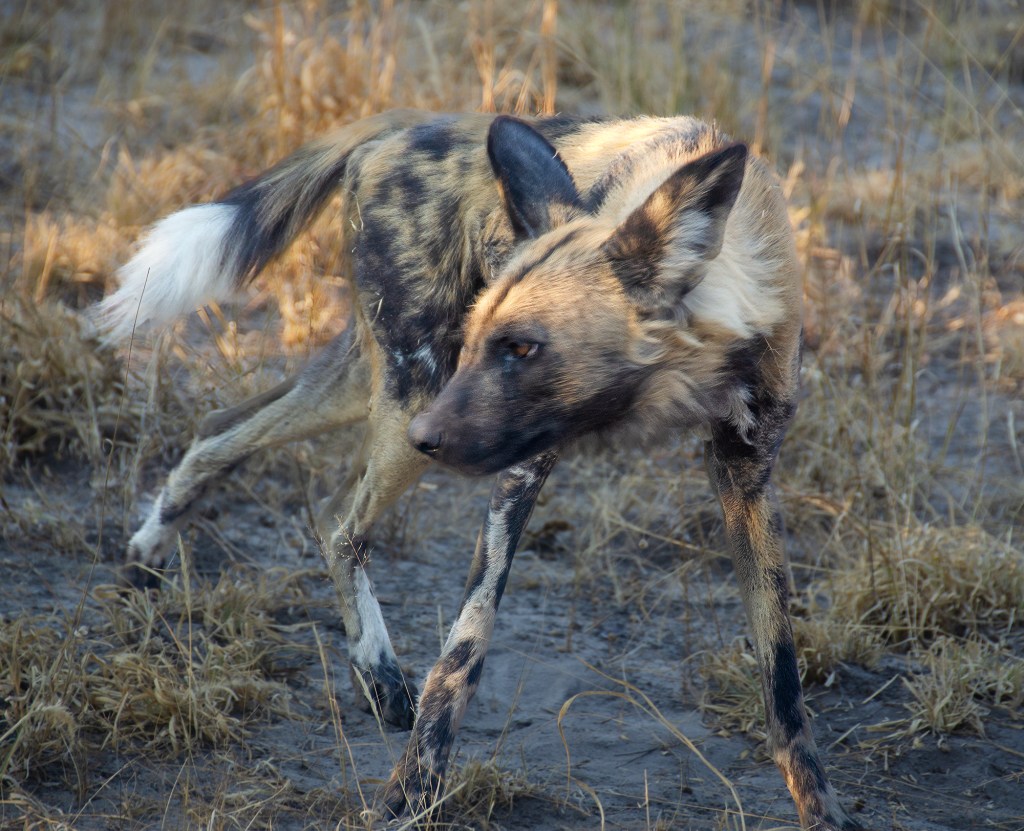
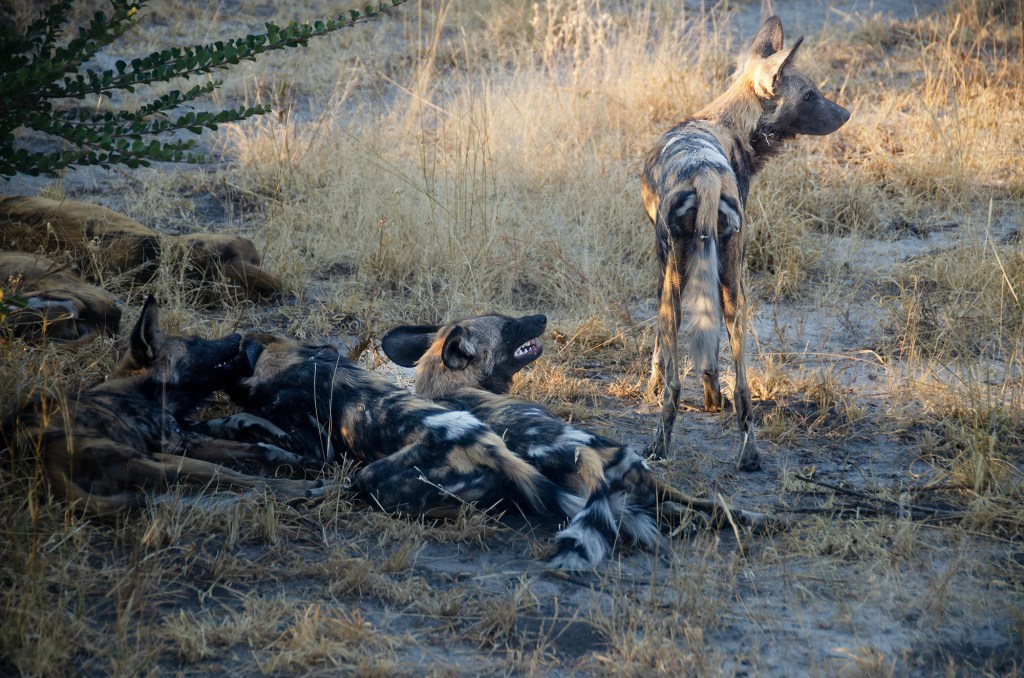
Ah, my favorite mammal in Botswana! Alas, this year we failed to see any of these beautiful animals, last year only a small pack of five. So I will use images from prior trips, and these are plentiful.
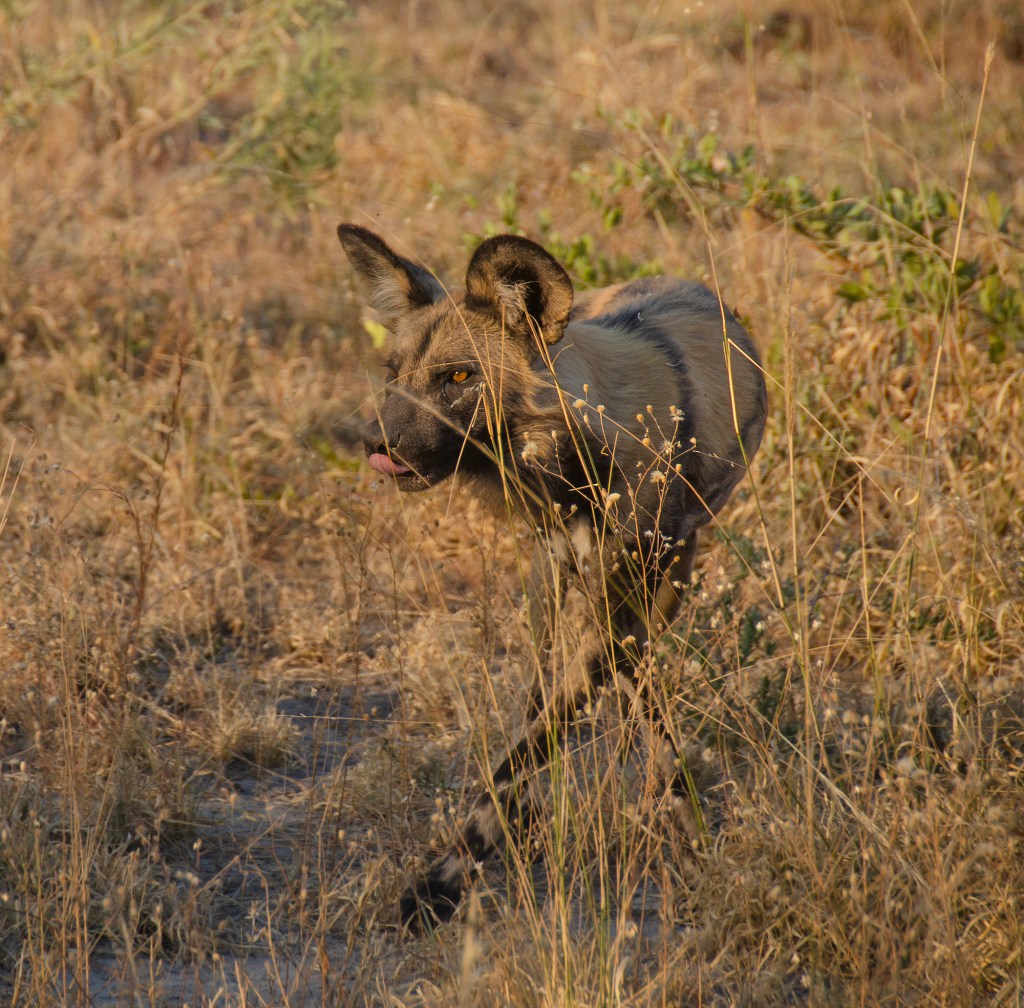
The African wild dog, also known as the painted dog or Cape hunting dog., is a wild canine native to sub-Saharan Africa. It is the largest wild canine in Africa. It is estimated that there are around 6600 adults living in 39 sub-populations, all threatened by habitat fragmentation, human persecution and outbreaks of disease. As the largest population probably consists of fewer than 250 individuals, the African wild dog has been listed as endangered by the authorities.
The English language has several names for the African wild dog, including African hunting dog, Cape hunting dog, painted hunting dog, painted dog, painted wolf and painted lycaon. The term painted dog is preferable to avoid negative impressions.
The dogs possess the most spectacular adaptations among the canids for coat color and diet and for pursuing its prey through its running ability. It has a graceful skeleton, and the loss of the first digit on its forefeet increases its stride and speed. This adaptation allows it to pursue prey across open terrain for long distances. They illustrate the most vivid varied coat colors among mammals. Individuals differ in patterns and colors, indicating a diversity of the underlying genes.The African wild dog is largely isolated from gene transfer with other canid species.
The African wild dog is the bulkiest and most solidly built of African canids. The species stands 24-30″ at the shoulders, measures 28 to 44′ in head-to-body length and has a tail length of 11 to 16″. Adults have a weight range of 40 to 80m pounds, averaging 44-55 pounds. Females are usually 3-7% smaller than males.
Color variation is extreme, and may serve in visual identification, as the dogs can recognize each other at distances of 160-330 feet. Much of the species’ coat patterning occurs on the trunk and legs. The tail is usually white at the tip, black in the middle and brown at the base.
The African wild dog occurs foremost in southern and eastern Africa. It inhabits mostly savannas and arid zones, generally avoiding forested ares. This is likely linked to its hunting preferences, which require open areas that do not obstruct vision or impede pursuit. It travels through scrubland, woodland and montane ares in pursuit of prey.
The dogs have strong social bonds; solitary living and hunting are extremely rare. They live in permanent packs consisting of two to 27 adults and yearling pups. Typical pack size in the Moremi is 8-9 individuals. Larger packs have been observed. Males and females have separate dominance hierarchies, with the latter usually being led by the oldest female. The dominant pair typically monopolizes breeding. Populations in southern Africa usually breed during the April-July period. During estrus the female is closely accompanied by a single male. The estrus period can last as long as 20 days. The gestation period lasts 69-73 days.; the interval between each pregnancy is about 12-14 months. Litters contain 6-16 pups, with an average of 10. Breeding is strictly limited to the dominant female. Pups are weaned at five weeks. African dogs have a lifespan of about 10-11 years in the wild.
Packs have a high ratio of males to females. Early litters have a high proportion of males, with subsequent litters more balanced or tilted to females.
Populations in the Okavango Delta have been observed rallying before setting out to hunt. Not every rally results in a departure, but departure becomes more likely when more individual dogs sneeze. The process of a pack awakening from a sleep, activating each other and finally setting out on a hunt is fascinating to observe. This can take 15-30 minutes.
Because the dog largely exists in fragmented , small populations, its existence is endangered. Inbreeding avoidance by mate selection is a characteristic of the species. The dogs are primarily threatened by habitat fragmentation, which results from human-wildlife conflict, transmission of infectious diseases and high mortality rates.
The African wild dog is a specialized pack hunter of common medium sized antelopes. The dogs hunt by approaching prey silently, then chasing it in a pursuit clocking at up to 40 mph for 10-60 minutes. The average chase covers some 1.2 miles, during which the prey suffers numerous bites to legs, belly and rump. The strategy can be adapted to type of prey. Medium sized prey is killed in 2-5 minutes, larger may take a half hour. Typical prey include kudu, gazelles, impale, bushbuck and wildebeest. Hunting success is good, with 60% of all chases ending up in a kill. This can rise to 90%. Kills are shared. Dogs are very fast eaters. The dogs will regurgitate food for other adults as well as young family members.
Lions dominate wild dogs and are a major source of mortality. The dogs are usually killed and left uneaten by lions. Kills by dogs are commonly lost to larger predators, especially spotted hyenas.
NOTE: Most of these images were taken by my wife Karen on our first trip to Botswana in 2013. Much of the information contained herein came from Wilipedia.
































 The Carefree Photographer