African buffalo roam by the thousands in sub-Saharan Africa. Cape buffalo are the most common. They are distinguished by coloring, size and even horn shape. When they are not fighting off the occasional lion, they are eating grass – and lots of it. It forms the bulk of their diet.
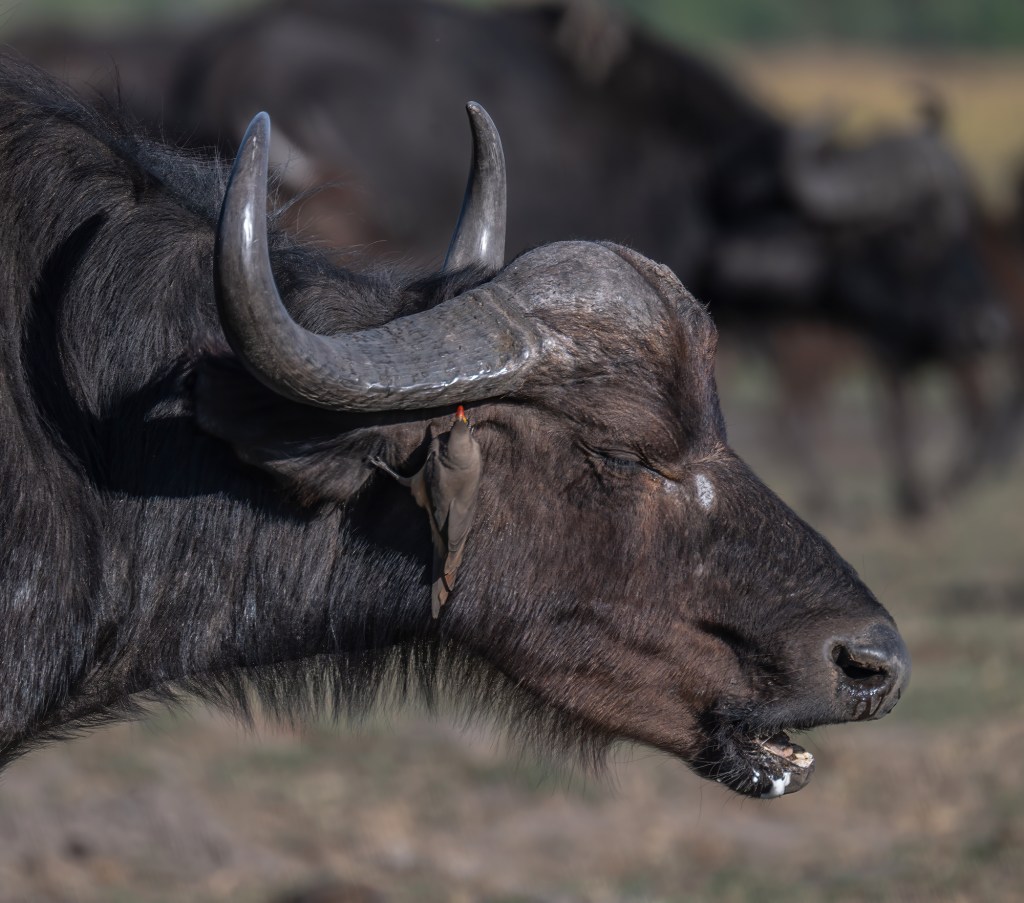
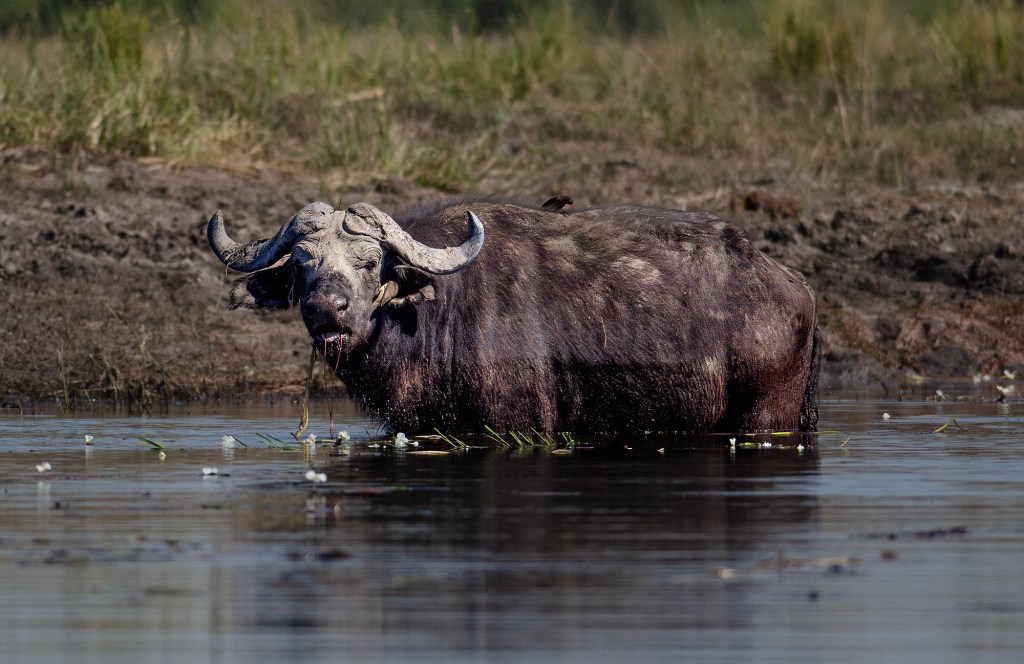
Buffalo and bison are not the same animals. The two are from different genuses in the bovine family. African buffalo are hardy creatures, able to flourish in many habitats – as long as they are close to water. They are found in many parts of Africa. They are often pictured with birds on their back. Mud helps buffalo get rid of ticks and parasites. Birds such as ox peckers ride on their backs and eat the insects.
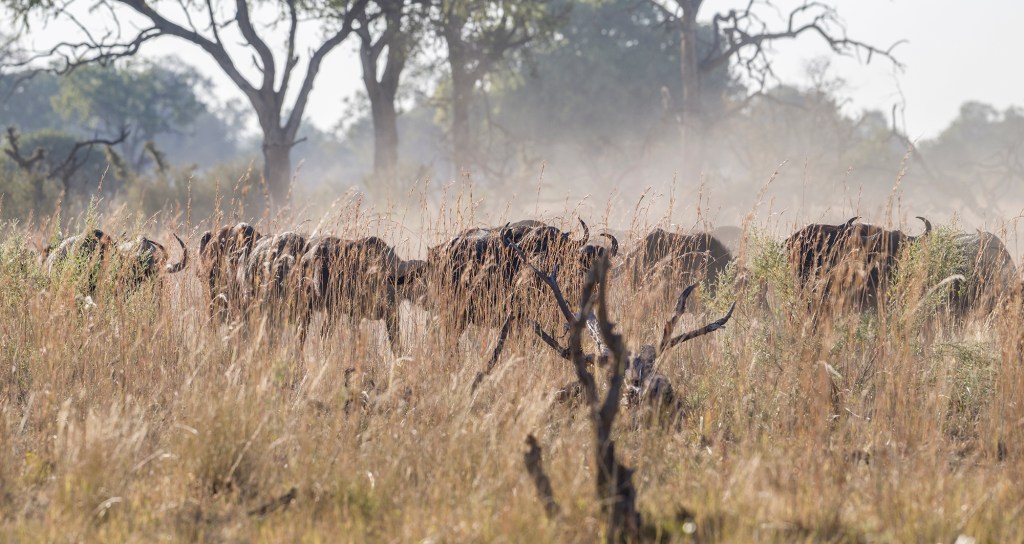
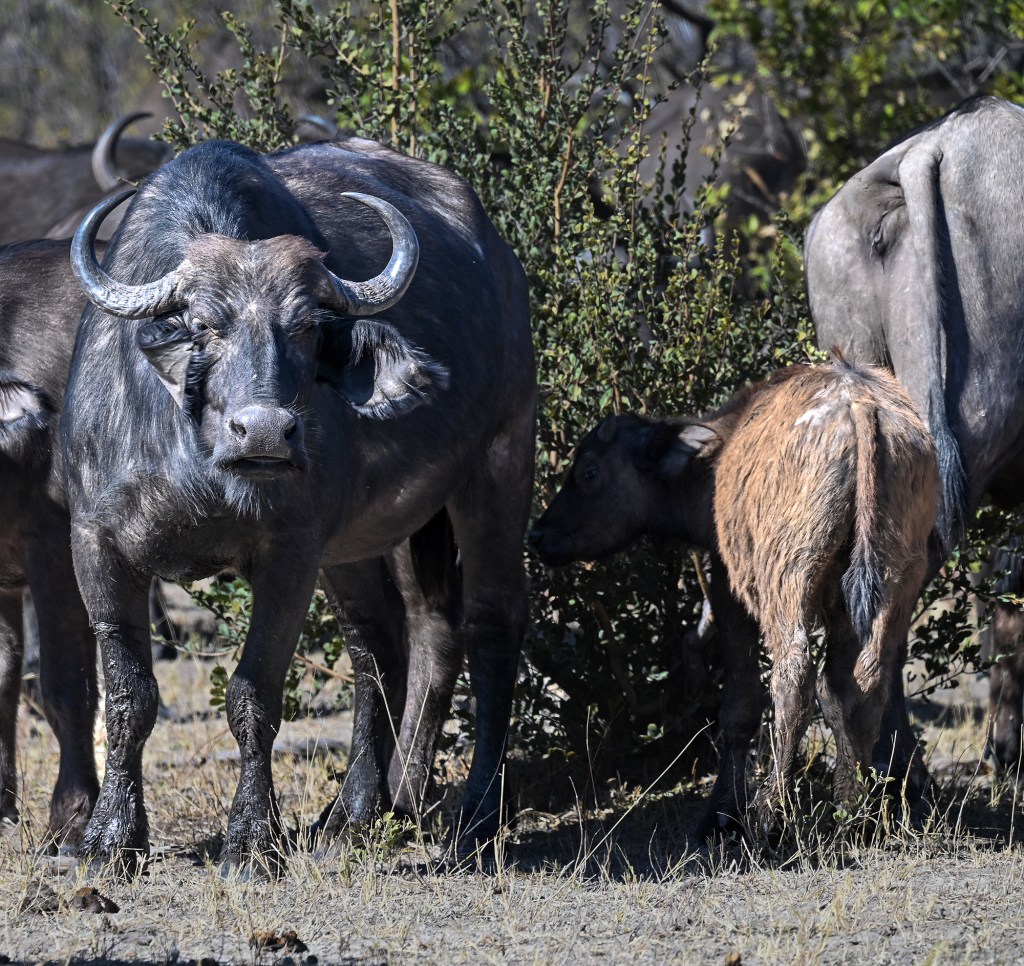
Buffalo spends most of their year in herds of anywhere between 50 and 500; this can rise to a thousand or more. Gathering in such large groups helps dissuade predators like lions, leopards, hyenas and African wild dogs. They Use sound defense tactics while protecting the herd. In the face of threats they display collective strength, forming a protective circle around the young, sick or elderly members.
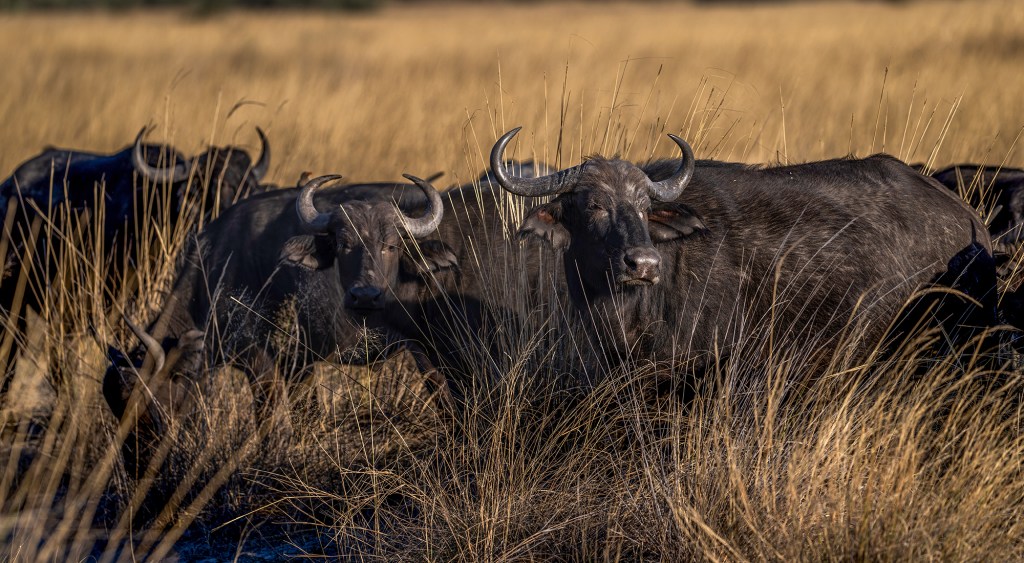
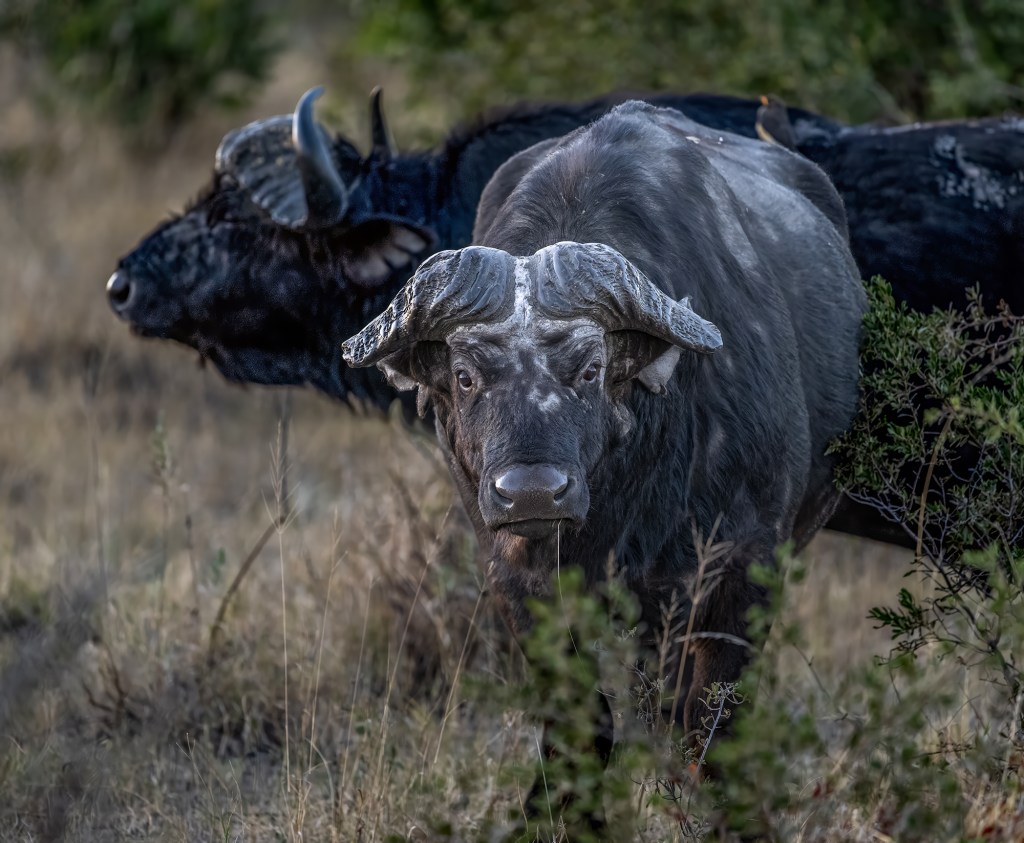
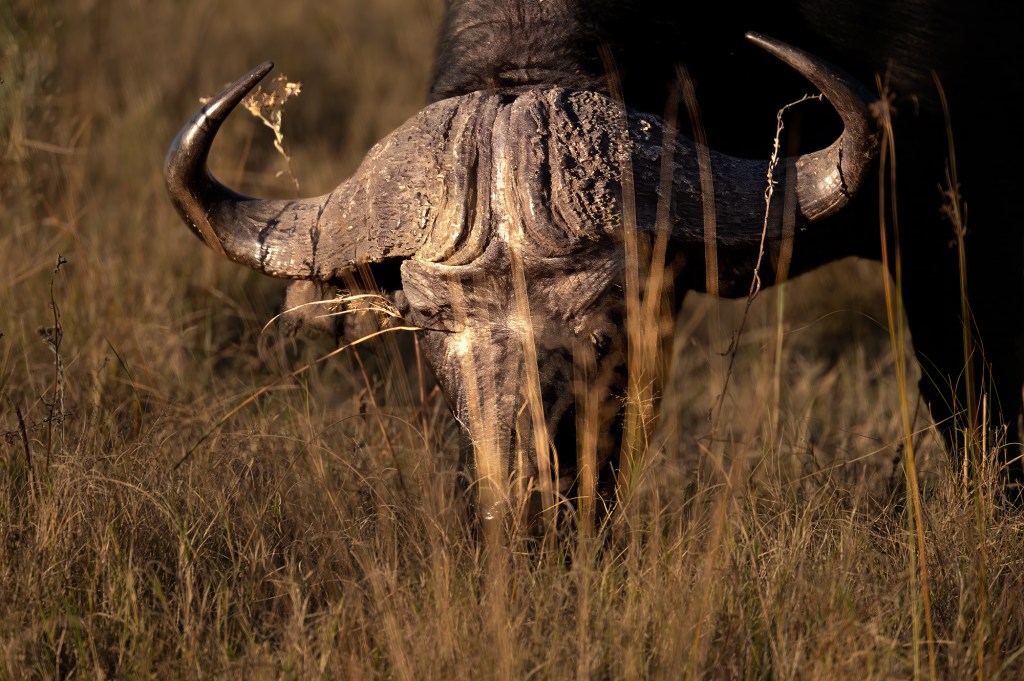
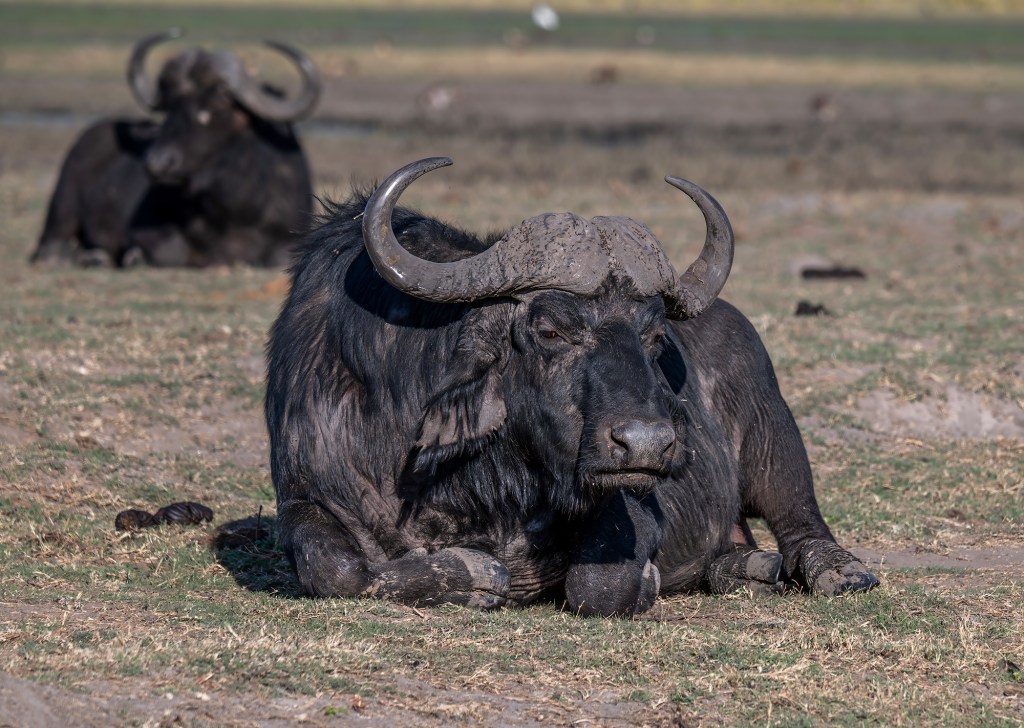
Buffalo are considered to be one of the “big five”, grouped with lions, leopards, rhinos and elephants. They are known to be grumpy and unpredictable. And they can run up to 37 mph. Their curved horns can reach up to seven feet from tip to tip. In large males the horns meet in the middle of their heads and are joined by a hard shield called a “boss”. This creates a helmet-esque formation. The horn structure is indicative of age and gender. Females and young males have no boss.
The cape buffalo is not very tall – it stands only 50-60″ tall with rather short legs. But it is massive, weighing 900-2000 pounds. Bulls are heavier than cows, and their horns are thicker and wider. To sustain its bulk, the animal must eat a lot of grass, depending on quantity rather than quality. They will consume other types of vegetation including leaves, twigs and even bark. They have a specialized four-chambered stomach, and their digestive system allows them to break down fibrous plant material.
Cape buffalo are led by a matriarch. Mature males often occupy dominant positions within the herd. These males compete for mating rights. Younger males often form bachelor groups until they are strong enough to challenge for a position within the herd. Typical gestation period is about 11.5 months, with one calf the norm. The buffalo live from 15 to 25 years.
The buffalo is susceptible to cattle-borne diseases, including foot and mouth disease and bovine tuberculosis. They are often poached for bushmeat. The cape buffalo is considered to be “near-threatened” by the conservationists. There are about 400,000 adult buffalo in Africa.





 The Carefree Photographer