Cape Buffalo

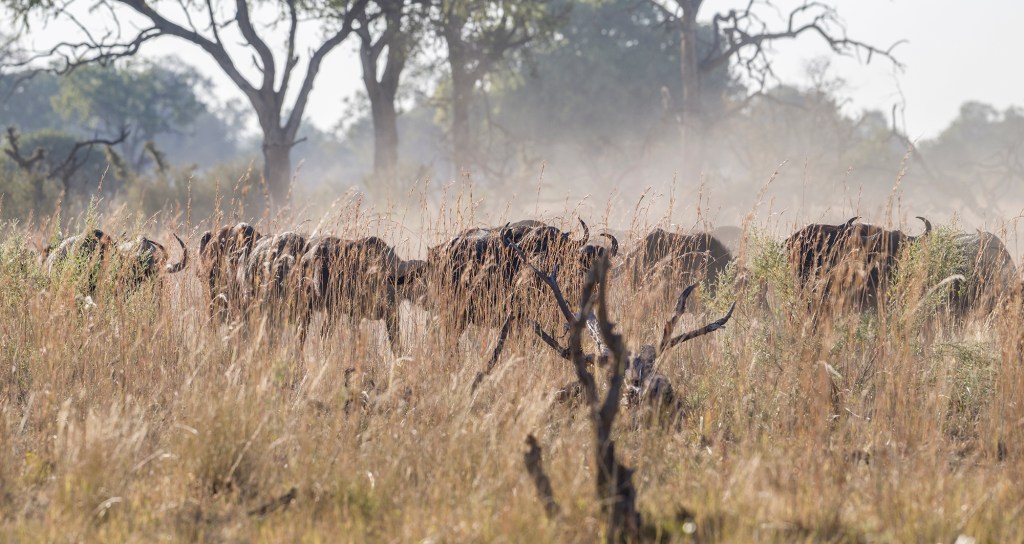
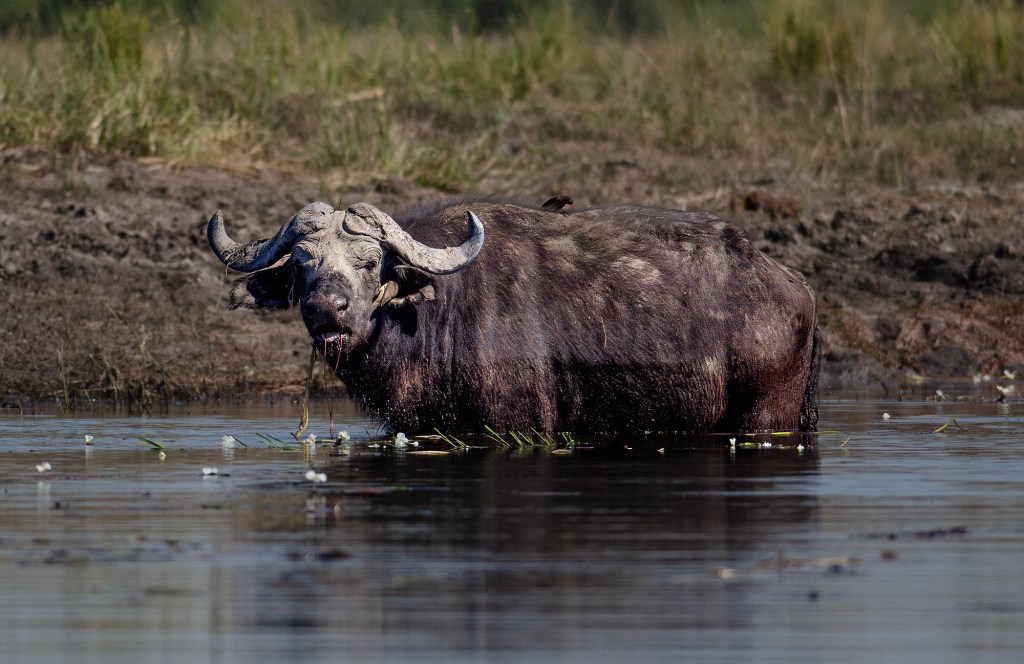
African buffalo roam by the thousands in sub-Saharan Africa. Cape buffalo are the most common. They are distinguished by coloring, size and even horn shape. When they are not fighting off the occasional lion, they are eating grass – and lots of it. It forms the bulk of their diet.

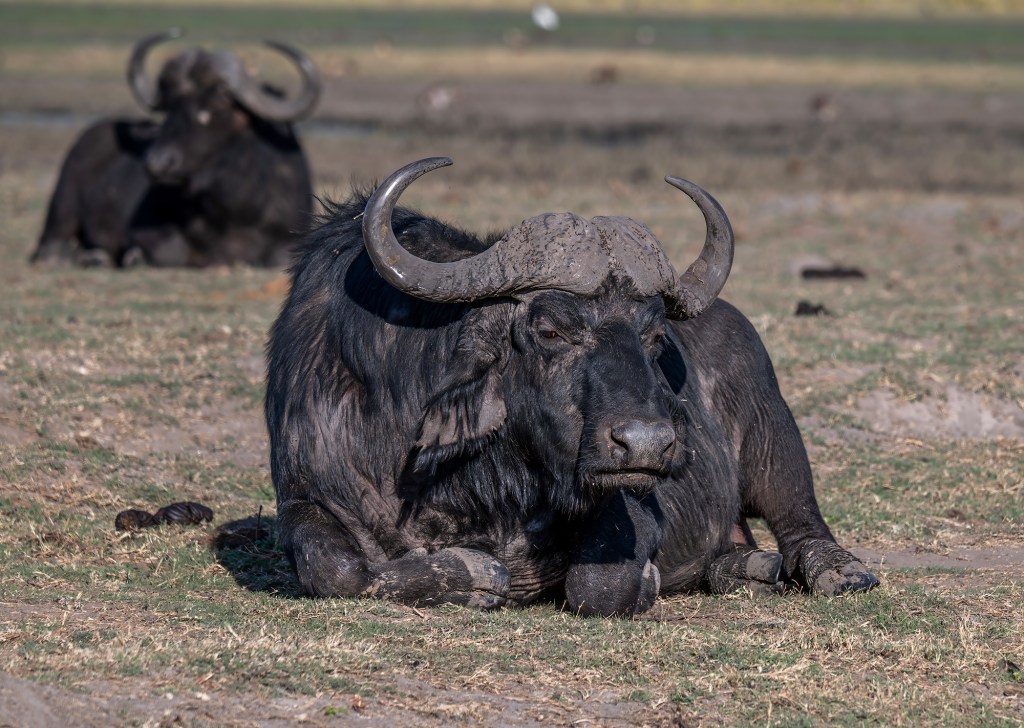
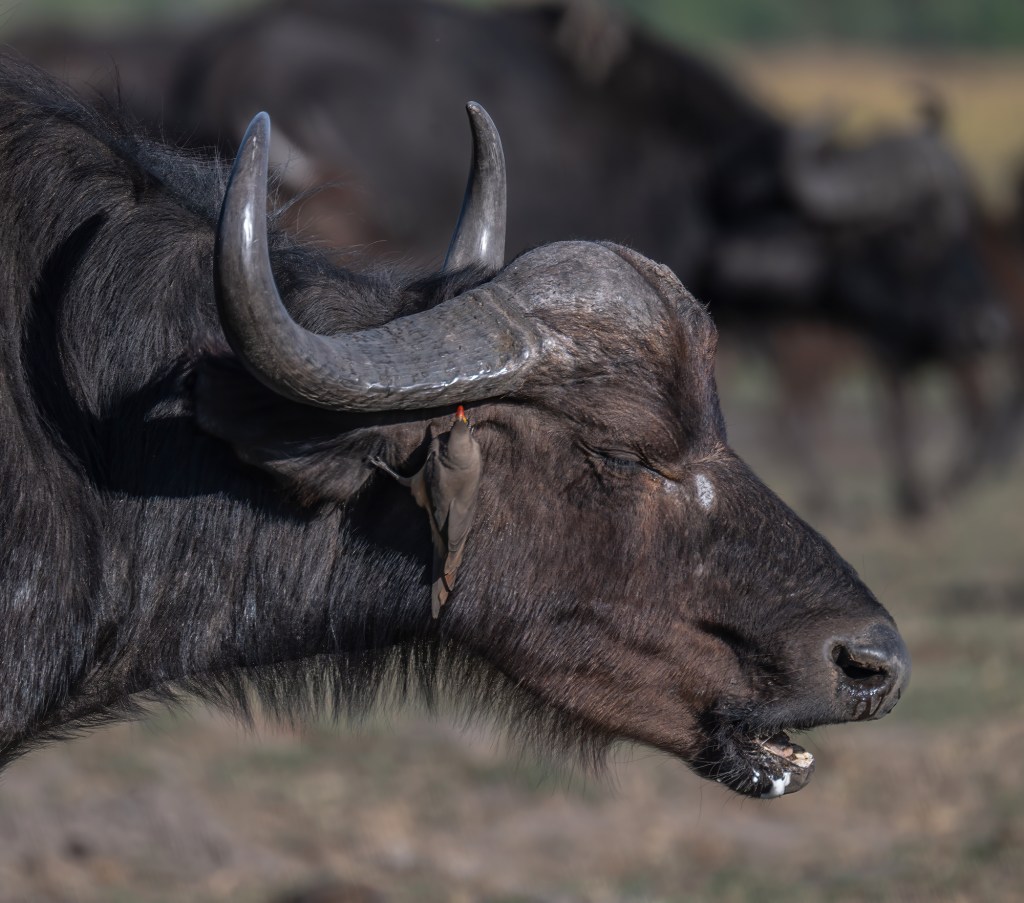
Buffalo and bison are not the same animals. The two are from different genuses in the bovine family. African buffalo are hardy creatures, able to flourish in many habitats – as long as they are close to water. They are found in many parts of Africa. They are often pictured with birds on their back. Mud helps buffalo get rid of ticks and parasites. Birds such as ox peckers ride on their backs and eat the insects.

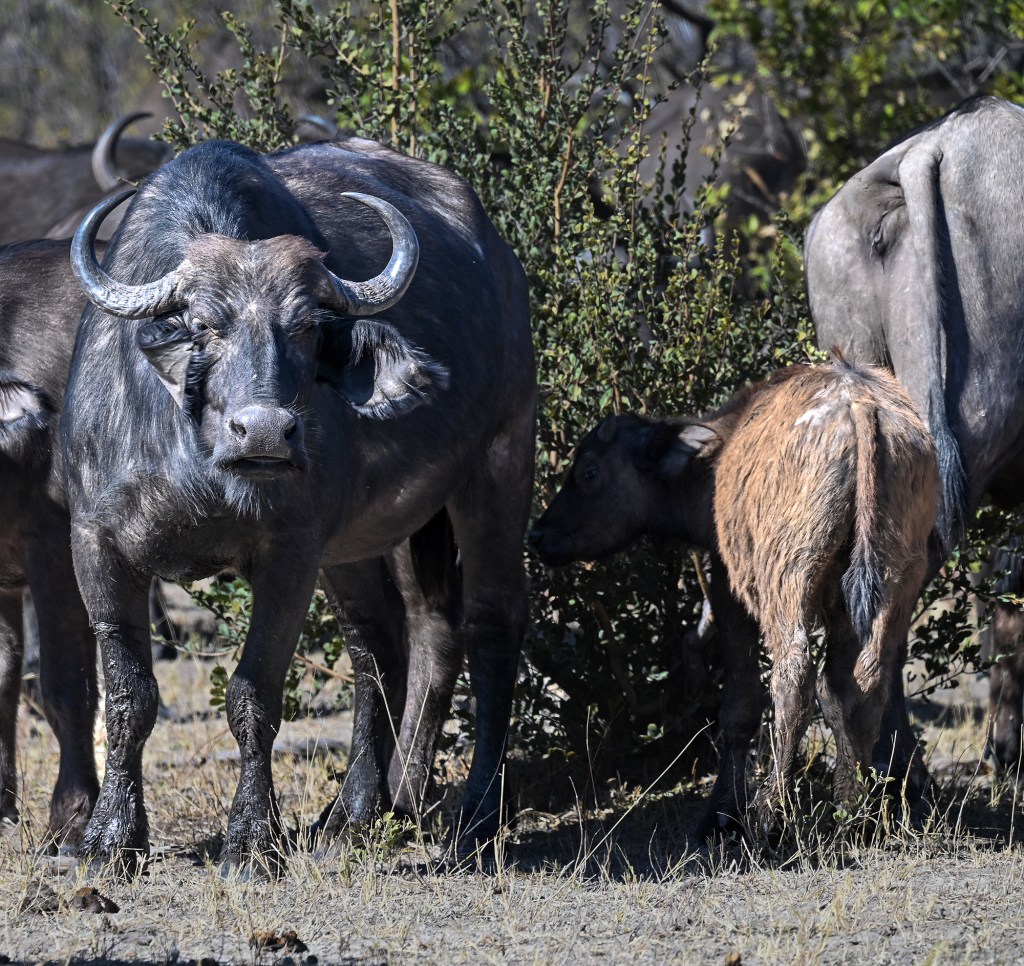
Buffalo spends most of their year in herds of anywhere between 50 and 500; this can rise to a thousand or more. Gathering in such large groups helps dissuade predators like lions, leopards, hyenas and African wild dogs. They Use sound defense tactics while protecting the herd. In the face of threats they display collective strength, forming a protective circle around the young, sick or elderly members.
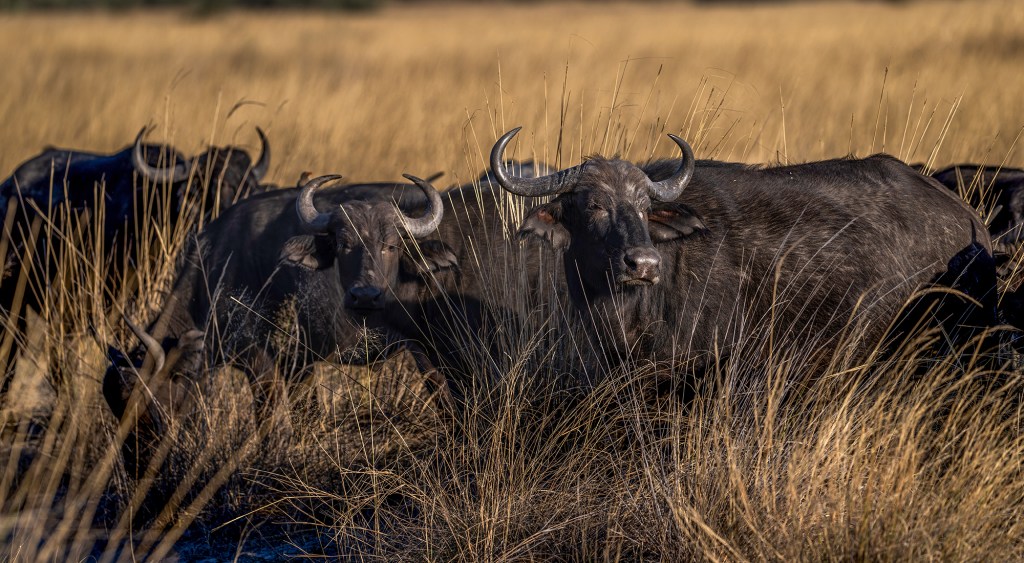
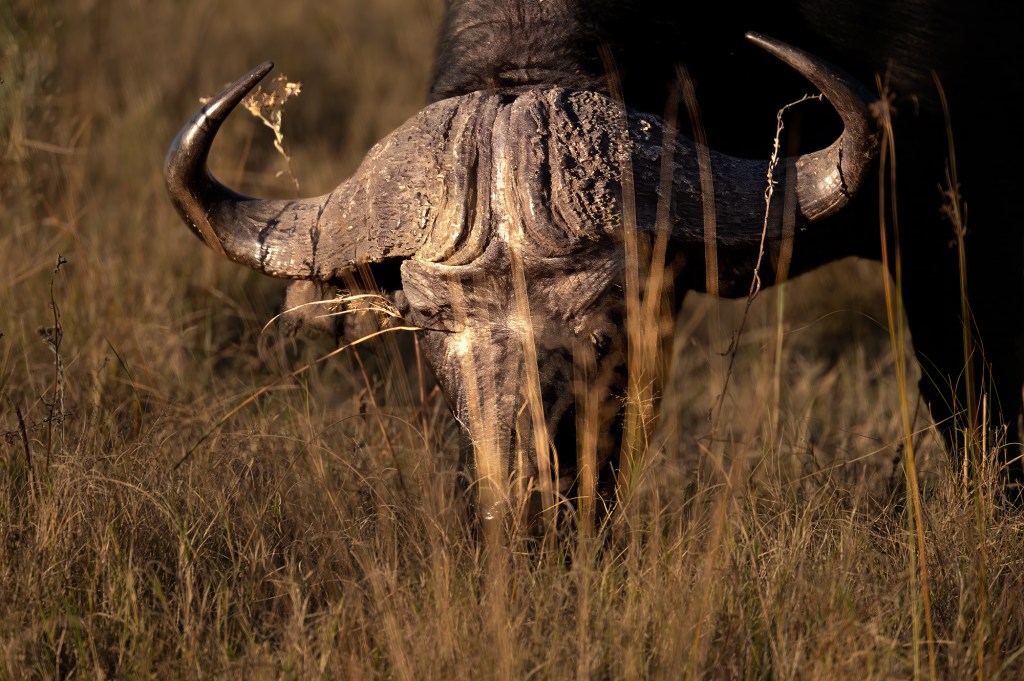
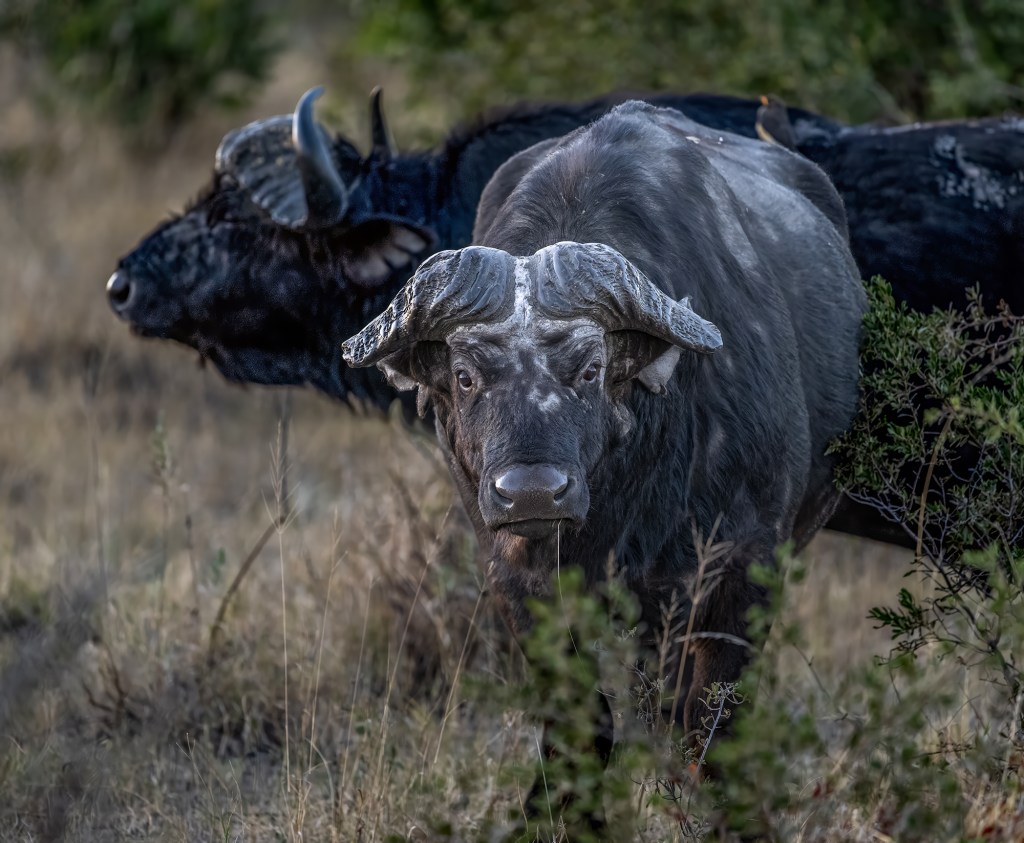
Buffalo are considered to be one of the “big five”, grouped with lions, leopards, rhinos and elephants. They are known to be grumpy and unpredictable. And they can run up to 37 mph. Their curved horns can reach up to seven feet from tip to tip. In large males the horns meet in the middle of their heads and are joined by a hard shield called a “boss”. This creates a helmet-esque formation. The horn structure is indicative of age and gender. Females and young males have no boss.

The cape buffalo is not very tall – it stands only 50-60″ tall with rather short legs. But it is massive, weighing 900-2000 pounds. Bulls are heavier than cows, and their horns are thicker and wider. To sustain its bulk, the animal must eat a lot of grass, depending on quantity rather than quality. They will consume other types of vegetation including leaves, twigs and even bark. They have a specialized four-chambered stomach, and their digestive system allows them to break down fibrous plant material.

Cape buffalo are led by a matriarch. Mature males often occupy dominant positions within the herd. These males compete for mating rights. Younger males often form bachelor groups until they are strong enough to challenge for a position within the herd. Typical gestation period is about 11.5 months, with one calf the norm. The buffalo live from 15 to 25 years.

The buffalo is susceptible to cattle-borne diseases, including foot and mouth disease and bovine tuberculosis. They are often poached for bushmeat. The cape buffalo is considered to be “near-threatened” by the conservationists. There are about 400,000 adult buffalo in Africa.

Birds

The wide presence of bird life in Botswana – and the whole of Southern Africa – is astonishing. And the colors, shapes, and types of bird life is quite impressive. Here are some of the birds seen and photographed on this 2024 trip.

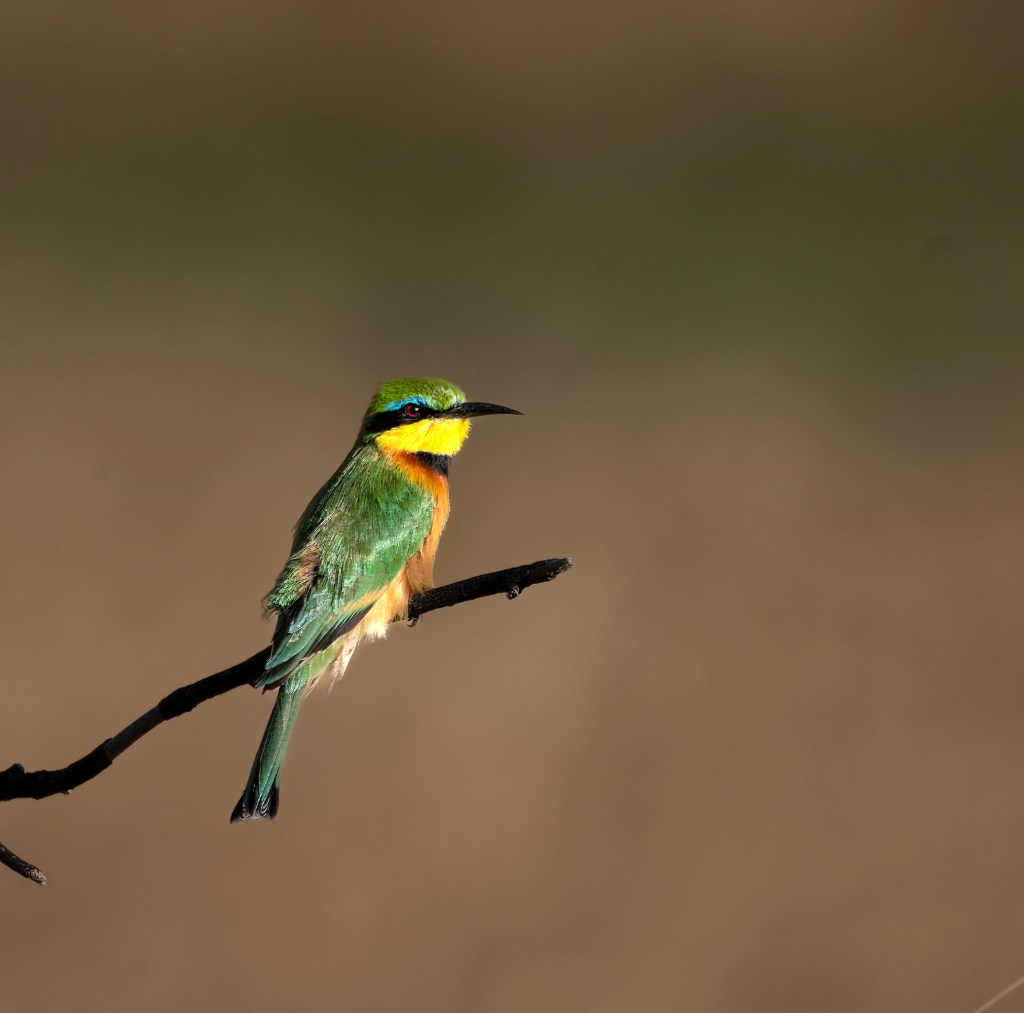
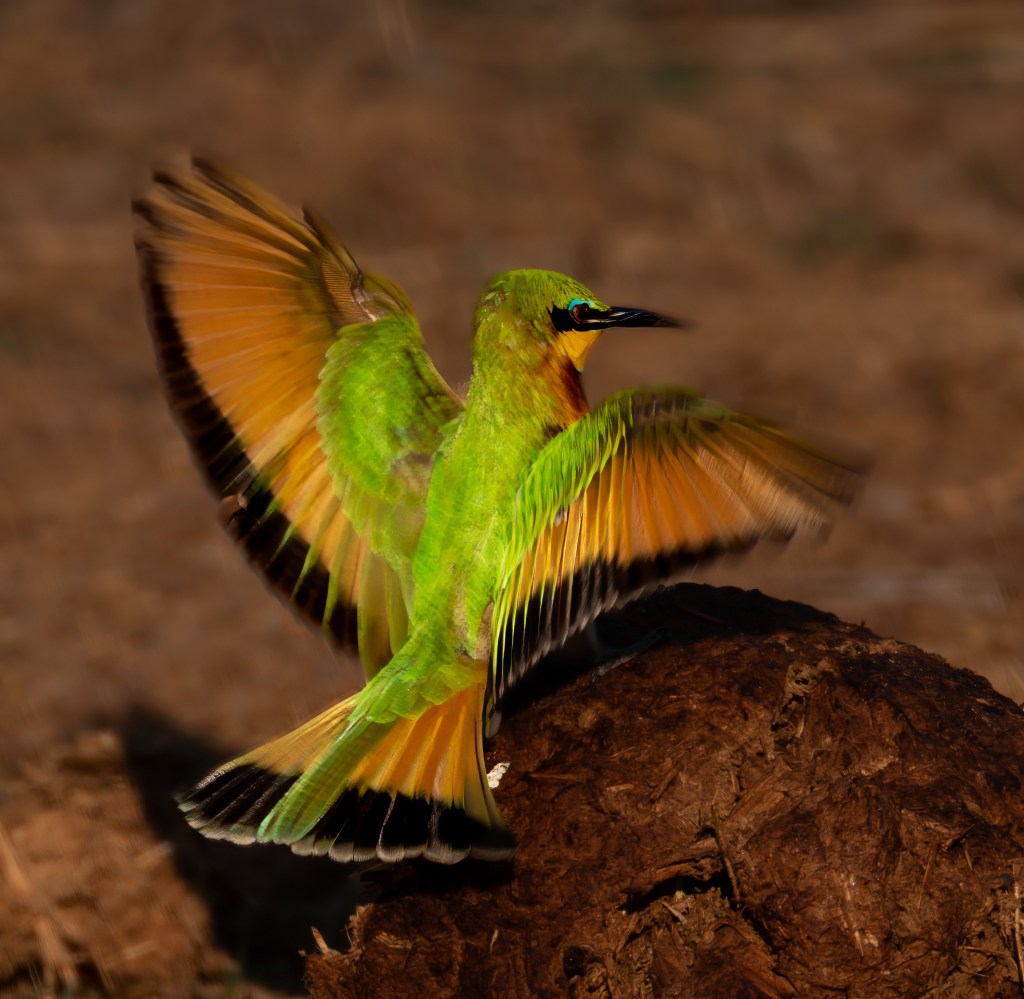
Little Bee-eater
Bataleur Eagle
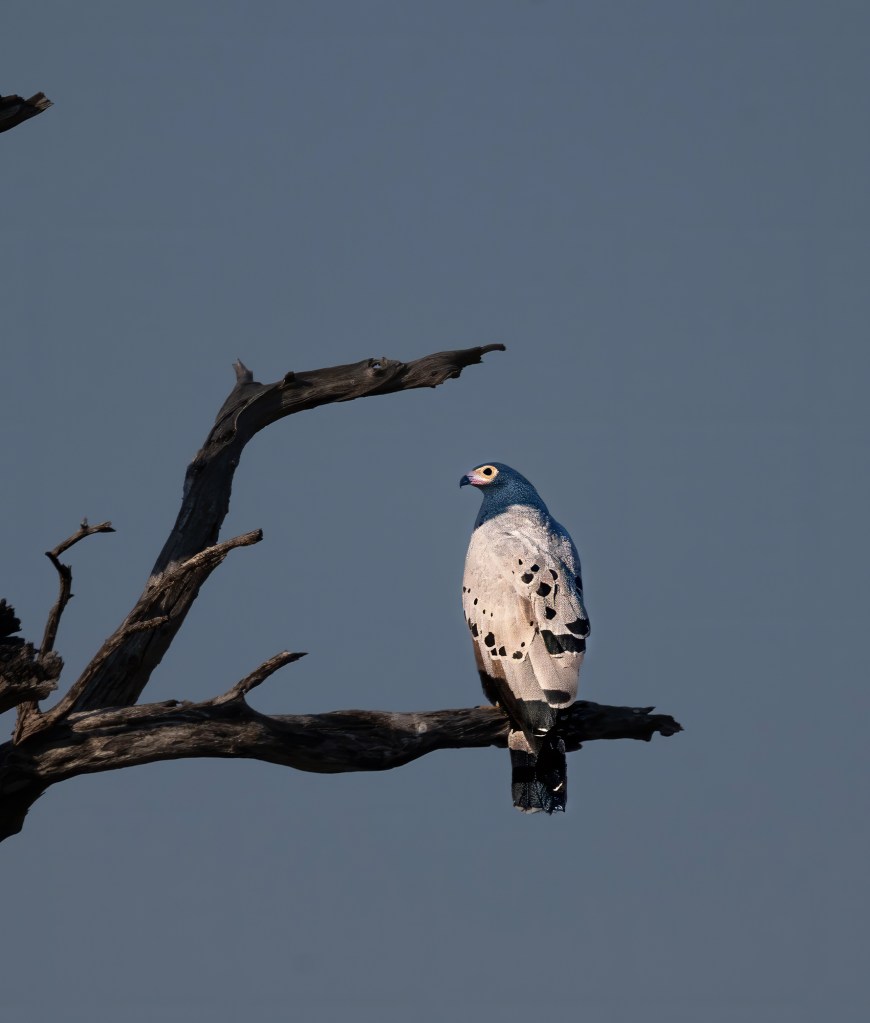
African Harrier-hawk
Little Bee-eater
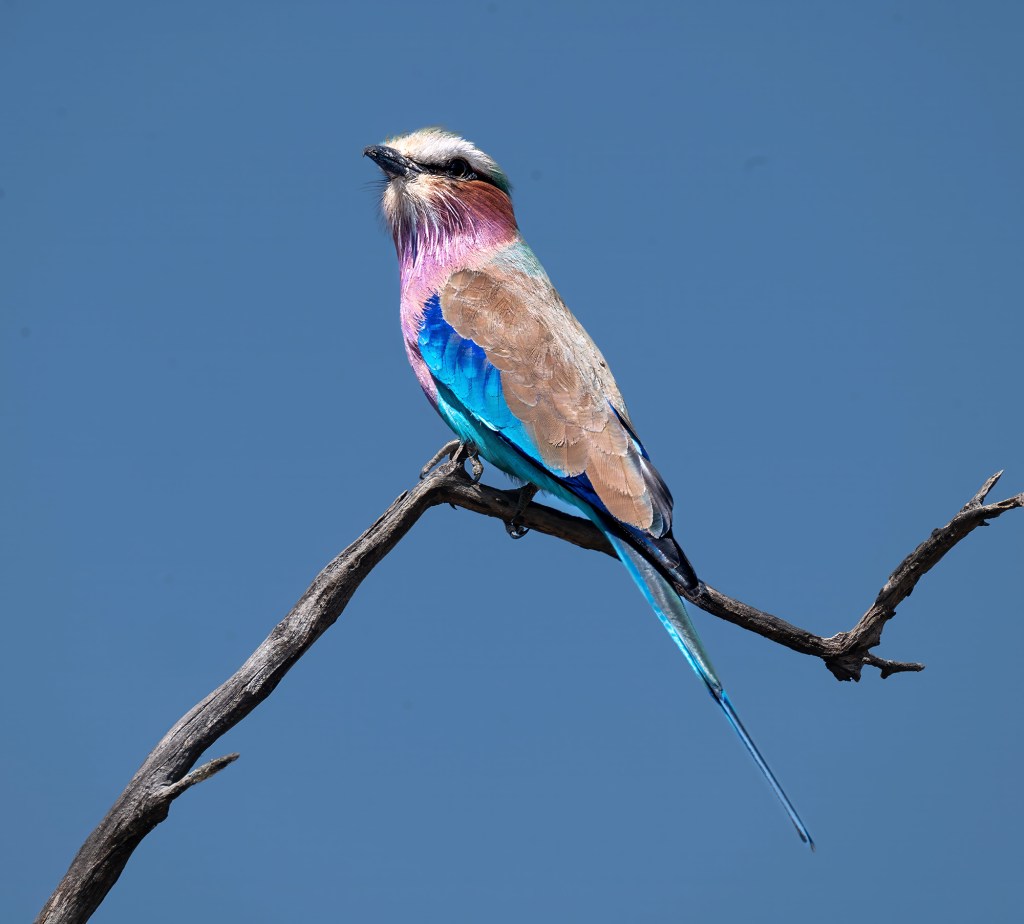
Lilac Breasted Roller
Little Bee-eater
African Green Pigeon
Yellow-billed stork with Egyptian goose
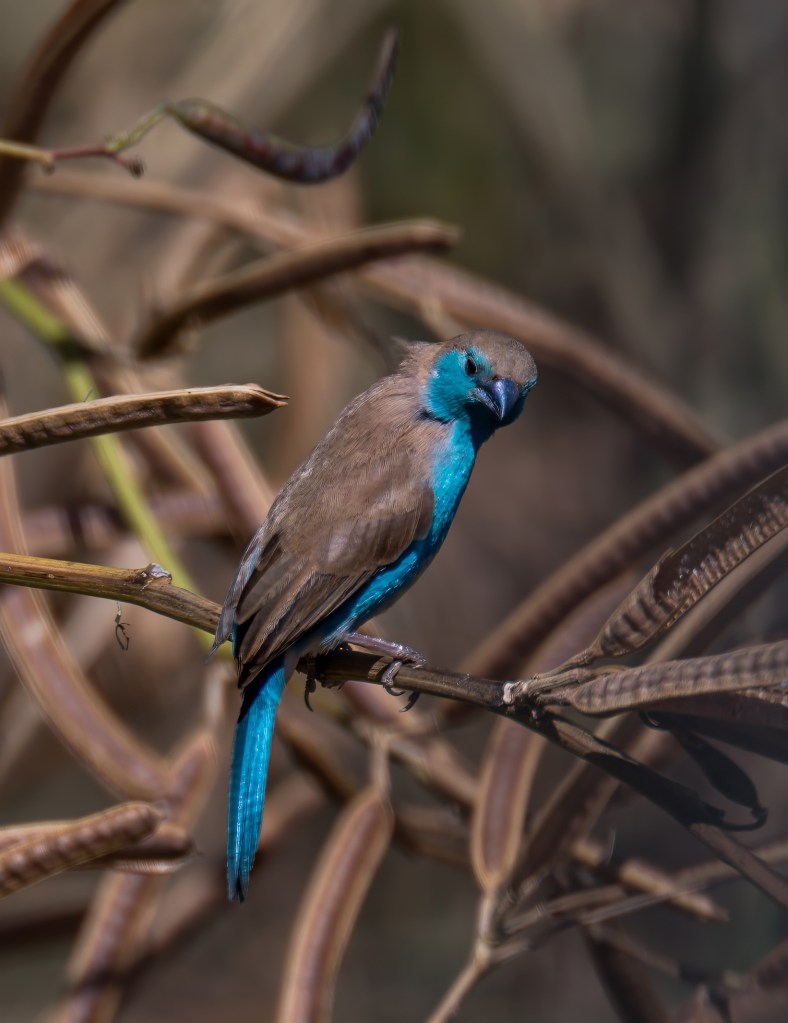
Blue-breasted Cordon Bleu
African Darter
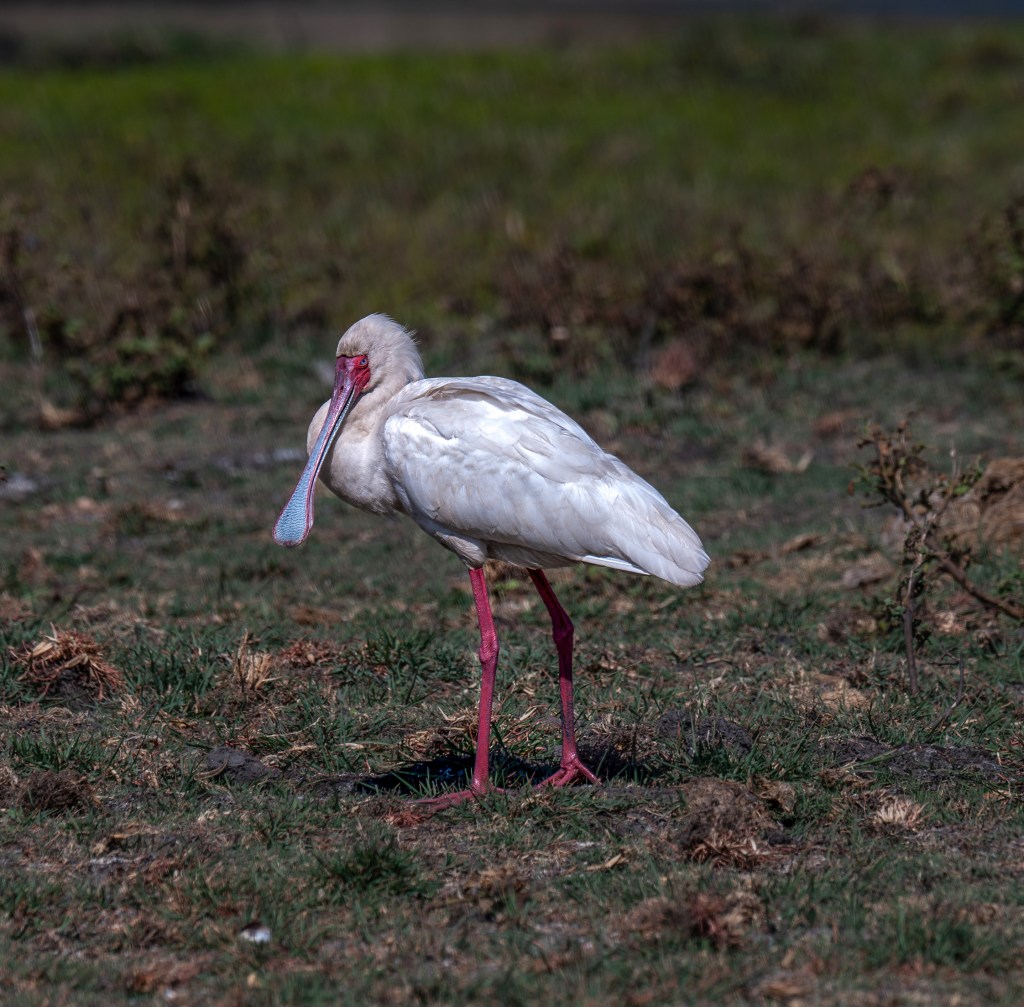
African Spoonbill
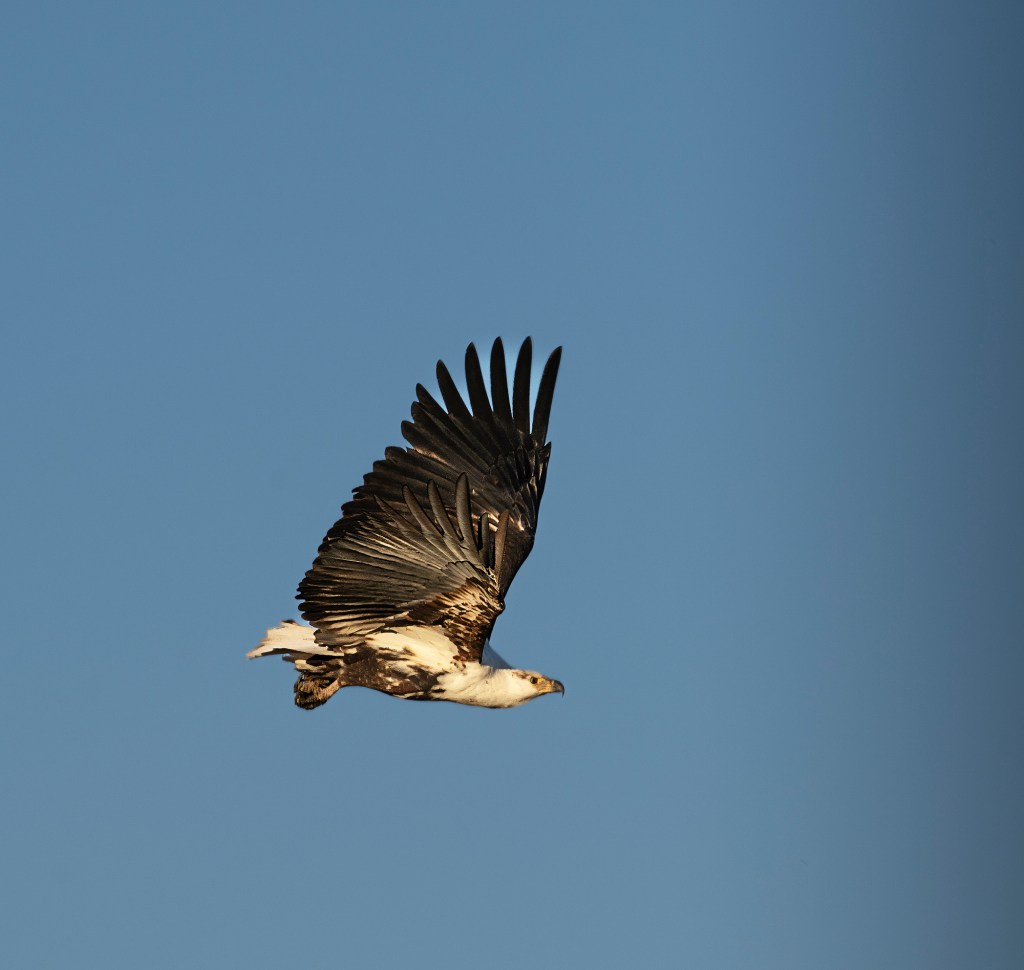
Fish Eagle
Swallow-tailed Bee-eater
Hamerkop
Common Kingfisher
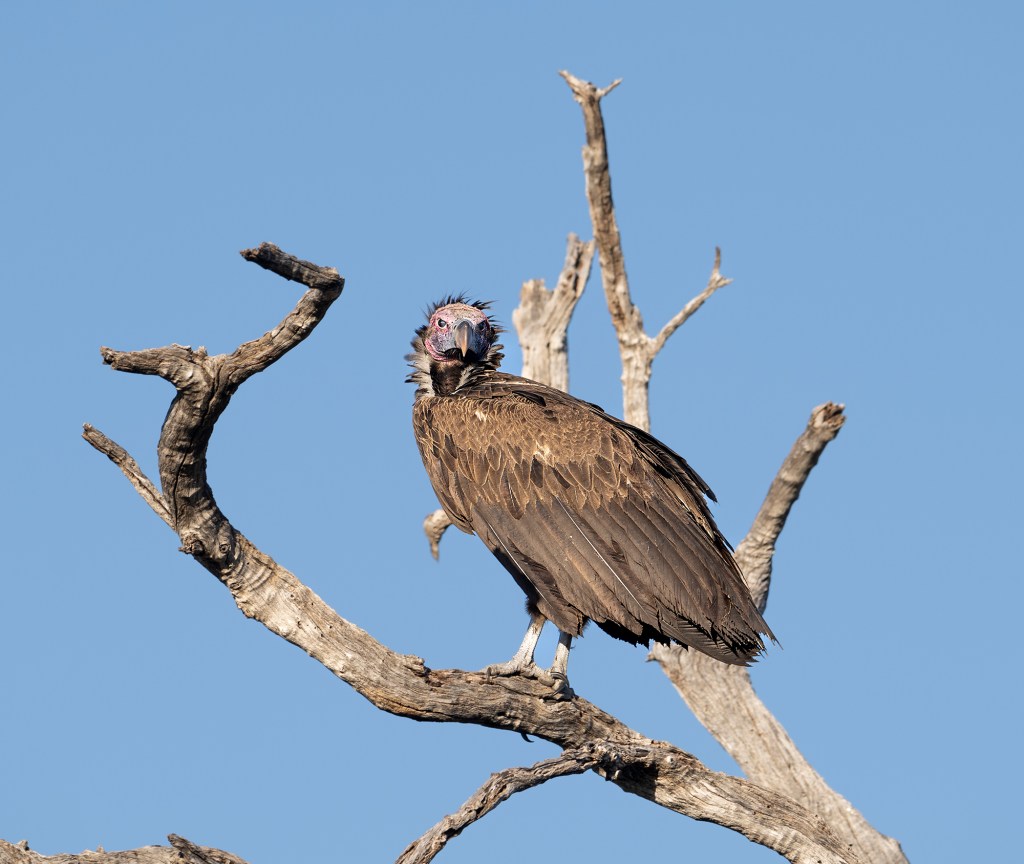
Lappet-faced Vulture
Helmeted Guineafowl
Darter
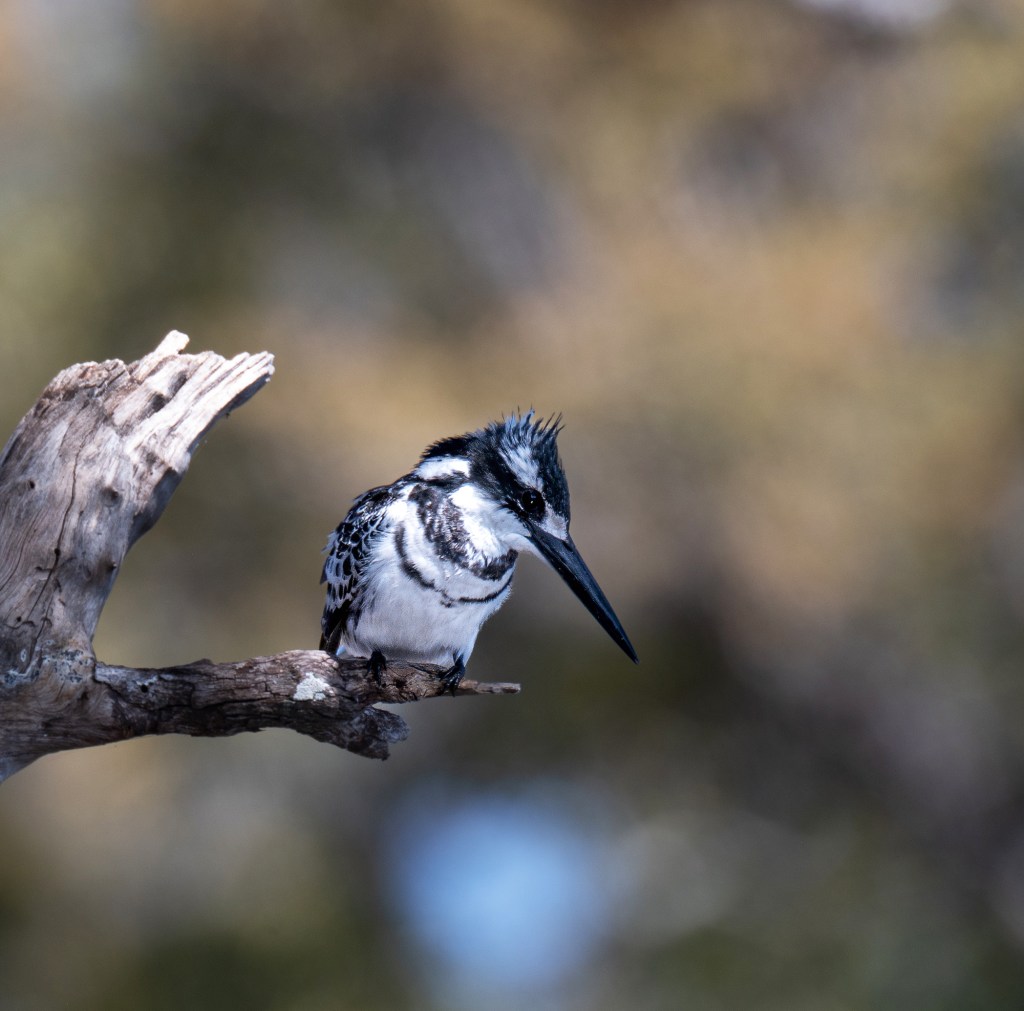
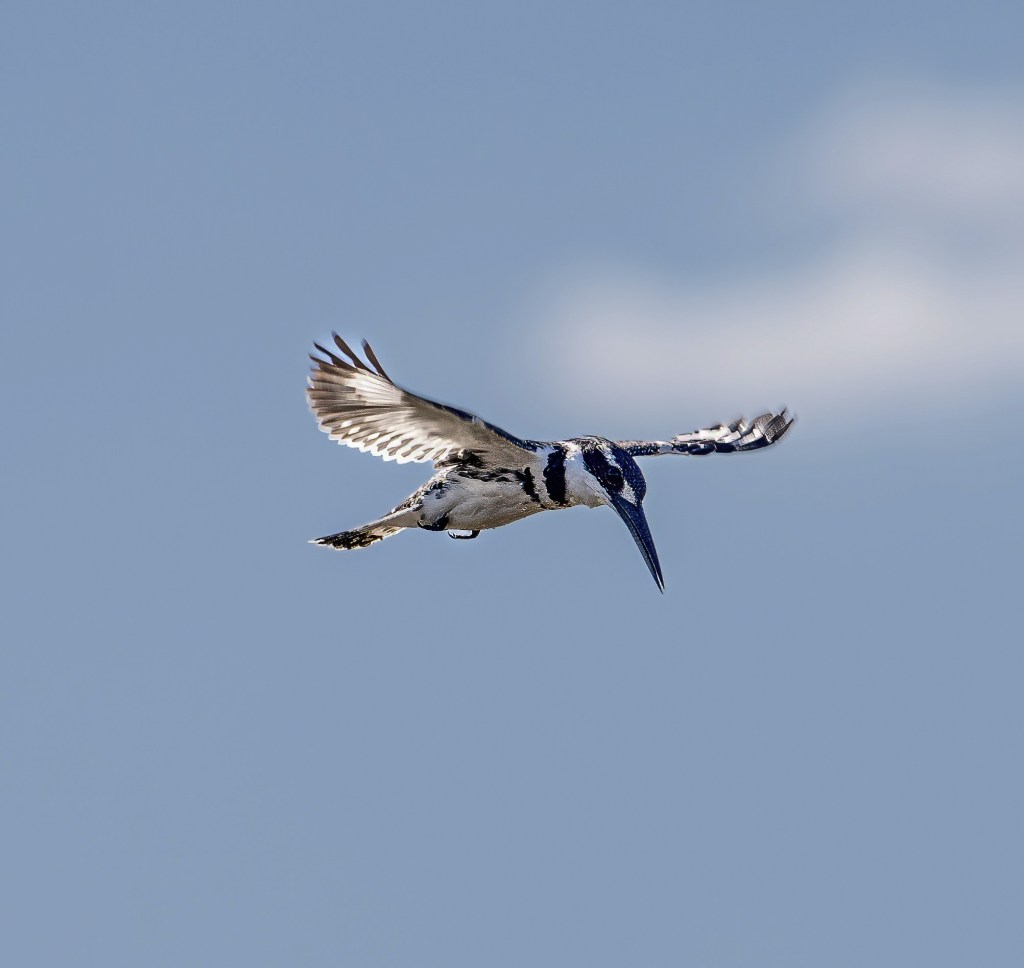
Pied Kingfisher
Grey Lourie
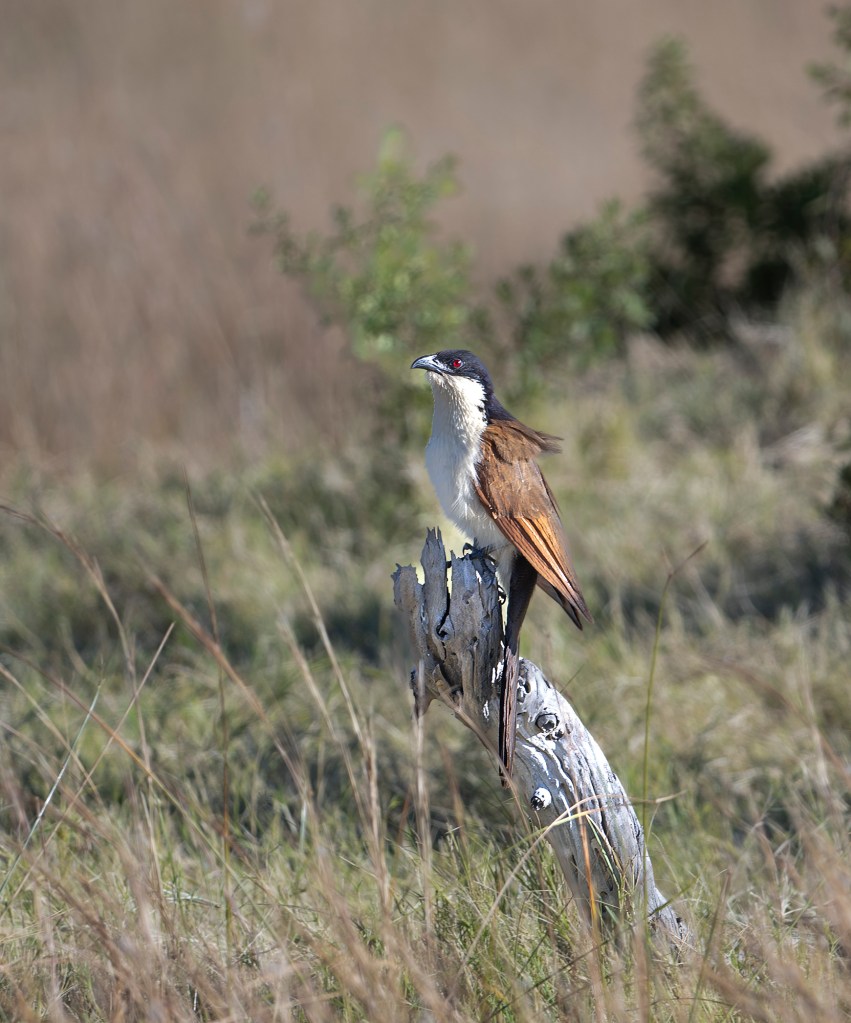
Coucal
Saddle-billed Stork
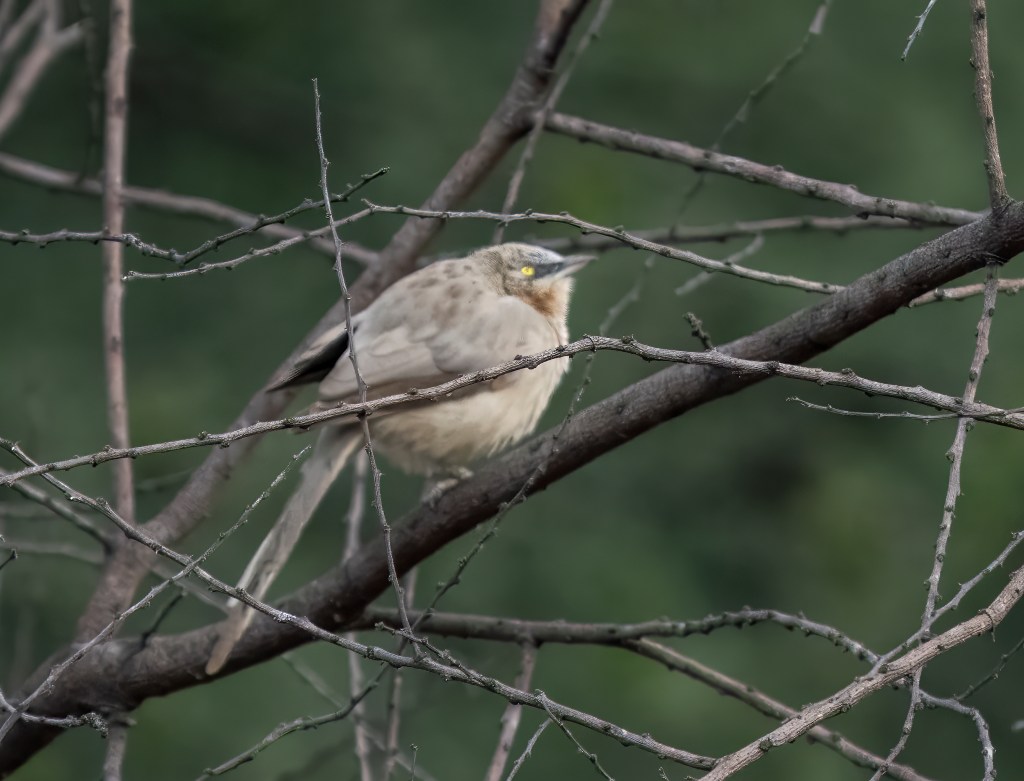
Large Grey Babbler
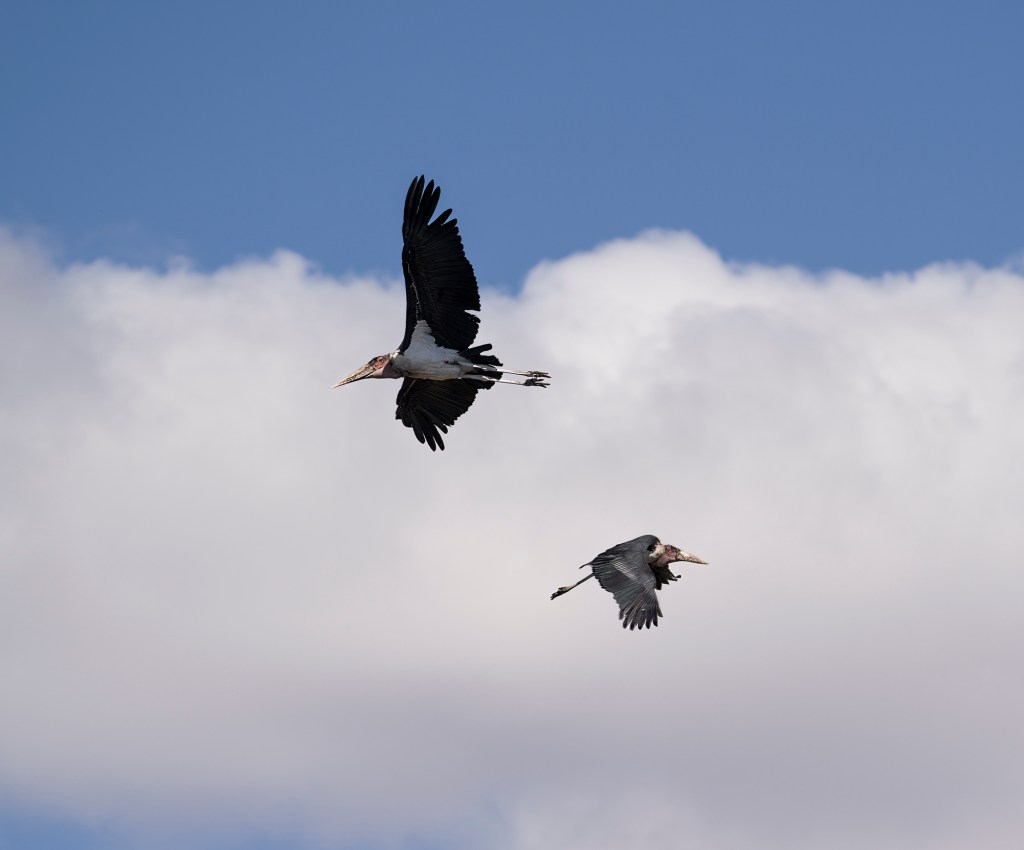
Marabou Stork

Zebras

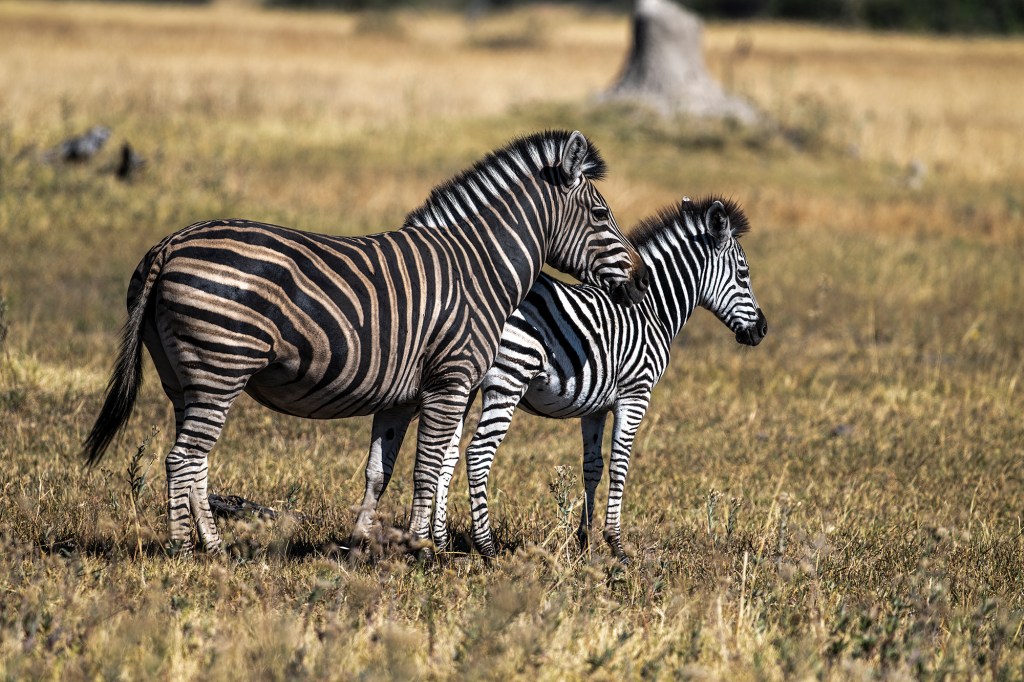
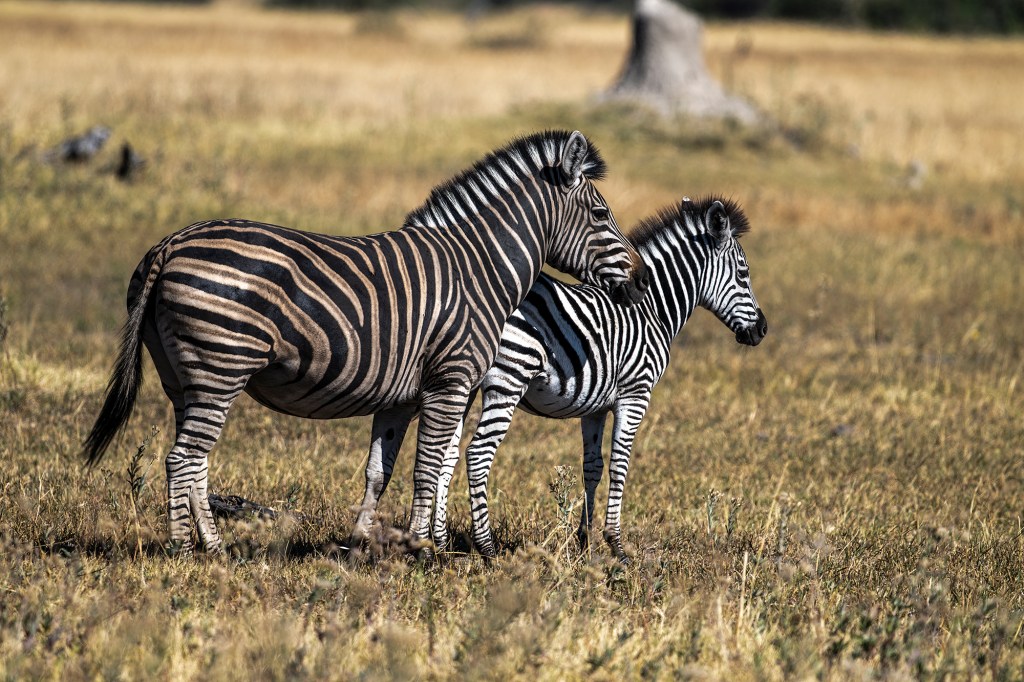
The term zebras refers to any of the three species of strikingly black-and-white striped mammals of the horse family (genus Equus); the plains zebra, found in the rich grasslands over much of eastern and southern Africa; Grevy’s zebra, which lives in arid, sparsely wooded areas in Kenya; and the mountain zebra which inhabits dry upland plains in Namibia and South Africa. The plains zebra is made up of six subspecies; Crawshay’s, half-maned, Grant’s, Chapmann’s, Burchell’s and quagga, which is extinct. Botswana is populated with large herds of the plains zebra, predominantly Burchell’s.

Zebras are closely related to domestic horses. They are large single-hoofed ungulates built for speed and long-distance migrations. They typically stand about 47-55 inches at the shoulder. Plains zebra weigh 400-850 pounds. Sexes are the same size in the plains zebra. Males do have spade-shaped canines used in fighting. The teeth of all three species are adapted for grazing.
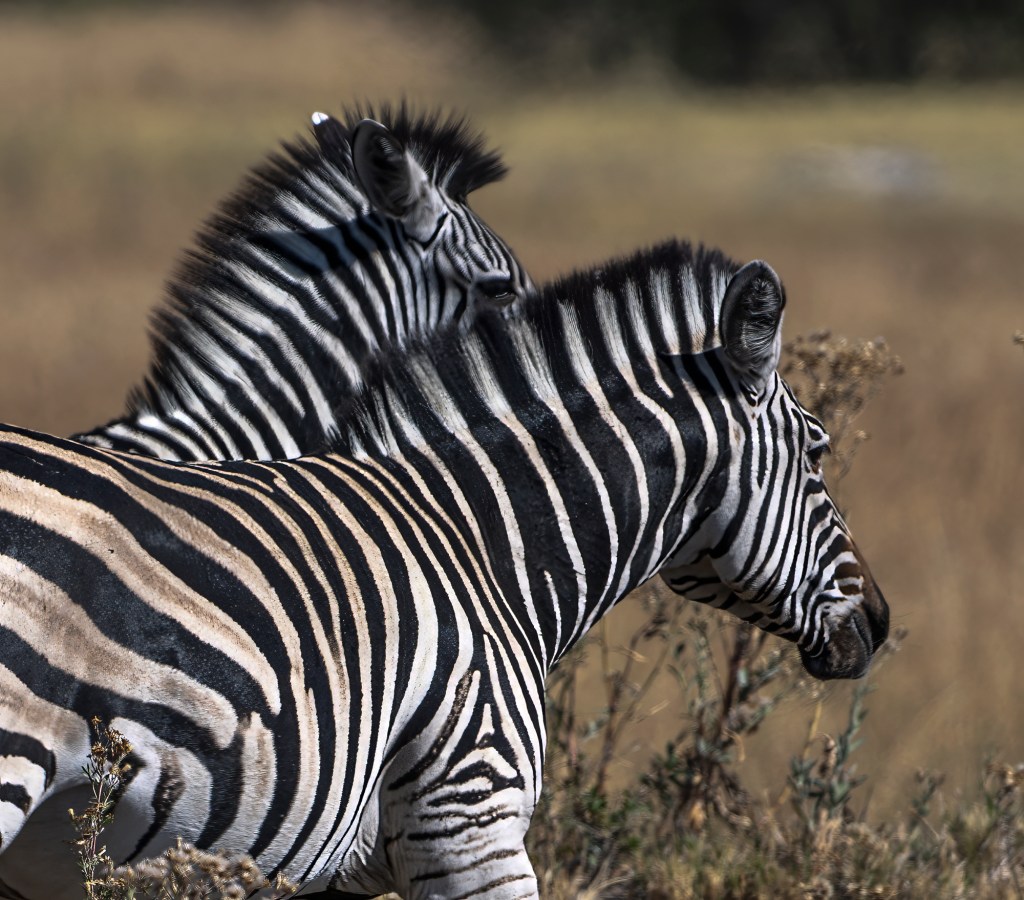
All zebras are dark-skinned. Their stripes arise from melanocytes that selectively determine the pigmentation of the fur. The cells transfer melanin into some of the animal’s growing hairs. Hairs that contain melanin appear black, whereas those without melanin appear white. Many have brown tinges or coloring in the white areas, presumably due to lower melanin levels.

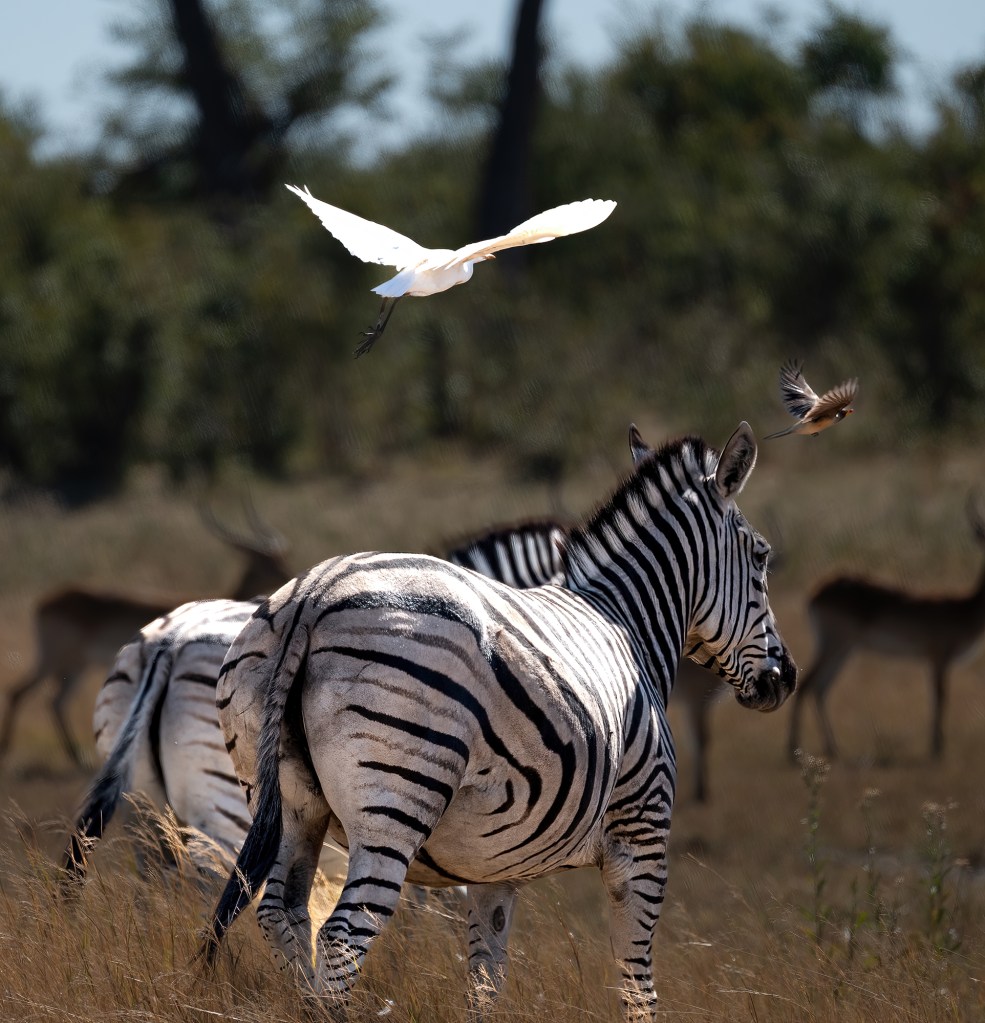
In the plains zebra the stripes are wide and widely spaced. Some have lighter “shadow stripes” between the main stripes. Many scientists maintain that the zebra’s stripes evolved to thwart horse fly infestation. A 2019 study showed that the zebra’s black and white striped pattern appeared to confuse biting horse flies.

Two types of mating systems are observed in zebras. Like the horse, the mountain and plains zebras live in small family groups consisting of a stallion and several mares with their foals. The females that inhabit the harem are unrelated. The females mate only with their stallion. Gestation is 11-13 months, with one foal only. Foals nurse for about 12 months.

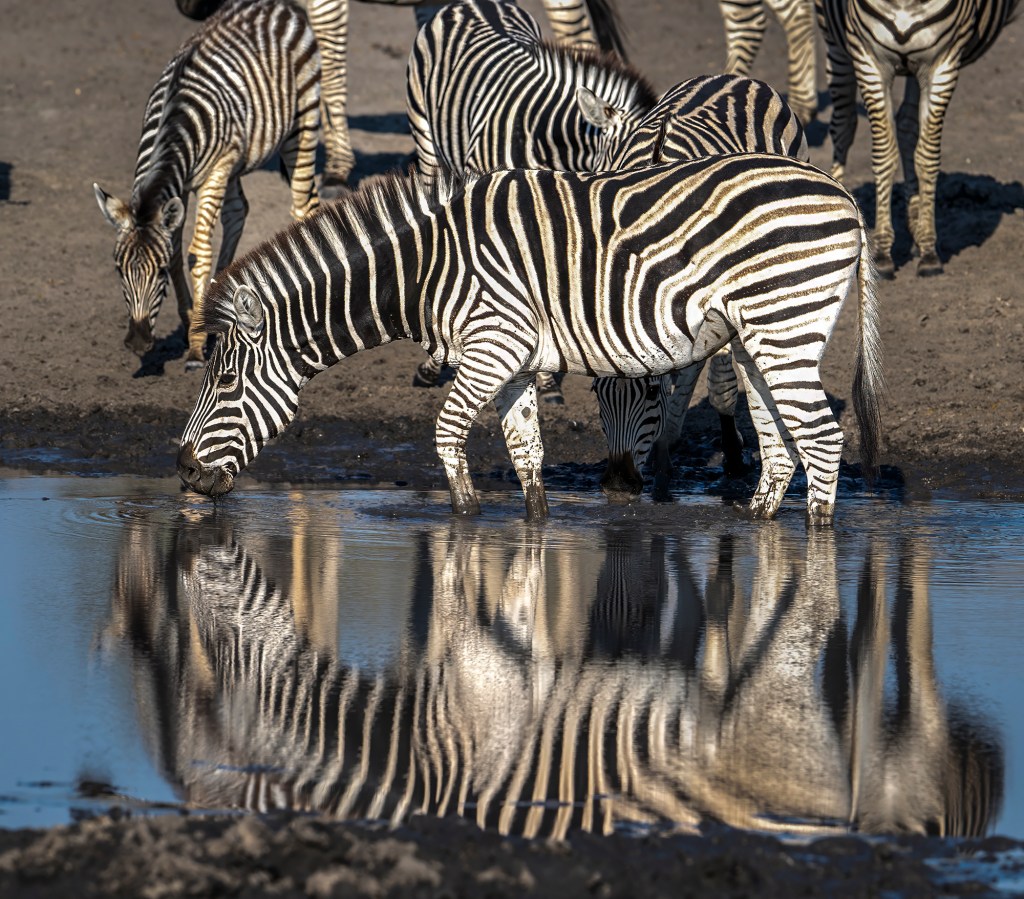
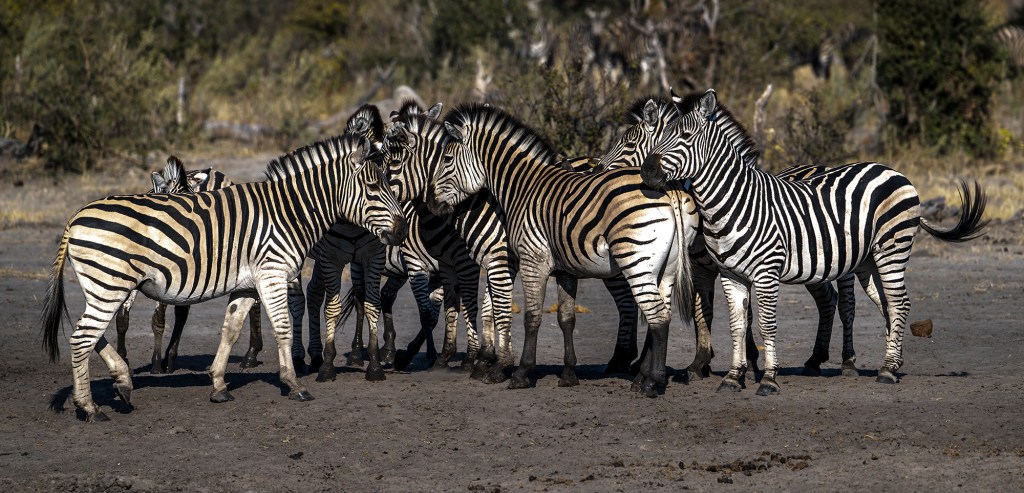
With plentiful food, small groups may coalesce into large herds or “dazzles” and still maintain their identity. When we were at Four Rivers Camp this year, we saw huge collections of zebras estimated at 400 animals or more. Zebras often form mixed herds with other mammals such as wildebeests and giraffes. Zebras with young colts avoid predators such as hyenas by forming a cluster around the mother and foal. Available surface water is a critical need.

Zebras are considered to be in the “near threatened” category. All three species have decreased in abundance through human activities; Grevy’s are considered an endangered species.

Hyenas, Jackals and Foxes

Two of these species belong to the family “canidae”. Although hyenas may look like dogs but are actually descended from cats. So lets proceed in the above order.

Hyenas

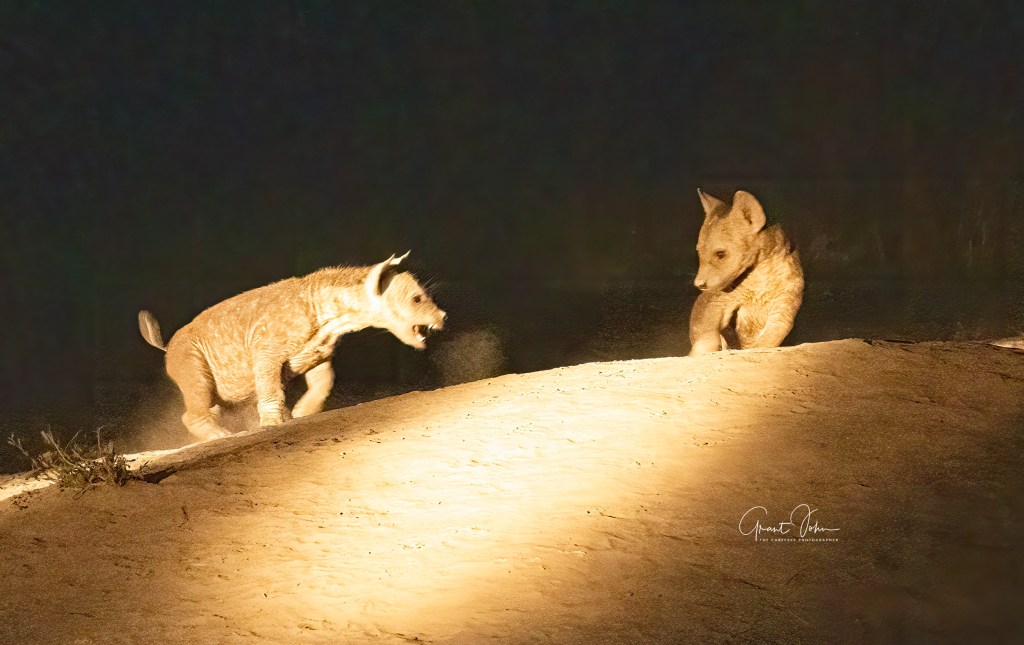
Hyenas are the fifth smallest family in the order Carnivora. They are unique and vital components of most African ecosystems. Both hyenas and canines are non-arboreal, curatorial hunters that catch prey with their teeth rather than claws. Both eat food quickly, and their calloused feet are adapted for running and making sharp turns. Their other habits including grooming, scent marking, defecation routines, mating and parental behavior are consistent with feline behavior.

The four species are the striped hyena, the brown hyena, the spotted hyena and the aardwolf (already covered). Spotted and brown hyenas live primarily in sub-Saharan Africa, and are very common in Botswana. They are noted for their scavenging habits.

Hyenas have long forelegs and powerful neck and shoulders for dismembering and carrying prey. They are tireless trotters with excellent sight, hearing and smell for locating carrion, and they are proficient hunters as well. They are all more or less nocturnal.

Intelligent, curious and opportunistic in matters of diet, hyenas frequently come into contact with humans. Spotted hyenas range south of the Sahara except in rain forests. They are ginger colored with patterns of dark spots unique to each individual. Females at=re larger than males, weighing up to 180 pounds and measuring up to 6.5′ long. They communicate with moans, yells, giggles, and whoops, some carrying several kilometers.

Gestation is about 110 days, annual litter size is usually two pups. They hunt everything from young hippos to fish; antelopes are common. In southern Africa they kill most of their own food, hunting effectively in groups.Strong jaws and broad molars allow the animal to get at every part of a carcass and crush bones, which are digested in the stomach by highly concentrated hydrochloric acid.

They live in clans of 5-80 individuals, and mark their territory with dung piles and scent from anal glands. The sexes have a linear dominance hierarchy, the lowest female outranking the highest male.

The smaller brown hyena weighs about 40 ; the coat is shaggy with an erectile white mane over the neck. Birds and eggs, insects and fruit are staples, but leftover kills by lions, cheetahs and spotted hyenas are important. They also live in clans, but adult females nurse each other’s cubs, other clan members take food to the cubs, and females do not outrank males.

Jackals

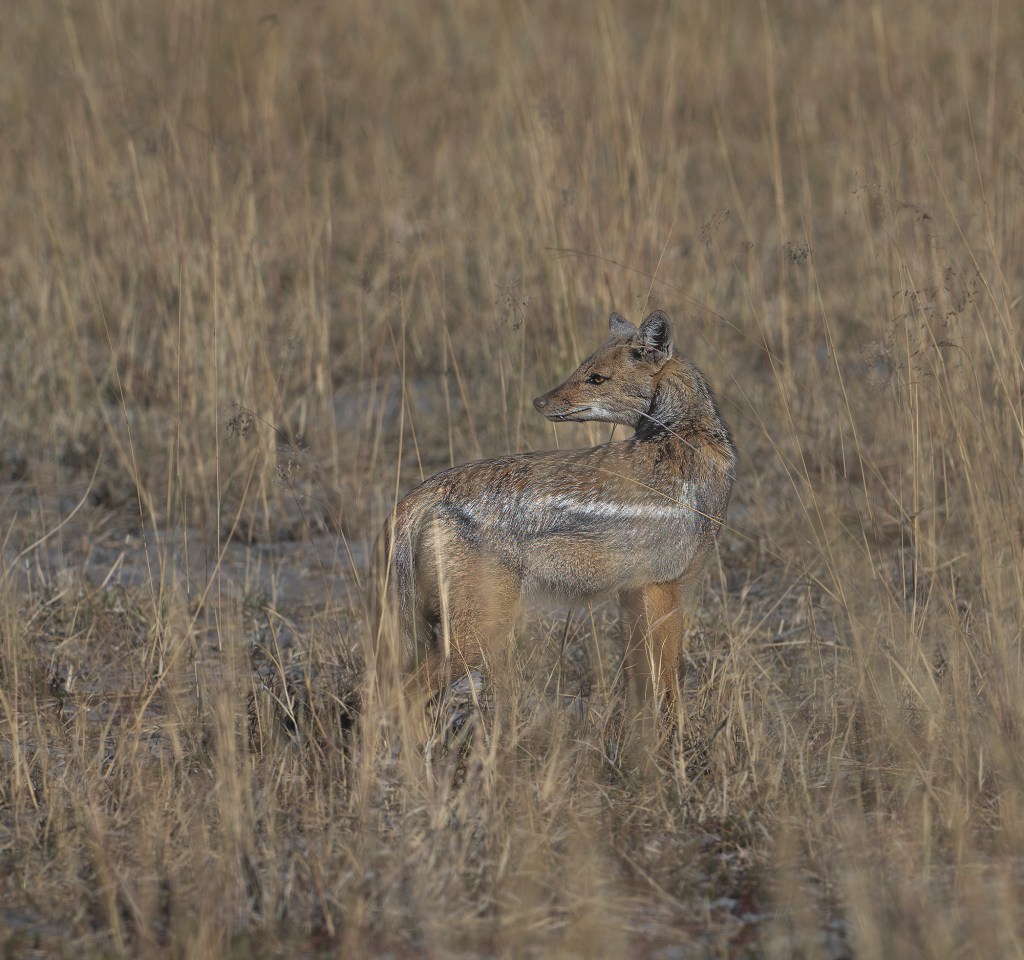
Jackals are canids native to Africa and Eurasia. The name commonly refers to three species: the closely related black-backed jackal (above) and side-striped jackal of sub-Saharan Africa, and the golden jackal of Europe and Asia.

All jackals are opportunistic omnivores, predators of small to medium sized animals and proficient scavengers. Their long legs and curved canine teeth are adapted for hunting small mammals, birds and reptiles, and their large feet and fused leg bones give them a physique well-suited for long-distance running. Jackals are most active at dawn and dusk.

Jackals in Africa prefer to live in the open and wooded savanna, in grasslands, shrub lands and along waterways with dense undergrowth. They are 17-25 pounds in weight and 27-33 inches in length.

Their most common social unit is a monogamous pair, which defend their territory from other pairs by vigorously chasing intruders and marking landmarks with their urine and feces. Gestation period is about two months. They live in burrows, litters containing two to seven pups.

Primary predators are leopards, hyenas and eagles.

Bat-eared Fox

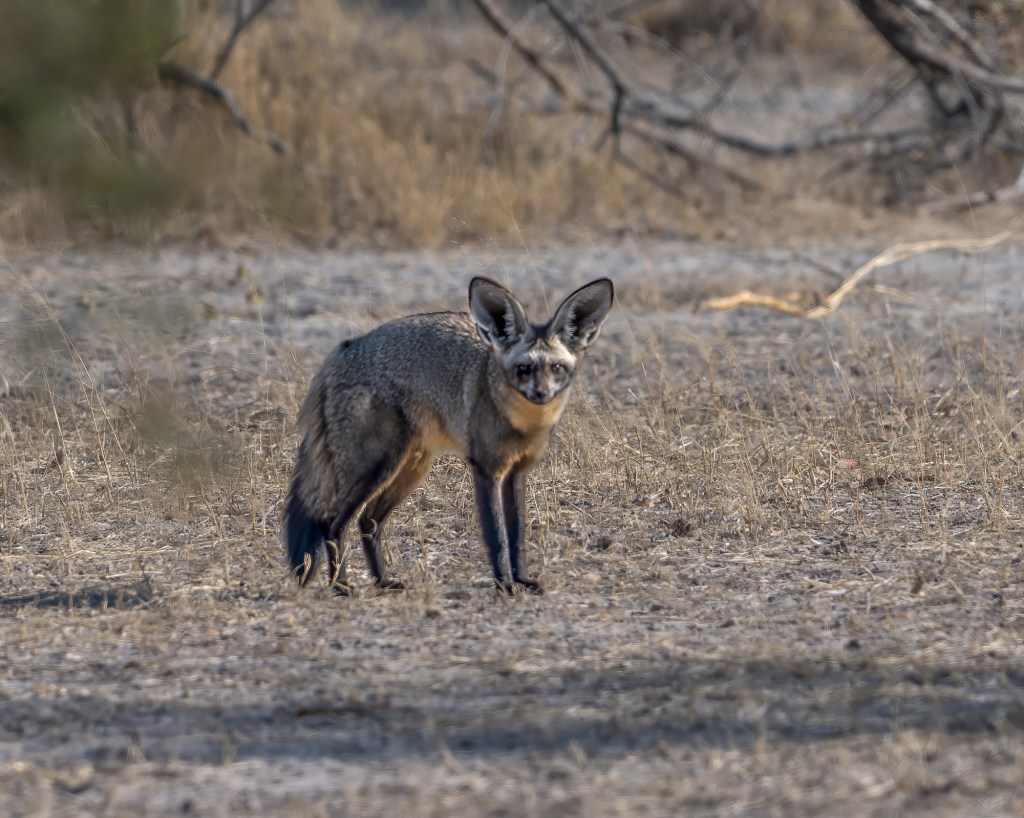
The bat-eared fox is a small, African fox known for its enormous ears, which are over 5 inches tall. The ears are full of blood vessels that shed heat and help keep the fox cool; they also give the fox a very goo sense of hearing.

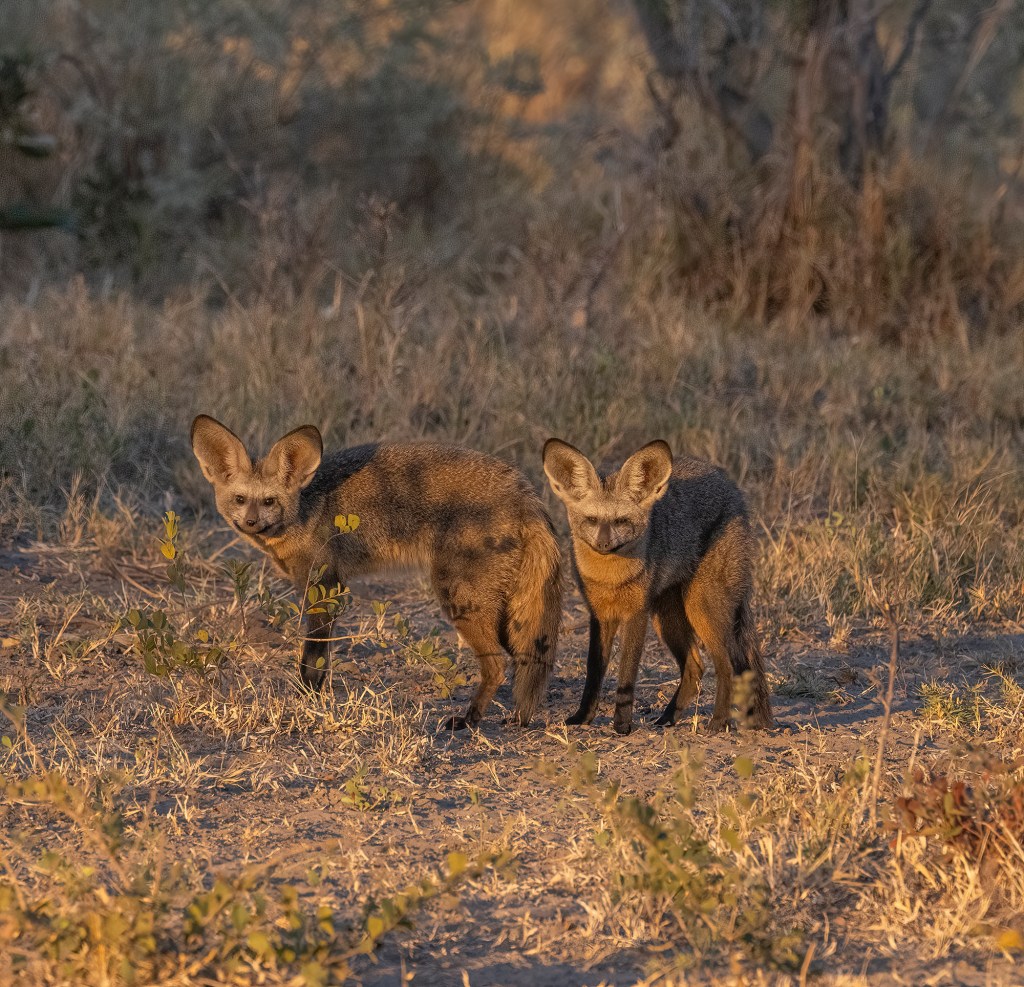
Bat-eared foxes are sandy gray withe lighter fur on the belly and darker fur around the eyes, muzzle, back of the ears, feet and tip if its large bushy tail. The inside of the ears and a band across the forehead are white of buff.

They are not territorial. A family has several den holes with many entrances, tunnels and chambers. They can create their own or enlarge an abandoned one. Predators include eagles, jackals and hyenas.

They eat insects, with termites up to 79% of its diet. They also eat dung beetles and their larvae, grasshoppers, scorpions, lizards, fruits and eggs. They have more teeth (46-50) than most mammals. They typically live in pairs, with other females and their pups and a male fox.

They tend to hunt for termites late in the day and at night, spending most days in their dens. These foxes are fairly common in southern Africa.