Lions are of course a major attraction to safari goers, and the safari guides love to find them on any drive. One of the interests is that lions are often found in prides. It is not uncommon to come across a group of 3-5, and often ten or more.
Lions in Africa are often called “kings of the jungle”, but do not normally dwell in jungles. Rather they reside in savannah like areas, where there are large numbers of prey including zebras, buffalo, antelope, giraffe and wildebeest. Kills are normally made via strangulation. They typically hunt in groups, and often females do most of the hunting. Male lions tend to spend their awake time patrolling their territory, and eat when their females make a kill. Lions sleep 16-20 hours a day.
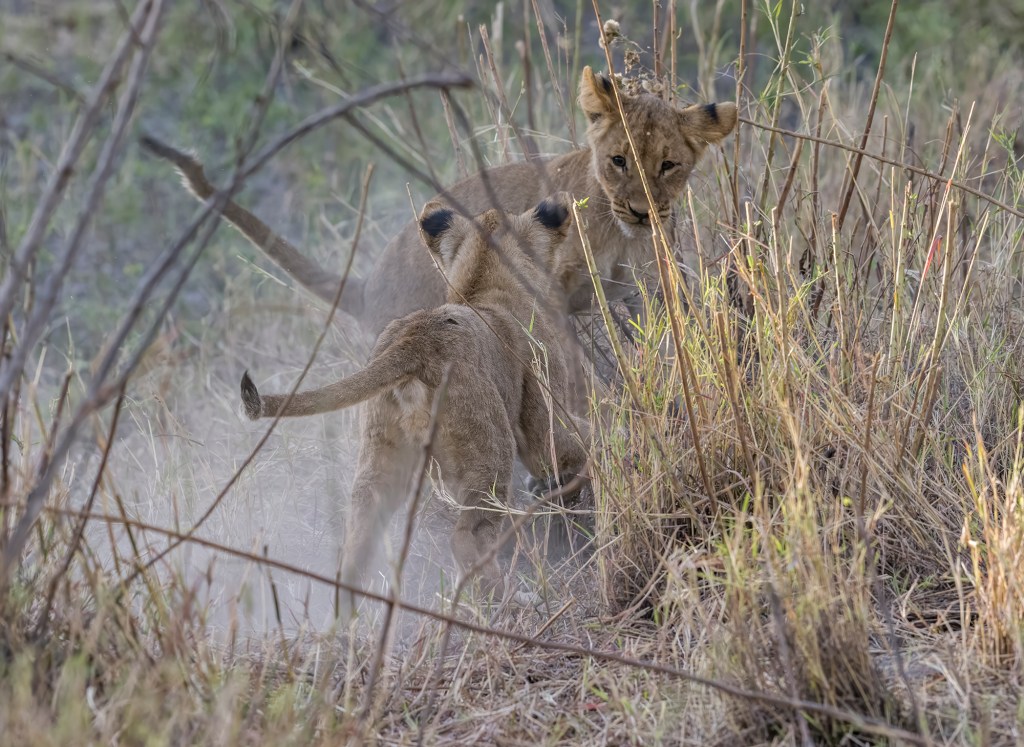
Prides are groups of female, male and cubs, and can run anywhere from six to twenty animals. Males can oversee more than one pride. Females can mate at any time, often with multiple males. In fact the female can go into estrus if she senses danger for her cubs. Males joining a pride will often kill existing cubs as they are not their offspring. Some 80% of cubs do not survive to adult hood., threatened by male lions, hyenas, leopards and wild dogs. Adults live 10-14 years in the wild. Primary risk factors to adult lions are humans.
Male lions are 26-40″ high at the shoulder and 4.5-6.5′ long, and weigh 260-420 lbs. Lions are the only cat with sexual dimorphism, where the males and females look different. Males at 2-4 develop a large mane.
The historical range of African lions is today only 8% of historical figures, and are strictly sub-Saharan today. The population of African lions is estimated at 23000., down from 30000 in 2006. The largest population is estimated to be found in the Okavango Delta of Botswana.
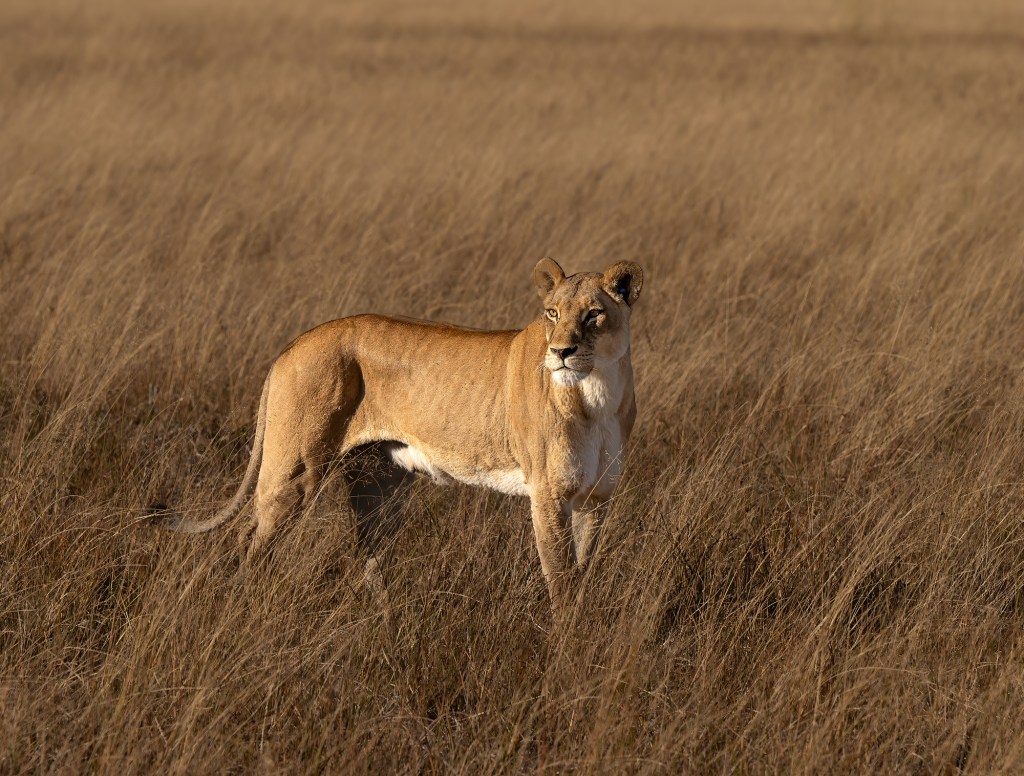
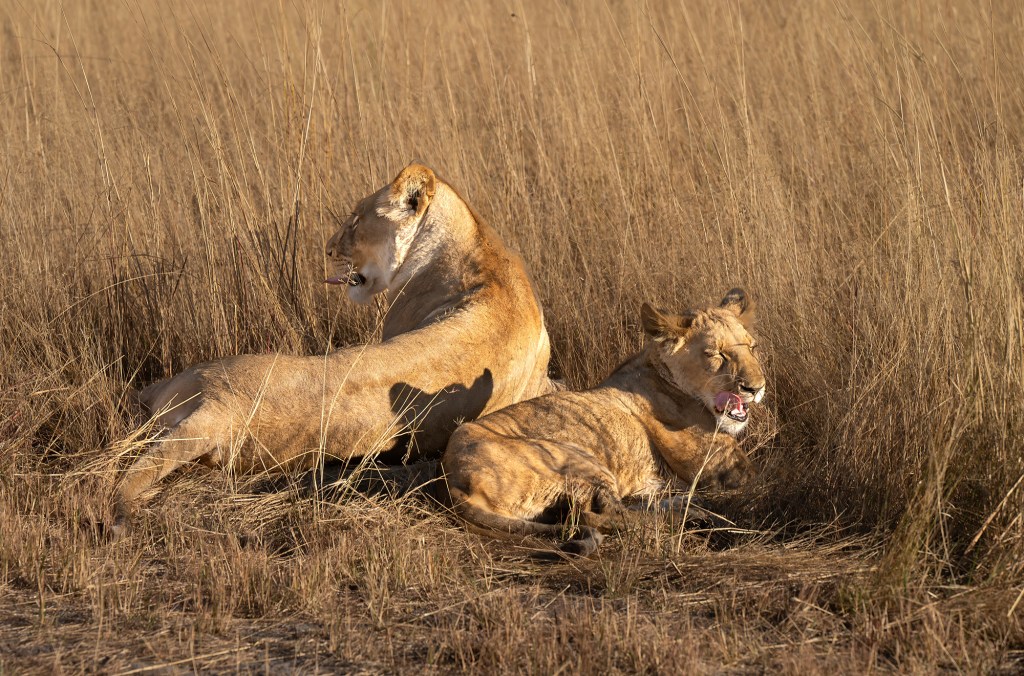
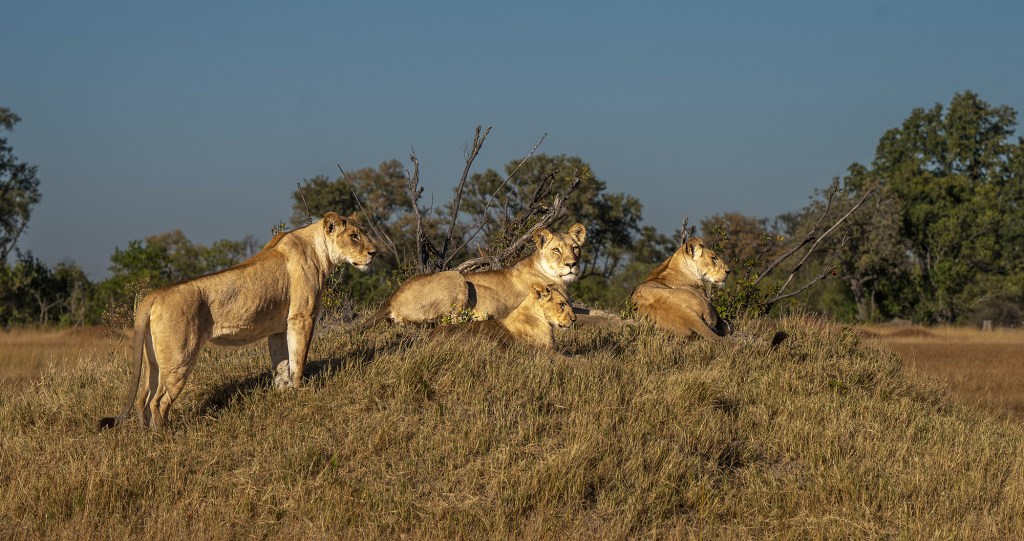
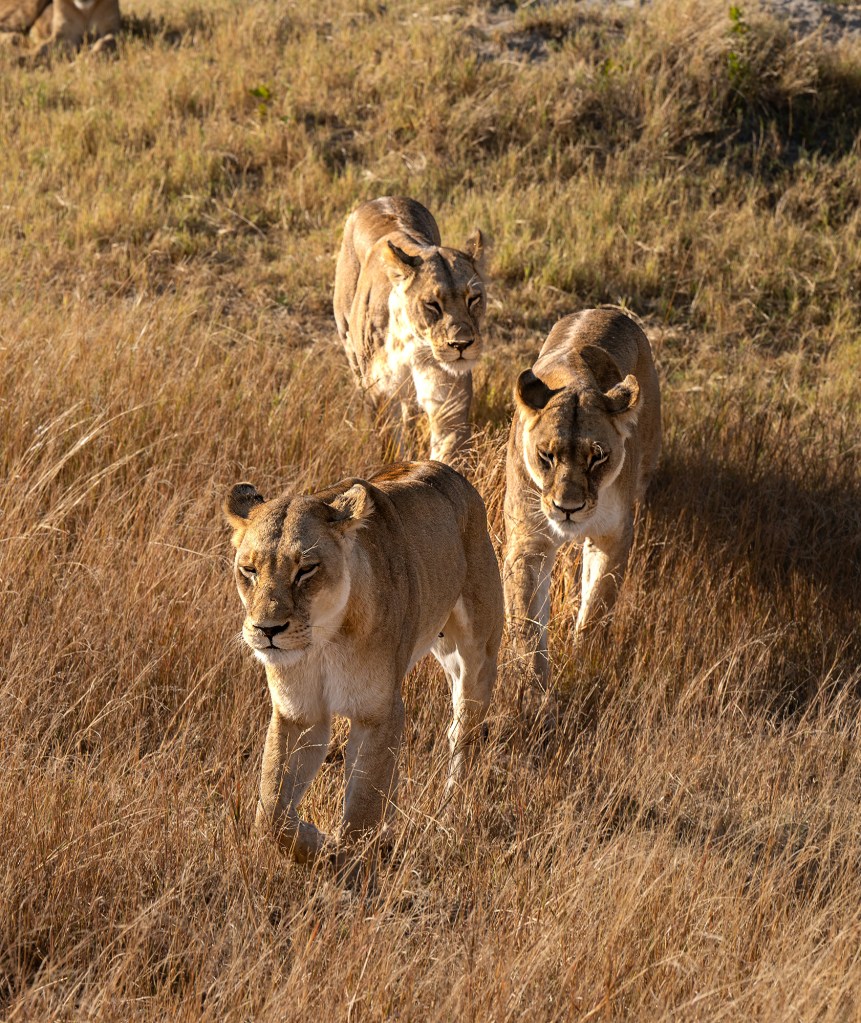
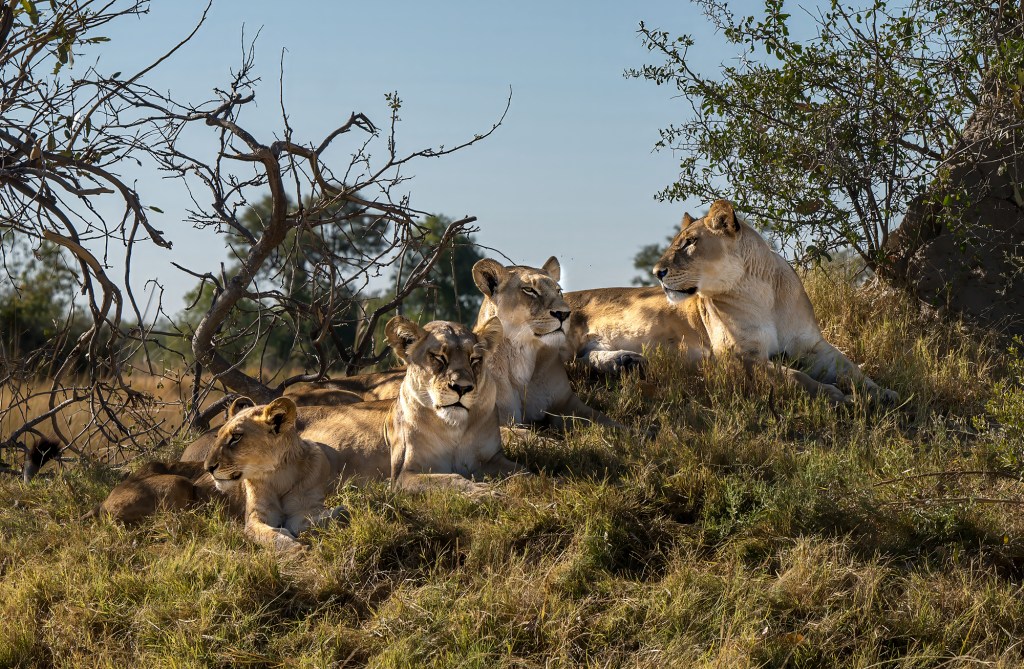
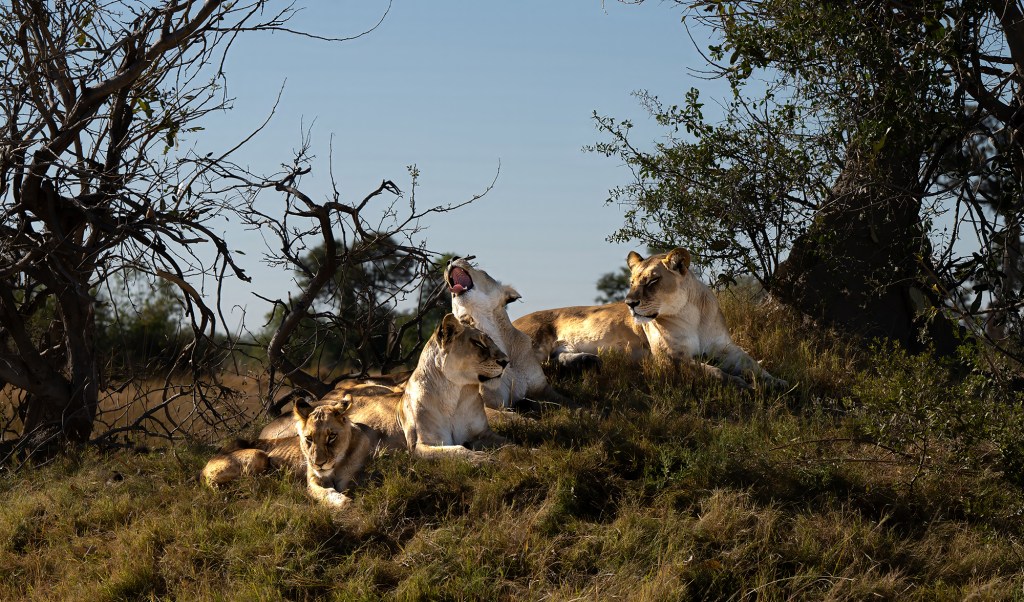
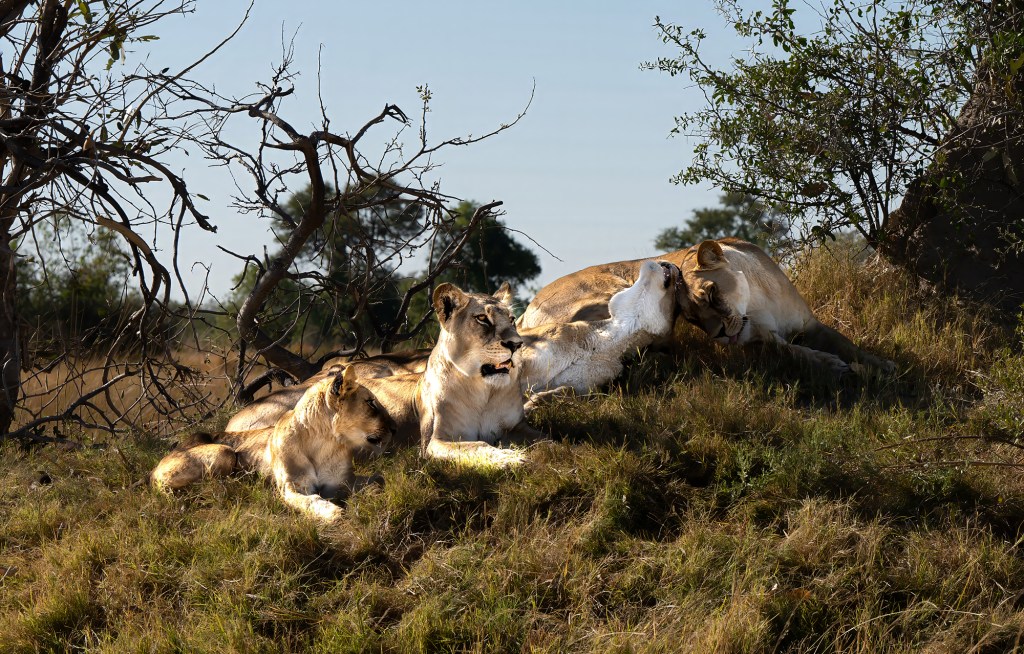
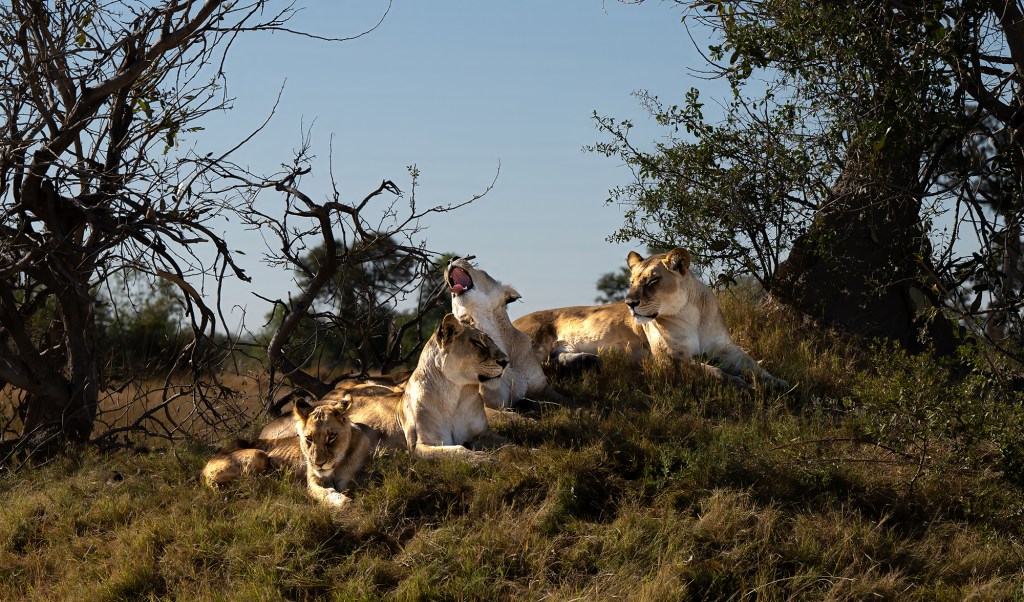
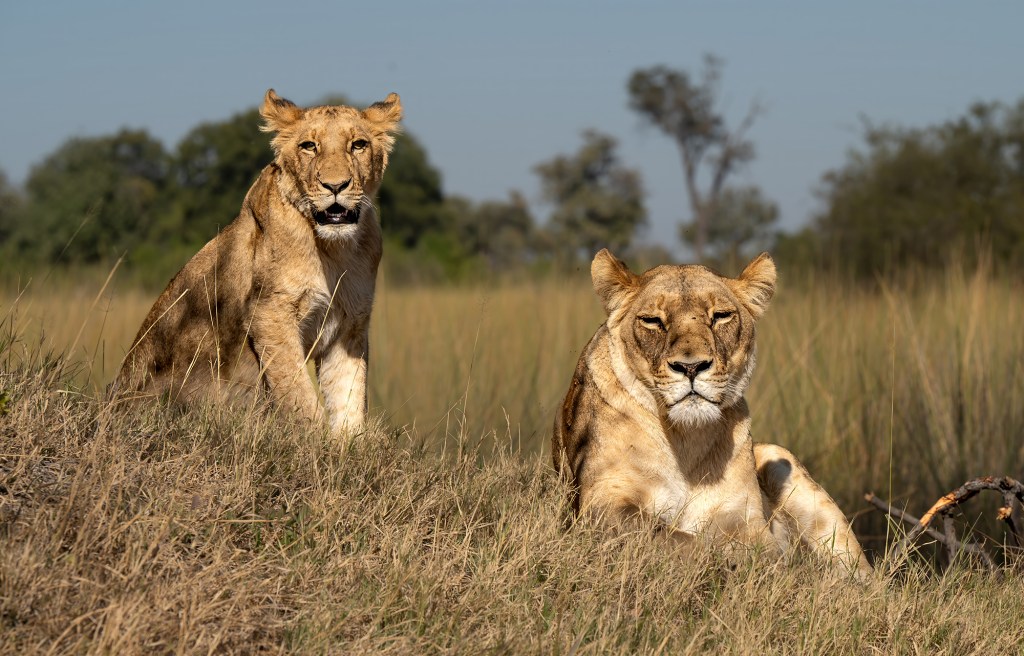
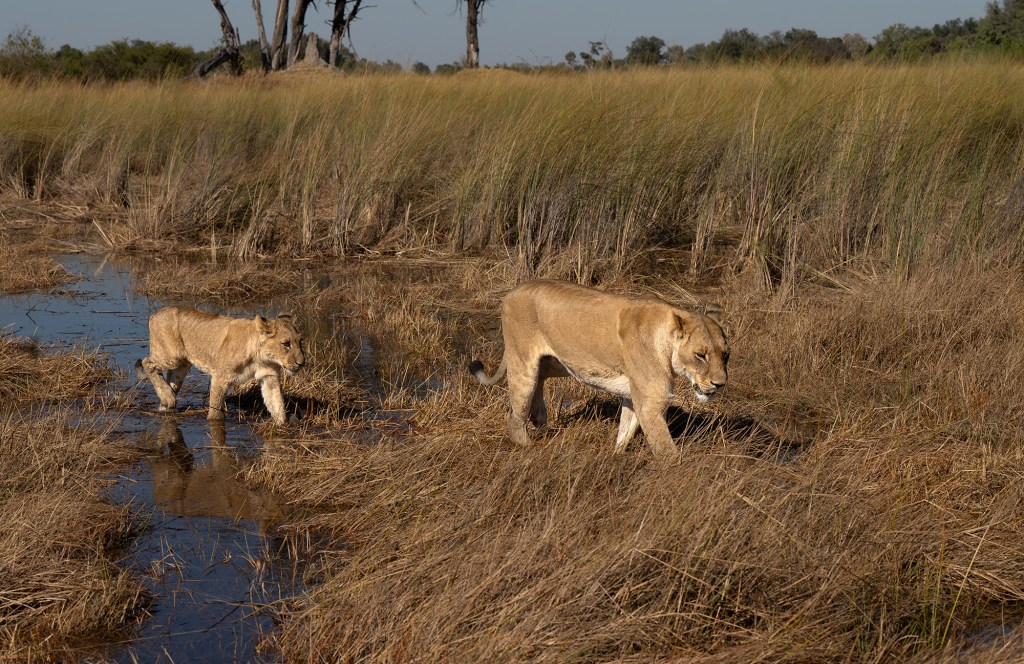
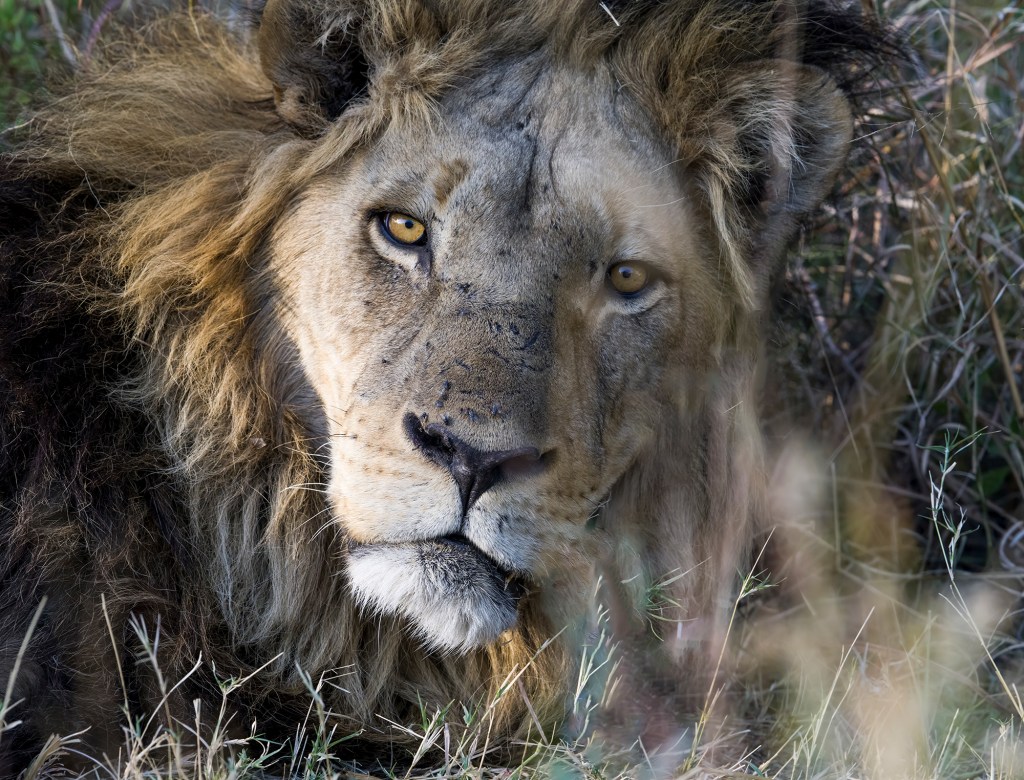
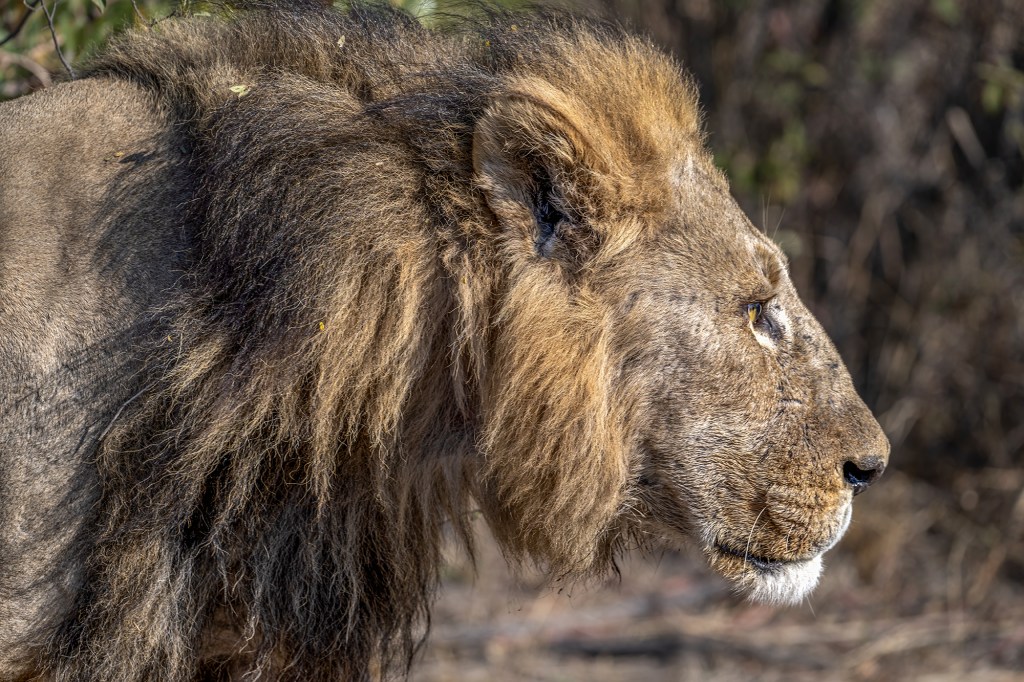
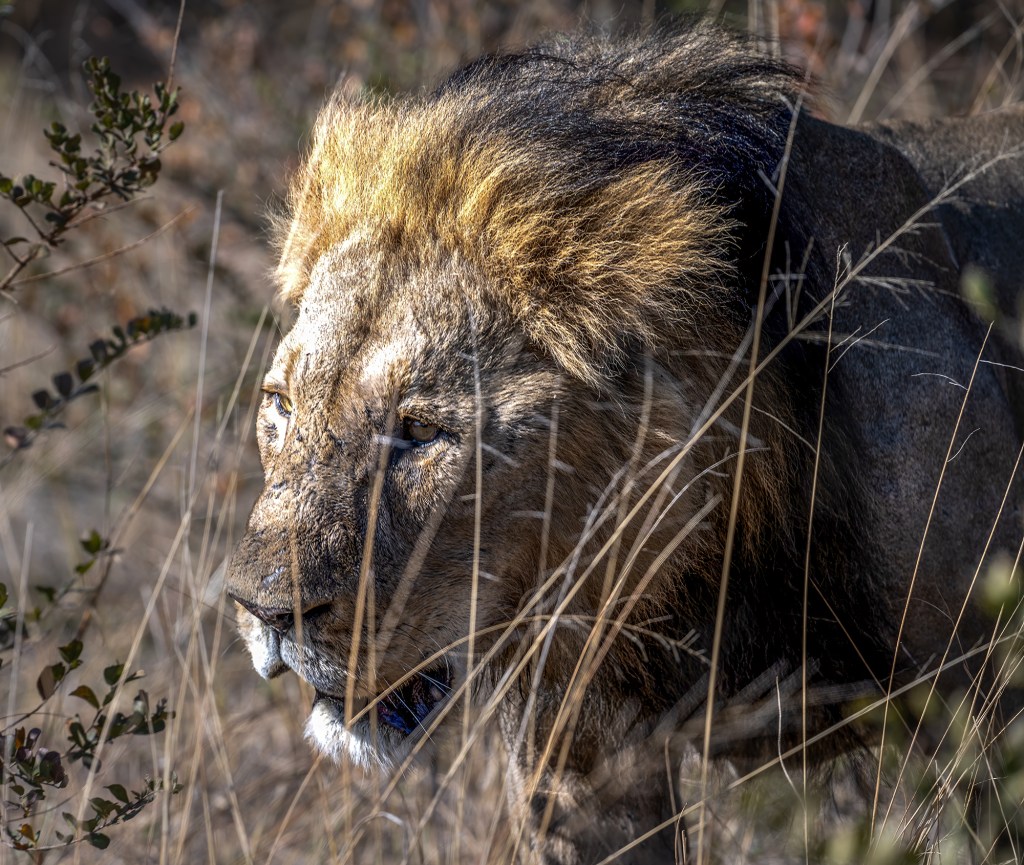
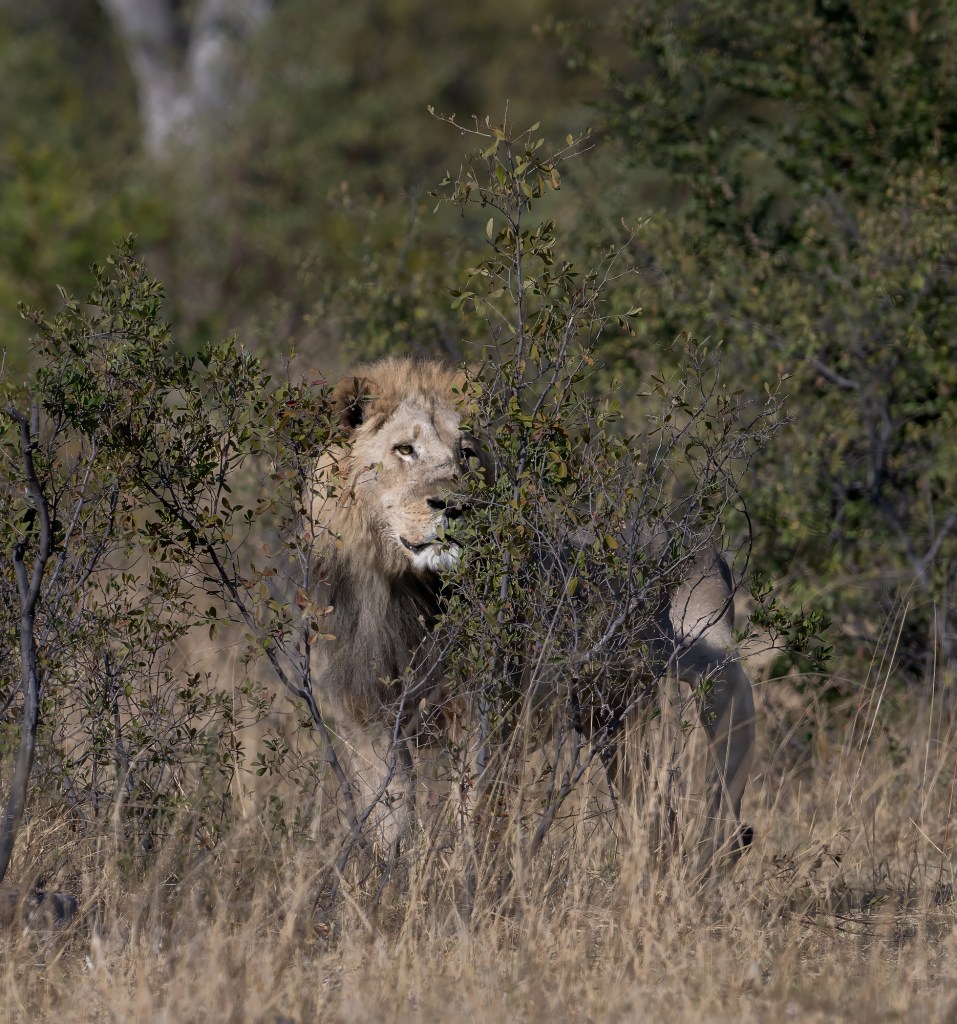
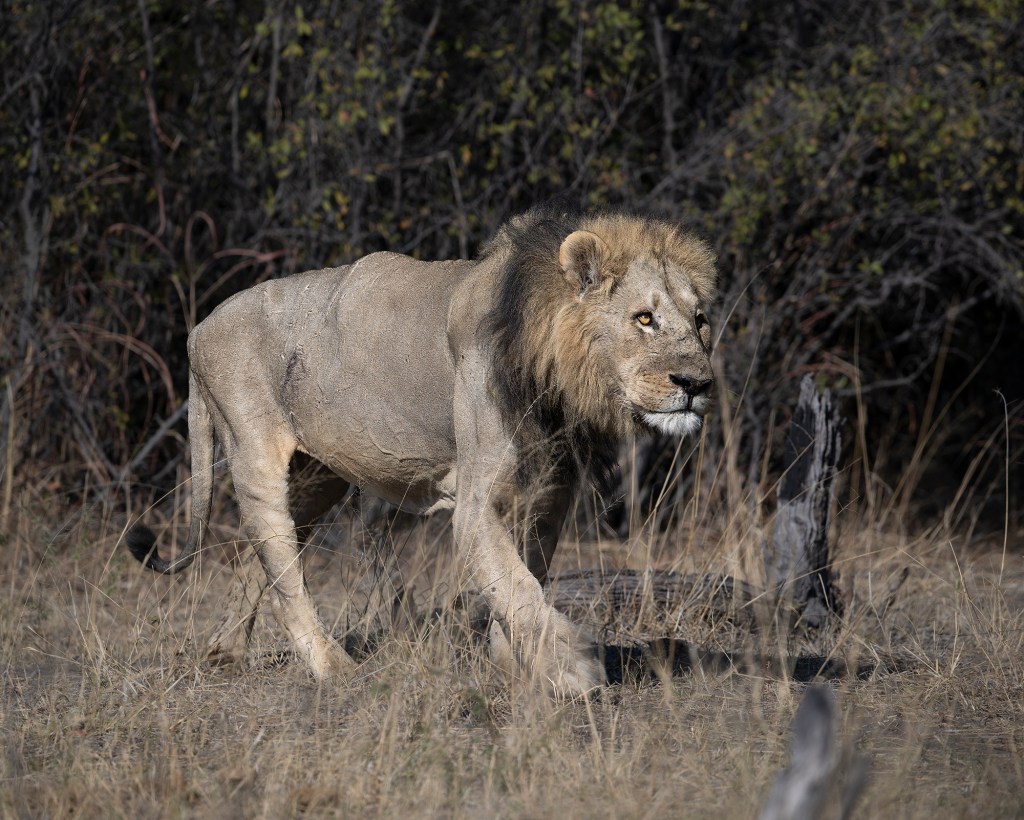
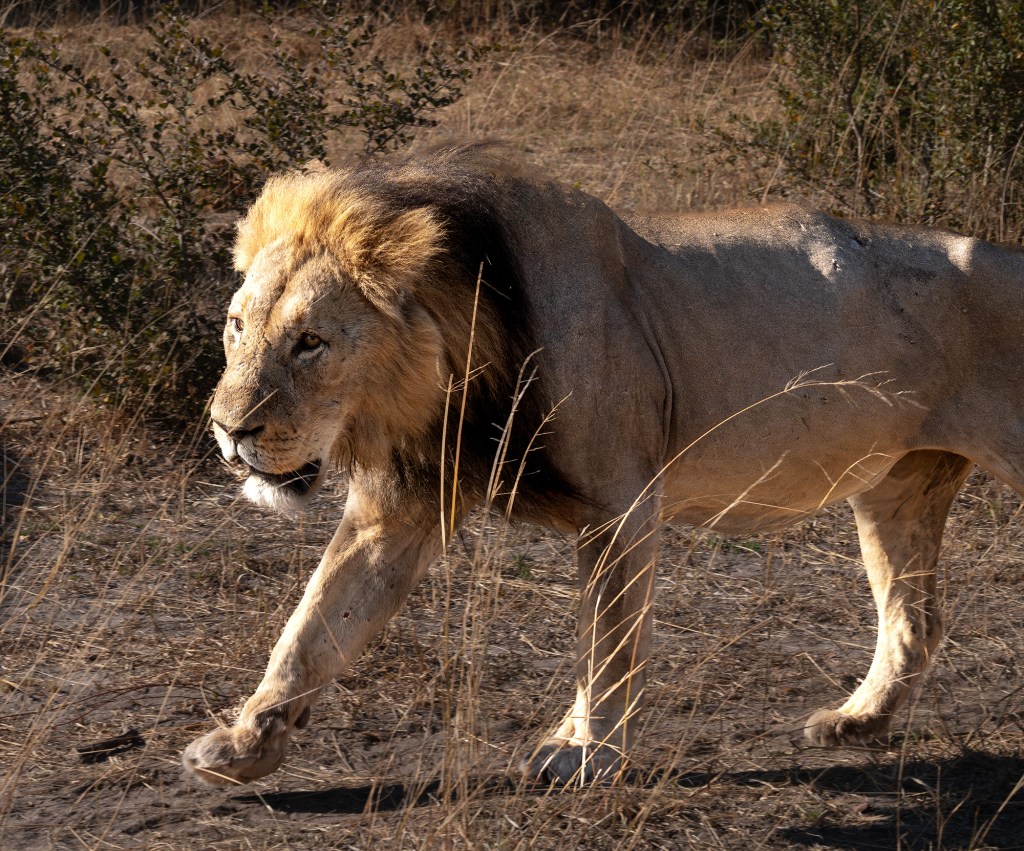
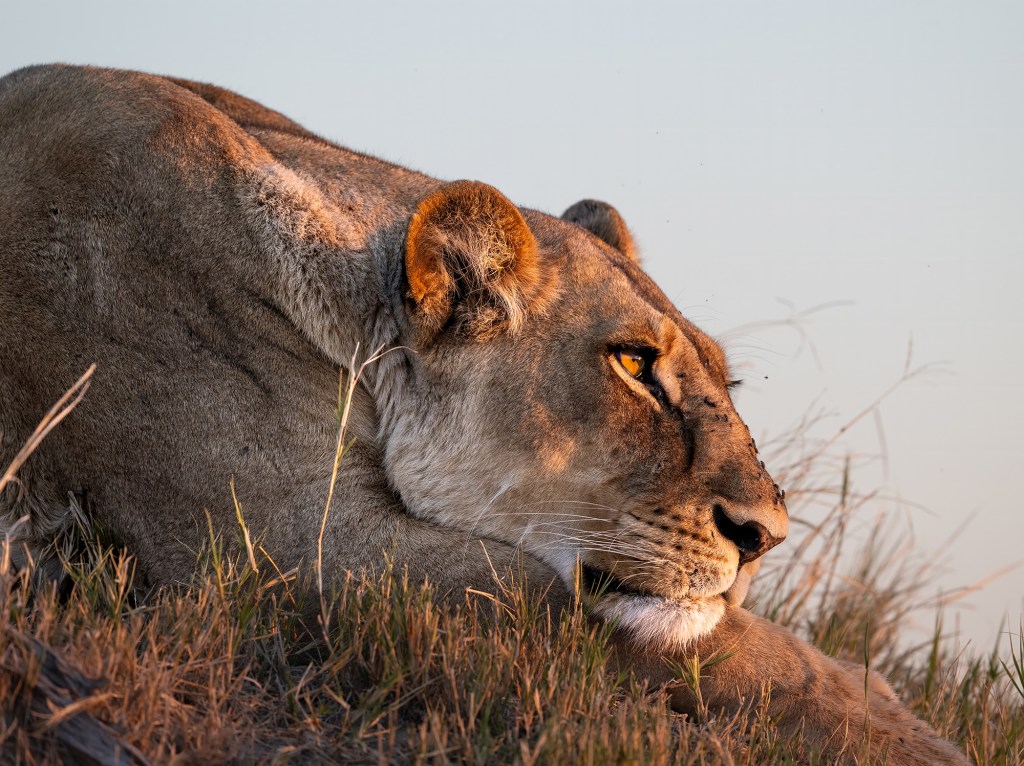
We saw fairly large numbers of lions on this trip, mainly at Four Rivers and Lagoo. One day we followed three females and a sub-adult male for 2-3 hours while they wandered, often stopping at small rises to survey the scene. We also encountered a pair of male brothers, both quite old and well-worn.

















 The Carefree Photographer