More Unusual Sightings

In addition, besides the pangolin, we had three other first sightings. They were the aardwolf, the civet and the serval.

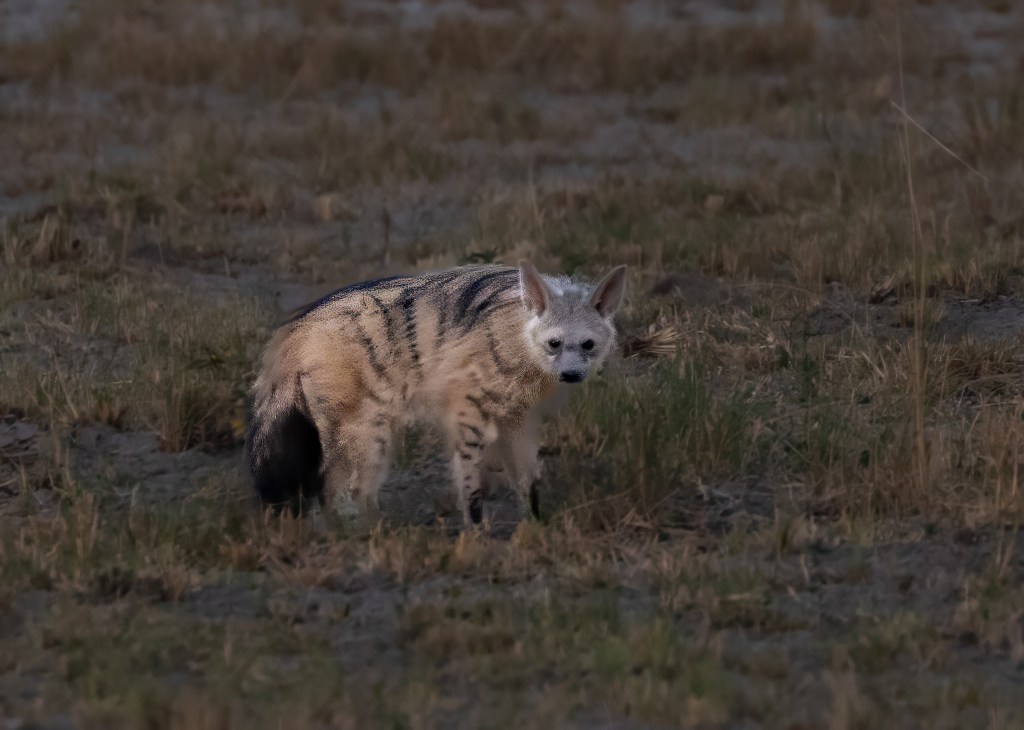
Aardwolf

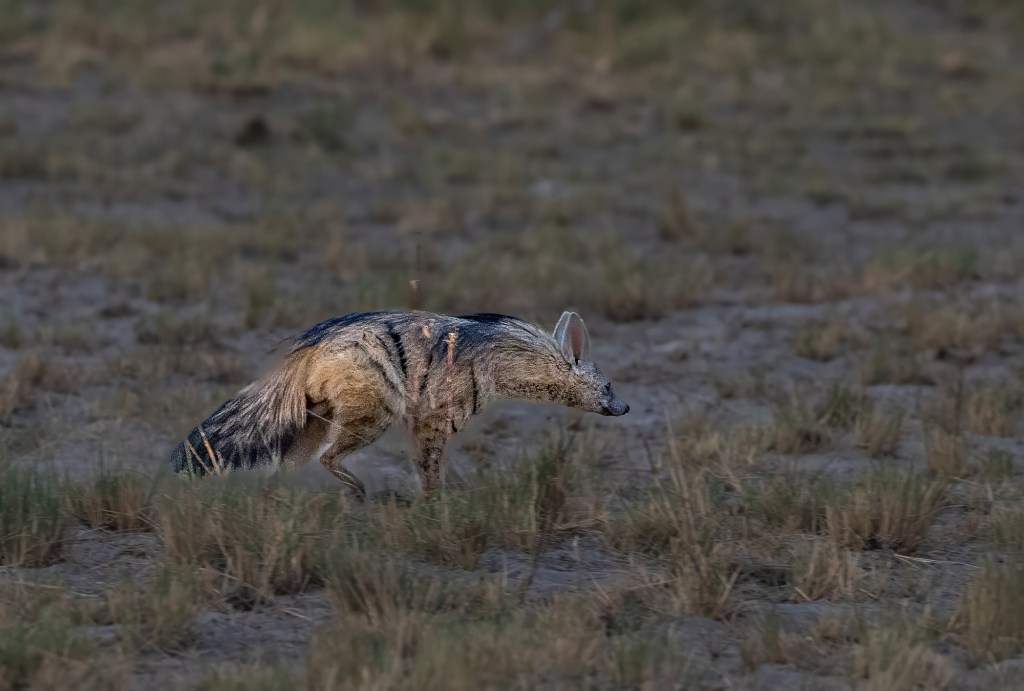
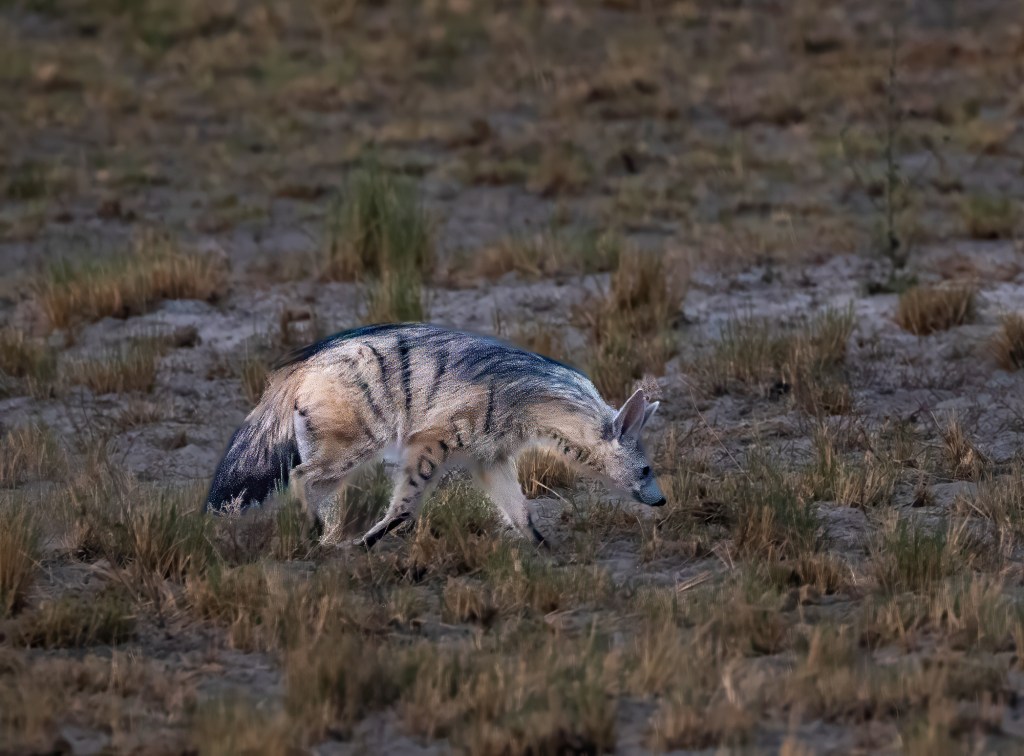
The aardwolf is neither aardvark nor wolf. Their name, which means “earth wolf” in Afrikaans, refers to their underground dens and canine-like appearance. They are one of four hyena species, along with spotted hyenas, striped hyenas and brown hyenas. They have a loping, low-energy gait that they can sustain for long distances.

Aardwolfs are most similar to the striped hyena, with long muzzles, large pointed ears and black stripes on gold fur. They are exclusive to Africa. They are nocturnal, and live dry, open savannas and grasslands, and take shelter in abandoned burrows.

Most are carnivorous, but prefer insects to large prey. At night they emerge in search of mound building termites, which they lap up with long, sticky tongues by the thousands. They have a genetic trait which allows them to tolerate the insects’ noxious secretions.

Predators such as leopards, lions, black-backed jackals and spotted hyenas will kill both adult and cub aardwolves. Females go into estrus once a year, during which the solitary animals come together to mate. Gestation lasts 90 days, with litters of one to four cubs.

Populations are said to be thriving.

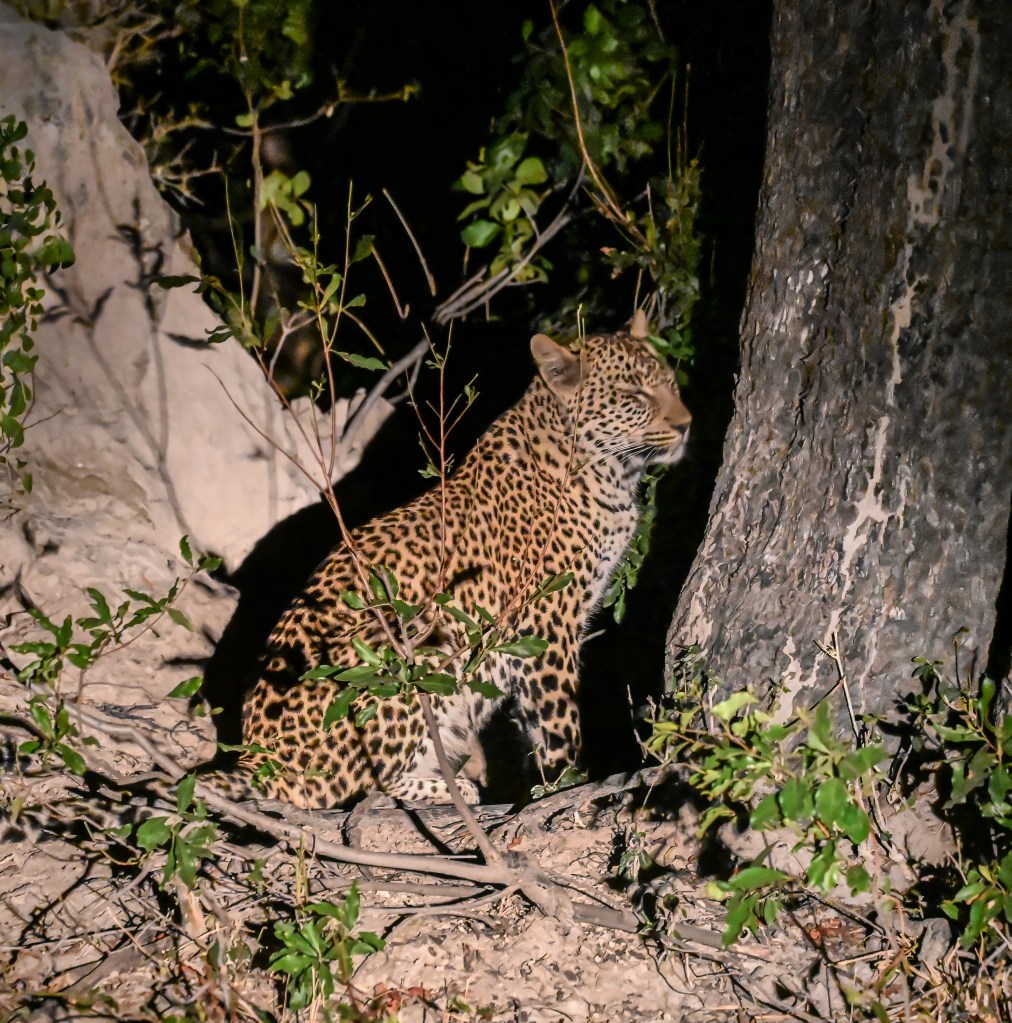
We had an extended sighting at Lagoon Camp while watching a leopard trying to get close to a small herd of impala.
Civets

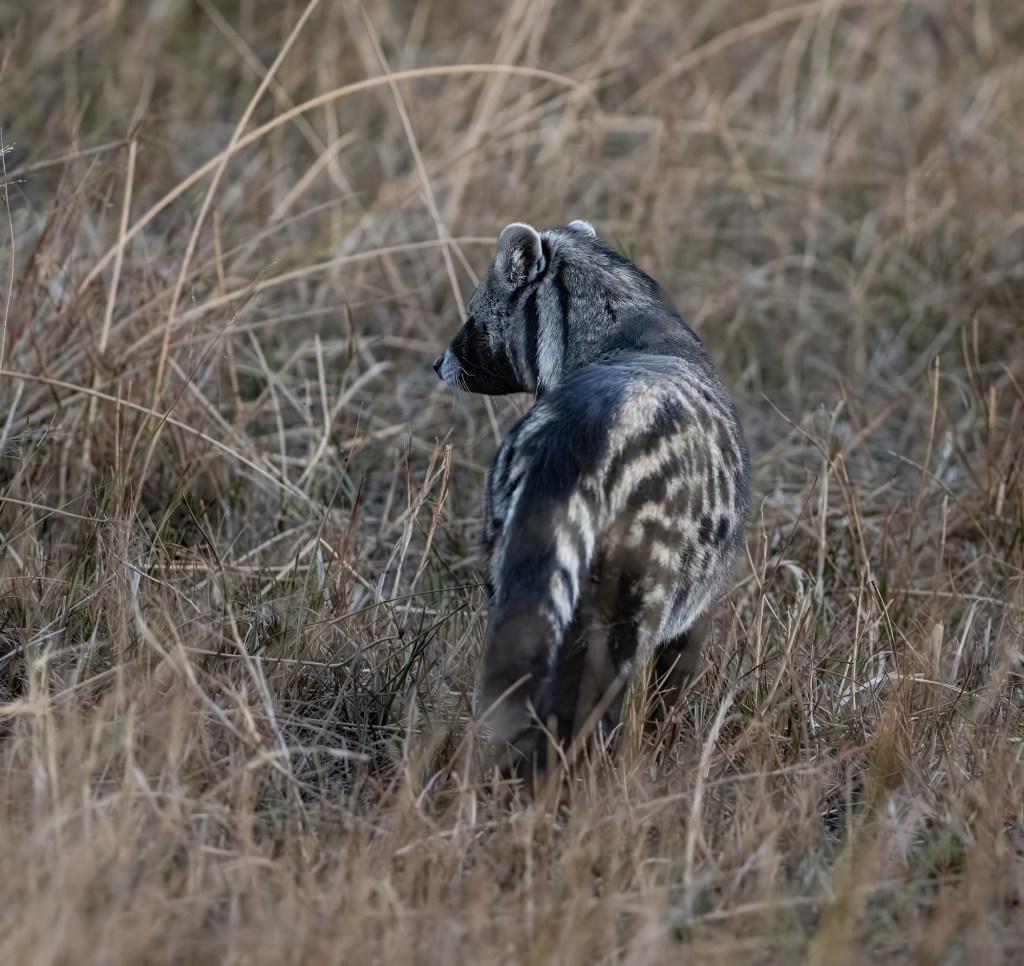
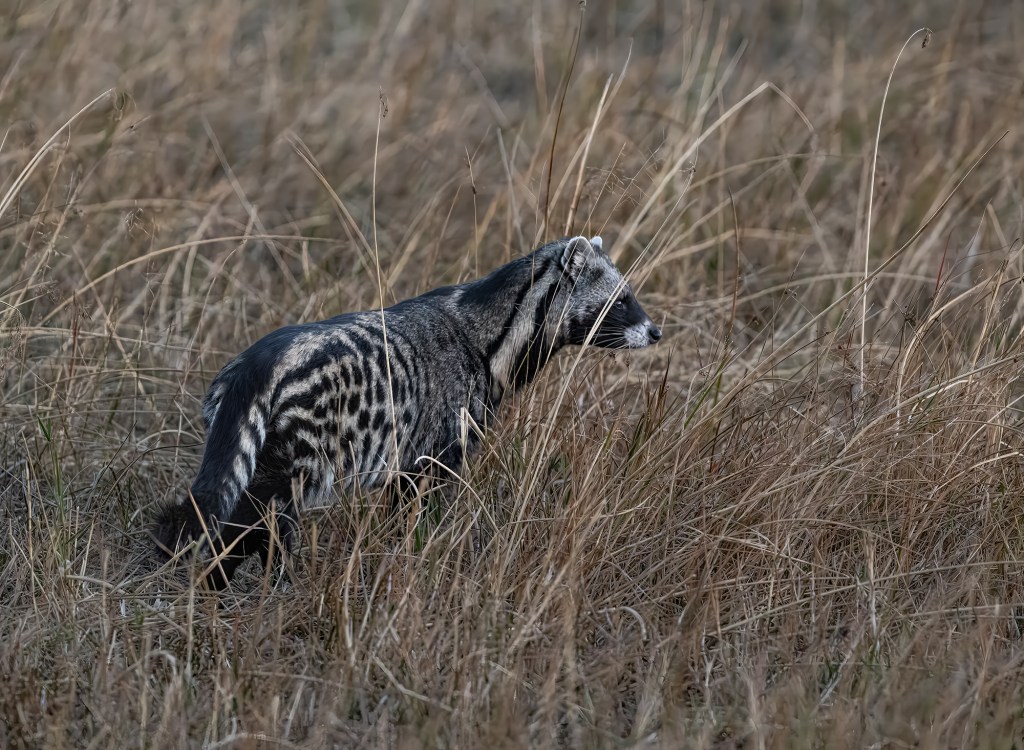
A civet is a small, lean, mostly nocturnal mammal native to Asia and Africa, especially the tropical forests. The African civet has historically been the main species from which a musky scent used in perfumery was obtained.Civets have a broadly cat-like general appearance, though the muzzle is extended and often pointed, rather like that of an otter or mongoose. They range in length from 17-28 inches and weigh about 3-10 pounds.

Civets are native to sub-Saharan Africa as well as Asia. Favored habitats include woodland, savanna and mountain biome. Many are faced with loss of habitat, and several species are considered vulnerable.

Civets are omnivores or even herbivores. Most eat primarly fruit. Some use flower nectar as a major source of energy.

We actually had two sightings at Lagoon Camp, with one for several minutes in decent lighting conditions.
Serval

Servals look like cheetahs who stretched out after a nap and decided to stay that way. They are long-legged, long-necked, medium sized wild cats who look sleek and elegant. Their coats are unique, honey-colored and adorned with spots so close together they look like stripes. This appearance helps them blend in with the shadows of savanna grasses and forest trees, hiding from their predators which include hyenas, wild dogs and leopards.

They are remarkable hunters. They can see above tall grasses, and can perform nine-foot leaps to catch birds in flight, and run as fast as 50 MPH. They are ambush predators. Their hearing is exceptional. So they can snatch fish and frogs from the water, and take rodents from their burrows. They can take down prey 50% of the time, a much higher success rate than a group of lions.

Servals are mostly solitary, but males stay with the female for her one-four day estrus period. Gestation is 75 days, with 2-3 kittens per litter. They have a stable population numbers. Their main threat is the loss of wetlands, a habitat which holds rodents, a favorite food source.

Some servals are bred with domestic cats to produce so-called “Savannah cats”. Some places have banned owning them.

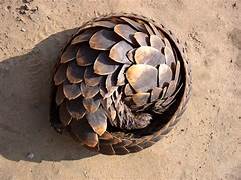
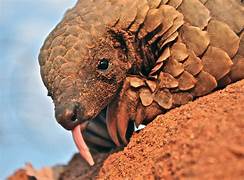
We startled a serval in high grass near water as we were following a leopard. The cat quickly demonstrated its ability to move at high speeds so no images were taken. So I have borrowed a couple from the net.

Pangolin

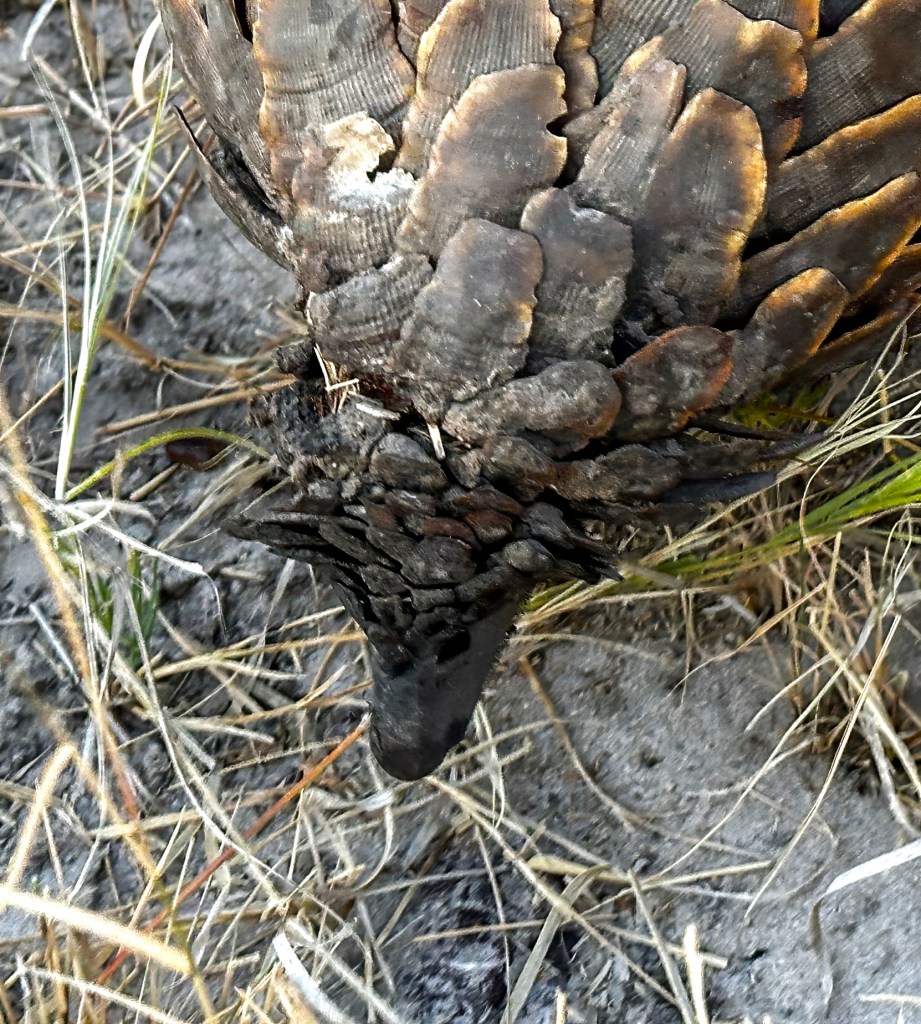
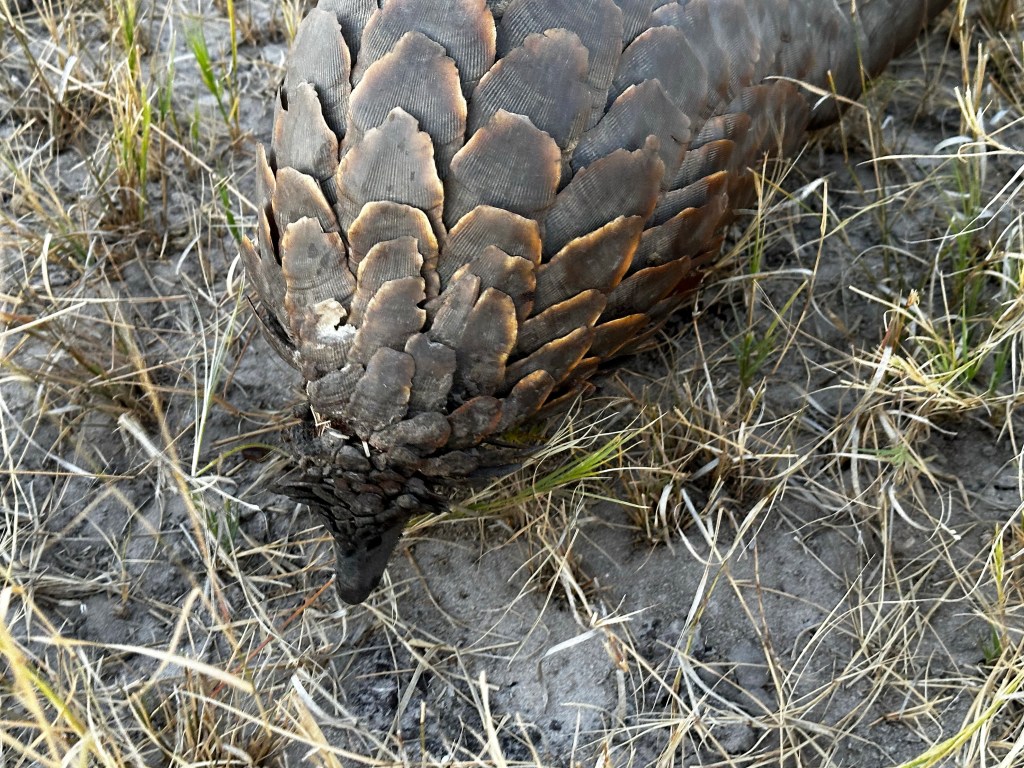
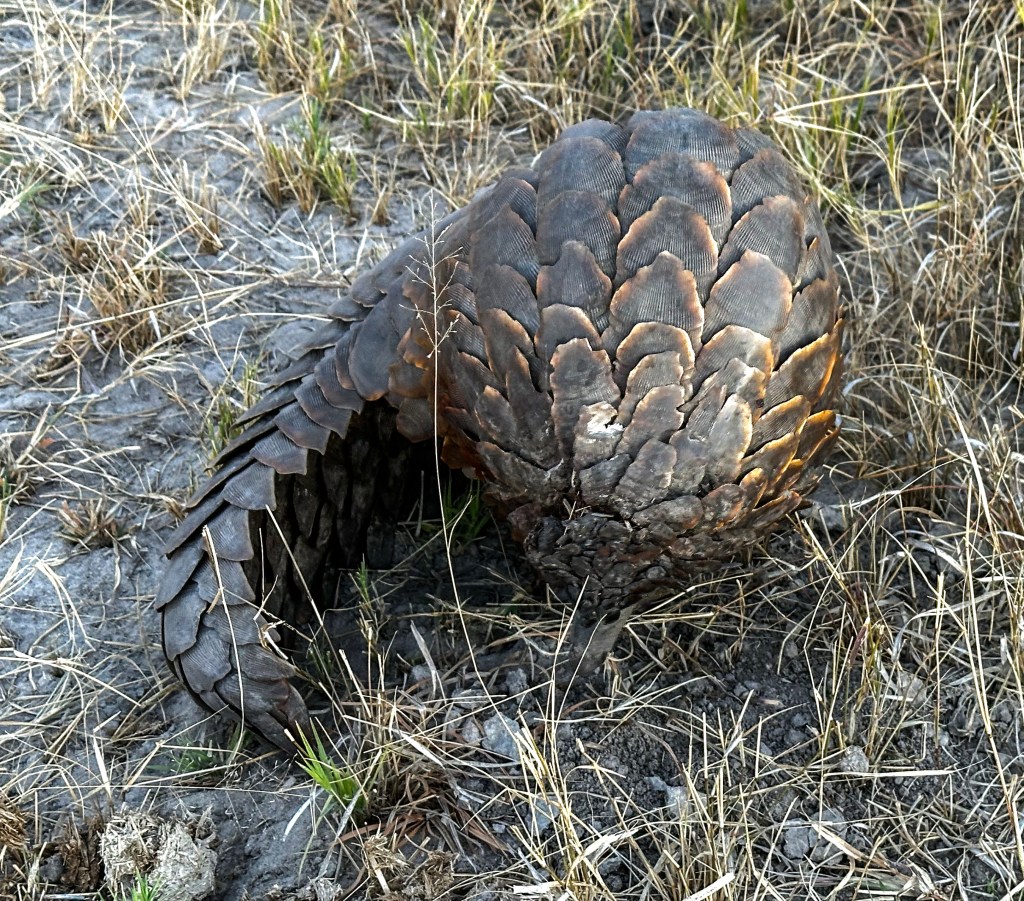
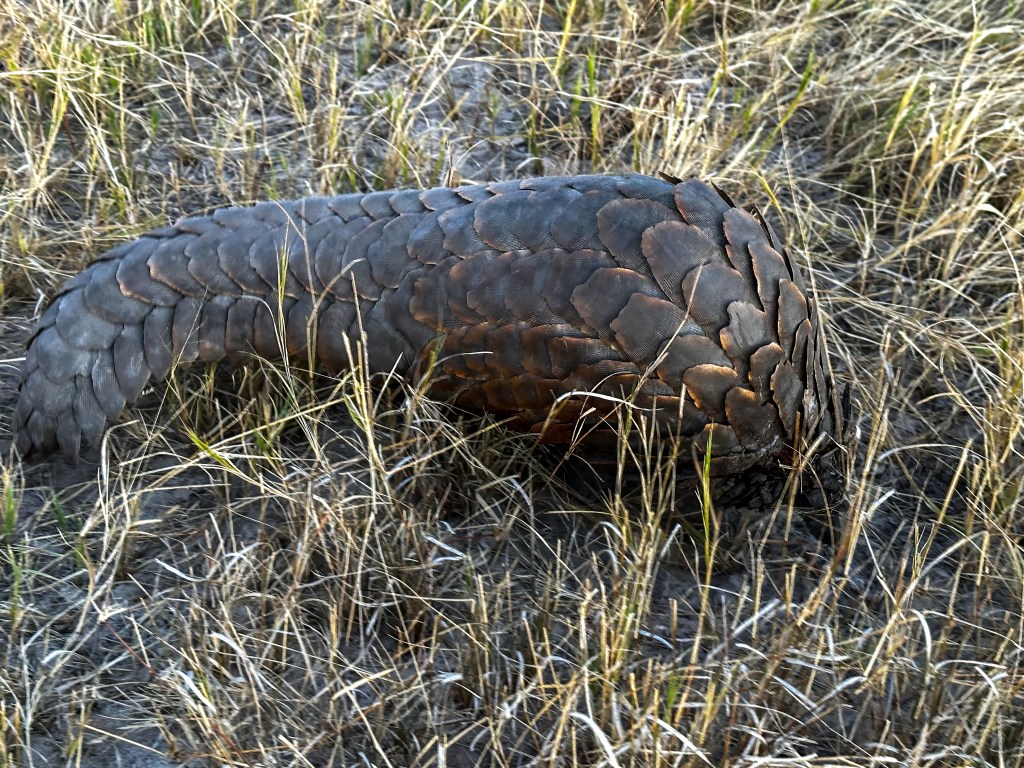
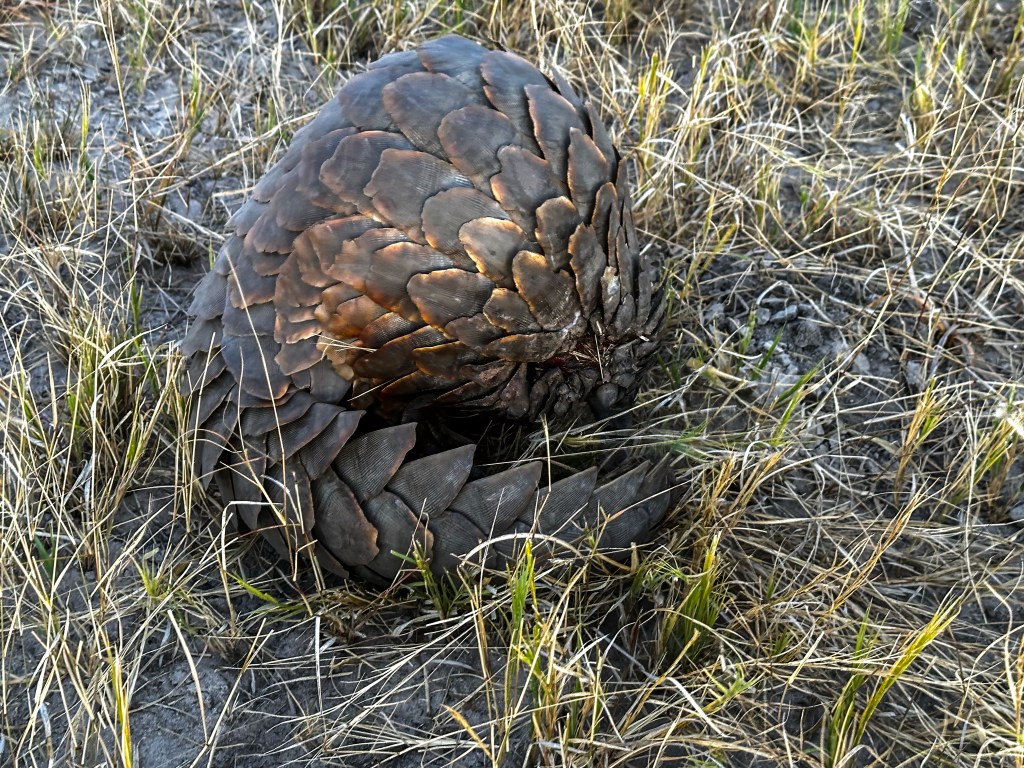
Now the unusual sighting! We saw in great detail and openness a live pangolin in daylight! This was a very fortuitous event. Experienced safari guides either have never seen a pangolin, or have only seen partly concealed in shrubbery.
Pangolins are ant eating mammals covered in scales made of keratin, which provide protection against predators. The scales account for about 20% of their weight, and the animal protects itself by curling into a ball. The pangolin has a long, broad tail and a small head, and has no external ears although the hearing is quite good. The tongue is wormlike and can extend up to 25 cm in length. The legs are short, and the feet have sharp claws. They are primarily nocturnal and also shy, making them difficult to find.

Pangolins feed mainly on termites but also eat ants and other insects. They range in size from a large housecat to more than four feet long.

They tend to be solitary except when mating. Some fathers will stay in the den until the single offspring is independent.

There are 8 species of pangolin, 4 in Asia and 4 in Africa. They are trafficked at high rates for their scales and meat. In 2016 CITES, the treaty that regulates the international wildlife trade, voted to ban commercial trade in pangolins. For many years the Asian species were the primary target of poachers and traffickers, but African animals are now under increasing attack. It is believed to be the world’s most trafficked non-human animal.

Cheetahs

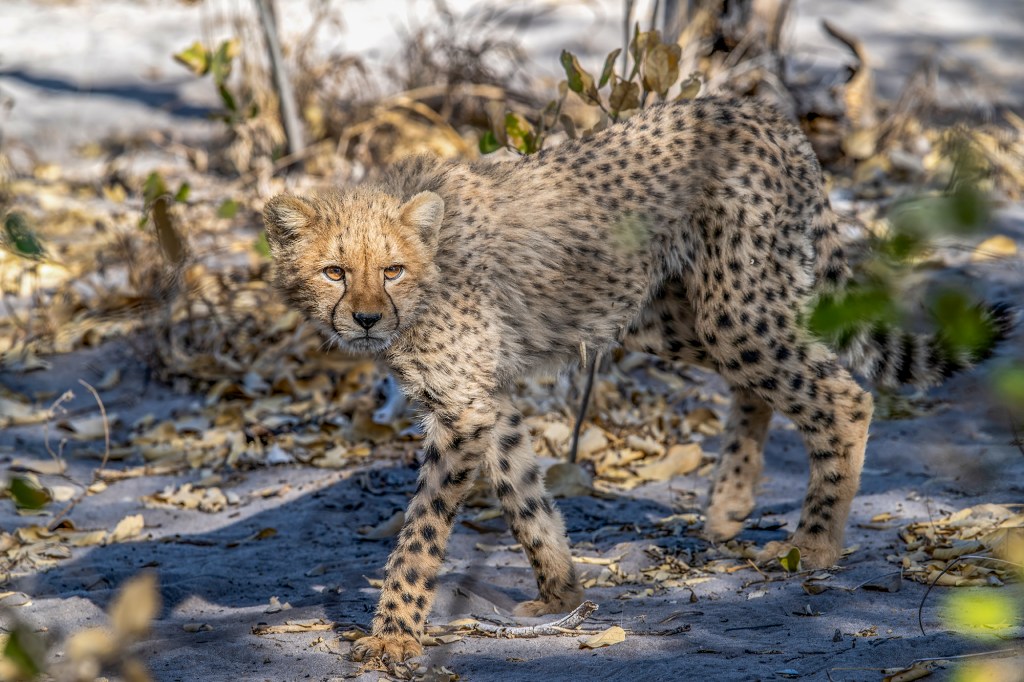
Cheetahs are the fastest land mammal. They can reach 60 mph at a high rate of acceleration. They are very nimble at high speeds, and use their tails as a rudder and claws like spikes. They ar sometimes not considered large cats because they don’t roar, rather they purr. They have tawny coats with black spots, and black stripes from their eye corners to the edges of their mouth. They also have black rings on their tails.

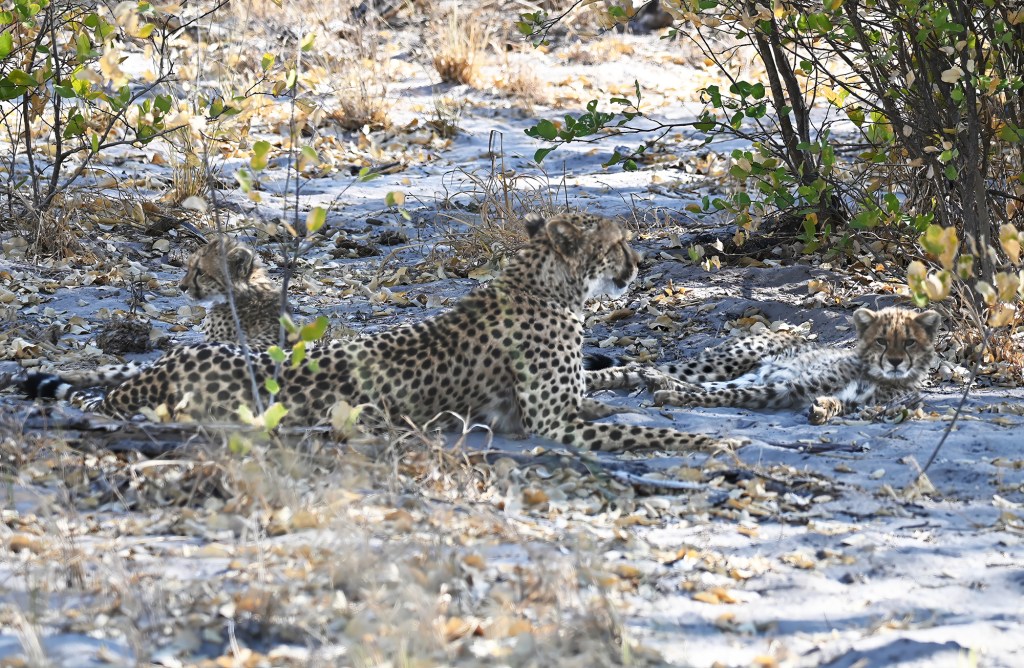
They are sized like leopards, with a sleekness of their own. Typical weights are 75-140 pounds. They do not habituate in groups. Typically the female live alone and roam in large areas. Males are solitary but often seen with 1-2 companions, usually litter mates. They can mate with several partners, and a litter can contain offspring from different fathers. Litters are usually three in number, and the kittens stay with their mother for 1 1/2 years.

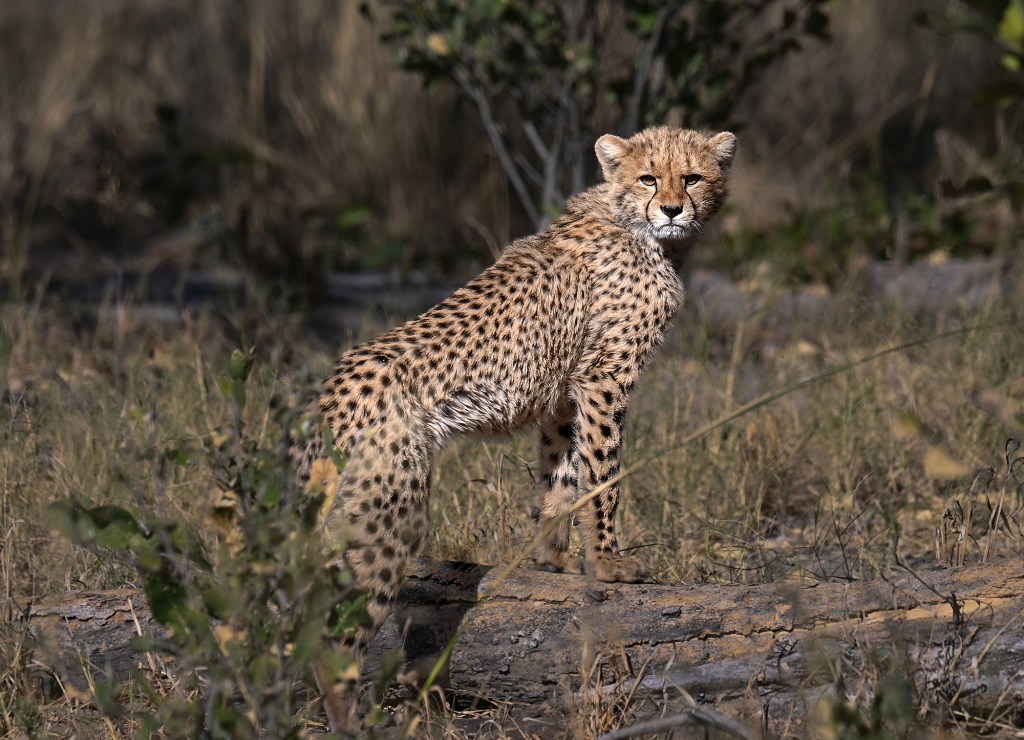
Cheetahs tend to be daylight hunters. They rely on stealth and camouflage, and very keen eyesight. Often they can be seen on the savannah atop small knolls or fallen trees, surveying for prey. They hunt antelopes, warthogs, hares, birds, etc. Their MO is to stalk, then sprint. Kills are by suffocation. They will eat fast, and are susceptible to kill theft by lions and hyenas.

Human growth continues to constrict the active areas for cheetahs, and they are susceptible to poaching and human responses to assaults on livestock. Cubs are open to lion kills. The species is considered vulnerable. Population in Africa is estimated at less than 7000 adults.

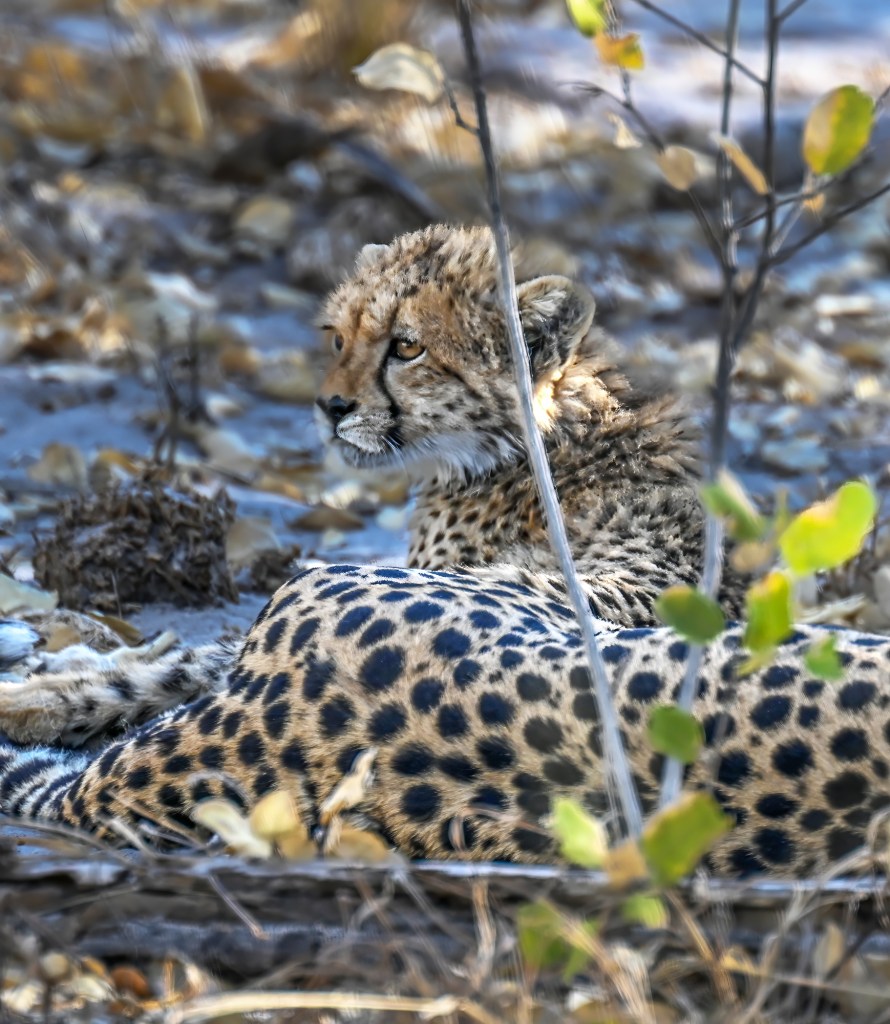
We quite often see cheetahs, although this year was rather lean. On our last morning at Lagoon Camp, our guide Spencer Mathambo along with K1, our tracker, was able to track and eventually find a mother cheetah and two six month old cubs.

Lions

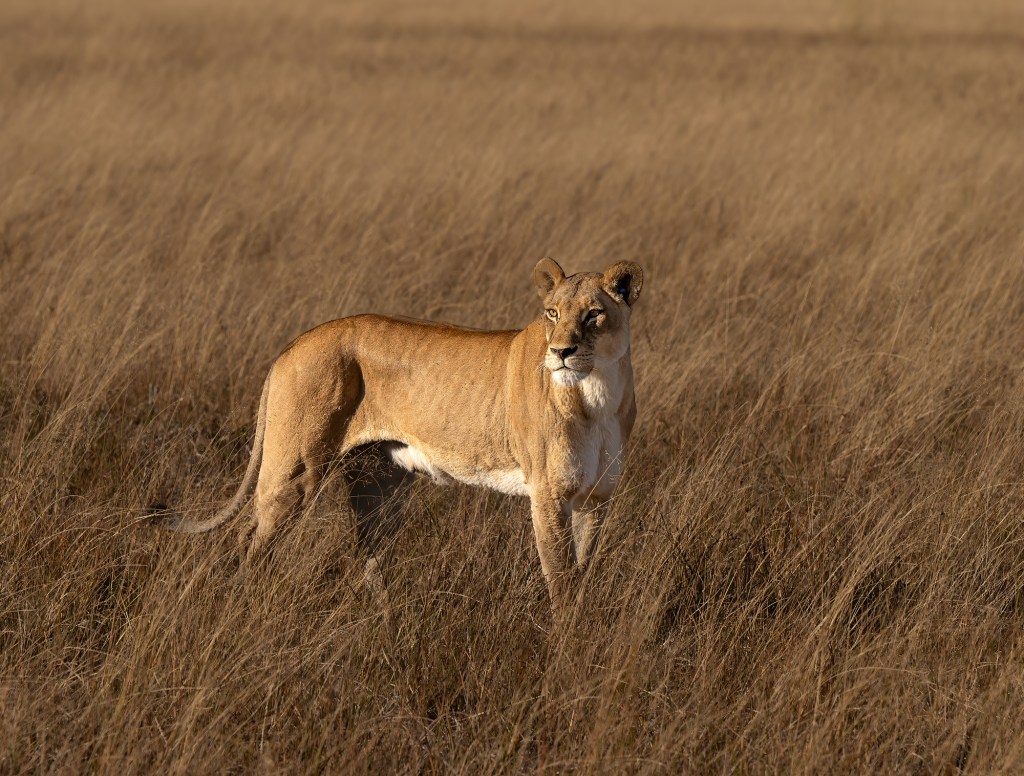
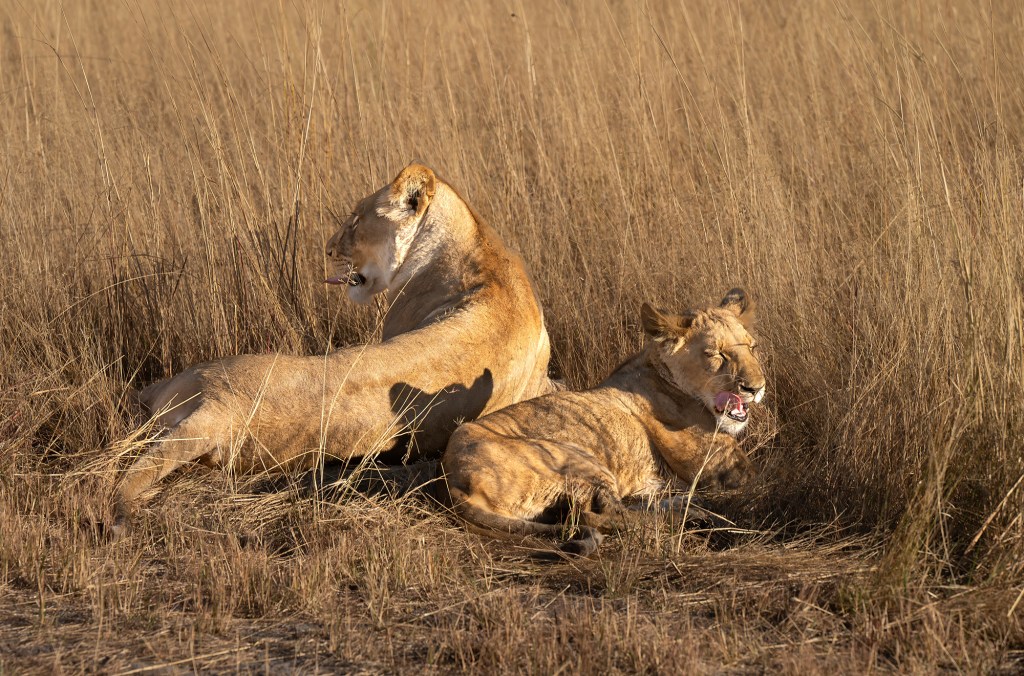
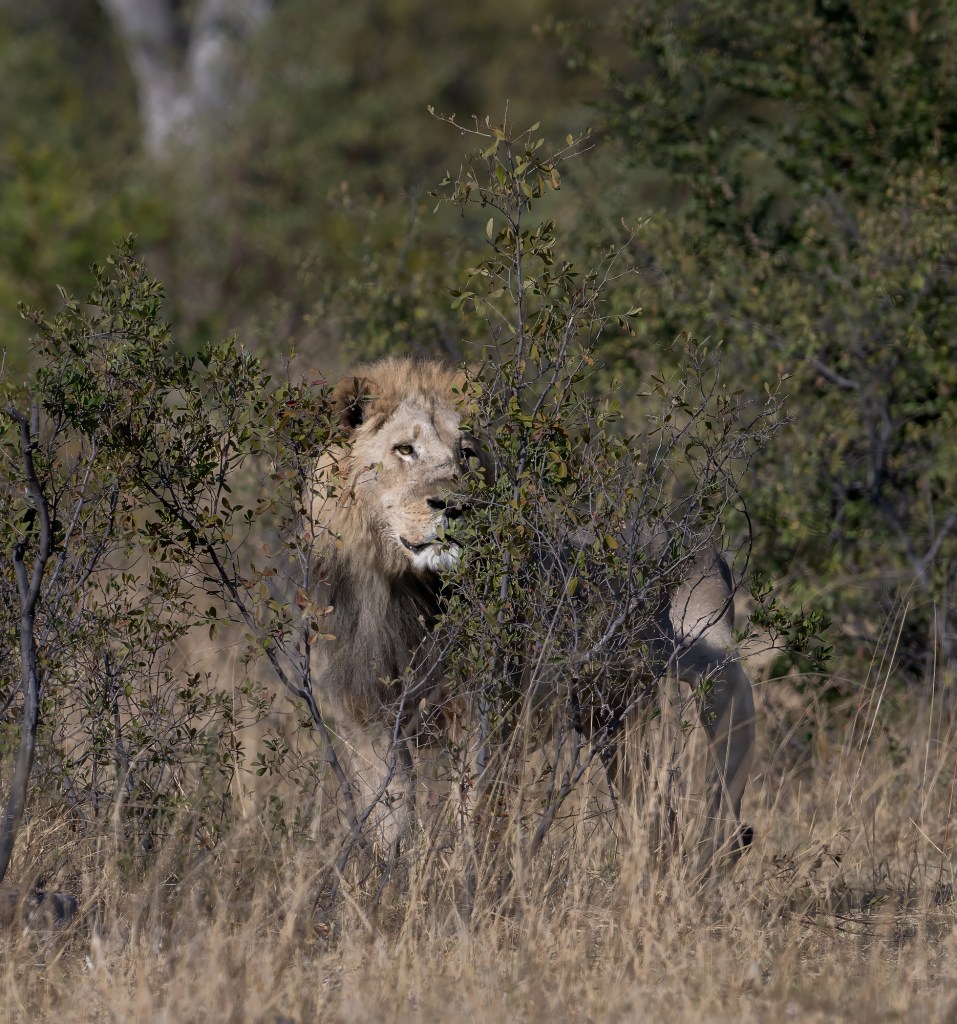
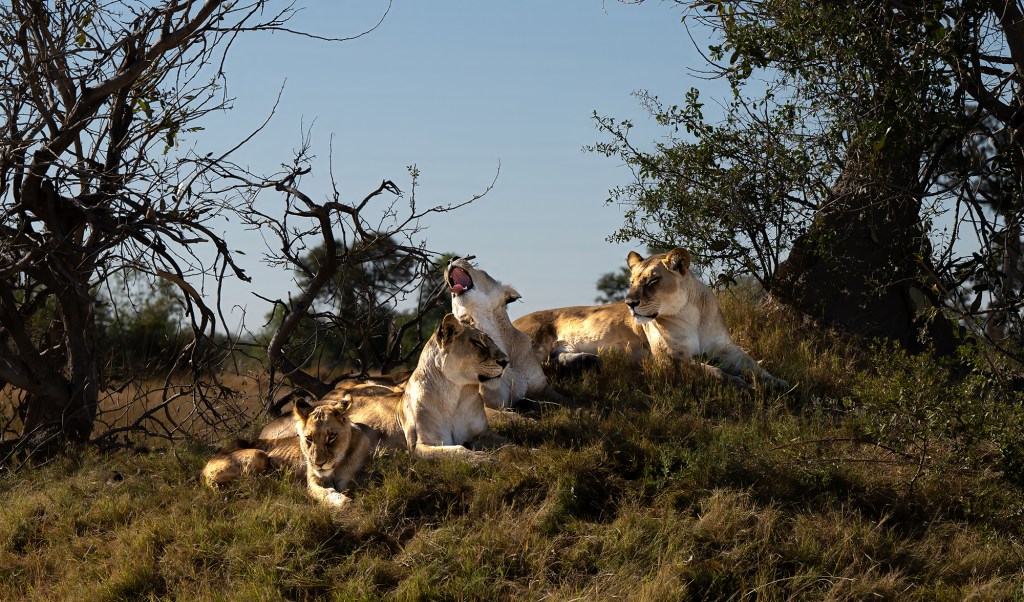
Lions are of course a major attraction to safari goers, and the safari guides love to find them on any drive. One of the interests is that lions are often found in prides. It is not uncommon to come across a group of 3-5, and often ten or more.

Lions in Africa are often called “kings of the jungle”, but do not normally dwell in jungles. Rather they reside in savannah like areas, where there are large numbers of prey including zebras, buffalo, antelope, giraffe and wildebeest. Kills are normally made via strangulation. They typically hunt in groups, and often females do most of the hunting. Male lions tend to spend their awake time patrolling their territory, and eat when their females make a kill. Lions sleep 16-20 hours a day.

Prides are groups of female, male and cubs, and can run anywhere from six to twenty animals. Males can oversee more than one pride. Females can mate at any time, often with multiple males. In fact the female can go into estrus if she senses danger for her cubs. Males joining a pride will often kill existing cubs as they are not their offspring. Some 80% of cubs do not survive to adult hood., threatened by male lions, hyenas, leopards and wild dogs. Adults live 10-14 years in the wild. Primary risk factors to adult lions are humans.

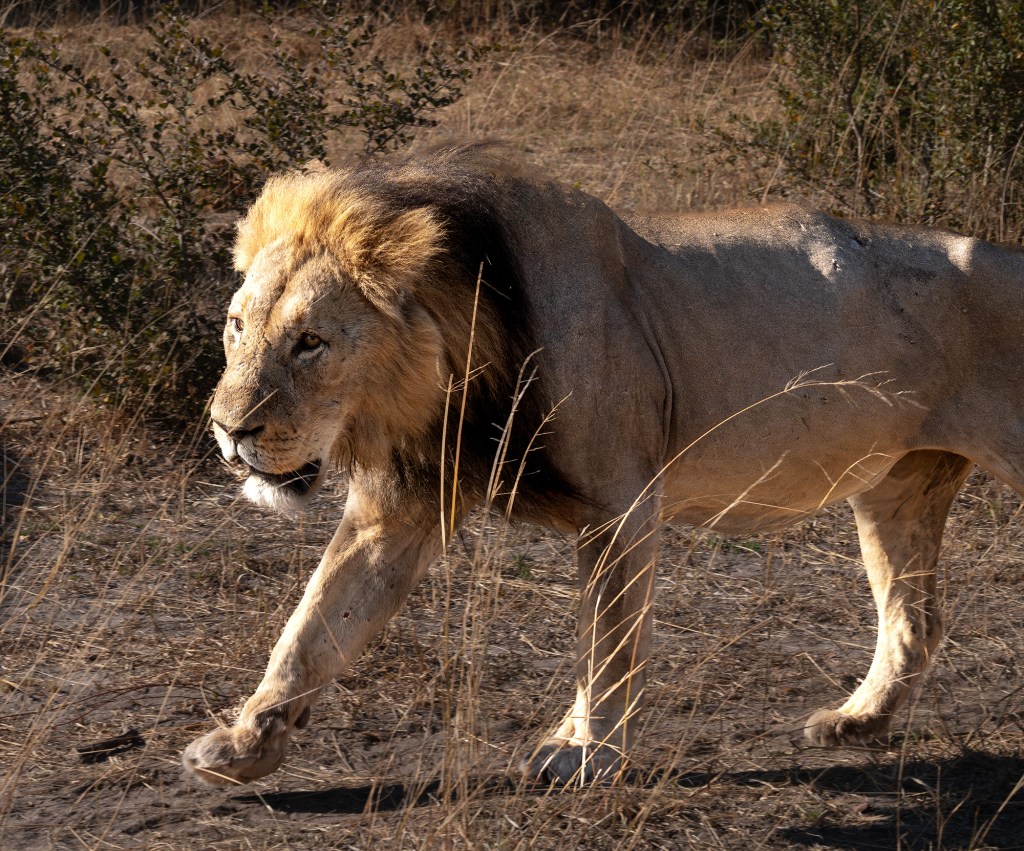
Male lions are 26-40″ high at the shoulder and 4.5-6.5′ long, and weigh 260-420 lbs. Lions are the only cat with sexual dimorphism, where the males and females look different. Males at 2-4 develop a large mane.

The historical range of African lions is today only 8% of historical figures, and are strictly sub-Saharan today. The population of African lions is estimated at 23000., down from 30000 in 2006. The largest population is estimated to be found in the Okavango Delta of Botswana.

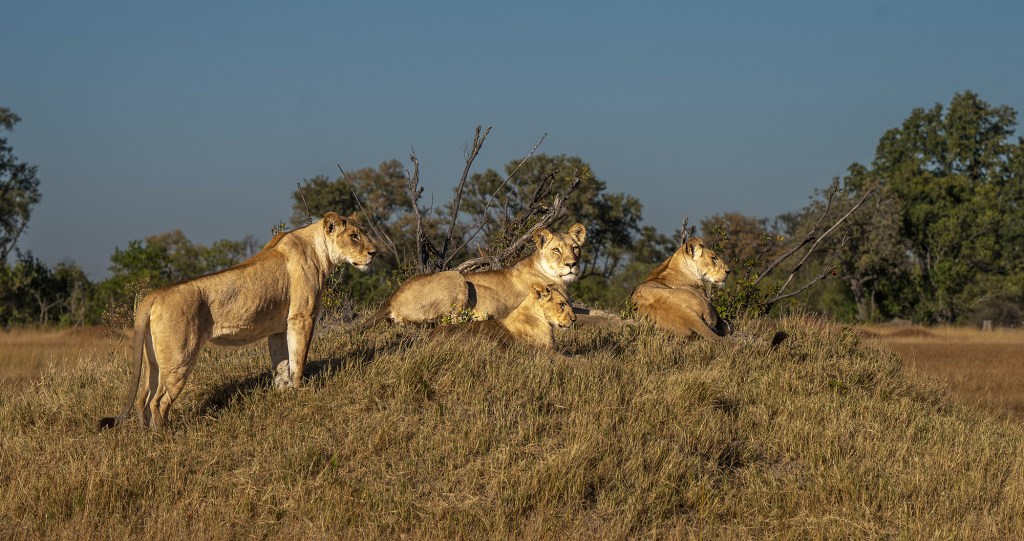
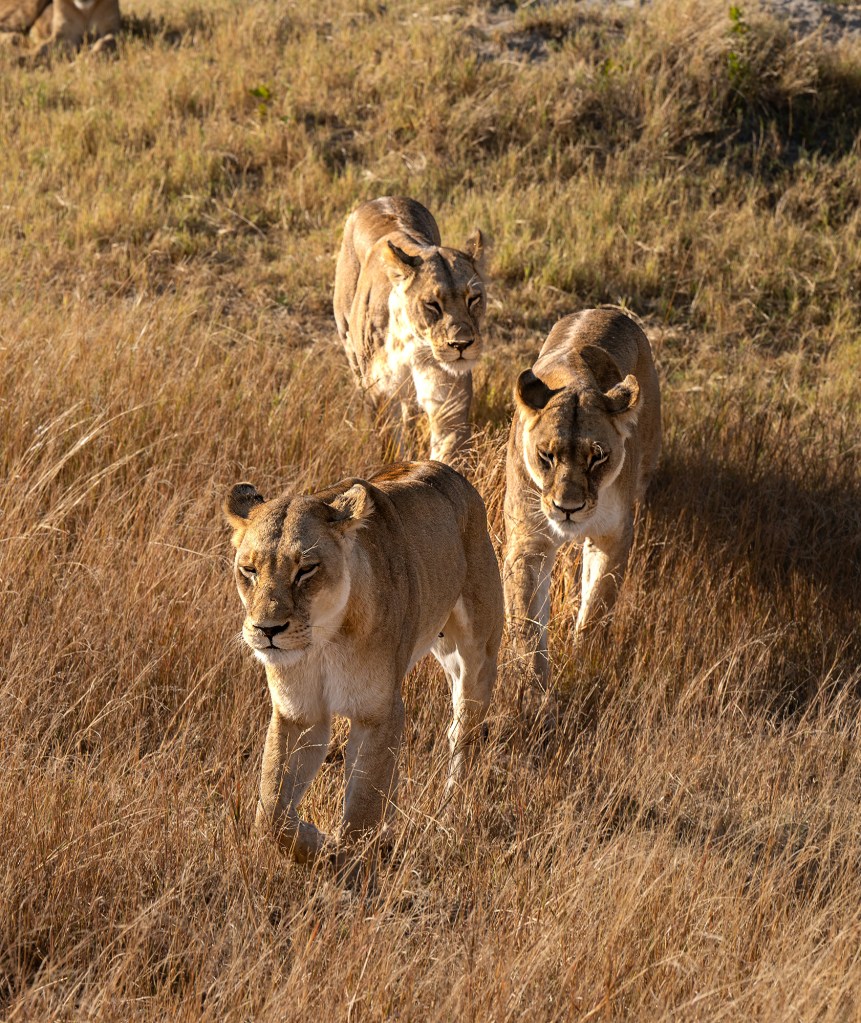
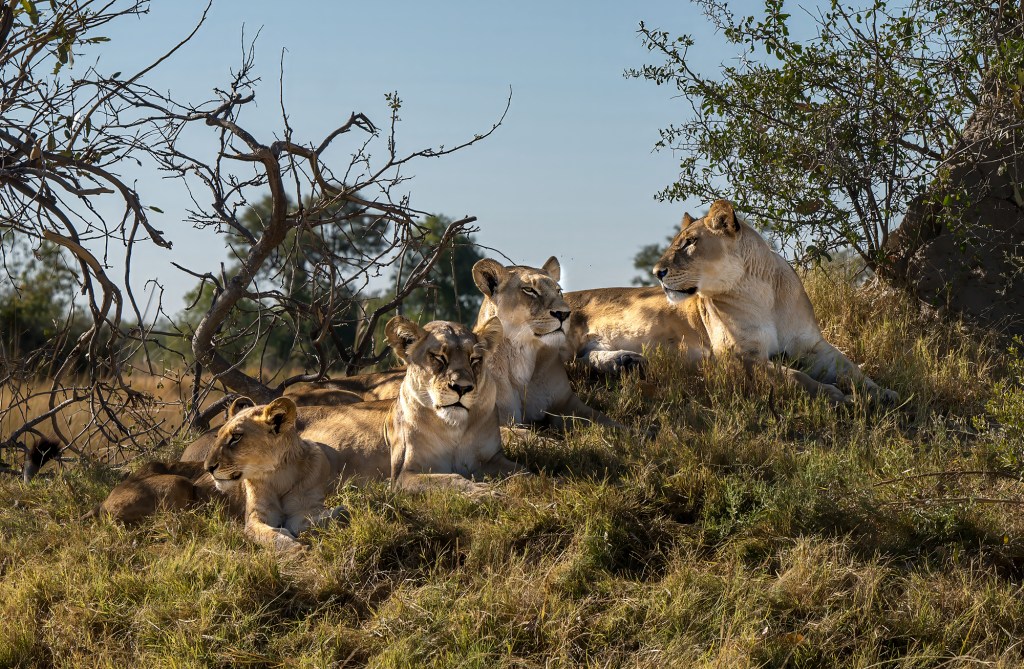
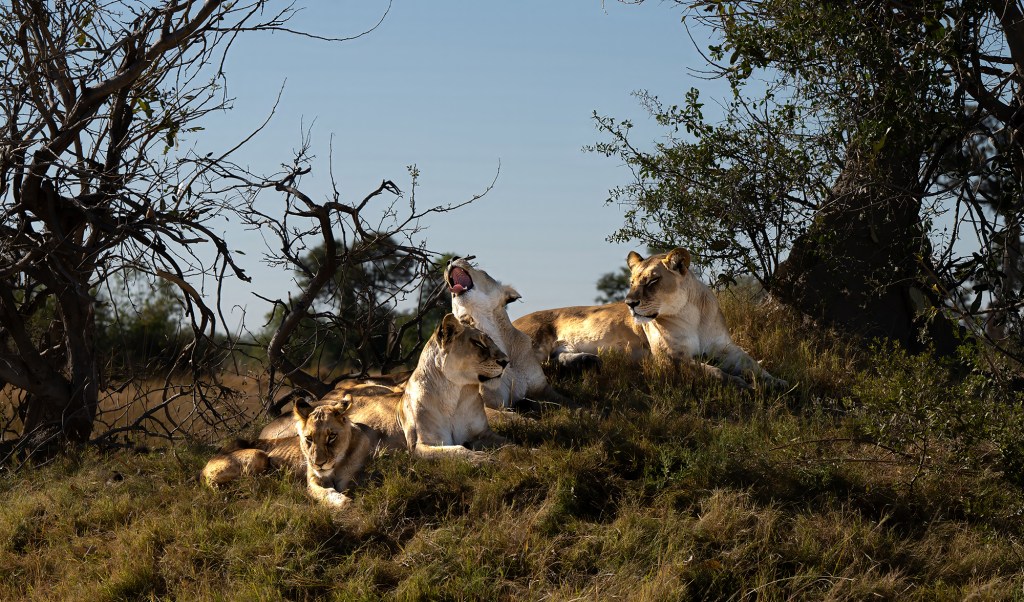
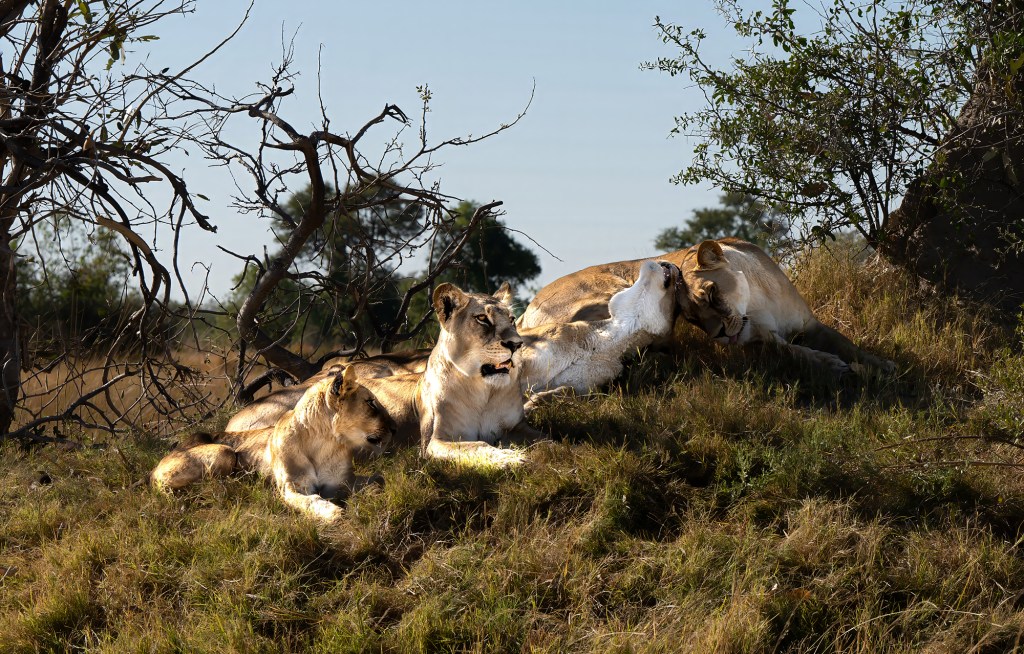
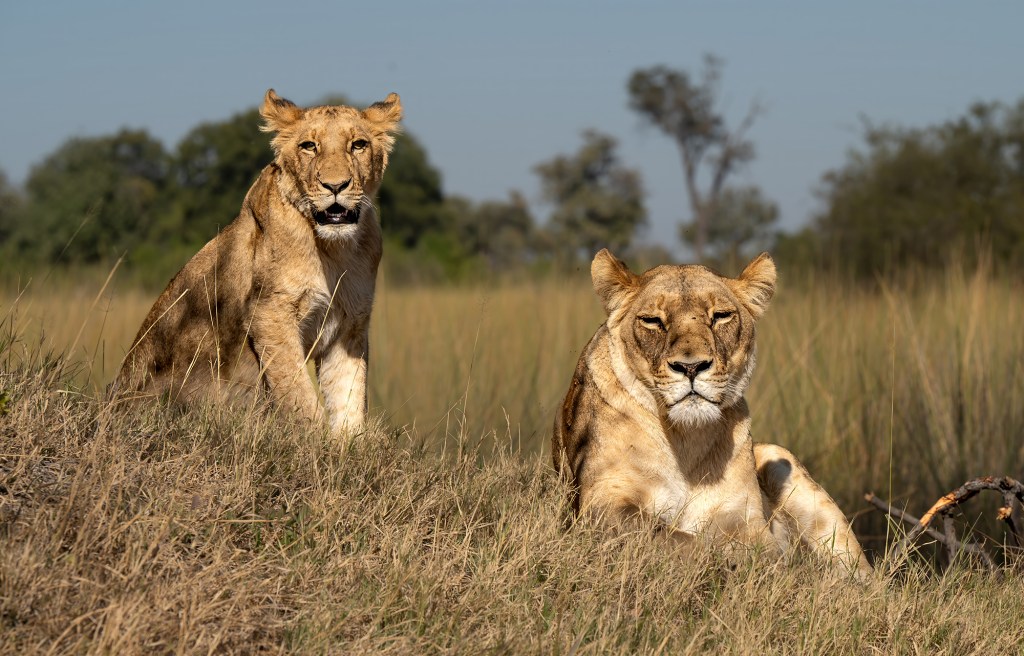
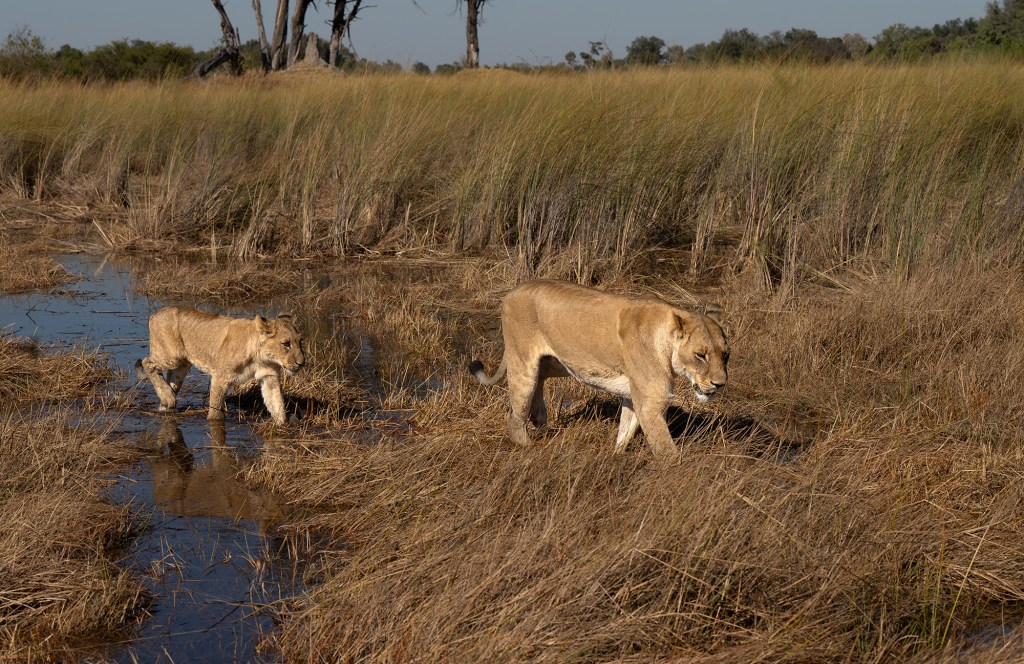
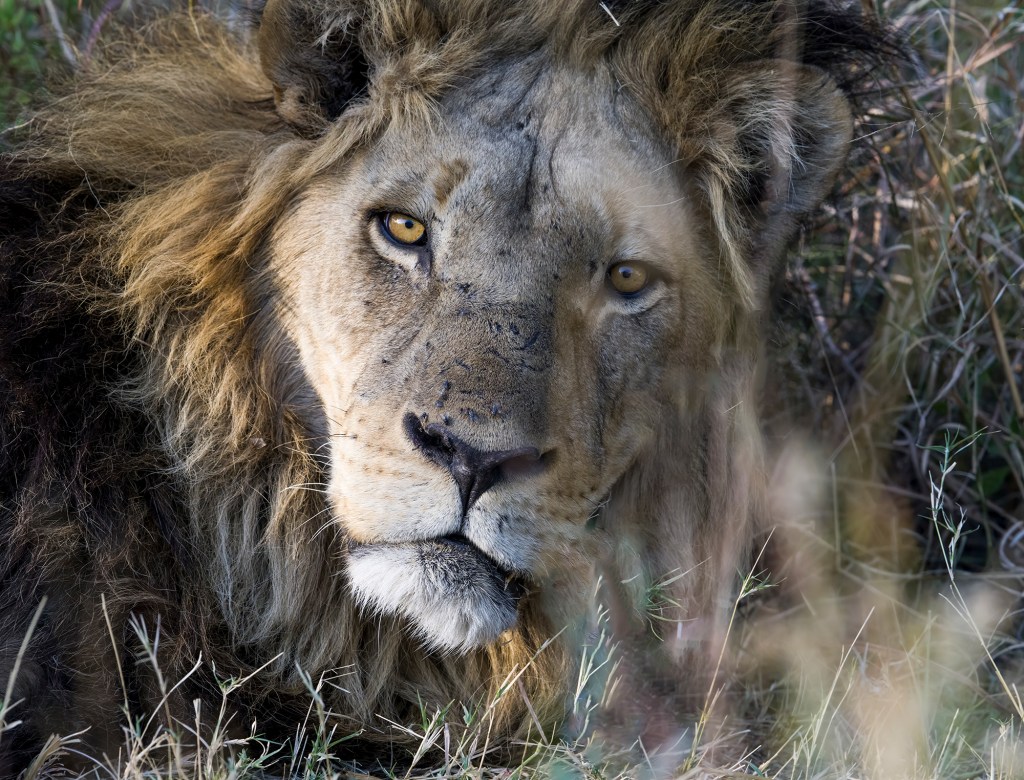
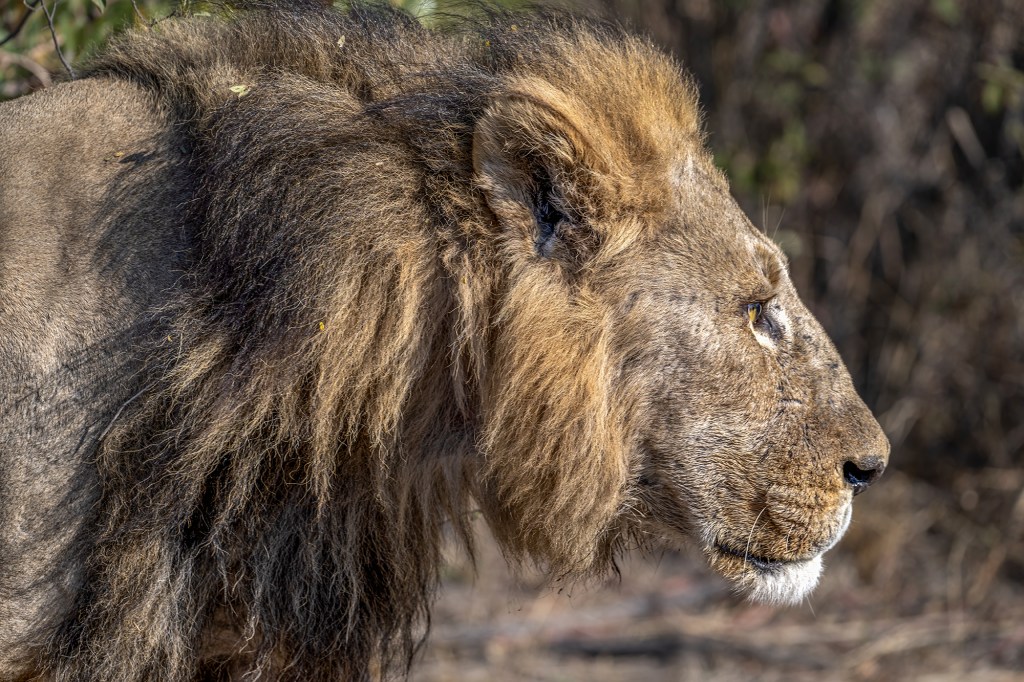
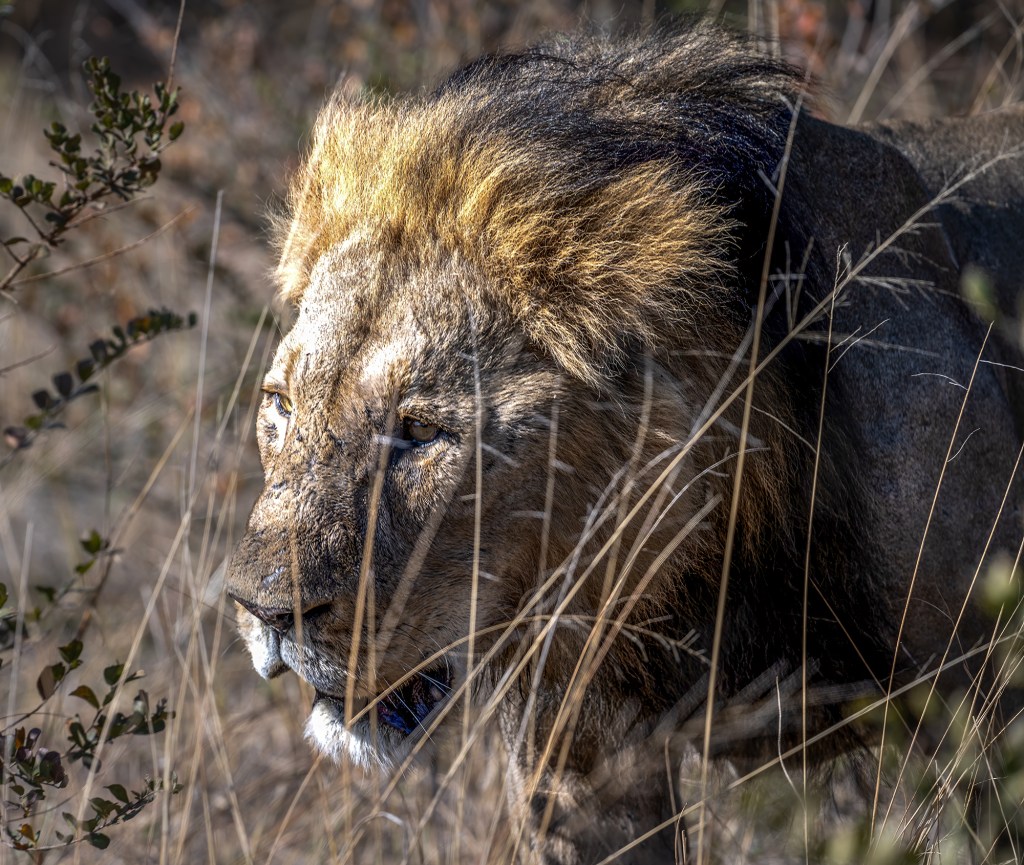
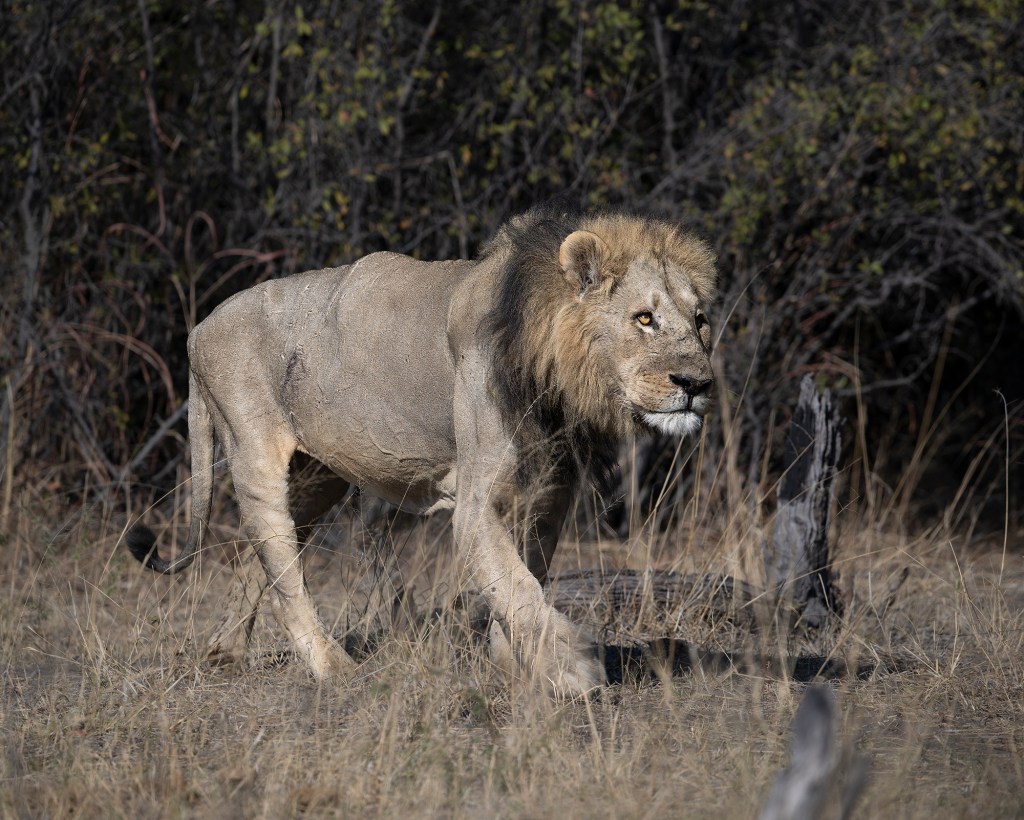
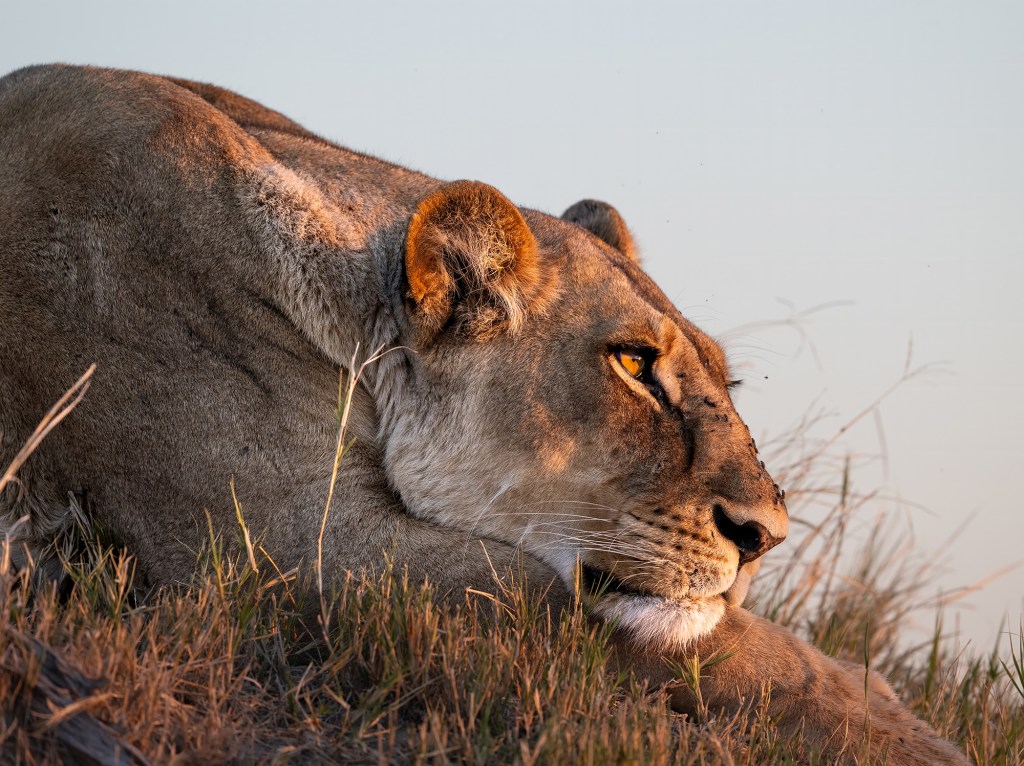
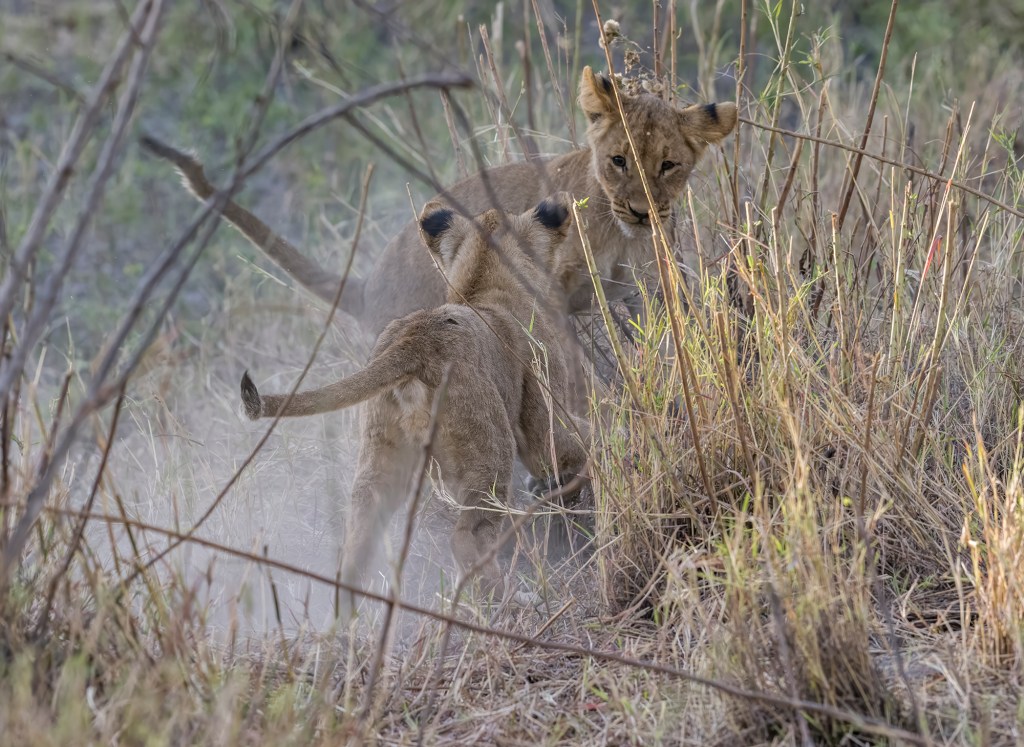
We saw fairly large numbers of lions on this trip, mainly at Four Rivers and Lagoo. One day we followed three females and a sub-adult male for 2-3 hours while they wandered, often stopping at small rises to survey the scene. We also encountered a pair of male brothers, both quite old and well-worn.

Leopards

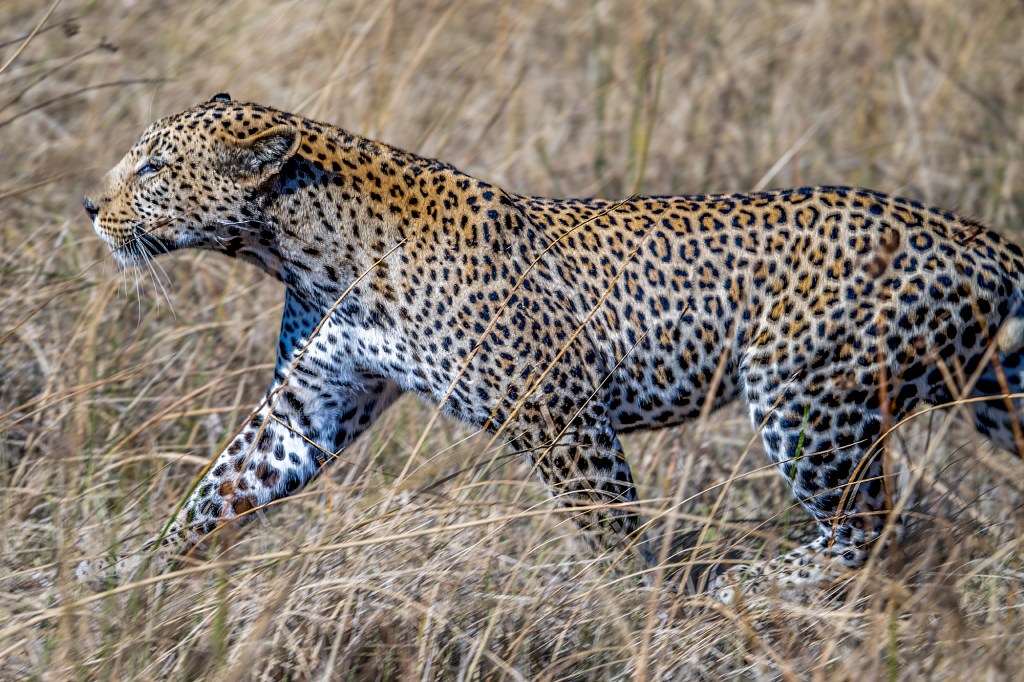
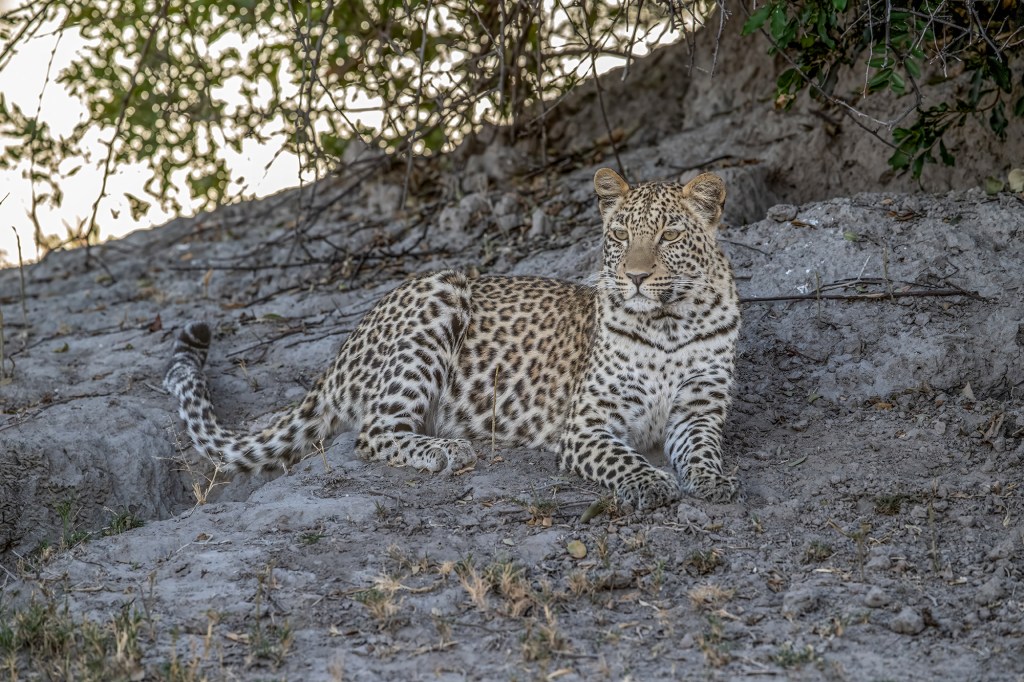
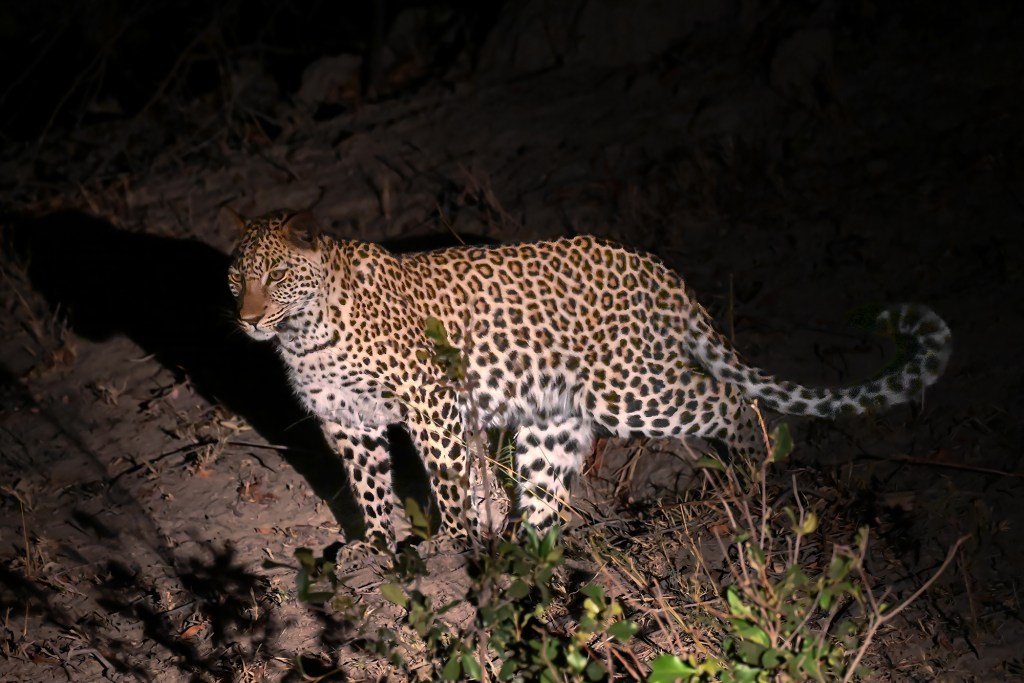
Many find this species the most desired sighting in Africa. Leopards are many times difficult to find as they tend to hunt primarily at twilight and night and are quite solitary. On this most recent trip we were fortunate to see about a dozen leopards in eight days. More than usual for sure!

Leopards are found primarily in Africa ans Asia, with eight subspecies recognized. They are adapted to a variety of habitats. They are opportunistic predators, relying on their spotted patterns for camouflage as it stalks and ambushes its prey. They are active and very strong tree climbers, often hauling their dead prey up into trees, mainly to avoid theft by lions, hyenas and other predators.

They are also territorial and can wander for many miles to mark their territory. Leopards prefer medium-sized prey which tend to concentrate in small herds in wooded areas. These include impala, bushbuck, duiker and chital. They also hunt smaller prey such as jackal, fox, genet and cheetah. Typically the animal are killed by suffocation. Average daily meat consumption for an average male has been determined as almost 8 kg. Their main enemy is the lion, responsible for more than 20% of leopard deaths at one major reserve. In fact on this trip, we saw a dead female leopard who had an impala kill in a tree. She had come down for a break, and on her return was ambushed by two male lions.

Gestation period is 90-105 days, with litters of two to four cubs common. On average 40% will not live a year. Males at maturity reach 60-70 cm in height at the shoulder and weigh 30-70 kg. Their top speed is nearing 40 mph.

Leopards occur widely in Africa, the Caucasus and Asia. In Africa they are still numerous and surviving, although there is considerable potential for human-leopard conflict due to leopards preying on livestock. In addition, expanding human populations continue to diminish available areas for wildlife. Historical ranges in Africa are only about 50% of that in 1750, and most are now in sub-Saharan areas. Leopard population estimates in the world range from 50-100,000. Botswana population is thought to be 3-5000, mostly in the Okavango Delta. They are also fairly abundant in the Indian subcontinent, with a population estimated at 12-13000. We were told on our India trip earlier this year that leopards at a preserve near Jaipur commonly hunted dogs in the urban area at night.