India has done a great job over the past fifty years or so in establishing national reserves for wildlife, with a special focus on tigers. I think it is worthwhile for us to understand a little of the history so I am taking the liberty of copying sections of a release by the Ministry of Environment, Forest and Climate Change, July 23, 2023.
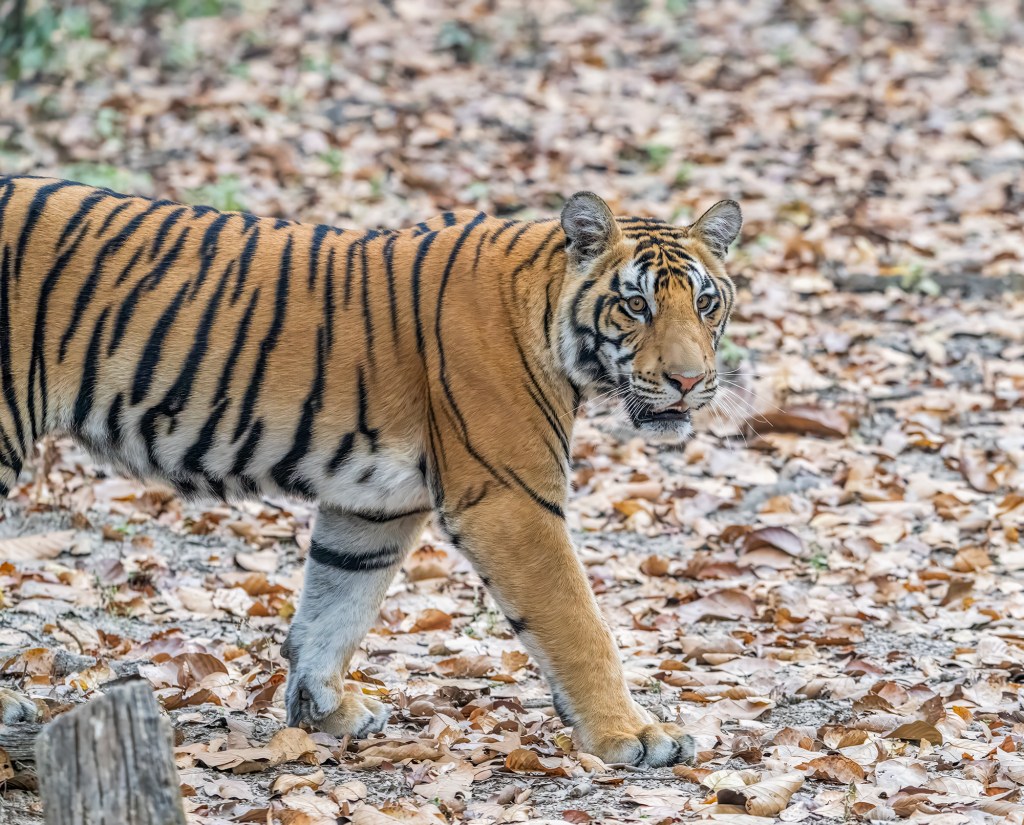
In 1973, the Government of India launched Project Tiger, an ambitious, holistic conservation project, aimed at safeguarding the nation’s tiger population and preserving biodiversity. Over the past fifty years, Project Tiger has achieved commendable success, making significant strides in tiger conservation. Initially covering nine tiger reserves spanning 18000 km2, the project has flourished into a remarkable accomplishment with 53 reserves spread across 75000 km2. India currently harbors 75% of the world’s wild tiger population.
Central India and the Shivalik Hills and Gangetic Plains witnessed a notable increase in tiger population, particularly in the states of Madhya Pradesh, Uyyarakhand and Maharashtra. The largest population of 785 is in Madhya Pradesh, wich includes Bandhavgarh and Kanha reserves. Tiger population is highest in Corbett (260), followed by Bandipur (150), Nagahole (141), and Bandhavgarh (135). Kanha has 105, Pench 77. It is estimated that the total Indian tiger population in 2022 is 3167 tigers, up from 1411 in 2006. Estimates for the beginning of the 19th century were in the 40,000 range!
Various reserves have shown remarkable growth, while others face challenges. About 35% require enhanced protective measures, habitat restoration, ungulate augmentation and subsequent tiger reintroduction. Challenges like poaching are still a threat to tiger conservation.
Our tour included Bandhavgarh and Kanha, both in Madhya Pradesh. Kanha was one of the original nine reserves established in 1973. Both parks are large, beautiful, heavily forested in places, open plains in others. Entrance is well controlled, although the number of vehicles allowed is 28 per each park section. So a tiger sighting is a magnet for most of them even though the walky talky communications used in Africa are not allowed in India. But cell phones often work quite well!
In the next blog posts I will provide fairly extensive images of the reserves so you can appreciate the beauty and diversity of these nature parks. Then I will illustrate the diversity of wildlife at each reserve.

 The Carefree Photographer