Part I: Agra
Our first full day in India started in Delhi, and began with a 4 hour drive to the city of Agra. Our guide Shayam informed us that it would likely be raining later in the day, and a sundown visit to the Taj Mahal would not be worthwhile. So after an Indian lunch in a very touristy cafe, we checked in and then visited the Agra Fort.


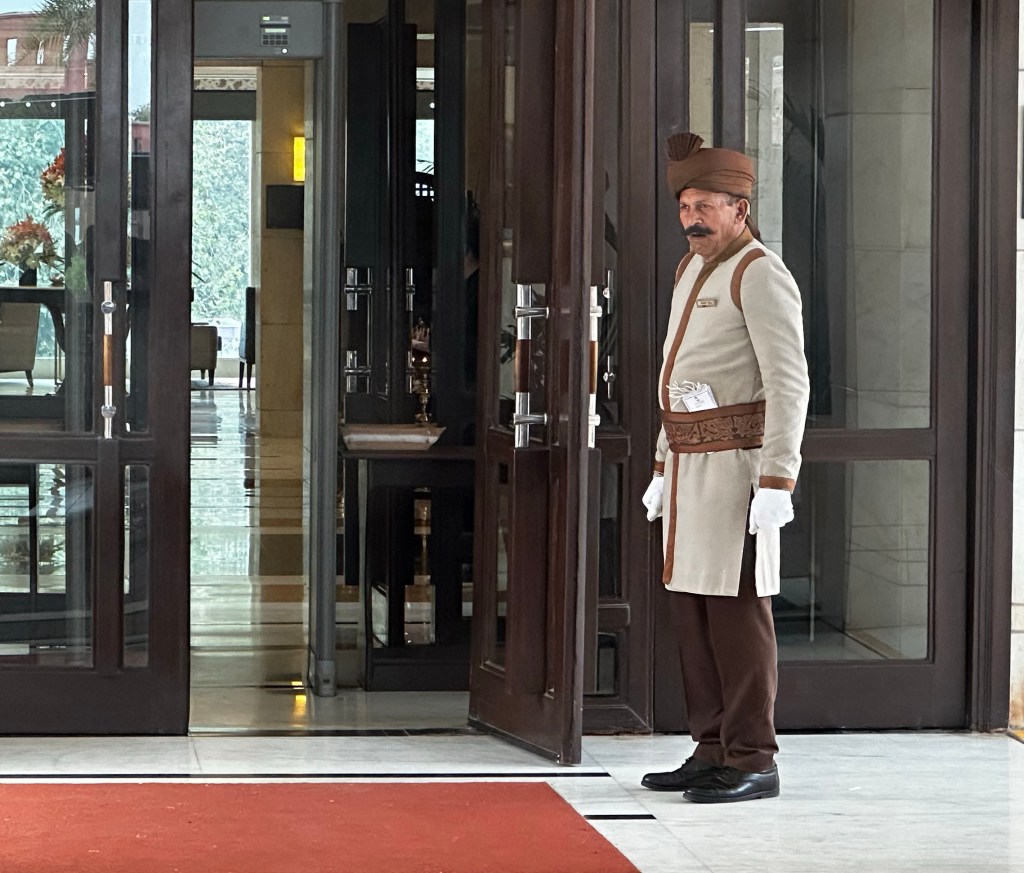
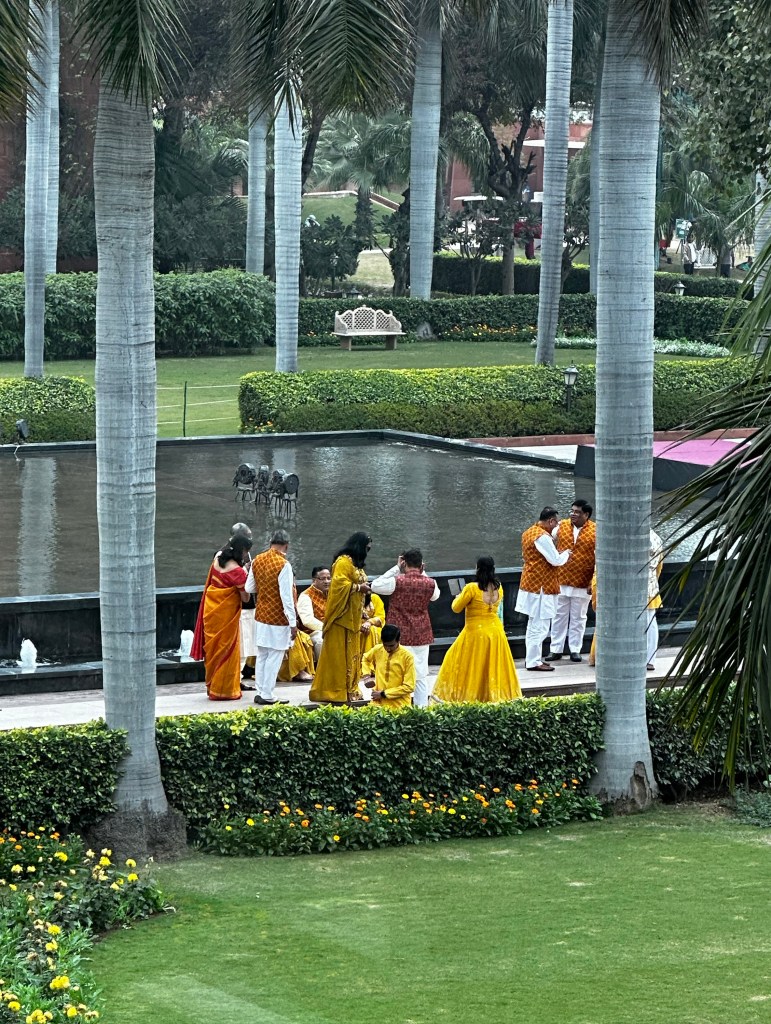
The Agra Fort is an historic fort in the city, also known as Agra’s Red Fort. Mughal emperor Humayun was crowned here. It was later renovated by emperor Akbar from 1565, completed in 1573. It served as the main residence of the rulers of the Mugdal dynasty until 1638, when the capital was shifted to Delhi.The 94 acre fort has a semicircular plan, with 70′ high walls. Double ramparts have massive circular bastions at intervals. four gates were provided on its four sides. Most notable are the Delhi Gate and the Lahore Gate.
Entry is provided at the Delhi Gate, after crossing a wooden drawbridge over the moat.


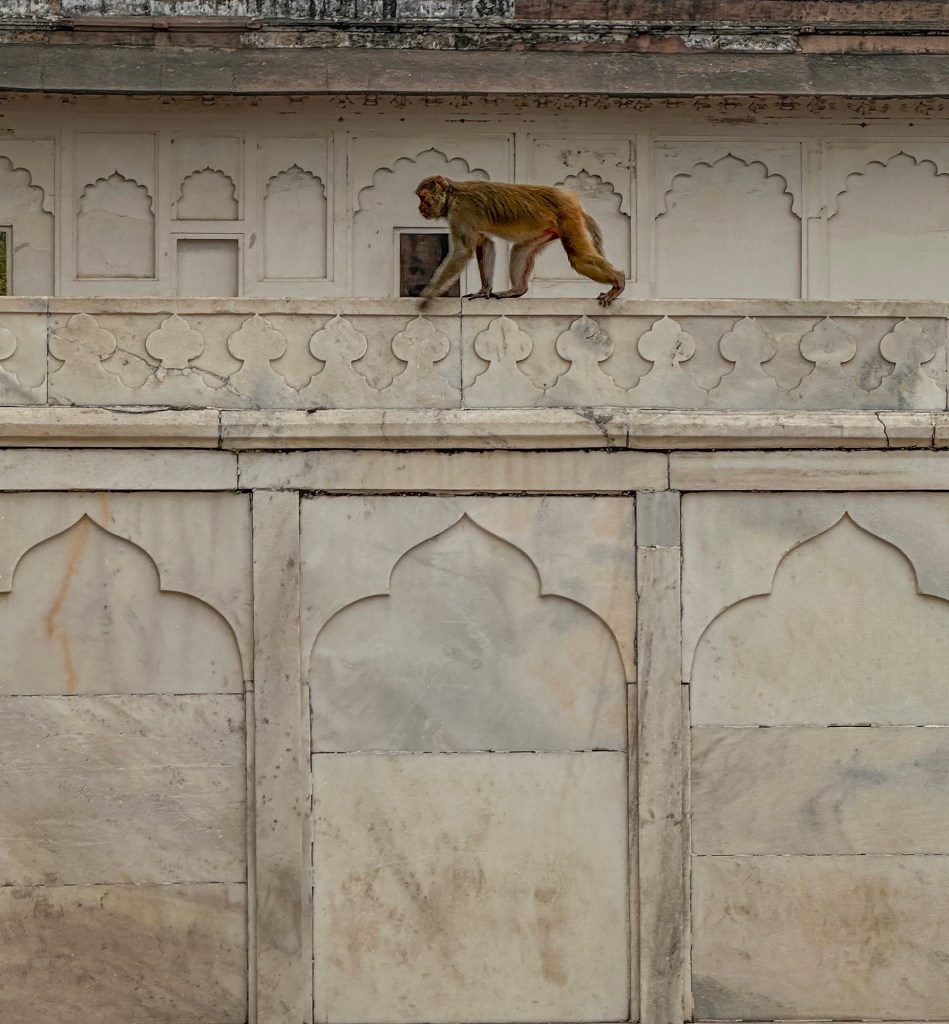
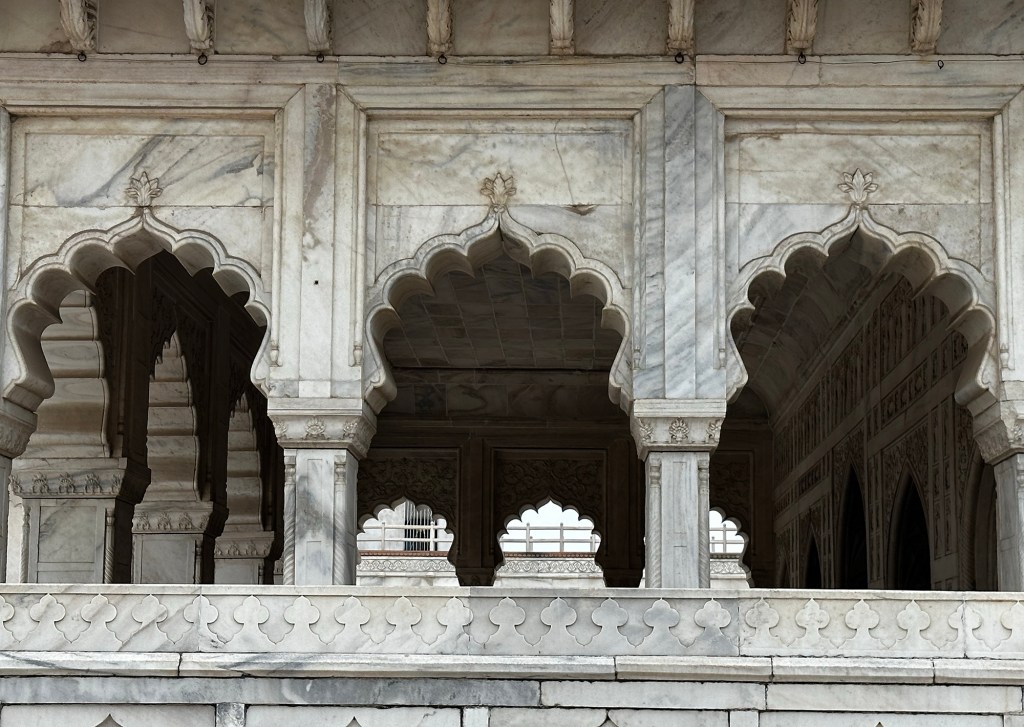
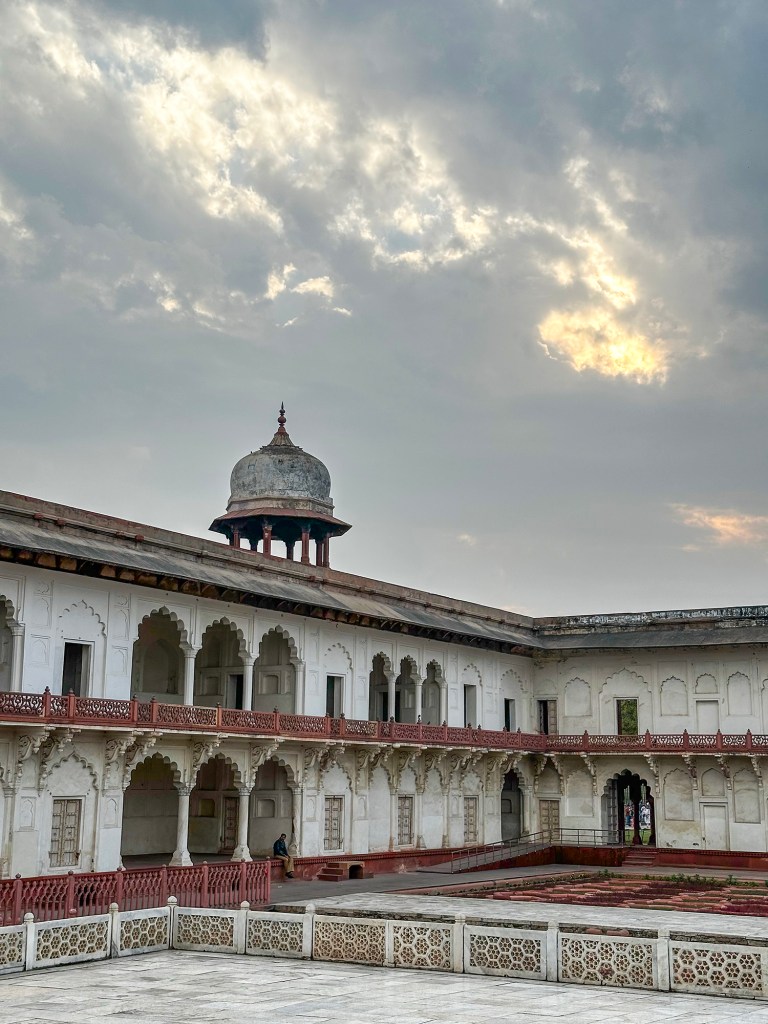

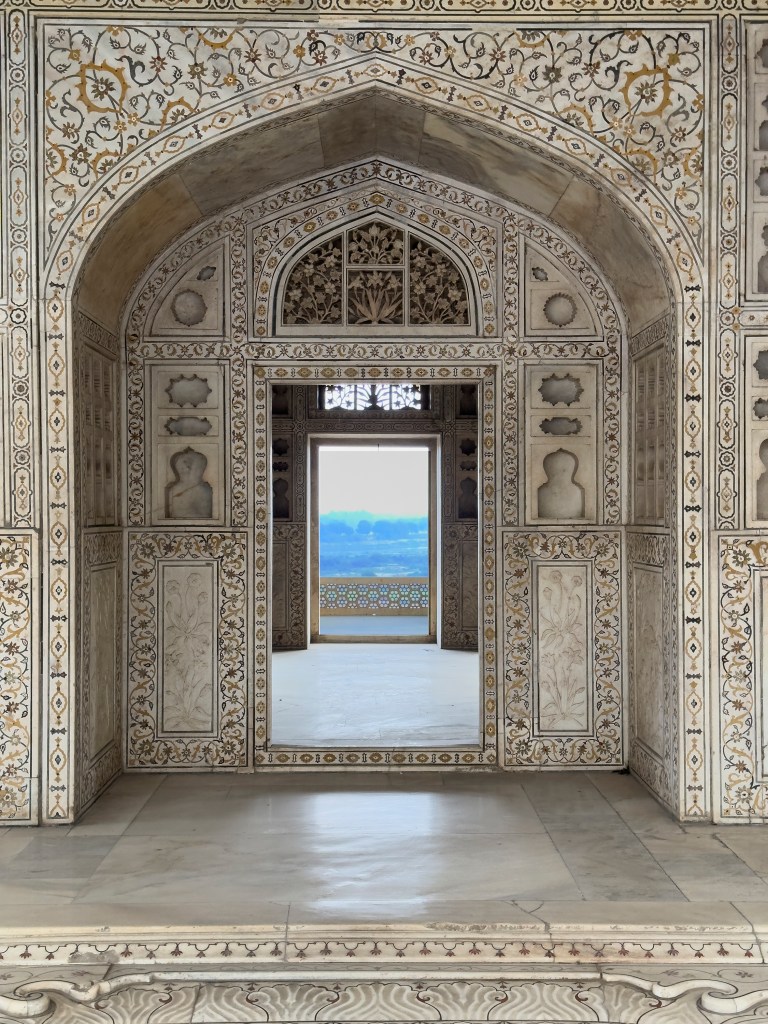
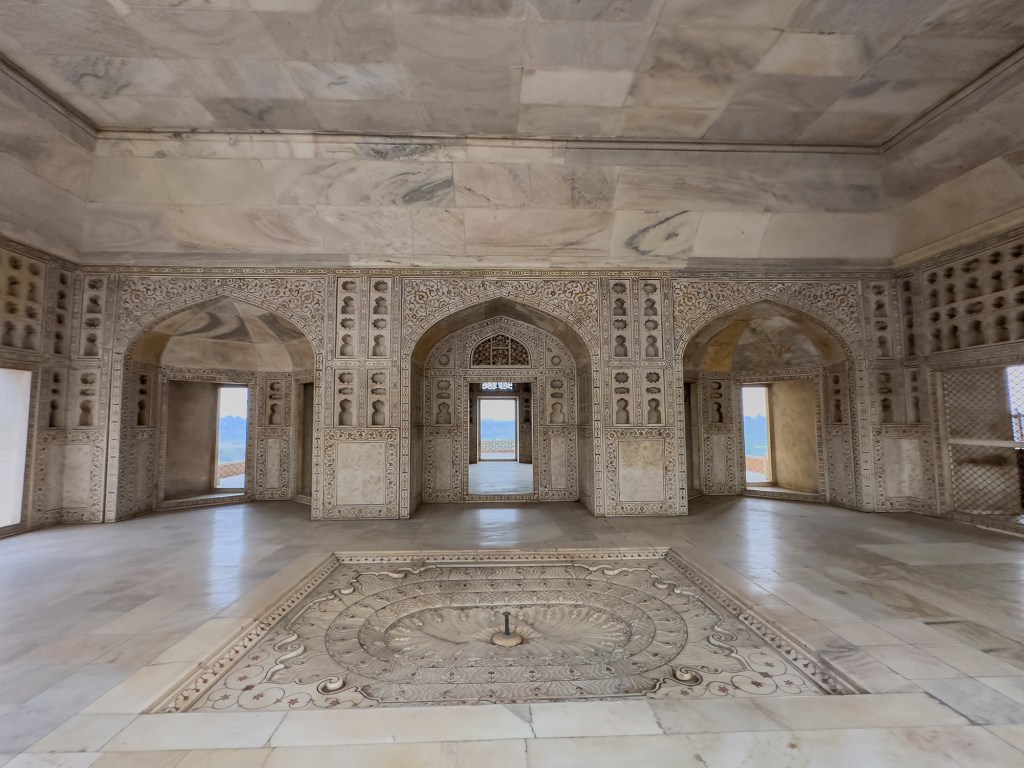
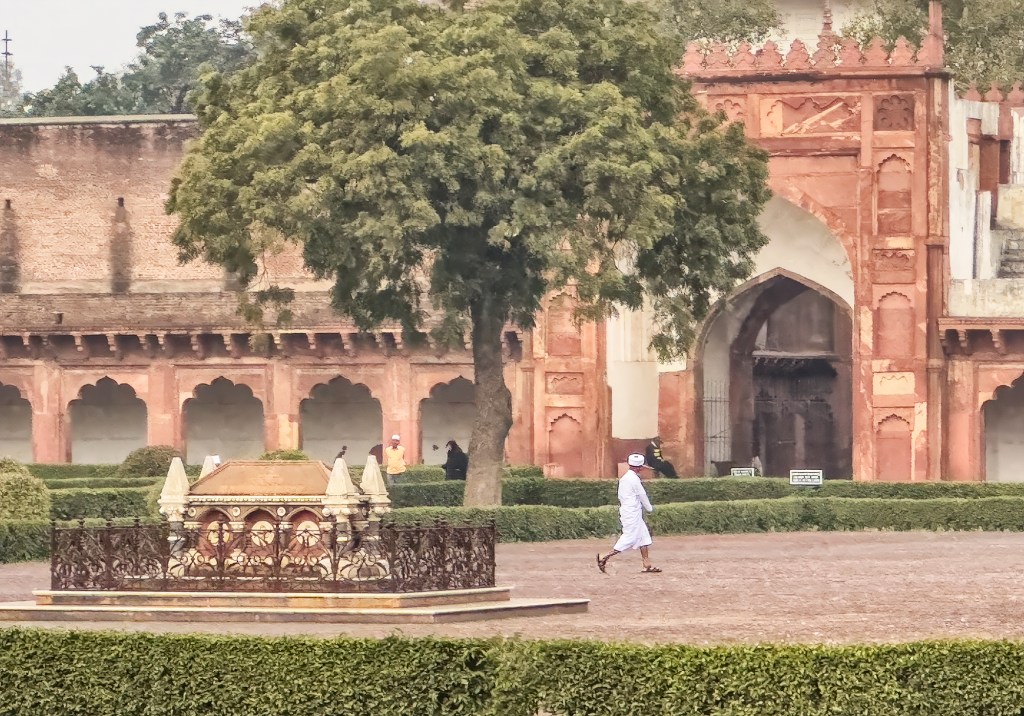
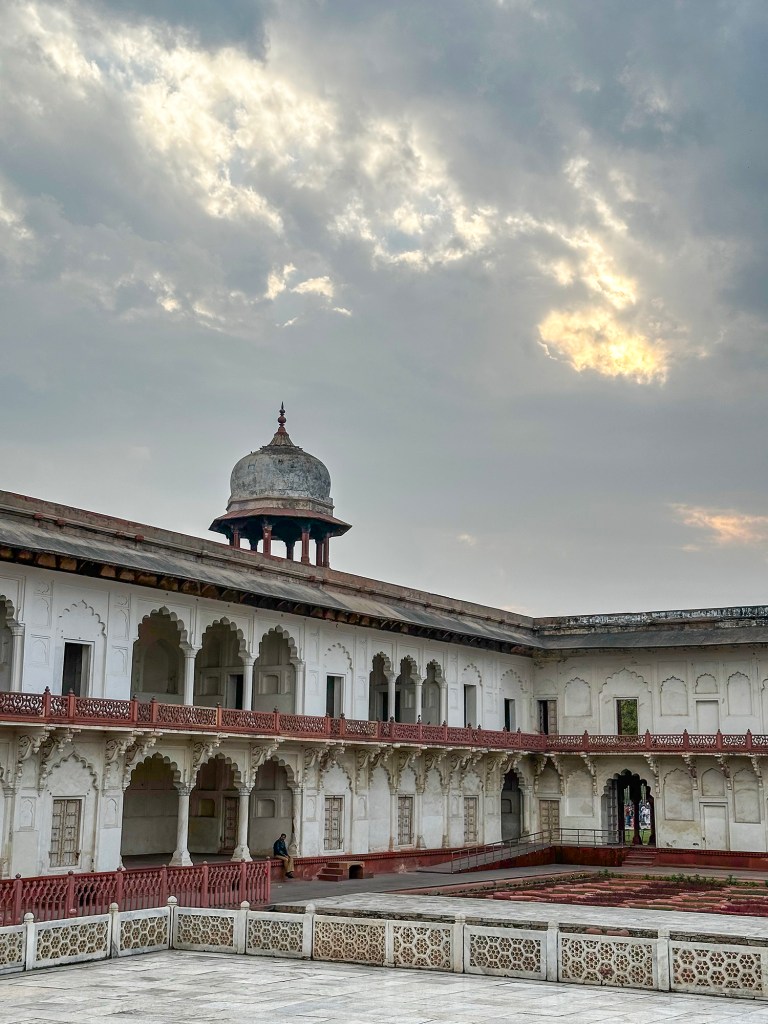
That evening we rode in Tuktuks, then walked in the rain to get our first closer=up view of the Taj from the back side and across the river.

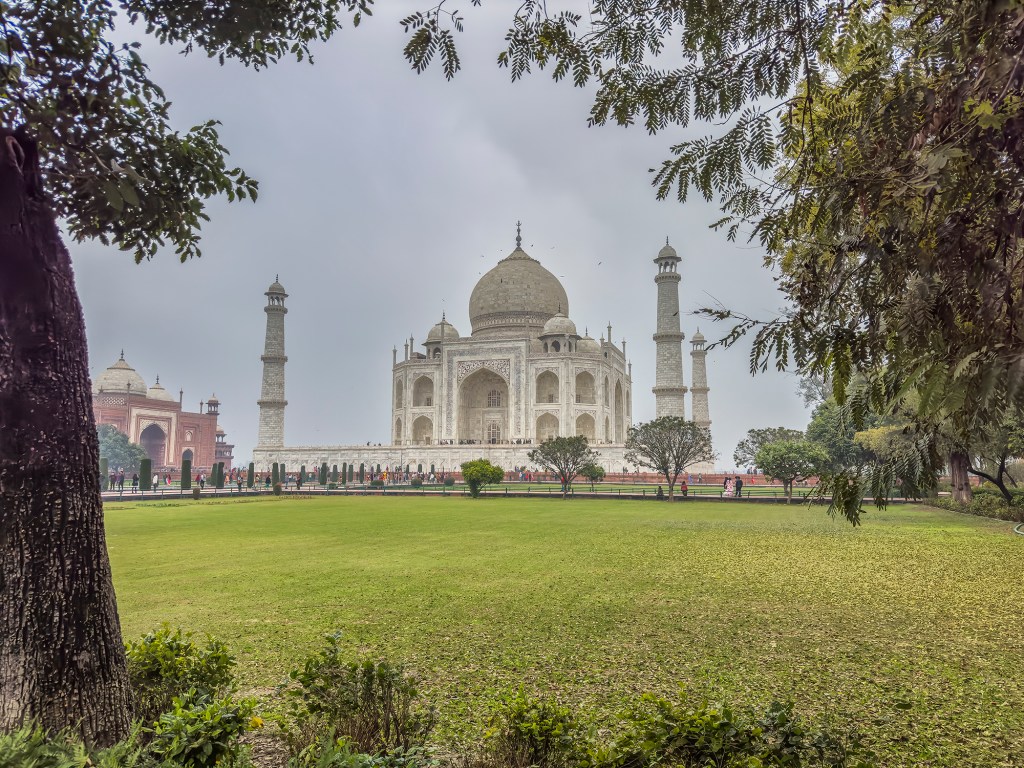
This was a preview to our extensive tour the next morning to the iconic Taj Mahal. This is an ivory white marble mausoleum on the right bank of the river Yamuna. It was commissioned in 1631 by the fifth Mughal emperor, Shah Jahan to house the tomb of his beloved wife Mumtaz Mahal; it also houses the tomb of the Shah himself. The tomb is the centerpiece of a 17-hectare complex, which includes a mosque and a guest house (never used), and is set in formal gardens bounded on three sides by a crenelated wall.
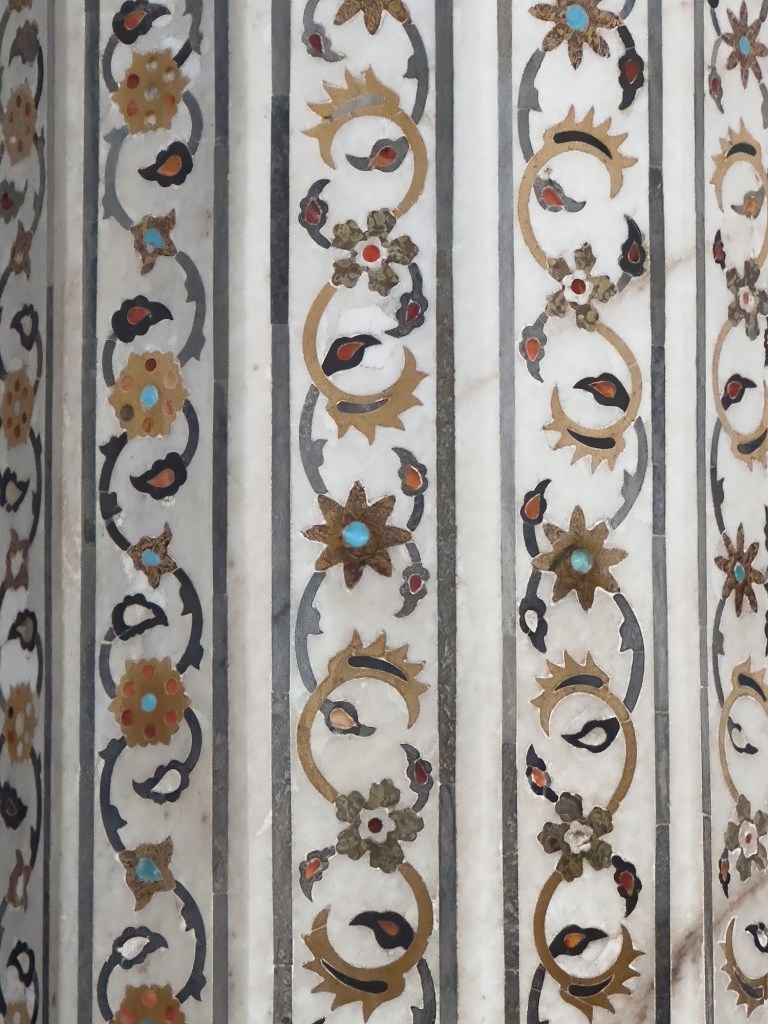
The Taj Mahal complex is believed to have been competed in 1653 at a cost estimated today at $500 million. The project employed some 20,000 artisans under the guidance of a board of architects. The Taj incorporates and expands on design traditions of indo-islamic and earlier Mughal architecture. Shah Jahan promoted the use of white marble inlaid with semi-precious stones.The tomb is the central focus of the entire complex. It is a large white marble structure standing on a square plinth and consists of a symmetrical building with an iwan (an arch-shaped doorway) topped be a large dome and finial. The o\overall details are phenomenal.
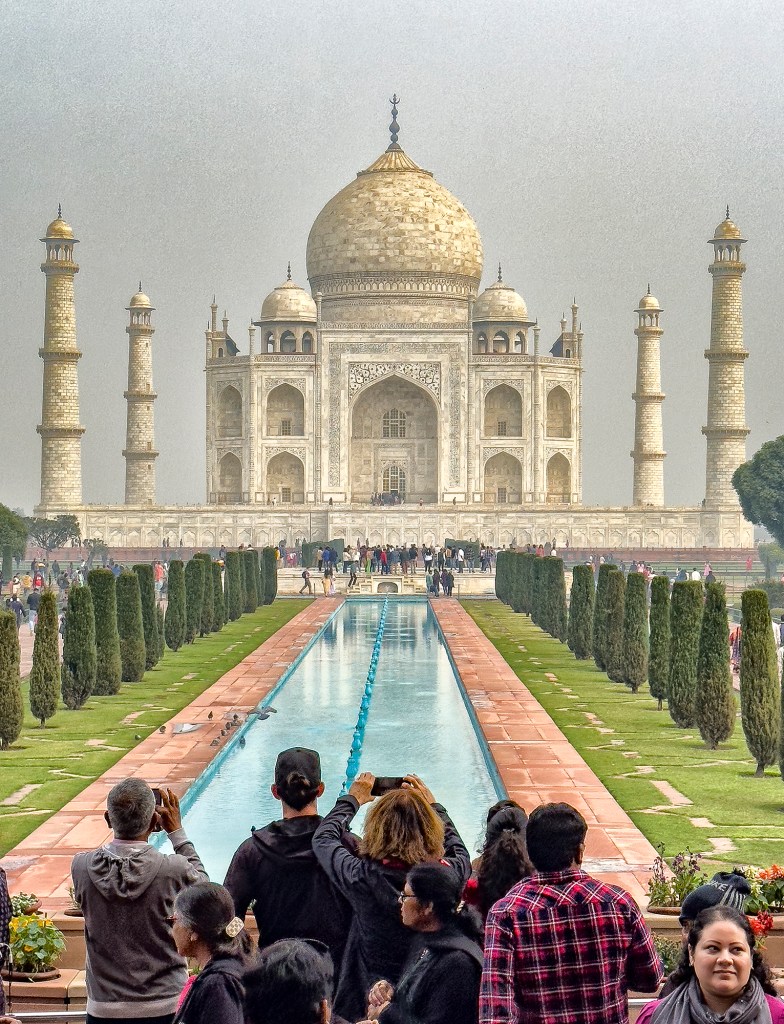
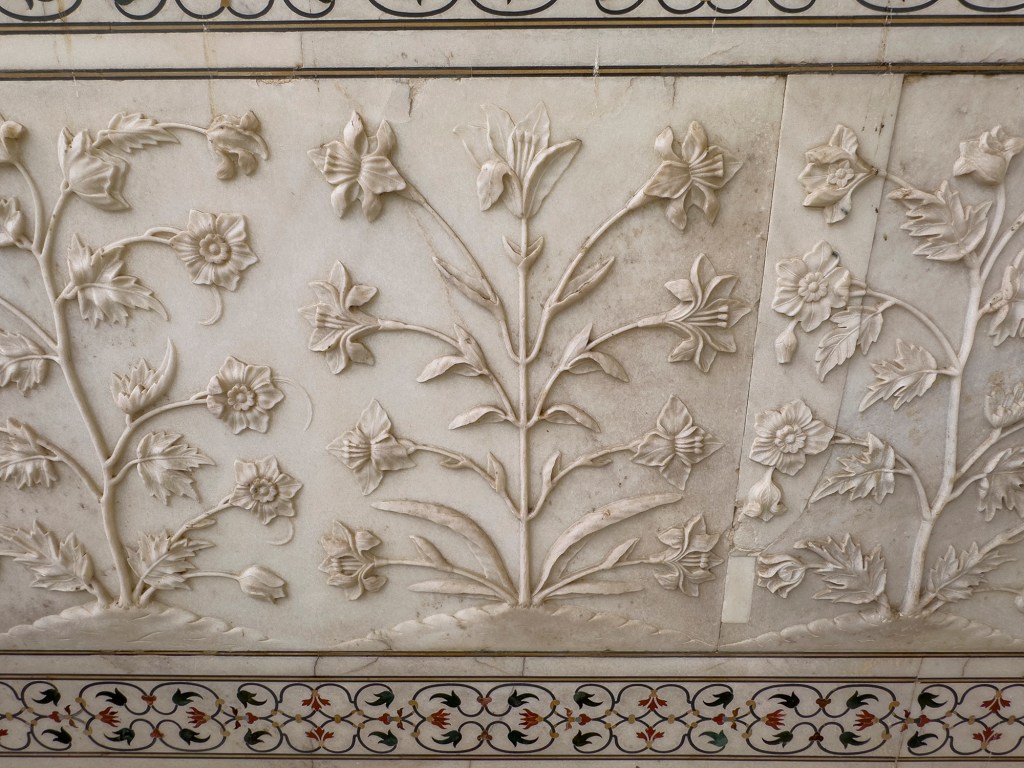
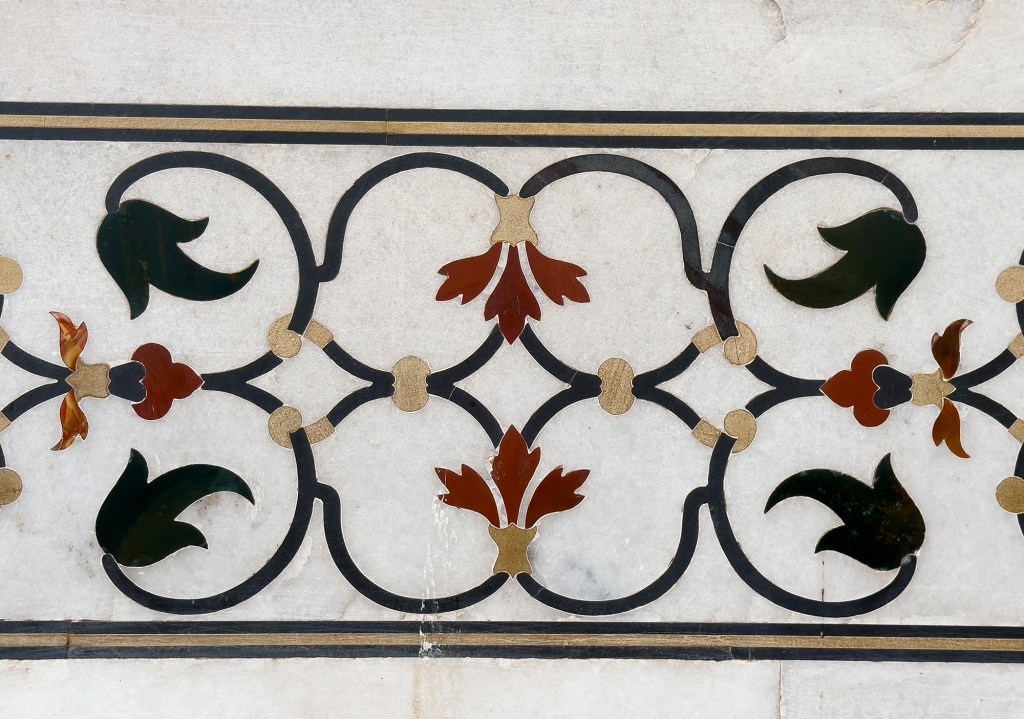


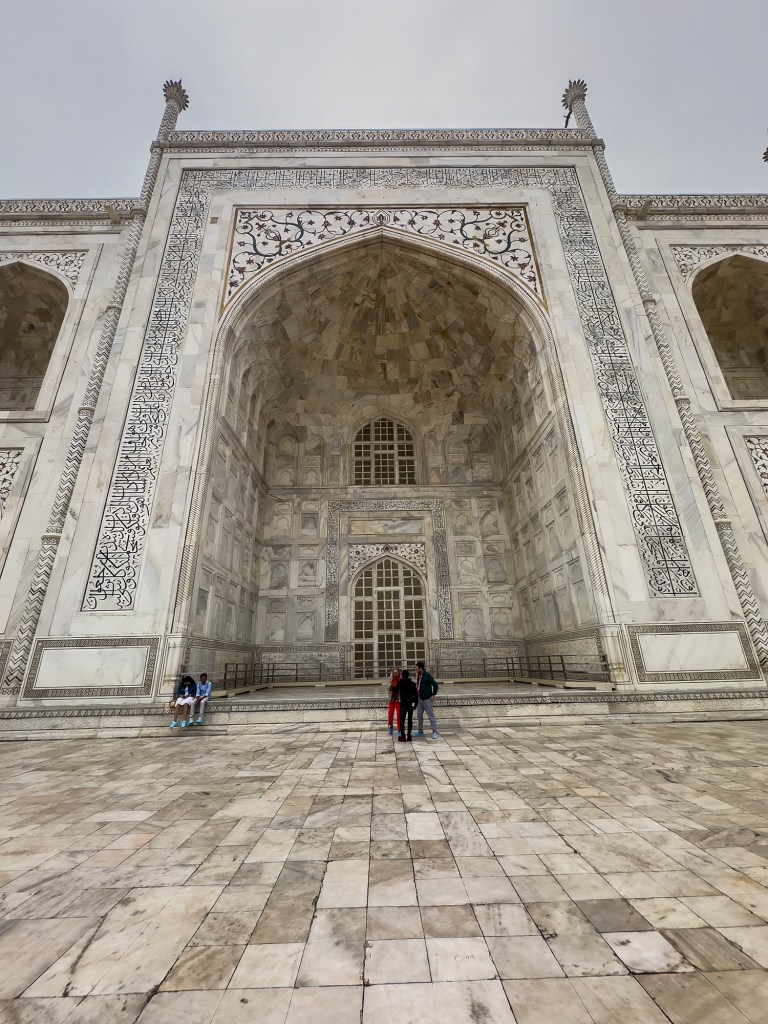

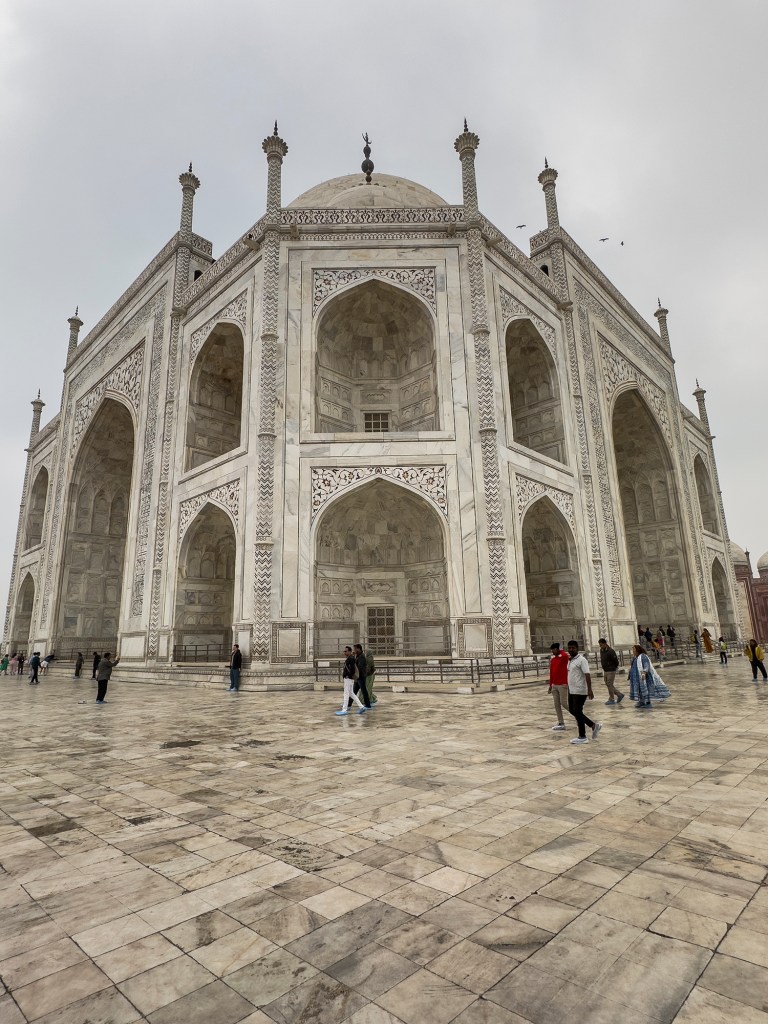
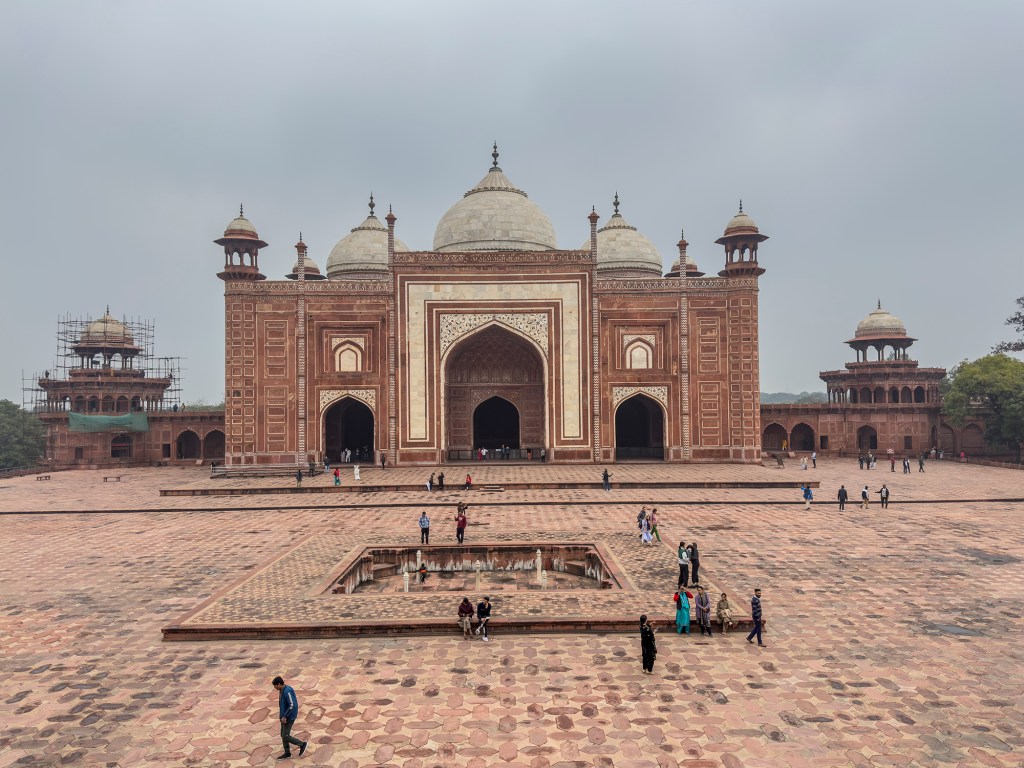
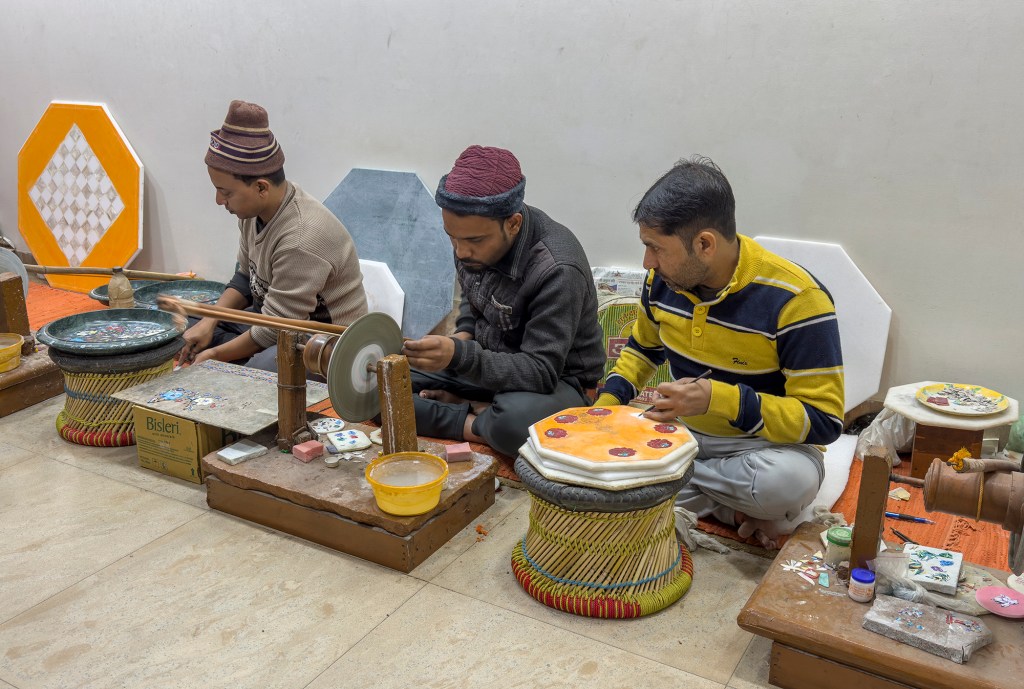
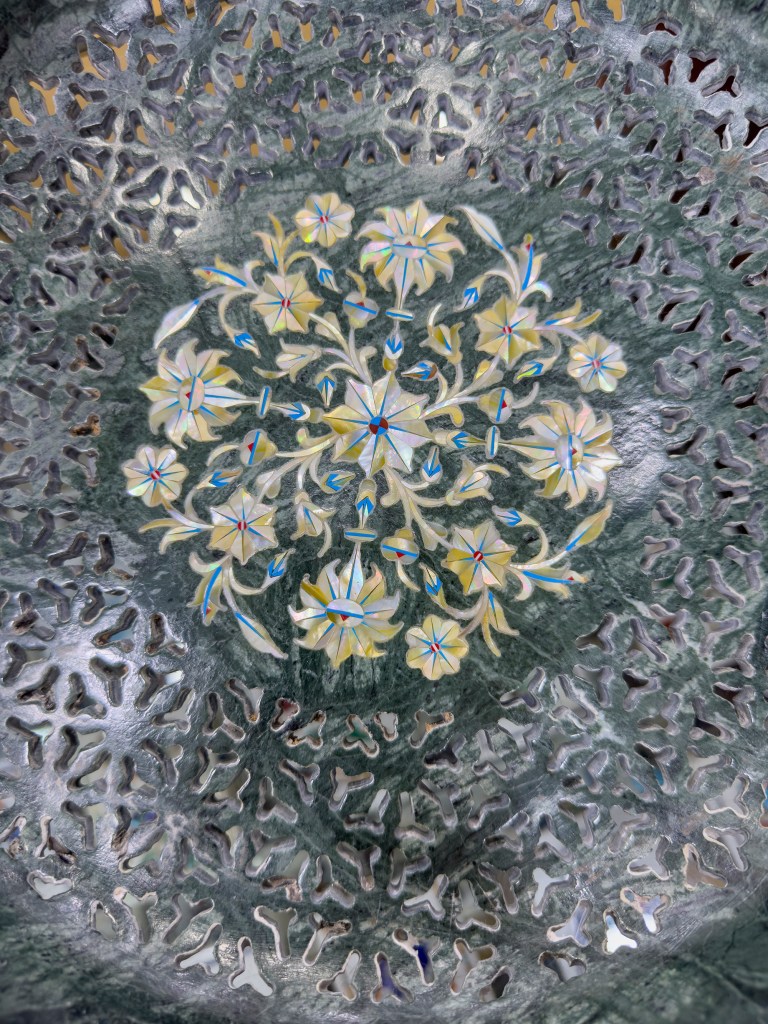
After touring the Taj, we visited a tile shop owned and managed by descendants of the family that did the inlay work at the shrine.
It is true to say that any visitor to India must visit Agra.

 The Carefree Photographer
Thank you so much for sharing. Now I donât have to goð
[cid:image001.jpg@01DA6BE2.938B45D0]
Debra Stevens|Co-Founder
Elephant Havens Wildlife Foundation
elephanthavens.org
4104 Calculus Dr.
Dallas, Texas 75244
972 620 1365
LikeLike
Very cool Grant!
LikeLike
You guys coulda played bridge !!!
>
LikeLike
Who knew the TAJ has a lap pool.
GREAT PHOTOS. You saved me a trip!
>
LikeLike