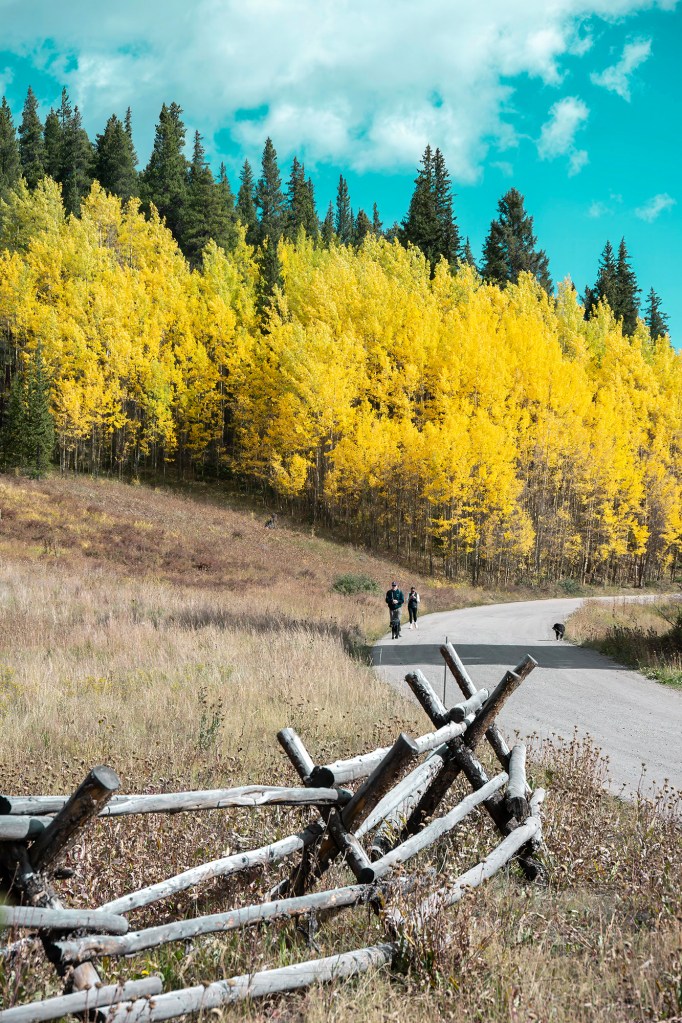
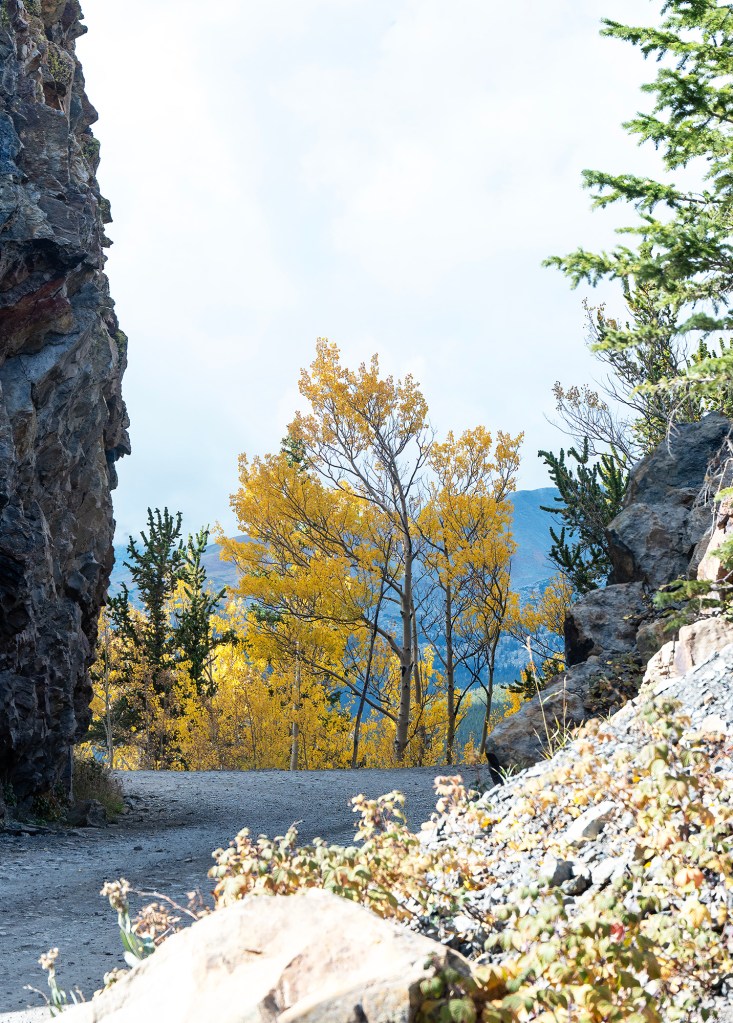
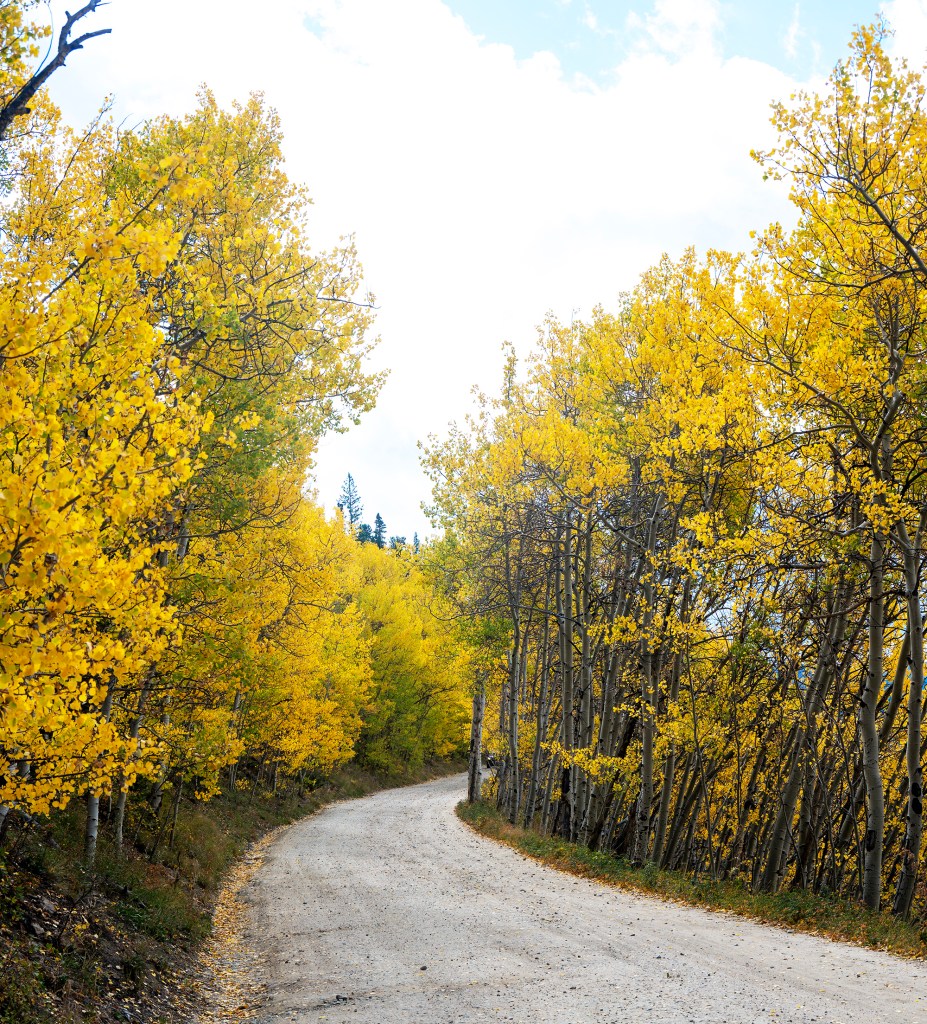
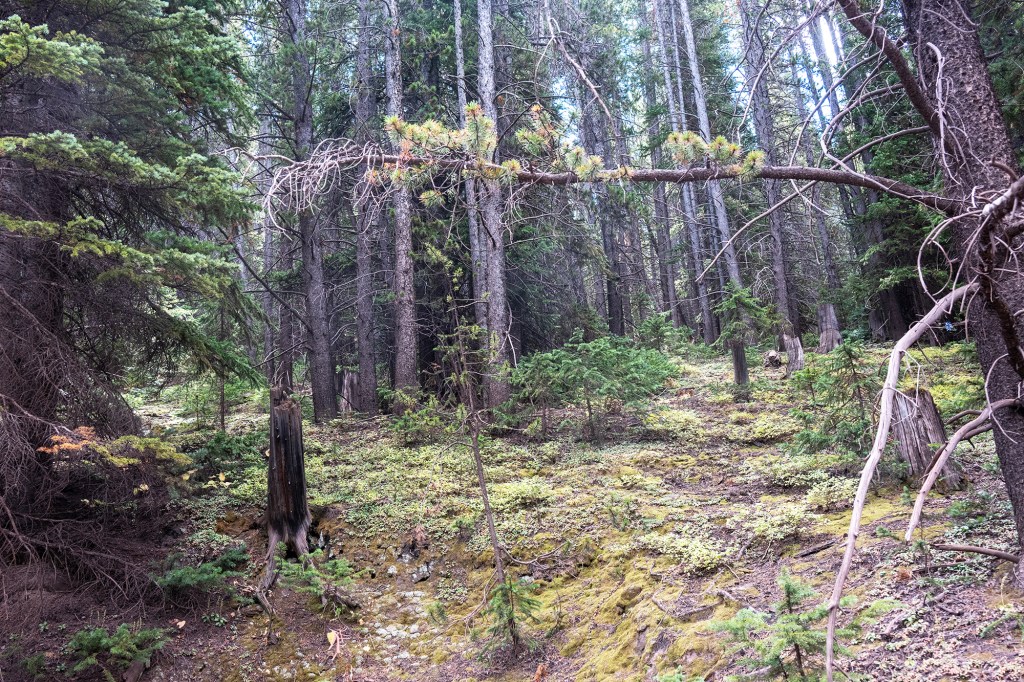
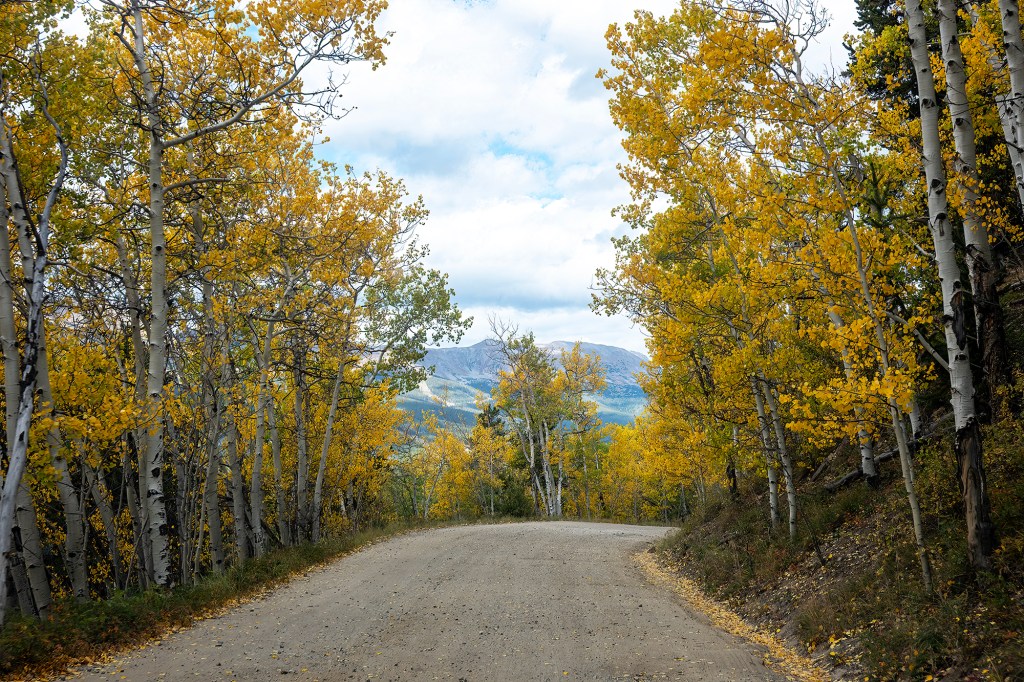
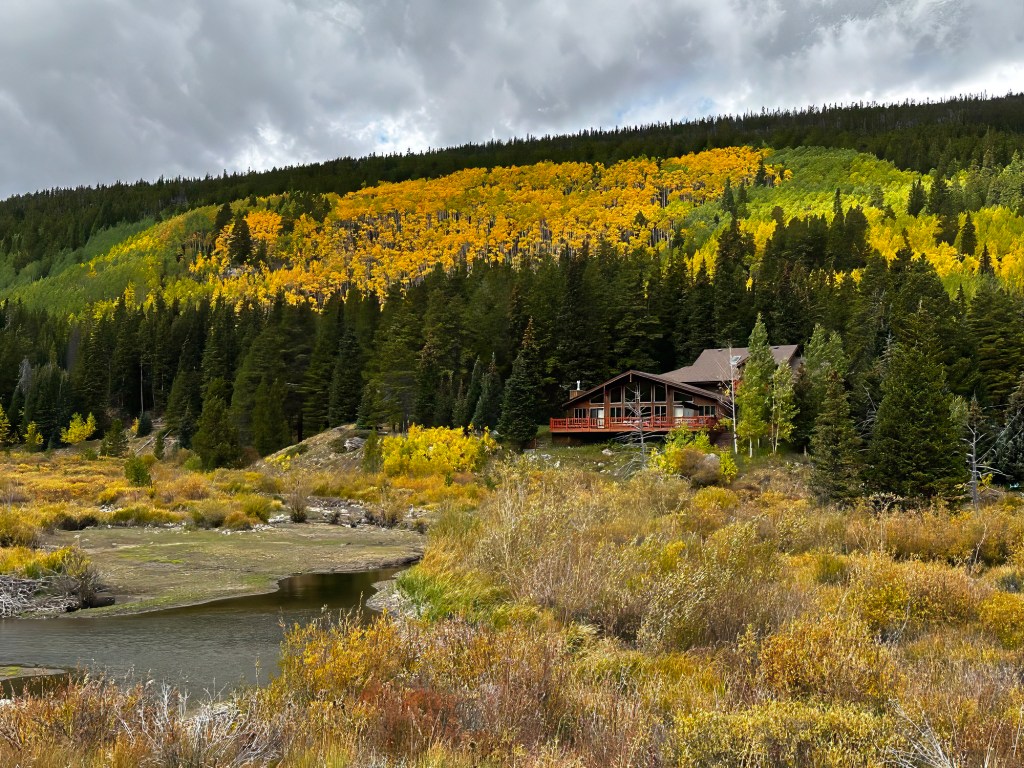
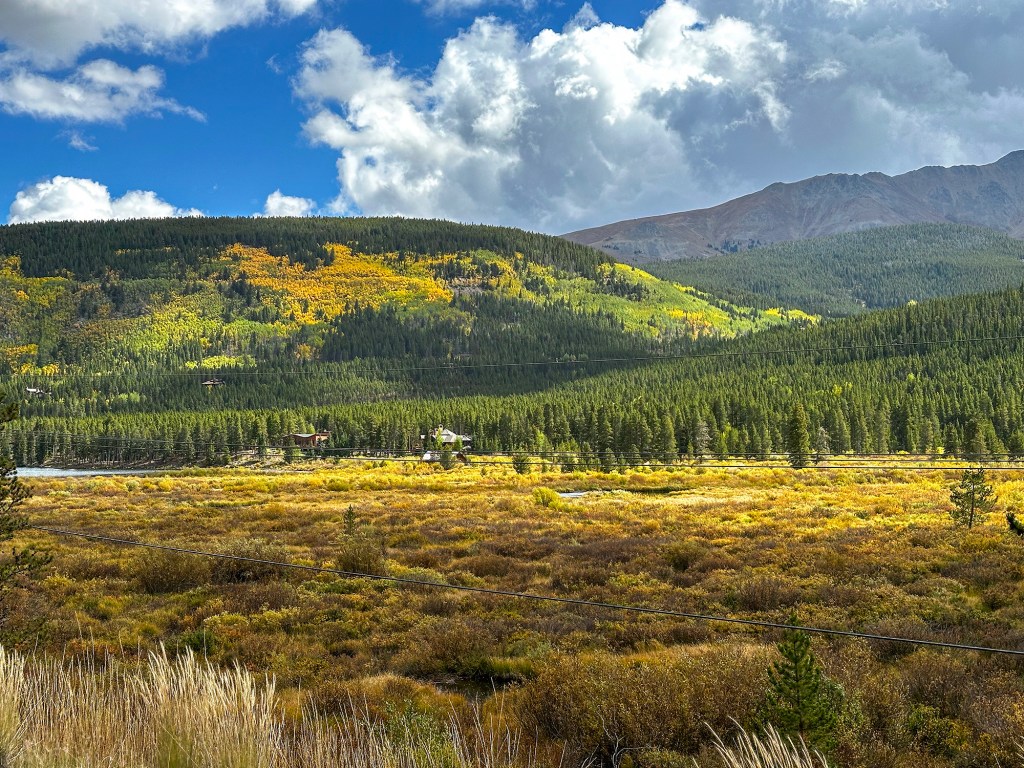
Breckenridge is one of our favorite places to visit. This is particularly so in mid to late November, when the as;pens are in the process of changing color from green to yellow to – in some cases – orange/red. At this time we often drive up the road on the SE end of town up to Boreas Pass. This is a paved road that turns at some point to gravel, and is a favorite road for hikers, bikers and walkers, as well as drivers. Here are a few of this year’s images.
A widespread and conspicuously abundant resident of the African savanna. Often seen in family groups, trotting around with tail raised stiffly. This diurnal pig dines on grasses, insects, roots, berries and the like.
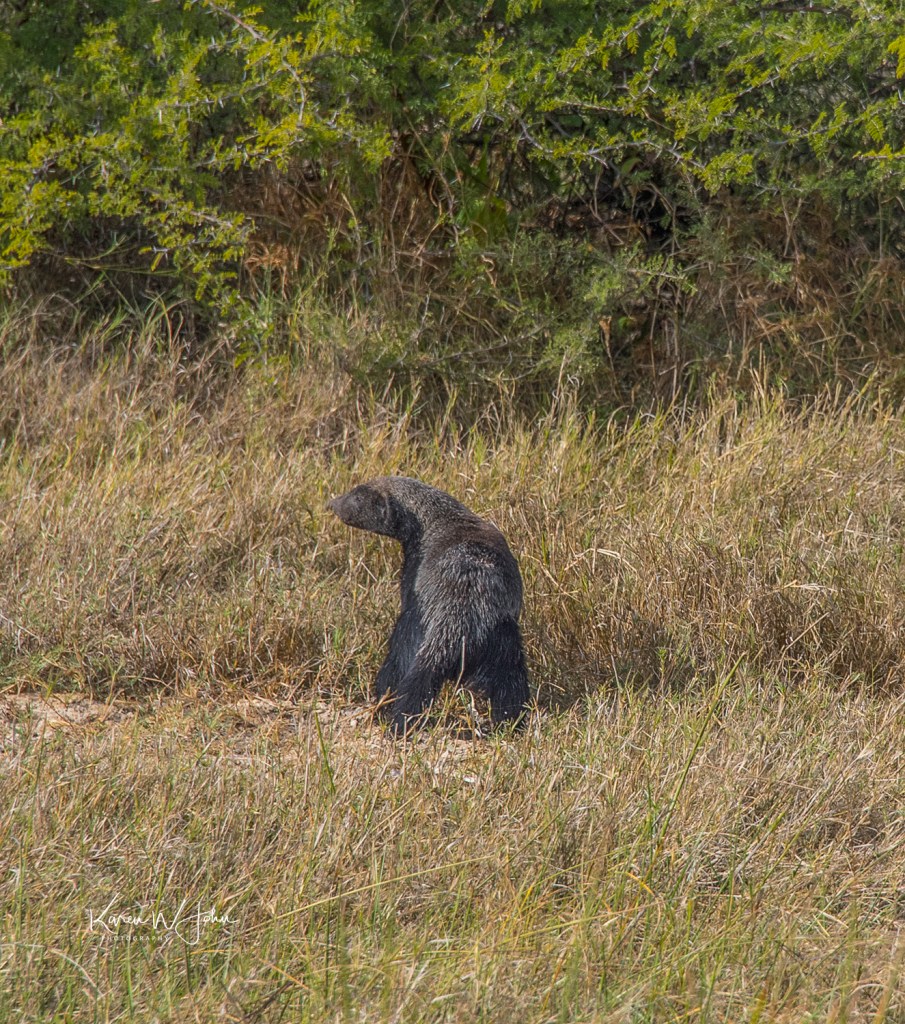
Honey Badger
The honey badger is black with a puppyish face and grey-white back. Loves to feed on broken up bee hives. Most widespread African carnivore, most powerful and aggressive for its size. Thinly distributed and infrequently seen.
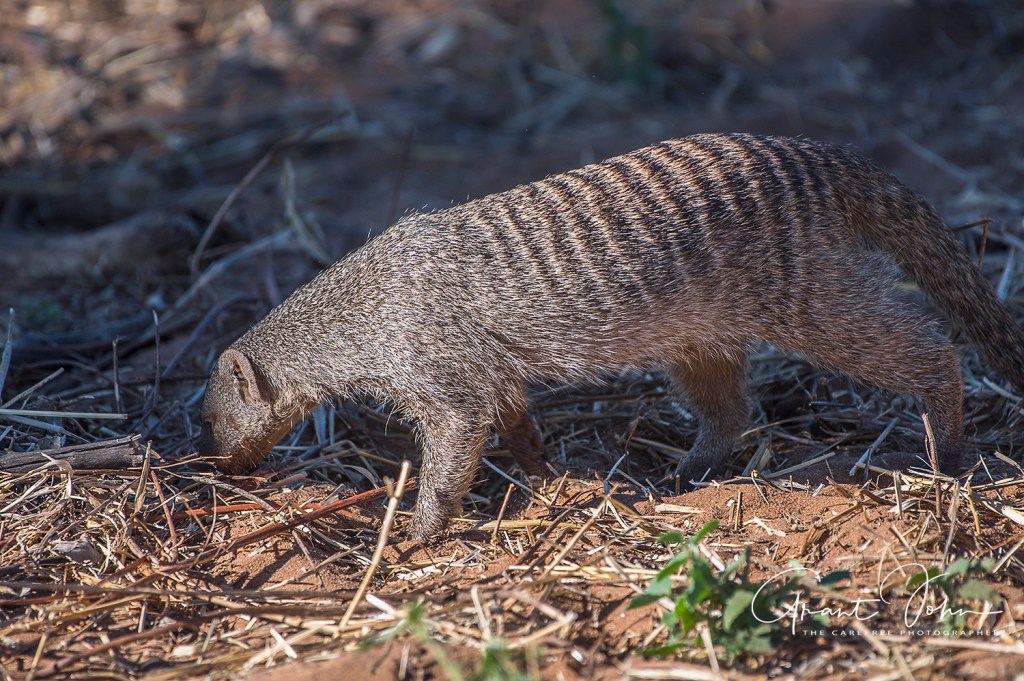
Mongoose
Most frequently the banded version. Most commonly observed of a group of small carnivores. Occur in playful family groups, or troops, throughout Botswana. Feeds on insects, scorpions, amphibians, reptiles and eggs.
Squirrel
Common in ground and bush varieties; the first is located in the arid part of Botswana and the second in the bush lands.
Bushbaby
Most widespread and common member of a group of nocturnal primates distantly related to the lemur. Seen throughout the northern half of Botswana. Feed on insects. Inhabit wooded ares. Keen eyes and lightning speed.
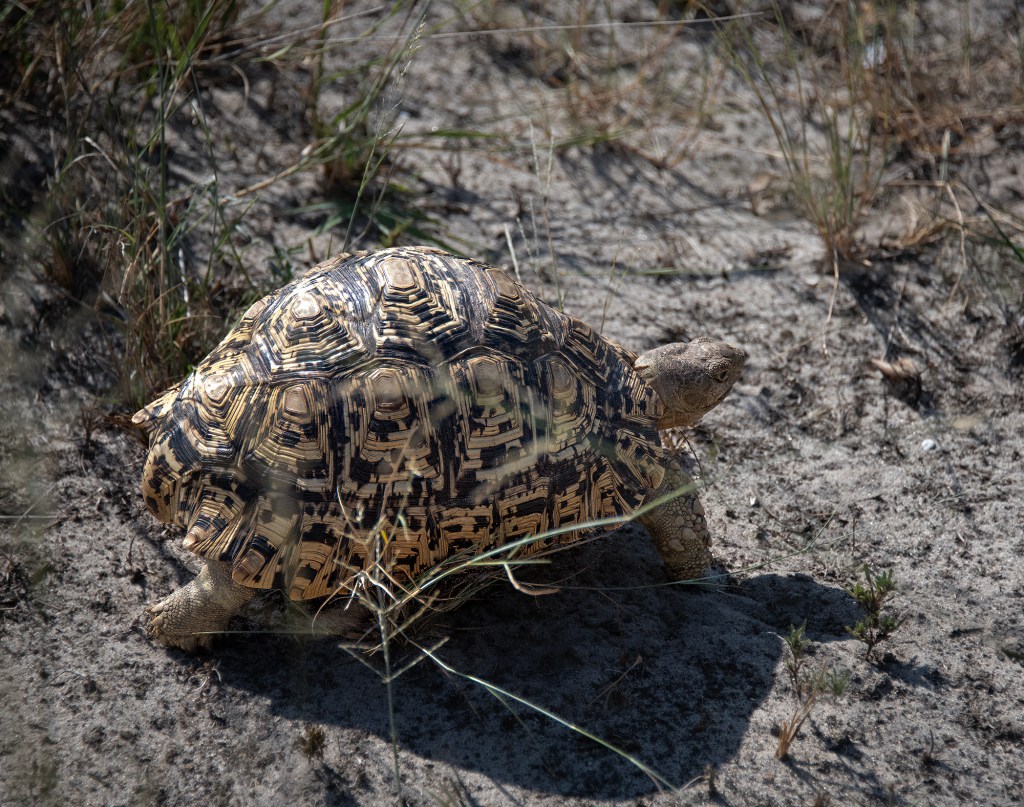
Leopard Tortoise
A large and attractively marked tortoise found in the savanna of eastern and southern Africa. A grazing species that favors semiarid thorny to grassland habitats. Dwells in abandoned burrows. Grazes among mixed grasses, and favors succulents and thistles.
Scrub Hare
Largest and most common African hare. Nocturnal, tend to freeze when disturbed.
Bat Eared Fox
Small, silver-grey insectivore with huge ears and black eye-mask. Found anywhere the harvester termite is found, usually short grass plains. Will also eat lizards, gerbils, small birds, scorpions beetle larvae and other insects. Mostly nocturnal, often seen in small family groups.
Monitor Lizard
Lizards in the genus Varansus. Long necks, powerful tails and well-developed limbs. Terrestrial and carnivorous. Very abundant near water.
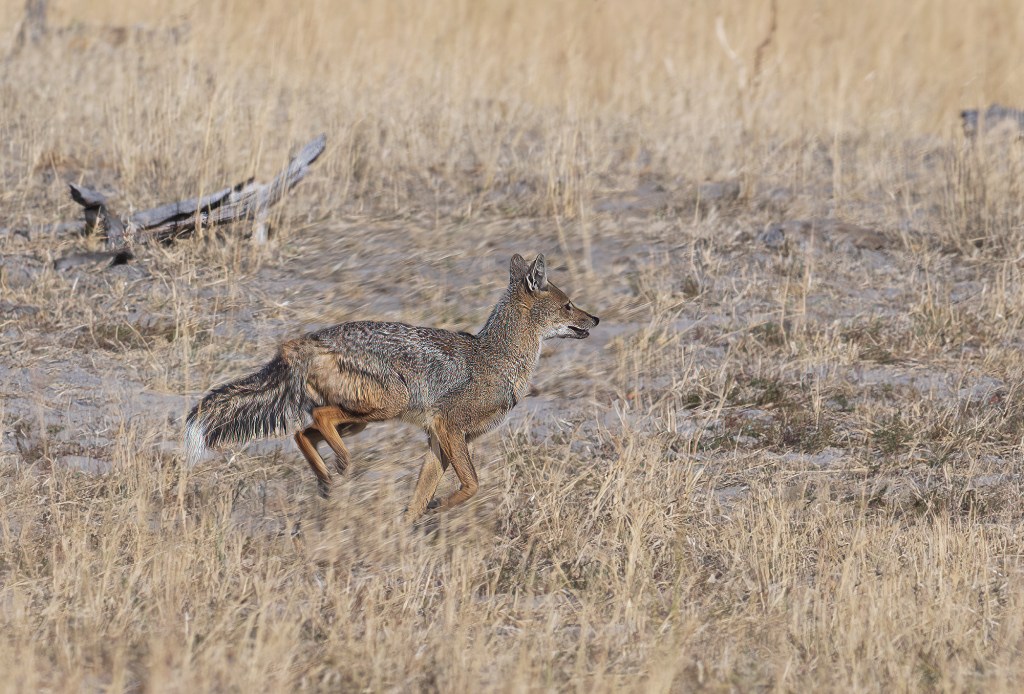
Side Striped Jackal
Relatively uncommon in Botswana. Grayish in color, with a horizontal stripe on each flank and often a white-tipped tail. Opportunistic feeder, taking rats, mice, birds, insects, carrion, fruit and termites.
African Wild Cat
Similat to coomon house cat in appearance. Ringed tail, brown tinge to back of ears and unspotted torso.Prey on reptiles, amphibians and birds.
Genet
Long, lean carnivores that appear catlike with a tail as long as the body. Round and elongated spots. Omnivorous. weighs 2-7 pounds.
Caracal
Smaller but heavier than the serval, resemble European lynx, with a tan coat and tufted ears. Solitary nocturnal hunters which feed on birds, small antelope and young livestock. Remarkable hunters. Rarely seen and mostly at night.
Black Mamba
Species of highly venomous snakes, native to sub-Saharan Africa. Second longest venomous snake after the king cobra. Mature snakes grow to 2-3 meters in length. Very fast. Seldom seen.
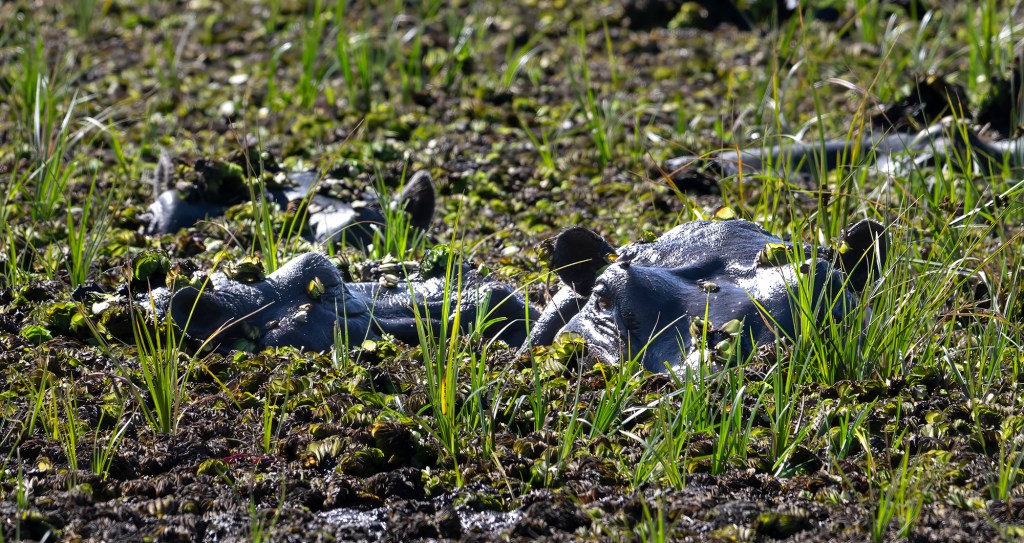
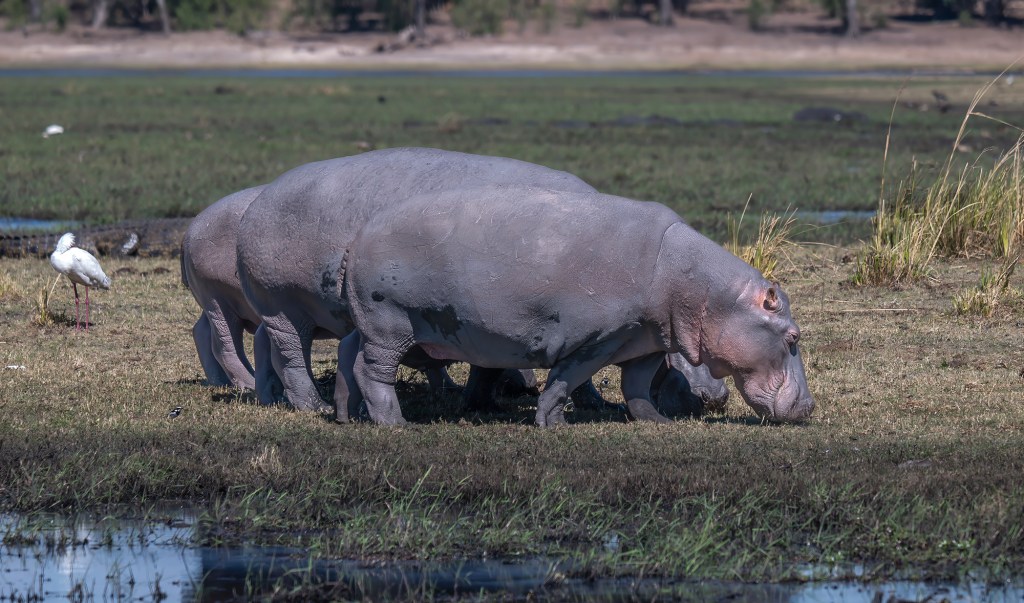
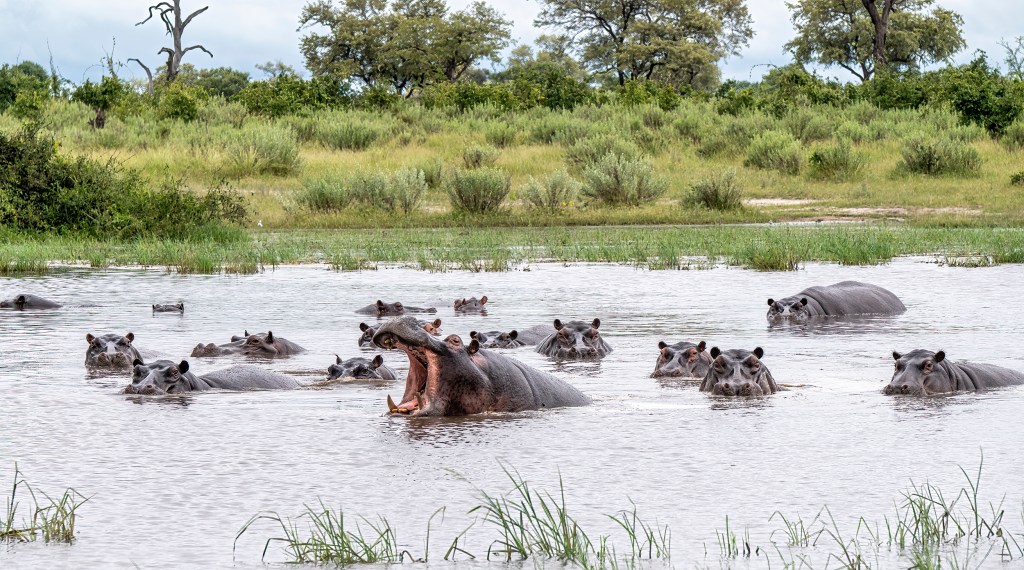
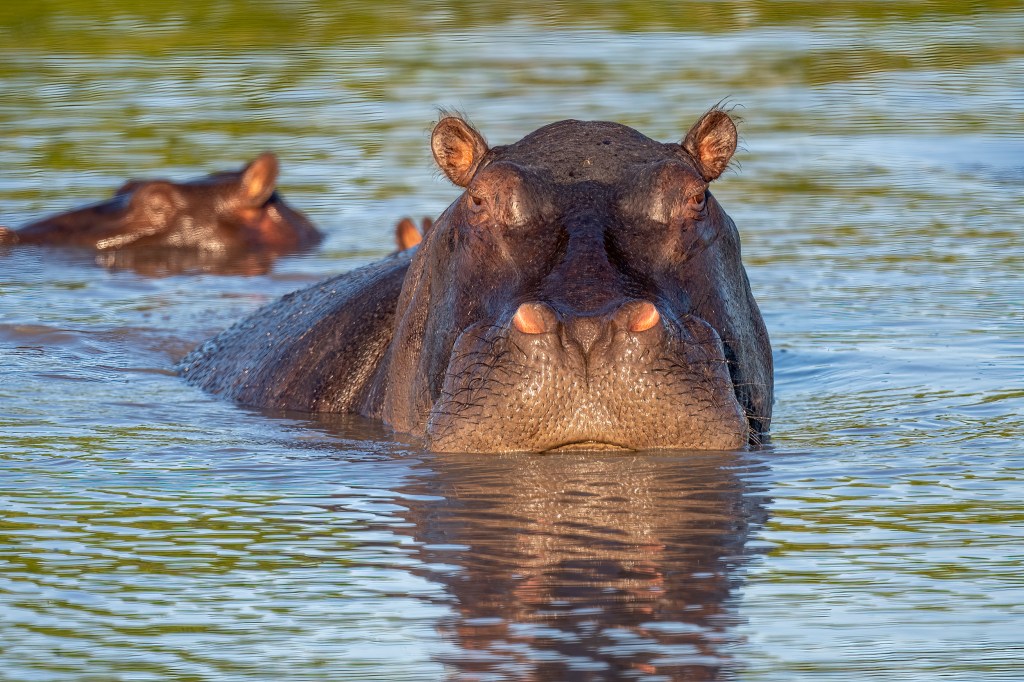
The hippopotamus, also known as the hippo, is a large semi aquatic mammal native to sub-Saharan Africa. After elephants and rhinoceroses, the hippo is the next largest land mammal. The closest living relatives of the hippos are cetaceans (whales, dolphins and porpoises). Hippos are recognizable for their barrel-shaped torsos, wide opening mouths with large canine tusks, nearly hairless bodies, pillar-like legs and large size. Adults average 3300 pounds for bulls and 2000 for cows. They are capable of running almost 20 mph over short distances.
After elephants and rhinos, the hippo is the next largest land mammal. Its’ closet living relatives are cetaceans – whales, porpoises, dolphins and the like. Hippos are recognizable for their barrel-shaped torsos, wide opening mouths with large canine tusks, nearly hairless bodies, pillar=like legs and large size. Adults average 3300 pounds for bulls and 2900 for cows. It is capable of running almost 20 mph for short distances.
Hippos inhabit rivers, lakes and mangrove swamps. Territorial males each preside over a stretch of water and a group of five to thirty cows and calves. The bull has breweding access to all the cows in his territory. Mating and birth both take place in water. During the day, hippos remain cool by staying in water or mud, emerging at dusk to graze on grasses. A hippo will travel 2-3 miles per night, eating around 90 pounds of grass. By dawn they are back in the water. Grazing is solitary and non-territorial. Hippos are the most dangerous animals in the world due to their aggressive and unpredictable nature. They are threatened by habitat loss and poaching for meat and ivory.
Their skin is protected by a natural secretion of a red-colored sunscreen substance that is sometimes called a “blood sweat”. The hippo’s life span is typically 40-50 years. They are not particularly good swimmers. They rarely enter deep water. They can survive under water for 4-6 minutes at a time. They sleep with both hemispheres of their brains resting, and usually sleep on land or water with the nostrils exposed.
Hippos have a significant impact on the land across they walk, keeping the land clear of vegetation and depressing the ground. Over time they can redirect the path of streams, swamps ans d channels. Yawning, very common, serves as a threat display. When fighting the bulls use their incisors to block each other’s attacks and their large canines as offensive weapons. The most common hippo vocalization is the “wheeze honk”, which can travel over long distances in air. The call starts as a high-pitched squeal followed by a deeper resonant call. The animals can recognize the calls of other individuals.
Cows reach sexual maturity at five to six years of age and have a gestation period of eight months. Females will typically not begin ovulation after giving birth for 17 months. Calves weigh on average 110 pounds. Hippos coexist alongside a variety of large predators including Nile crocodiles, lions and spotted hyenas. Calves are particularly susceptible.
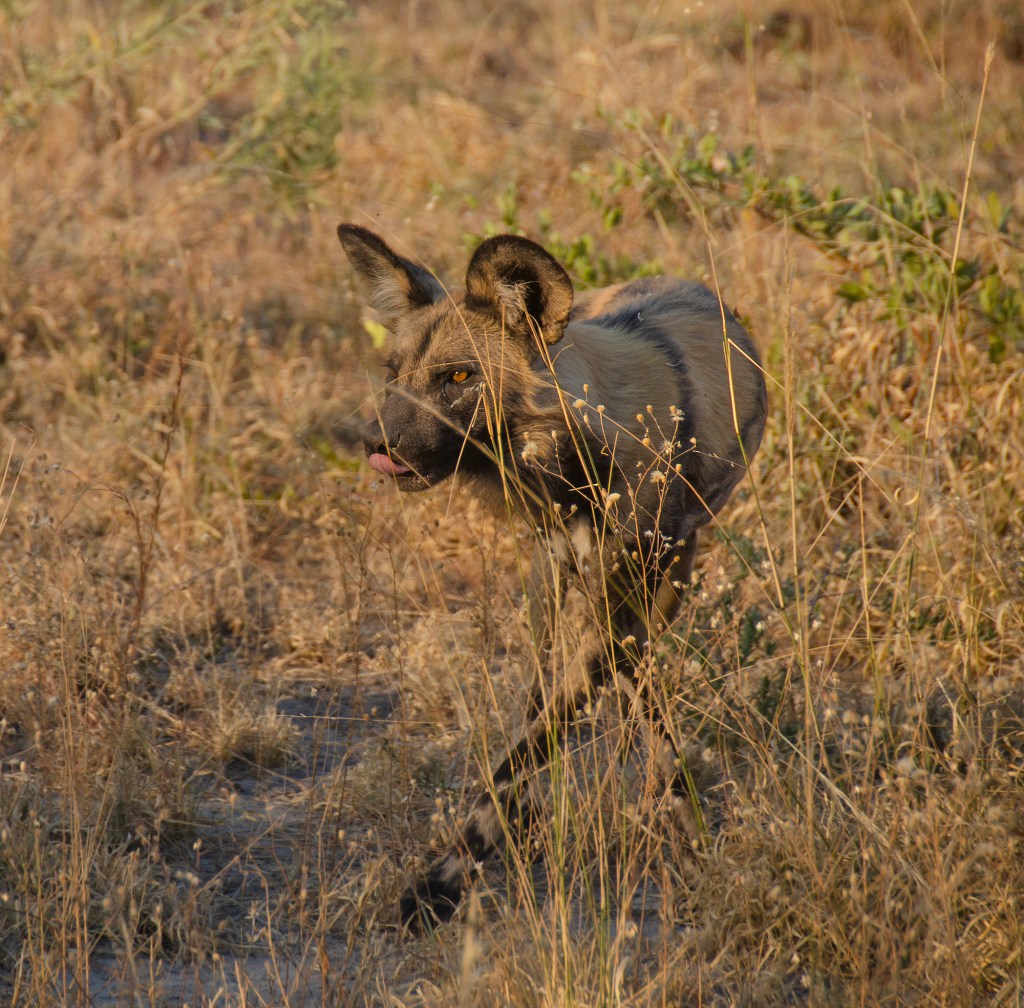
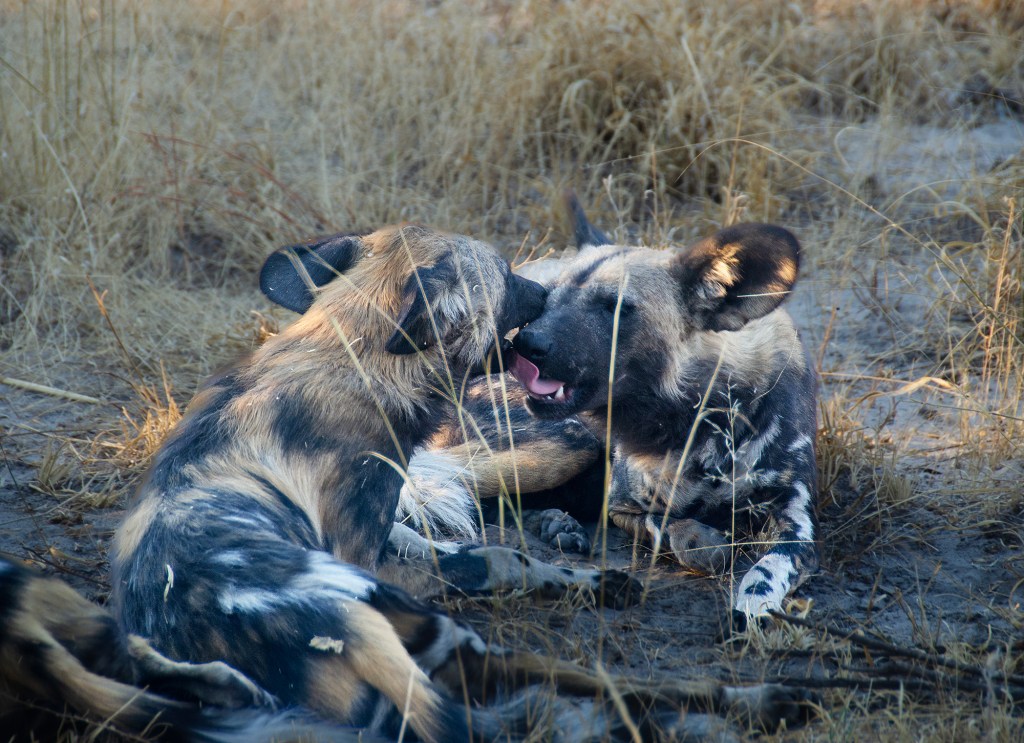
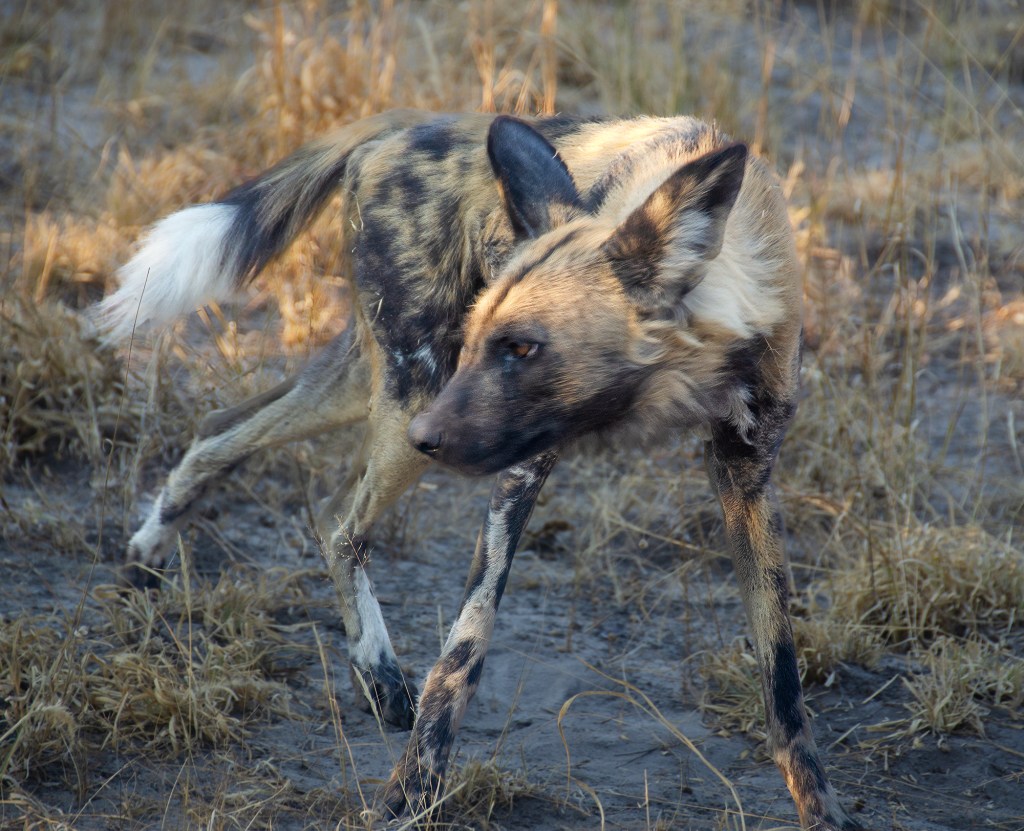
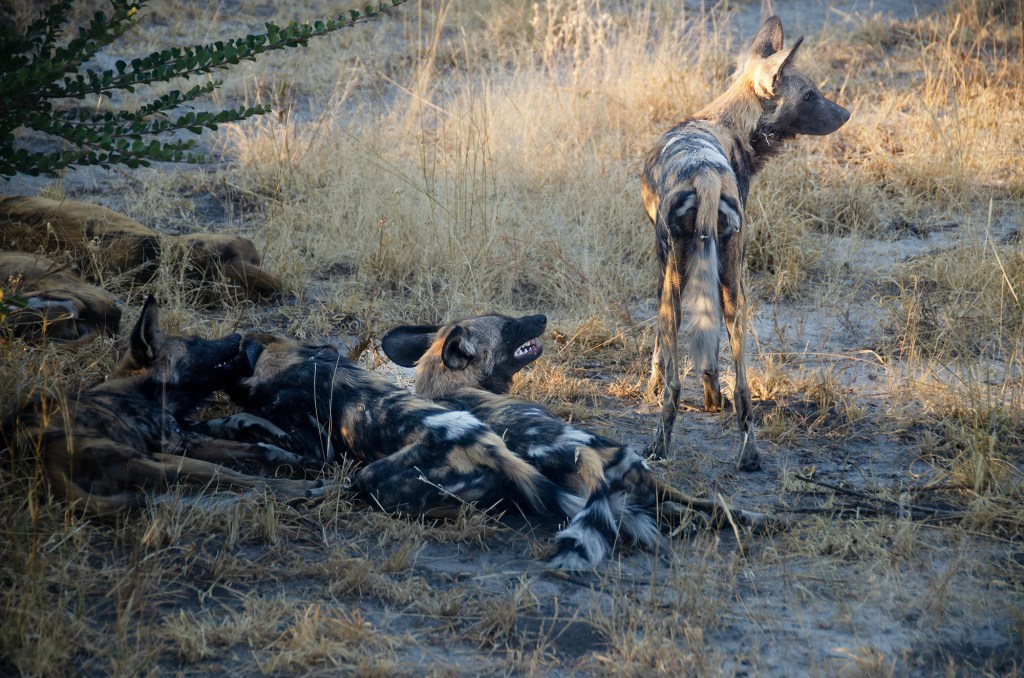
Ah, my favorite mammal in Botswana! Alas, this year we failed to see any of these beautiful animals, last year only a small pack of five. So I will use images from prior trips, and these are plentiful.
The African wild dog, also known as the painted dog or Cape hunting dog., is a wild canine native to sub-Saharan Africa. It is the largest wild canine in Africa. It is estimated that there are around 6600 adults living in 39 sub-populations, all threatened by habitat fragmentation, human persecution and outbreaks of disease. As the largest population probably consists of fewer than 250 individuals, the African wild dog has been listed as endangered by the authorities.
The English language has several names for the African wild dog, including African hunting dog, Cape hunting dog, painted hunting dog, painted dog, painted wolf and painted lycaon. The term painted dog is preferable to avoid negative impressions.
The dogs possess the most spectacular adaptations among the canids for coat color and diet and for pursuing its prey through its running ability. It has a graceful skeleton, and the loss of the first digit on its forefeet increases its stride and speed. This adaptation allows it to pursue prey across open terrain for long distances. They illustrate the most vivid varied coat colors among mammals. Individuals differ in patterns and colors, indicating a diversity of the underlying genes.The African wild dog is largely isolated from gene transfer with other canid species.
The African wild dog is the bulkiest and most solidly built of African canids. The species stands 24-30″ at the shoulders, measures 28 to 44′ in head-to-body length and has a tail length of 11 to 16″. Adults have a weight range of 40 to 80m pounds, averaging 44-55 pounds. Females are usually 3-7% smaller than males.
Color variation is extreme, and may serve in visual identification, as the dogs can recognize each other at distances of 160-330 feet. Much of the species’ coat patterning occurs on the trunk and legs. The tail is usually white at the tip, black in the middle and brown at the base.
The African wild dog occurs foremost in southern and eastern Africa. It inhabits mostly savannas and arid zones, generally avoiding forested ares. This is likely linked to its hunting preferences, which require open areas that do not obstruct vision or impede pursuit. It travels through scrubland, woodland and montane ares in pursuit of prey.
The dogs have strong social bonds; solitary living and hunting are extremely rare. They live in permanent packs consisting of two to 27 adults and yearling pups. Typical pack size in the Moremi is 8-9 individuals. Larger packs have been observed. Males and females have separate dominance hierarchies, with the latter usually being led by the oldest female. The dominant pair typically monopolizes breeding. Populations in southern Africa usually breed during the April-July period. During estrus the female is closely accompanied by a single male. The estrus period can last as long as 20 days. The gestation period lasts 69-73 days.; the interval between each pregnancy is about 12-14 months. Litters contain 6-16 pups, with an average of 10. Breeding is strictly limited to the dominant female. Pups are weaned at five weeks. African dogs have a lifespan of about 10-11 years in the wild.
Packs have a high ratio of males to females. Early litters have a high proportion of males, with subsequent litters more balanced or tilted to females.
Populations in the Okavango Delta have been observed rallying before setting out to hunt. Not every rally results in a departure, but departure becomes more likely when more individual dogs sneeze. The process of a pack awakening from a sleep, activating each other and finally setting out on a hunt is fascinating to observe. This can take 15-30 minutes.
Because the dog largely exists in fragmented , small populations, its existence is endangered. Inbreeding avoidance by mate selection is a characteristic of the species. The dogs are primarily threatened by habitat fragmentation, which results from human-wildlife conflict, transmission of infectious diseases and high mortality rates.
The African wild dog is a specialized pack hunter of common medium sized antelopes. The dogs hunt by approaching prey silently, then chasing it in a pursuit clocking at up to 40 mph for 10-60 minutes. The average chase covers some 1.2 miles, during which the prey suffers numerous bites to legs, belly and rump. The strategy can be adapted to type of prey. Medium sized prey is killed in 2-5 minutes, larger may take a half hour. Typical prey include kudu, gazelles, impale, bushbuck and wildebeest. Hunting success is good, with 60% of all chases ending up in a kill. This can rise to 90%. Kills are shared. Dogs are very fast eaters. The dogs will regurgitate food for other adults as well as young family members.
Lions dominate wild dogs and are a major source of mortality. The dogs are usually killed and left uneaten by lions. Kills by dogs are commonly lost to larger predators, especially spotted hyenas.
NOTE: Most of these images were taken by my wife Karen on our first trip to Botswana in 2013. Much of the information contained herein came from Wilipedia.
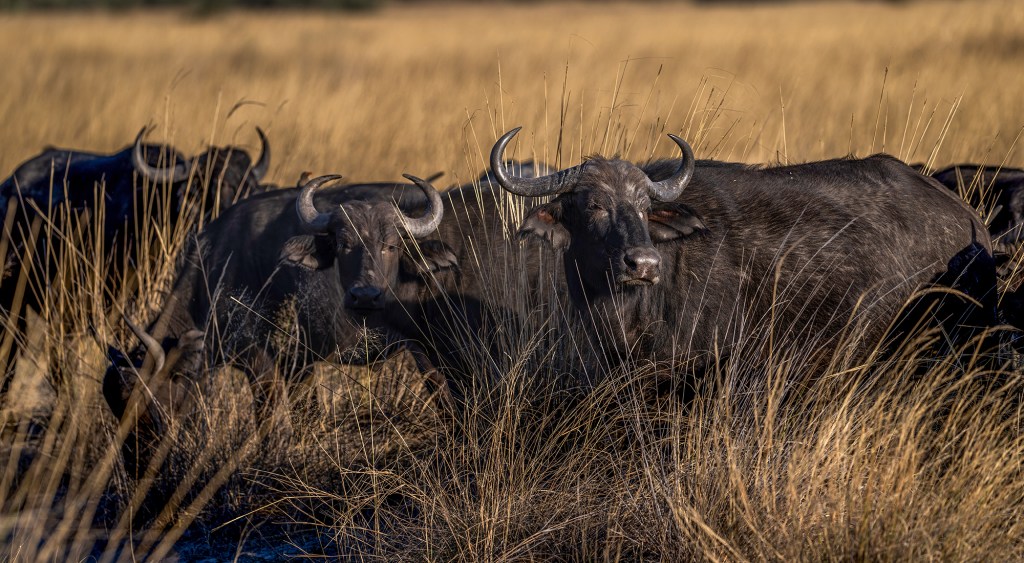
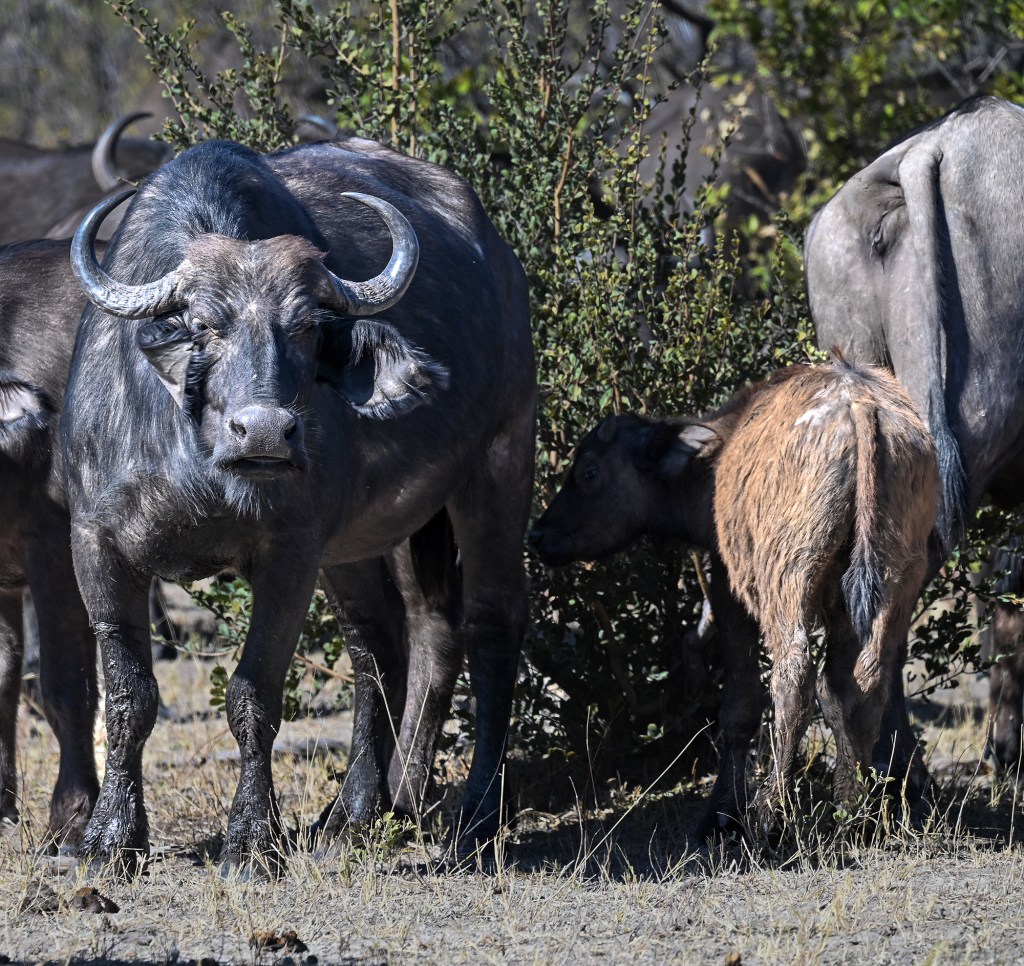
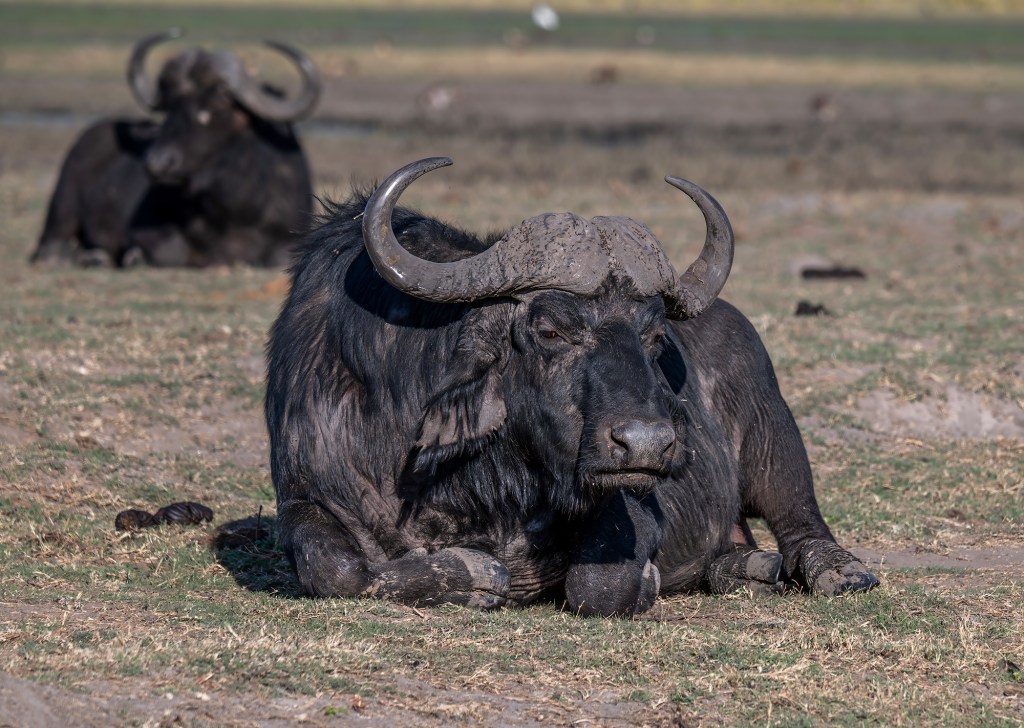
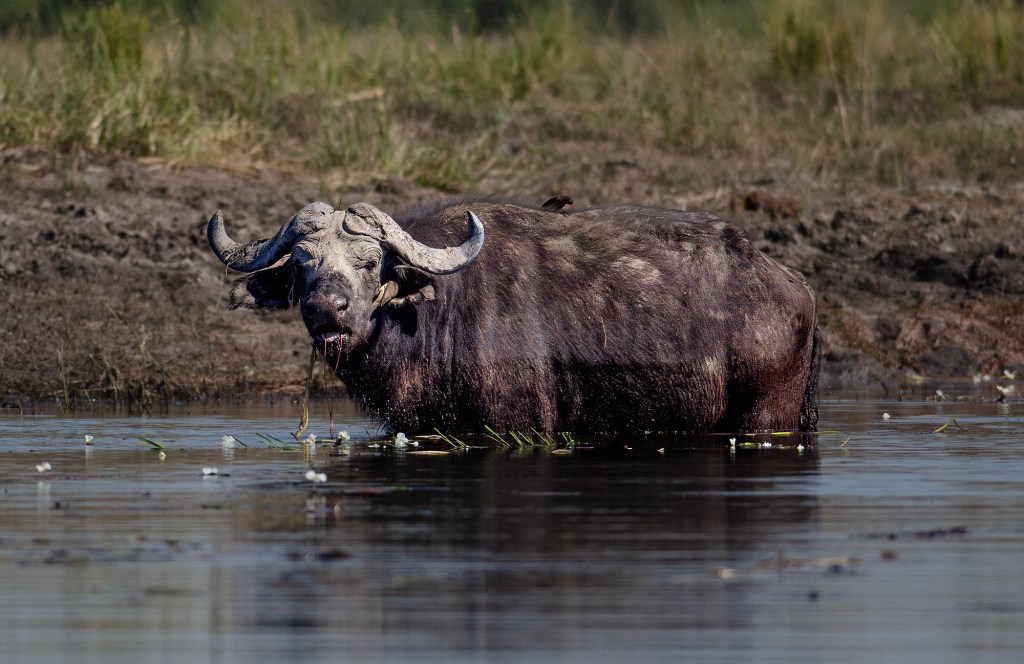
African buffalo roam by the thousands in sub-Saharan Africa. Cape buffalo are the most common. They are distinguished by coloring, size and even horn shape. When they are not fighting off the occasional lion, they are eating grass – and lots of it. It forms the bulk of their diet.
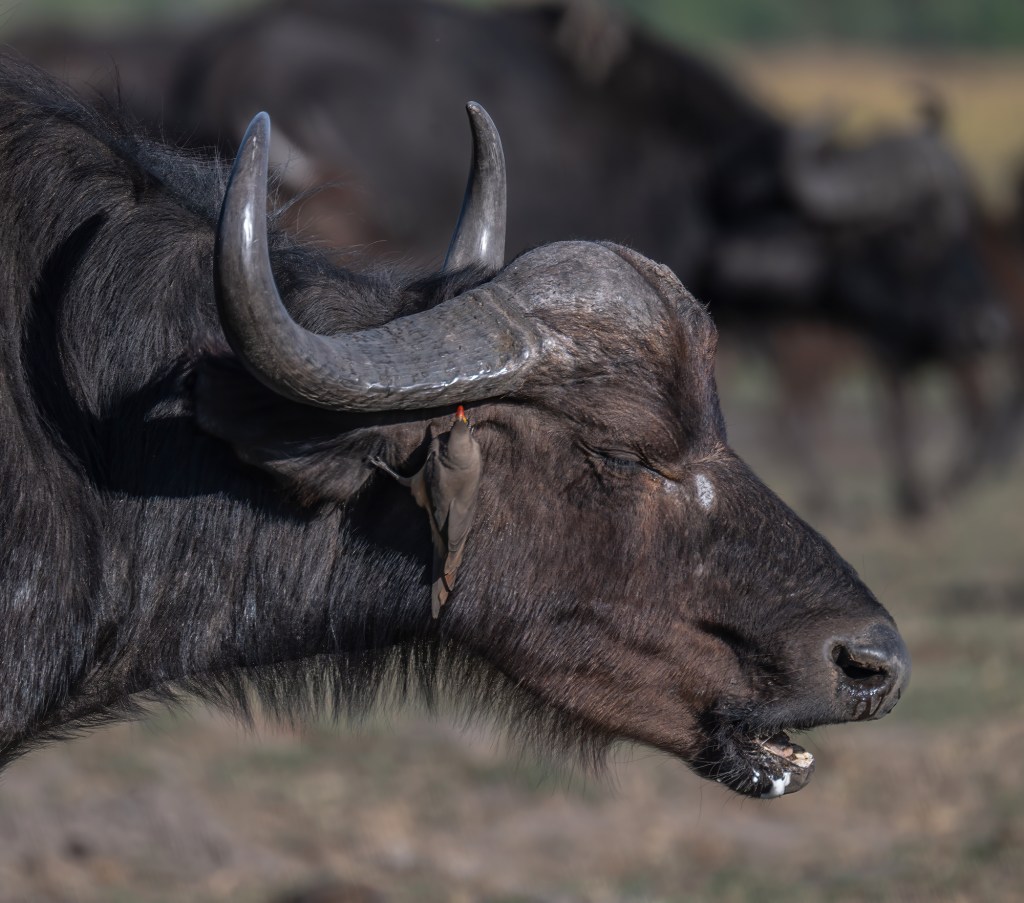
Buffalo and bison are not the same animals. The two are from different genuses in the bovine family. African buffalo are hardy creatures, able to flourish in many habitats – as long as they are close to water. They are found in many parts of Africa. They are often pictured with birds on their back. Mud helps buffalo get rid of ticks and parasites. Birds such as ox peckers ride on their backs and eat the insects.
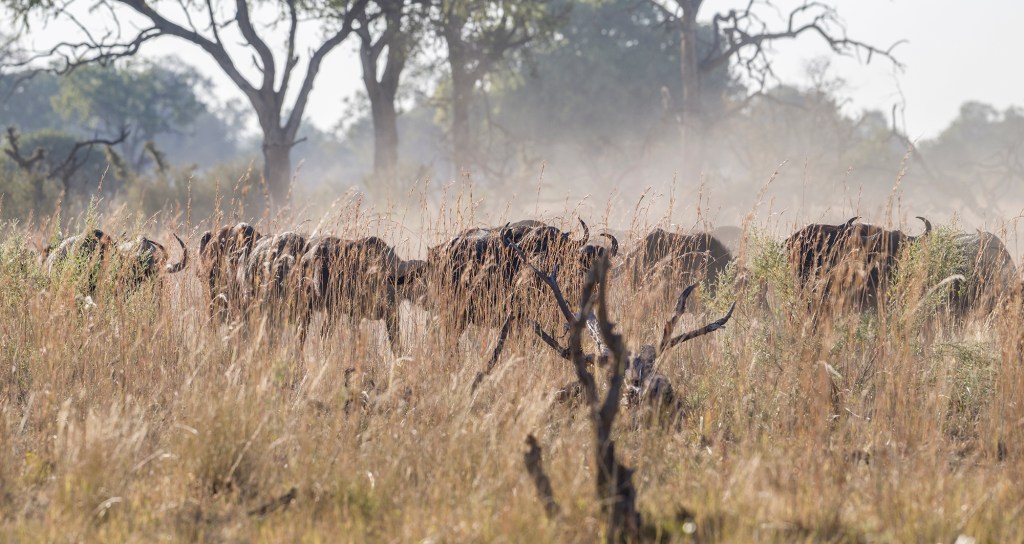
Buffalo spends most of their year in herds of anywhere between 50 and 500; this can rise to a thousand or more. Gathering in such large groups helps dissuade predators like lions, leopards, hyenas and African wild dogs. They Use sound defense tactics while protecting the herd. In the face of threats they display collective strength, forming a protective circle around the young, sick or elderly members.
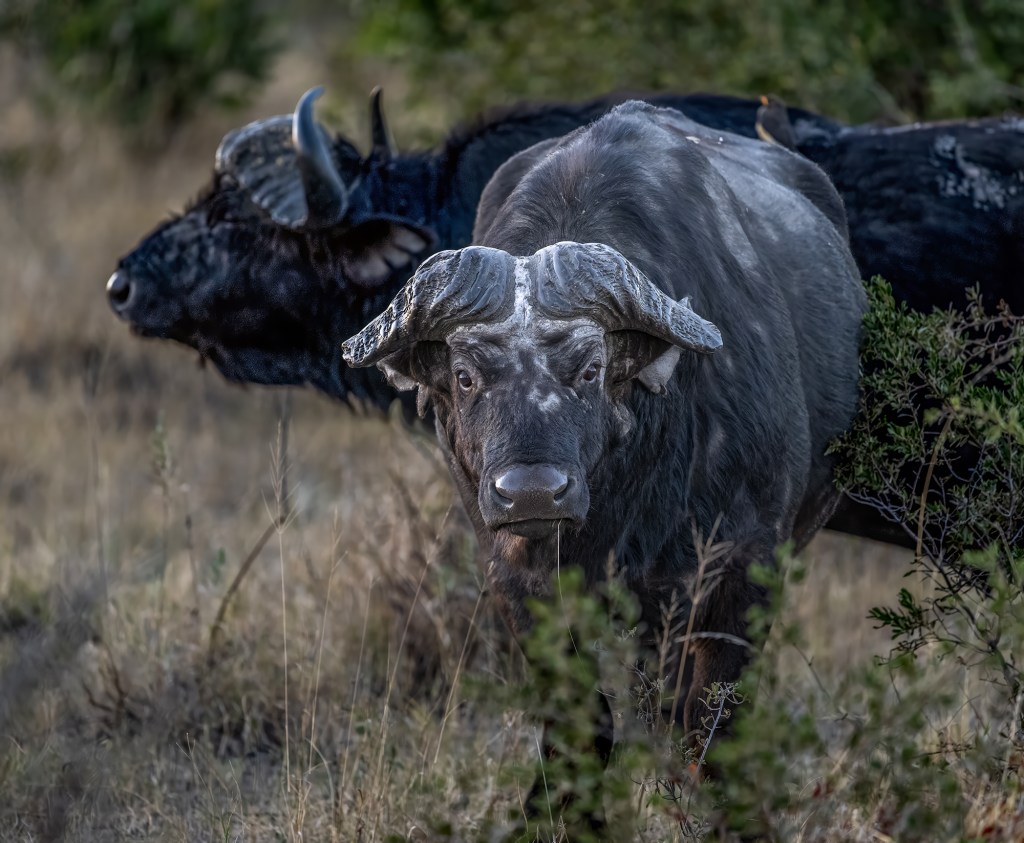
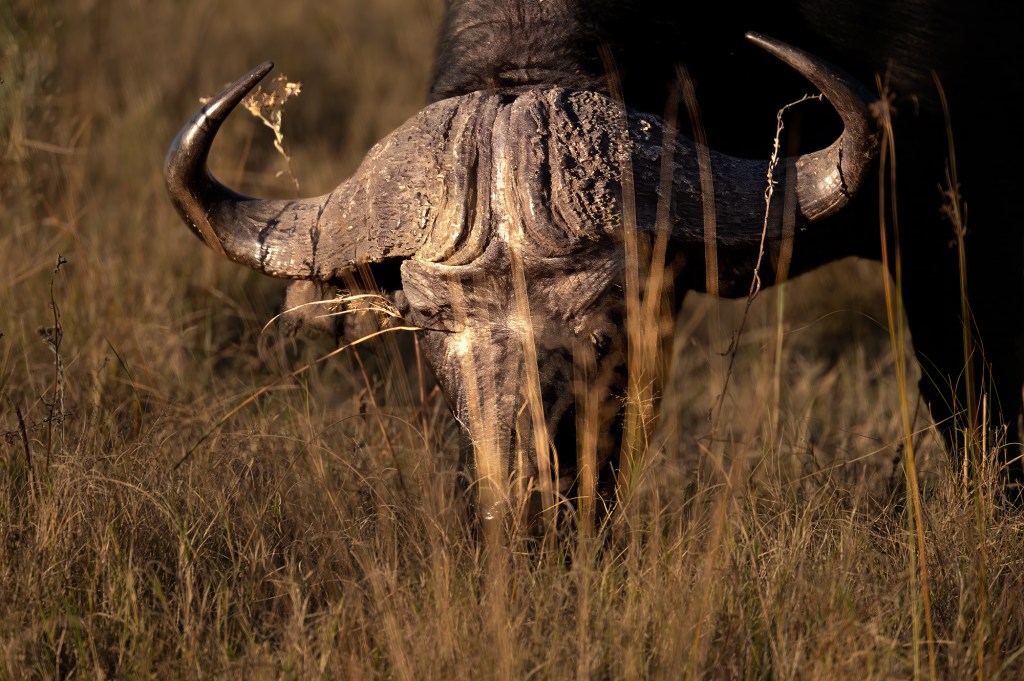
Buffalo are considered to be one of the “big five”, grouped with lions, leopards, rhinos and elephants. They are known to be grumpy and unpredictable. And they can run up to 37 mph. Their curved horns can reach up to seven feet from tip to tip. In large males the horns meet in the middle of their heads and are joined by a hard shield called a “boss”. This creates a helmet-esque formation. The horn structure is indicative of age and gender. Females and young males have no boss.
The cape buffalo is not very tall – it stands only 50-60″ tall with rather short legs. But it is massive, weighing 900-2000 pounds. Bulls are heavier than cows, and their horns are thicker and wider. To sustain its bulk, the animal must eat a lot of grass, depending on quantity rather than quality. They will consume other types of vegetation including leaves, twigs and even bark. They have a specialized four-chambered stomach, and their digestive system allows them to break down fibrous plant material.
Cape buffalo are led by a matriarch. Mature males often occupy dominant positions within the herd. These males compete for mating rights. Younger males often form bachelor groups until they are strong enough to challenge for a position within the herd. Typical gestation period is about 11.5 months, with one calf the norm. The buffalo live from 15 to 25 years.
The buffalo is susceptible to cattle-borne diseases, including foot and mouth disease and bovine tuberculosis. They are often poached for bushmeat. The cape buffalo is considered to be “near-threatened” by the conservationists. There are about 400,000 adult buffalo in Africa.
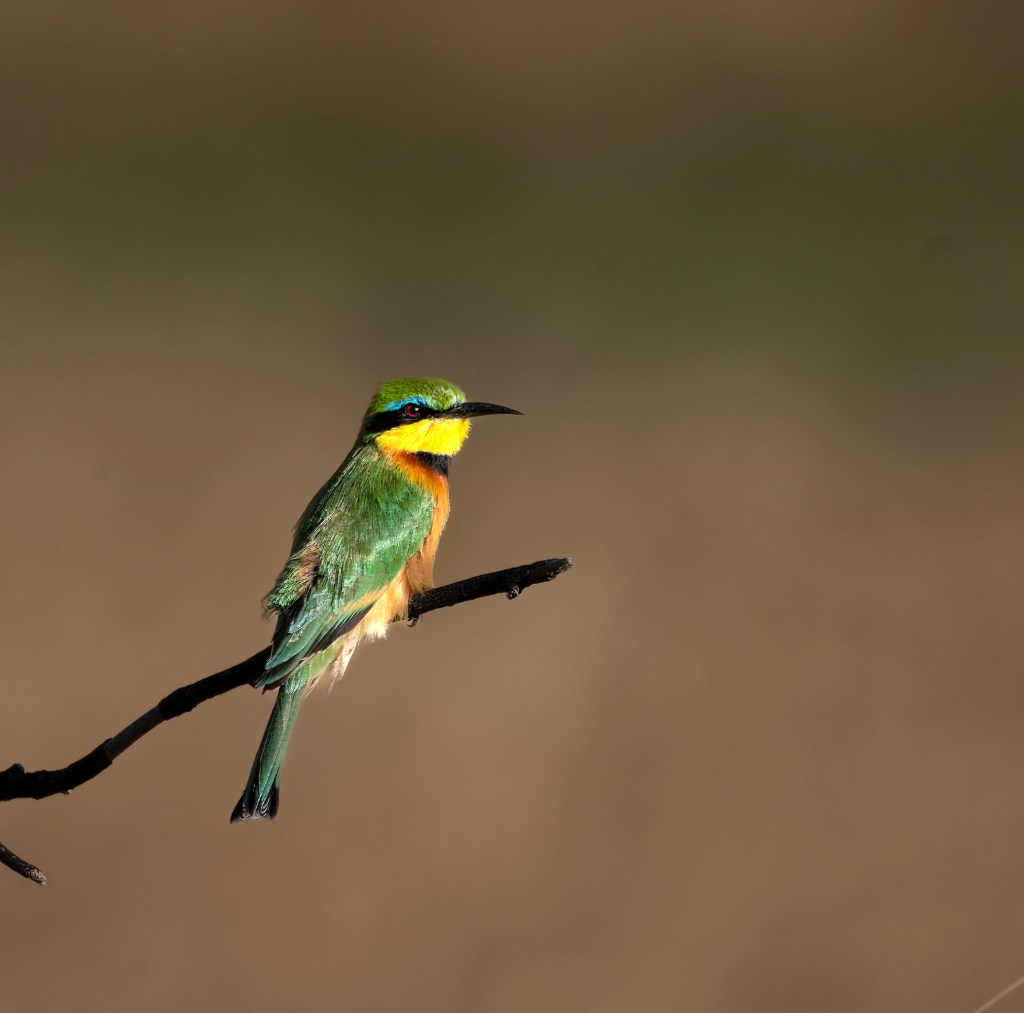
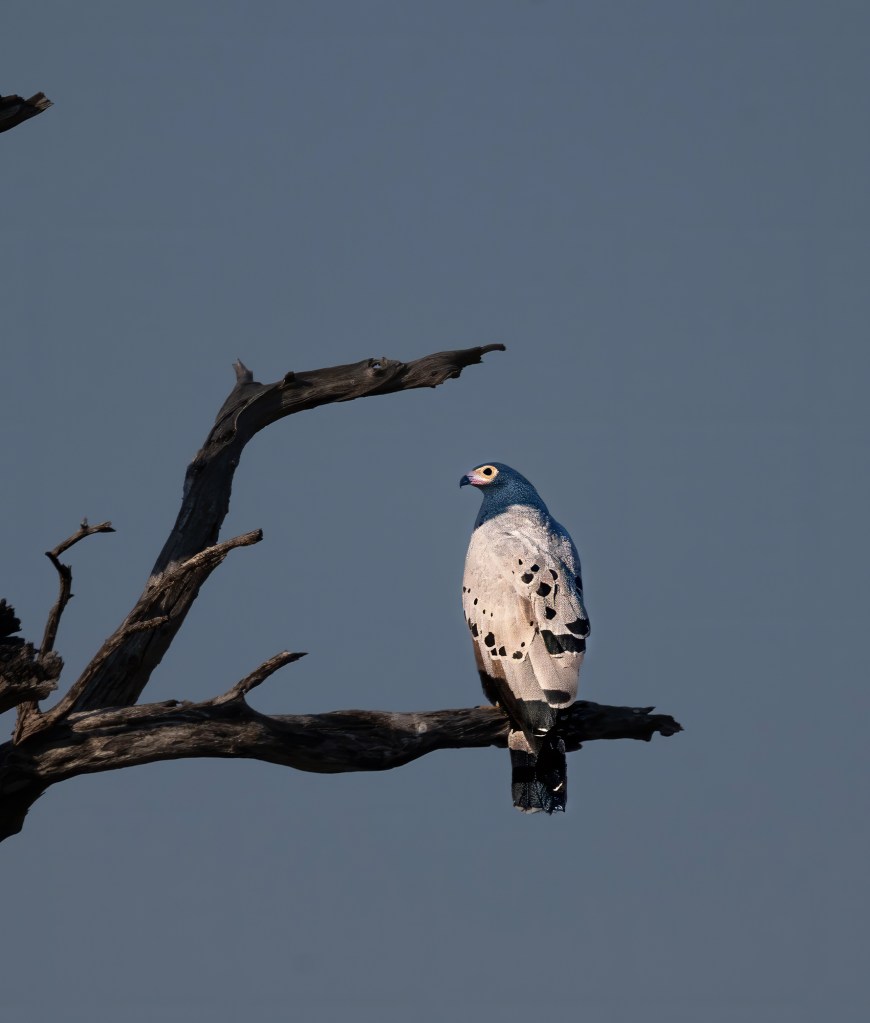
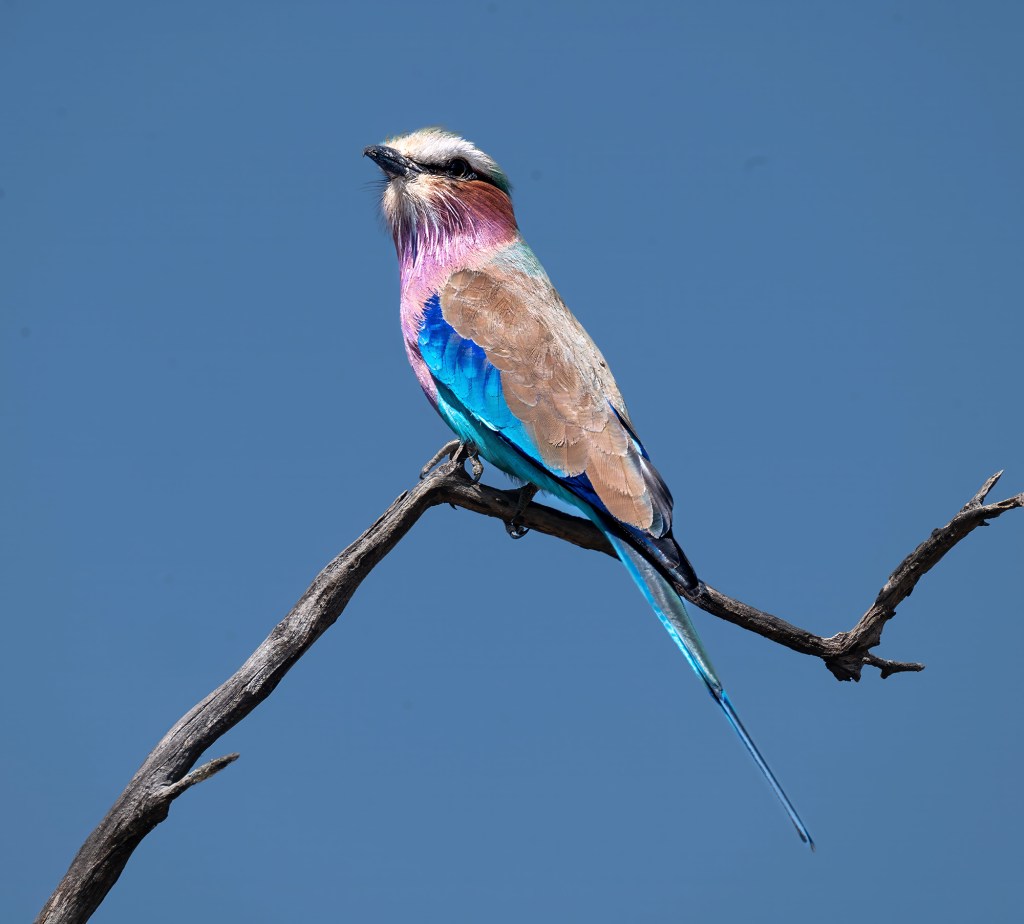
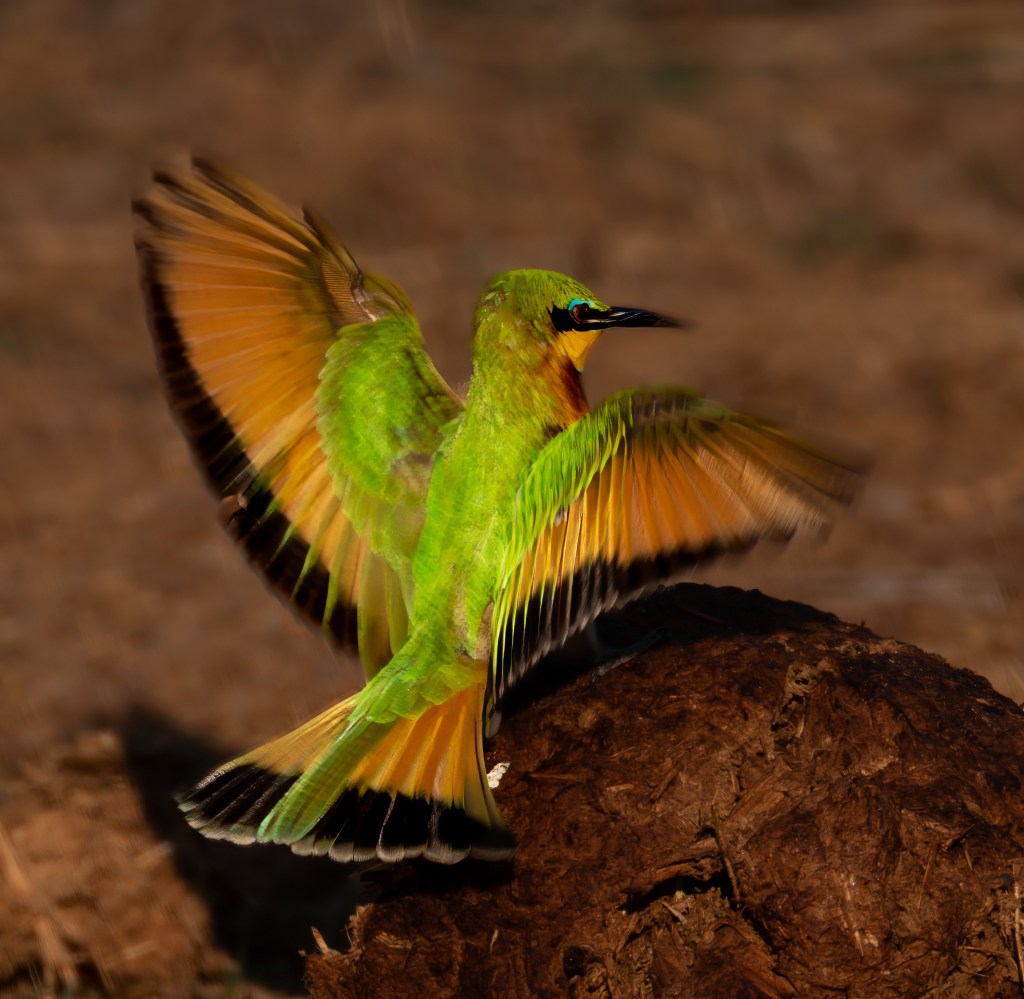
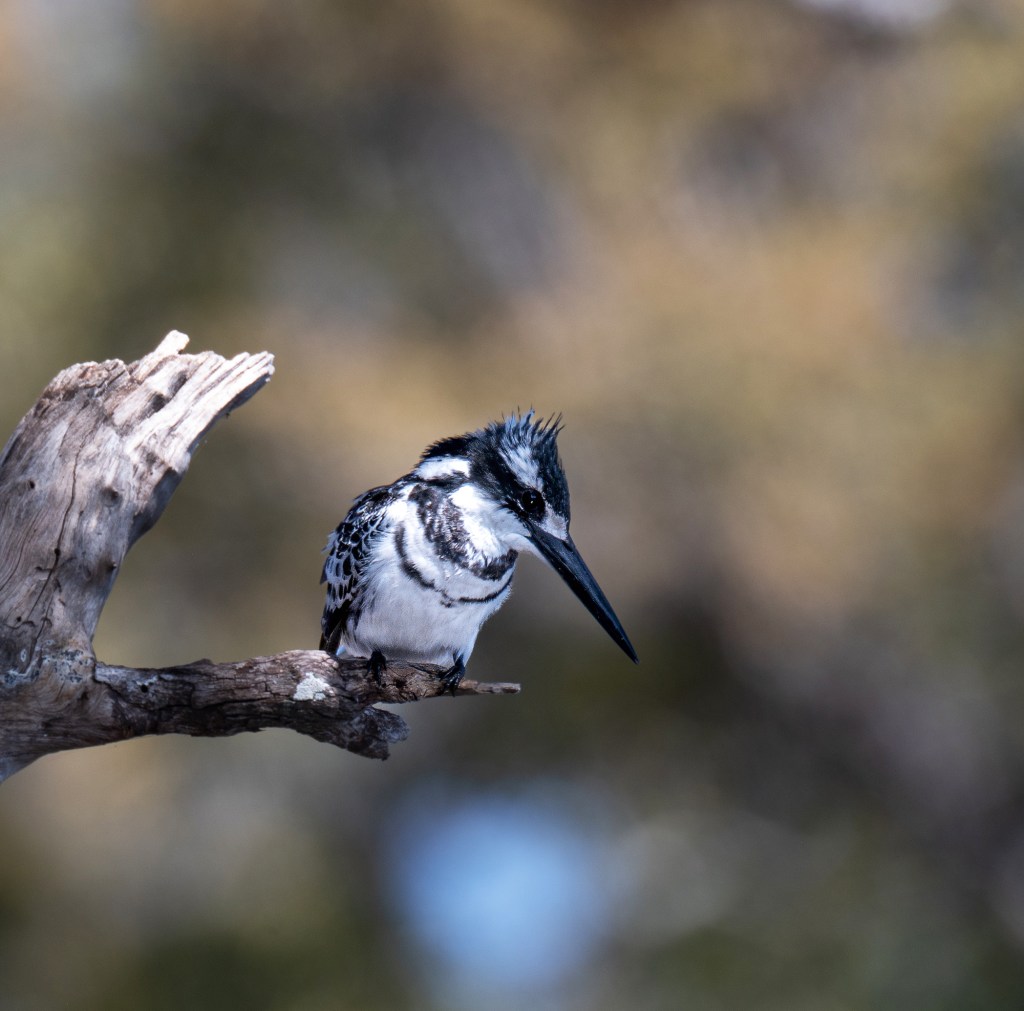
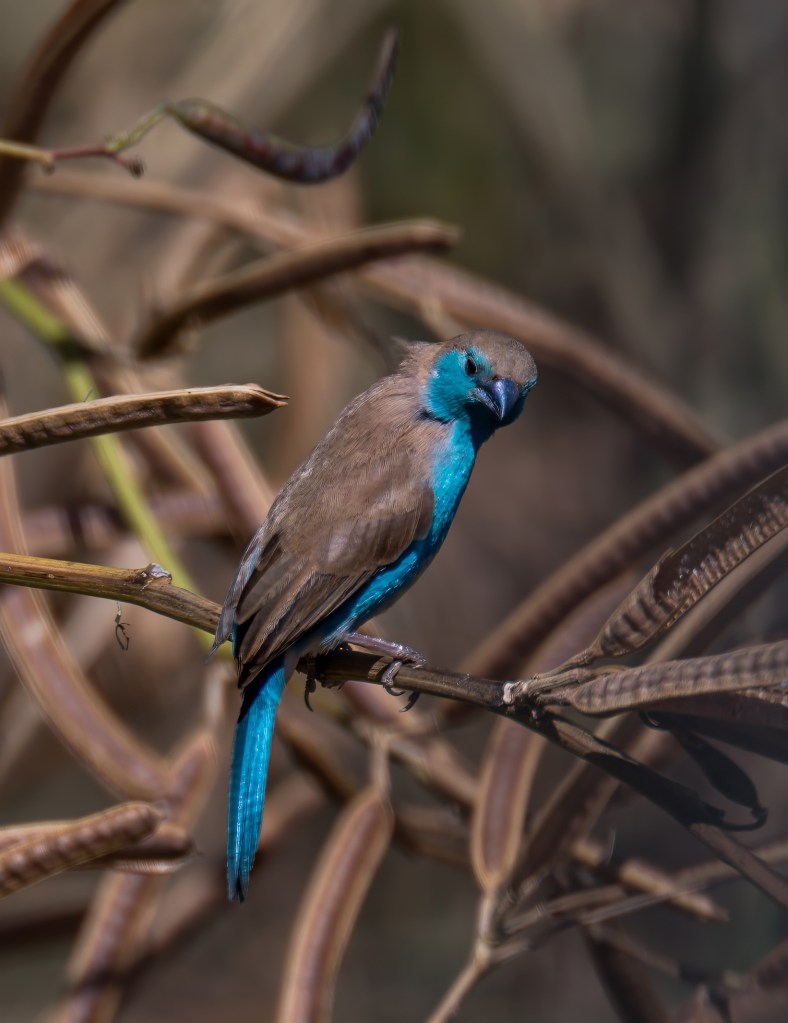
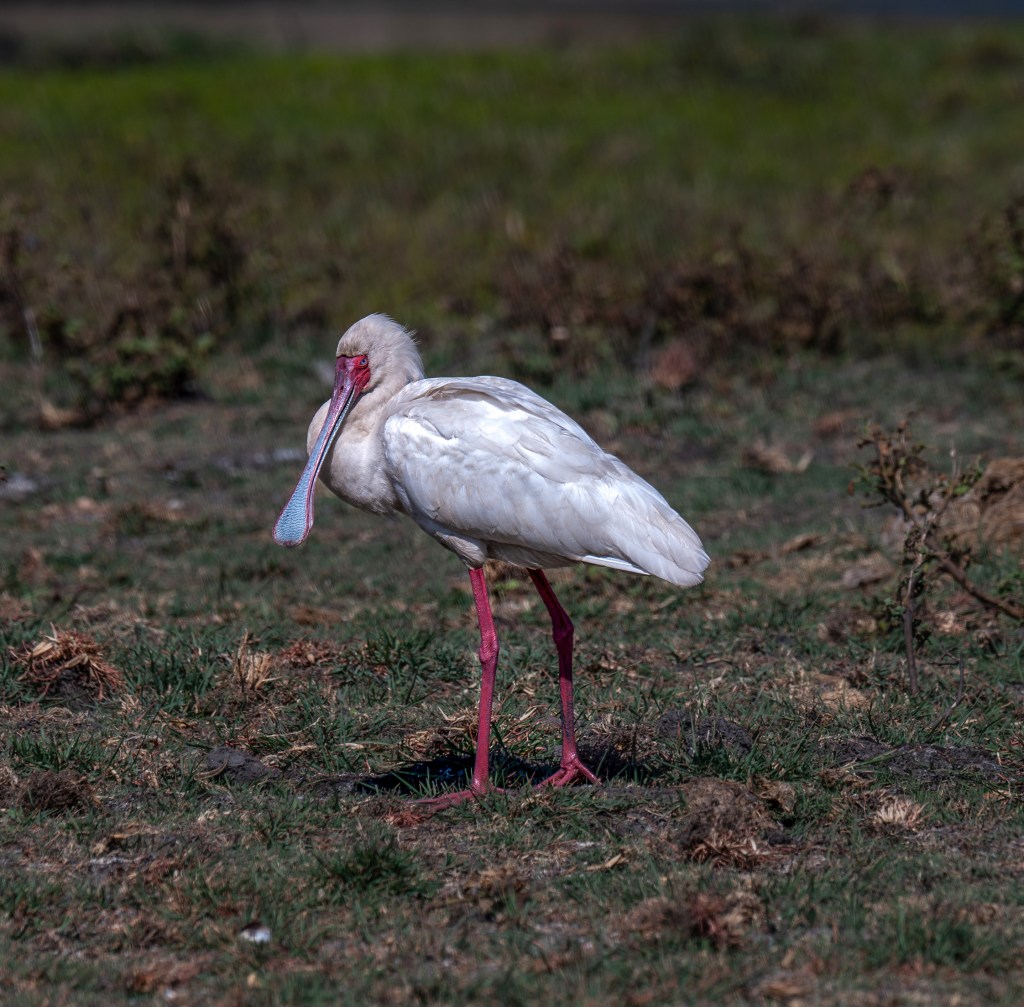
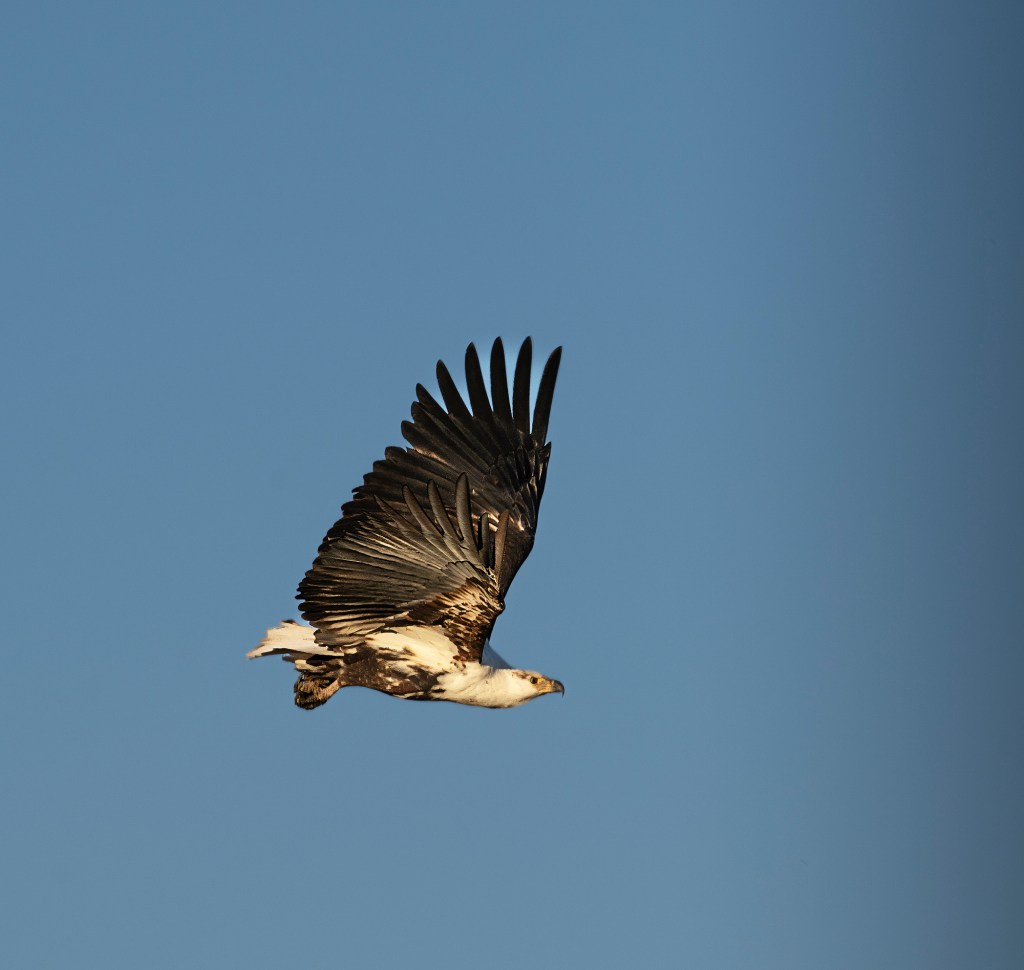
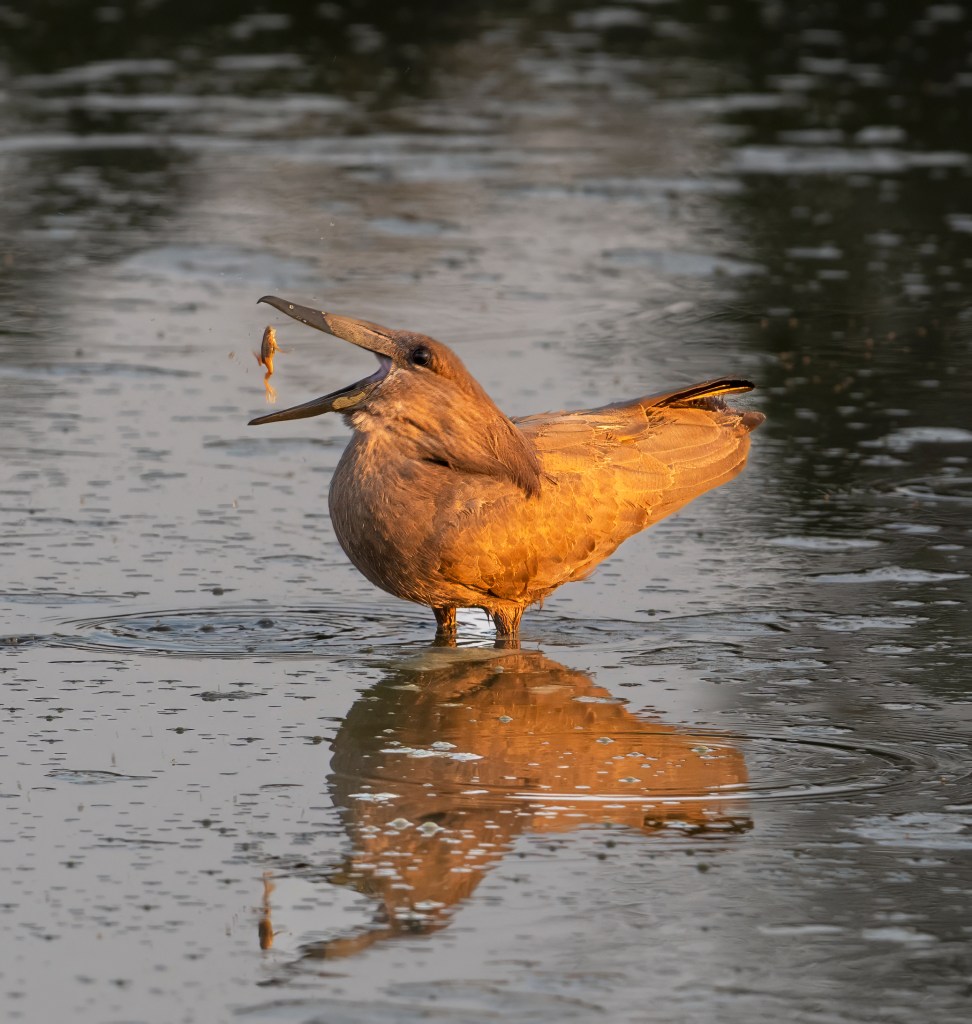
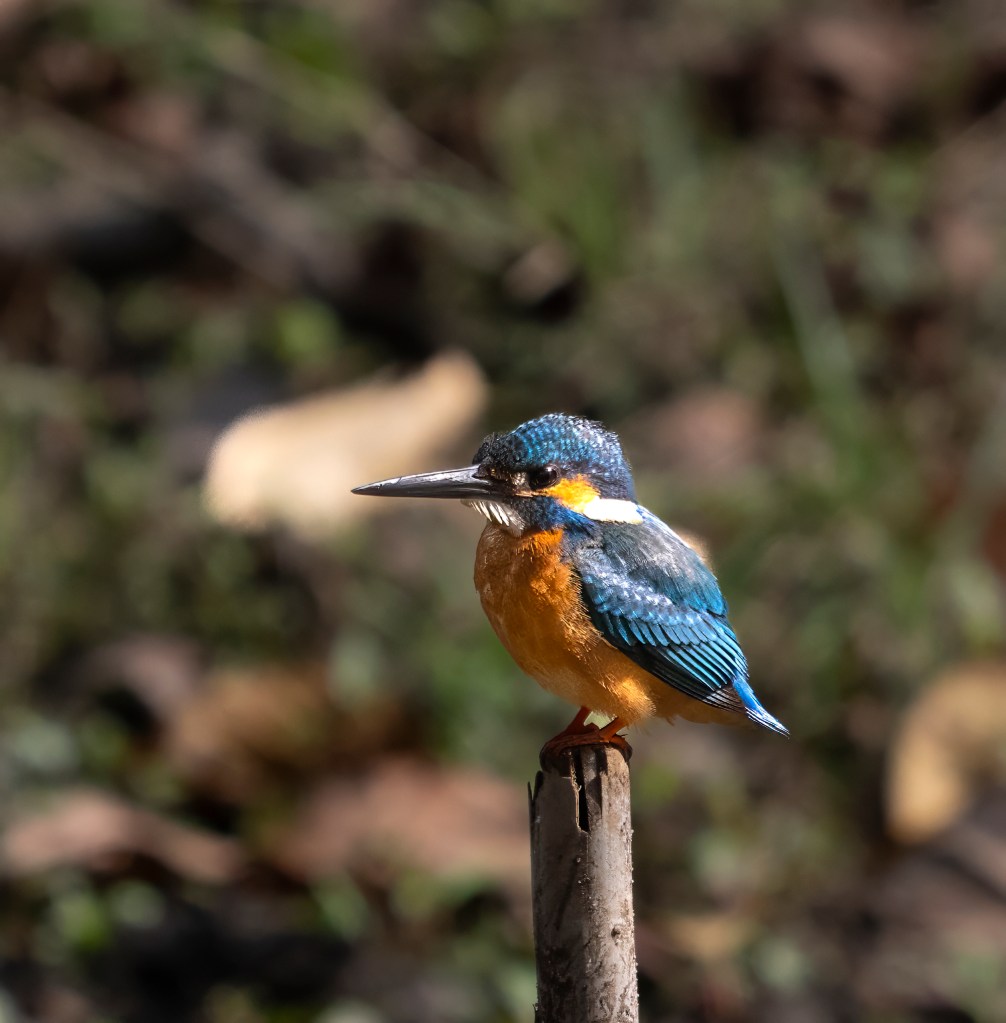
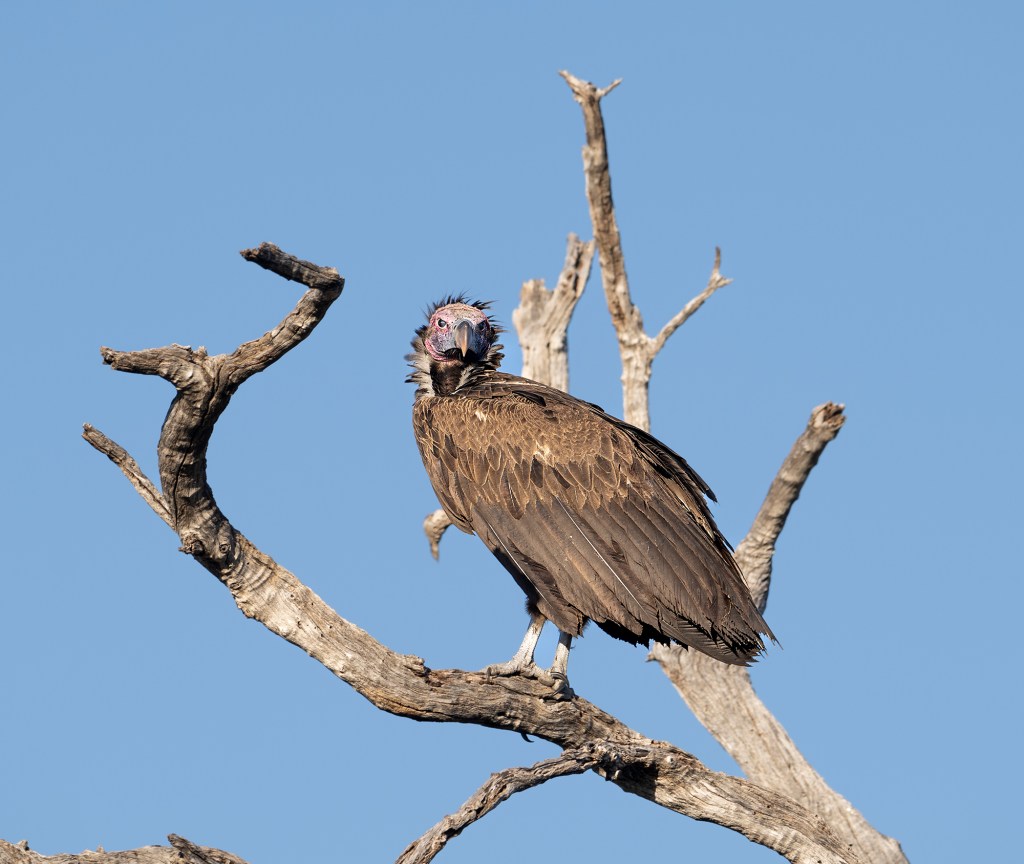
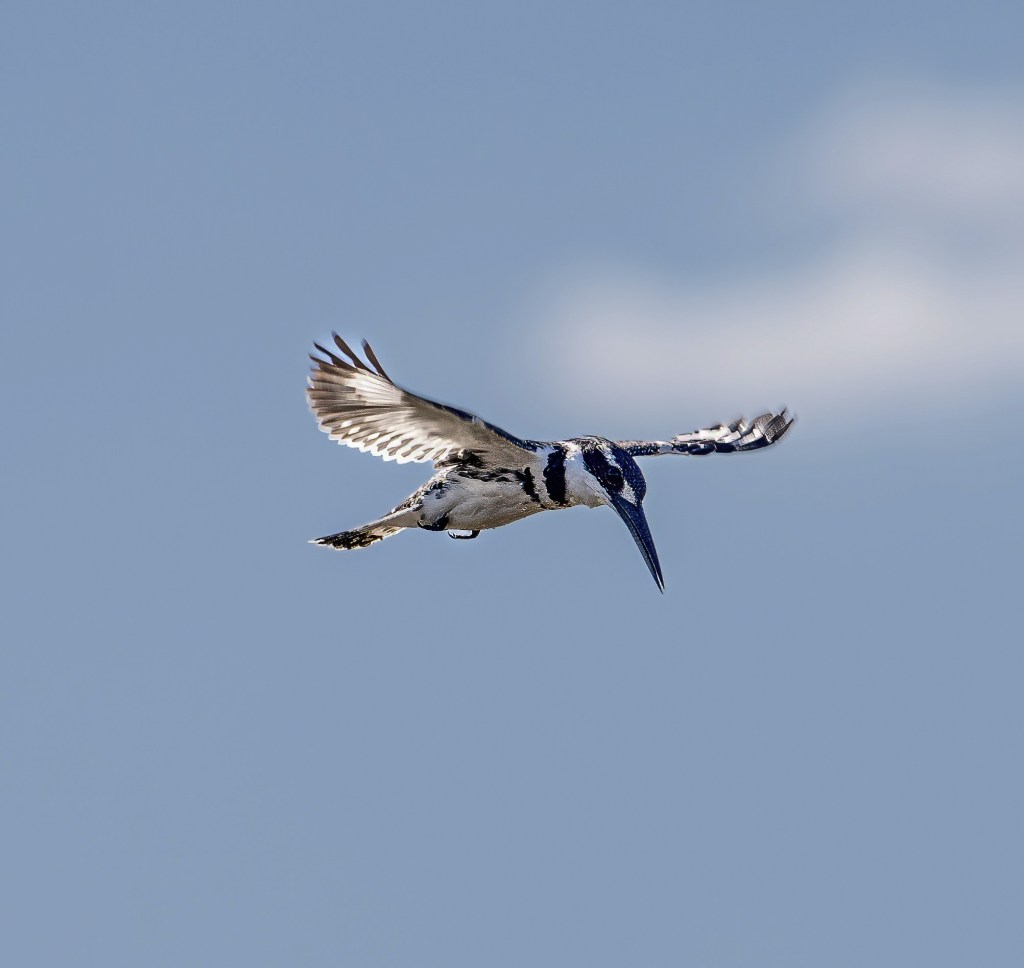
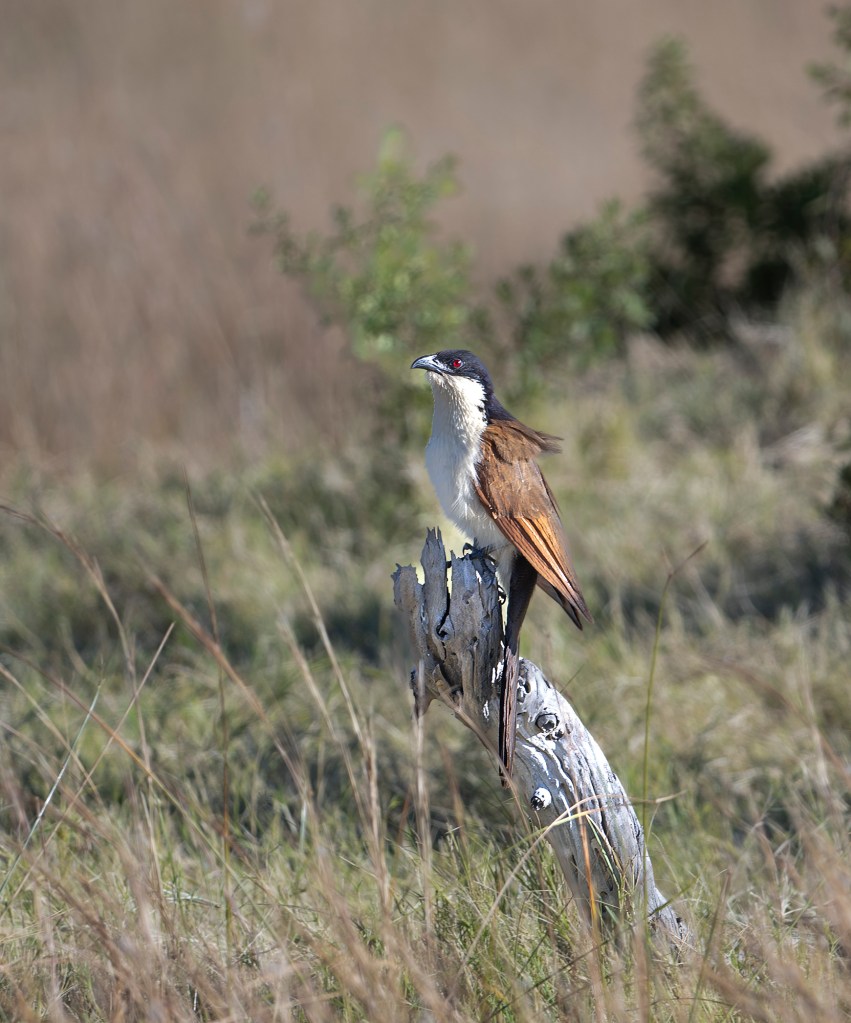
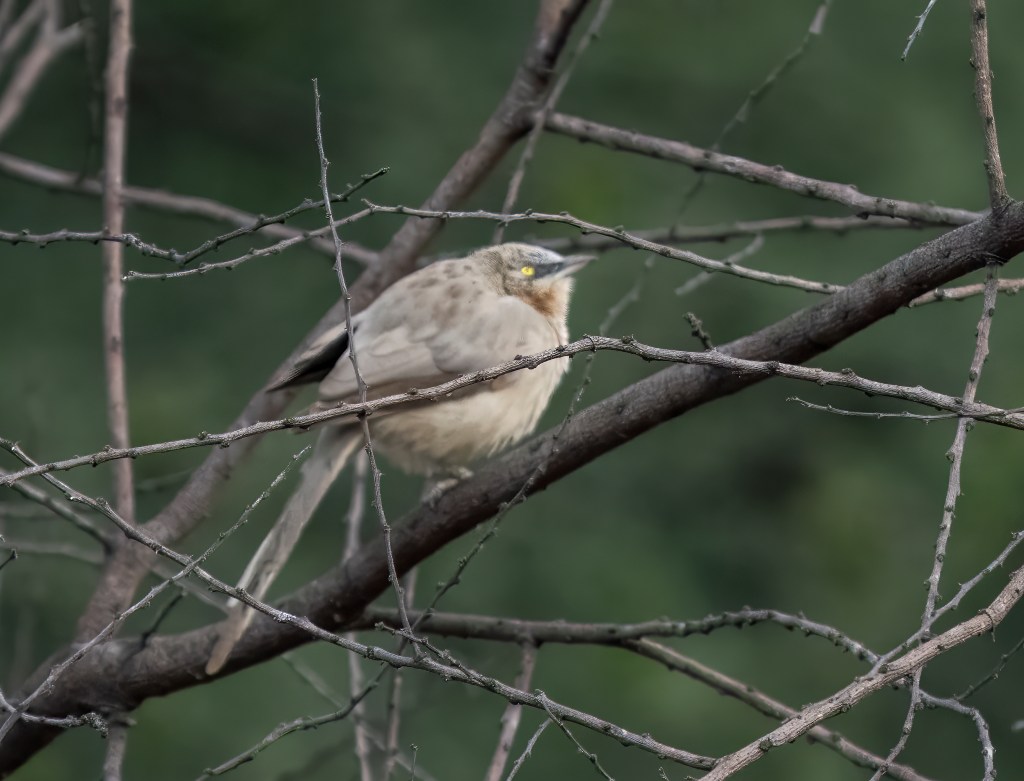
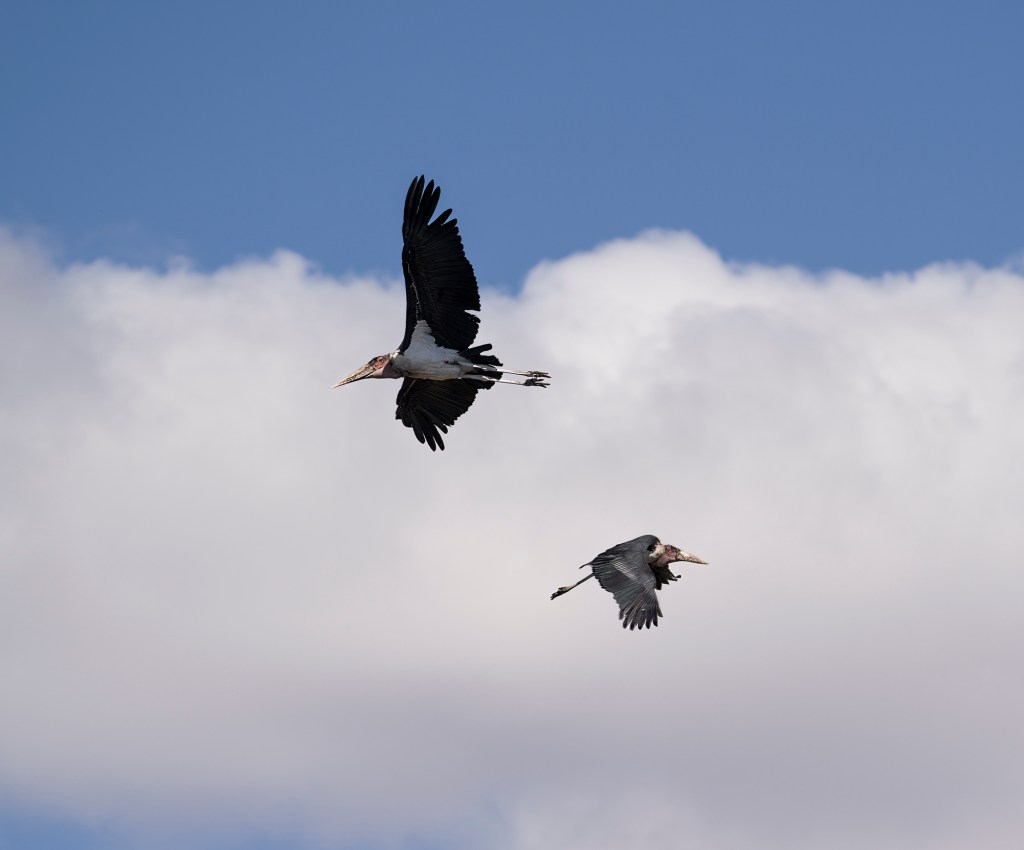
The wide presence of bird life in Botswana – and the whole of Southern Africa – is astonishing. And the colors, shapes, and types of bird life is quite impressive. Here are some of the birds seen and photographed on this 2024 trip.
Little Bee-eaterBataleur EagleAfrican Harrier-hawkLittle Bee-eaterLilac Breasted RollerLittle Bee-eaterAfrican Green PigeonYellow-billed stork with Egyptian gooseBlue-breasted Cordon BleuAfrican DarterAfrican SpoonbillFish EagleSwallow-tailed Bee-eaterHamerkopCommon KingfisherLappet-faced VultureHelmeted GuineafowlDarterPied KingfisherGrey LourieCoucalSaddle-billed StorkLarge Grey BabblerMarabou Stork
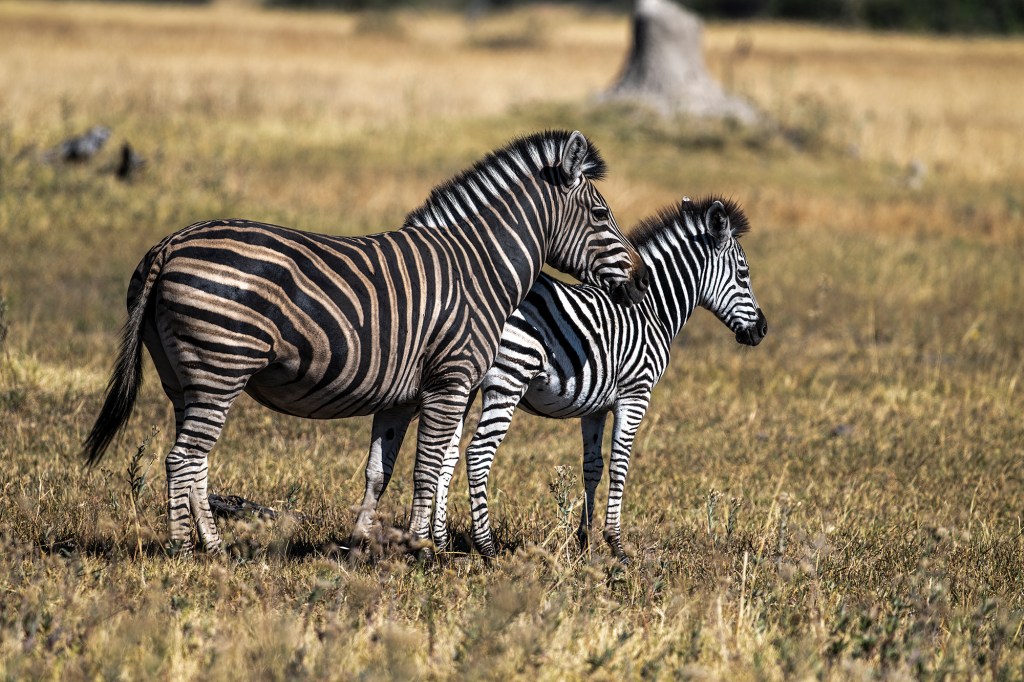
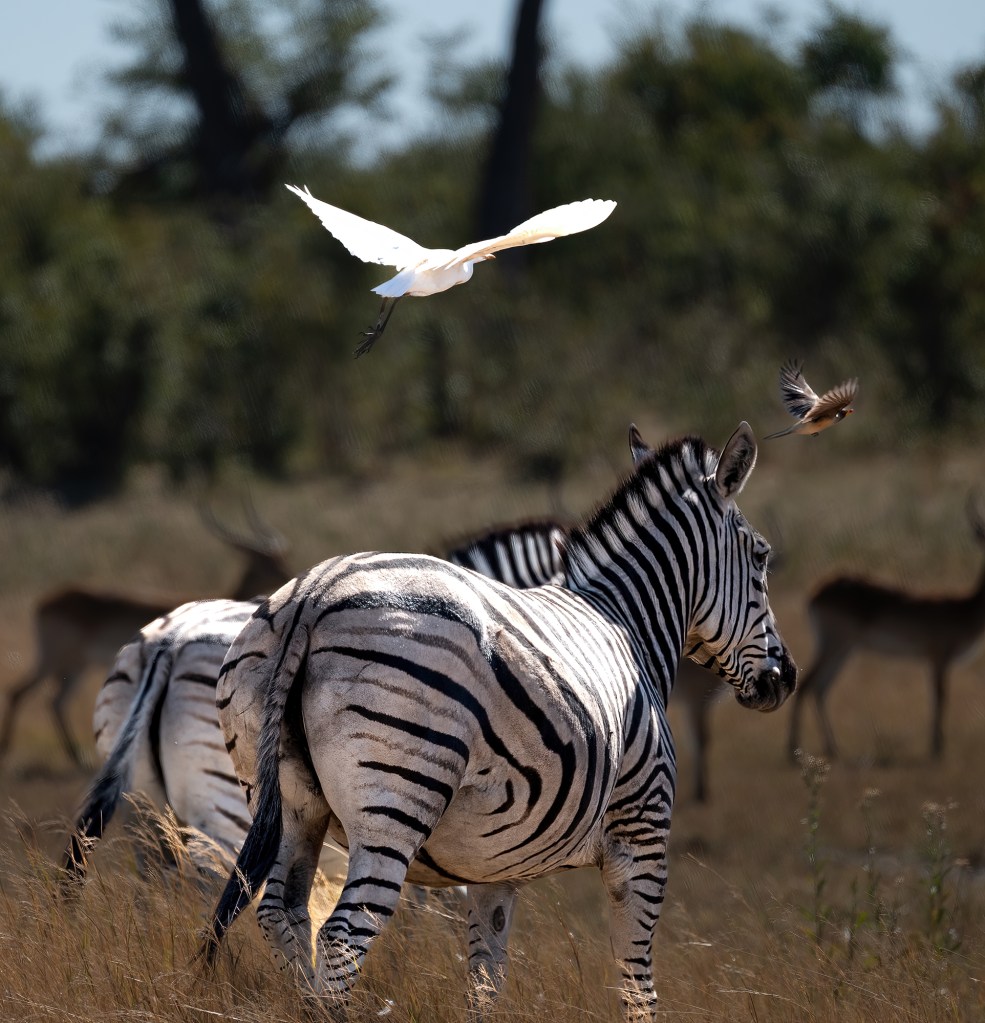
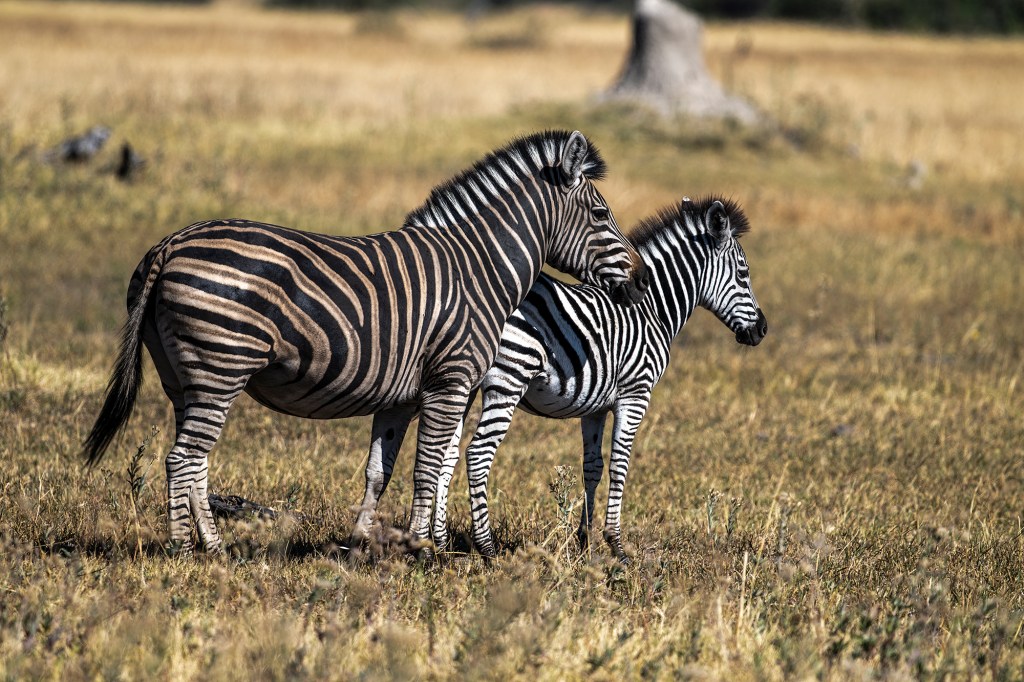
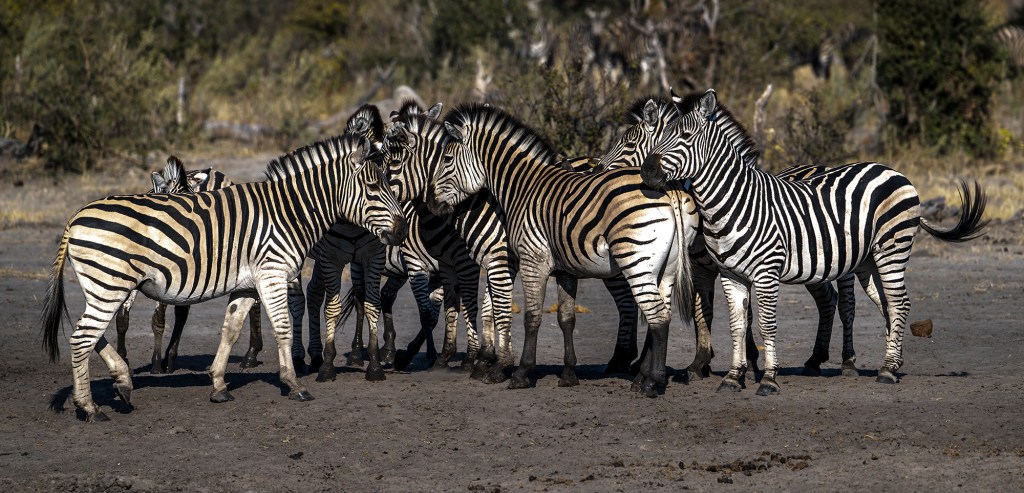
The term zebras refers to any of the three species of strikingly black-and-white striped mammals of the horse family (genus Equus); the plains zebra, found in the rich grasslands over much of eastern and southern Africa; Grevy’s zebra, which lives in arid, sparsely wooded areas in Kenya; and the mountain zebra which inhabits dry upland plains in Namibia and South Africa. The plains zebra is made up of six subspecies; Crawshay’s, half-maned, Grant’s, Chapmann’s, Burchell’s and quagga, which is extinct. Botswana is populated with large herds of the plains zebra, predominantly Burchell’s.
Zebras are closely related to domestic horses. They are large single-hoofed ungulates built for speed and long-distance migrations. They typically stand about 47-55 inches at the shoulder. Plains zebra weigh 400-850 pounds. Sexes are the same size in the plains zebra. Males do have spade-shaped canines used in fighting. The teeth of all three species are adapted for grazing.
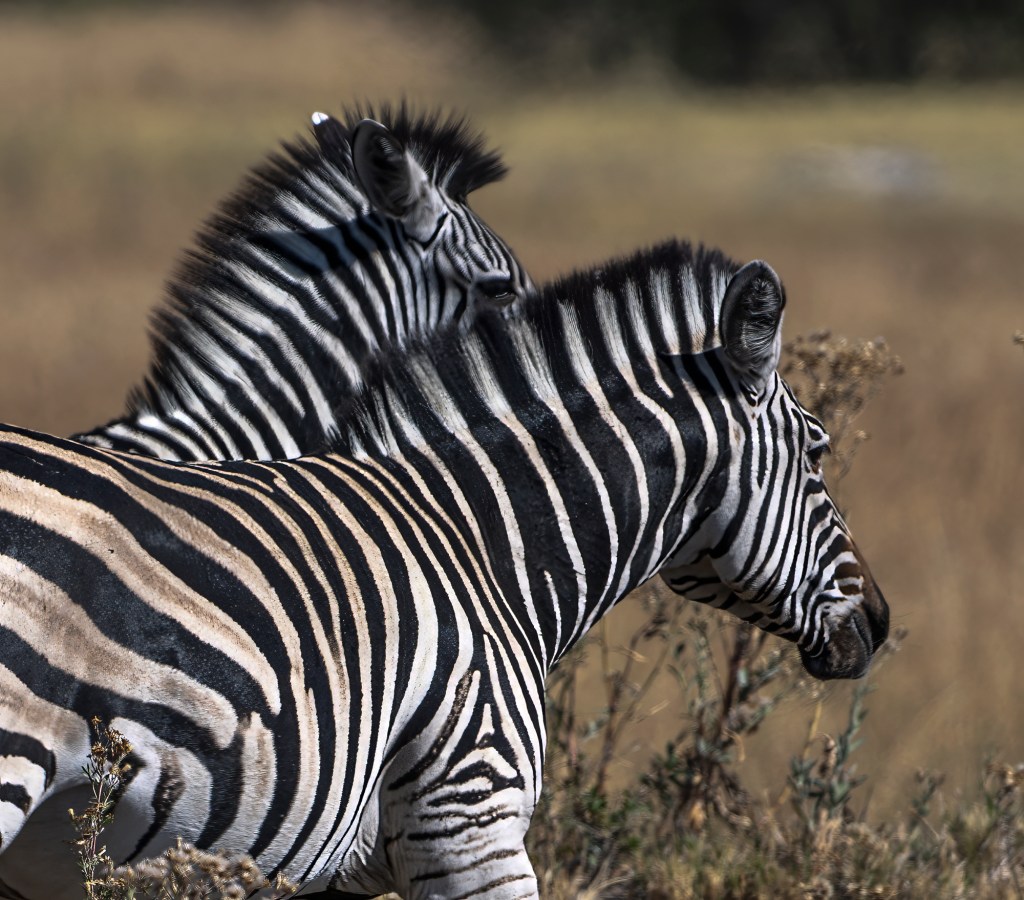
All zebras are dark-skinned. Their stripes arise from melanocytes that selectively determine the pigmentation of the fur. The cells transfer melanin into some of the animal’s growing hairs. Hairs that contain melanin appear black, whereas those without melanin appear white. Many have brown tinges or coloring in the white areas, presumably due to lower melanin levels.
In the plains zebra the stripes are wide and widely spaced. Some have lighter “shadow stripes” between the main stripes. Many scientists maintain that the zebra’s stripes evolved to thwart horse fly infestation. A 2019 study showed that the zebra’s black and white striped pattern appeared to confuse biting horse flies.
Two types of mating systems are observed in zebras. Like the horse, the mountain and plains zebras live in small family groups consisting of a stallion and several mares with their foals. The females that inhabit the harem are unrelated. The females mate only with their stallion. Gestation is 11-13 months, with one foal only. Foals nurse for about 12 months.
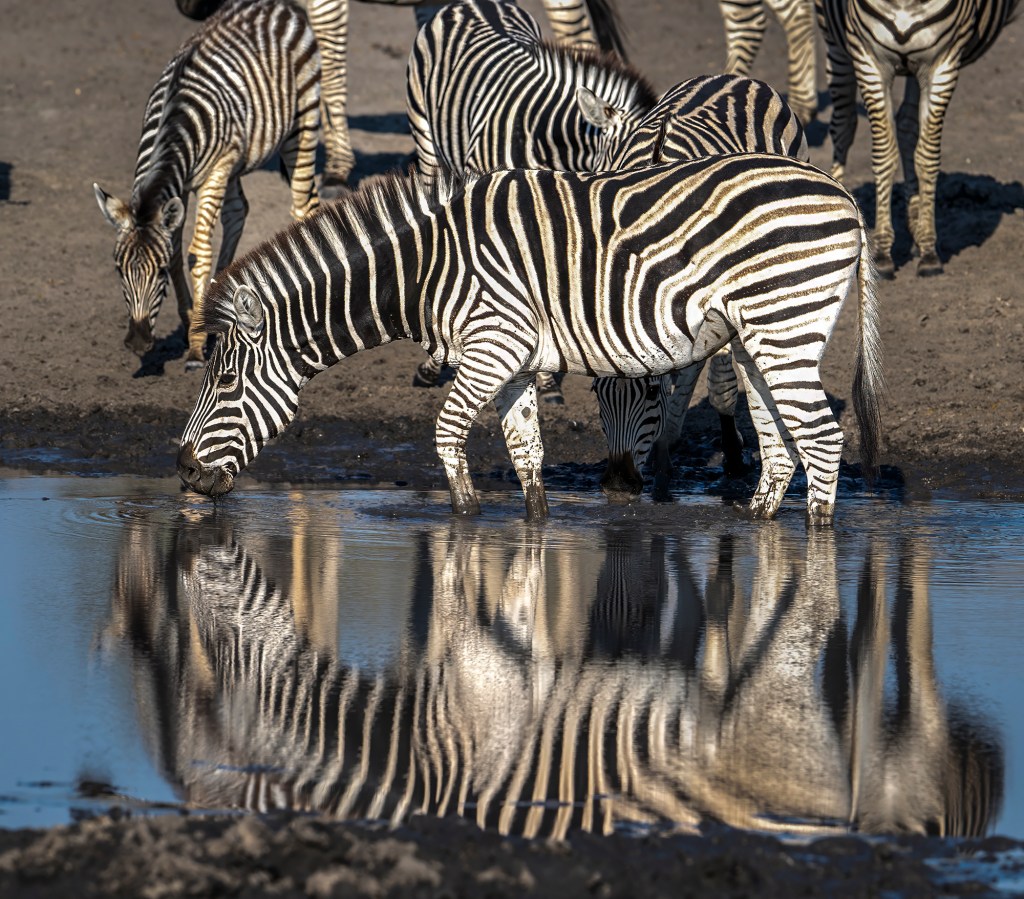
With plentiful food, small groups may coalesce into large herds or “dazzles” and still maintain their identity. When we were at Four Rivers Camp this year, we saw huge collections of zebras estimated at 400 animals or more. Zebras often form mixed herds with other mammals such as wildebeests and giraffes. Zebras with young colts avoid predators such as hyenas by forming a cluster around the mother and foal. Available surface water is a critical need.
Zebras are considered to be in the “near threatened” category. All three species have decreased in abundance through human activities; Grevy’s are considered an endangered species.
Two of these species belong to the family “canidae”. Although hyenas may look like dogs but are actually descended from cats. So lets proceed in the above order.
Hyenas
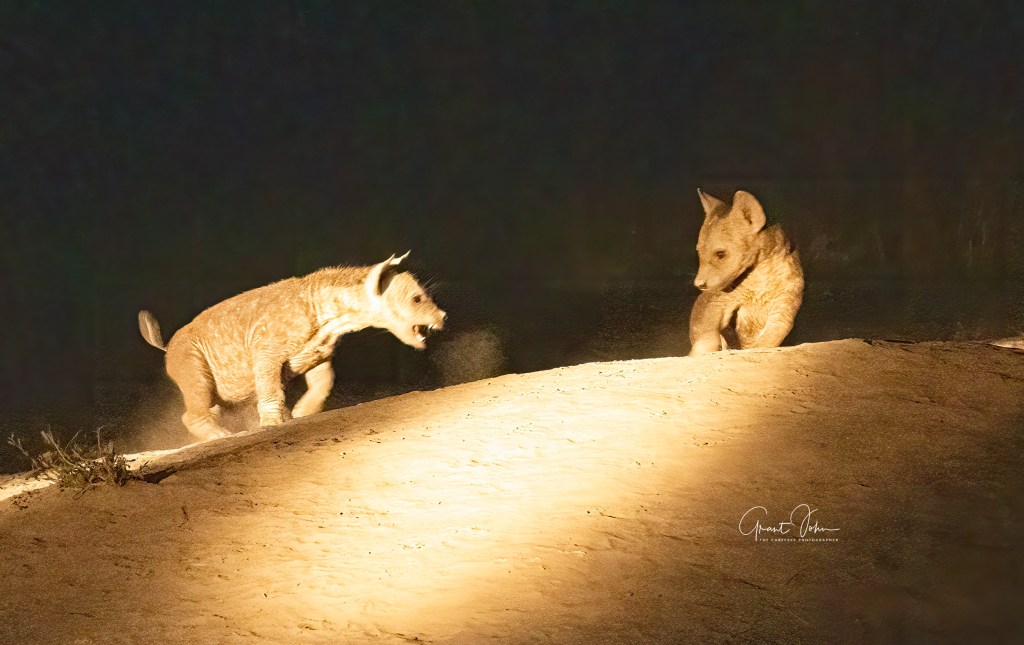
Hyenas are the fifth smallest family in the order Carnivora. They are unique and vital components of most African ecosystems. Both hyenas and canines are non-arboreal, curatorial hunters that catch prey with their teeth rather than claws. Both eat food quickly, and their calloused feet are adapted for running and making sharp turns. Their other habits including grooming, scent marking, defecation routines, mating and parental behavior are consistent with feline behavior.
The four species are the striped hyena, the brown hyena, the spotted hyena and the aardwolf (already covered). Spotted and brown hyenas live primarily in sub-Saharan Africa, and are very common in Botswana. They are noted for their scavenging habits.
Hyenas have long forelegs and powerful neck and shoulders for dismembering and carrying prey. They are tireless trotters with excellent sight, hearing and smell for locating carrion, and they are proficient hunters as well. They are all more or less nocturnal.
Intelligent, curious and opportunistic in matters of diet, hyenas frequently come into contact with humans. Spotted hyenas range south of the Sahara except in rain forests. They are ginger colored with patterns of dark spots unique to each individual. Females at=re larger than males, weighing up to 180 pounds and measuring up to 6.5′ long. They communicate with moans, yells, giggles, and whoops, some carrying several kilometers.
Gestation is about 110 days, annual litter size is usually two pups. They hunt everything from young hippos to fish; antelopes are common. In southern Africa they kill most of their own food, hunting effectively in groups.Strong jaws and broad molars allow the animal to get at every part of a carcass and crush bones, which are digested in the stomach by highly concentrated hydrochloric acid.
They live in clans of 5-80 individuals, and mark their territory with dung piles and scent from anal glands. The sexes have a linear dominance hierarchy, the lowest female outranking the highest male.
The smaller brown hyena weighs about 40 ; the coat is shaggy with an erectile white mane over the neck. Birds and eggs, insects and fruit are staples, but leftover kills by lions, cheetahs and spotted hyenas are important. They also live in clans, but adult females nurse each other’s cubs, other clan members take food to the cubs, and females do not outrank males.
Jackals
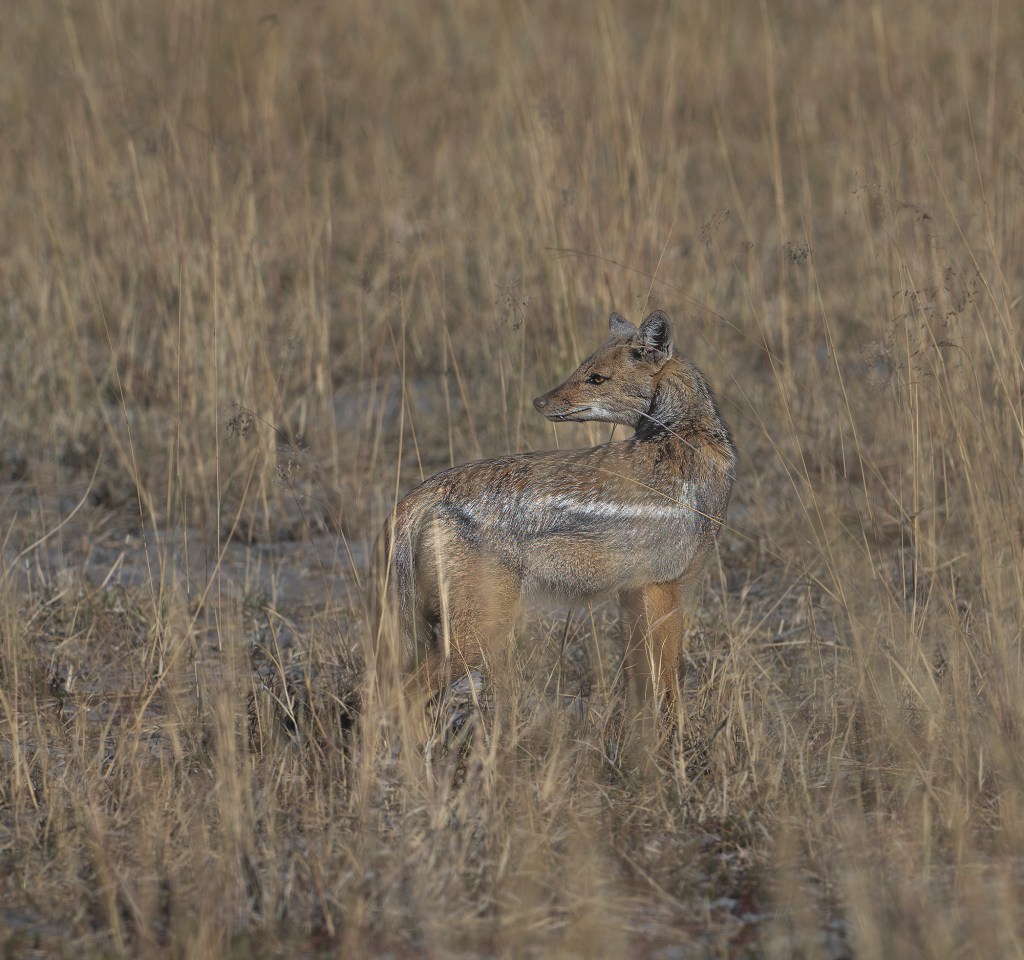
Jackals are canids native to Africa and Eurasia. The name commonly refers to three species: the closely related black-backed jackal (above) and side-striped jackal of sub-Saharan Africa, and the golden jackal of Europe and Asia.
All jackals are opportunistic omnivores, predators of small to medium sized animals and proficient scavengers. Their long legs and curved canine teeth are adapted for hunting small mammals, birds and reptiles, and their large feet and fused leg bones give them a physique well-suited for long-distance running. Jackals are most active at dawn and dusk.
Jackals in Africa prefer to live in the open and wooded savanna, in grasslands, shrub lands and along waterways with dense undergrowth. They are 17-25 pounds in weight and 27-33 inches in length.
Their most common social unit is a monogamous pair, which defend their territory from other pairs by vigorously chasing intruders and marking landmarks with their urine and feces. Gestation period is about two months. They live in burrows, litters containing two to seven pups.
Primary predators are leopards, hyenas and eagles.
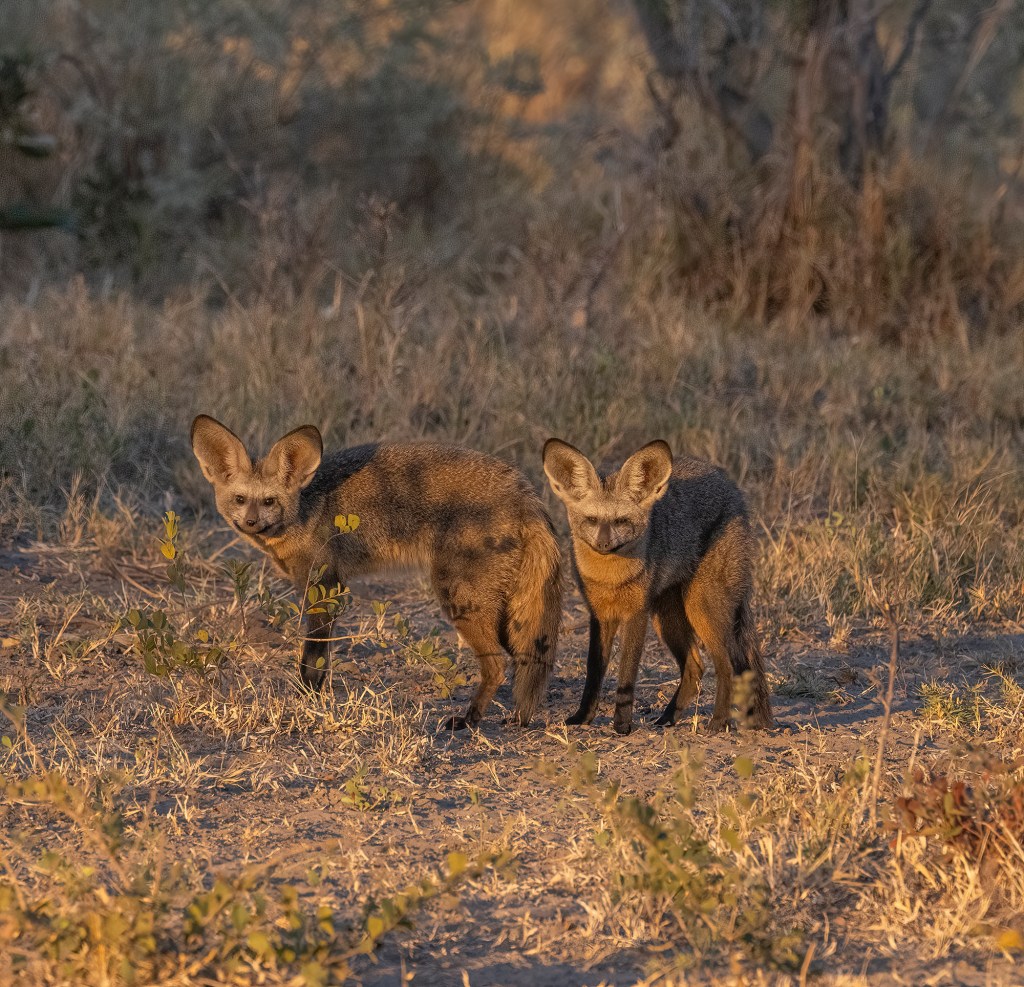
Bat-eared Fox
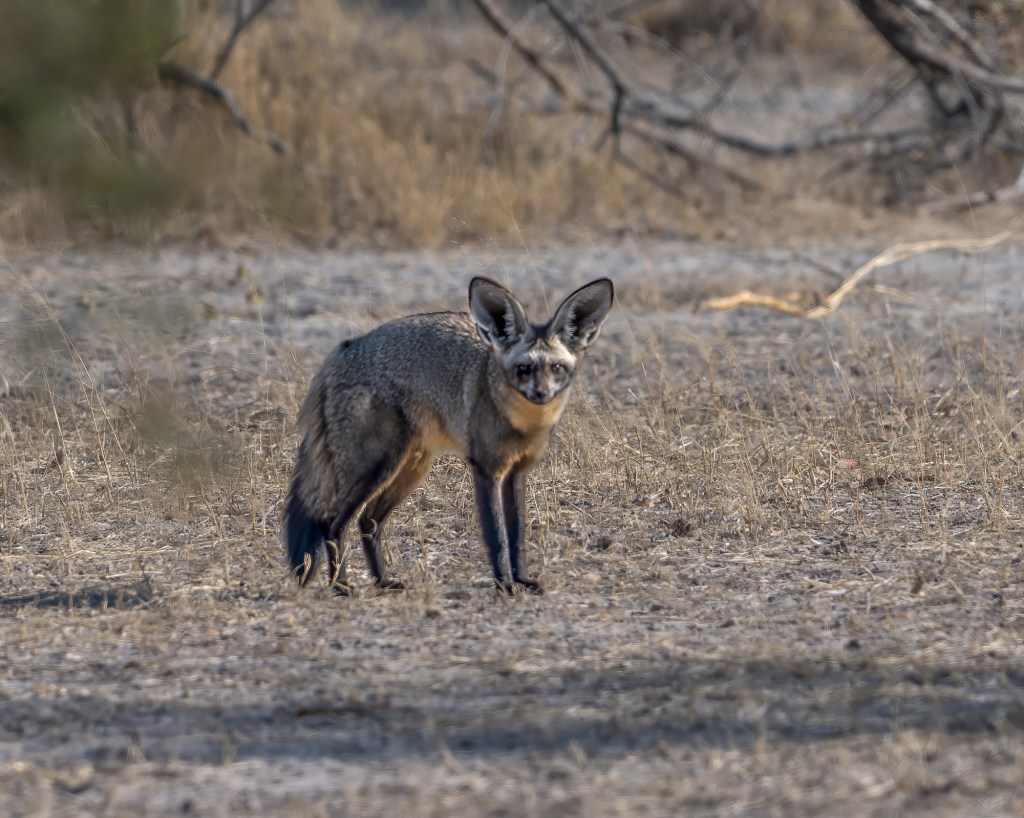
The bat-eared fox is a small, African fox known for its enormous ears, which are over 5 inches tall. The ears are full of blood vessels that shed heat and help keep the fox cool; they also give the fox a very goo sense of hearing.
Bat-eared foxes are sandy gray withe lighter fur on the belly and darker fur around the eyes, muzzle, back of the ears, feet and tip if its large bushy tail. The inside of the ears and a band across the forehead are white of buff.
They are not territorial. A family has several den holes with many entrances, tunnels and chambers. They can create their own or enlarge an abandoned one. Predators include eagles, jackals and hyenas.
They eat insects, with termites up to 79% of its diet. They also eat dung beetles and their larvae, grasshoppers, scorpions, lizards, fruits and eggs. They have more teeth (46-50) than most mammals. They typically live in pairs, with other females and their pups and a male fox.
They tend to hunt for termites late in the day and at night, spending most days in their dens. These foxes are fairly common in southern Africa.
In addition, besides the pangolin, we had three other first sightings. They were the aardwolf, the civet and the serval.
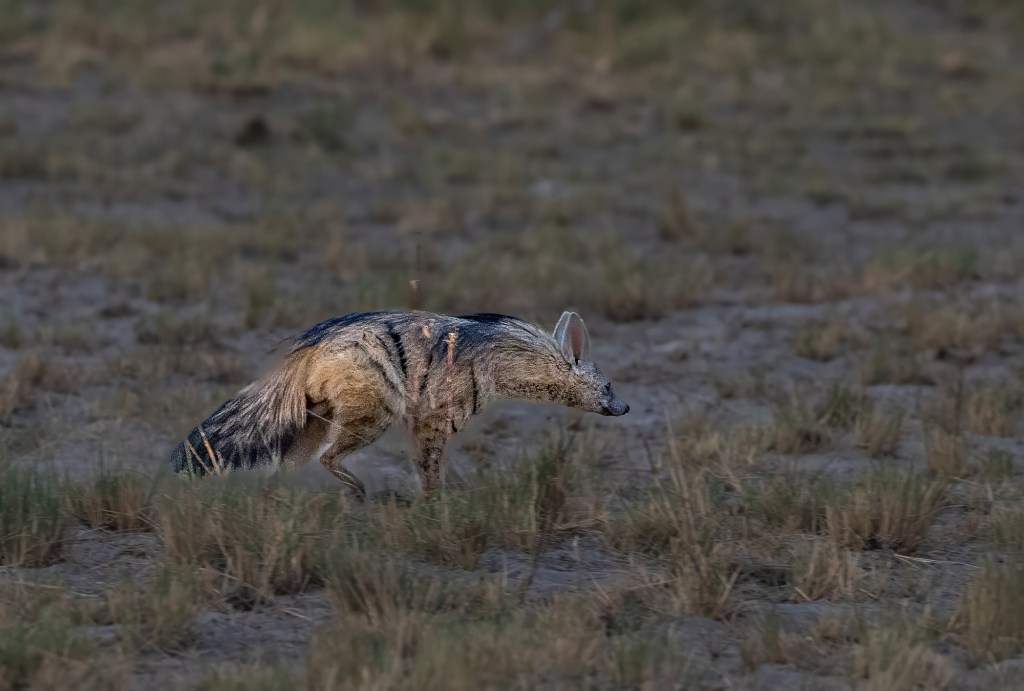
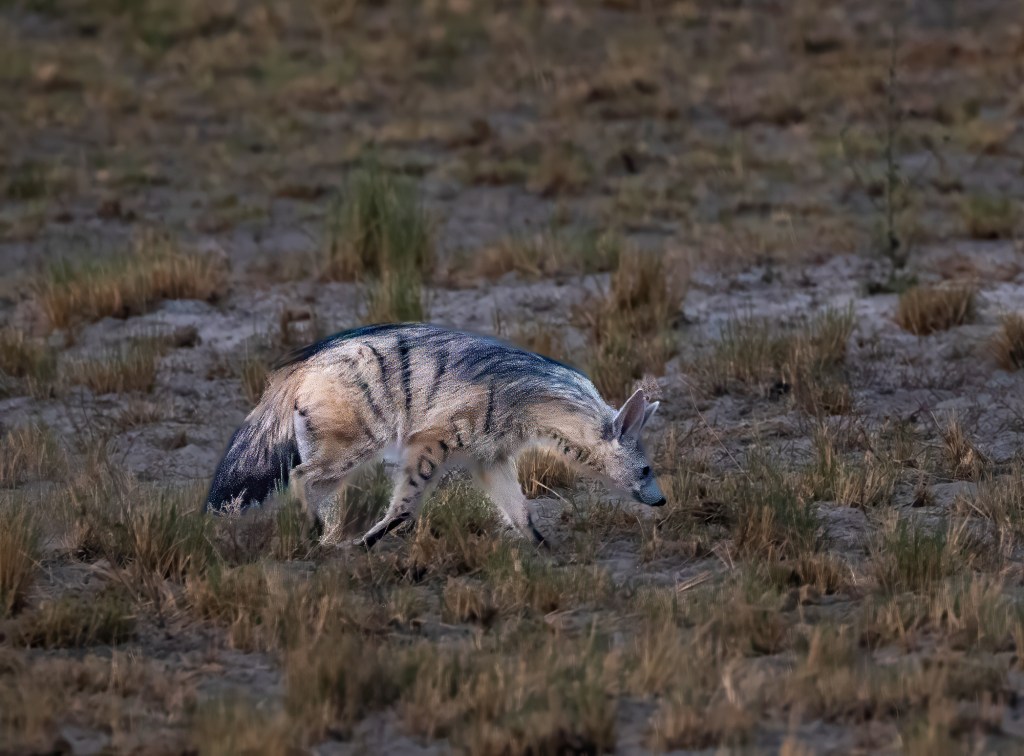
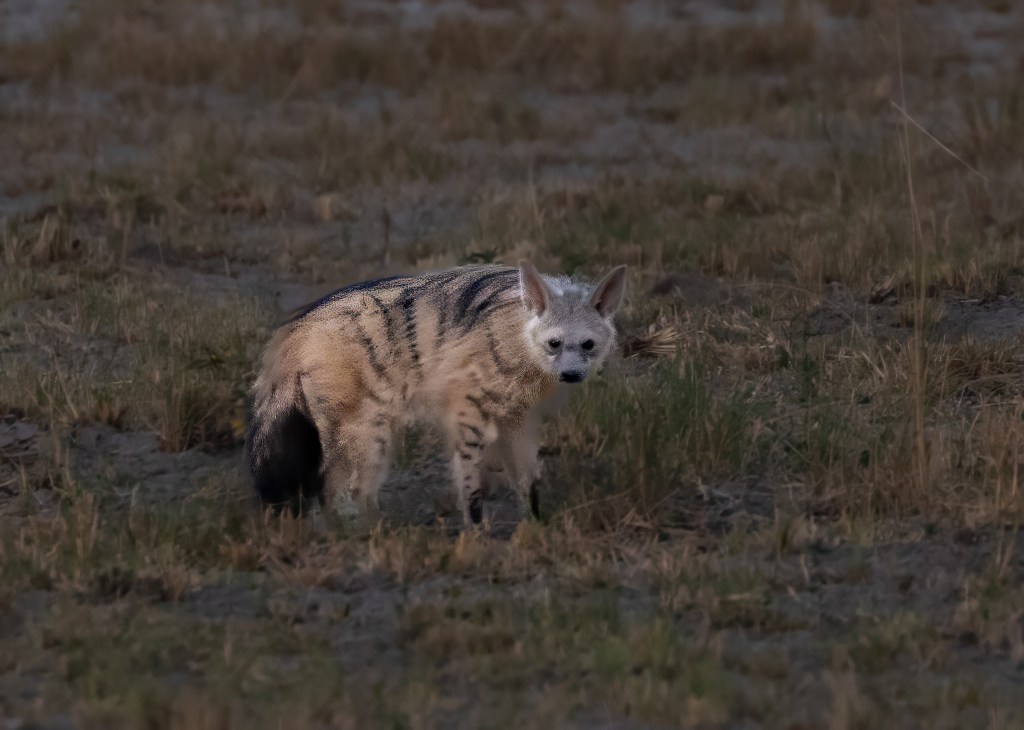
Aardwolf
The aardwolf is neither aardvark nor wolf. Their name, which means “earth wolf” in Afrikaans, refers to their underground dens and canine-like appearance. They are one of four hyena species, along with spotted hyenas, striped hyenas and brown hyenas. They have a loping, low-energy gait that they can sustain for long distances.
Aardwolfs are most similar to the striped hyena, with long muzzles, large pointed ears and black stripes on gold fur. They are exclusive to Africa. They are nocturnal, and live dry, open savannas and grasslands, and take shelter in abandoned burrows.
Most are carnivorous, but prefer insects to large prey. At night they emerge in search of mound building termites, which they lap up with long, sticky tongues by the thousands. They have a genetic trait which allows them to tolerate the insects’ noxious secretions.
Predators such as leopards, lions, black-backed jackals and spotted hyenas will kill both adult and cub aardwolves. Females go into estrus once a year, during which the solitary animals come together to mate. Gestation lasts 90 days, with litters of one to four cubs.
Populations are said to be thriving.
We had an extended sighting at Lagoon Camp while watching a leopard trying to get close to a small herd of impala.
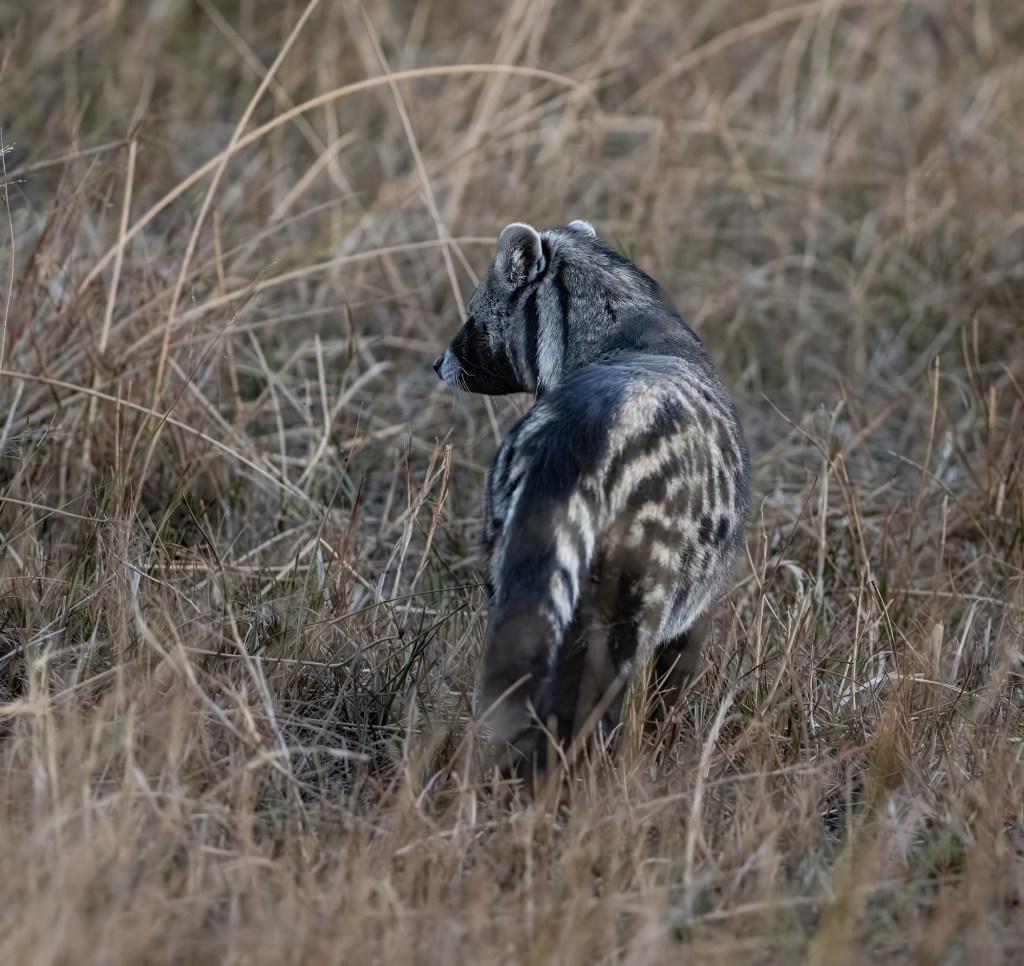
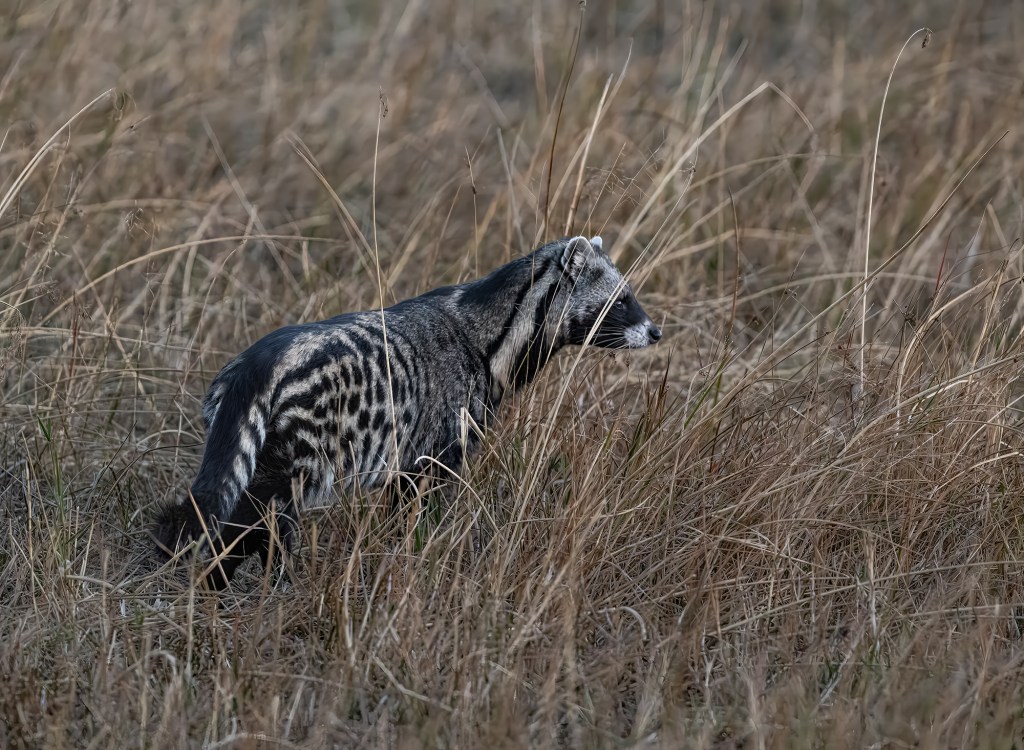
Civets
A civet is a small, lean, mostly nocturnal mammal native to Asia and Africa, especially the tropical forests. The African civet has historically been the main species from which a musky scent used in perfumery was obtained.Civets have a broadly cat-like general appearance, though the muzzle is extended and often pointed, rather like that of an otter or mongoose. They range in length from 17-28 inches and weigh about 3-10 pounds.
Civets are native to sub-Saharan Africa as well as Asia. Favored habitats include woodland, savanna and mountain biome. Many are faced with loss of habitat, and several species are considered vulnerable.
Civets are omnivores or even herbivores. Most eat primarly fruit. Some use flower nectar as a major source of energy.
We actually had two sightings at Lagoon Camp, with one for several minutes in decent lighting conditions.
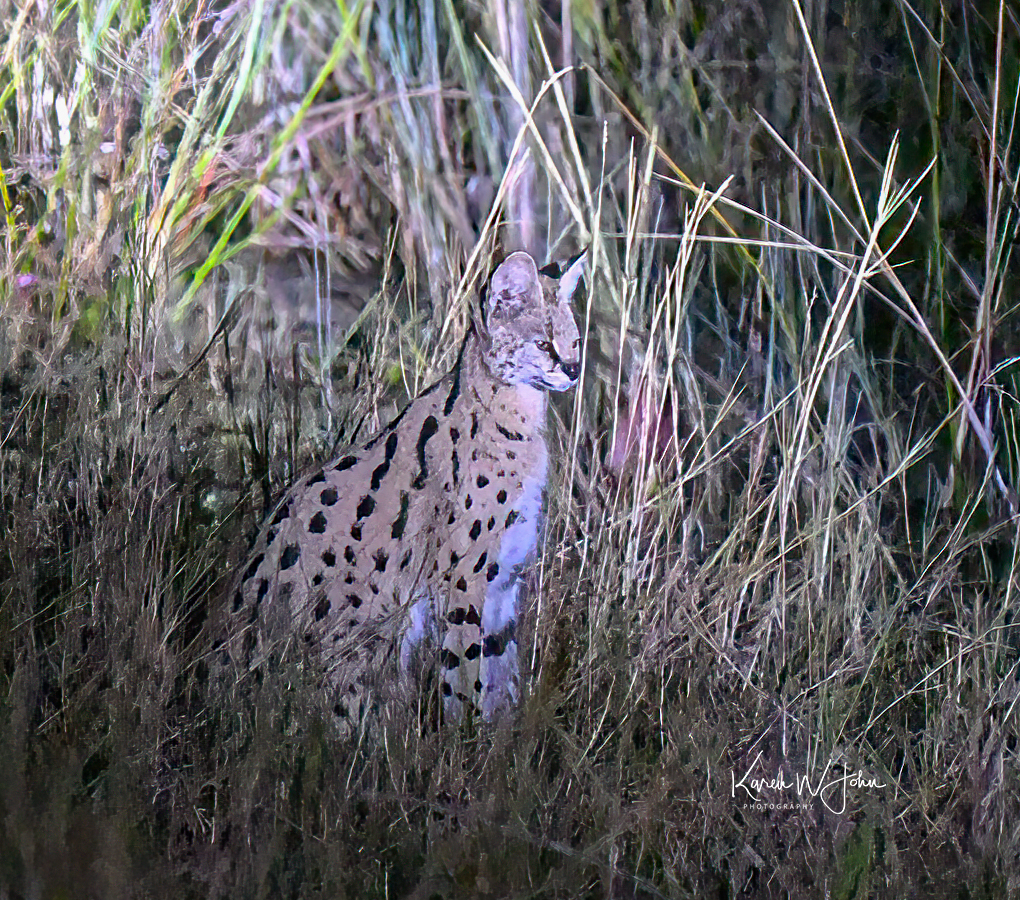
Serval
Servals look like cheetahs who stretched out after a nap and decided to stay that way. They are long-legged, long-necked, medium sized wild cats who look sleek and elegant. Their coats are unique, honey-colored and adorned with spots so close together they look like stripes. This appearance helps them blend in with the shadows of savanna grasses and forest trees, hiding from their predators which include hyenas, wild dogs and leopards.
They are remarkable hunters. They can see above tall grasses, and can perform nine-foot leaps to catch birds in flight, and run as fast as 50 MPH. They are ambush predators. Their hearing is exceptional. So they can snatch fish and frogs from the water, and take rodents from their burrows. They can take down prey 50% of the time, a much higher success rate than a group of lions.
Servals are mostly solitary, but males stay with the female for her one-four day estrus period. Gestation is 75 days, with 2-3 kittens per litter. They have a stable population numbers. Their main threat is the loss of wetlands, a habitat which holds rodents, a favorite food source.
Some servals are bred with domestic cats to produce so-called “Savannah cats”. Some places have banned owning them.
We startled a serval in high grass near water as we were following a leopard. The cat quickly demonstrated its ability to move at high speeds so no images were taken. So I have borrowed a couple from the net.
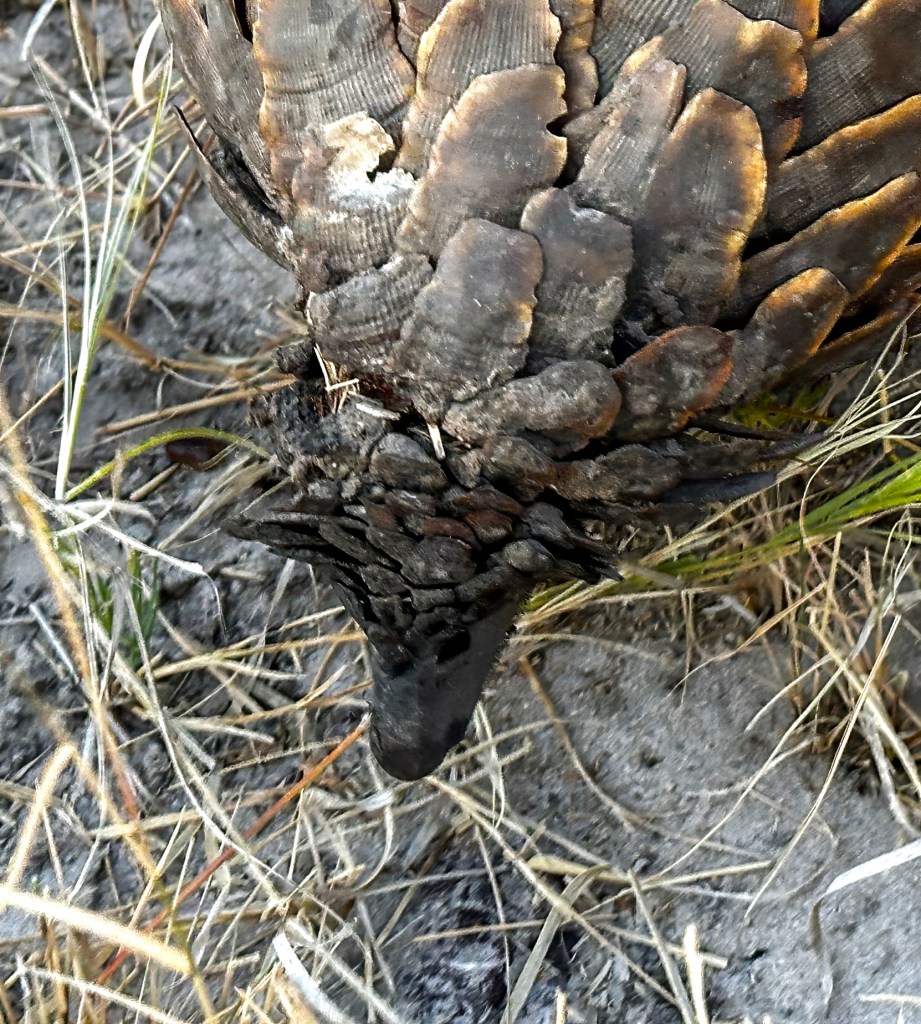
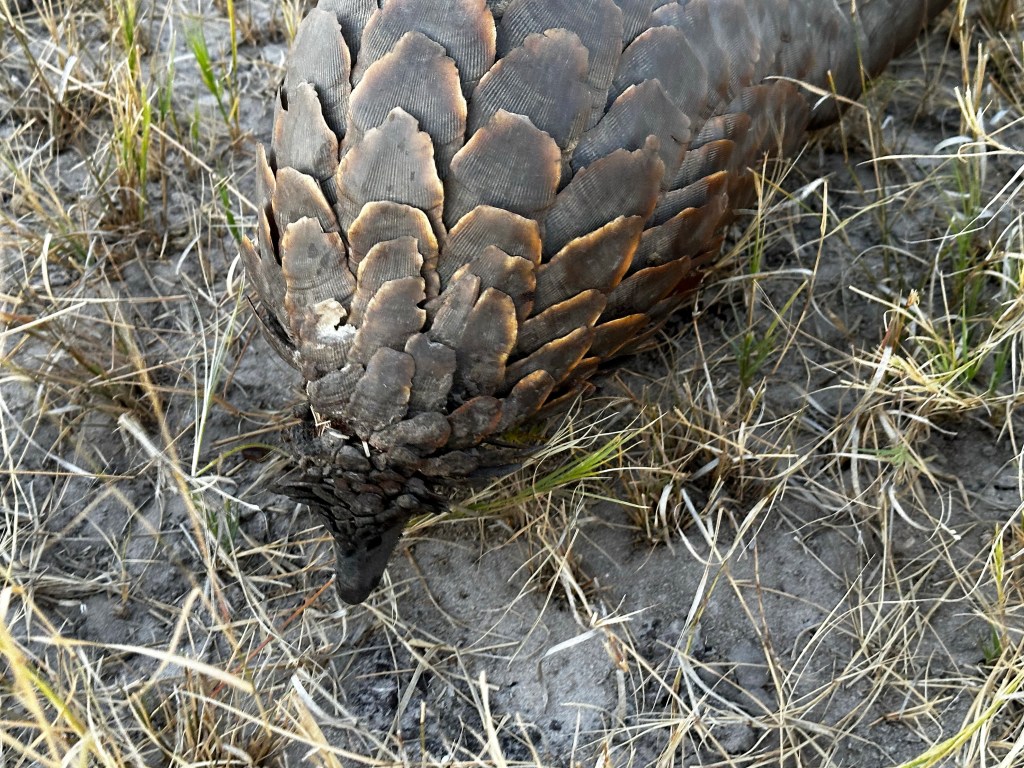
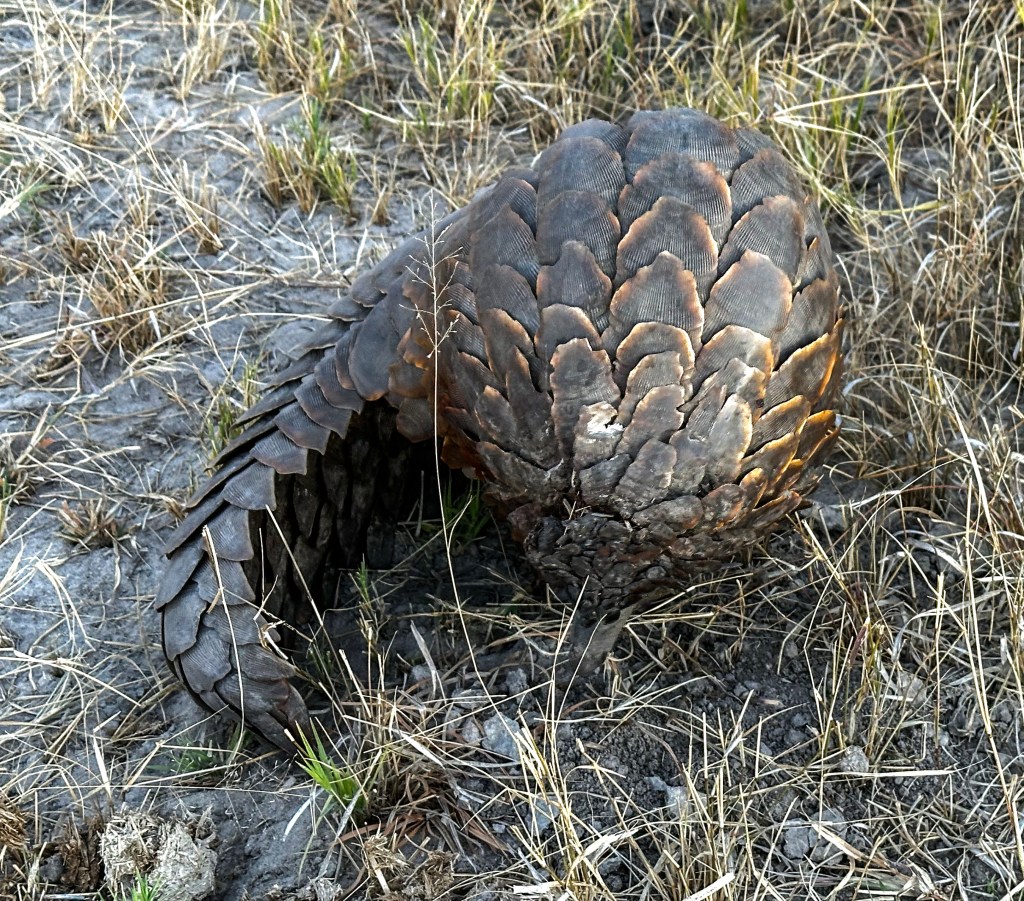
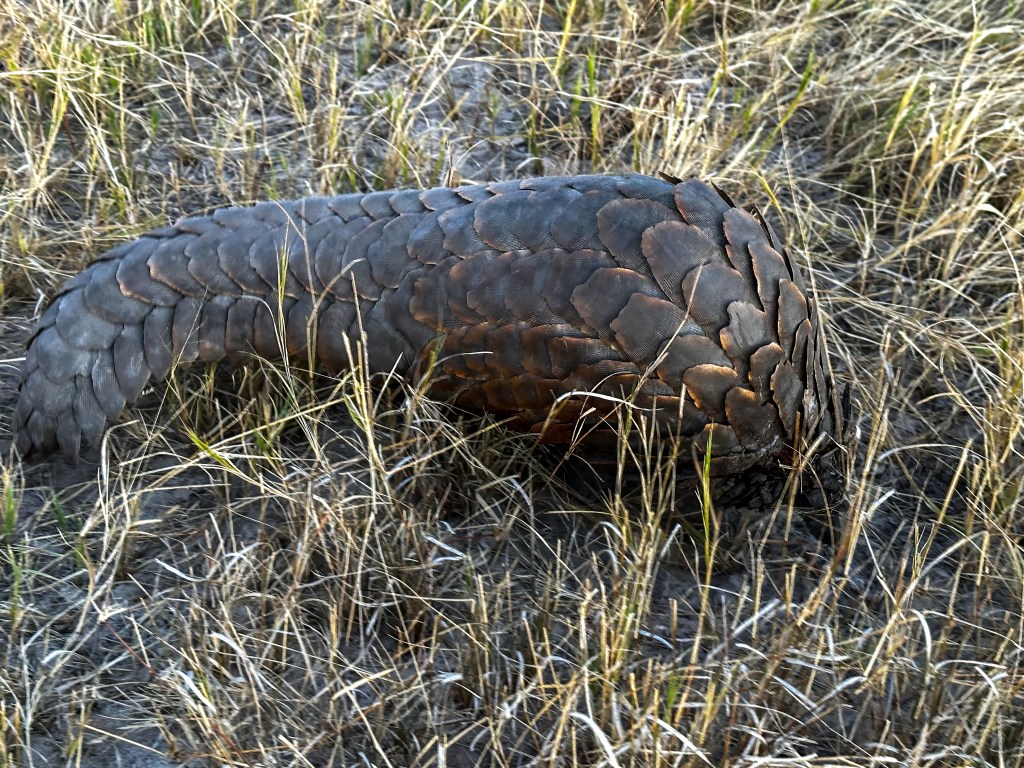
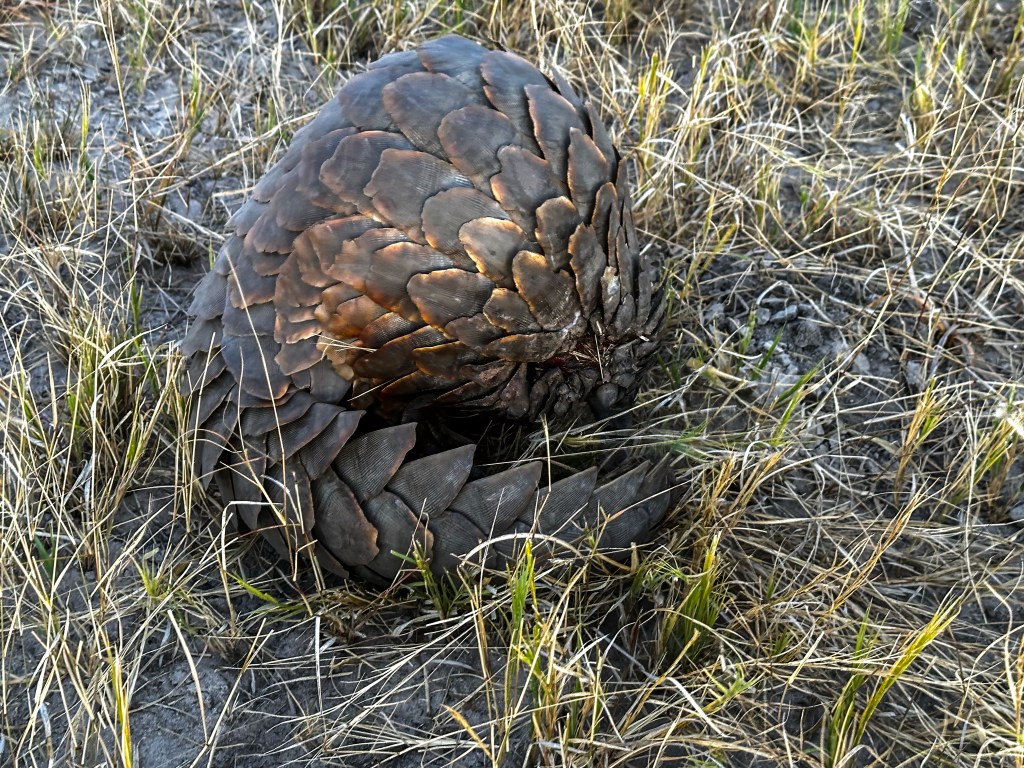
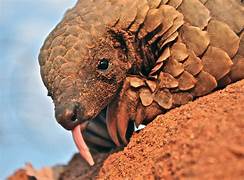
Now the unusual sighting! We saw in great detail and openness a live pangolin in daylight! This was a very fortuitous event. Experienced safari guides either have never seen a pangolin, or have only seen partly concealed in shrubbery.
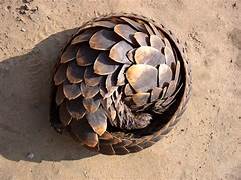
Pangolins are ant eating mammals covered in scales made of keratin, which provide protection against predators. The scales account for about 20% of their weight, and the animal protects itself by curling into a ball. The pangolin has a long, broad tail and a small head, and has no external ears although the hearing is quite good. The tongue is wormlike and can extend up to 25 cm in length. The legs are short, and the feet have sharp claws. They are primarily nocturnal and also shy, making them difficult to find.
Pangolins feed mainly on termites but also eat ants and other insects. They range in size from a large housecat to more than four feet long.
They tend to be solitary except when mating. Some fathers will stay in the den until the single offspring is independent.
There are 8 species of pangolin, 4 in Asia and 4 in Africa. They are trafficked at high rates for their scales and meat. In 2016 CITES, the treaty that regulates the international wildlife trade, voted to ban commercial trade in pangolins. For many years the Asian species were the primary target of poachers and traffickers, but African animals are now under increasing attack. It is believed to be the world’s most trafficked non-human animal.







































































 The Carefree Photographer