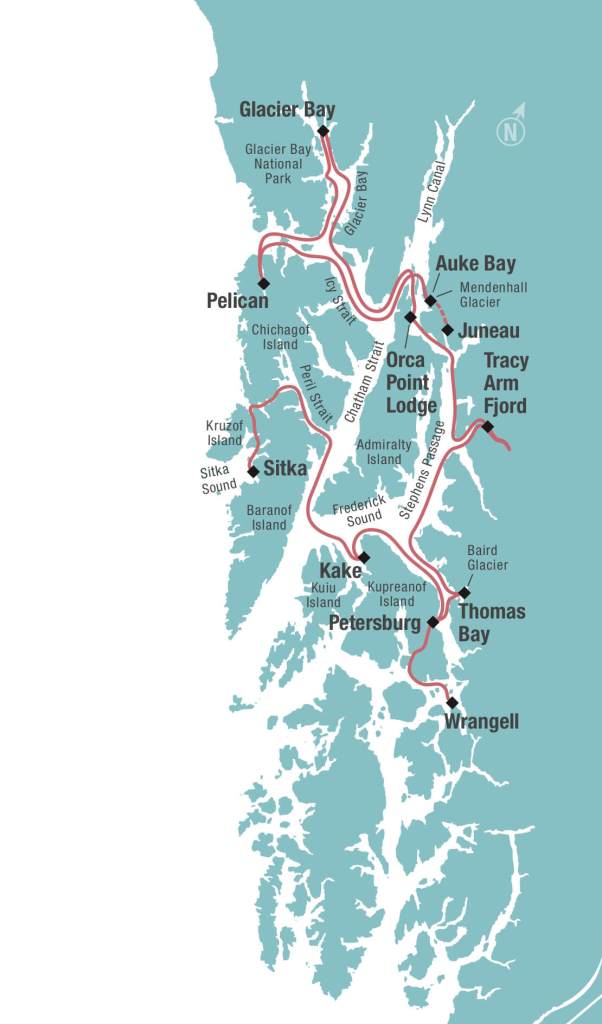
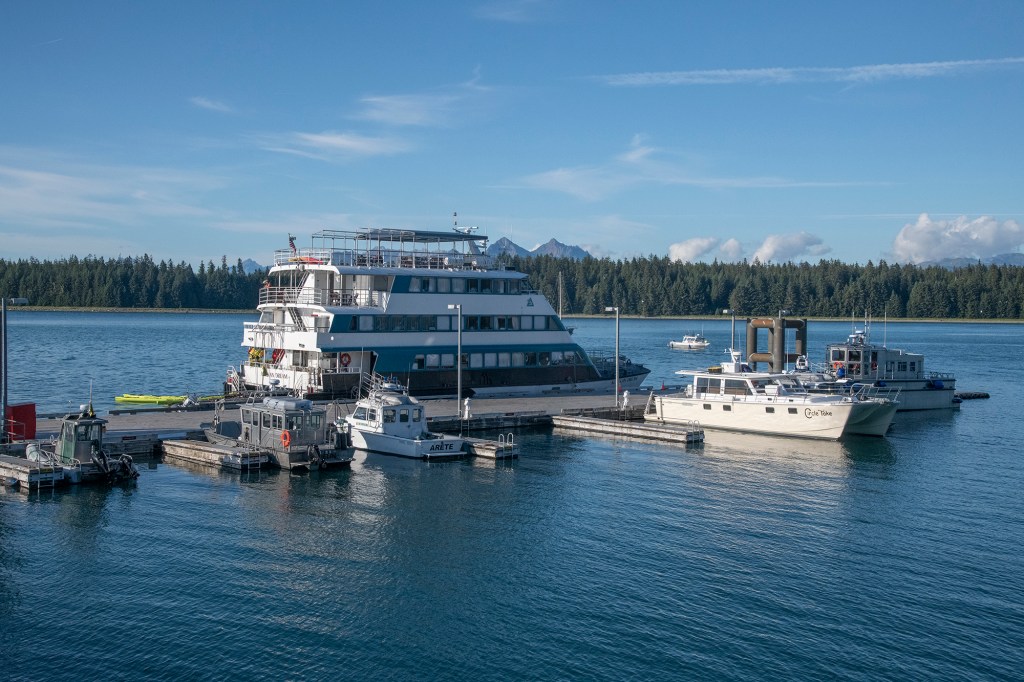
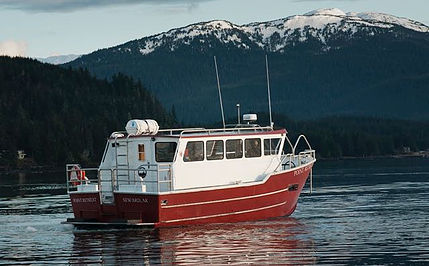
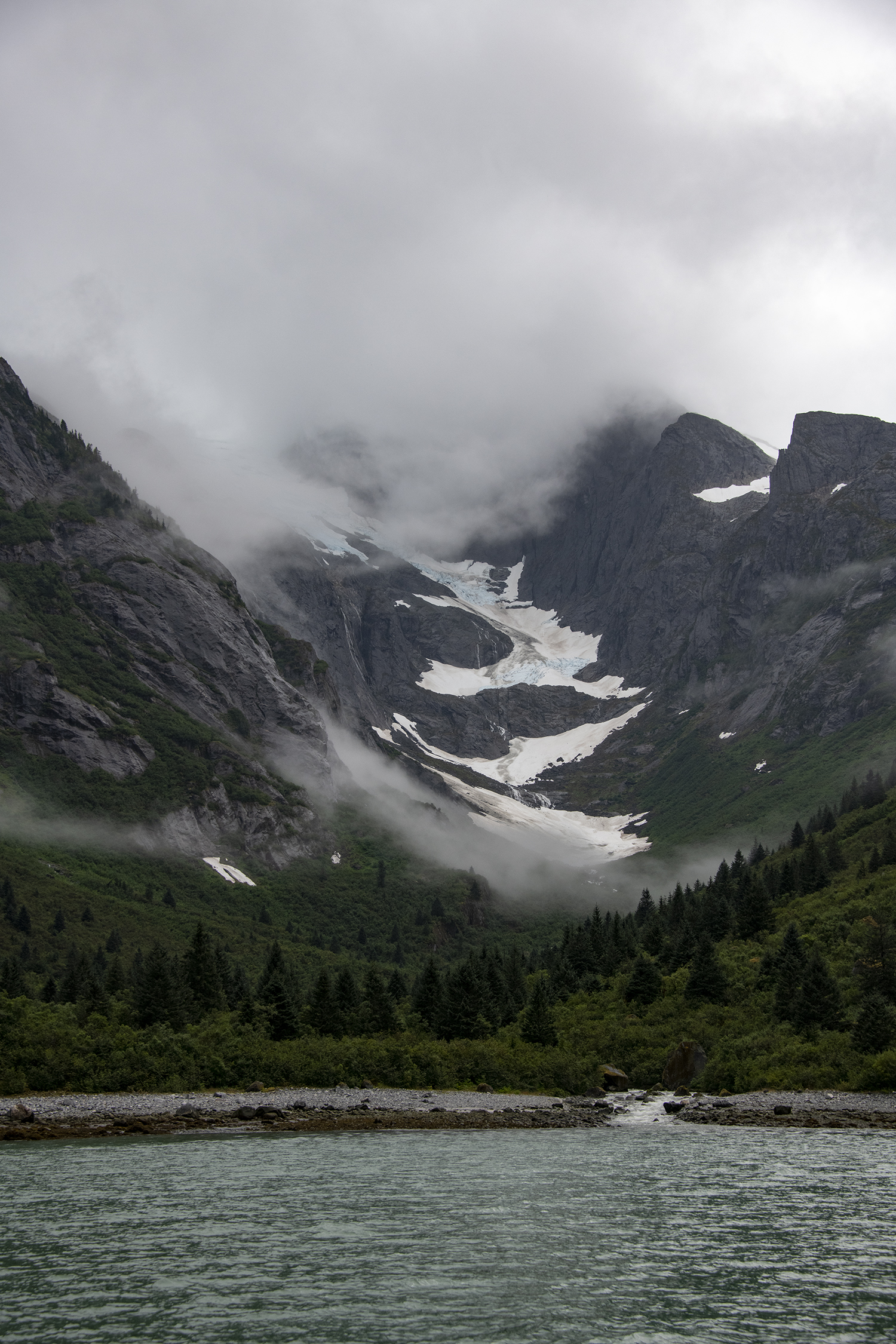
We recently took a one week cruise on Alaskan Dream, a 40 passenger catamaran operated by the company of the same name. The cruise was focused on the Inland Passage of SE Alaska. This is a great way to see this spectacular area, starting in Juneau and ending up in Sitka. We only had 27 passengers, serviced by a crew of 17 led by Captain Eric Morrow. Every day was an adventure, the food was wonderful and the social setting lovely.
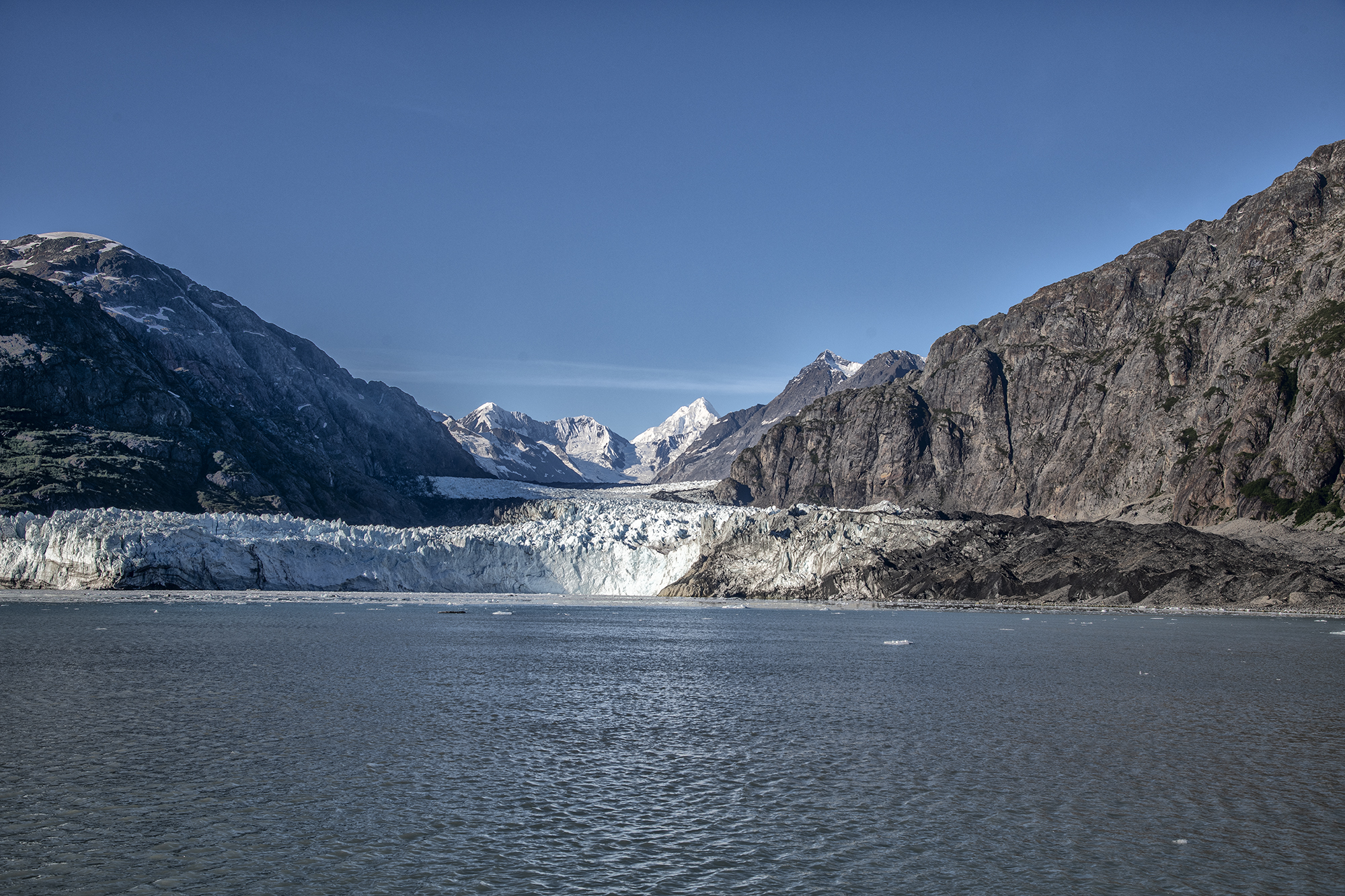
Our first day was spent touring Glacier Bay, a national monument established in 1925, and officially made a national park in 1980. The bay is 65 miles in length, running north from Icy Strait. It was first visited by Capt. George Vancouver in 1794, when the bay was covered in ice out to Icy Strait. Eighty five years later, John Muir visited by canoe and found the glacier receding as fast as a mile per year..
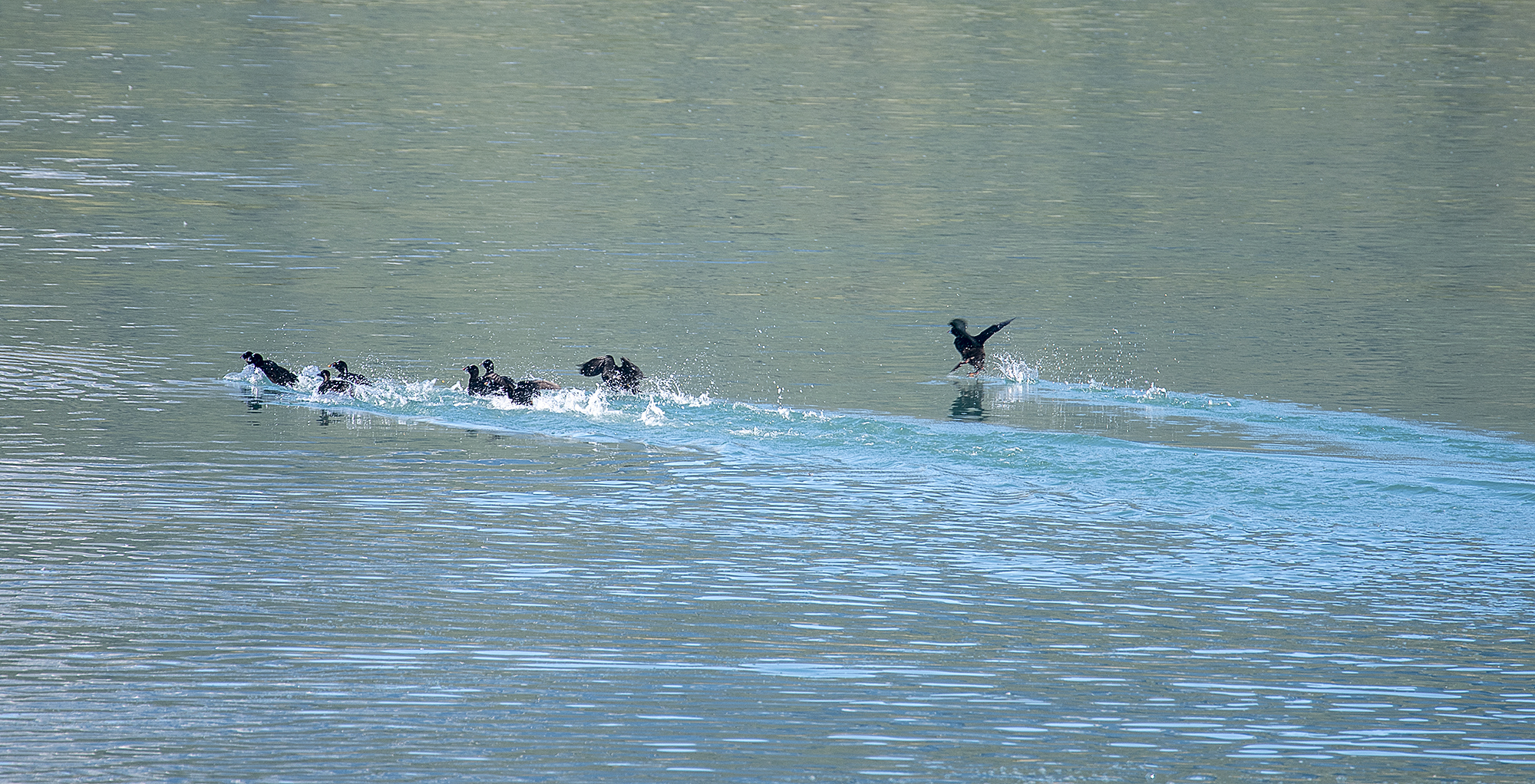
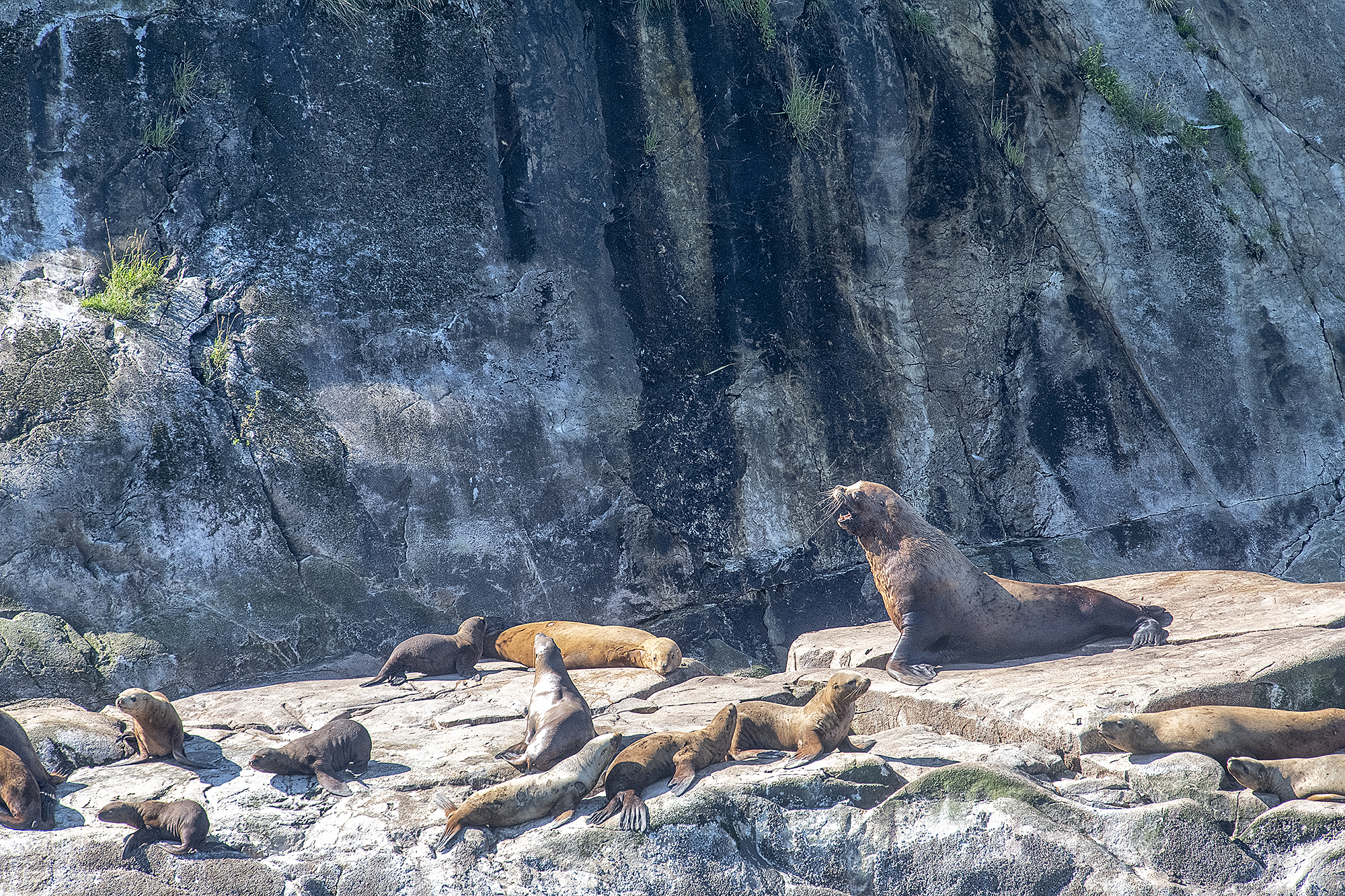
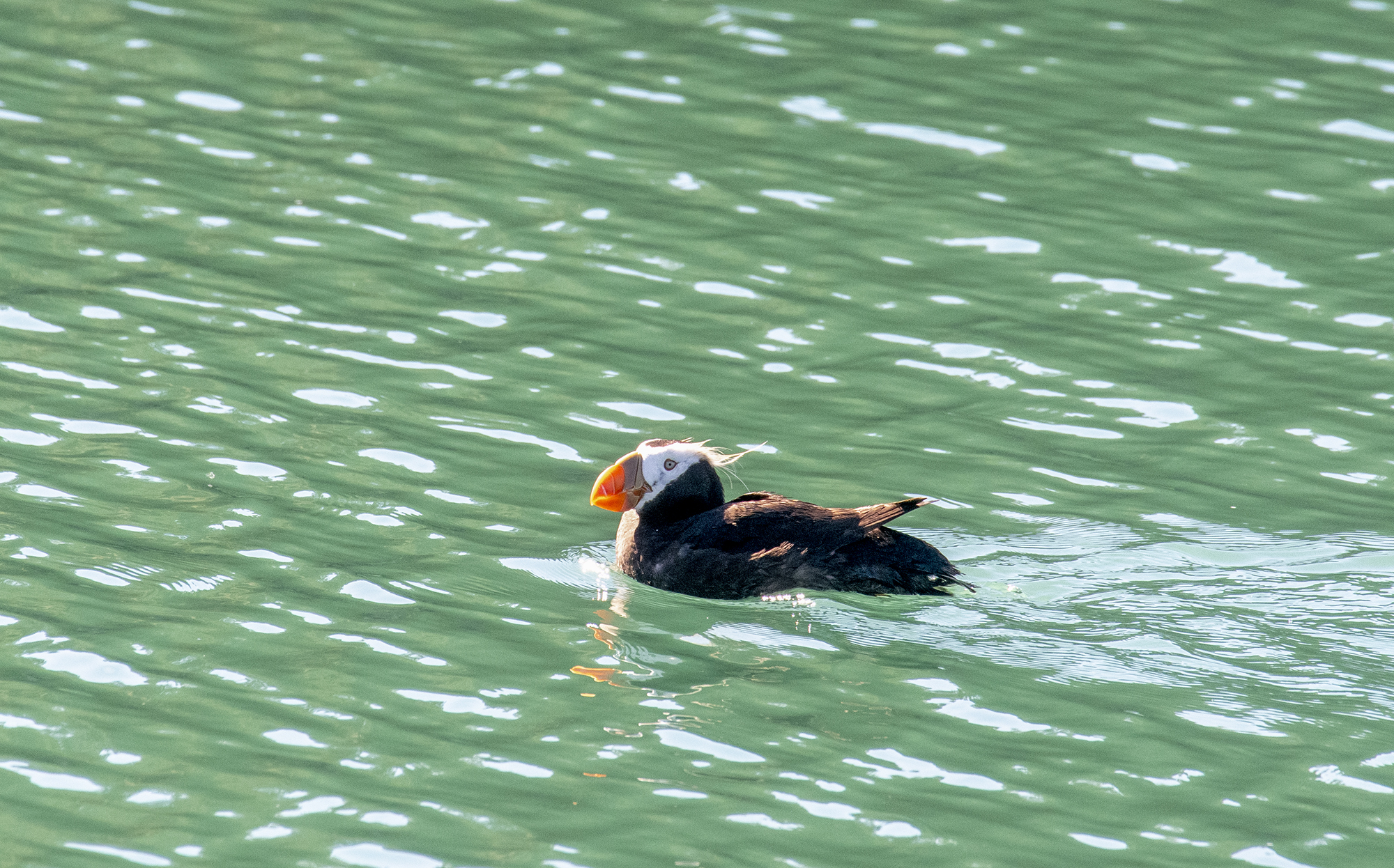
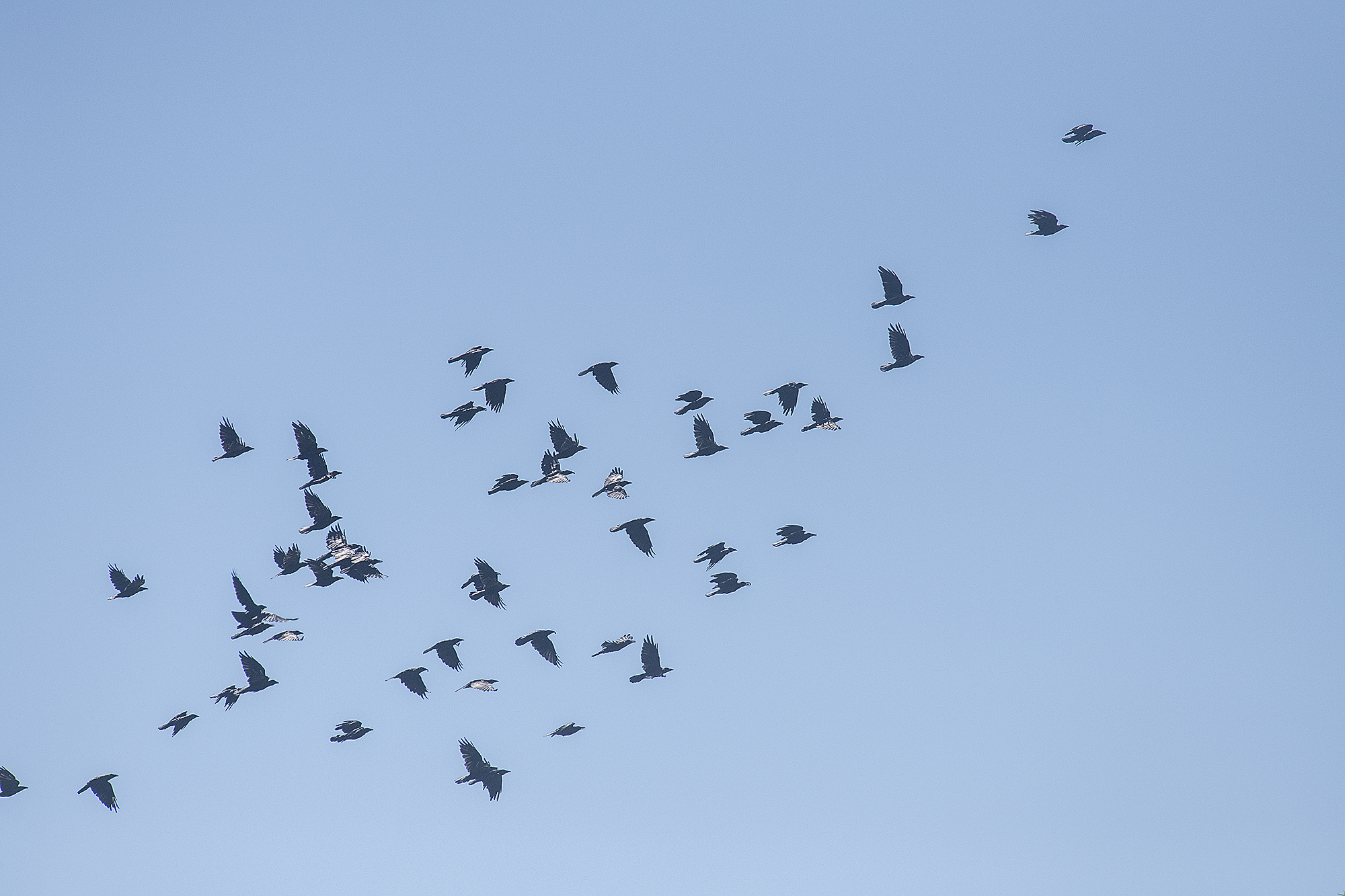
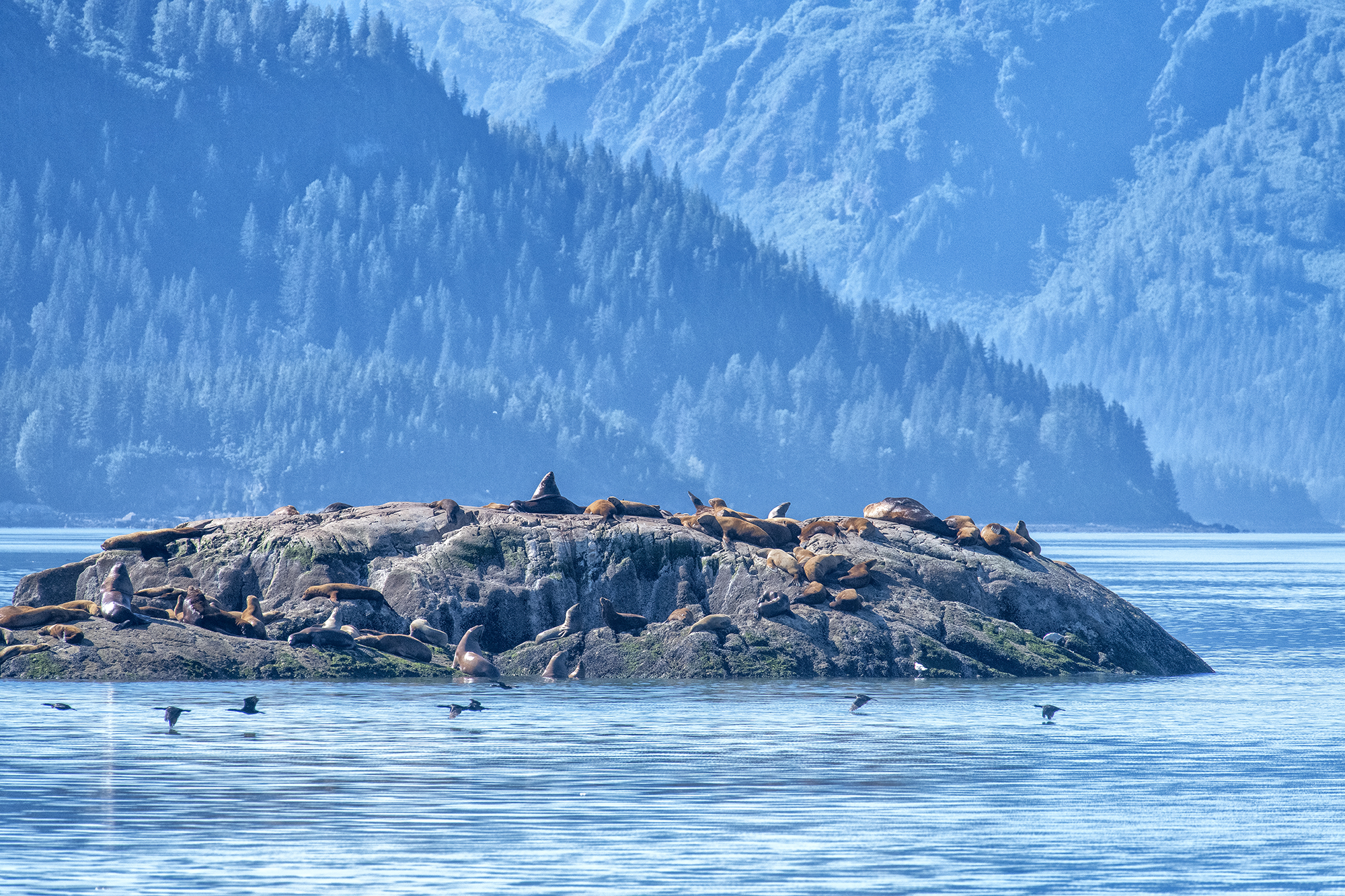
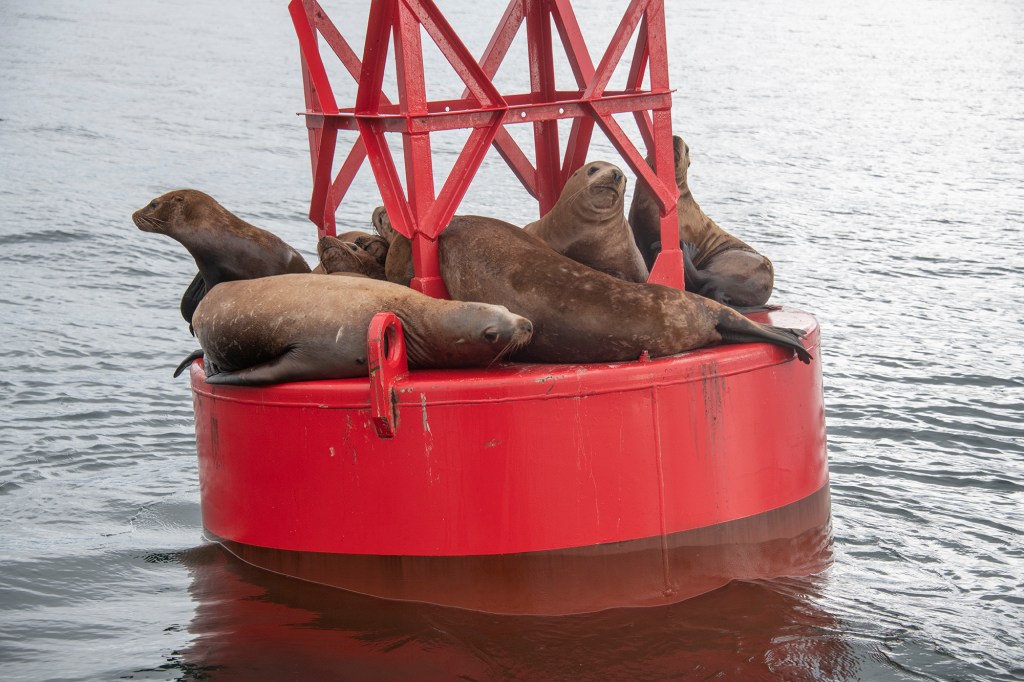
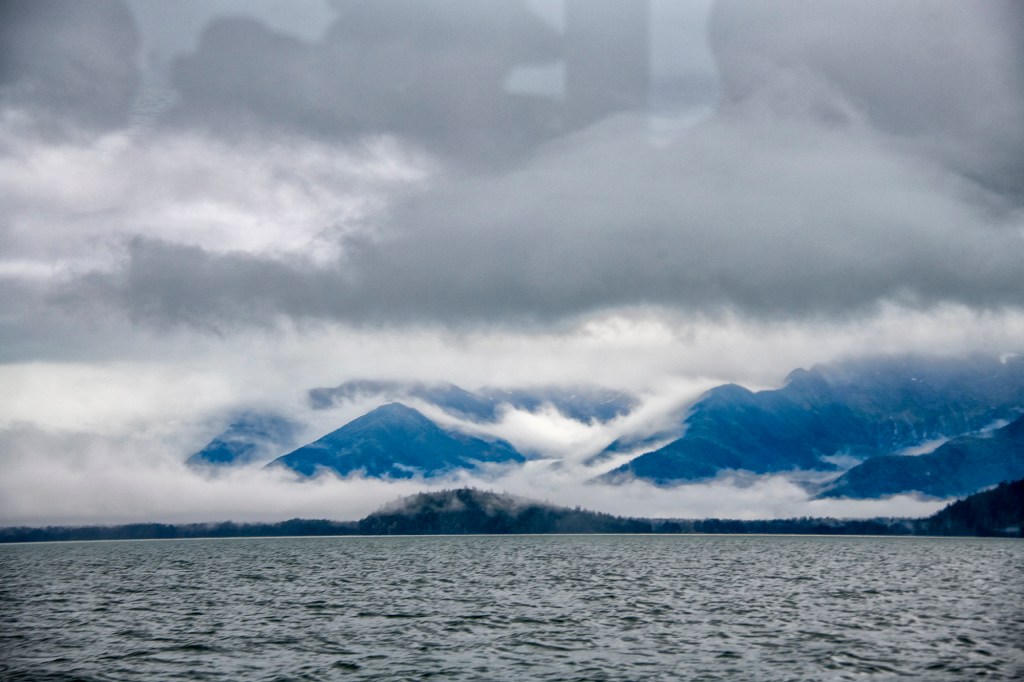
A boat tour north from Gustavius is fascinating, beautiful and full of interest – glaciers, mountains, bird life, whales, seals and so on. The smaller ship of course can access the glaciers very closely.
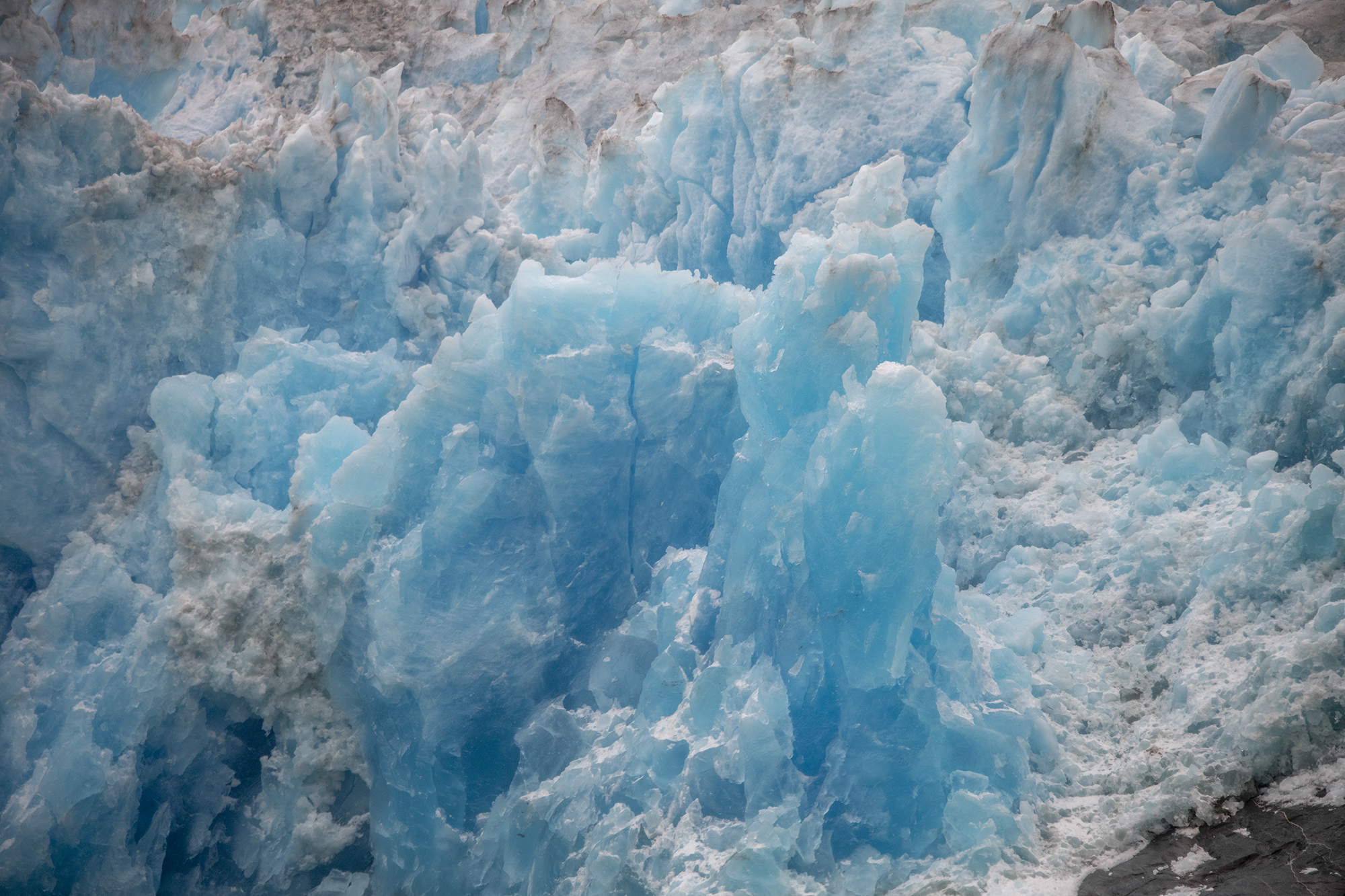
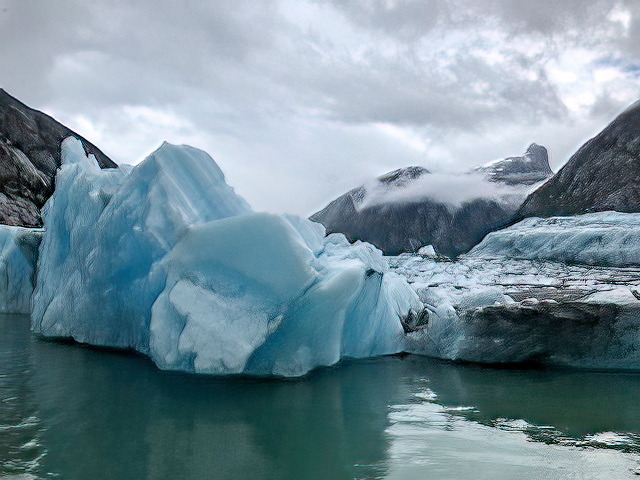
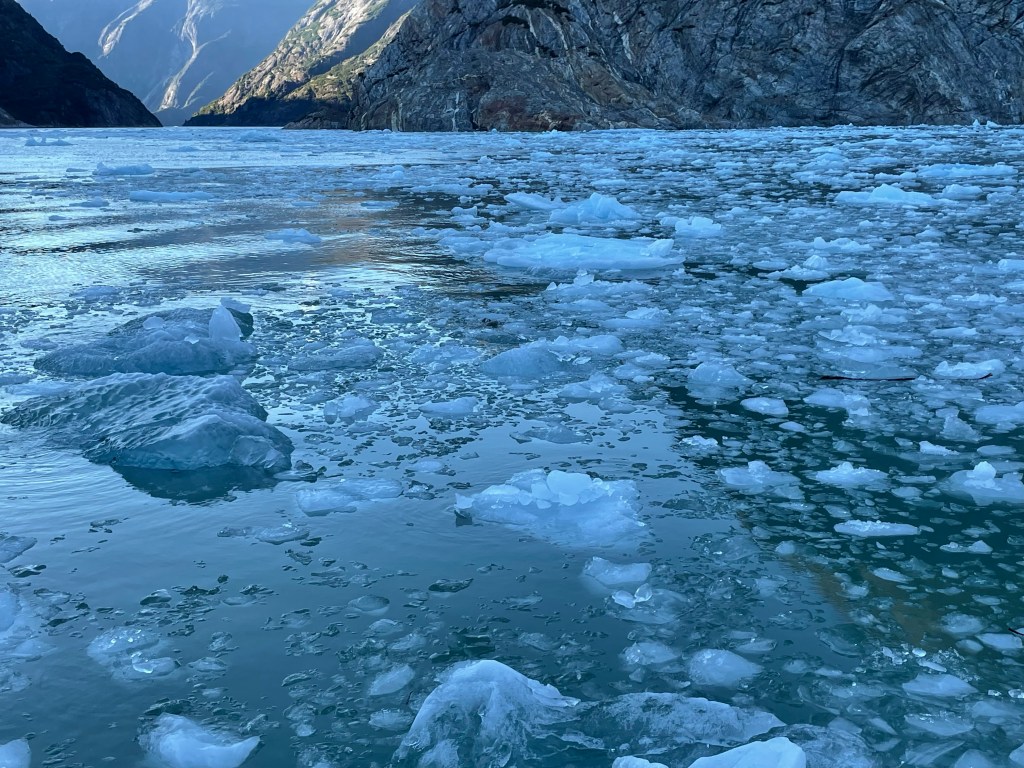
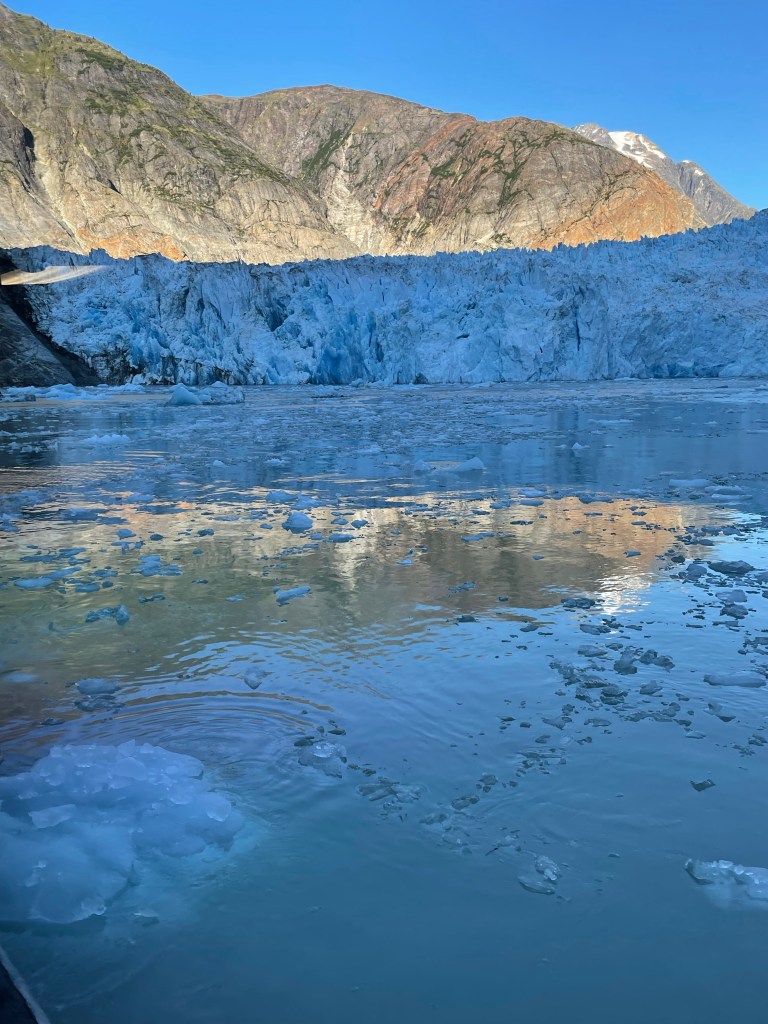
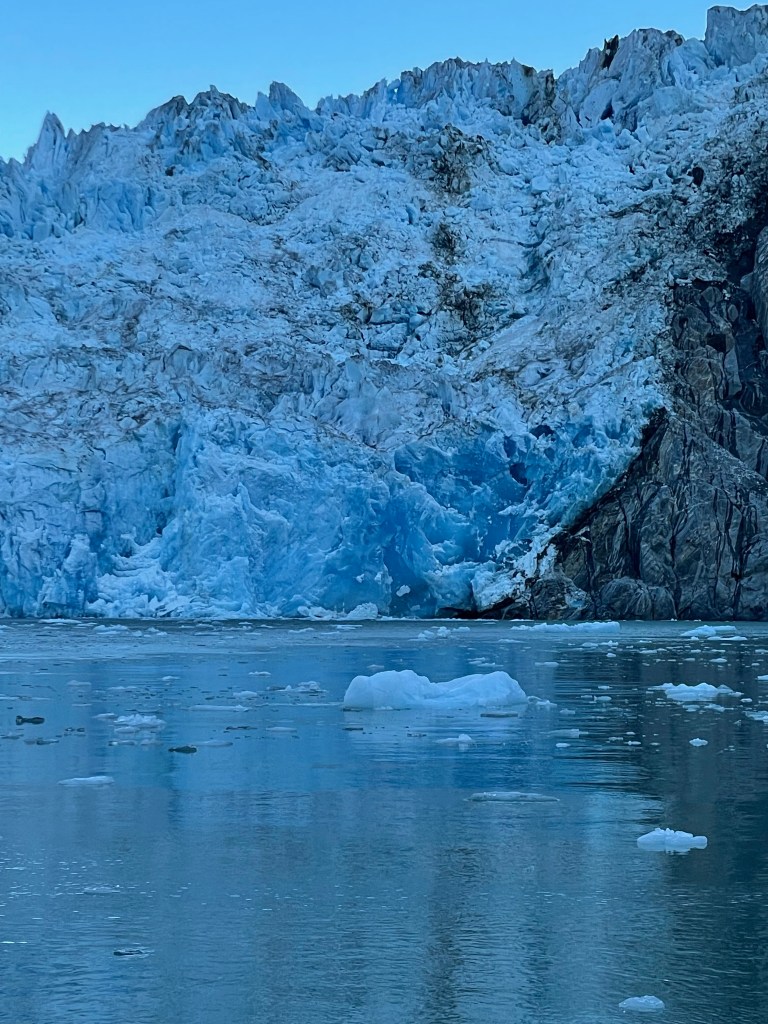
LeConte Glacier, the continent’s southermost tidewater glacier, is a shorth boat ride away from Petersburg, Alaska. It was named after biologist Joseph LeConte. It is well known for its “shooterss”, which are icebergs that calve off the glacier underwater and shoot up to the surface.
We were fortunate to get a half day tour of the glacier with Seek Alaska Tours out of Petersburg. The ride was rather bumpy up the river, and got more interesting as our pilot began dodging the multitude of icebergs floating away from the glacier’s face. Time at the face was fascinating, as we watched and heard frequent incidents of ice calving off the face.
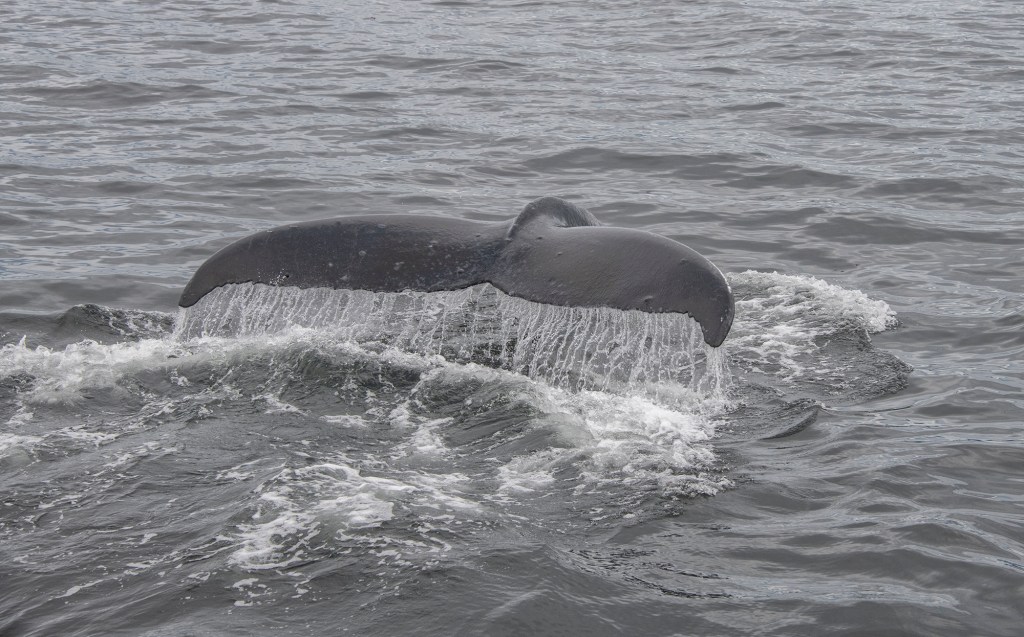
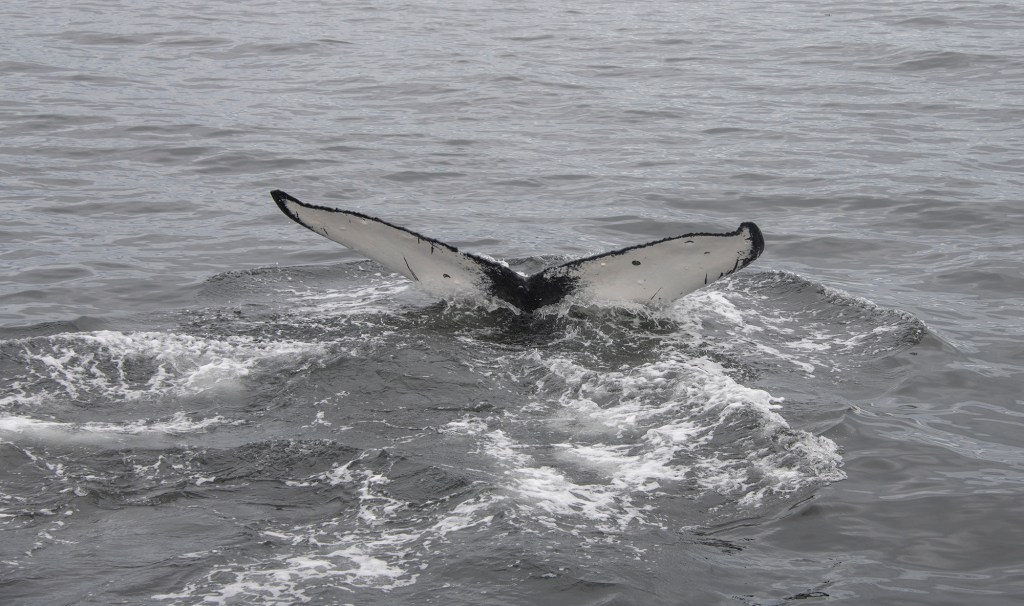
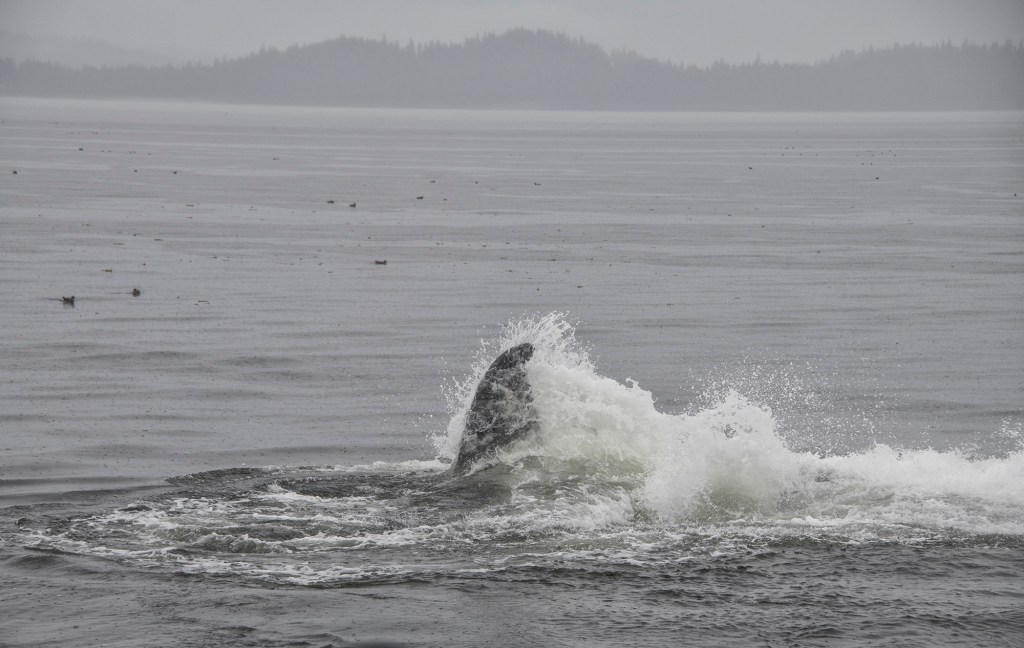
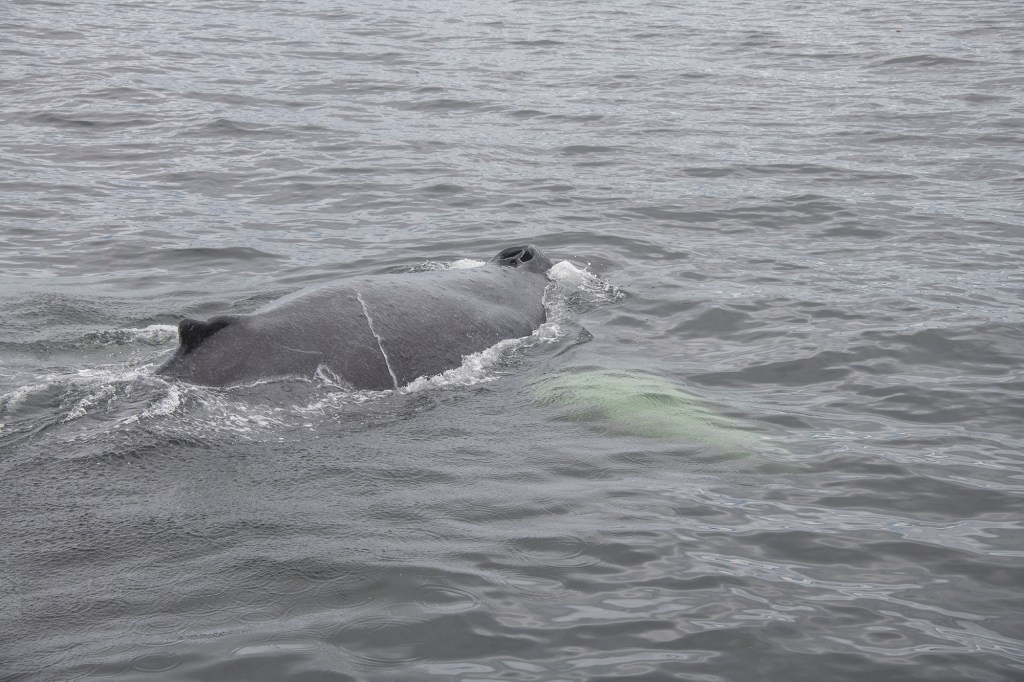
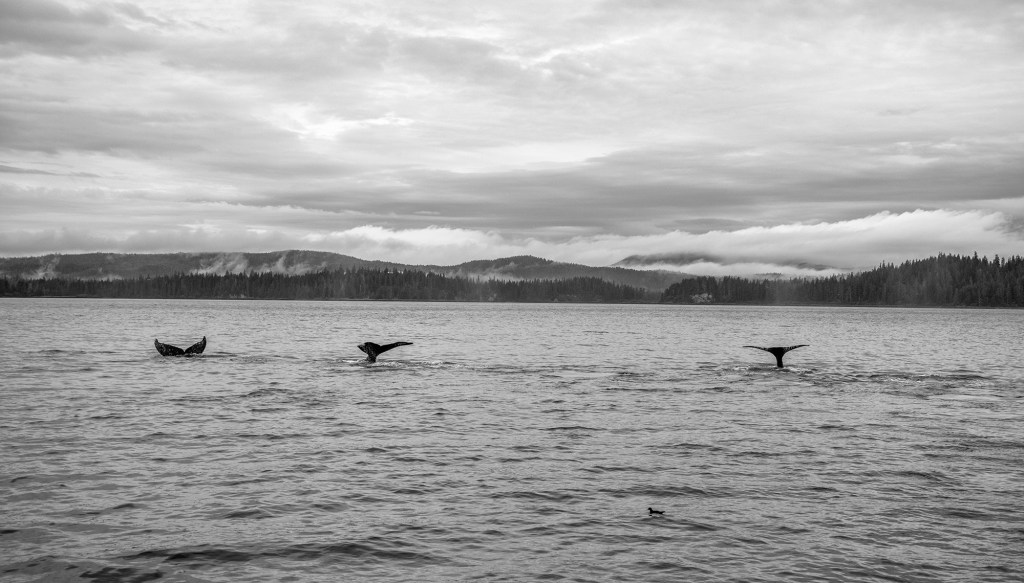
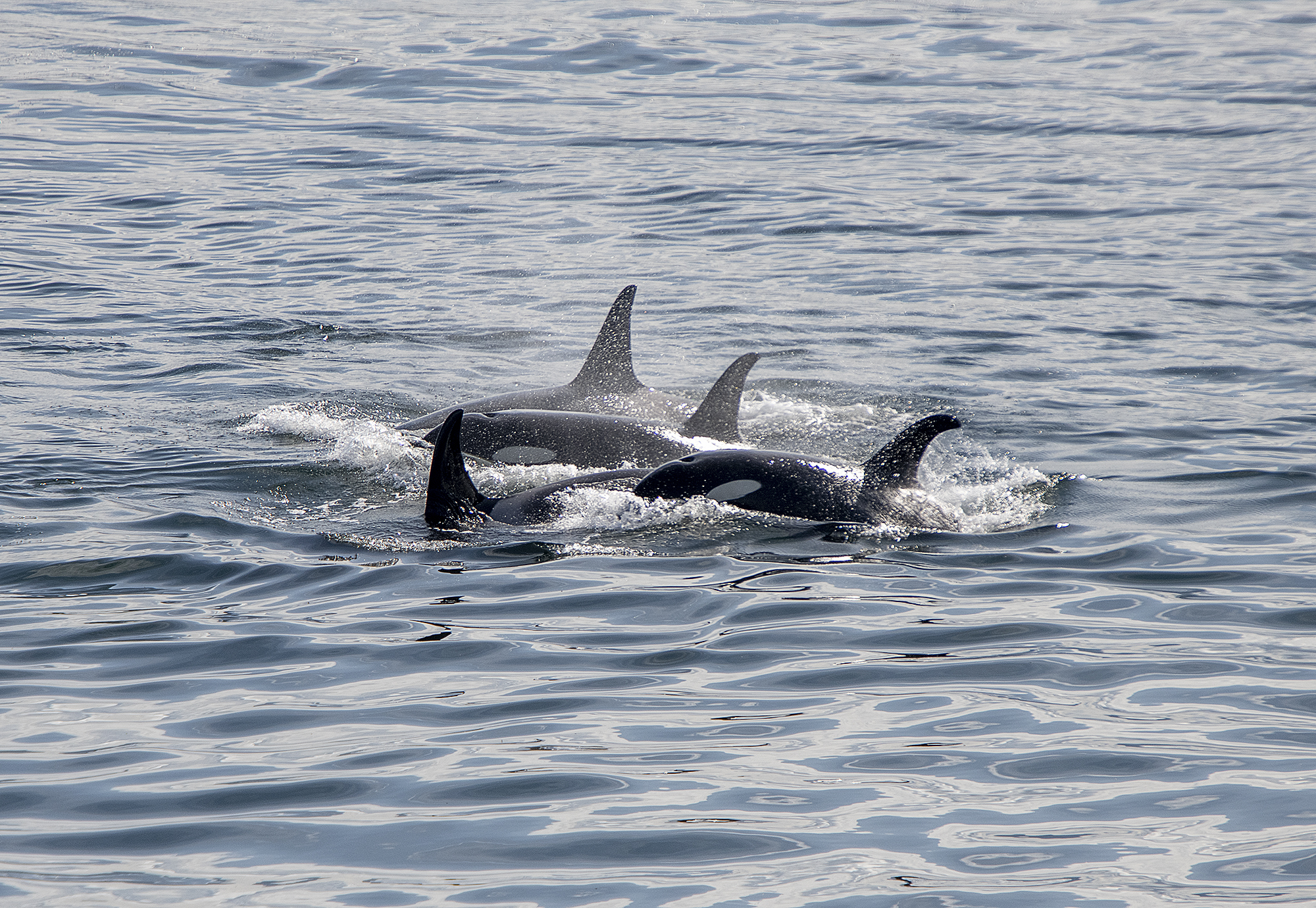
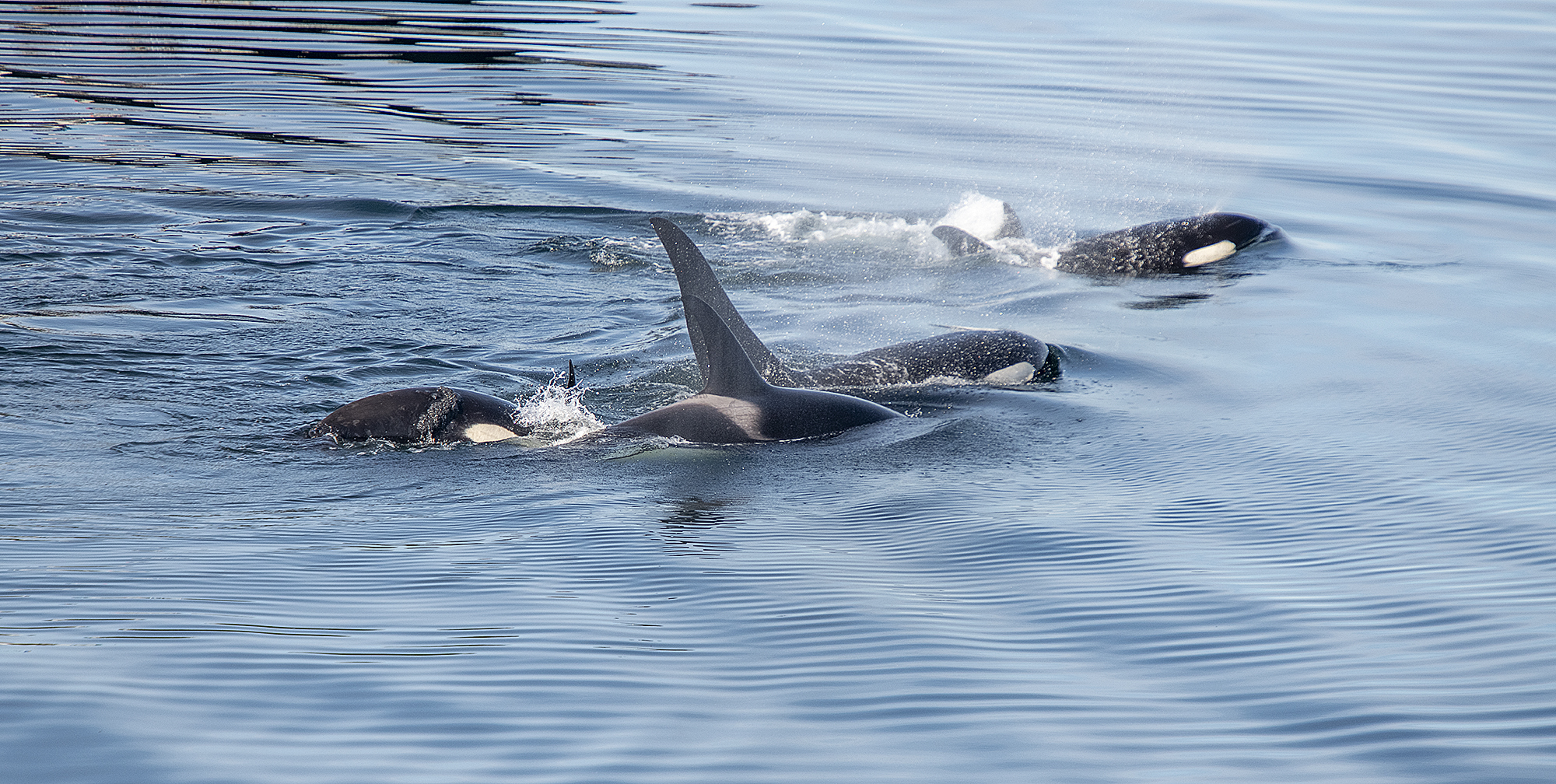
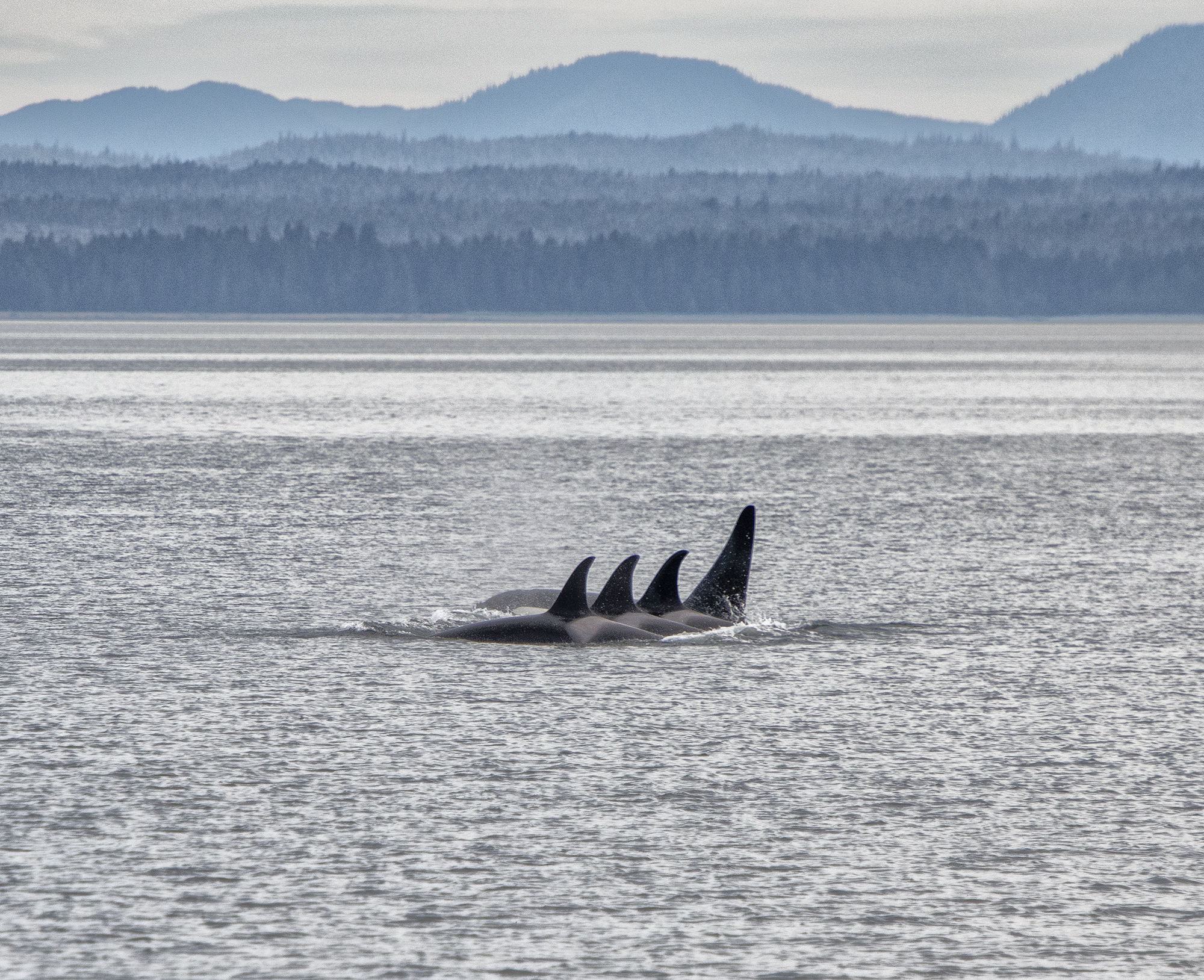
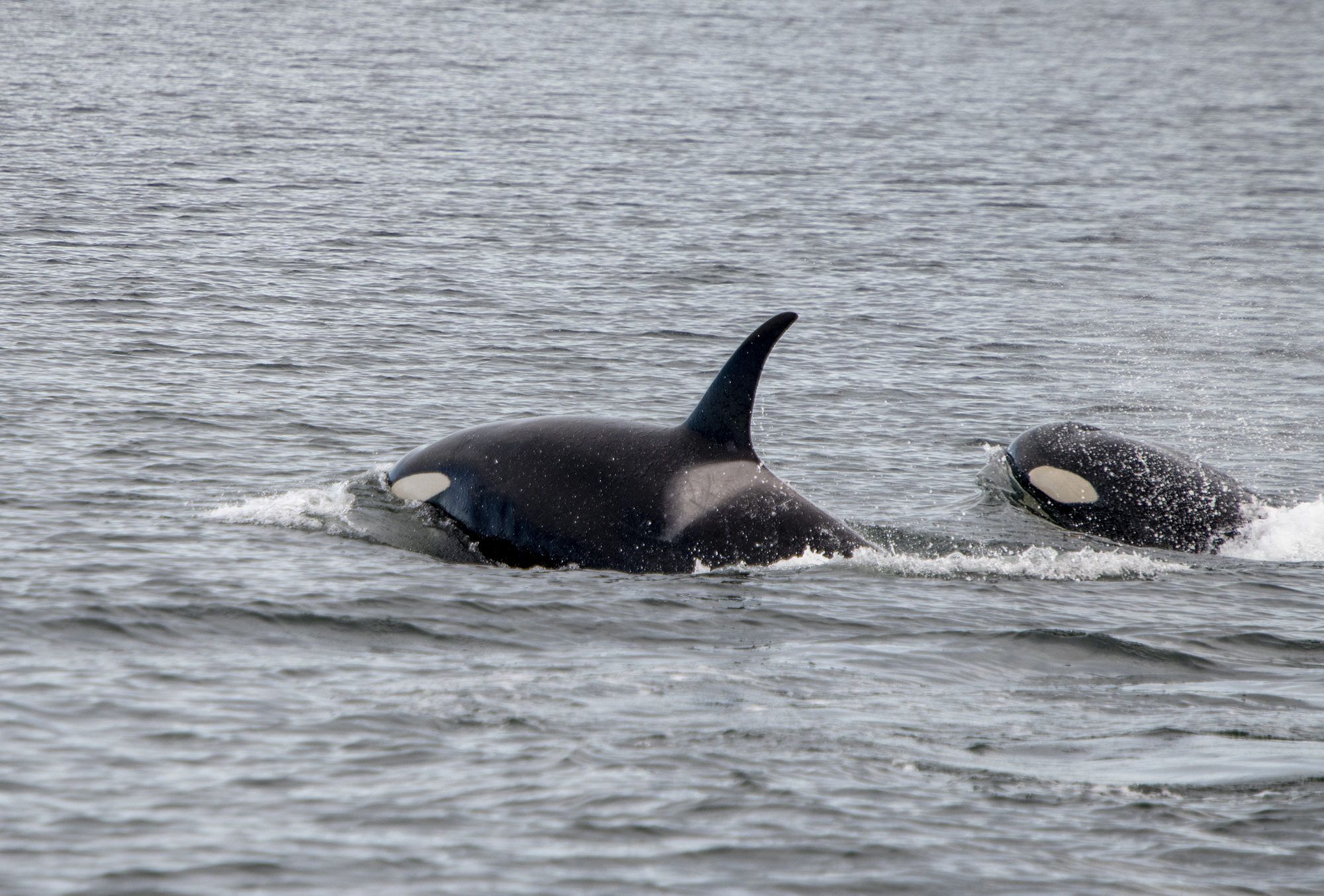
The Inner Passage of Alaska is a prime place to see whales – especially humpbacks and, if fortunate, orcas. We hade a fortunate time on this cruise as we saw both – in abundance.
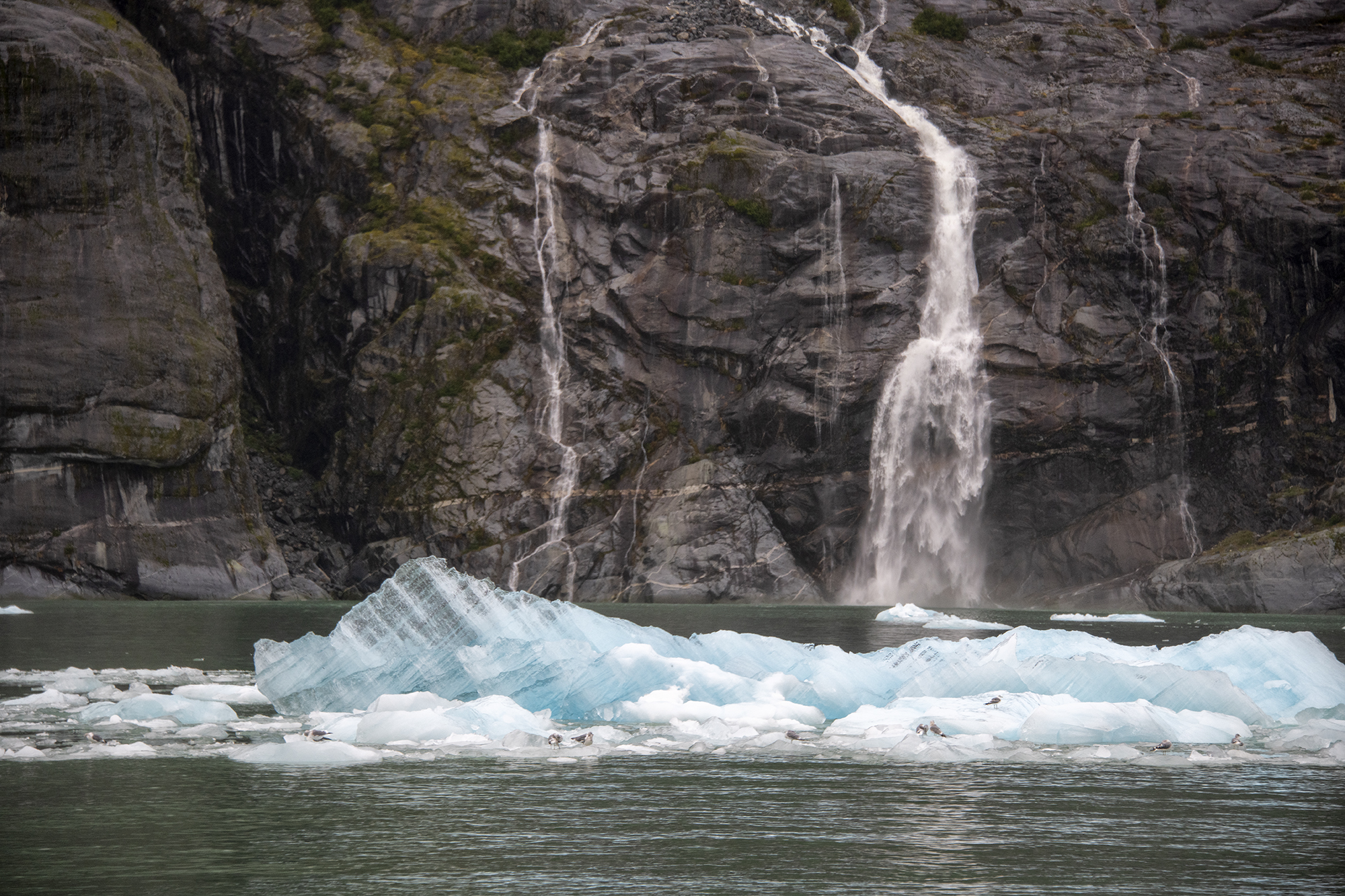
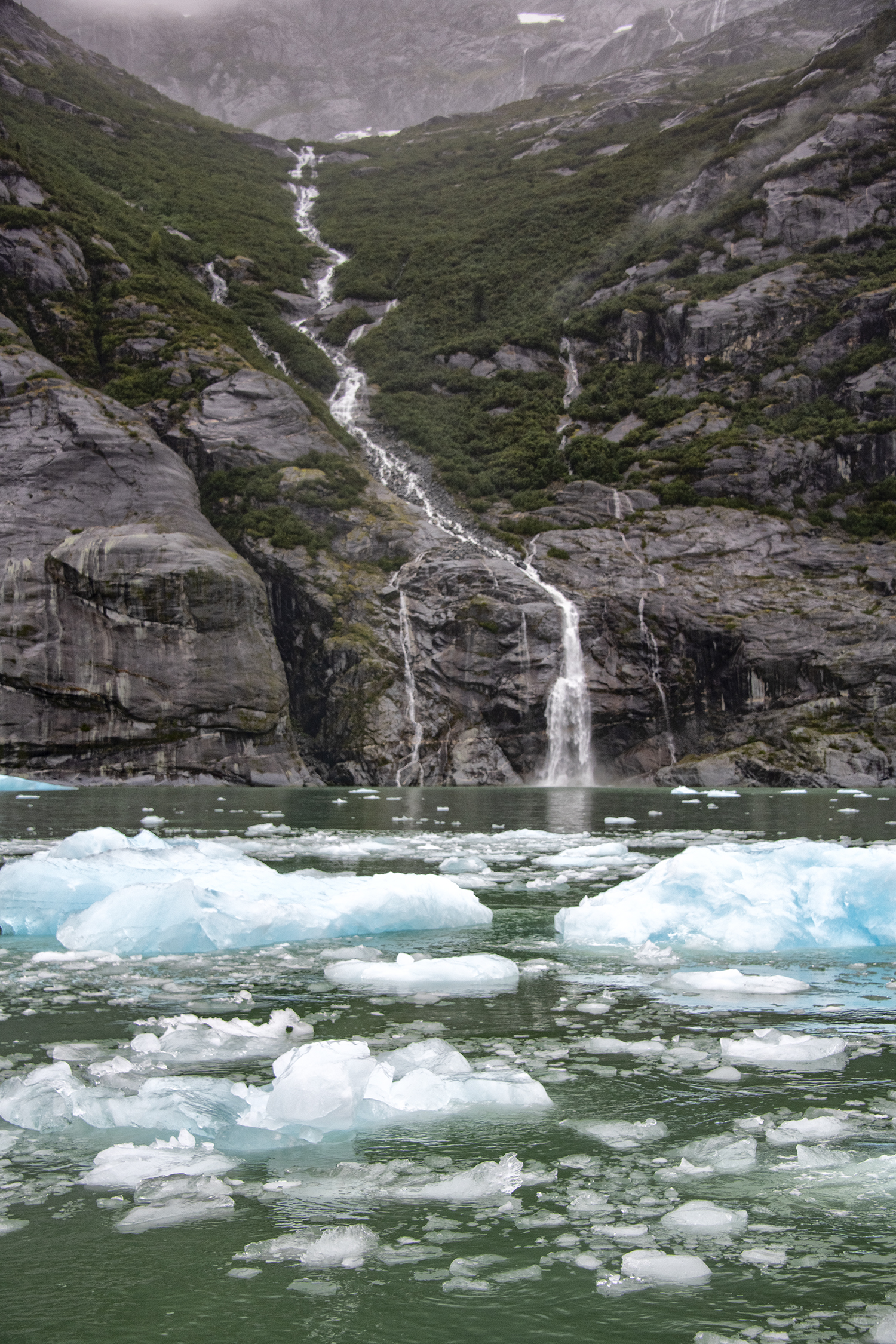
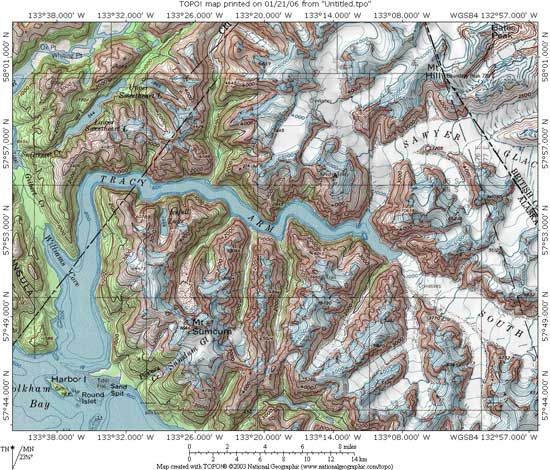
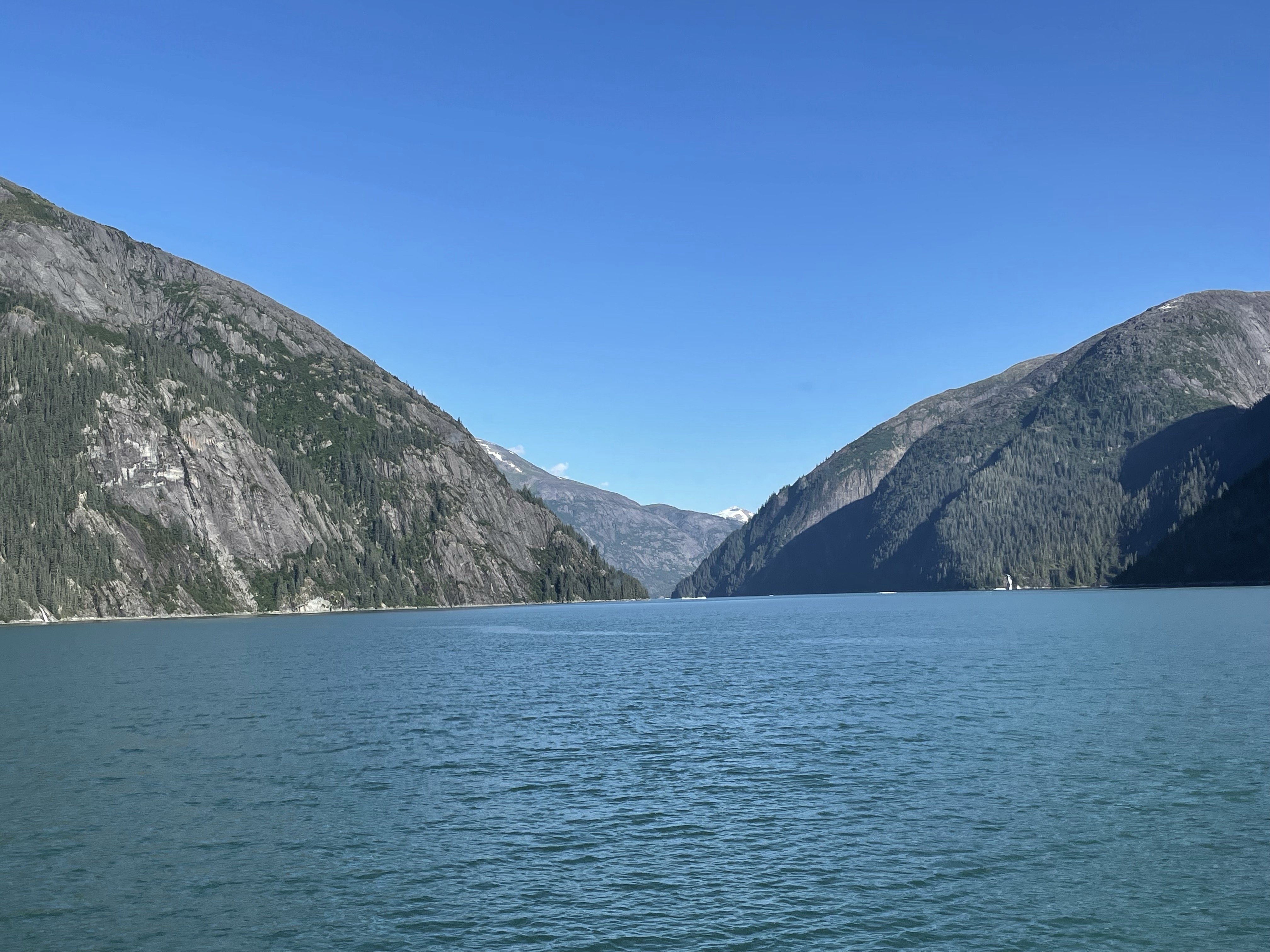
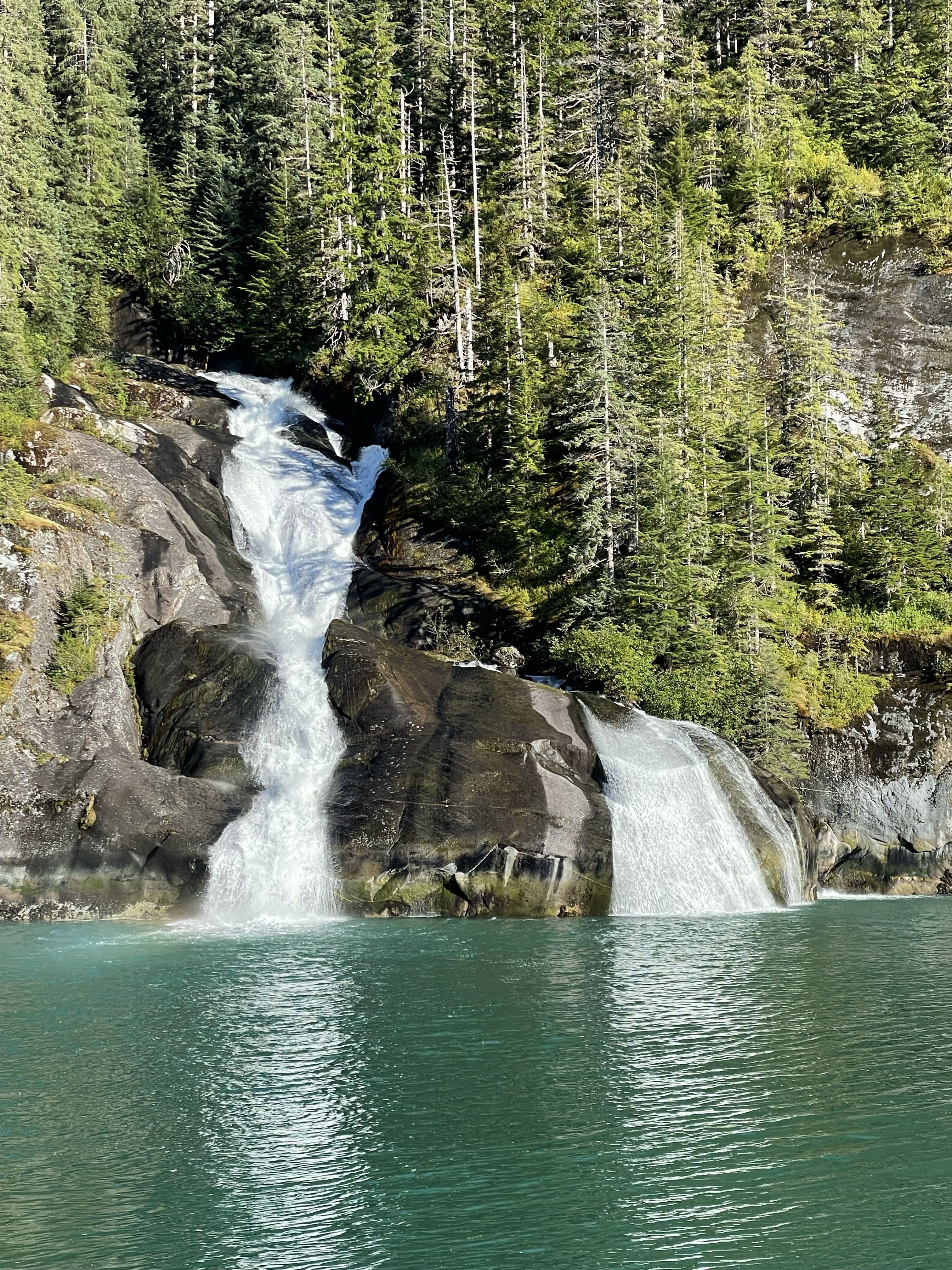
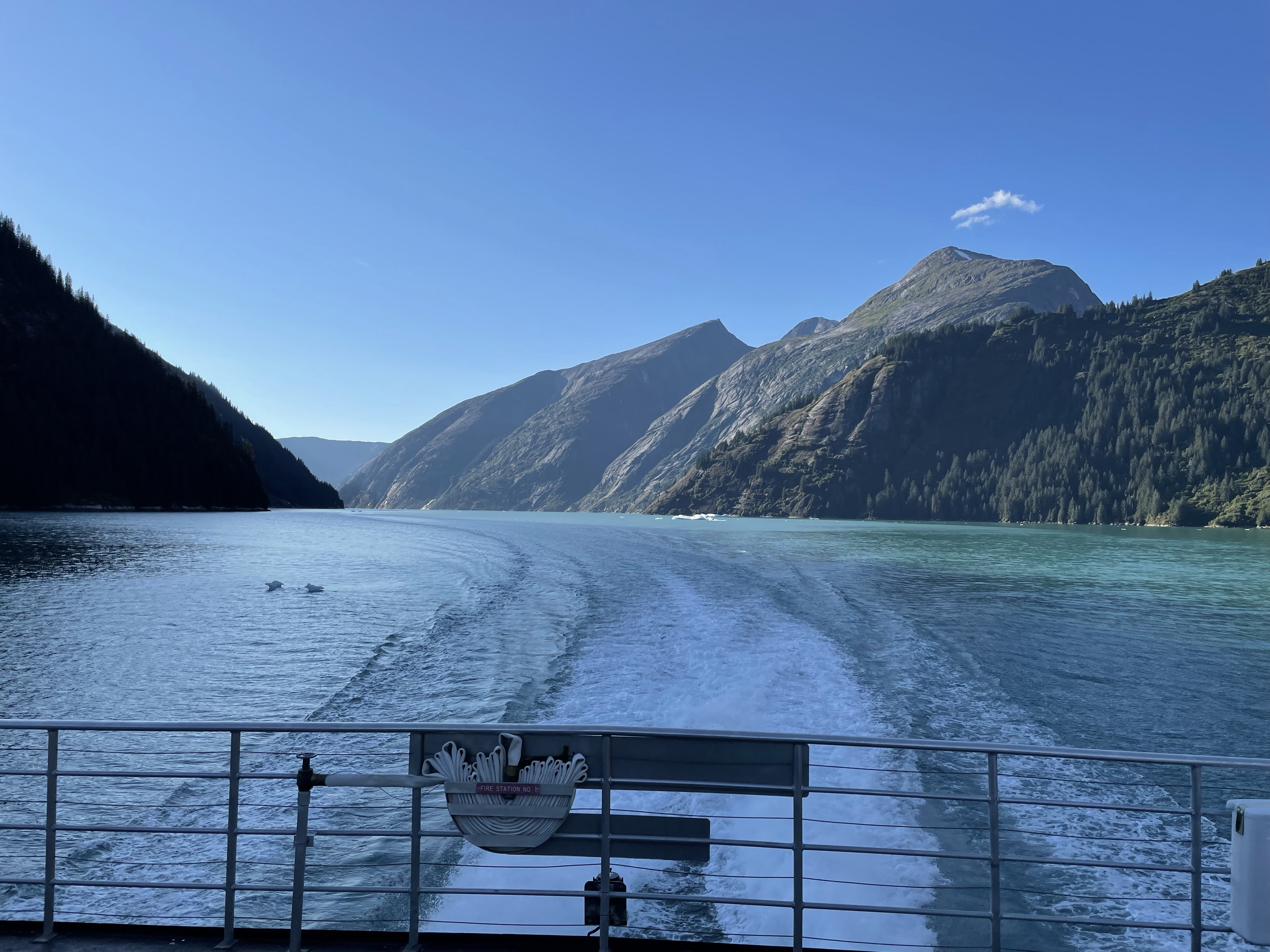
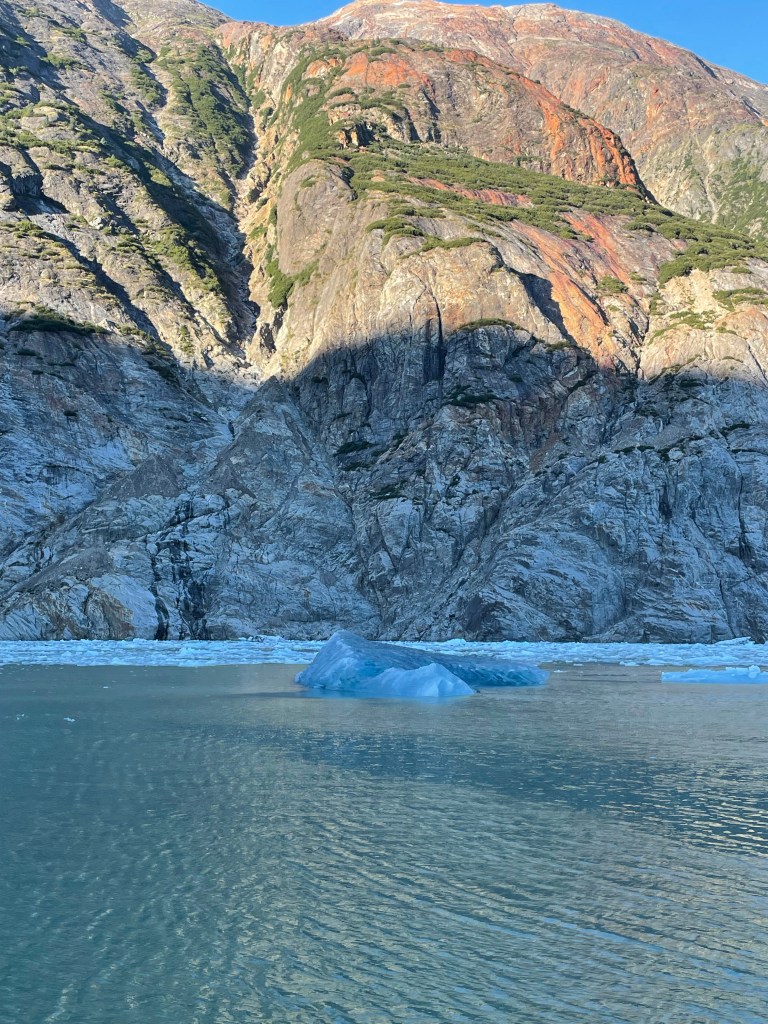
The 27 mile Tracy Arm fjord is a bigger, better and more dramatic natural gem than Mendenhall Glacier in Juneau. The inlet is very narrow – at times no more than half a mile wide – with cliffs that rise more than 3000 feet on either side, and waterfalls that cascade down the steep rock walls. The arm is locates some 45 miles south of Juneau. North and South Sawyer glaciers mark the end of the fjord, and are among the most dramatic ice fields in Alaska.
We like to do a little off-roading in Colorado in our Jeep. The roads taken include Kebler Pass and Paradise Divide near Crested Butte, Boreas Pass in Breckenridge and Cinnamon Pass from Lake City to Silverton. These are certainly not the toughest trails, but they do include their share of bumps, narrowness, shelf roads and so on. Most recently we drove Last Dollar Road from Telluride to the Ridgeway road.
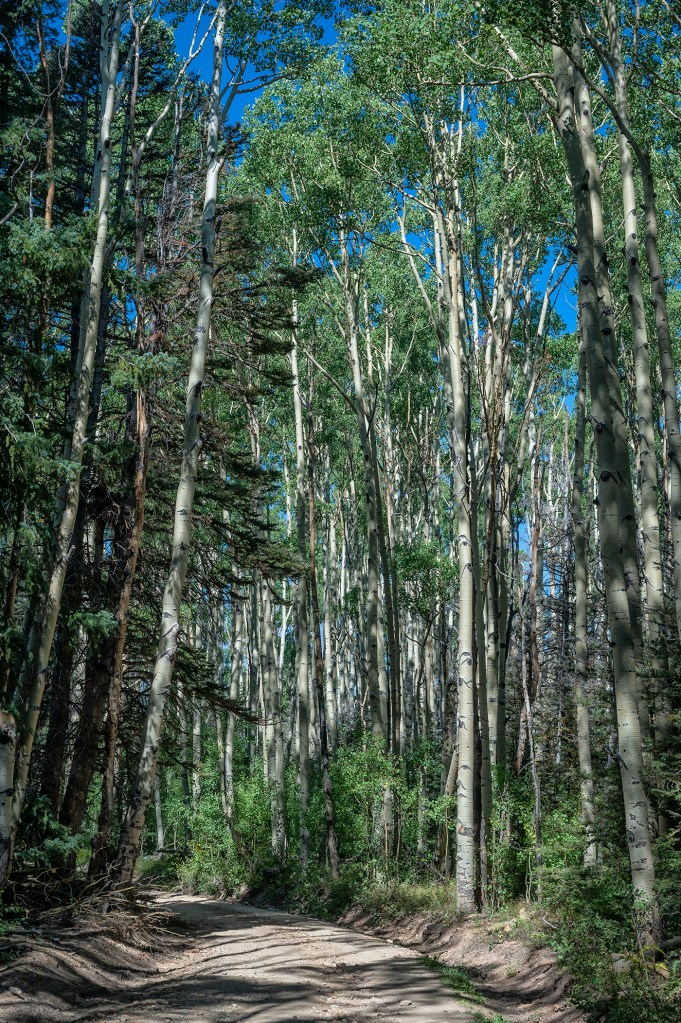
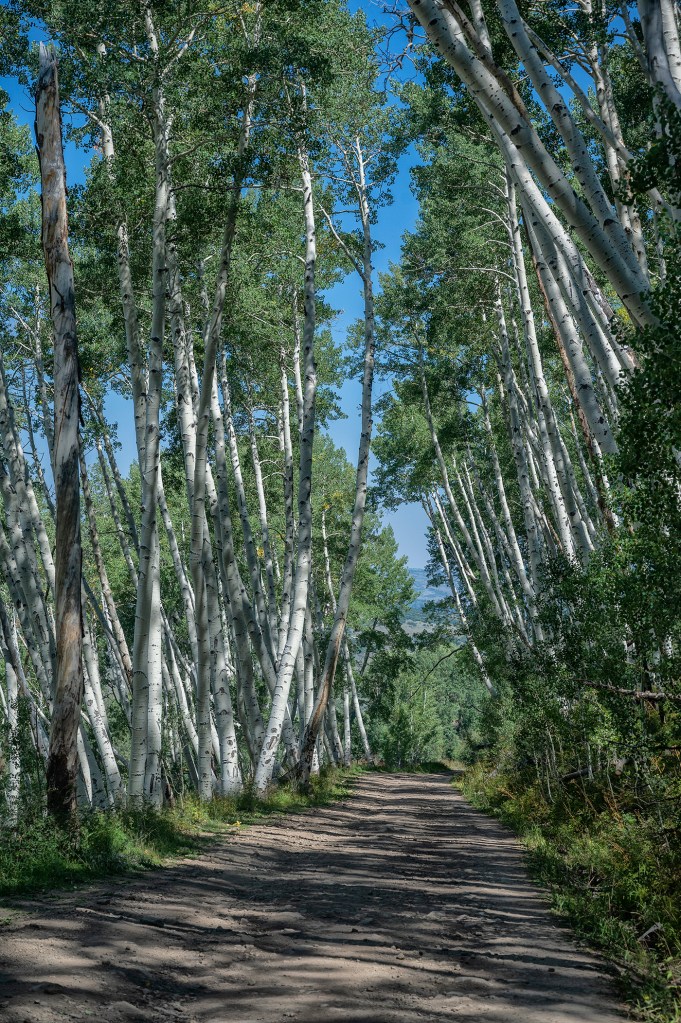
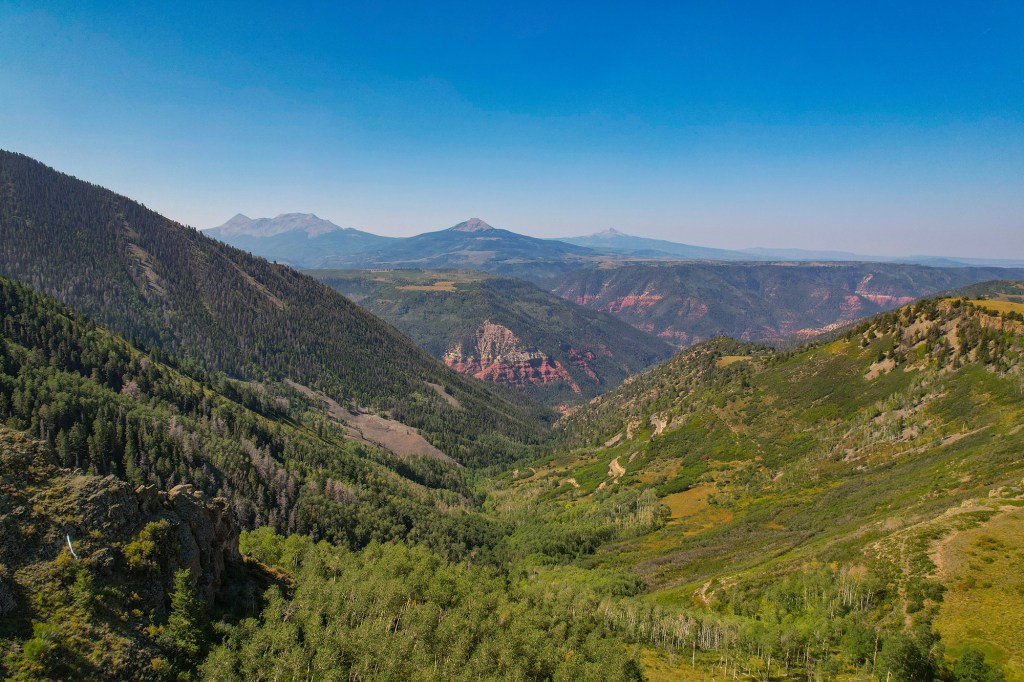
Last Dollar Road we named as an alternative to Million Dollar Highway from Silverton to Ouray. It is 13 miles long, very scenic, and runs through stretches of ranchlands and the San Juan Mountains. On the south end it offers spectacular vistas including Mt. Wilson. The drive almost requires four wheel drive in sections, and takes about 2-3 hours. The drive is particularly attractive in the summer wildflower season and during the fall color changes in the aspen groves along much of the road.
defaultdefault
The Telluride-Ridgeway-Ouray area offers many other off road adventures, including Imogene Pass, Yankee Boy, Ophir pass and so on. These tend to be somewhat more challenging, and definitely require four wheel capability. Down the road for us!
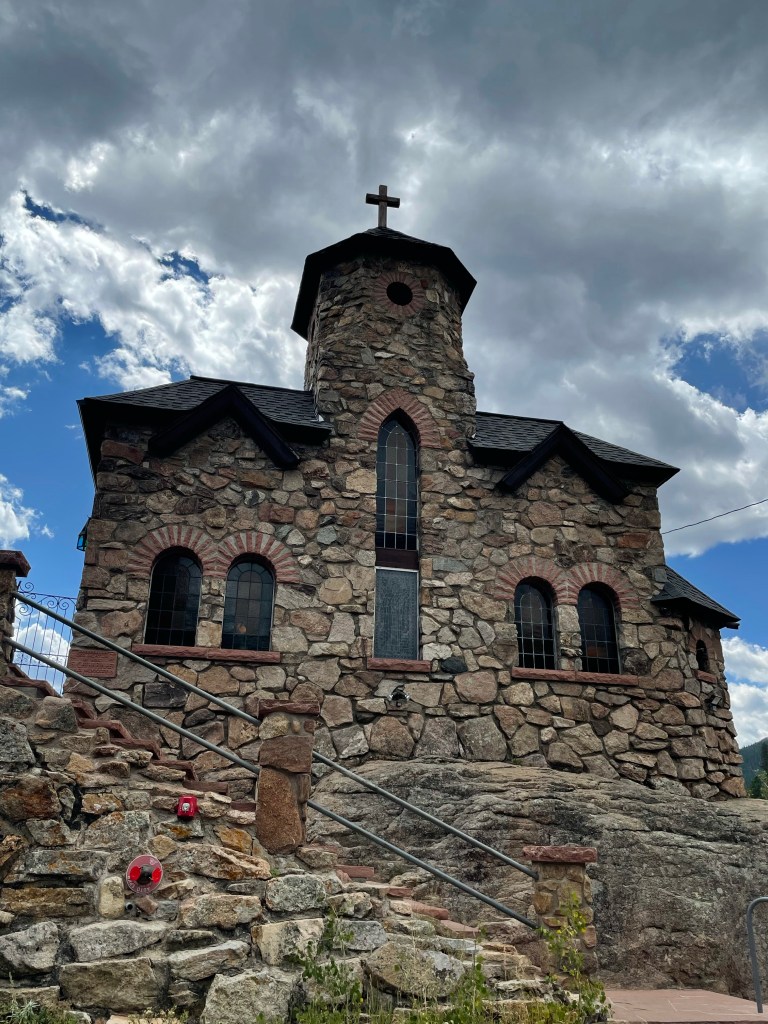
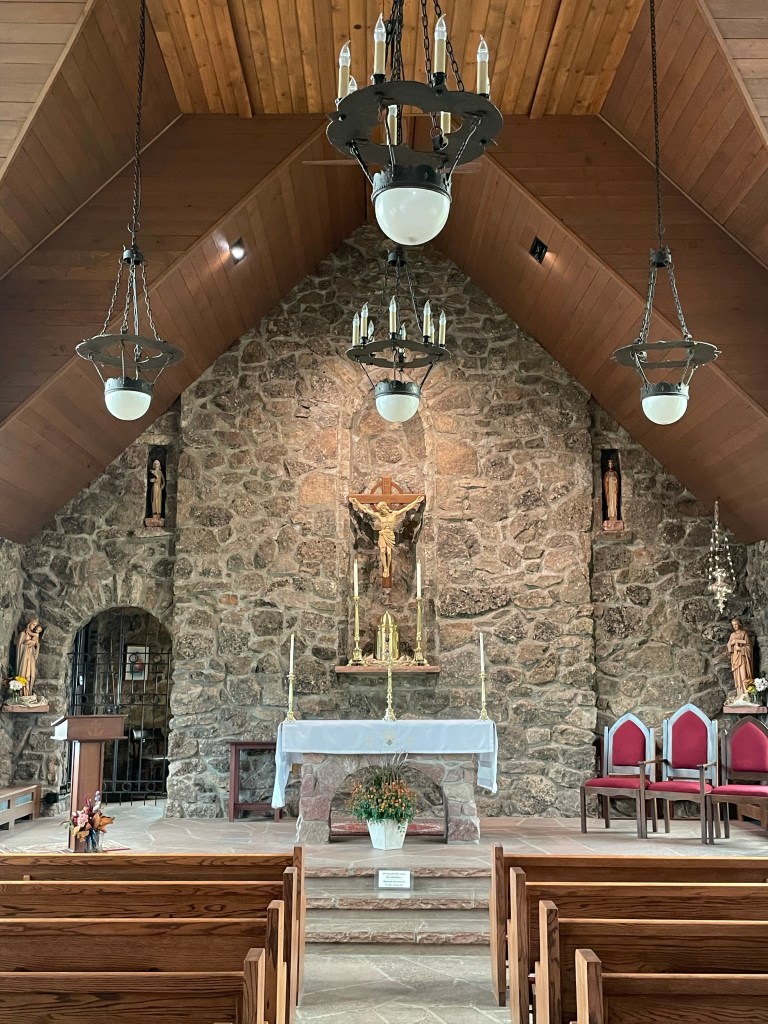
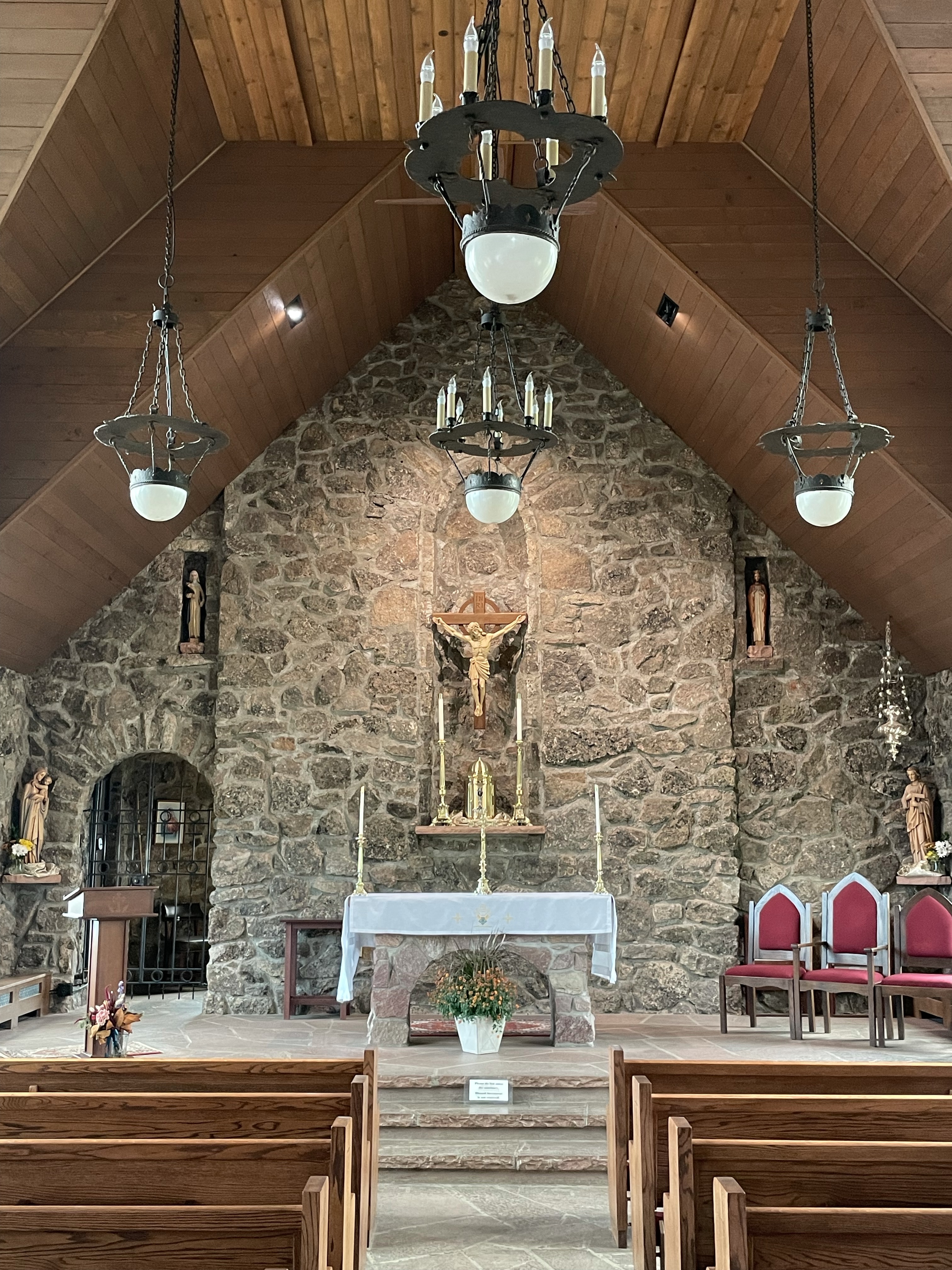
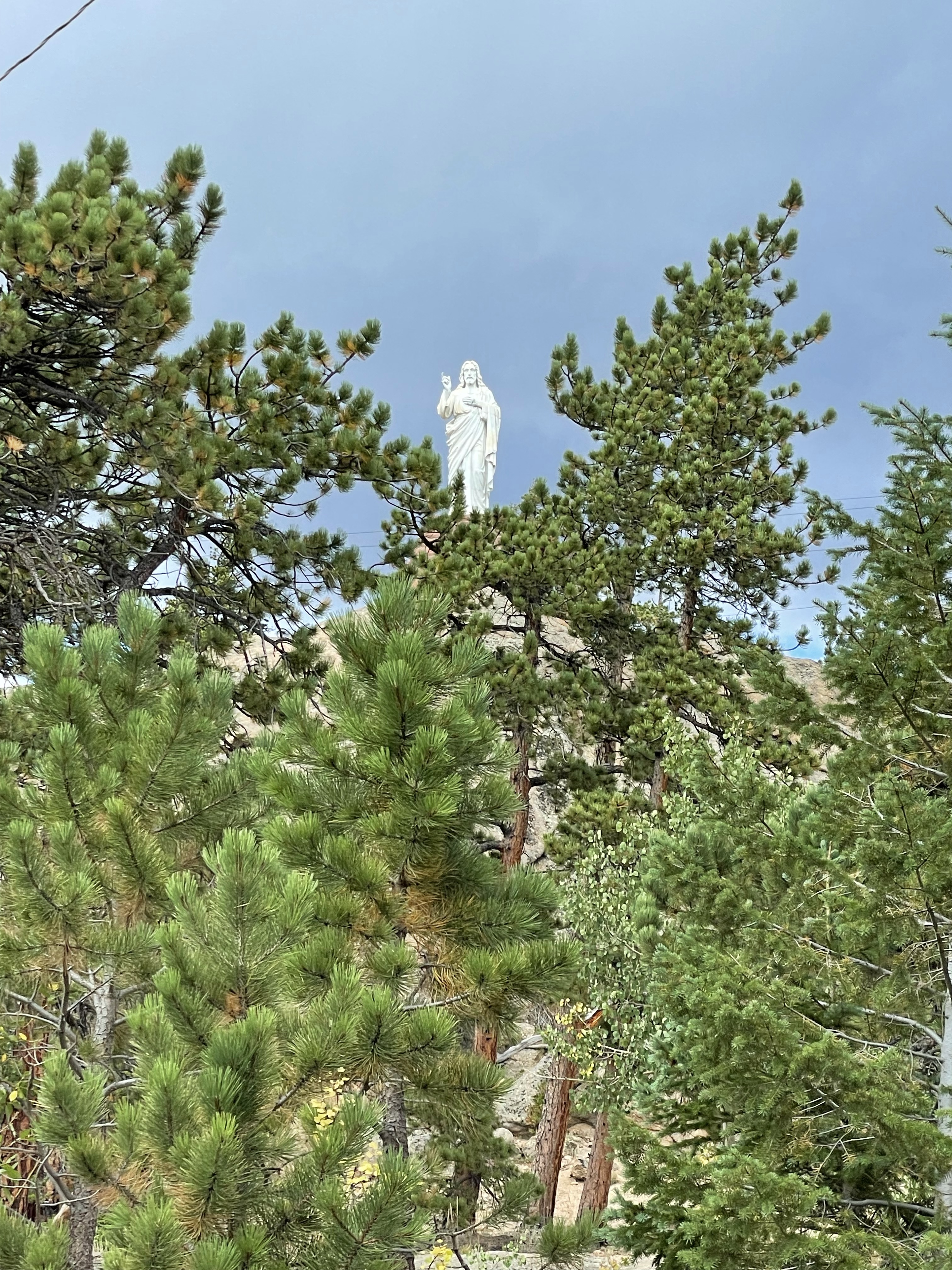
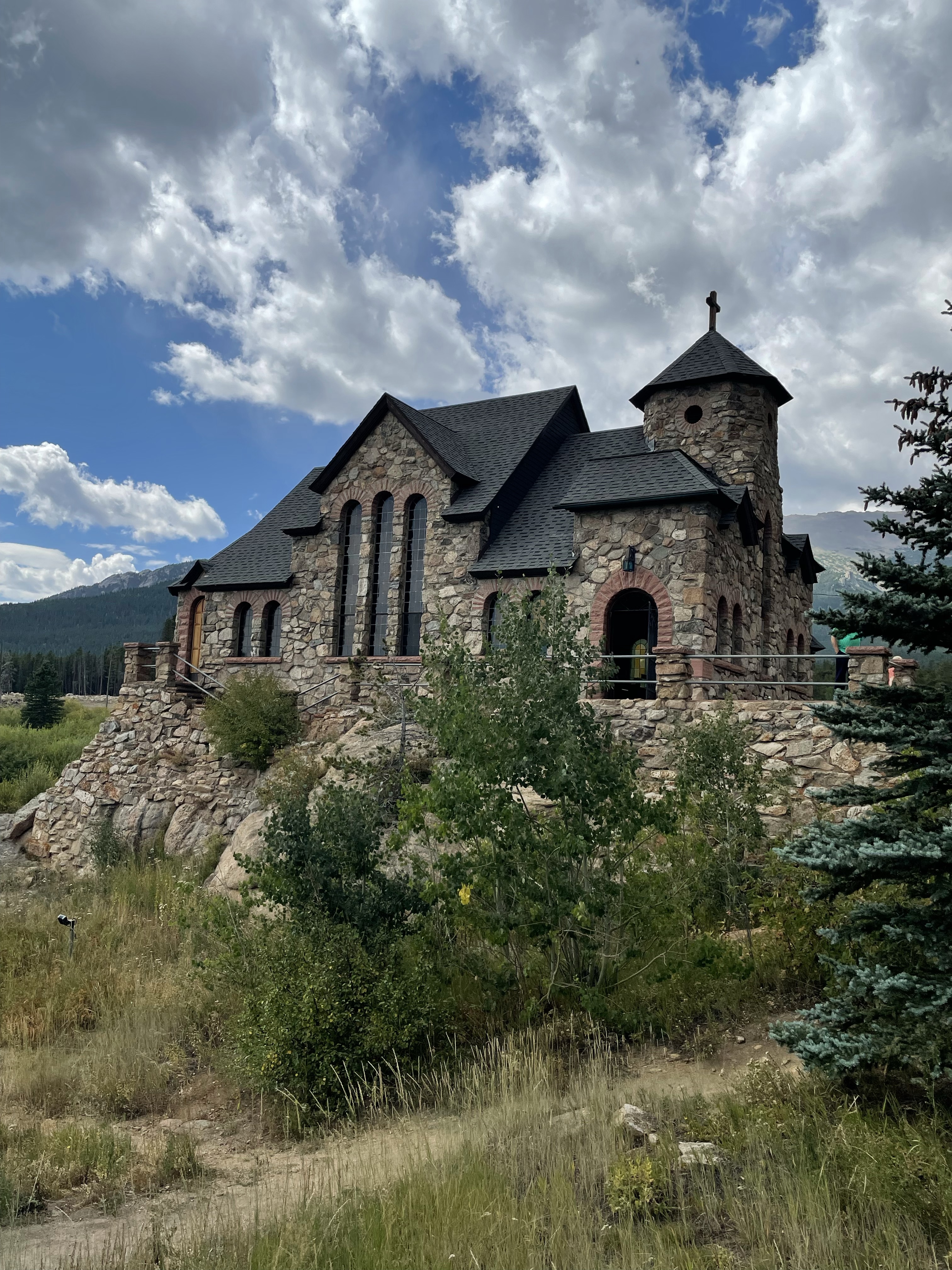
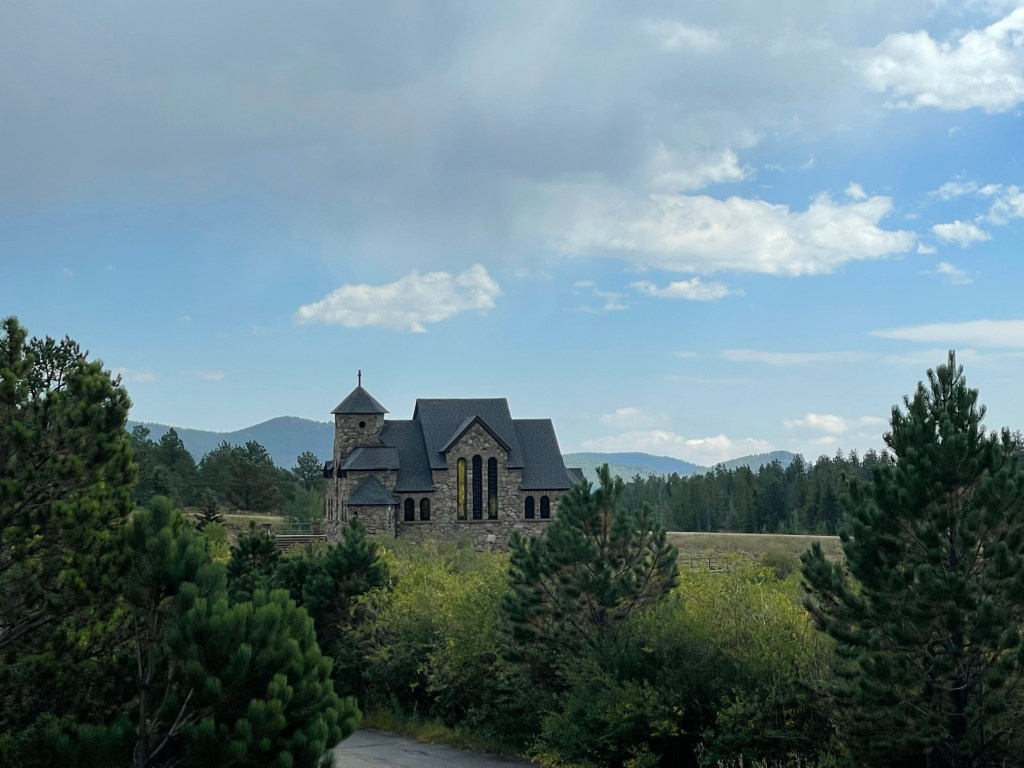
If you are driving north on Colorado route 7, about 12 miles south of Estes Park in Allenspark keep an eye out on your left for Chapel on the Rock. This pretty little chapel is well worth a 15 minute stop. It is a nearly 100 year oldfunctioning Catholic church built atop a riveting rock formation. It is operated by the Catholic Archdiocese of Denver.
The Chapel was first conceived in 1916 by Monsignor Joseph Bosetti, who happened across the rocky area where the church would later be built and was inspired by Mathew 16:19, which states “upon this rock I will build my church.” Monsignor Bosetti did just that, though lack of money delayed construction.
After 20 years of struggles the land was donated to the monsignor by Mr. and Mrs. Oscar Malo, after whom the chapel was named. Construction finished in 1936, and in 1999 Boulder County officially designated it a historical landmark.
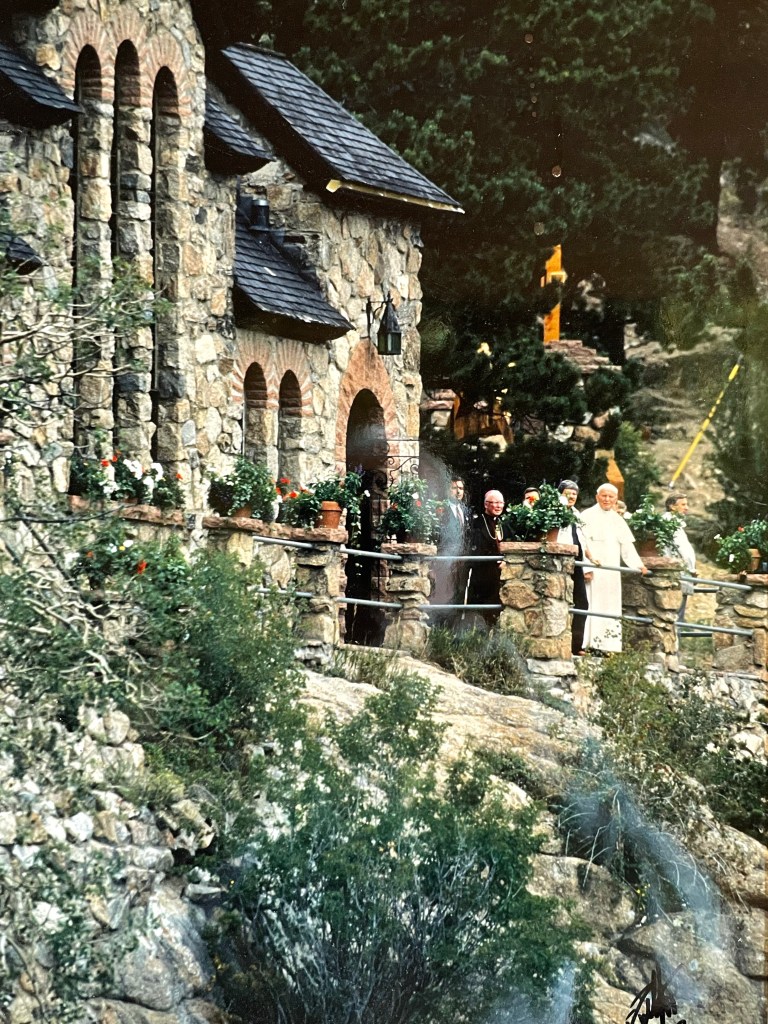
In 1993 Pope John Paul II visited the Chapel while touring Denver. He prayed inside the church and blessed it afterwards before hiking in the surrounding forest.
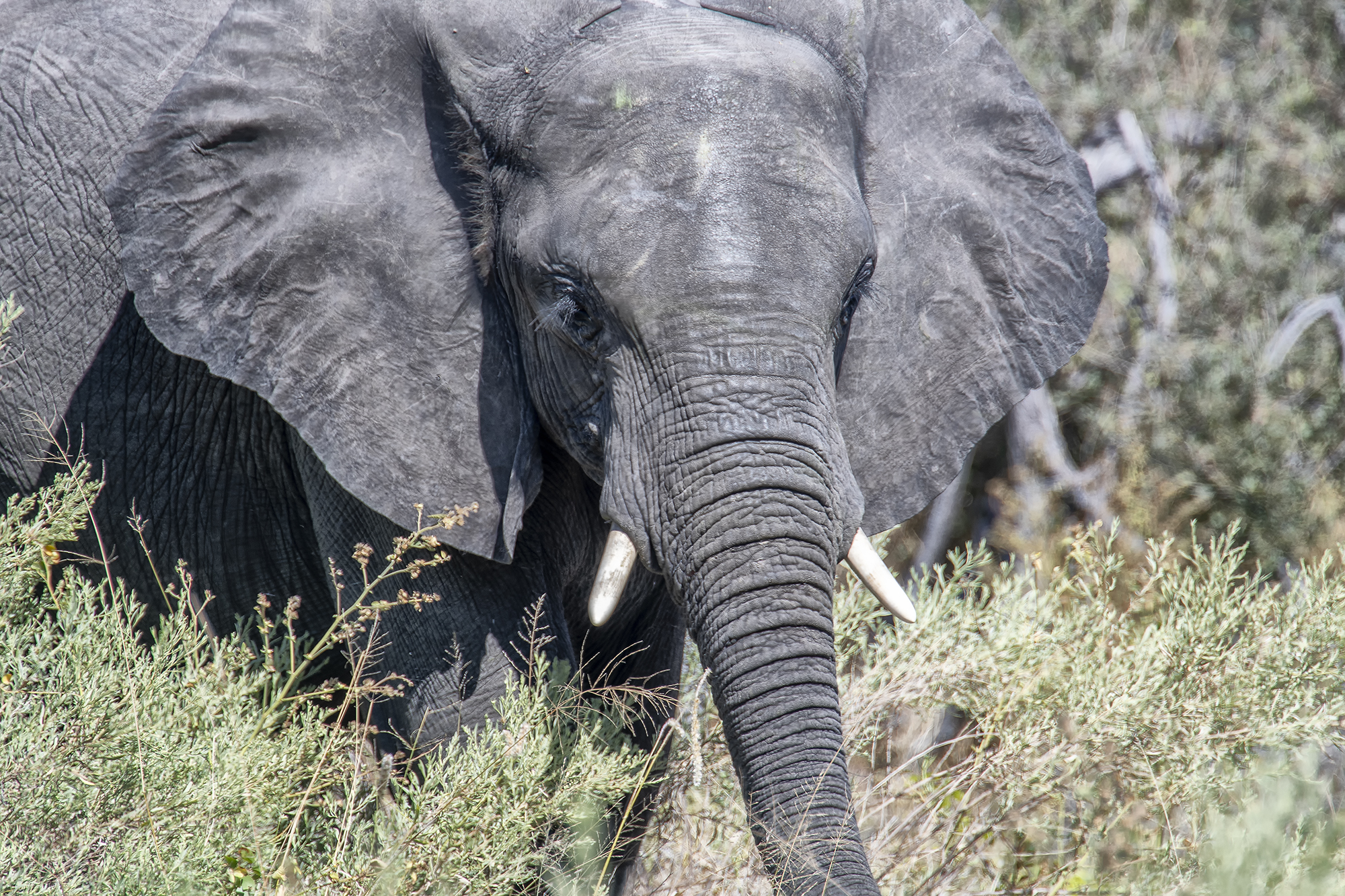
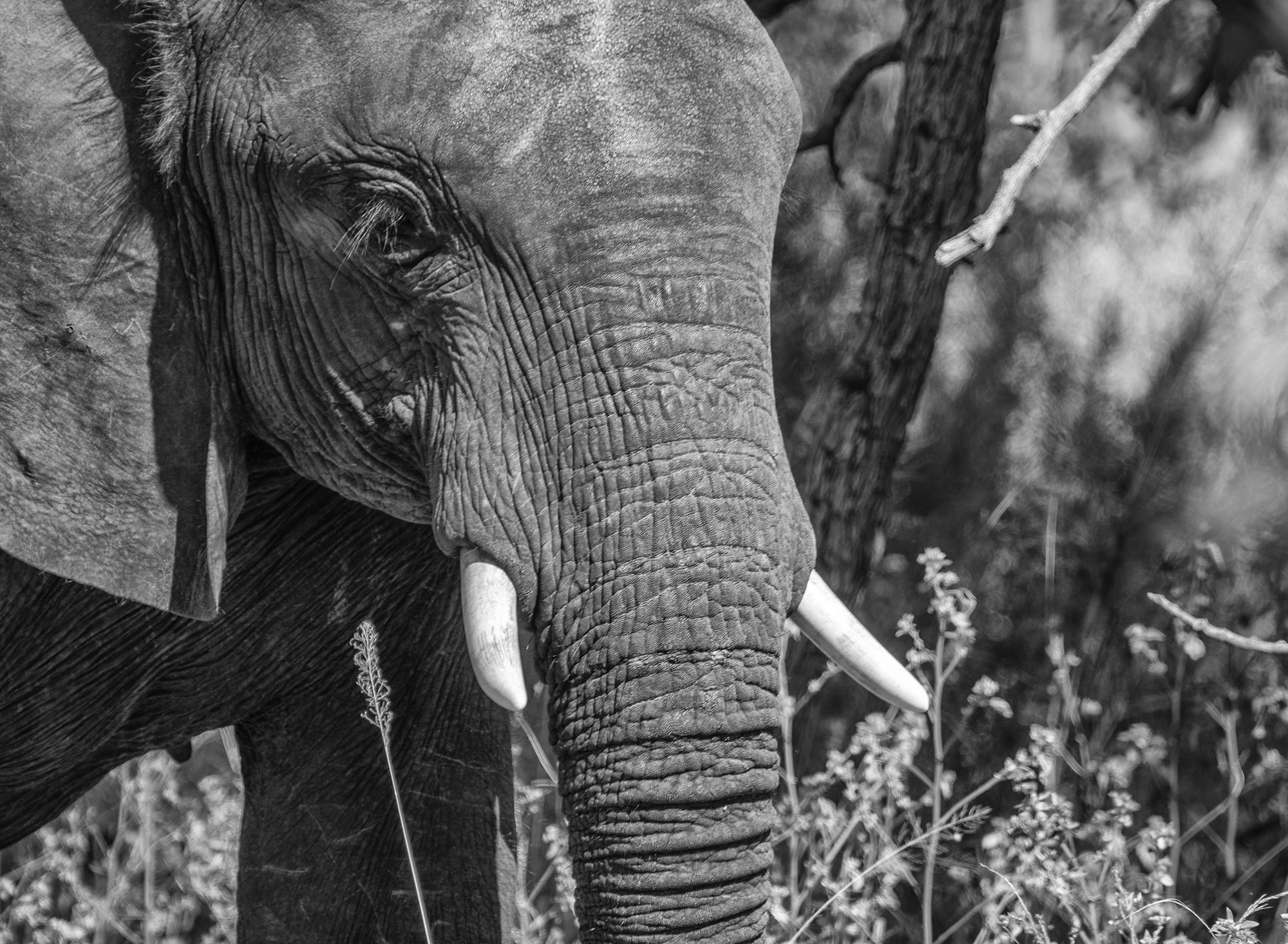
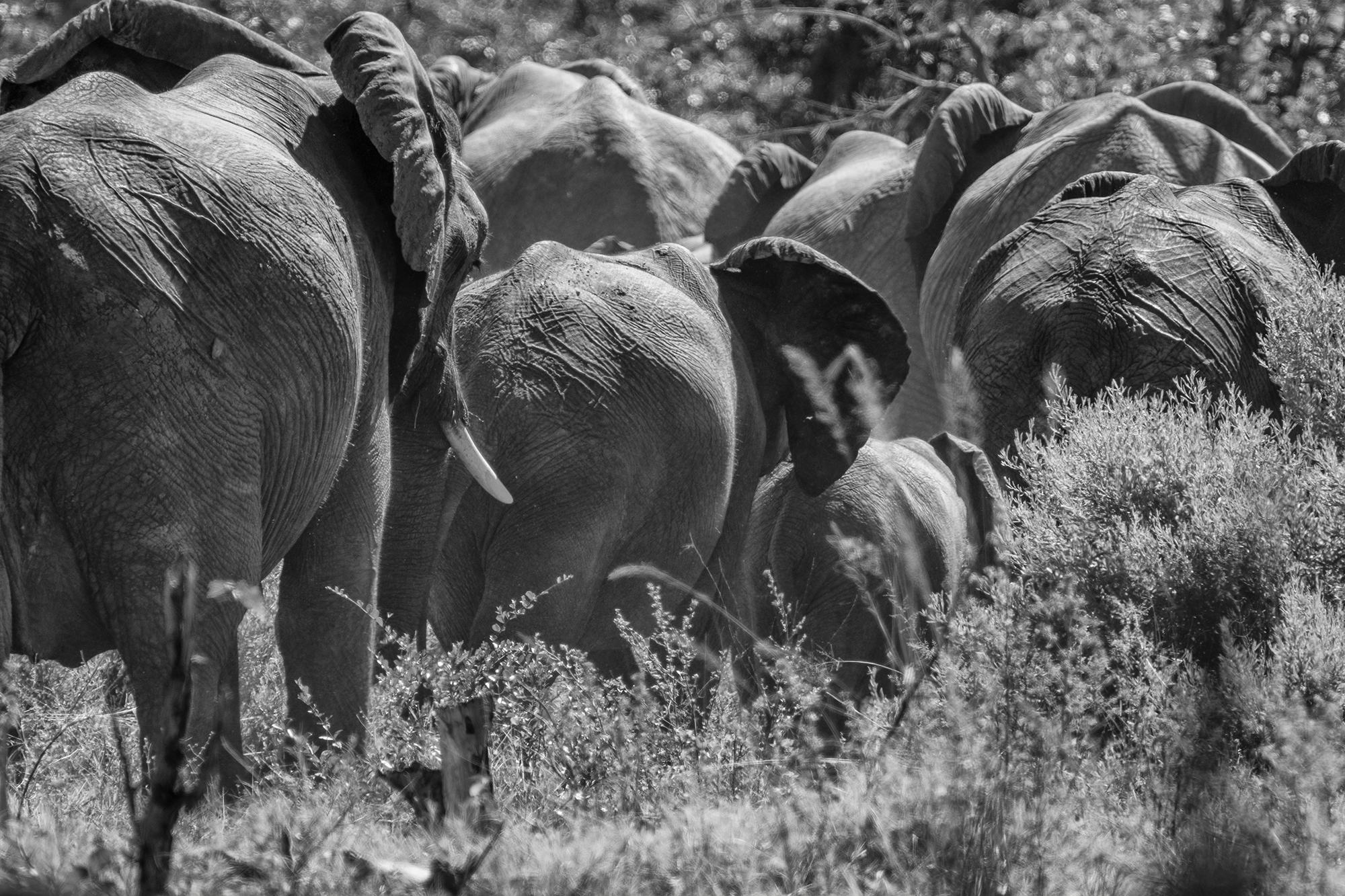
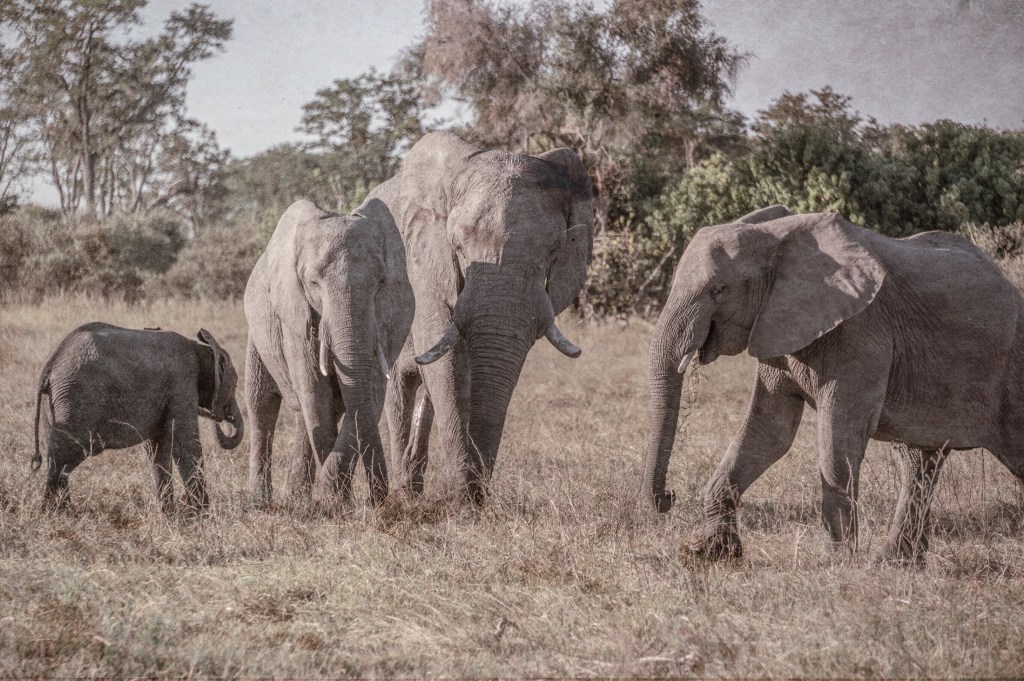
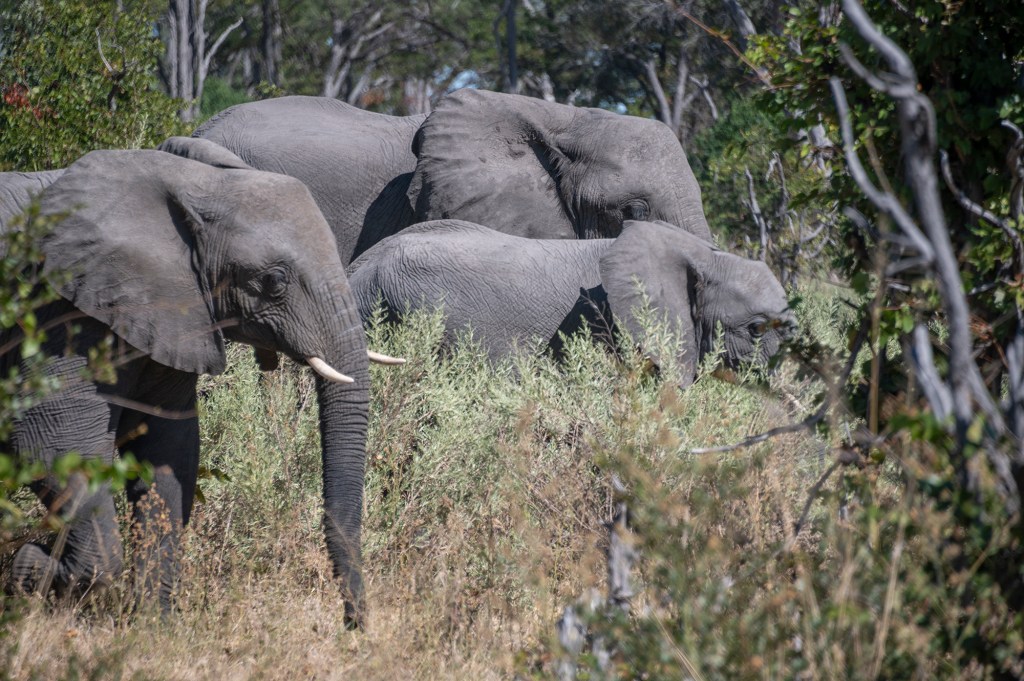
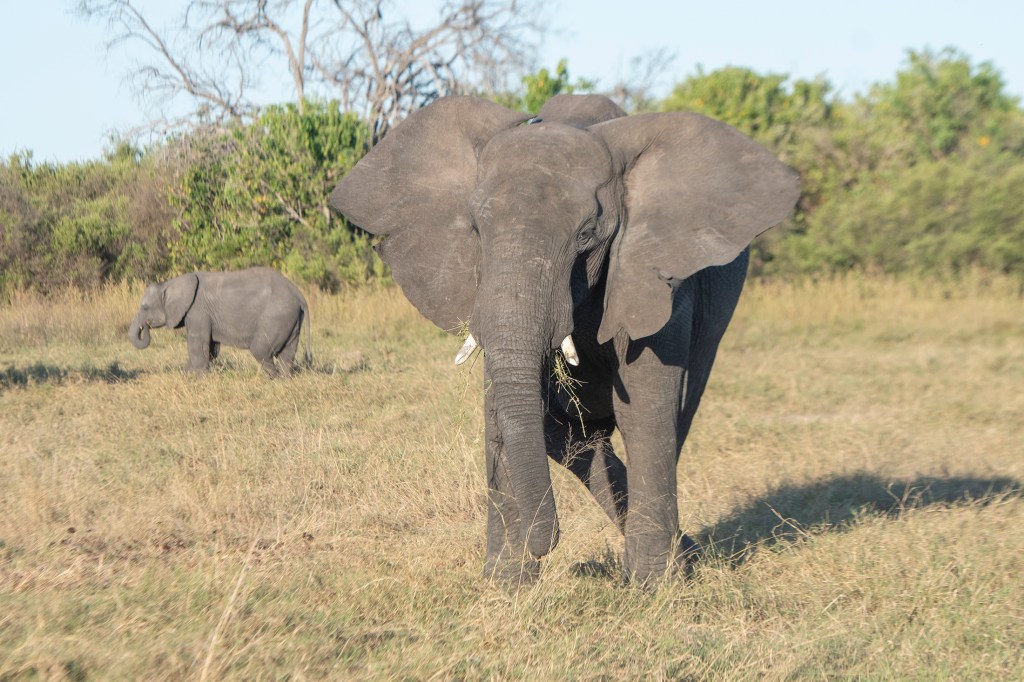
This post will be mainly pictures, and will not include the sad image of the mother and still born infant, which is in another post. We saw elephants on virtually every drive; some singles, some 2-3 and some larger herds. Their behavior is always fascinating. Going past one small herd elicited a very angry response from one elephant, saying essentially “leave us alone”. Shortly after that another herd paid no attention to us at all. And both had little ones!
Fortunately it is quite common to see lions in Botswana, and Splash Camp is no exception. This time we saw lions on almost every drive. In 2019, on the other hand, we only saw the brothers Puffy and Big Man, but a number of times. There were females with cubs hidden somewhere in the swampy area but we had no luck seeing them.
Tom tells us that Puffy and Big Man were chased away by a group of five males; they have been designated the “Bad Boys” because they killed an adult female upon arrival, a very strange event since the female is the male lion’s means of preserving his genes! We saw all five but not all together.
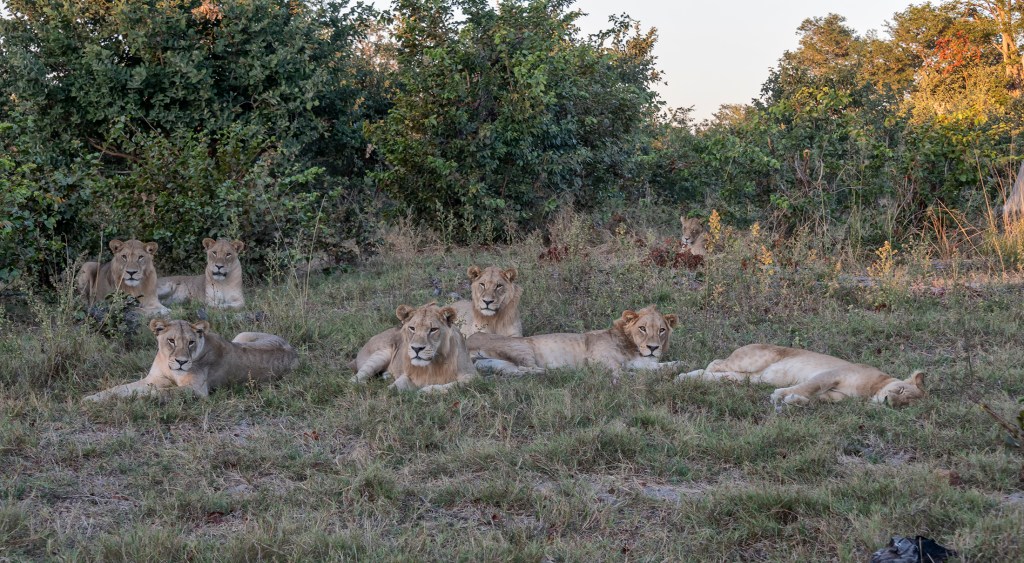
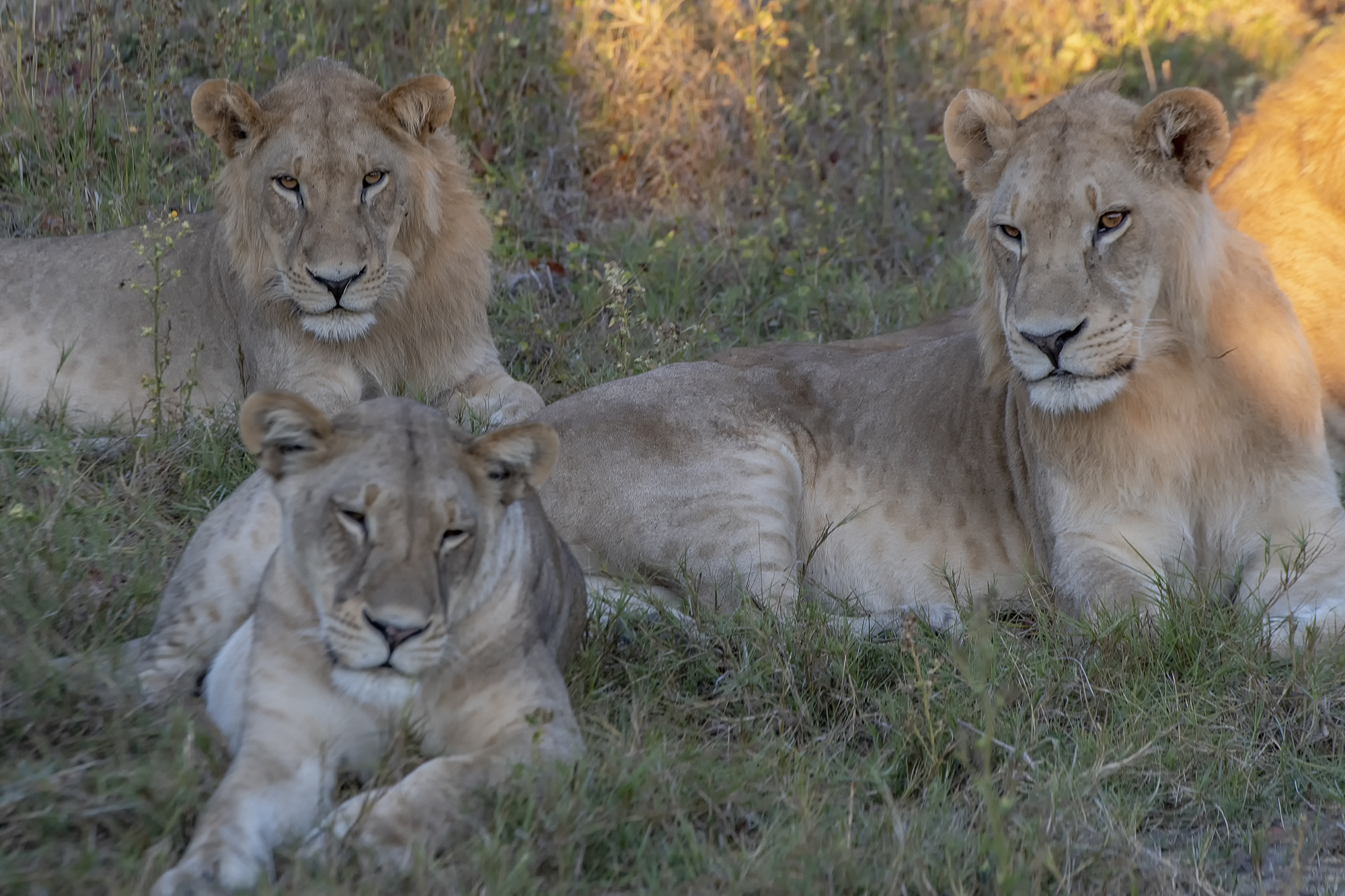
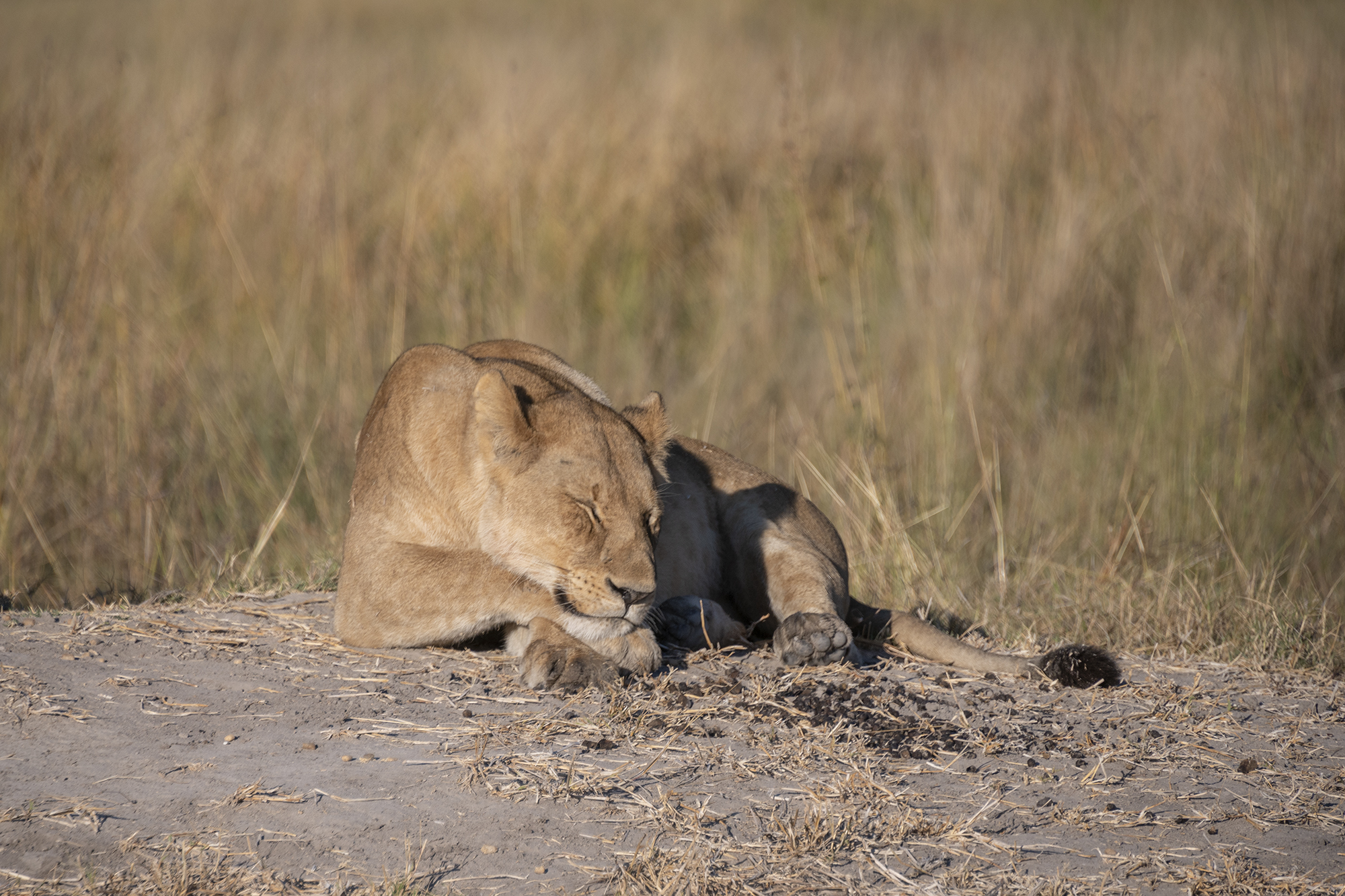
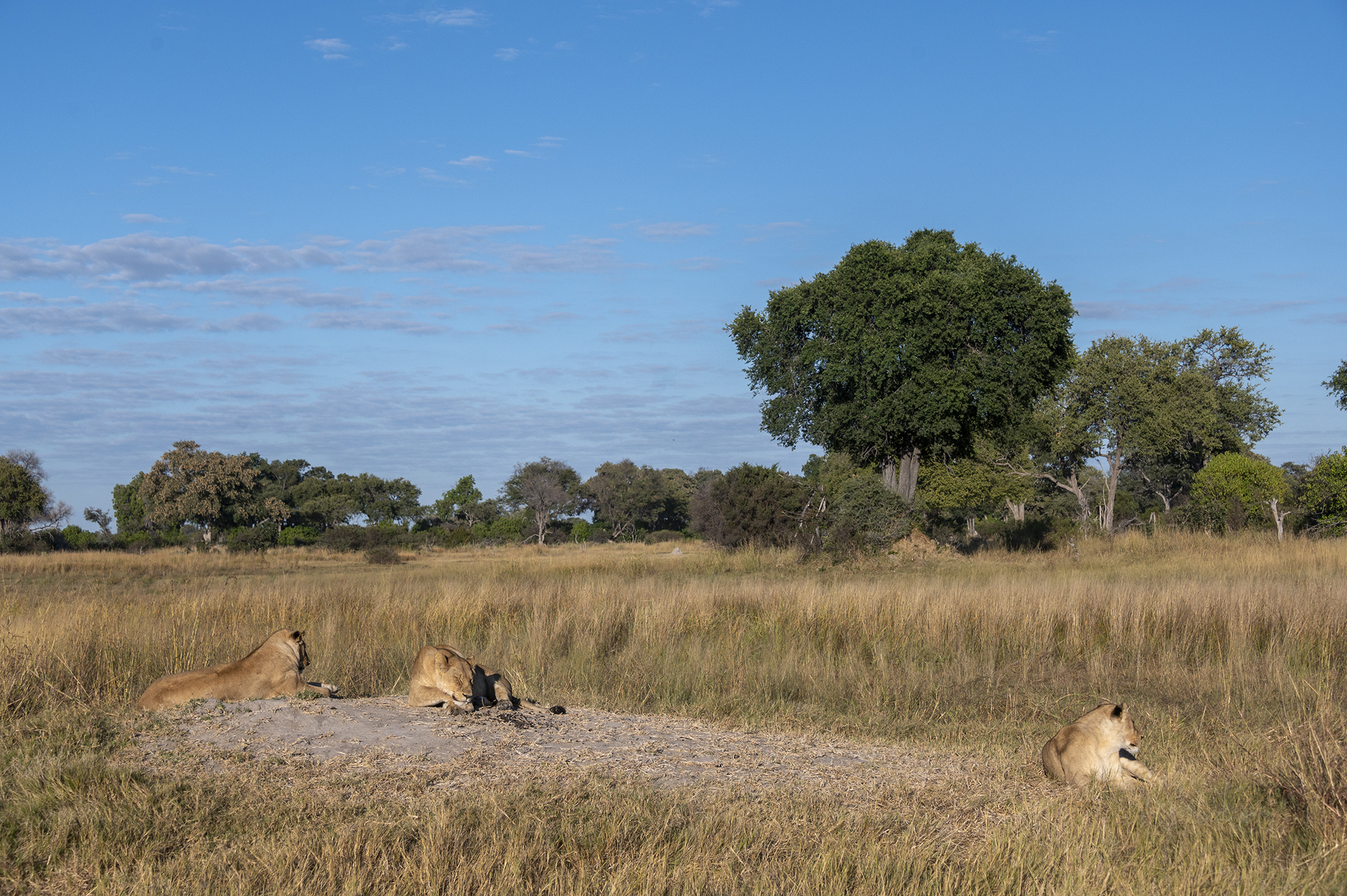
There are now three prides in the Kwando concession. The five males will control all three prides. The first we encountered was the “no name” pride which consists today of two females and 7 sub-adult males. Here are a few views – all nine were present one early evening.
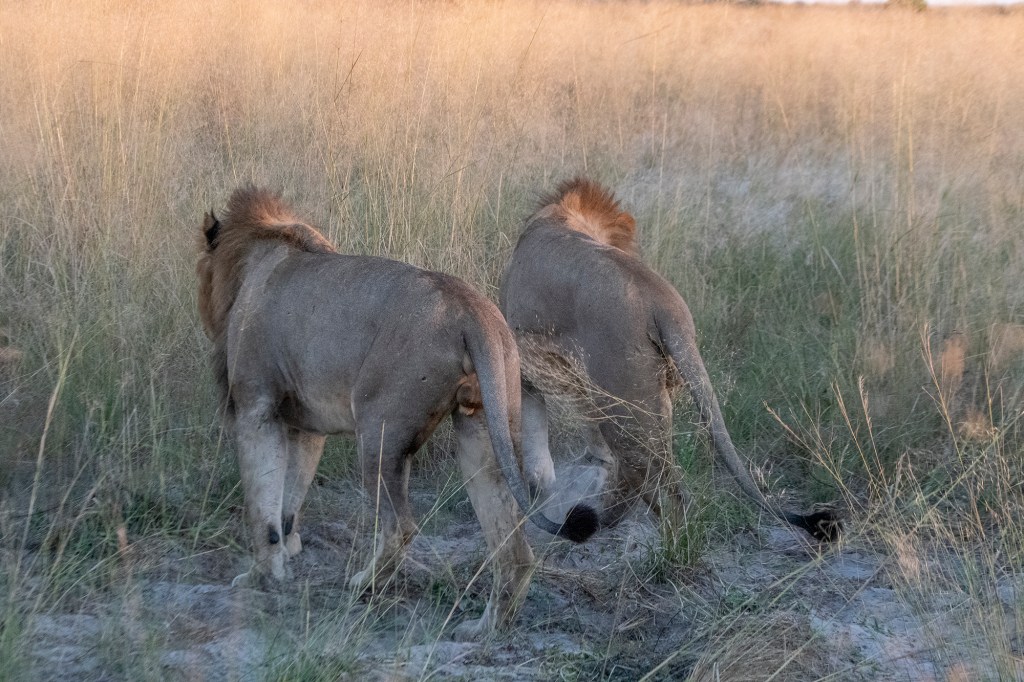
We later encountered two of the Bad Boys searching for the “One Eyed Pride” of two females and three cubs. This group was again hidden in the swampy area somewhere, and it was getting too dark for us to follow the one male.
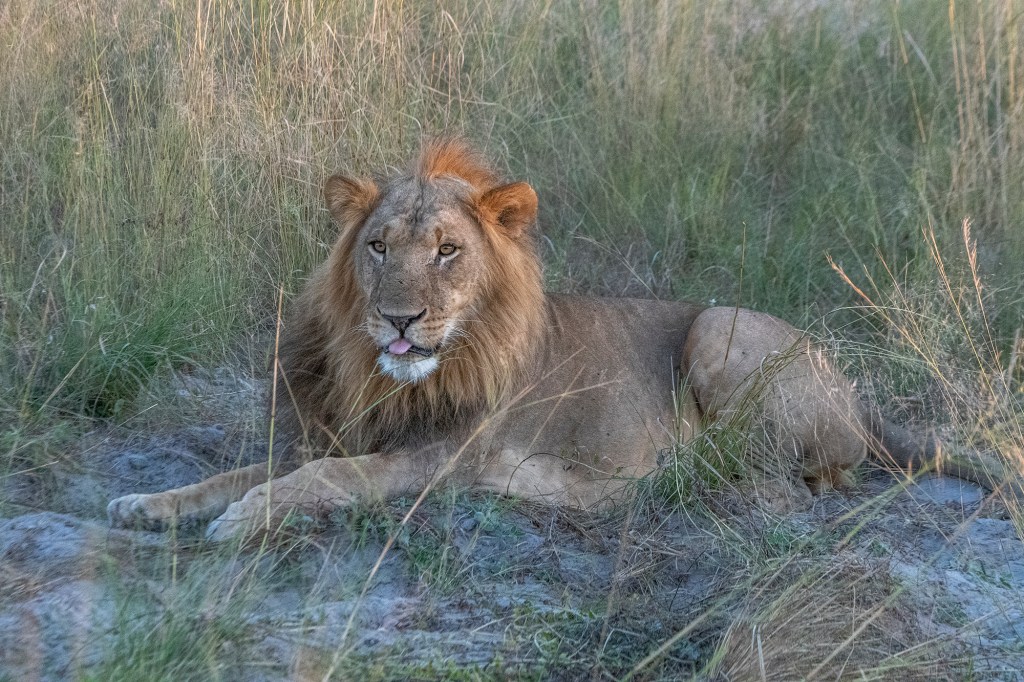
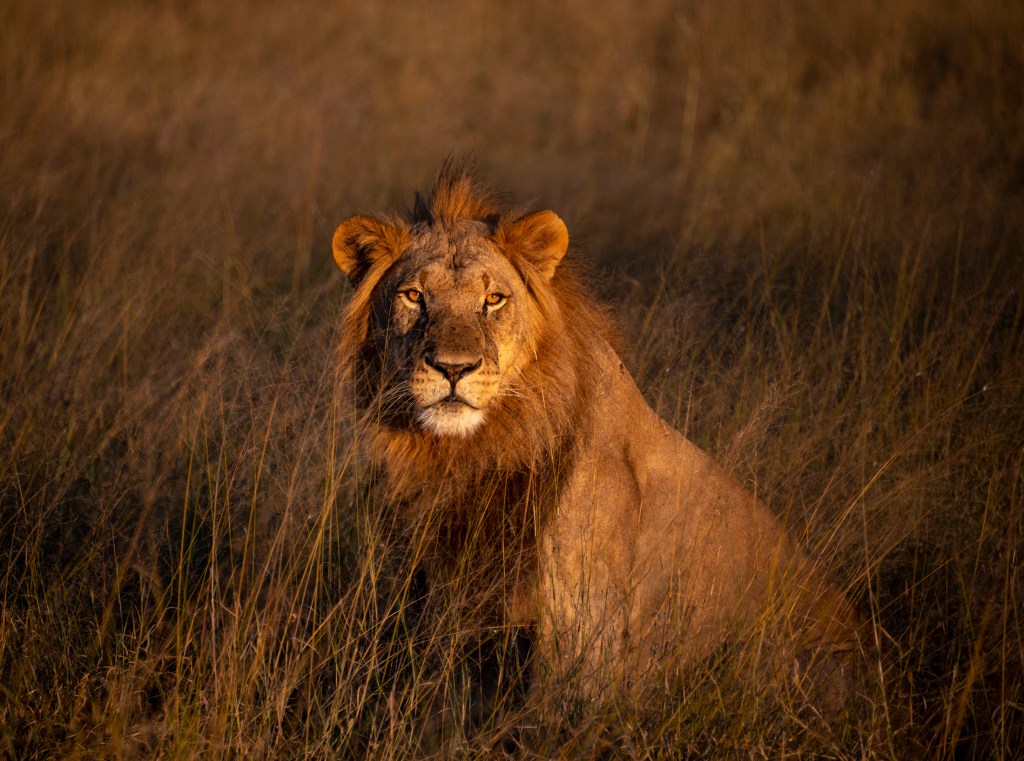
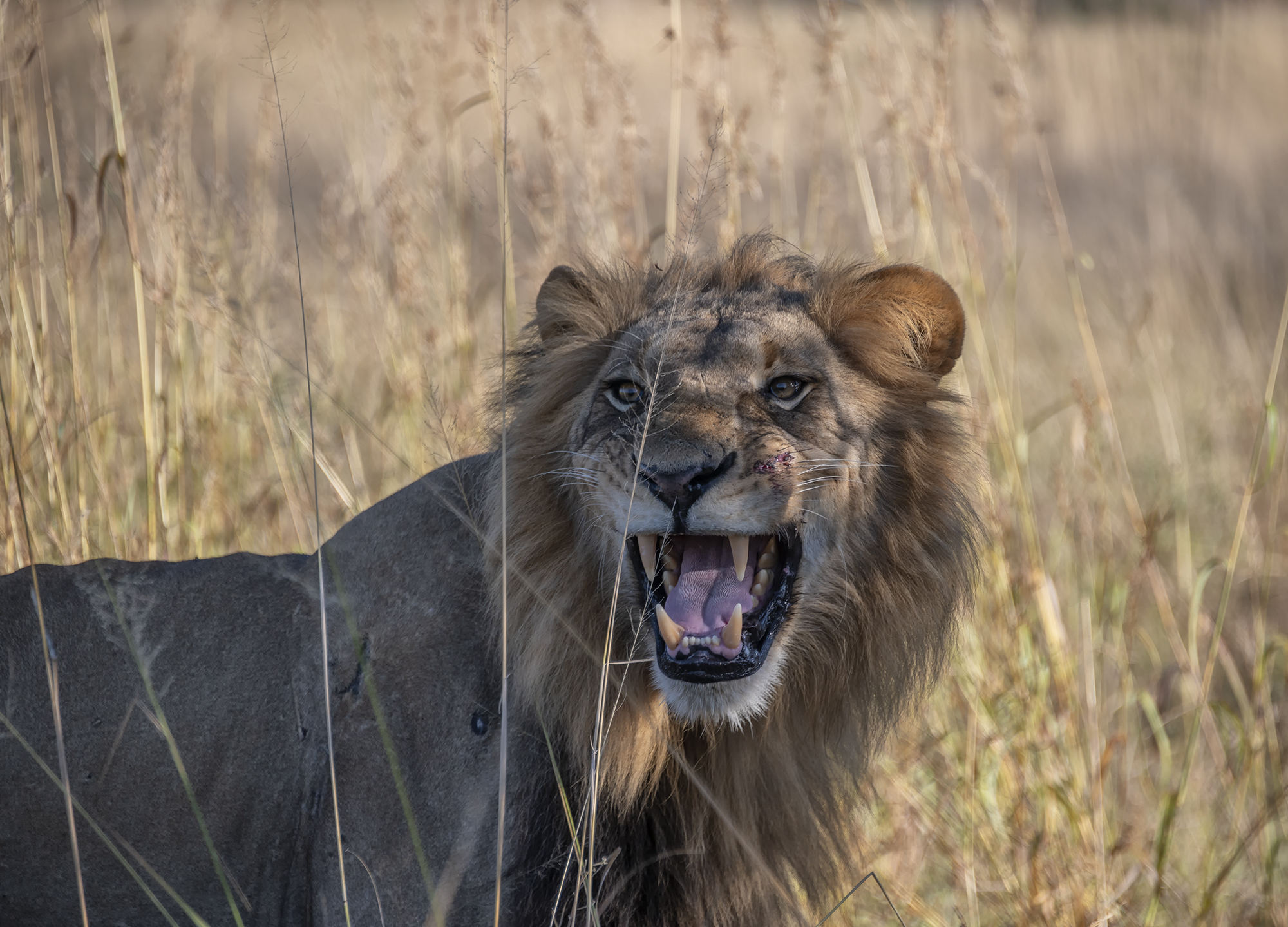
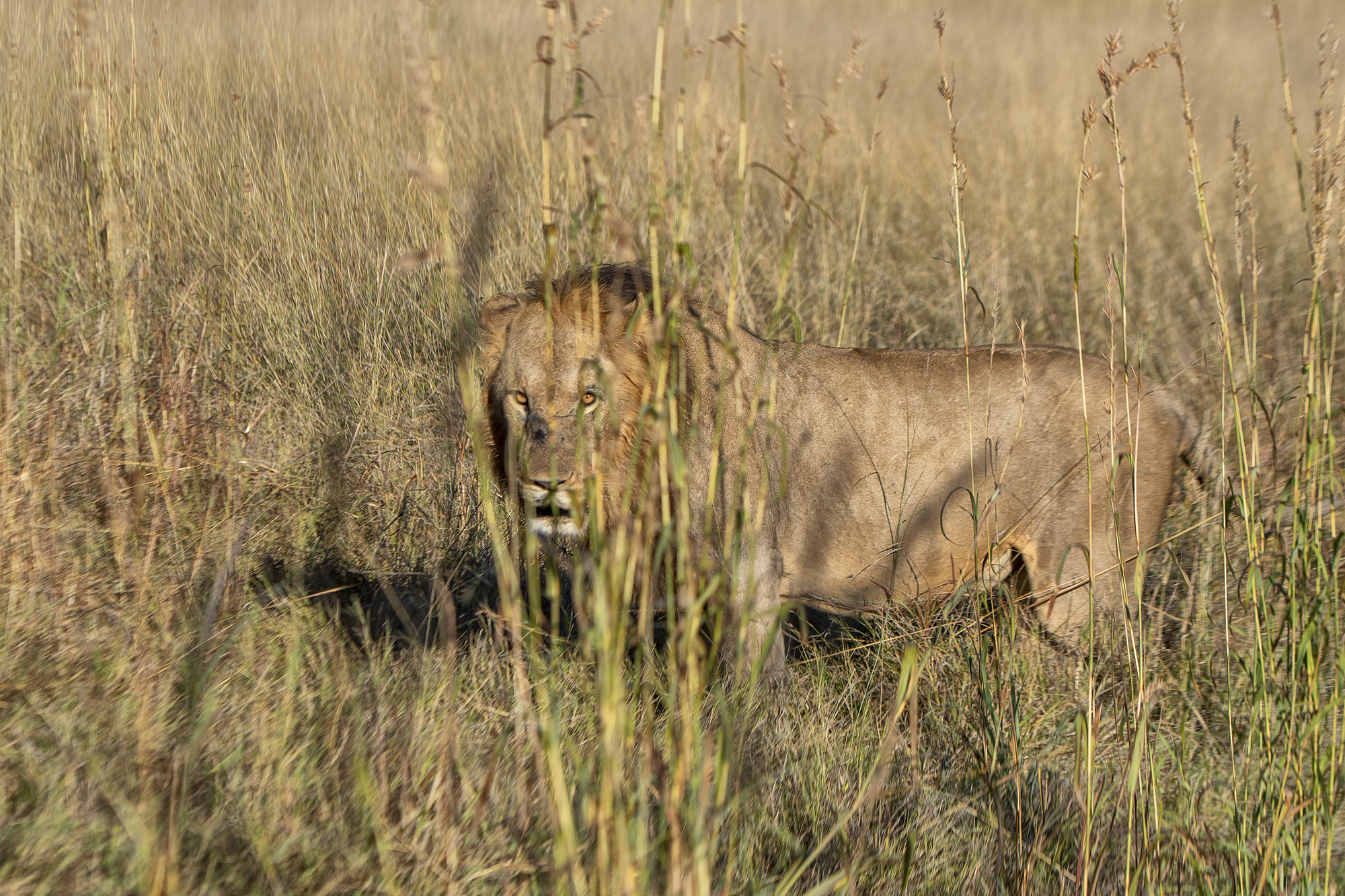
Here is a great shot taken by Karen of one of the Bad Boys. The lighting in the late afternoon was perfect.
And an attempt by me to texturize another of Karen’s pictures.
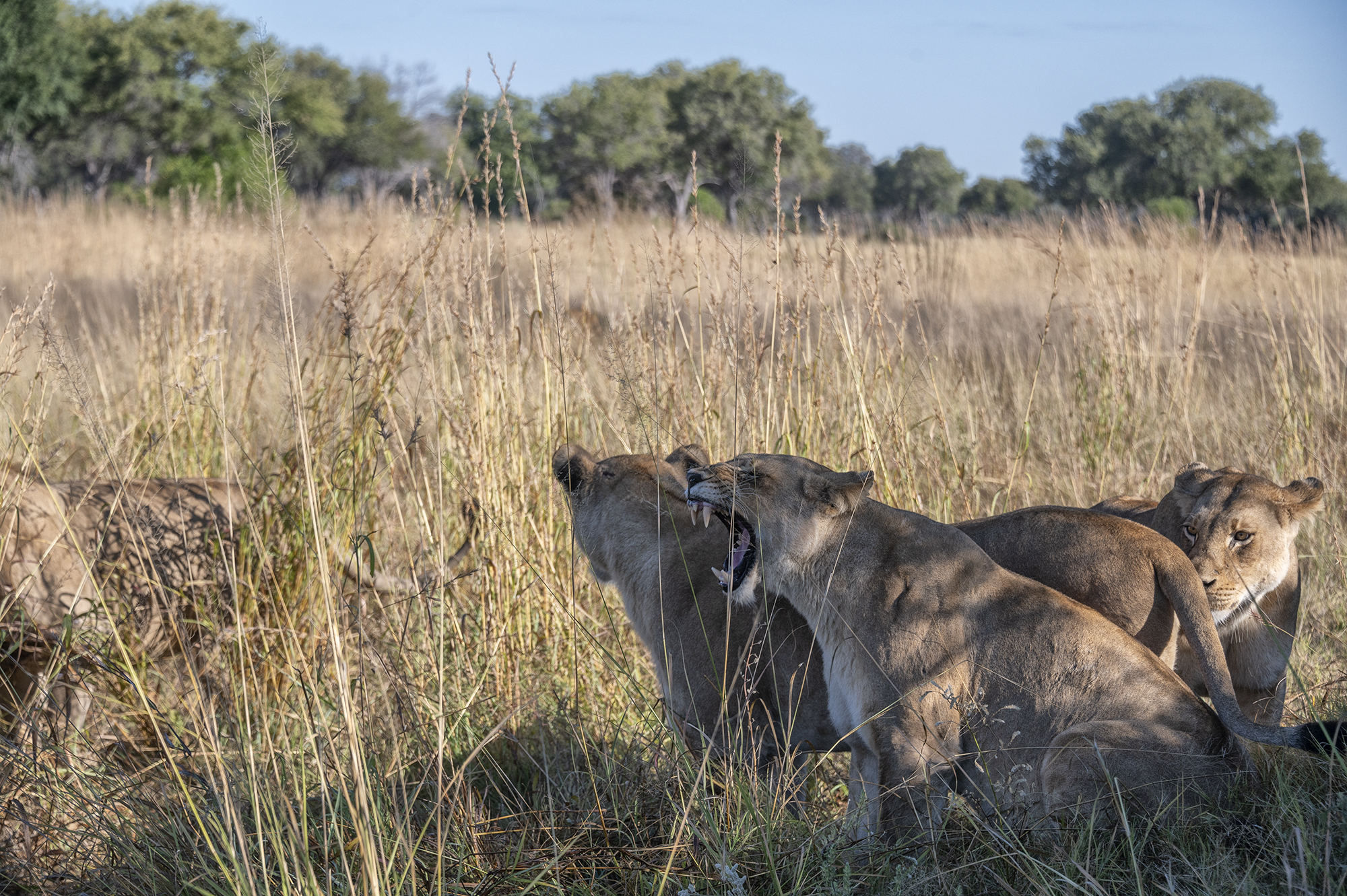
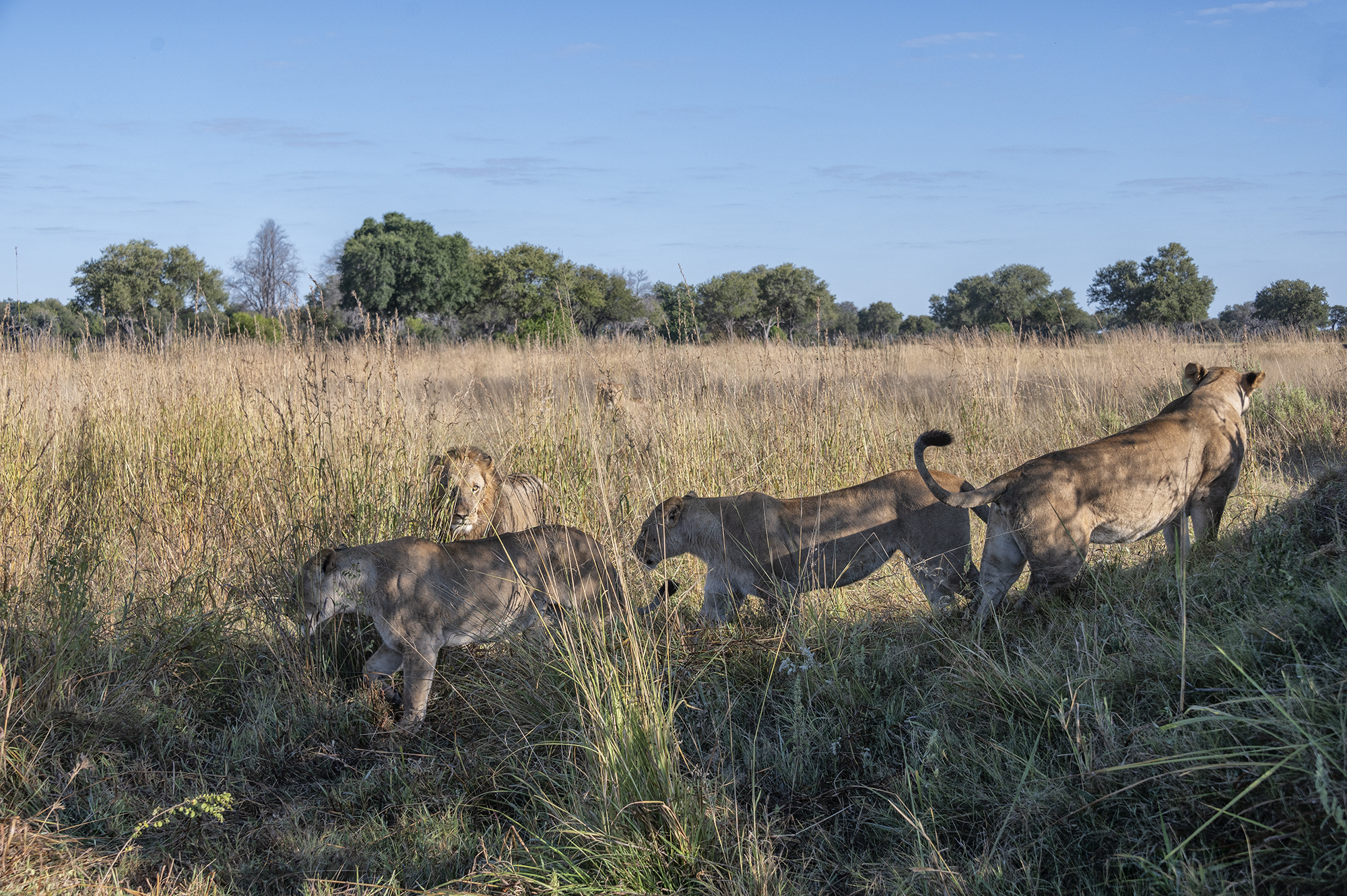
One morning we encountered an interesting scene. Three of the Bad Boys were lurking in the grass in different locations, all intent watching four females from the “Splash Pride“. Tom explained that one or more of the females were probably ready to mate, and each of the boys wanted to be the preferred suitor. At one point the vehicle came between one of the males and the female group, and the male leaped up and ran towards the female. No line of sight was to be lost!
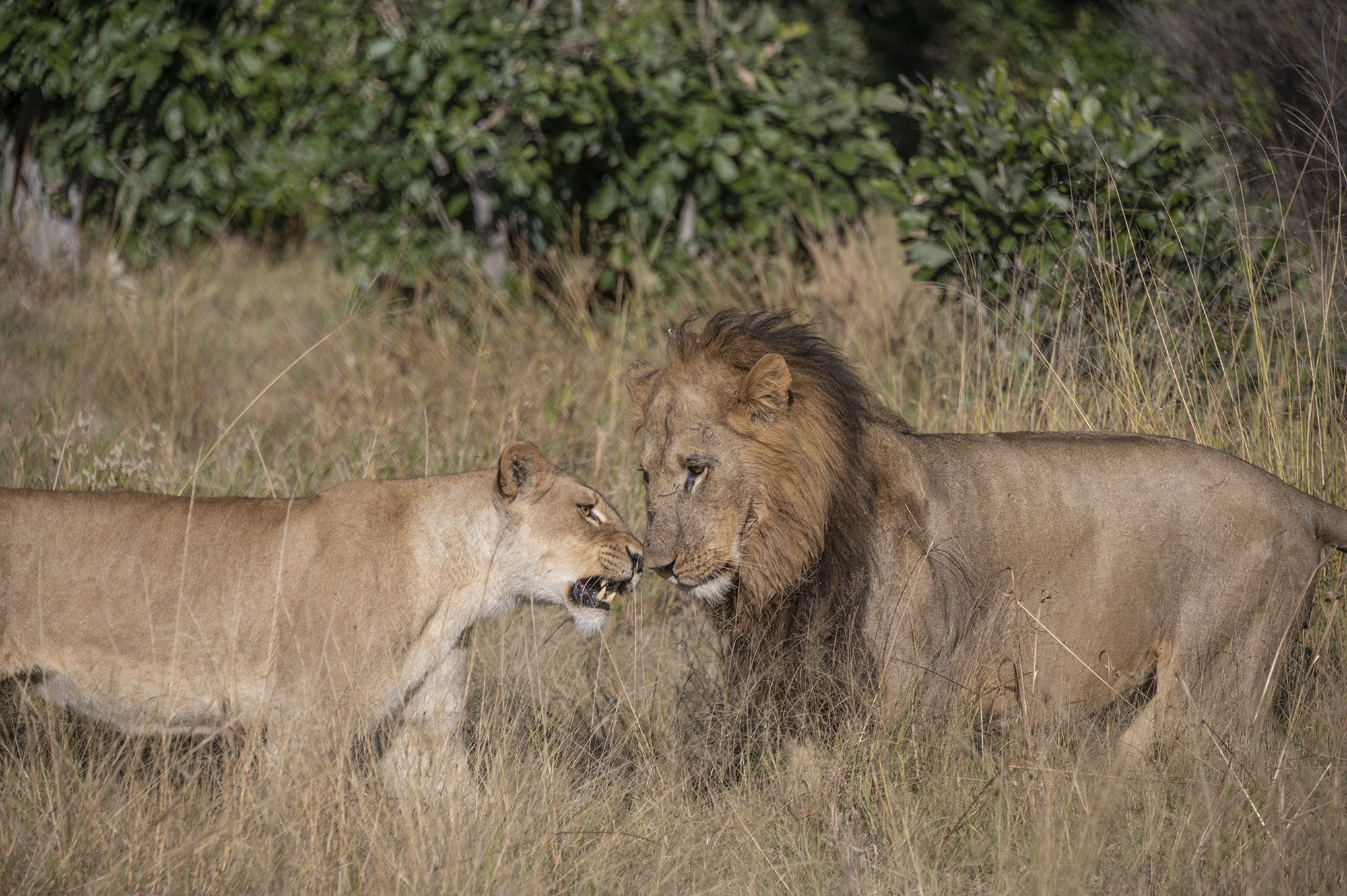
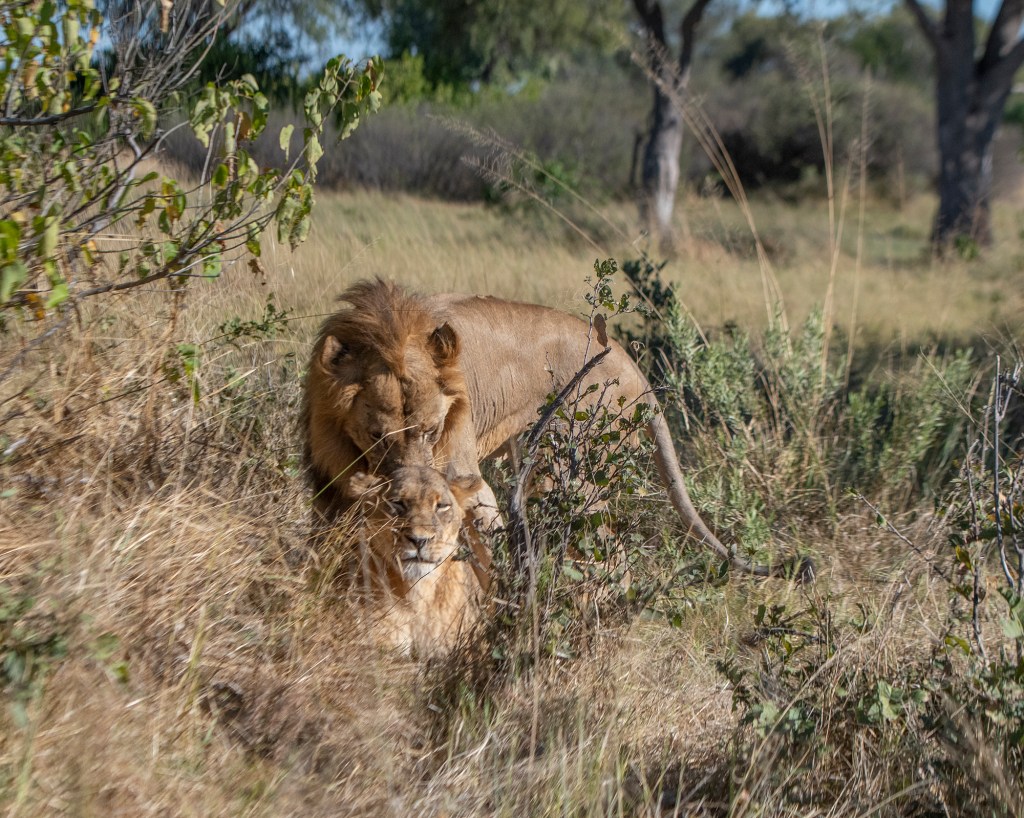
On another morning we heard from another vehicle that they were watching a mating scene. As we arrived the female was walking away with the avid male in tow. After a few minutes she laid in the grass, as did he. At one point she stirred and coughed, and he leaped up and attempted to mount her – he learned quickly that she was not in the mood!
And to finish, a brief lesson on lion mating. When the female is ready, she will be serviced every 10 minutes for the first day, then every 20-30 minutes for the next two days. The mating continues for up to 5-7 days. Needless to say, she mates with two or three different males during this process – so all think they are the father!
It is quite well known that when new males take over a pride, any cubs there will be killed because they want the young ones to be theirs. A smart female with cubs can hide the cubs, mate, then expose the cubs 2-3 weeks later and all is fine!
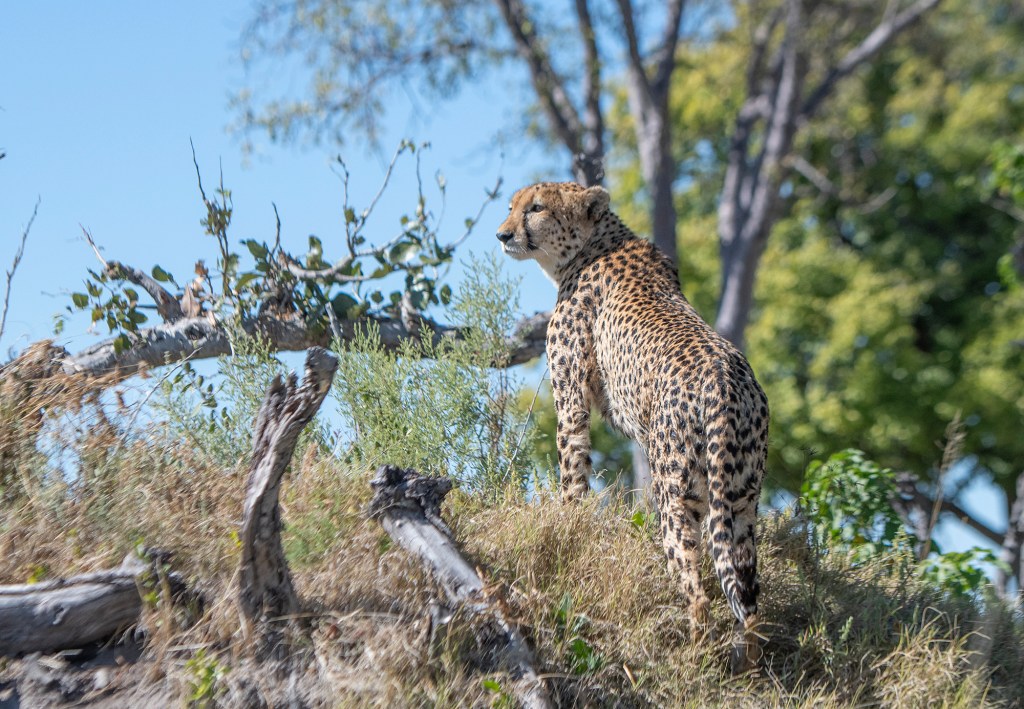
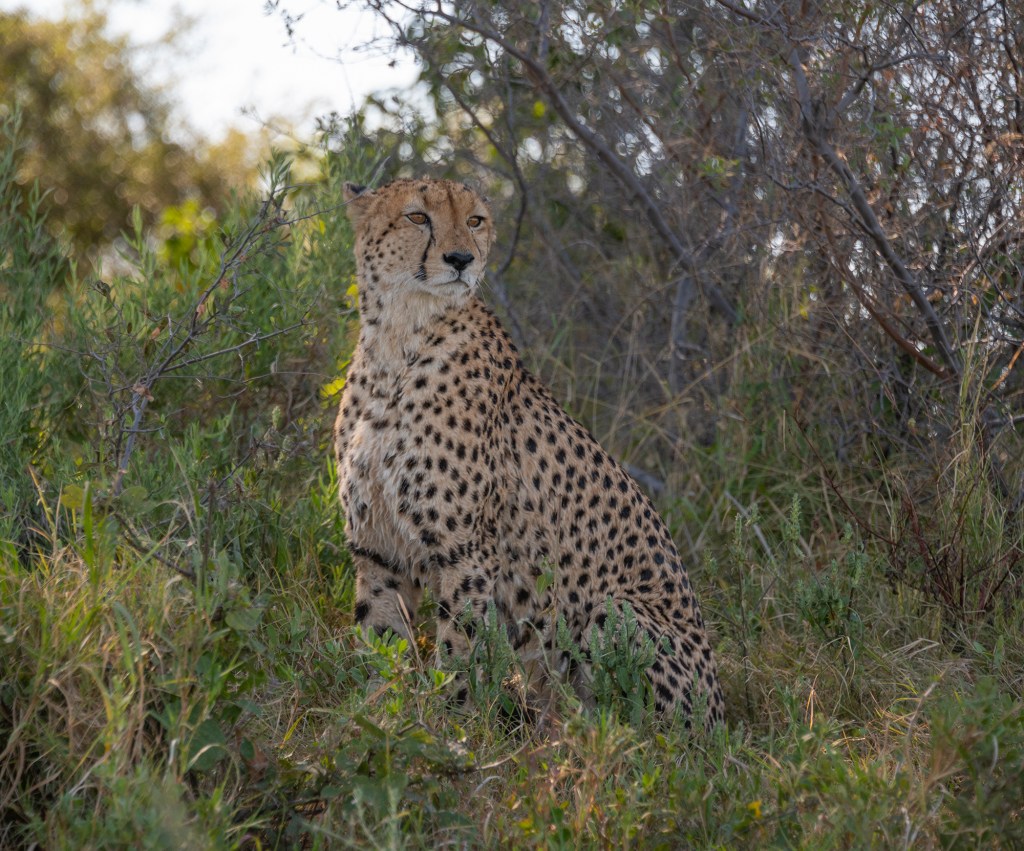
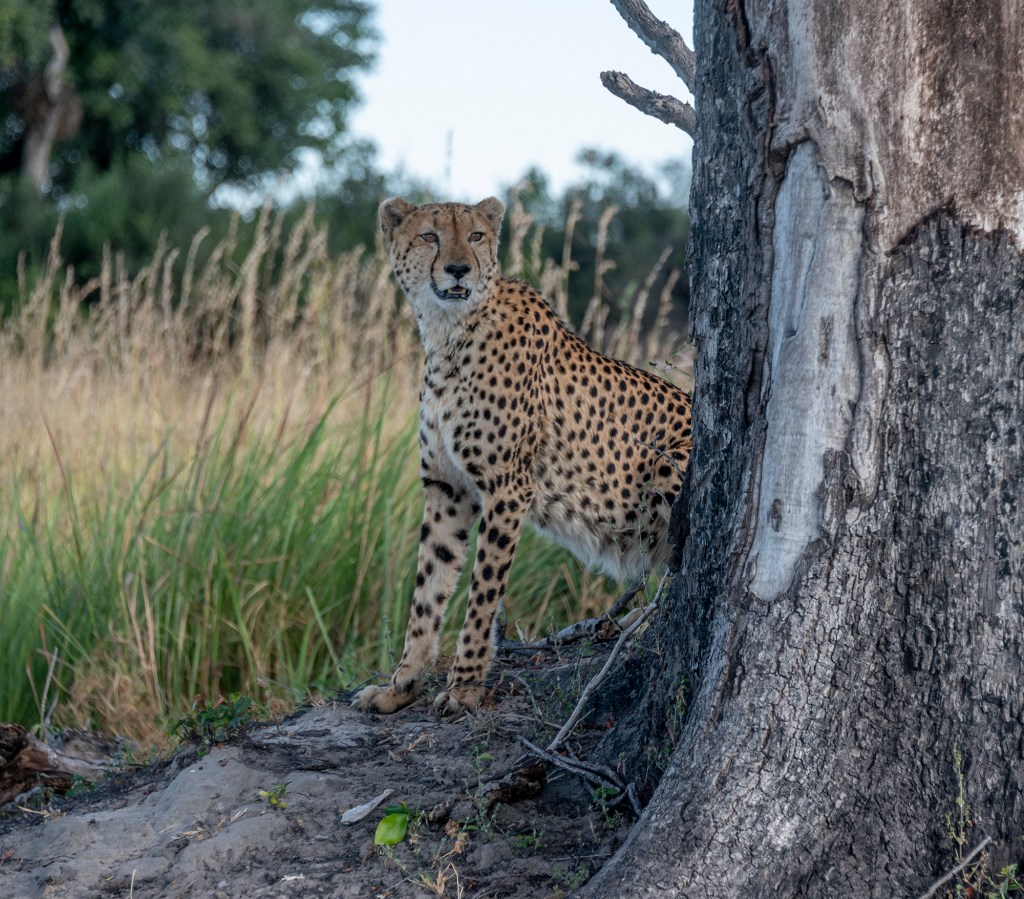
One particular cheetah in the Kwando concession has dominated the territory for his lifetime, maybe eight years. He is known as Mr. Special because he has demonstrated a proclivity to climb trees in order to enhance his search for prey. Usually this is a trait reserved for leopards.
We saw Mr. Special quite frequently during our stay at Splash Camp in 2019, but usually watched him for maybe an hour at a time. On this visit we were alone with Big Tom and AT, and decided to track him until he caught a meal. So we followed him though grassy plains, water and some treed areas, pausing frequently to rest and look around. Starting at about 9 am, we did not leave him until about four.
We presume he attempted to catch something before nine, but we watched him try to catch a red lechwe, made two attempts to catch and eat a small warthog and then made a half hearted try at an impala. Since we saw him the next morning and he was still thin, obviously he had a very unsuccessful day.
Out of curiosity we asked Big Tom what the cheetah success rate was at catching prey. Interesting comments. Per Tom, lions are successful maybe 1 in 10 tries, leopards 1-2, and cheetahs 2-3. He said the wild dogs are more like 3-4, probably because of the pack and their speed and stamina.
So when we first encountered Mr. Special this day, he was sitting on a small rise perusing an area of tall grass and water at a number of red lechwes about a hundred yards away. He eventually rose, stalked through the grasses and made his move. Unfortunately the lechwes ran into the water – they are much more agile in water than the cheetah.
Resting
Ready to Hunt
Stalking
Spotted Prey
The target – red lechwes
Looking
Resting and looking
He wandered around, crossed the airport runway and got on a rise to look around.
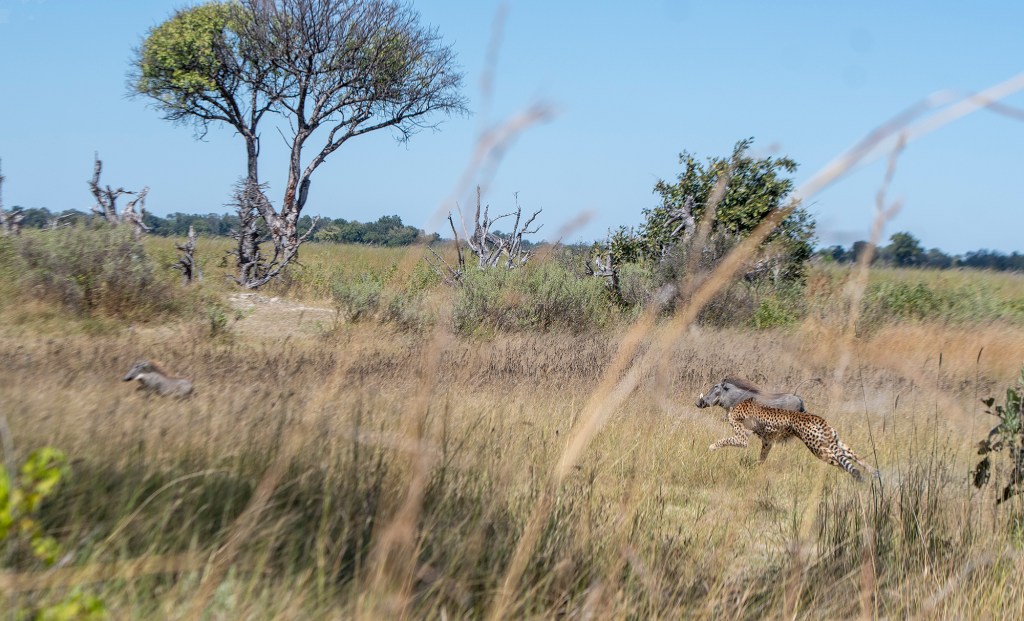
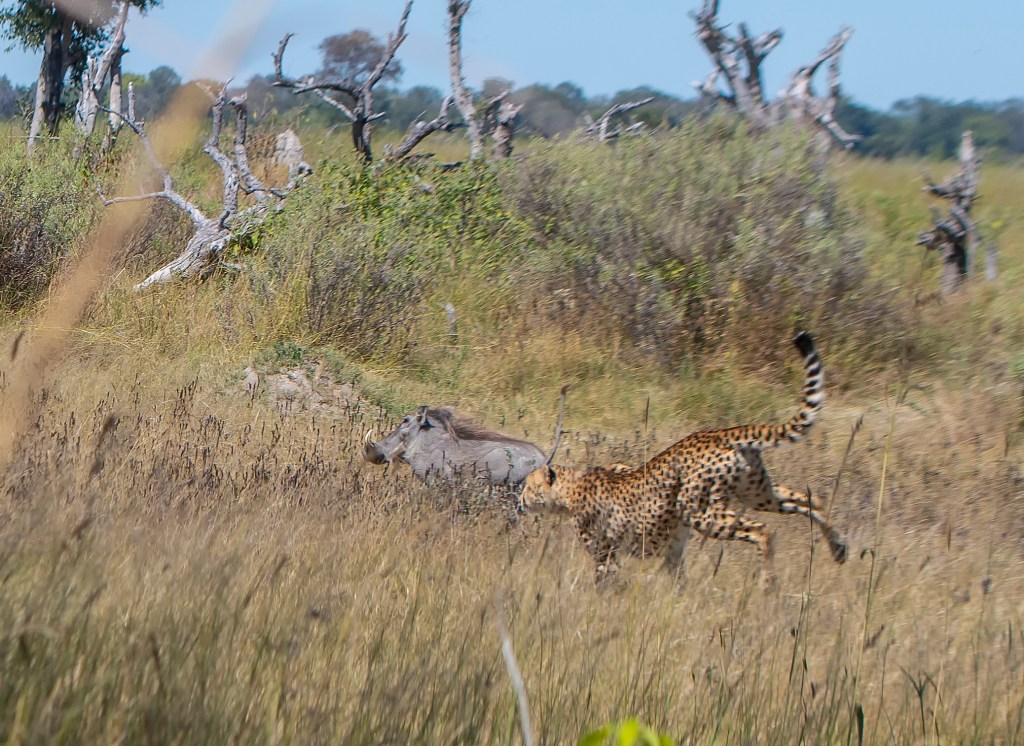
Then he spotted a mother warthog with her little one, gave chase, and actually caught the small warthog by the rear end. Then the mother went after him, he dropped the little one and took off., chasing the warthogs for a few minutes. Then he gave up. So he sat under a tree for about 45 minutes.
Then lo and behold, mama warthog decided to come back into the same area. And then the chase was on. First the cheetah chased after the two warthogs. Then mama turned the tables as she spun around and chased the cheetah for several hundred yards before giving up.
The cheetah by now is wearing down. After a rest he made a weak stab at an impala with no success. He then spent the next hour or so lying around and occasionally rising up to see if anything was around. Eventually he wandered away and paused to have a deep drink.
So while we watched for 7 hours, Mr. Special made four distinct efforts to catch his dinner to no avail. At this stage we also gave up and headed for the lodge. Tough day for a cheetah!
Even though we have been to Botswana five times, we always see new behaviors, do something different, experience firsts and so on. This trip we had a number of firsts.
Five Jackals
Normally ones sees a single jackal, or a pair. This time we encountered five jackals together, and we had a great time watching these animals play fighting, pushing and cavorting around.
Night Creatures
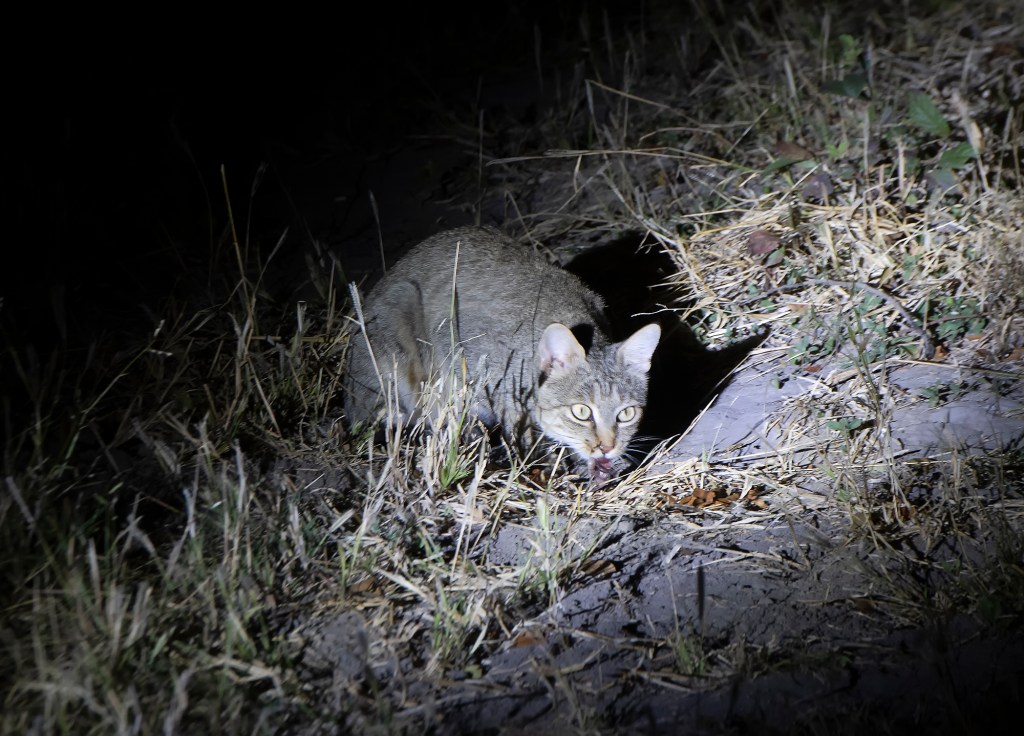
Night drives – with the tracker shining a spotlight around the 180 degrees in front of the vehicle – can be quite interesting. It is not unusual for an elephant to be right in the vehicle’s path, which results in a huge roar which startles everyone. There are creatures who are usually only seen in the spotlight at night, and we were fortunate to see three for the first time. The African wild cat looked just like your own house cat, with its’ ringed tail. Then the spring hare bouncing along was a treat to watch – Tom called it an African kangaroo! Thirdly we saw a caracal, which resembles a European lynx.
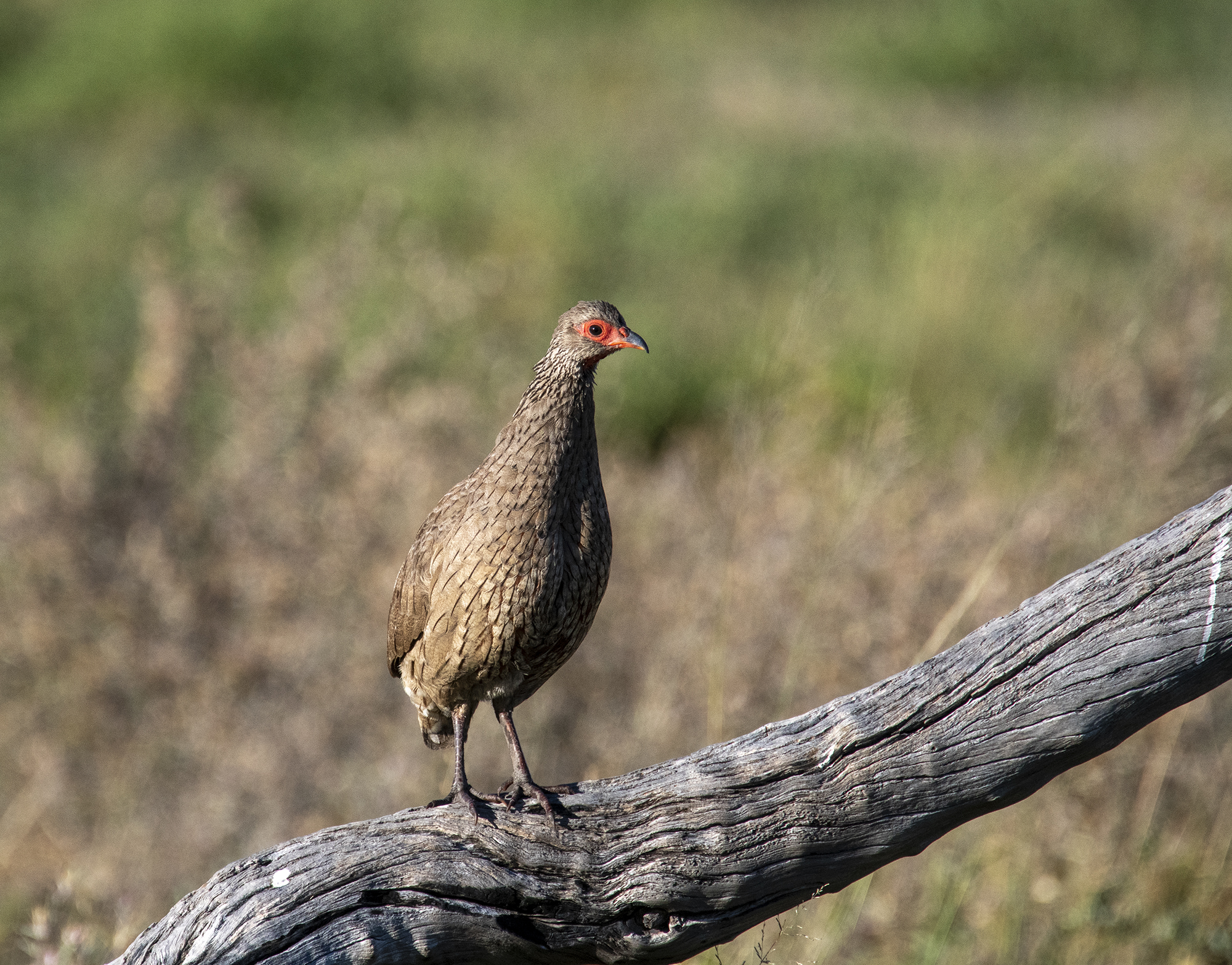
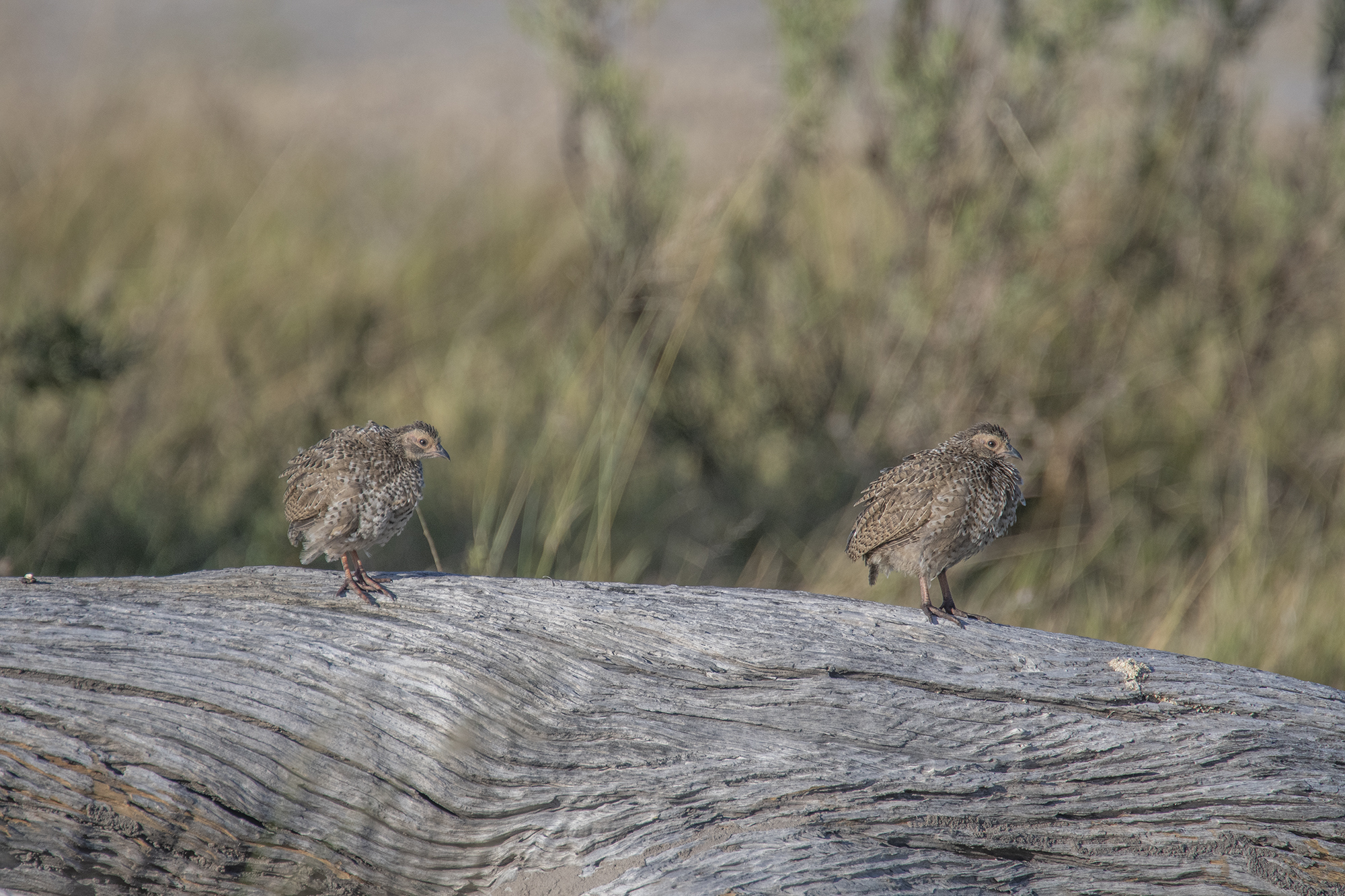
Spurfowl Family
We often see these spurfowls or francolins singly or in pairs. This time we saw mother and dad with two little ones in beautiful morning light.
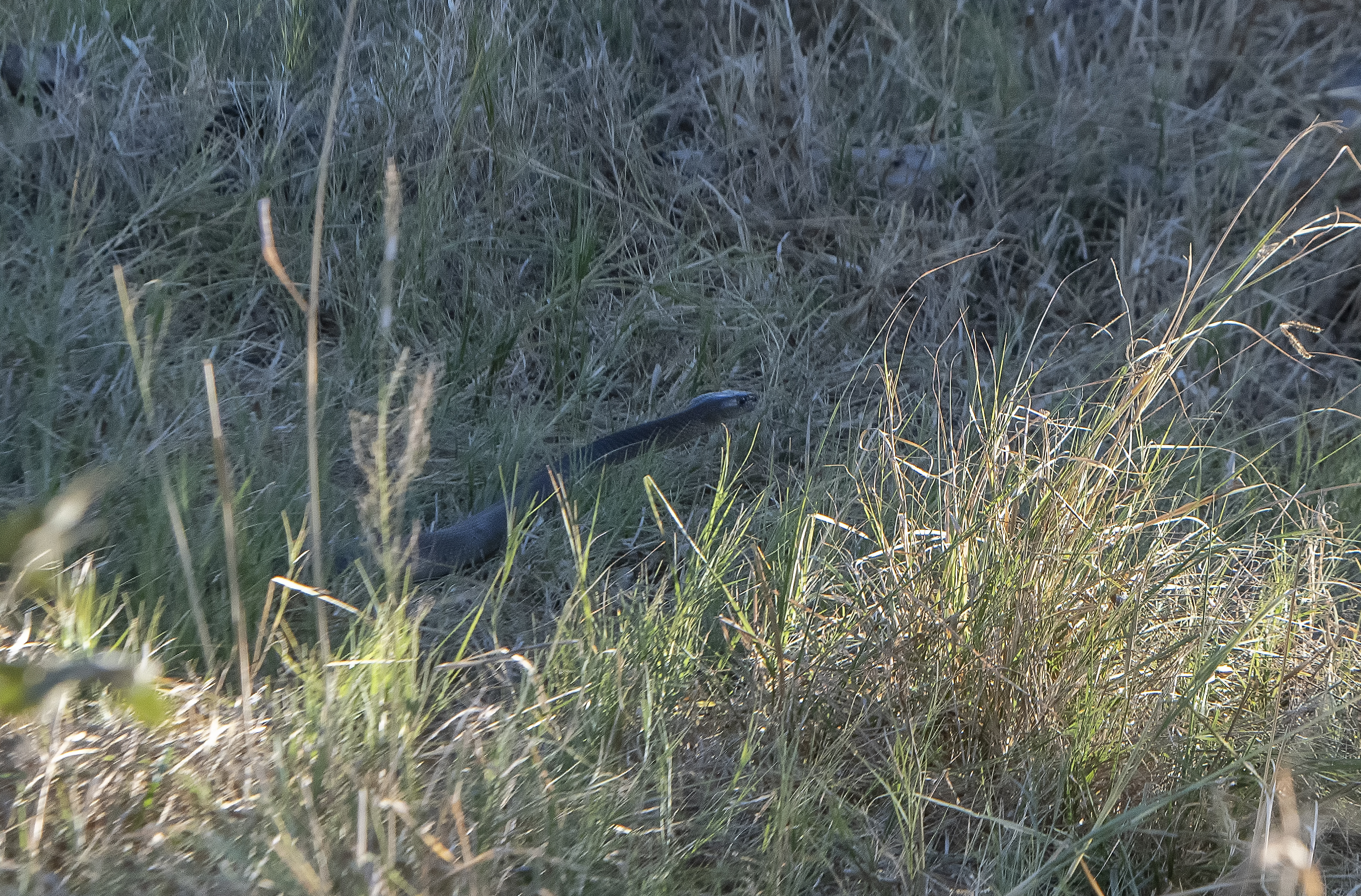
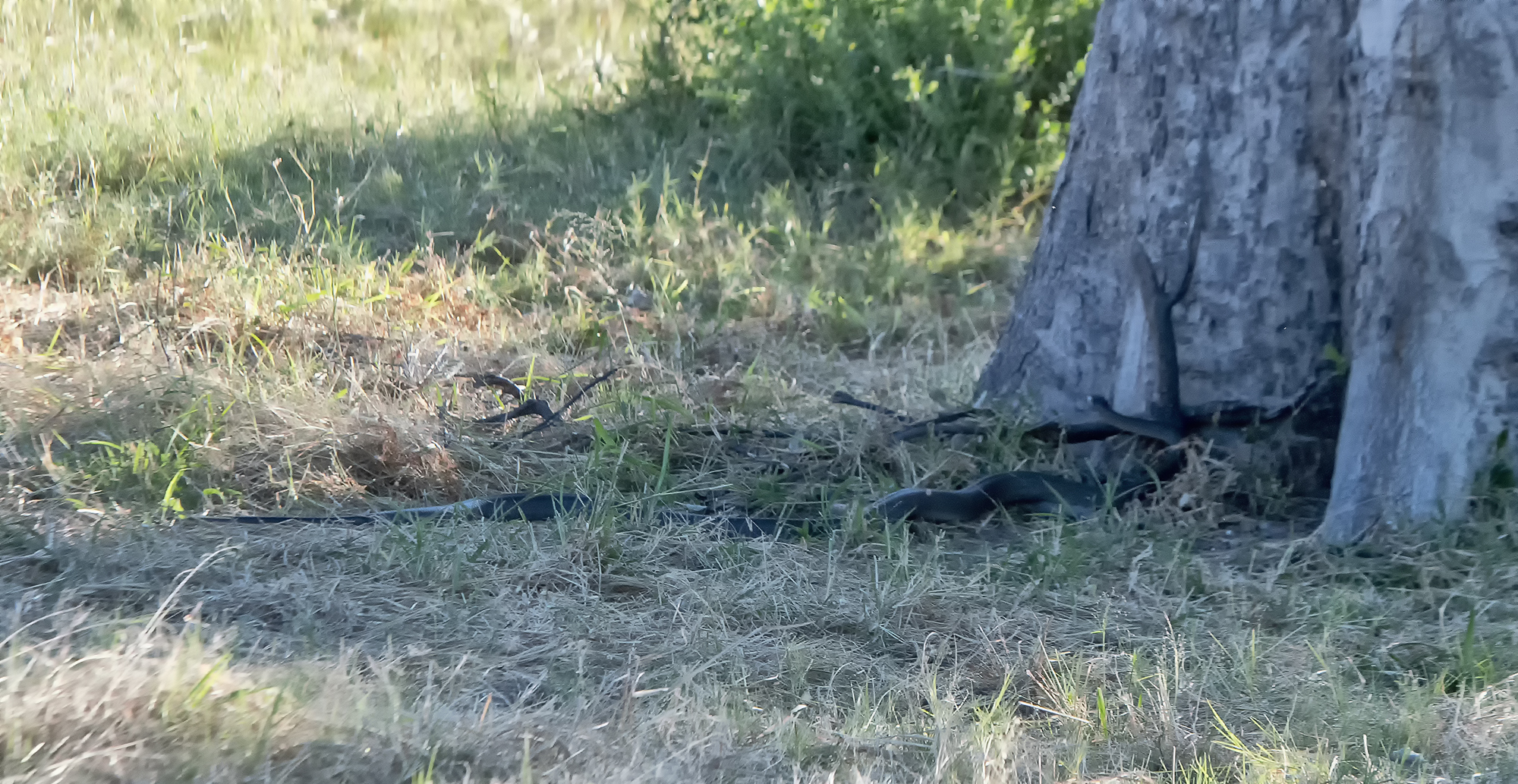
Black Mamba
Driving along Tom and AT spotted a large bush containing dozens of screeching starlings. Tom said it might be a snake. Sure enough we spotted a seldom seen – and highly toxic – black mamba looking for a meal. The snake poked its’ head above the branches – Tom said they can raise up half of their total length! Then it quickly slid its way towards the base of a large tree and disappeared around it. The snake was at least 6″ long and quite big around.
Sadness
We spotted a large number of vultures circling around a certain area. So naturally we drove to that area. Sadly the vultures were circling above a female adult elephant who gad just given birth, and the infant was still born. The mother was pushing the little one trying to arouse it – to no avail. A very sad scene indeed.
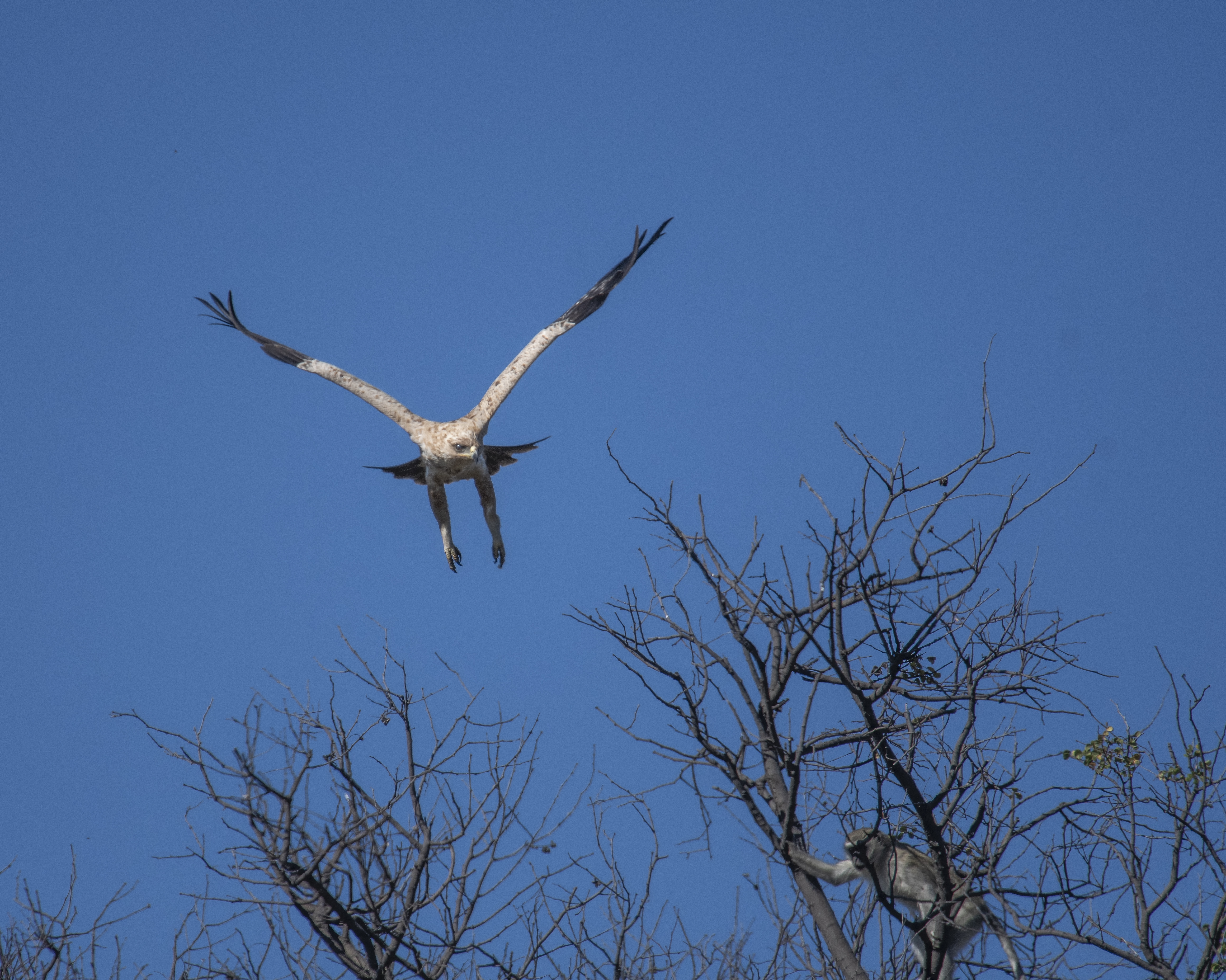
Hawk-Eagle
Tom spotted a hawk-eagle high in a tree. Then we saw a monkey climbing up the tree toward the eagle, which eventually flew away, giving the monkey a long dirty glare. The hawk eagle was a first for us, and certainly the encounter was as well.
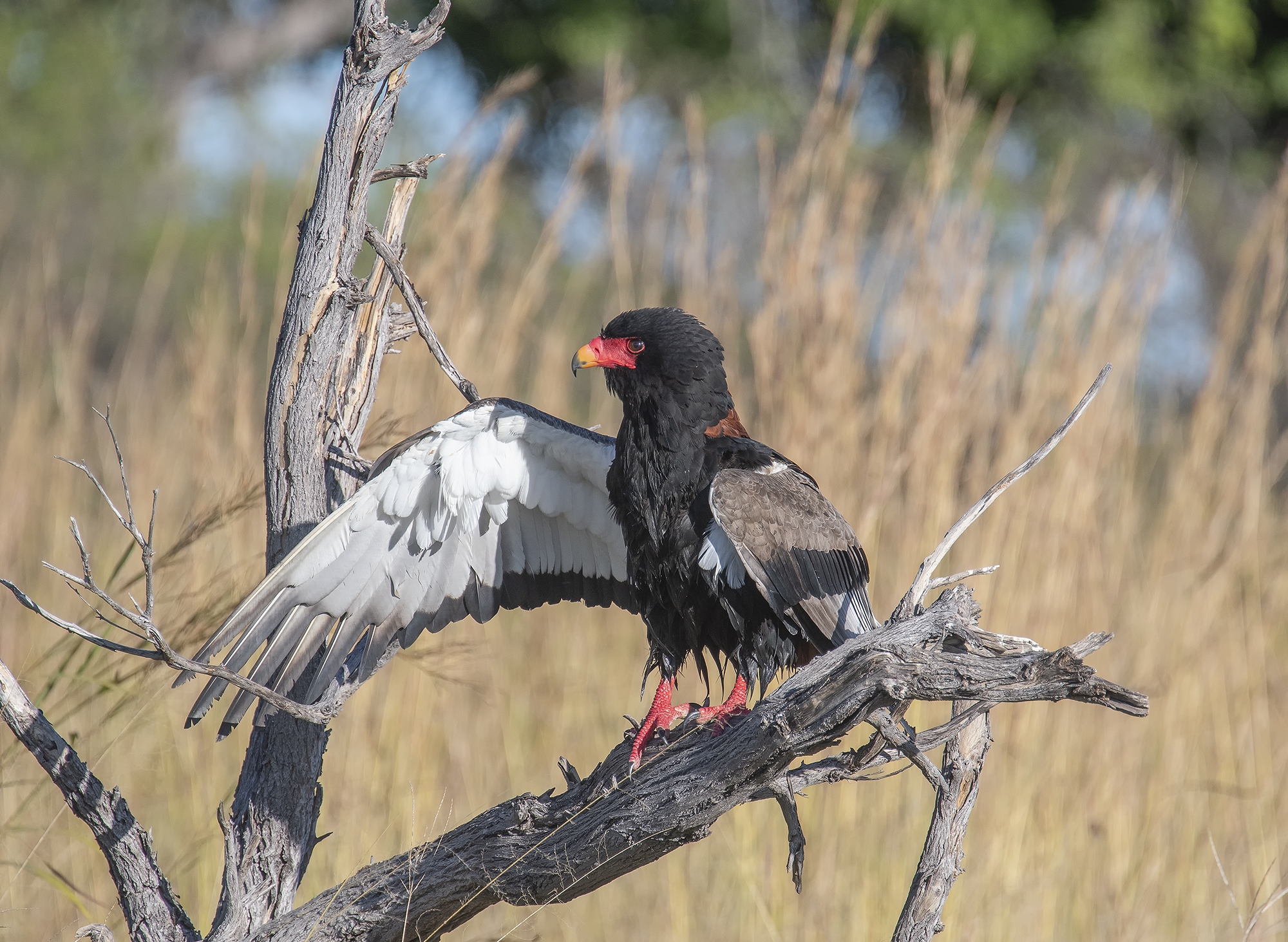
Bateleur Eagle
We have seen this beautiful bird in the past, usually flying in circles high above, or occasionally in a far away tree. This time was different. Tom spotted this one sitting on a branch on the other side of a smallish pond (pan) of water. It had its’ wings spread, and he guessed that the eagle had bathed and was drying out its’ wings. So we took a few images and waited for it to fly. No such luck. So Tom drove the vehicle across the pan to the other side. Now we had a great view of the eagle – but no flight. Eventually AT got off his seat and started to approach the bird – and it finally flew.
Overall some neat firsts. Each safari is different and always bring new experiences.






































































 The Carefree Photographer