Next stop Kusadasi, Turkey, the port for those going to visit Ephesus. This is the ruins of one of the most important cities of the Roman Empire, and among the top archaeological sites anywhere. At its peak in the first and second centuries AD, Ephesus was one of the grandest cities of the ancient world (along with Alexandria, Antioch and Rome itself). At the time more than 250,000 people lived there. The city grew as a seaport and the worship center of the goddess Artemis.By 500 BC it was a bustling cultural capital on the Mediterranean.
The physical location of ancient Ephesus mover over time. The Meander River tended to shift its path, and the valley’s sandy soil constantly moved.When the sea silted up in the fourth century BC, the Ephesians relocated their city farther up the valley where the ruins now sit. It reached its peak under Emperor Augustus, who made it the Roman capital of Asia in 27 AD.
Ephesus’ prominence attracted some of the earliest followers of Christ. St. John came about 50 AD when he wrote his First Epistle to the Corinthians. It lost its position when raiding barbarians looted the city in AD 263.
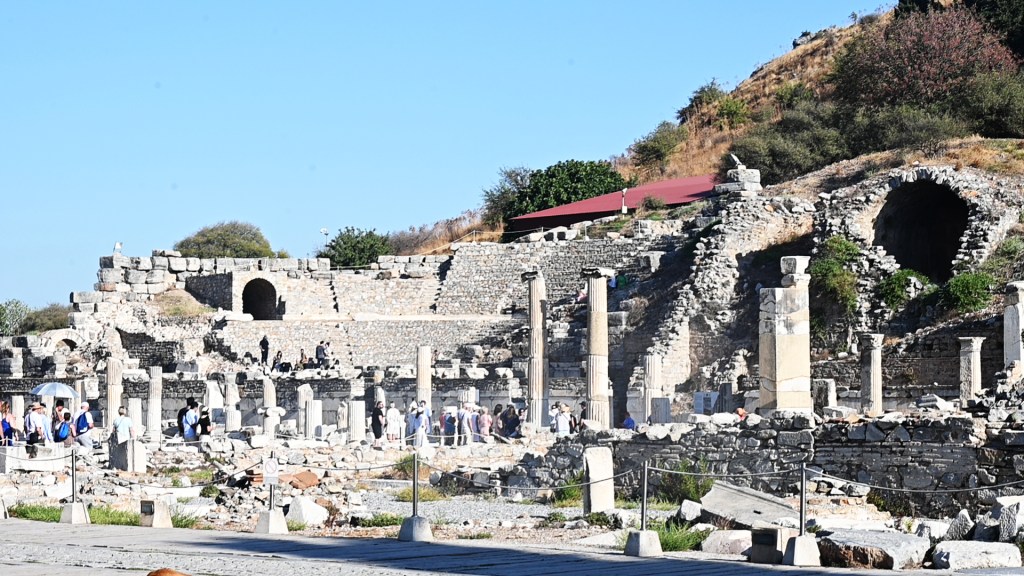
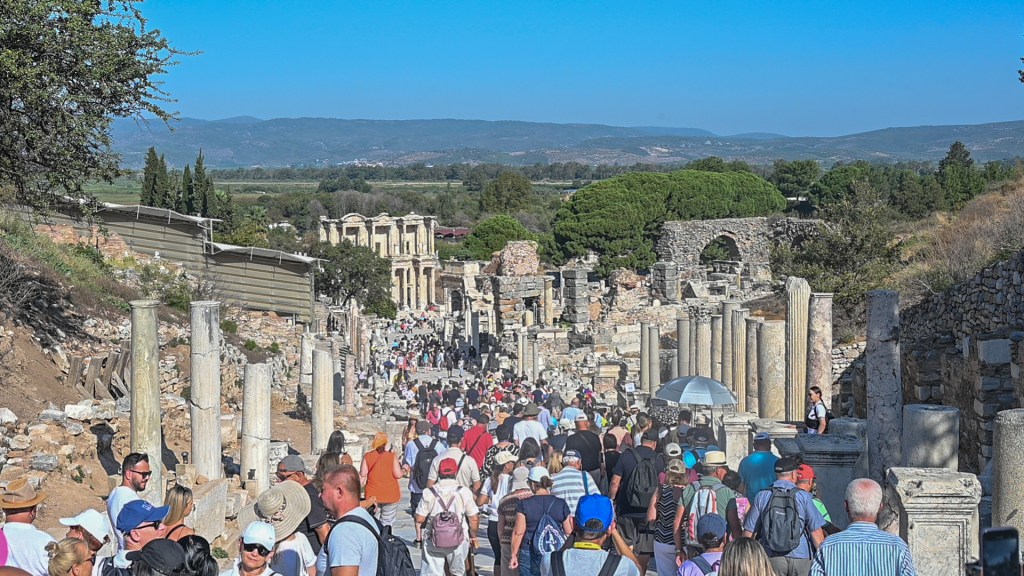
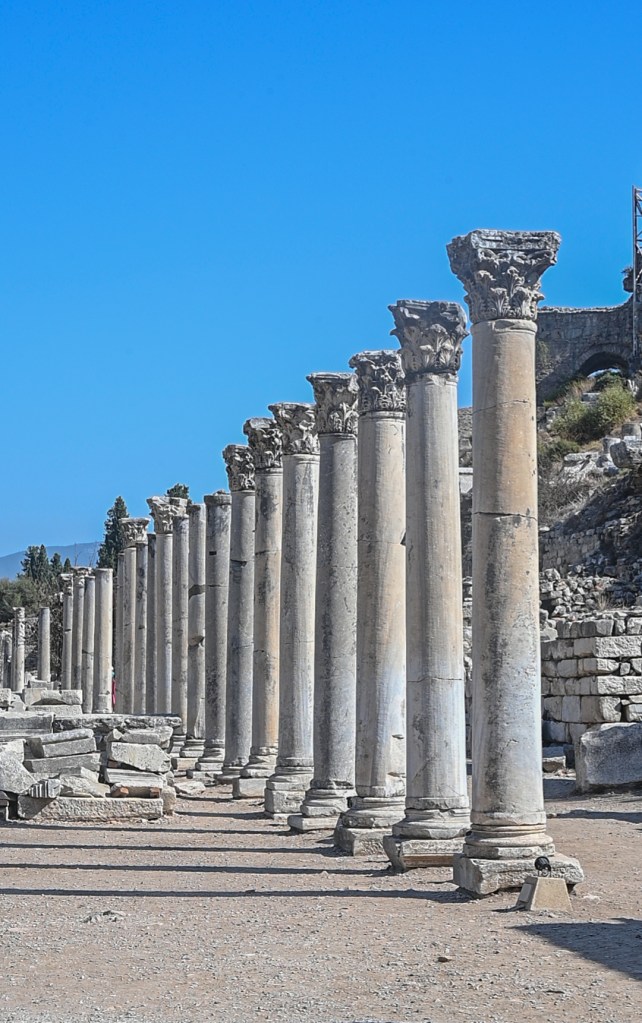
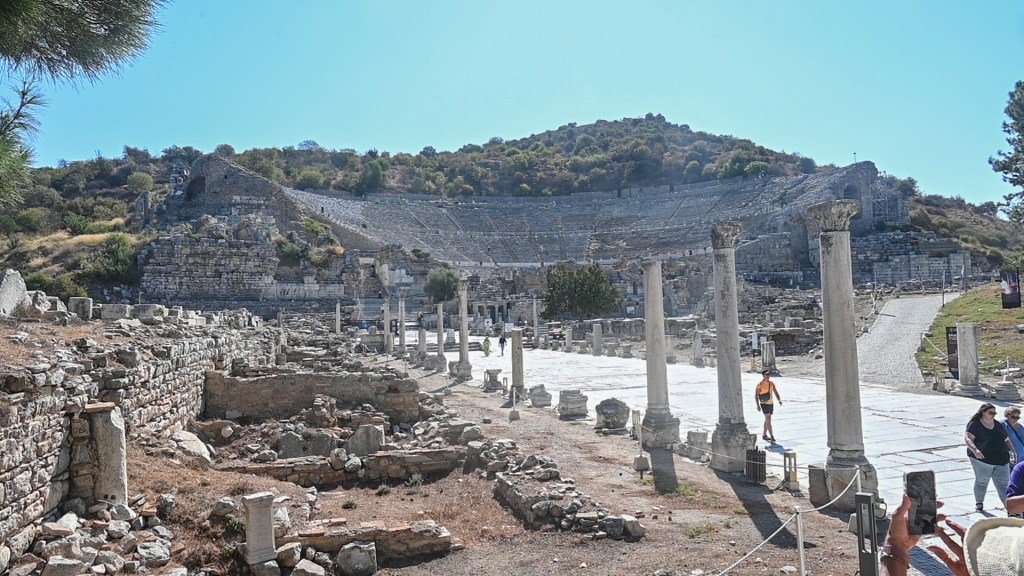
The excavated area of Ephesus basically represents the city center. Beginning at the upper gate, the tour passes through the government center, a shopping area, and a theater and nightlife district. The Curates Road connects the upper gate to the Library of Celsus.
Tour











Dinner at the Library
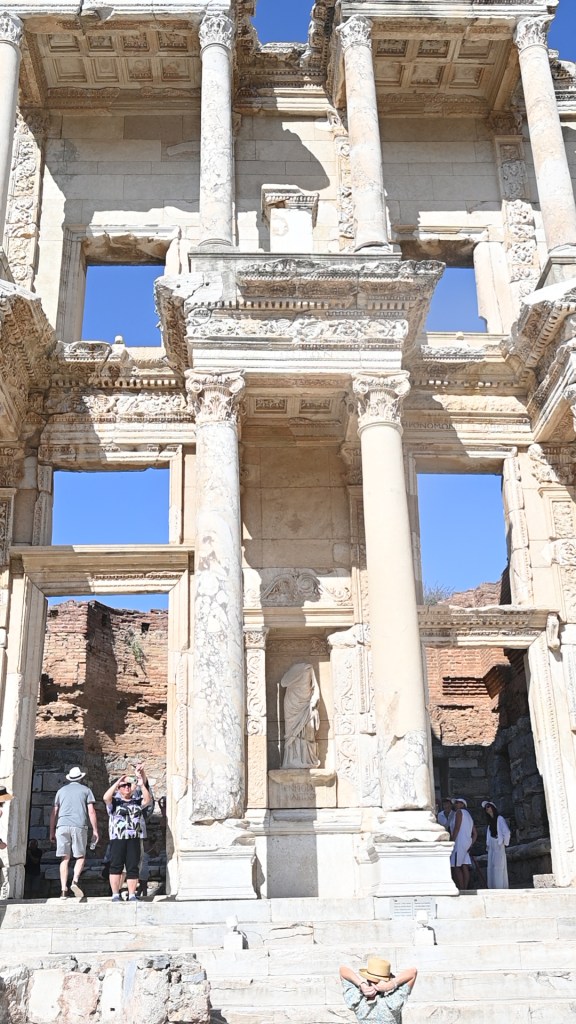
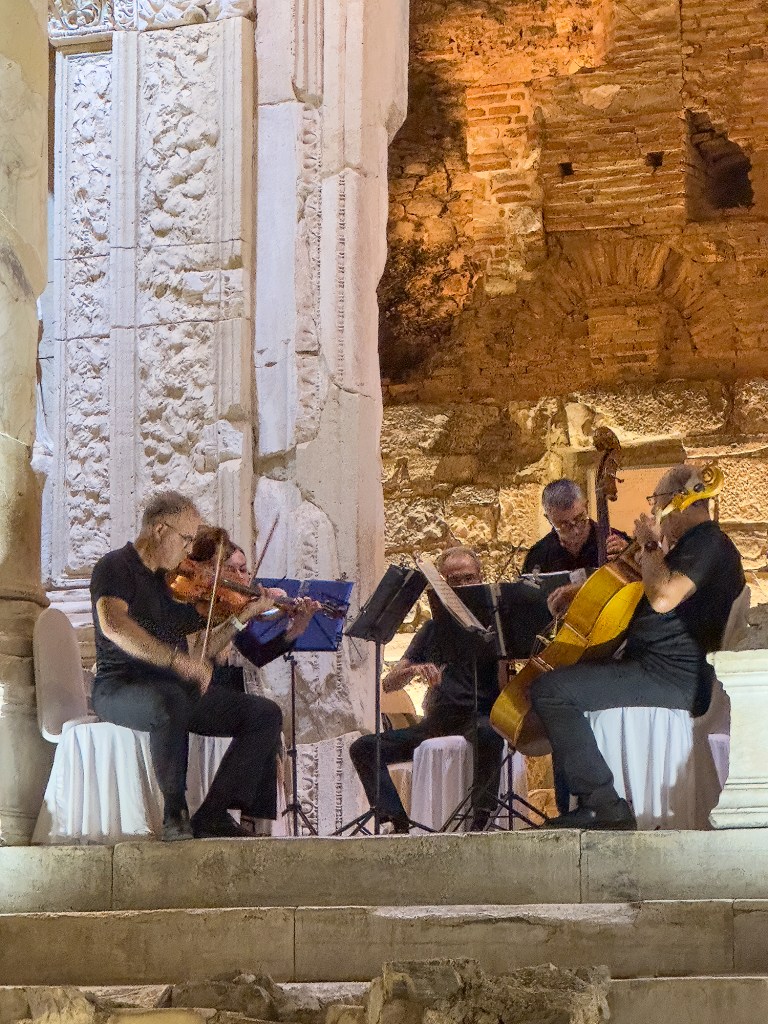
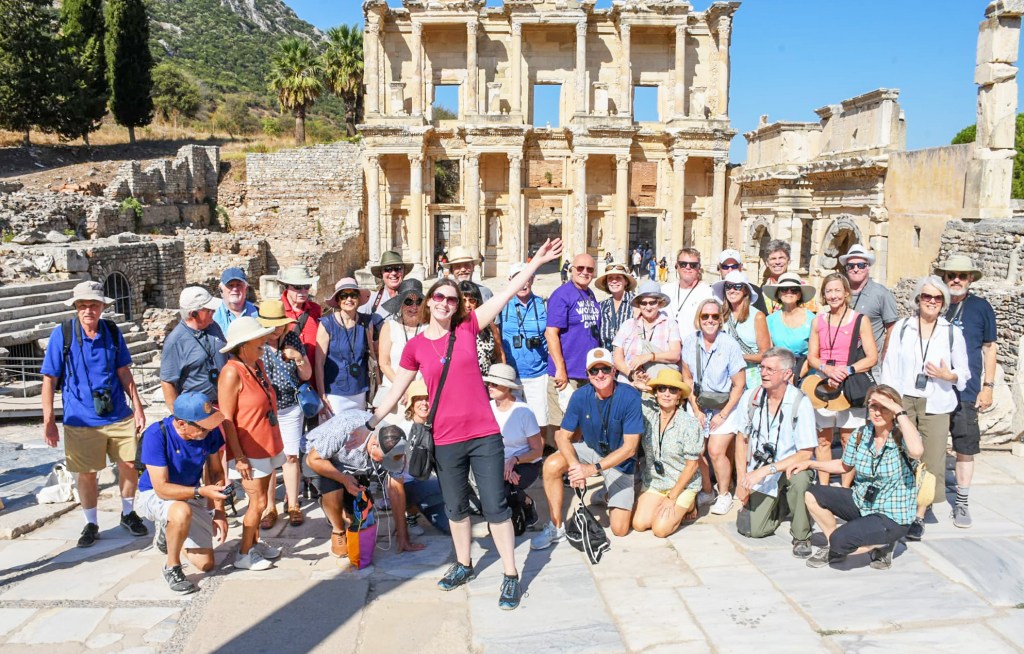
Those of us on Windstar (about 140) were privileged to enjoy an evening outside dinner with chamber music in front of the well-lit Library. The library, with 12000 volumes, was the third-largest library of the ancient world (behind Alexandria, Egypt and Pergamon).


Back to Windstar


 The Carefree Photographer